
Infective endocarditis — MCQs

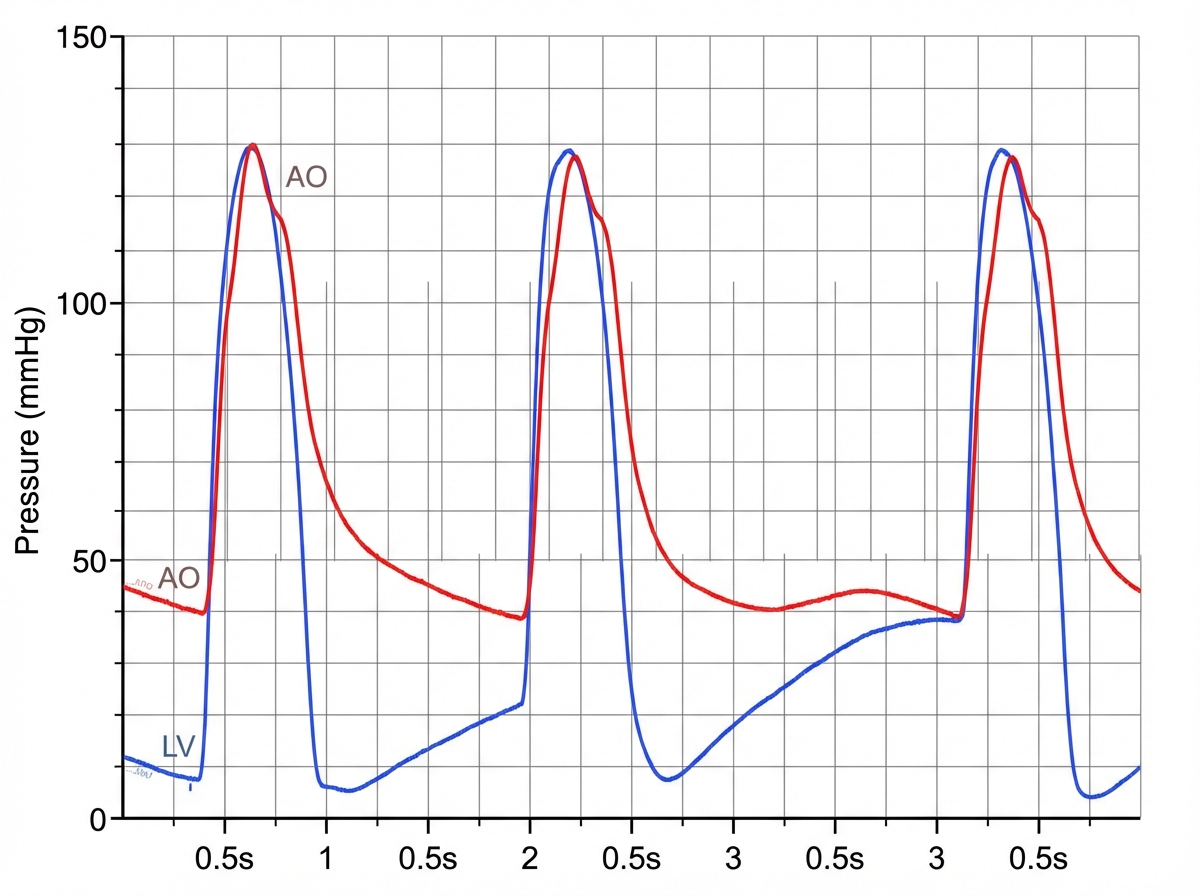
A 31-year-old man comes to the physician because of a 5-day history of fever, chills, and dyspnea. His temperature is 38.9°C (102°F) and pulse is 90/min. Cardiac examination shows a murmur. In addition to other measures, cardiac catheterization is performed. A graph showing the results of the catheterization is shown. This patient most likely has which of the following valvular heart defects?
A 37-year-old man with a history of IV drug use presents to the ED with complaints of fevers, chills, and malaise for one week. He admits to recently using IV and intramuscular heroin. Vital signs are as follows: T 40.0 C, HR 120 bpm, BP 110/68 mmHg, RR 14, O2Sat 98%. Examination reveals a new systolic murmur that is loudest at the lower left sternal border. Initial management includes administration of which of the following regimens?
A 75-year-old man presents to his primary care provider with malaise and low-grade fever after he underwent a cystoscopy for recurrent cystitis and pyelonephritis two weeks ago. His past medical history is significant for coronary artery disease and asthma. His current medications include aspirin, metoprolol, atorvastatin, and albuterol inhaler. Temperature is 37.2°C (99.0°F), blood pressure is 110/70 mm Hg, pulse is 92/min and respirations are 14/min. On physical examination, there are painless areas of hemorrhage on his palms and soles. Cardiac auscultation reveals a new pansystolic murmur over the apex. An echocardiogram shows echogenic endocardial vegetation on a leaflet of the mitral valve. Which of the following pathogens is most likely responsible for his condition?
A 24-year-old male is brought into the emergency department complaining of chills, headaches, and malaise for several days. He also states that he experiences shortness of breath when climbing two flights of stairs in his home. He admits to occasionally using intravenous drugs during the previous year. On exam, his vital signs are temperature 39.2° C, heart rate 108/min, blood pressure 124/82 mm Hg, respiratory rate 20/min, and oxygen saturation 98% on room air. A holosystolic murmur is heard near the lower left sternal border. An echocardiogram confirms vegetations on the tricuspid valve. What is the most likely causative organism of this patient's condition?
A 37-year-old man presents to the emergency department for a persistent fever. The patient states he has felt unwell for the past week and has felt subjectively febrile. The patient has a past medical history of a suicide attempt and alcohol abuse. He is not currently taking any medications. The patient admits to using heroin and cocaine and drinking 5-8 alcoholic drinks per day. His temperature is 103°F (39.4°C), blood pressure is 92/59 mmHg, pulse is 110/min, respirations are 20/min, and oxygen saturation is 96% on room air. Cardiopulmonary exam is notable for a systolic murmur heard best along the left sternal border. Dermatologic exam reveals scarring in the antecubital fossa. Which of the following is the next best step in management?
A 65-year-old man presents with low-grade fever and malaise for the last 4 months. He also says he has lost 9 kg (20 lb) during this period and suffers from extreme fatigue. Past medical history is significant for a mitral valve replacement 5 years ago. His temperature is 38.1°C (100.6°F), respirations are 22/min, pulse is 102/min, and blood pressure is 138/78 mm Hg. On physical examination, there is a new onset 2/6 holosystolic murmur loudest in the apical area of the precordium. Which of the following organisms is the most likely cause of this patient’s condition?
A 27-year-old man presents to the emergency department with weakness and a fever for the past week. The patient is homeless and has a past medical history of alcohol and IV drug abuse. His temperature is 102°F (38.9°C), blood pressure is 107/68 mmHg, pulse is 120/min, respirations are 17/min, and oxygen saturation is 98% on room air. Physical exam is notable for a tremulous patient with antecubital scars and a murmur over the left lower sternal border. Blood cultures are drawn and the patient is started on vancomycin and ceftriaxone and is admitted to the ICU. The patient's fever and symptoms do not improve despite antibiotic therapy for which the initial identified organism is susceptible. Cultures currently reveal MRSA as one of the infective organisms. Which of the following is the best next step in management?
A 42-year-old woman presents to a medical office with complaints of fatigue, weight loss, and low-grade fever for 1 week. She noticed bleeding spots on her feet this morning. The past medical history is significant for a recent dental appointment. She is a non-smoker and does not drink alcohol. She does not currently take any medications. On examination, the vital signs include temperature 37.8°C (100.0°F), blood pressure 138/90 mm Hg, respirations 21/min, and pulse 87/min. Cardiac auscultation reveals a pansystolic murmur in the mitral area with radiation to the left axilla. Laboratory studies show hemoglobin levels of 17.2 g/dL, erythrocyte sedimentation rate (ESR) of 25 mm/h, and a white blood cell (WBC) count of 12,000 cells/mm3. An echocardiogram reveals valvular vegetations on the mitral valve with mild regurgitation. Blood samples are sent for bacterial culture. Empiric antibiotic therapy is initiated with ceftriaxone and vancomycin. The blood cultures most likely will yield the growth of which of the following organisms?
A 54-year-old man is brought to the emergency department 1 hour after an episode of loss of consciousness that lasted 3 minutes. Since awakening, he has had weakness of the left arm and leg, and his speech has been slurred. He has had a fever for 10 days. He has not had vomiting or headache. He was treated for bacterial sinusitis 3 weeks ago with amoxicillin-clavulanate. He has hypertension, hypothyroidism, hyperlipidemia, and type 2 diabetes mellitus. Current medications include amlodipine, hydrochlorothiazide, metformin, simvastatin, aspirin, and levothyroxine. His temperature is 38.6°C (101.4°F), pulse is 106/min, and blood pressure is 160/90 mm Hg. He is alert and oriented to person, place, and time. Examination shows multiple petechiae on his trunk and painless macules over both palms. A new grade 3/6 systolic murmur is heard best at the apex. He follows commands, but he slurs his words and has difficulty naming common objects. There is left facial droop. Muscle strength is 4/5 in the left upper and lower extremities. Deep tendon reflexes are 3+ on the left side and 2+ on the right side. The left big toe shows an extensor response. Fundoscopic examination shows retinal hemorrhages with white centers. Laboratory studies show: Hemoglobin 15.3 g/dL Leukocyte count 12,300/mm3 Serum Na+ 136 mEq/L Cl- 103 mEq/L K+ 4.3 mEq/L Glucose 108 mg/dL Creatinine 1.1 mg/dL Urine Protein 1+ Glucose negative Blood 1+ WBC 1–2/hpf RBC 7–10/hpf Which of the following is the most likely cause of these findings?
A 65-year-old man presents to the emergency department with a fever and weakness. He states his symptoms started yesterday and have been gradually worsening. The patient has a past medical history of obesity, diabetes, alcohol abuse, as well as a 30 pack-year smoking history. He lives in a nursing home and has presented multiple times in the past for ulcers and delirium. His temperature is 103°F (39.4°C), blood pressure is 122/88 mmHg, pulse is 129/min, respirations are 24/min, and oxygen saturation is 99% on room air. Physical exam is notable for a murmur. The patient is started on vancomycin and piperacillin-tazobactam and is admitted to the medicine floor. During his hospital stay, blood cultures grow Streptococcus bovis and his antibiotics are appropriately altered. A transesophageal echocardiograph is within normal limits. The patient’s fever decreases and his symptoms improve. Which of the following is also necessary in this patient?
Want unlimited practice?
Get full access to all questions, explanations, and performance tracking.
Scan to download app