A 28-year-old woman presents to the clinic with complaints of occasional low-grade fever and joint pain for 1 month. She also complains of morning stiffness in the proximal interphalangeal joints of both hands, which lasts for 5 to 10 minutes. She recently noticed a pink rash on her nose and cheekbones. Her family history is significant for similar complaints in her mother. She is not taking any medications. On examination, her temperature is 37.6°C (99.6°F), pulse is 74/min, blood pressure is 110/70 mm Hg, and respirations are 18/min. Aphthous ulcers are noted on her oral mucosa. Which of the following tests would be most specific for confirming the diagnosis in this patient?
Q32
A 35-year-old woman comes to the physician because of a 3-month history of worsening fatigue. She has difficulty concentrating at work despite sleeping well most nights. Three years ago, she was diagnosed with Crohn disease. She has about 7 non-bloody, mildly painful bowel movements daily. Her current medications include 5-aminosalicylic acid and topical budesonide. She does not smoke or drink alcohol. She appears pale. Her temperature is 37.9°C (100.2°F), pulse is 92/min, and blood pressure is 110/65 mmHg. The abdomen is diffusely tender to palpation, with no guarding. Laboratory results show:
Hemoglobin 10.5 g/dL
Mean corpuscular volume 83 μm3
Reticulocytes 0.2 %
Platelets 189,000/mm3
Serum
Iron 21 μg/dL
Total iron binding capacity 176 μg/dL (N=240–450)
A blood smear shows anisocytosis. Which of the following is the most appropriate next step in treatment?
Q33
A 36-year-old man comes to the emergency department for the evaluation of recurrent bloody diarrhea for 4 weeks. During this time, he has also had intermittent abdominal pain. His symptoms have worsened over the past 2 days and he has also had fever and several episodes of nonbloody vomiting. He was diagnosed with ulcerative colitis three years ago but has had difficulty complying with his drug regimen. His temperature is 38.8°C (100.9°F), pulse is 112/min and regular, and blood pressure is 90/50 mm Hg. Abdominal examination shows a distended abdomen with no guarding or rebound; bowel sounds are hypoactive. Hemoglobin concentration is 10.1 g/dL, leukocyte count is 15,000/mm3, and erythrocyte sedimentation rate is 50 mm/h. Fluid resuscitation is initiated. In addition to complete bowel rest, which of the following is the most appropriate next step in the management of this patient?
Q34
A 29-year-old man presents to clinic with a complaint of fatigue that has developed over the past 6 months. Upon questioning, he endorses abdominal pain, non-bloody diarrhea, and decreased appetite over the past year. He denies recent travel outside of the country or eating uncooked meats. On exam, his temperature is 99.0°F (37.2°C), blood pressure is 126/78 mmHg, pulse is 93/min, and respirations are 12/min. Notably, the abdominal exam is unremarkable aside from some tenderness to palpation near the umbilicus. His colonoscopy demonstrates perianal inflammation with a normal rectum, and biopsies of suspicious lesions in the transverse colon reveal transmural inflammation. Which one of the following is most strongly associated with the patient’s condition?
Q35
A 33-year-old woman presents to the clinic complaining of yellowish discoloration of her skin and eyes, mild fever, and body aches. She has had this problem for 6 months, but it has become worse over the past few weeks. She also complains of repeated bouts of bloody diarrhea and abdominal pain. The past medical history is noncontributory. She takes no medication. Both of her parents are alive with no significant disease. She works as a dental hygienist and drinks wine occasionally on weekends. Today, the vital signs include blood pressure 110/60 mm Hg, pulse rate 90/min, respiratory rate 19/min, and temperature 36.6°C (97.8°F). On physical examination, she appears uncomfortable. The skin and sclera are jaundiced. The heart has a regular rate and rhythm, and the lungs are clear to auscultation bilaterally. The abdomen is soft with mild hepatosplenomegaly. There is no tenderness or rebound tenderness. The digital rectal examination reveals blood and mucus in the rectal vault. Laboratory studies show:
Serum sodium 140 mEq/L
Serum potassium 3.8 mEq/L
Alanine aminotransferase (ALT) 250 U/L
Aspartate aminotransferase (AST) 170 U/L
Alkaline phosphatase (ALP) 120 U/L
Which of the following antibodies would you expect to find in this patient?
Q36
A 27-year-old female has a history of periodic bloody diarrhea over several years. Colonoscopy shows sigmoid colon inflammation, and the patient complains of joint pain in her knees and ankles. You suspect inflammatory bowel disease. Which of the following would suggest a diagnosis of Crohn disease:
Q37
An 18-year-old man presents with bloody diarrhea and weight loss. He undergoes endoscopic biopsy which shows pseudopolyps. Biopsies taken during the endoscopy show inflammation only involving the mucosa and submucosa. He is diagnosed with an inflammatory bowel disease. Which of the following characteristics was most likely present?
Q38
A 23-year-old female presents with a seven-day history of abdominal pain, and now bloody diarrhea that brings her to her primary care physician. Review of systems is notable for a 12-pound unintentional weight loss and intermittent loose stools. She has a family history notable for a father with CAD and a mother with primary sclerosing cholangitis. Upon further workup, she is found to have the following on colonoscopy and biopsy, Figures A and B respectively. Serum perinuclear antineutrophil cytoplasmic antibodies (P-ANCA) is positive. This patient's disease is likely to also include which of the following features?
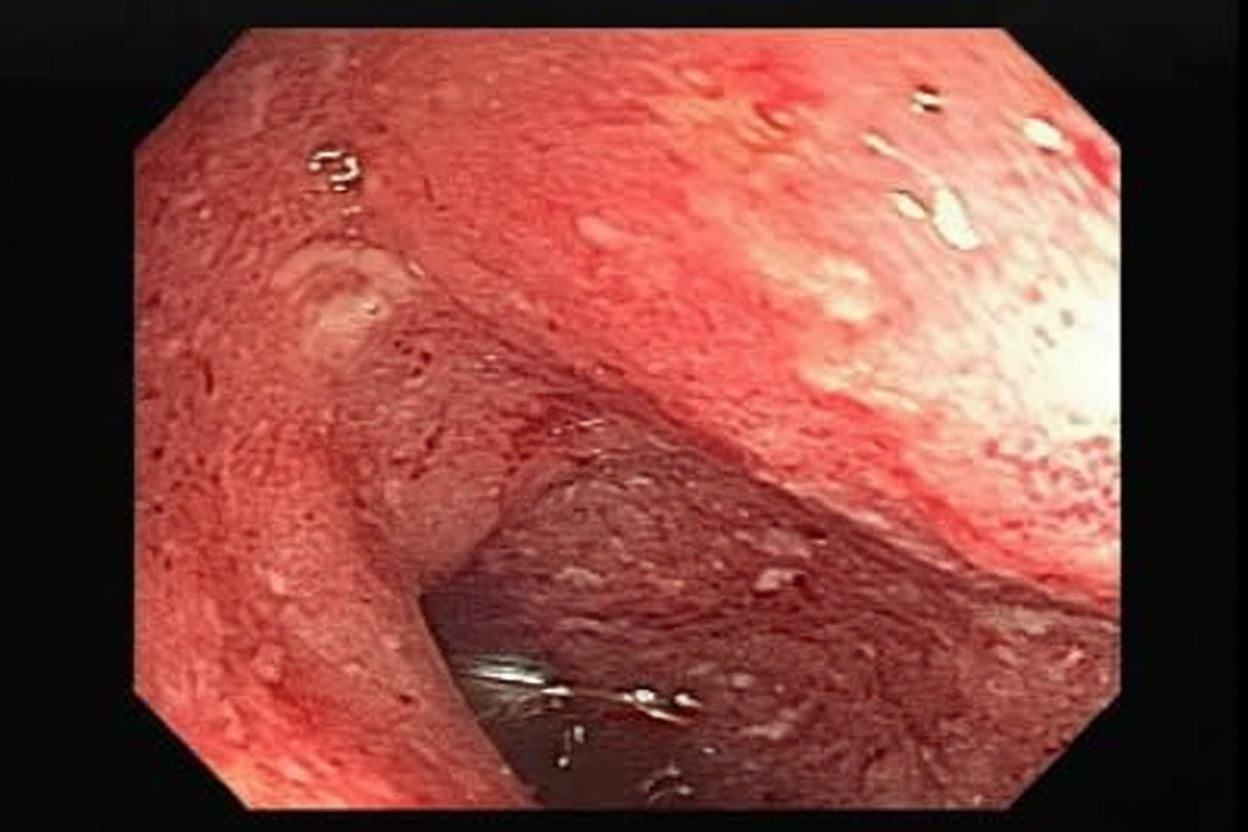
Q39
A 27-year-old male presents to his primary care physician complaining of pain with urination and eye redness. He reports that he developed these symptoms approximately one week ago. He also has noticed left knee and right heel pain that started a few days ago. He denies any recent trauma. He had an episode of abdominal pain and diarrhea ten days ago that resolved. He has otherwise felt well. On exam, he walks with a limp and his conjunctivae are erythematous. Laboratory findings are notable for an elevated erythrocyte sedimentation rate (ESR) and elevated C-reactive protein (CRP). Which of the following is most likely associated with this patient’s condition?
Q40
A 34-year-old man presents to his dermatologist with white scaly papules and plaques on his extensor arms, elbows, knees, and shins. Scaly and flaky eruptions are also present on his ears, eyebrows, and scalp. He describes the lesions as being itchy and irritating. When the scales are scraped away, pinpoint bleeding is noted. His vital signs are unremarkable, and physical examination is otherwise within normal limits. Which of the following is the best initial test for this patient’s condition?
IBD US Medical PG Practice Questions and MCQs
Question 31: A 28-year-old woman presents to the clinic with complaints of occasional low-grade fever and joint pain for 1 month. She also complains of morning stiffness in the proximal interphalangeal joints of both hands, which lasts for 5 to 10 minutes. She recently noticed a pink rash on her nose and cheekbones. Her family history is significant for similar complaints in her mother. She is not taking any medications. On examination, her temperature is 37.6°C (99.6°F), pulse is 74/min, blood pressure is 110/70 mm Hg, and respirations are 18/min. Aphthous ulcers are noted on her oral mucosa. Which of the following tests would be most specific for confirming the diagnosis in this patient?
A. Antinuclear antibodies (ANA)
B. Anti-topoisomerase (anti-Scl 70) antibodies
C. Anti-double stranded DNA (dsDNA) antibodies (Correct Answer)
D. Anti-Ro antibodies
E. Anti-histone antibodies
Explanation: ***Anti-double stranded DNA (dsDNA) antibodies***
- The patient's symptoms (low-grade fever, joint pain, morning stiffness, malar rash, oral ulcers, and family history) are highly suggestive of **Systemic Lupus Erythematosus (SLE)**.
- **Anti-dsDNA antibodies** are highly specific for SLE and are included in the diagnostic criteria, often correlating with disease activity and **lupus nephritis**.
*Antinuclear antibodies (ANA)*
- While **ANA** is a very sensitive screening test for SLE (positive in >95% of cases), it is not specific, as it can be positive in other autoimmune diseases and even in healthy individuals.
- A positive ANA result prompts further testing with more specific antibodies to confirm an SLE diagnosis.
*Anti-topoisomerase (anti-Scl 70) antibodies*
- **Anti-Scl 70 antibodies** are highly specific for **systemic sclerosis (scleroderma)**, particularly the diffuse cutaneous form.
- The patient's presentation does not describe the skin thickening, Raynaud's phenomenon, or other characteristic features of scleroderma.
*Anti-Ro antibodies*
- **Anti-Ro (SSA) antibodies** are primarily associated with **Sjögren's syndrome**, and can also be found in a subset of SLE patients, particularly those with subacute cutaneous lupus or neonatal lupus.
- They are not as specific for SLE as anti-dsDNA antibodies, and the patient's symptoms are more directly indicative of classic SLE.
*Anti-histone antibodies*
- **Anti-histone antibodies** are strongly associated with **drug-induced lupus**, which is not suggested by the patient's history as she is not taking any medications.
- While they can be present in some cases of idiopathic SLE, they are not the most specific marker for confirming the diagnosis in this context.
Question 32: A 35-year-old woman comes to the physician because of a 3-month history of worsening fatigue. She has difficulty concentrating at work despite sleeping well most nights. Three years ago, she was diagnosed with Crohn disease. She has about 7 non-bloody, mildly painful bowel movements daily. Her current medications include 5-aminosalicylic acid and topical budesonide. She does not smoke or drink alcohol. She appears pale. Her temperature is 37.9°C (100.2°F), pulse is 92/min, and blood pressure is 110/65 mmHg. The abdomen is diffusely tender to palpation, with no guarding. Laboratory results show:
Hemoglobin 10.5 g/dL
Mean corpuscular volume 83 μm3
Reticulocytes 0.2 %
Platelets 189,000/mm3
Serum
Iron 21 μg/dL
Total iron binding capacity 176 μg/dL (N=240–450)
A blood smear shows anisocytosis. Which of the following is the most appropriate next step in treatment?
A. Red blood cell transfusion
B. Oral iron supplementation
C. Subcutaneous erythropoietin injection
D. Oral vitamin B12 supplementation
E. Oral prednisone therapy (Correct Answer)
Explanation: ***Oral prednisone therapy***
- The patient's symptoms (worsening fatigue, difficulty concentrating), signs (fever, diffuse abdominal tenderness), and lab findings (**anemia**, **active inflammation**) indicate a **moderate to severe flare of Crohn disease**.
- She has **7 bowel movements daily** and is inadequately controlled on 5-aminosalicylic acid and topical budesonide, indicating need for escalation of therapy.
- **Systemic corticosteroids like prednisone** are the mainstay for inducing remission in a moderate to severe Crohn disease flare when aminosalicylates and topical steroids are insufficient.
- Treating the underlying inflammation will also improve the **anemia of chronic disease**.
*Red blood cell transfusion*
- While the patient has **anemia (Hb 10.5 g/dL)**, it is not severe enough to warrant an immediate **red blood cell transfusion**.
- Transfusions are typically reserved for **severe, symptomatic anemia** (Hb <7 g/dL in stable patients) or those with acute hemodynamic instability or active bleeding, which is not present here.
- The underlying cause (active Crohn's flare) should be treated first.
*Oral iron supplementation*
- The patient has **anemia of chronic disease** as evidenced by **low iron, LOW TIBC (176 μg/dL)**, normocytic anemia, and low reticulocytes in the setting of active inflammation.
- In **anemia of chronic disease**, ferritin is typically elevated (acute phase reactant) and hepcidin levels are high, which **blocks iron absorption and utilization**.
- **Oral iron supplementation** would be largely ineffective in the context of active inflammation. The priority is to resolve the inflammation with corticosteroids, which will improve iron utilization.
- Note: If TIBC were HIGH, it would suggest iron deficiency anemia instead.
*Subcutaneous erythropoietin injection*
- **Erythropoietin** is primarily used for **anemia associated with chronic kidney disease** or specific cases of anemia of chronic disease unresponsive to other measures.
- It would not address the underlying **active inflammation from Crohn disease** which is the primary driver of her current symptoms and anemia.
- Treating the Crohn's flare is the appropriate first step.
*Oral vitamin B12 supplementation*
- While Crohn disease, particularly involving the terminal ileum, can lead to **vitamin B12 deficiency**, her **mean corpuscular volume (MCV)** is normal (83 μm3), indicating a **normocytic anemia**, not the macrocytic anemia (MCV >100) typical of B12 deficiency.
- Furthermore, addressing the active inflammation is the most urgent step to improve her overall condition and resolve the anemia.
Question 33: A 36-year-old man comes to the emergency department for the evaluation of recurrent bloody diarrhea for 4 weeks. During this time, he has also had intermittent abdominal pain. His symptoms have worsened over the past 2 days and he has also had fever and several episodes of nonbloody vomiting. He was diagnosed with ulcerative colitis three years ago but has had difficulty complying with his drug regimen. His temperature is 38.8°C (100.9°F), pulse is 112/min and regular, and blood pressure is 90/50 mm Hg. Abdominal examination shows a distended abdomen with no guarding or rebound; bowel sounds are hypoactive. Hemoglobin concentration is 10.1 g/dL, leukocyte count is 15,000/mm3, and erythrocyte sedimentation rate is 50 mm/h. Fluid resuscitation is initiated. In addition to complete bowel rest, which of the following is the most appropriate next step in the management of this patient?
A. Abdominal x-ray (Correct Answer)
B. IV metronidazole and rectal vancomycin
C. Colonoscopy
D. Topical sulfasalazine and oral prednisolone
E. Double-contrast barium enema
Explanation: ***Abdominal x-ray***
- This patient presents with **severe ulcerative colitis** symptoms (bloody diarrhea, abdominal pain, fever, tachycardia, hypotension, leukocytosis, elevated ESR) and signs of **toxic megacolon** (distended abdomen, hypoactive bowel sounds). An **abdominal x-ray** is crucial for diagnosing toxic megacolon by revealing colonic dilation (>6 cm).
- Early identification of toxic megacolon is critical as it carries a high risk of **perforation** and requires urgent intervention; fluid resuscitation and bowel rest are initial steps, but imaging must confirm the diagnosis before proceeding with medical or surgical therapy.
*IV metronidazole and rectal vancomycin*
- While **antibiotics** like metronidazole might be used in severe colitis to cover for bacterial translocation, the specific combination with rectal vancomycin suggests treatment for *Clostridioides difficile* infection. Although possible, the immediate priority in suspected toxic megacolon is to rule out perforation and assess colonic dilation.
- *C. difficile* infection can exacerbate UC, but an abdominal x-ray is still needed first to assess for **toxic megacolon** and its complications before specific infection treatment.
*Colonoscopy*
- **Colonoscopy** is generally **contraindicated** in acute, severe ulcerative colitis and suspected toxic megacolon due to the high risk of **perforation** of the inflamed bowel.
- Diagnostic evaluation should focus on less invasive methods to assess the severity and complications, such as **imaging**.
*Topical sulfasalazine and oral prednisolone*
- **Sulfasalazine** and **prednisolone** are used to treat active ulcerative colitis. However, topical sulfasalazine is not potent enough for severe, systemic symptoms, and while oral prednisolone is used for flares, it's insufficient for a patient with signs of **toxic megacolon** and hemodynamic instability.
- This patient's condition warrants **aggressive intravenous steroids** (e.g., hydrocortisone or methylprednisolone) and close monitoring in an intensive care setting, but the immediate step is diagnostic imaging.
*Double-contrast barium enema*
- A **barium enema** is **contraindicated** in patients with severe inflammatory bowel disease, especially with suspected toxic megacolon, due to the high risk of **perforation** and the potential to worsen the patient's condition.
- It also provides less immediate and detailed information about colonic dilation and perforation compared to a plain abdominal x-ray or CT scan.
Question 34: A 29-year-old man presents to clinic with a complaint of fatigue that has developed over the past 6 months. Upon questioning, he endorses abdominal pain, non-bloody diarrhea, and decreased appetite over the past year. He denies recent travel outside of the country or eating uncooked meats. On exam, his temperature is 99.0°F (37.2°C), blood pressure is 126/78 mmHg, pulse is 93/min, and respirations are 12/min. Notably, the abdominal exam is unremarkable aside from some tenderness to palpation near the umbilicus. His colonoscopy demonstrates perianal inflammation with a normal rectum, and biopsies of suspicious lesions in the transverse colon reveal transmural inflammation. Which one of the following is most strongly associated with the patient’s condition?
A. Positive serum transglutaminase antibodies
B. Kidney stones (Correct Answer)
C. Endocarditis
D. Colorectal cancer
E. Hemolytic anemia
Explanation: ***Kidney stones***
- Patients with **Crohn's disease**, particularly those with ileal involvement, are at increased risk for **calcium oxalate kidney stones** due to increased oxalate absorption.
- In Crohn's disease, fat malabsorption occurs because bile salts are not reabsorbed in the inflamed terminal ileum. This leads to free fatty acids in the colon that bind calcium, leaving oxalate unbound and available for absorption. The excess oxalate is then excreted in urine, promoting calcium oxalate stone formation.
- This is one of the most well-established extraintestinal complications of Crohn's disease.
*Positive serum transglutaminase antibodies*
- These antibodies are a hallmark of **celiac disease**, which is characterized by villous atrophy in the small intestine due to gluten sensitivity.
- The patient's clinical presentation and colonoscopy findings (transmural inflammation, perianal disease, skip lesions) are pathognomonic for Crohn's disease, not celiac disease.
*Endocarditis*
- **Endocarditis** is an infection of the heart valves, typically caused by bacteremia, and is not a recognized association with Crohn's disease.
- While chronic inflammatory conditions can have cardiovascular effects, endocarditis is not a characteristic or strong complication of Crohn's disease.
*Colorectal cancer*
- While patients with **ulcerative colitis** have a significantly increased risk of colorectal cancer (especially with pancolitis and longer disease duration), the risk in **Crohn's disease** is lower and less direct.
- Crohn's disease can increase colorectal cancer risk with extensive colonic involvement, but this patient's presentation shows predominantly small bowel and perianal disease, making kidney stones a much stronger and more immediate association.
*Hemolytic anemia*
- **Hemolytic anemia** is not a characteristic complication of Crohn's disease.
- Anemia in Crohn's disease is more commonly due to **iron deficiency** from chronic blood loss or malabsorption, or **anemia of chronic disease** from chronic inflammation, rather than hemolysis.
Question 35: A 33-year-old woman presents to the clinic complaining of yellowish discoloration of her skin and eyes, mild fever, and body aches. She has had this problem for 6 months, but it has become worse over the past few weeks. She also complains of repeated bouts of bloody diarrhea and abdominal pain. The past medical history is noncontributory. She takes no medication. Both of her parents are alive with no significant disease. She works as a dental hygienist and drinks wine occasionally on weekends. Today, the vital signs include blood pressure 110/60 mm Hg, pulse rate 90/min, respiratory rate 19/min, and temperature 36.6°C (97.8°F). On physical examination, she appears uncomfortable. The skin and sclera are jaundiced. The heart has a regular rate and rhythm, and the lungs are clear to auscultation bilaterally. The abdomen is soft with mild hepatosplenomegaly. There is no tenderness or rebound tenderness. The digital rectal examination reveals blood and mucus in the rectal vault. Laboratory studies show:
Serum sodium 140 mEq/L
Serum potassium 3.8 mEq/L
Alanine aminotransferase (ALT) 250 U/L
Aspartate aminotransferase (AST) 170 U/L
Alkaline phosphatase (ALP) 120 U/L
Which of the following antibodies would you expect to find in this patient?
A. Perinuclear anti-neutrophil cytoplasmic antibodies (p-ANCA) (Correct Answer)
B. Anti-double stranded DNA (anti-dsDNA)
C. Anti-mitochondrial antibody
D. Anti-cyclic citrullinated peptide (anti-CCP)
E. Anti-endomysial IgA
Explanation: ***Perinuclear anti-neutrophil cytoplasmic antibodies (p-ANCA)***
- The patient presents with **primary sclerosing cholangitis (PSC)** in the setting of **inflammatory bowel disease (IBD)**, most likely ulcerative colitis given the bloody diarrhea and rectal bleeding.
- The combination of **cholestatic liver disease** (jaundice, elevated ALP) and **IBD** is pathognomonic for PSC, as **60-80% of PSC patients have concurrent IBD** (predominantly UC).
- **p-ANCA is positive in 60-80% of PSC patients** and 70-80% of UC patients, making it the expected antibody in this clinical scenario.
*Anti-double stranded DNA (anti-dsDNA)*
- Anti-dsDNA antibodies are highly specific for **Systemic Lupus Erythematosus (SLE)**.
- While SLE can cause hepatitis and serositis, it does not typically present with **cholestatic jaundice combined with bloody diarrhea**. The clinical picture here does not fit SLE.
*Anti-mitochondrial antibody*
- Anti-mitochondrial antibodies (AMAs) are the hallmark of **primary biliary cholangitis (PBC)**, found in >95% of cases.
- While PBC also causes cholestatic liver disease, **the presence of inflammatory bowel disease strongly favors PSC over PBC**, as IBD is seen in 60-80% of PSC patients but is **NOT a recognized association with PBC**.
- PBC typically presents in middle-aged women with fatigue, pruritus, and cholestasis, but without concurrent IBD.
*Anti-cyclic citrullinated peptide (anti-CCP)*
- Anti-CCP antibodies are highly specific for **rheumatoid arthritis (RA)**.
- The patient's symptoms—jaundice, hepatosplenomegaly, and bloody diarrhea—are inconsistent with RA, which primarily involves **inflammatory polyarthritis** of small joints.
*Anti-endomysial IgA*
- Anti-endomysial antibodies (EMA) are characteristic of **celiac disease**.
- Celiac disease presents with malabsorption, chronic diarrhea (usually non-bloody), and may have mild transaminitis, but does **NOT** typically cause **significant cholestatic jaundice, hepatosplenomegaly, or bloody diarrhea** as seen in this patient.
Question 36: A 27-year-old female has a history of periodic bloody diarrhea over several years. Colonoscopy shows sigmoid colon inflammation, and the patient complains of joint pain in her knees and ankles. You suspect inflammatory bowel disease. Which of the following would suggest a diagnosis of Crohn disease:
A. Jaundice
B. Mucosal and submucosal ulcerations
C. Perianal fistula (Correct Answer)
D. Loss of large bowel haustra
E. Left lower quadrant pain
Explanation: ***Perianal fistula***
- The presence of a **perianal fistula** is highly characteristic of **Crohn disease** due to its **transmural inflammation**, which can extend through the bowel wall and form tracts to the skin.
- While other inflammatory bowel disease (IBD) symptoms like bloody diarrhea and joint pain are present, a fistula specifically points towards Crohn disease rather than ulcerative colitis.
*Jaundice*
- **Jaundice** is not a typical manifestation of Crohn disease itself, though it can occur as a complication if there is associated **primary sclerosing cholangitis (PSC)**, which is more commonly linked with **ulcerative colitis**.
- It would suggest a primary liver issue or biliary obstruction, rather than directly supporting a diagnosis of Crohn disease.
*Mucosal and submucosal ulcerations*
- While **ulcerations** are a feature of both ulcerative colitis and Crohn disease, the description of **mucosal and submucosal ulcerations** is not specific enough to differentiate between them.
- In Crohn disease, ulcers tend to be **scattered** and **deep ("cobblestoning")**, potentially extending transmurally, whereas in ulcerative colitis, they are typically more **superficial** and **continuous**.
*Loss of large bowel haustra*
- **Loss of haustra**, also known as **"lead pipe" appearance**, is a characteristic finding in chronic **ulcerative colitis** due to continuous inflammation and fibrosis, leading to a straightened appearance of the colon.
- This finding is less typical for Crohn disease, which often has **skip lesions** and can involve any part of the gastrointestinal tract.
*Left lower quadrant pain*
- **Left lower quadrant pain** can be associated with inflammation in the **descending or sigmoid colon**, which can occur in both Crohn disease and ulcerative colitis.
- Therefore, this symptom is **non-specific** and does not help to differentiate between the two conditions.
Question 37: An 18-year-old man presents with bloody diarrhea and weight loss. He undergoes endoscopic biopsy which shows pseudopolyps. Biopsies taken during the endoscopy show inflammation only involving the mucosa and submucosa. He is diagnosed with an inflammatory bowel disease. Which of the following characteristics was most likely present?
A. Cobblestone mucosa
B. Skip lesions
C. Fistulas and strictures
D. Noncaseating granuloma
E. Rectal involvement (Correct Answer)
Explanation: **_Rectal involvement_**
- The description of **bloody diarrhea** and **pseudopolyps** on endoscopy, along with inflammation limited to the **mucosa and submucosa**, is highly characteristic of **ulcerative colitis (UC)**. UC invariably involves the rectum and extends proximally in a continuous fashion.
- The presence of **pseudopolyps** is common in UC due to cycles of mucosal ulceration and regeneration.
*Cobblestone mucosa*
- **Cobblestone mucosa** is a classic endoscopic finding in **Crohn's disease**, resulting from deep ulcerations interspersed with islands of edematous, non-ulcerated mucosa.
- This feature points to a transmural pattern of inflammation, which is inconsistent with the superficial inflammation confined to the **mucosa and submucosa** described.
*Skip lesions*
- **Skip lesions** refer to discontinuous areas of inflammation separated by healthy tissue, a hallmark feature of **Crohn's disease**.
- **Ulcerative colitis** (implied by the superficial inflammation) is characterized by continuous inflammation extending proximally from the rectum without skipped areas.
*Fistulas and strictures*
- **Fistulas** (abnormal connections between organs or to the skin) and **strictures** (narrowing of the intestinal lumen) are complications typically associated with **Crohn's disease**, due to its **transmural inflammation**.
- These are rare in **ulcerative colitis**, which primarily affects the superficial layers of the colon.
*Noncaseating granuloma*
- The presence of **noncaseating granulomas** on biopsy is a key histological feature distinguishing **Crohn's disease** from ulcerative colitis.
- The inflammation described as restricted to the **mucosa and submucosa** makes granulomas less likely, as they often imply a transmural process.
Question 38: A 23-year-old female presents with a seven-day history of abdominal pain, and now bloody diarrhea that brings her to her primary care physician. Review of systems is notable for a 12-pound unintentional weight loss and intermittent loose stools. She has a family history notable for a father with CAD and a mother with primary sclerosing cholangitis. Upon further workup, she is found to have the following on colonoscopy and biopsy, Figures A and B respectively. Serum perinuclear antineutrophil cytoplasmic antibodies (P-ANCA) is positive. This patient's disease is likely to also include which of the following features?
A. Worse disease severity near the ileocecal valve
B. Cobblestoning and skip lesions
C. Fistulae and stricture formation
D. Perianal disease
E. Continuous progression beginning in the rectum (Correct Answer)
Explanation: ***Continuous progression beginning in the rectum***
- The patient's presentation with abdominal pain, bloody diarrhea, weight loss, and **positive P-ANCA** is highly suggestive of **ulcerative colitis**.
- **Ulcerative colitis** characteristically presents with **continuous inflammation** that begins in the **rectum** and extends proximally through the colon.
*Worse disease severity near the ileocecal valve*
- This feature is more characteristic of **Crohn's disease**, where the **ileocecal region** is a common site of severe involvement.
- In **ulcerative colitis**, inflammation is typically confined to the colon and does not disproportionately affect the ileocecal valve unless there is backwash ileitis.
*Cobblestoning and skip lesions*
- **Cobblestoning** and **skip lesions** are classic endoscopic findings in **Crohn's disease**, reflecting the patchy, transmural inflammation.
- **Ulcerative colitis** is characterized by diffuse, superficial inflammation without skip lesions.
*Fistulae and stricture formation*
- The formation of **fistulae** (abnormal connections between organs) and **strictures** (narrowing of the bowel lumen) are hallmarks of **Crohn's disease** due to its transmural inflammation.
- These complications are rare in **ulcerative colitis**, which primarily affects the mucosal layer.
*Perianal disease*
- **Perianal disease**, including **fissures**, **abscesses**, and **fistulae**, is a common extraintestinal manifestation and complication of **Crohn's disease**.
- While other extraintestinal manifestations like **primary sclerosing cholangitis** can occur in both, perianal disease itself is less typical for uncomplicated **ulcerative colitis**.
Question 39: A 27-year-old male presents to his primary care physician complaining of pain with urination and eye redness. He reports that he developed these symptoms approximately one week ago. He also has noticed left knee and right heel pain that started a few days ago. He denies any recent trauma. He had an episode of abdominal pain and diarrhea ten days ago that resolved. He has otherwise felt well. On exam, he walks with a limp and his conjunctivae are erythematous. Laboratory findings are notable for an elevated erythrocyte sedimentation rate (ESR) and elevated C-reactive protein (CRP). Which of the following is most likely associated with this patient’s condition?
A. Anti-centromere antibody
B. HLA-B27 haplotype (Correct Answer)
C. Anti-cyclic citrullinated peptide (anti-CCP) antibody
D. HLA-DR4 haplotype
E. Rheumatoid factor
Explanation: ***HLA-B27 haplotype***
- The patient presents with symptoms of **urethritis** (pain with urination), **conjunctivitis** (eye redness), and **arthritis** (knee and heel pain), which is the classic triad of **Reactive Arthritis**
- **Reactive arthritis** is strongly associated with the presence of the **HLA-B27 haplotype**, especially following gastrointestinal or genitourinary infections.
*Anti-centromere antibody*
- This antibody is associated with **limited cutaneous systemic sclerosis** (CREST syndrome) characterized by calcinosis, Raynaud's phenomenon, esophageal dysmotility, sclerodactyly, and telangiectasias.
- The patient's symptoms do not align with systemic sclerosis.
*Anti-cyclic citrullinated peptide (anti-CCP) antibody*
- **Anti-CCP antibodies** are highly specific for **rheumatoid arthritis**, which primarily affects the small joints of the hands and feet symmetrically and does not typically present with conjunctivitis or urethritis.
- The patient's presentation with an acute, asymmetric arthritis following an infection is not consistent with rheumatoid arthritis.
*HLA-DR4 haplotype*
- The **HLA-DR4 haplotype** is primarily associated with **rheumatoid arthritis**, a chronic inflammatory autoimmune disease that differs significantly in presentation from the patient's acute symptoms.
- This patient's symptoms are more indicative of a seronegative spondyloarthropathy, not rheumatoid arthritis.
*Rheumatoid factor*
- **Rheumatoid factor (RF)** is an autoantibody found in many patients with **rheumatoid arthritis**, but it is also present in other conditions and can be negative in some RA cases.
- While it indicates systemic inflammation, it is not specific to the patient's constellation of symptoms, which point more directly to a reactive process.
Question 40: A 34-year-old man presents to his dermatologist with white scaly papules and plaques on his extensor arms, elbows, knees, and shins. Scaly and flaky eruptions are also present on his ears, eyebrows, and scalp. He describes the lesions as being itchy and irritating. When the scales are scraped away, pinpoint bleeding is noted. His vital signs are unremarkable, and physical examination is otherwise within normal limits. Which of the following is the best initial test for this patient’s condition?
A. No tests are necessary (Correct Answer)
B. Serum autoantibodies
C. Plain film X-rays of the hands and feet
D. Skin biopsy
E. Wood’s lamp
Explanation: **No tests are necessary**
- The patient's presentation with **white scaly papules and plaques** on extensor surfaces (elbows, knees, shins), along with involvement of the ears, eyebrows, and scalp, are classic signs of **psoriasis**.
- The phenomenon of **pinpoint bleeding** upon scraping the scales (Auspitz sign) is highly distinctive for psoriasis, making additional diagnostic tests initially unnecessary.
*Serum autoantibodies*
- This test is typically used to diagnose **autoimmune connective tissue diseases** like lupus or rheumatoid arthritis, which have different clinical presentations.
- Psoriasis is a T-cell mediated autoimmune disease, but specific serum autoantibodies are not used for its primary diagnosis.
*Plain film X-rays of the hands and feet*
- X-rays are used to assess **joint damage** in conditions like psoriatic arthritis, which is a complication of psoriasis.
- However, the patient's current presentation describes only skin lesions, so joint imaging is not the best initial diagnostic step.
*Skin biopsy*
- While a **skin biopsy** can confirm psoriasis, the clinical picture here is so characteristic that a biopsy is generally reserved for **atypical presentations** or when the diagnosis is uncertain.
- It is not the *best initial test* when the diagnosis is clear clinically.
*Wood’s lamp*
- A **Wood's lamp** (UV light) is primarily used to detect **fungal infections** (e.g., tinea) or pigmentation disorders.
- It does not aid in the diagnosis of psoriasis, which has a distinct morphology visible to the naked eye.