A 61-year-old man comes to the physician because of fatigue, diarrhea, and crampy abdominal pain for 3 weeks. The abdominal pain is worse after eating. During the past week, he has had up to 4 watery stools daily. He has also had pain in his mouth and gums for 6 days. He has not had nausea, vomiting, or fever. Four months ago, he went on a 1-week trip to the Dominican Republic. He has atrial fibrillation, hypertension, and hypothyroidism. Current medications include levothyroxine, metoprolol, and warfarin. He has smoked one pack of cigarettes daily for 40 years. His temperature is 37.9°C (100.2°F), pulse is 81/min, and blood pressure is 120/75 mm Hg. Examination shows two 1-cm, tender ulcerative lesions in the mouth. Abdominal examination shows mild tenderness to palpation in the right lower quadrant without guarding or rebound. Bowel sounds are normal. His hemoglobin concentration is 11.5 g/dL, mean corpuscular volume is 77 fL, leukocyte count is 11,800/mm³, and platelet count is 360,000/mm³. Colonoscopy with biopsy of the colonic mucosa is performed. Analysis of the specimen shows non-caseating granulomas and neutrophilic inflammation of the crypts. Which of the following is the most likely diagnosis?
Q12
A 25-year-old man presents to the emergency department for severe abdominal pain. The patient states that for the past week he has felt fatigued and had a fever. He states that he has had crampy lower abdominal pain and has experienced several bouts of diarrhea. The patient states that his pain is somewhat relieved by defecation. The patient returned from a camping trip 2 weeks ago in the Rocky Mountains. He is concerned that consuming undercooked meats on his trip may have caused this. He admits to consuming beef and chicken cooked over a fire pit. The patient is started on IV fluids and morphine. His temperature is 99.5°F (37.5°C), blood pressure is 130/77 mmHg, pulse is 90/min, respirations are 12/min, and oxygen saturation is 98% on room air. Laboratory studies are ordered and are seen below.
Hemoglobin: 10 g/dL
Hematocrit: 28%
Leukocyte count: 11,500 cells/mm^3 with normal differential
Platelet count: 445,000/mm^3
Serum:
Na+: 140 mEq/L
Cl-: 102 mEq/L
K+: 4.1 mEq/L
HCO3-: 24 mEq/L
BUN: 24 mg/dL
Glucose: 145 mg/dL
Creatinine: 1.4 mg/dL
Ca2+: 9.6 mg/dL
Erythrocyte sedimentation rate (ESR): 75 mm/hour
Physical exam is notable for a patient who appears to be uncomfortable. Gastrointestinal (GI) exam is notable for abdominal pain upon palpation. Ear, nose, and throat exam is notable for multiple painful shallow ulcers in the patient's mouth. Inspection of the patient's lower extremities reveals a pruritic ring-like lesion. Cardiac and pulmonary exams are within normal limits. Which of the following best describes this patient's underlying condition?
Q13
A 24-year-old woman presents to the clinic with chronic abdominal discomfort and cramping. She seeks medical attention now as she is concerned about the diarrhea that she has developed that is occasionally mixed with tiny streaks of blood. Her medical history is significant for lactose intolerance and asthma. She has a family history of wheat allergy and reports that she has tried to make herself vomit on several occasions to lose weight. After counseling the patient about the dangers of bulimia, physical examination reveals the rectum is red, inflamed, tender, and a perirectal abscess is seen draining purulent material. Colonoscopy demonstrates scattered mucosal lesions involving the colon and terminal ileum. A complete blood count is given below:
Hb%: 10 gm/dL
Total count (WBC): 12,500/mm3
Differential count:
Neutrophils: 50%
Lymphocytes: 40%
Monocytes: 5%
ESR: 22 mm/hr
What is the most likely diagnosis?
Q14
A 28-year-old woman comes to the physician because of a 2-month history of multiple right inframammary lumps. They are tender and have a foul-smelling odor. She has had previous episodes of painful swellings in the axillae 12 months ago that resolved with antibiotic therapy, leaving some scarring. She has Crohn disease. Menses occur at irregular 18- to 40-day intervals and last 1–5 days. The patient's only medication is mesalamine. She appears anxious. She is 162 cm (5 ft 4 in) tall and weighs 87 kg (192 lb); BMI is 33 kg/m2. Vital signs are within normal limits. Examination of the right inframammary fold shows multiple tender, erythematous nodules and fistulas with purulent discharge. Hirsutism is present. Her fasting glucose concentration is 136 mg/dL. Which of the following areas is most likely to also be affected by this patient's condition?
Q15
A 42-year-old woman comes to the physician because of increasing fatigue and difficulty concentrating at work for the last 2 months. She has hypertension and a 22-year history of Crohn disease. She has been hospitalized and treated for acute exacerbations, sometimes involving strictures, multiple times in the past. She has not had significant gastrointestinal symptoms in over a year. Current medications include mesalamine, thiazide, and bisoprolol. Her temperature is 37.2°C (99°F), pulse is 72/min, and blood pressure is 140/90 mm Hg. Examination shows a soft abdomen and pale conjunctivae. Rectal examination is unremarkable. Laboratory studies show:
Hemoglobin 9.4 g/dL
Mean corpuscular volume 112 fL
Mean corpuscular hemoglobin 37.2 pg/cell
Leukocyte count 8,700 /mm3
Platelet count 150,000 /mm3
Erythrocyte sedimentation rate 42 mm/h
Serum
Ferritin 88 ng/mL
Iron 117 μg/dL
Thyroid-stimulating hormone 3.2 μU/mL
Thyroxine 7 μg/dL
Further evaluation of this patient is most likely to reveal which of the following findings?
Q16
A 33-year-old primigravid visits the clinic at the 22 weeks’ gestation with concerns about several episodes of loose watery stool over the past 4 months, which are sometimes mixed with blood. Use of over-the-counter antidiarrheal medications has not been helpful. She also reports having painful ulcers in her mouth for the last 2 months. Pregnancy has been otherwise uncomplicated so far. On physical examination, the blood pressure is 110/60 mm Hg, the pulse rate is 90/min, the respiratory rate is 19/min, and the temperature is 36.6°C (97.8°F). There is bilateral conjunctival redness. Abdominal examination shows minimal tenderness but no guarding or rebound tenderness. Fundal height is proportionate to 22 weeks of gestation, and fetal heart sounds are audible. Colonoscopy shows focal areas of inflammation in the ileum, separated by normal mucosa, with rectal sparing. Based on the colonoscopy results, which of the following complications is the patient at risk for?
Q17
A 53 year-old woman with history of ulcerative colitis presents to the emergency department with a severe flare. The patient reports numerous bloody loose stools, and has been febrile for two days. Vital signs are: T 101.9 HR 98 BP 121/86 RR 17 Sat 100%. Abdominal exam is notable for markedly distended abdomen with tympani and tenderness to palpation without guarding or rebound. KUB is shown in figure A. CT scan shows markedly dilated descending and sigmoid colon with no perforations. What is the next best step in management for this patient?
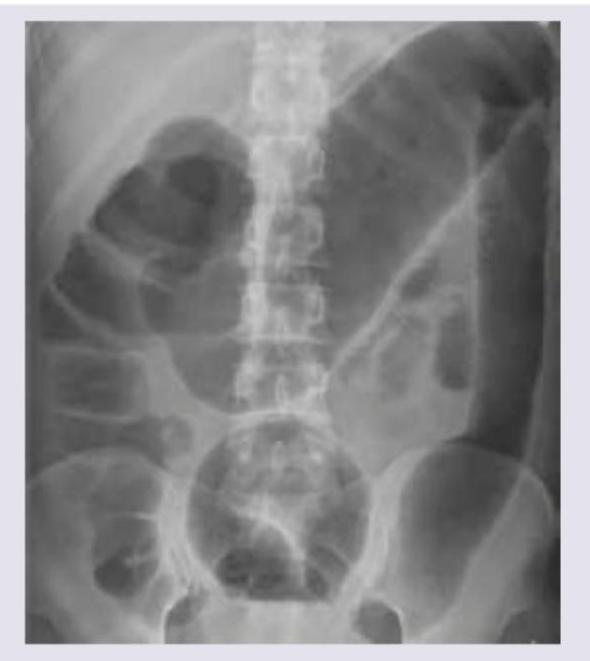
Q18
A 26-year-old male presents to the emergency room with weight loss, abdominal pain, and bloody diarrhea. He reports having intermittent bloody stools and crampy left lower quadrant abdominal pain over the past several days. He is otherwise healthy, does not smoke, and takes no medications. His family history is notable for colon cancer in his father. He subsequently undergoes a colonoscopy which demonstrates a hyperemic friable mucosa with inflammation extending continuously from the rectum proximally through the colon. A biopsy of the rectal mucosa is notable for crypt abscesses and pseudopolyps. This patient’s condition is most commonly associated with what other condition?
Q19
A 33-year-old man presents to the clinic complaining of multiple painful joints for the past 2 weeks. The patient notes no history of trauma or any joint disorders. The patient states that he is generally healthy except for a recent emergency room visit for severe bloody diarrhea, which has resolved. On further questioning, the patient admits to some discomfort with urination but notes no recent sexual activity. On examination, the patient is not in acute distress, with no joint deformity, evidence of trauma, swelling, or erythema. He has a decreased range of motion of his right knee secondary to pain. Vital signs are as follows: heart rate 75/min, blood pressure 120/78 mm Hg, respiratory rate 16/min, and temperature 37.3°C (99.0°F). What is the next step in the treatment of this patient?
Q20
A 22-year-old woman comes to the physician because of a 1-month history of persistent abdominal cramping, diarrhea, and rectal pain. During the past 2 weeks, she has had up to 4 small volumed, blood-tinged stools with mucus daily. She has also had intermittent fevers and a 4.5-kg (10-lb) weight loss during this time. She traveled to Southeast Asia 3 months ago and received all appropriate vaccinations and medications beforehand. She has no history of serious illness and takes no medications. Her temperature is 37.2°C (99°F), pulse is 90/min, respirations are 16/min, and blood pressure is 125/80 mm Hg. The abdomen is soft, and there is tenderness to palpation of the left lower quadrant with guarding but no rebound. Bowel sounds are normal. The stool is brown, and a test for occult blood is positive. Flexible sigmoidoscopy shows a granular, hyperemic, and friable rectal mucosa that bleeds easily on contact. Which of the following is this patient at greatest risk of developing?
IBD US Medical PG Practice Questions and MCQs
Question 11: A 61-year-old man comes to the physician because of fatigue, diarrhea, and crampy abdominal pain for 3 weeks. The abdominal pain is worse after eating. During the past week, he has had up to 4 watery stools daily. He has also had pain in his mouth and gums for 6 days. He has not had nausea, vomiting, or fever. Four months ago, he went on a 1-week trip to the Dominican Republic. He has atrial fibrillation, hypertension, and hypothyroidism. Current medications include levothyroxine, metoprolol, and warfarin. He has smoked one pack of cigarettes daily for 40 years. His temperature is 37.9°C (100.2°F), pulse is 81/min, and blood pressure is 120/75 mm Hg. Examination shows two 1-cm, tender ulcerative lesions in the mouth. Abdominal examination shows mild tenderness to palpation in the right lower quadrant without guarding or rebound. Bowel sounds are normal. His hemoglobin concentration is 11.5 g/dL, mean corpuscular volume is 77 fL, leukocyte count is 11,800/mm³, and platelet count is 360,000/mm³. Colonoscopy with biopsy of the colonic mucosa is performed. Analysis of the specimen shows non-caseating granulomas and neutrophilic inflammation of the crypts. Which of the following is the most likely diagnosis?
A. Diverticulitis
B. Whipple disease
C. Crohn disease (Correct Answer)
D. Celiac disease
E. Tropical sprue
Explanation: ***Crohn disease***
- The presence of **fatigue, diarrhea, crampy abdominal pain worse after eating, oral ulcers, and mild right lower quadrant tenderness** is highly suggestive of Crohn disease.
- The colonoscopy finding of **non-caseating granulomas** with **neutrophilic inflammation of the crypts** is a classic histopathological hallmark of Crohn disease.
*Diverticulitis*
- Typically presents with **left lower quadrant pain**, fever, and leukocytosis, usually without oral lesions or chronic diarrhea.
- Histopathology would show **inflammation of diverticula**, not non-caseating granulomas.
*Whipple disease*
- Characterized by **malabsorption, arthralgias, neurological symptoms, and lymphadenopathy,** caused by *Tropheryma whipplei*.
- Biopsy would reveal **PAS-positive macrophages** with bacilliform bodies, not non-caseating granulomas or neutrophilic crypt inflammation.
*Celiac disease*
- Triggered by **gluten ingestion**, leading to malabsorption, diarrhea, and abdominal pain, but often associated with **iron deficiency anemia** and weight loss.
- Diagnosis is made by biopsy showing **villous atrophy, crypt hyperplasia, and increased intraepithelial lymphocytes**, not granulomas.
*Tropical sprue*
- A chronic diarrheal illness defined by **malabsorption** in individuals residing in or visiting tropical regions, often leading to **folate or B12 deficiency**.
- Biopsy findings include **partial villous atrophy and inflammatory cell infiltration** of the lamina propria, distinct from granulomas.
Question 12: A 25-year-old man presents to the emergency department for severe abdominal pain. The patient states that for the past week he has felt fatigued and had a fever. He states that he has had crampy lower abdominal pain and has experienced several bouts of diarrhea. The patient states that his pain is somewhat relieved by defecation. The patient returned from a camping trip 2 weeks ago in the Rocky Mountains. He is concerned that consuming undercooked meats on his trip may have caused this. He admits to consuming beef and chicken cooked over a fire pit. The patient is started on IV fluids and morphine. His temperature is 99.5°F (37.5°C), blood pressure is 130/77 mmHg, pulse is 90/min, respirations are 12/min, and oxygen saturation is 98% on room air. Laboratory studies are ordered and are seen below.
Hemoglobin: 10 g/dL
Hematocrit: 28%
Leukocyte count: 11,500 cells/mm^3 with normal differential
Platelet count: 445,000/mm^3
Serum:
Na+: 140 mEq/L
Cl-: 102 mEq/L
K+: 4.1 mEq/L
HCO3-: 24 mEq/L
BUN: 24 mg/dL
Glucose: 145 mg/dL
Creatinine: 1.4 mg/dL
Ca2+: 9.6 mg/dL
Erythrocyte sedimentation rate (ESR): 75 mm/hour
Physical exam is notable for a patient who appears to be uncomfortable. Gastrointestinal (GI) exam is notable for abdominal pain upon palpation. Ear, nose, and throat exam is notable for multiple painful shallow ulcers in the patient's mouth. Inspection of the patient's lower extremities reveals a pruritic ring-like lesion. Cardiac and pulmonary exams are within normal limits. Which of the following best describes this patient's underlying condition?
A. p-ANCA positive autoimmune bowel disease
B. Transmural granulomas in the bowel (Correct Answer)
C. Gram-negative microaerophilic organism
D. Rectal mucosa outpouching
E. Bowel wall spasticity
Explanation: ***Transmural granulomas in the bowel***
- This patient's symptoms, including **chronic diarrhea**, **abdominal pain relieved by defecation**, **oral ulcers**, **fatigue**, **fever**, and **elevated ESR**, along with a **pruritic ring-like lesion** (suggestive of erythema nodosum, a common extraintestinal manifestation), are highly indicative of **Crohn's disease**.
- **Crohn's disease** is characterized by **transmural inflammation** of any part of the GI tract, often with the formation of **non-caseating granulomas**.
*p-ANCA positive autoimmune bowel disease*
- This describes **ulcerative colitis**, which is typically associated with **p-ANCA positivity** in a subset of patients.
- Unlike the diffuse and continuous inflammation seen in ulcerative colitis, Crohn's disease features **skip lesions** and **transmural inflammation**, which aligns better with the varied symptoms and extraintestinal manifestations presented.
*Gram-negative microaerophilic organism*
- This refers to bacterial infections such as those caused by **Campylobacter jejuni** or **Helicobacter pylori**, which can cause GI symptoms.
- While the patient's camping trip and consumption of undercooked meat might suggest an infectious etiology, the **chronic nature of symptoms** (week-long fatigue and fever), **oral ulcers**, **elevated ESR**, and **erythema nodosum-like lesion** point more strongly towards an autoimmune/inflammatory bowel disease rather than an acute bacterial infection.
*Rectal mucosa outpouching*
- **Diverticula** are outpouchings of the colon, commonly affecting the sigmoid colon, and are typically associated with **diverticulitis** when inflamed.
- This condition does not explain the widespread systemic symptoms, oral ulcers, or the chronic, crampy abdominal pain and diarrhea pattern seen in this patient.
*Bowel wall spasticity*
- **Bowel spasticity** is a feature of **irritable bowel syndrome (IBS)**.
- While IBS can cause crampy abdominal pain and changes in bowel habits, it is a **functional disorder** and does not cause **fever**, **oral ulcers**, **elevated ESR**, or significant **anemia** and **thrombocytosis** as seen in this patient.
Question 13: A 24-year-old woman presents to the clinic with chronic abdominal discomfort and cramping. She seeks medical attention now as she is concerned about the diarrhea that she has developed that is occasionally mixed with tiny streaks of blood. Her medical history is significant for lactose intolerance and asthma. She has a family history of wheat allergy and reports that she has tried to make herself vomit on several occasions to lose weight. After counseling the patient about the dangers of bulimia, physical examination reveals the rectum is red, inflamed, tender, and a perirectal abscess is seen draining purulent material. Colonoscopy demonstrates scattered mucosal lesions involving the colon and terminal ileum. A complete blood count is given below:
Hb%: 10 gm/dL
Total count (WBC): 12,500/mm3
Differential count:
Neutrophils: 50%
Lymphocytes: 40%
Monocytes: 5%
ESR: 22 mm/hr
What is the most likely diagnosis?
A. Ulcerative colitis
B. Celiac disease
C. Irritable bowel syndrome
D. Crohn’s disease (Correct Answer)
E. Laxative abuse
Explanation: ***Crohn’s disease***
- The presence of **abdominal discomfort, cramping, bloody diarrhea, perirectal abscess**, and **scattered mucosal lesions involving the colon and terminal ileum** are classic findings consistent with Crohn's disease. The involvement of the terminal ileum is a hallmark of Crohn's.
- Anemia (Hb% 10 gm/dL), leukocytosis (WBC 12,500/mm3), and elevated ESR (22 mm/hr) indicate **chronic inflammation** and are common in Crohn's disease.
*Ulcerative colitis*
- While ulcerative colitis presents with bloody diarrhea and abdominal discomfort, it typically involves **continuous inflammation confined to the colon** and rectum, without skip lesions or involvement of the terminal ileum.
- Perirectal abscesses are also less common in ulcerative colitis compared to Crohn's disease.
*Celiac disease*
- Celiac disease is an autoimmune disorder triggered by **gluten**, primarily affecting the **small intestine** and presenting with malabsorption, diarrhea, and abdominal pain. However, it does not typically cause bloody diarrhea, perirectal abscesses, or colon inflammation visible on colonoscopy.
- While there is a family history of wheat allergy, the clinical picture is more indicative of inflammatory bowel disease.
*Irritable bowel syndrome*
- IBS is characterized by chronic abdominal pain, discomfort, and altered bowel habits (diarrhea, constipation, or both), but it is a **functional gastrointestinal disorder** without evidence of inflammation, structural abnormalities, or bloody stools.
- The presence of bloody diarrhea, perirectal abscess, and inflammatory markers rules out IBS.
*Laxative abuse*
- Laxative abuse can cause chronic diarrhea, abdominal cramping, and electrolyte disturbances, but it does **not cause inflammatory changes** such as mucosal lesions, bloody diarrhea, or perirectal abscesses seen on colonoscopy.
- While a history of bulimia is mentioned, the specific findings point towards an inflammatory process.
Question 14: A 28-year-old woman comes to the physician because of a 2-month history of multiple right inframammary lumps. They are tender and have a foul-smelling odor. She has had previous episodes of painful swellings in the axillae 12 months ago that resolved with antibiotic therapy, leaving some scarring. She has Crohn disease. Menses occur at irregular 18- to 40-day intervals and last 1–5 days. The patient's only medication is mesalamine. She appears anxious. She is 162 cm (5 ft 4 in) tall and weighs 87 kg (192 lb); BMI is 33 kg/m2. Vital signs are within normal limits. Examination of the right inframammary fold shows multiple tender, erythematous nodules and fistulas with purulent discharge. Hirsutism is present. Her fasting glucose concentration is 136 mg/dL. Which of the following areas is most likely to also be affected by this patient's condition?
A. Forehead
B. Back
C. Shin
D. Central face
E. Groin (Correct Answer)
Explanation: ***Groin***
- The patient's presentation with recurrent tender, foul-smelling lumps in the **inframammary fold** and past episodes in the **axillae**, along with scarring, strongly suggests **hidradenitis suppurativa (HS)**. HS commonly affects areas with a high density of apocrine glands, including the **axillae, groin, inframammary folds**, and anogenital region.
- Her history of **Crohn disease**, obesity (BMI 33 kg/m²), and possible insulin resistance (fasting glucose 136 mg/dL) are all associated risk factors for HS. The groin is another typical site for lesions.
*Forehead*
- The forehead is generally considered part of the **T-zone of the face**, where sebaceous glands are abundant, but it is not a primary site for *hidradenitis suppurativa*.
- Lesions in this area are more commonly associated with **acne vulgaris** or other folliculitis, which typically present differently.
*Back*
- While the back can be affected by various follicular conditions like **acne inversa** or folliculitis, it is not a primary or highly characteristic site for the deep, painful, and recurring lesions of *hidradenitis suppurativa* in the way intertriginous areas are.
- The specific pattern of involvement in **skin folds** points away from the broader back area as an equally likely site.
*Shin*
- The shins are not typically affected by *hidradenitis suppurativa* as they lack the high concentration of **apocrine glands** found in the classic affected areas.
- Lesions on the shin are more characteristic of conditions like **erythema nodosum** or other forms of vasculitis, which have different presentations.
*Central face*
- The central face, like the forehead, is rich in **sebaceous glands** and is a common site for conditions like **acne vulgaris** or rosacea.
- However, it is not a typical anatomical location for the characteristic deep, recurrent abscesses and sinus tracts seen in *hidradenitis suppurativa*.
Question 15: A 42-year-old woman comes to the physician because of increasing fatigue and difficulty concentrating at work for the last 2 months. She has hypertension and a 22-year history of Crohn disease. She has been hospitalized and treated for acute exacerbations, sometimes involving strictures, multiple times in the past. She has not had significant gastrointestinal symptoms in over a year. Current medications include mesalamine, thiazide, and bisoprolol. Her temperature is 37.2°C (99°F), pulse is 72/min, and blood pressure is 140/90 mm Hg. Examination shows a soft abdomen and pale conjunctivae. Rectal examination is unremarkable. Laboratory studies show:
Hemoglobin 9.4 g/dL
Mean corpuscular volume 112 fL
Mean corpuscular hemoglobin 37.2 pg/cell
Leukocyte count 8,700 /mm3
Platelet count 150,000 /mm3
Erythrocyte sedimentation rate 42 mm/h
Serum
Ferritin 88 ng/mL
Iron 117 μg/dL
Thyroid-stimulating hormone 3.2 μU/mL
Thyroxine 7 μg/dL
Further evaluation of this patient is most likely to reveal which of the following findings?
A. Unexplained weight gain
B. Impaired vision in her right eye
C. Decreased vibratory sensation (Correct Answer)
D. Tarry stools
E. Dark-colored urine
Explanation: ***Decreased vibratory sensation***
- The patient's **macrocytic anemia** (elevated MCV of 112 fL) combined with a history of **Crohn's disease**, which often affects the **terminal ileum**, strongly suggests **vitamin B12 deficiency** due to malabsorption.
- **Vitamin B12 deficiency** can lead to **subacute combined degeneration** of the spinal cord, causing neurological symptoms like decreased vibratory sensation, proprioception, and ataxia.
*Unexplained weight gain*
- The patient has symptoms like fatigue and difficulty concentrating, which could be associated with systemic illness, but the lab findings point specifically to **anemia** and potential **malabsorption**, not weight gain.
- While some endocrine disorders can cause fatigue and weight gain, the specific hematological findings here are more indicative of a **nutritional deficiency**.
*Impaired vision in her right eye*
- Ocular symptoms are not typically associated with the **macrocytic anemia** or **Crohn's related malabsorption** described in this patient, although some inflammatory conditions associated with Crohn's can affect the eyes.
- The primary neurological findings in **vitamin B12 deficiency** are sensory and motor deficits, not acute vision loss.
*Tarry stools*
- **Tarry stools (melena)** indicate **upper gastrointestinal bleeding**, which typically causes **iron-deficiency anemia** (microcytic) rather than the macrocytic anemia observed.
- The patient has been free of significant gastrointestinal symptoms for over a year and her current lab values are inconsistent with active GI bleeding.
*Dark-colored urine*
- **Dark-colored urine** can be due to various causes such as **rhabdomyolysis**, **hemolysis**, or certain medications, but it is not a characteristic sign of **macrocytic anemia** or **vitamin B12 deficiency**.
- There are no other features in the patient's presentation or lab work (e.g., elevated bilirubin, signs of hemolytic anemia) to suggest a cause for dark urine.
Question 16: A 33-year-old primigravid visits the clinic at the 22 weeks’ gestation with concerns about several episodes of loose watery stool over the past 4 months, which are sometimes mixed with blood. Use of over-the-counter antidiarrheal medications has not been helpful. She also reports having painful ulcers in her mouth for the last 2 months. Pregnancy has been otherwise uncomplicated so far. On physical examination, the blood pressure is 110/60 mm Hg, the pulse rate is 90/min, the respiratory rate is 19/min, and the temperature is 36.6°C (97.8°F). There is bilateral conjunctival redness. Abdominal examination shows minimal tenderness but no guarding or rebound tenderness. Fundal height is proportionate to 22 weeks of gestation, and fetal heart sounds are audible. Colonoscopy shows focal areas of inflammation in the ileum, separated by normal mucosa, with rectal sparing. Based on the colonoscopy results, which of the following complications is the patient at risk for?
A. Carcinoid syndrome
B. Metastasis to the liver
C. Intestinal obstruction (Correct Answer)
D. Paralytic ileus
E. Primary sclerosing cholangitis
Explanation: ***Intestinal obstruction***
- Crohn's disease, characterized by **transmural inflammation** in the **ileum** with skipped lesions, often leads to **stricture formation** and **fibrosis**, increasing the risk of bowel obstruction.
- The patient's symptoms of chronic diarrhea and blood in the stool, coupled with oral ulcers and conjunctivitis, indicate **Crohn's disease**, which commonly affects the terminal ileum and can lead to complications such as strictures and subsequently, intestinal obstruction.
*Carcinoid syndrome*
- Carcinoid syndrome is caused by neuroendocrine tumors that secrete **vasoactive substances**, leading to symptoms like **flushing**, **diarrhea**, and **right-sided heart valve disease**.
- There is no evidence of neuroendocrine tumor activity or related systemic symptoms beyond the gastrointestinal manifestations common in inflammatory bowel disease.
*Metastasis to the liver*
- Metastasis to the liver implies a primary malignancy, and while patients with inflammatory bowel disease have an increased risk of certain cancers, there is **no direct evidence or typical presentation** in this case to suggest liver metastases.
- The patient's symptoms are more indicative of an **inflammatory process** like Crohn's disease rather than a malignant one with liver involvement.
*Paralytic ileus*
- Paralytic ileus involves a **temporary arrest of bowel motility** without mechanical obstruction, often due to abdominal surgery, peritonitis, or metabolic derangements.
- The chronic nature of the patient's symptoms and the specific colonoscopy findings pointing to **focal inflammation and strictures** are more consistent with a mechanical obstruction caused by Crohn's disease, not paralytic ileus.
*Primary sclerosing cholangitis*
- Primary sclerosing cholangitis (PSC) is a chronic cholestatic liver disease often associated with **ulcerative colitis**, characterized by inflammation and fibrosis of the bile ducts.
- While PSC can be associated with inflammatory bowel disease, it is more commonly linked to **ulcerative colitis** rather than Crohn's disease, and there are no signs of cholestasis or liver involvement in this patient's presentation.
Question 17: A 53 year-old woman with history of ulcerative colitis presents to the emergency department with a severe flare. The patient reports numerous bloody loose stools, and has been febrile for two days. Vital signs are: T 101.9 HR 98 BP 121/86 RR 17 Sat 100%. Abdominal exam is notable for markedly distended abdomen with tympani and tenderness to palpation without guarding or rebound. KUB is shown in figure A. CT scan shows markedly dilated descending and sigmoid colon with no perforations. What is the next best step in management for this patient?
A. IV Ondansetron
B. Rectal 5-ASA
C. IV hydrocortisone (Correct Answer)
D. Oral prednisone
E. IV Metoclopramide
Explanation: ***IV hydrocortisone***
- This patient has **toxic megacolon**, a life-threatening complication of ulcerative colitis requiring aggressive medical management alongside surgical consultation.
- High-dose **IV corticosteroids** (hydrocortisone 100mg IV q6-8h or methylprednisolone) are first-line medical therapy to rapidly suppress severe colonic inflammation.
- Medical management includes IV steroids, broad-spectrum antibiotics, bowel rest (NPO), IV fluid resuscitation, and nasogastric decompression while preparing for potential **emergent colectomy** if medical therapy fails within 24-72 hours.
- IV route ensures **rapid systemic delivery** in a critically ill patient with impaired GI absorption.
*IV Ondansetron*
- An antiemetic that treats nausea/vomiting symptoms but does **not address the underlying inflammatory process** or systemic toxicity.
- Does not modify disease course or reduce the risk of **perforation** in toxic megacolon.
*Rectal 5-ASA*
- **Contraindicated in toxic megacolon** due to risk of perforation with rectal manipulation and increased intraluminal pressure.
- Local therapy is ineffective for **systemic toxicity** (fever, hemodynamic instability) and extensive colonic involvement.
- Only appropriate for mild-to-moderate distal ulcerative colitis, not severe fulminant disease.
*Oral prednisone*
- Inadequate for **acute severe/fulminant colitis** requiring hospitalization due to delayed absorption and lower bioavailability.
- IV corticosteroids provide **immediate systemic effect** necessary for life-threatening toxic megacolon.
- Oral route inappropriate in patient with severe GI symptoms and potential ileus.
*IV Metoclopramide*
- A prokinetic agent that is **absolutely contraindicated in toxic megacolon** as it increases colonic motility and can precipitate perforation.
- Does not address the **inflammatory pathophysiology** of ulcerative colitis.
- Used for gastroparesis and nausea, not for managing inflammatory bowel disease complications.
Question 18: A 26-year-old male presents to the emergency room with weight loss, abdominal pain, and bloody diarrhea. He reports having intermittent bloody stools and crampy left lower quadrant abdominal pain over the past several days. He is otherwise healthy, does not smoke, and takes no medications. His family history is notable for colon cancer in his father. He subsequently undergoes a colonoscopy which demonstrates a hyperemic friable mucosa with inflammation extending continuously from the rectum proximally through the colon. A biopsy of the rectal mucosa is notable for crypt abscesses and pseudopolyps. This patient’s condition is most commonly associated with what other condition?
A. Primary sclerosing cholangitis (Correct Answer)
B. Primary biliary cholangitis
C. Intestinal strictures
D. Perianal fistulae
E. Aphthous ulcers
Explanation: **Primary sclerosing cholangitis**
- The described clinical picture (weight loss, abdominal pain, bloody diarrhea, continuous inflammation from the rectum proximally, crypt abscesses, pseudopolyps) is highly characteristic of **ulcerative colitis (UC)**.
- **Primary sclerosing cholangitis (PSC)** is a chronic cholestatic liver disease strongly associated with UC, occurring in 5-10% of UC patients.
*Primary biliary cholangitis*
- **Primary biliary cholangitis (PBC)**, formerly known as primary biliary cirrhosis, is an autoimmune liver disease primarily affecting small intrahepatic bile ducts, but it is typically associated with other autoimmune conditions like Sjögren's syndrome or rheumatoid arthritis, not inflammatory bowel disease (IBD).
- PBC is characterized by the presence of **antimitochondrial antibodies (AMA)** and predominantly affects middle-aged women.
*Intestinal strictures*
- While intestinal strictures can occur in inflammatory bowel disease, they are much more characteristic of **Crohn's disease**, which involves transmural inflammation and can lead to fibrosis and narrowing of the bowel lumen.
- Ulcerative colitis, with its mucosal inflammation, is less likely to cause strictures, though sometimes severe inflammation can lead to a toxic megacolon.
*Perianal fistulae*
- **Perianal fistulae** are a common complication of **Crohn's disease**, resulting from transmural inflammation and abscess formation penetrating the skin around the anus.
- They are extremely rare in ulcerative colitis, which primarily affects the colonic mucosa.
*Aphthous ulcers*
- **Aphthous ulcers** in the mouth can be an extraintestinal manifestation of inflammatory bowel disease, particularly **Crohn's disease**.
- While they can occur in UC, they are less specific and less commonly the most significant associated condition compared to PSC.
Question 19: A 33-year-old man presents to the clinic complaining of multiple painful joints for the past 2 weeks. The patient notes no history of trauma or any joint disorders. The patient states that he is generally healthy except for a recent emergency room visit for severe bloody diarrhea, which has resolved. On further questioning, the patient admits to some discomfort with urination but notes no recent sexual activity. On examination, the patient is not in acute distress, with no joint deformity, evidence of trauma, swelling, or erythema. He has a decreased range of motion of his right knee secondary to pain. Vital signs are as follows: heart rate 75/min, blood pressure 120/78 mm Hg, respiratory rate 16/min, and temperature 37.3°C (99.0°F). What is the next step in the treatment of this patient?
A. Intravenous (IV) antibiotics
B. Prostate biopsy
C. Serology for rheumatoid factor
D. Positron emission tomography (PET) scan
E. Nonsteroidal anti-inflammatory drugs (NSAIDs) (Correct Answer)
Explanation: ***Nonsteroidal anti-inflammatory drugs (NSAIDs)***
- This patient's presentation of **arthritis** following an episode of **bloody diarrhea** and
discomfort with urination is highly suggestive of **reactive arthritis**.
- **NSAIDs** are the **first-line treatment** for managing the pain and inflammation
associated with reactive arthritis.
*Intravenous (IV) antibiotics*
- While reactive arthritis can be triggered by a preceding infection, antibiotics are
generally **not effective** for established reactive arthritis as the condition is
thought to be an **immune-mediated response** to bacterial antigens, not ongoing
infection in the joints.
- Antibiotics may be indicated if there is an **active, ongoing infection** in another
system that is the source of the antigens, but the diarrhea has already resolved.
*Prostate biopsy*
- The patient's discomfort with urination could suggest **prostatitis** or **urethritis**,
which can be part of the reactive arthritis syndrome or a trigger.
- However, a **prostate biopsy** is an invasive procedure primarily used for diagnosing
prostate cancer and is **not indicated** for the symptomatic management or initial
diagnosis of reactive arthritis or simple urethral discomfort.
*Serology for rheumatoid factor*
- While reactive arthritis can cause joint pain, it is a **seronegative spondyloarthropathy**,
meaning **rheumatoid factor (RF)** is typically **negative**.
- Testing for RF would be more relevant if **rheumatoid arthritis** were suspected, but the
clinical picture (recent infection, type of joint involvement) points away from RA.
*Positron emission tomography (PET) scan*
- A **PET scan** is an advanced imaging technique used to detect metabolically active cells,
often in the context of cancer, infection, or inflammation in specific situations.
- It is **not a standard diagnostic or therapeutic tool** for reactive arthritis and would
be an **overly aggressive and inappropriate initial step** for this patient's
presentation.
Question 20: A 22-year-old woman comes to the physician because of a 1-month history of persistent abdominal cramping, diarrhea, and rectal pain. During the past 2 weeks, she has had up to 4 small volumed, blood-tinged stools with mucus daily. She has also had intermittent fevers and a 4.5-kg (10-lb) weight loss during this time. She traveled to Southeast Asia 3 months ago and received all appropriate vaccinations and medications beforehand. She has no history of serious illness and takes no medications. Her temperature is 37.2°C (99°F), pulse is 90/min, respirations are 16/min, and blood pressure is 125/80 mm Hg. The abdomen is soft, and there is tenderness to palpation of the left lower quadrant with guarding but no rebound. Bowel sounds are normal. The stool is brown, and a test for occult blood is positive. Flexible sigmoidoscopy shows a granular, hyperemic, and friable rectal mucosa that bleeds easily on contact. Which of the following is this patient at greatest risk of developing?
A. Oral ulcers
B. Colorectal cancer (Correct Answer)
C. Hemolytic uremic syndrome
D. Colonic granulomas
E. Gastric cancer
Explanation: ***Colorectal cancer***
- The patient's symptoms (abdominal cramping, diarrhea, rectal pain, bloody stools, weight loss, fever) and sigmoidoscopy findings (granular, hyperemic, friable rectal mucosa) are classic for **inflammatory bowel disease (IBD)**, specifically **ulcerative colitis**.
- Patients with ulcerative colitis are at significantly **increased risk of developing colorectal cancer** due to chronic inflammation, with risk increasing with disease duration and extent of colonic involvement.
- **Surveillance colonoscopy** is recommended starting 8-10 years after diagnosis for patients with extensive colitis, making colorectal cancer the most important long-term complication to monitor.
*Oral ulcers*
- While **aphthous oral ulcers** can be an extraintestinal manifestation of inflammatory bowel disease (Crohn's disease more commonly than ulcerative colitis), they are not a serious complication and do not represent the greatest long-term risk.
- They are also not mentioned in her current presentation.
*Hemolytic uremic syndrome*
- **Hemolytic uremic syndrome (HUS)** is characterized by **microangiopathic hemolytic anemia, thrombocytopenia, and acute kidney injury**, often triggered by certain bacterial infections (e.g., E. coli O157:H7).
- There is no evidence of hemolytic anemia, thrombocytopenia, or kidney injury in this patient, and her symptoms are more consistent with chronic inflammatory bowel disease rather than an acute infectious colitis leading to HUS.
*Colonic granulomas*
- **Granulomas** are characteristic histological findings in **Crohn's disease**, another type of inflammatory bowel disease.
- However, they are **typically absent in ulcerative colitis**, which is suggested by the presentation focusing on rectal and left-sided colonic inflammation.
- Granulomas are a pathologic finding, not a complication or risk that the patient would develop.
*Gastric cancer*
- While some conditions like **Helicobacter pylori infection** or **pernicious anemia** increase the risk of gastric cancer, there is no direct link between inflammatory bowel disease (especially ulcerative colitis) and an increased risk of gastric cancer.
- The patient's symptoms are localized to the lower gastrointestinal tract.