
Extraintestinal manifestations — MCQs

A 54-year-old woman comes to the physician because of a painful skin lesion on her right leg for 1 month. It initially started out as a small red spot but has rapidly increased in size during this period. She remembers an ant bite on her leg prior to the lesion occurring. She was treated for anterior uveitis 8 months ago with corticosteroids. She has Crohn's disease, type 2 diabetes mellitus, and hypertension. Current medications include insulin, mesalamine, enalapril, and aspirin. She returned from Wisconsin after visiting her son 2 months ago. Her temperature is 37.6°C (98°F), pulse is 98/min, and blood pressure is 126/88 mm Hg. Examination shows pitting pedal edema of the lower extremities. There is a 4-cm tender ulcerative lesion on the anterior right leg with a central necrotic base and purplish irregular borders. There are dilated tortuous veins in both lower legs. Femoral and pedal pulses are palpated bilaterally. Which of the following is the most likely diagnosis?
A 74-year-old man presents to the emergency room with abdominal pain. He reports acute onset of left lower quadrant abdominal pain and nausea three hours prior to presentation. The pain is severe, constant, and non-radiating. He has had two maroon-colored bowel movements since the pain started. His past medical history is notable for hypertension, hyperlipidemia, atrial fibrillation, insulin-dependent diabetes mellitus, and rheumatoid arthritis. He takes lisinopril, hydrochlorothiazide, atorvastatin, dabigatran, methotrexate. He has a 60 pack-year smoking history and drinks 1-2 beers per day. He admits to missing some of his medications recently because he was on vacation in Hawaii. His last colonoscopy was 4 years ago which showed diverticular disease in the descending colon and multiple sessile polyps in the sigmoid colon which were removed. His temperature is 100.1°F (37.8°C), blood pressure is 145/85 mmHg, pulse is 100/min, and respirations are 20/min. On exam, he has notable abdominal distention and is exquisitely tender to palpation in all four abdominal quadrants. Bowel sounds are absent. Which of the following is the most likely cause of this patient’s condition?
A 32-year-old man comes to the physician for a follow-up examination. He has a 2-month history of increasing generalized fatigue and severe pruritus. He has hypertension and ulcerative colitis which was diagnosed via colonoscopy 5 years ago. Current medications include lisinopril and rectal mesalamine. He is sexually active with 2 female partners and uses condoms inconsistently. His temperature is 37.3°C (99.1°F), pulse is 86/min, and blood pressure is 130/84 mm Hg. Examination shows scleral icterus and multiple scratch marks on the trunk and extremities. The lungs are clear to auscultation. The abdomen is soft and nontender. The remainder of the examination shows no abnormalities. Laboratory studies show: Hemoglobin 11.5 g/dL Leukocyte count 7500/mm3 Platelet count 280,000/mm3 Serum Na+ 138 mEq/L Cl- 101 mEq/L K+ 4.7 mEq/L Urea nitrogen 18 mg/dL Glucose 91 mg/dL Creatinine 0.8 mg/dL Bilirubin Total 1.5 mg/dL Direct 0.9 mg/dL Alkaline phosphatase 460 U/L AST 75 U/L ALT 78 U/L Anti-nuclear antibody negative Antimitochondrial antibodies negative Abdominal ultrasound shows thickening of the bile ducts and focal bile duct dilatation. Which of the following is the most likely diagnosis?
A 26-year-old male presents to the emergency room with weight loss, abdominal pain, and bloody diarrhea. He reports having intermittent bloody stools and crampy left lower quadrant abdominal pain over the past several days. He is otherwise healthy, does not smoke, and takes no medications. His family history is notable for colon cancer in his father. He subsequently undergoes a colonoscopy which demonstrates a hyperemic friable mucosa with inflammation extending continuously from the rectum proximally through the colon. A biopsy of the rectal mucosa is notable for crypt abscesses and pseudopolyps. This patient’s condition is most commonly associated with what other condition?
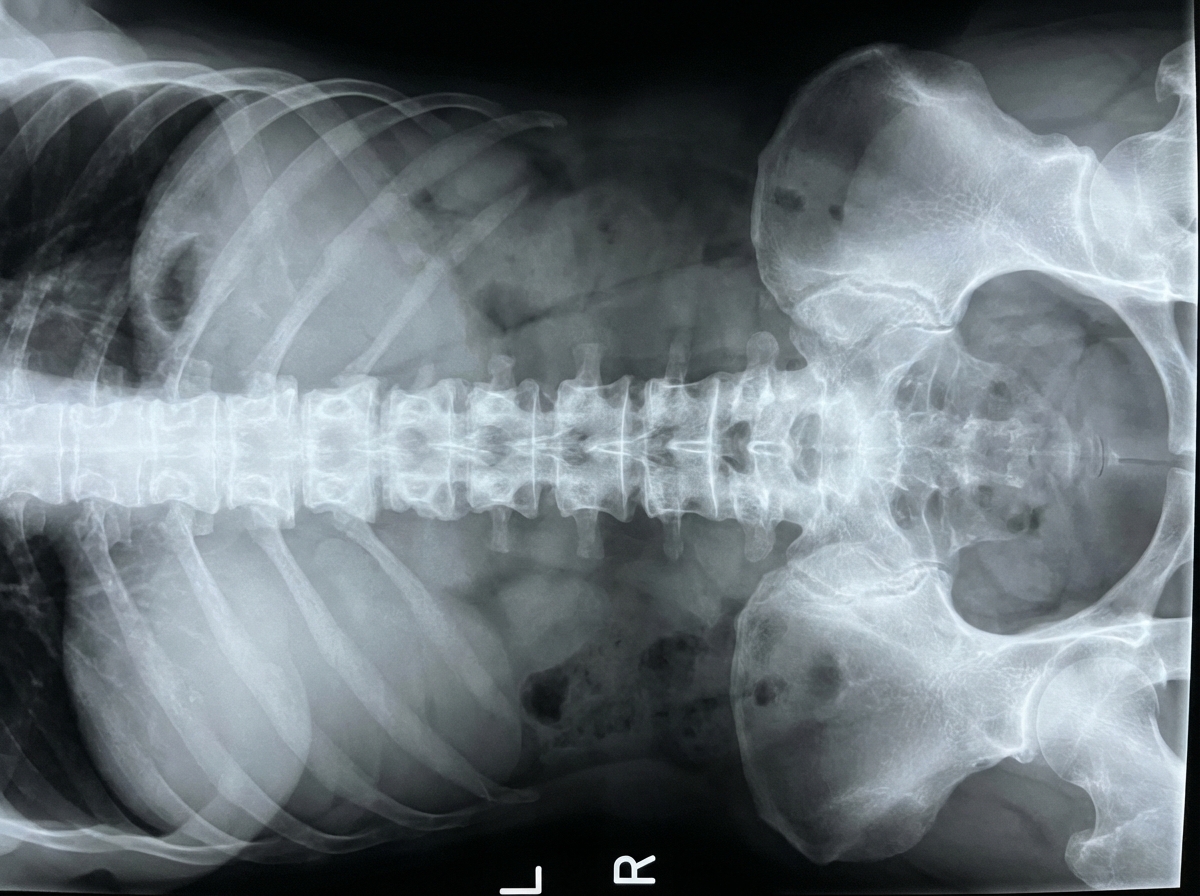
A 32-year-old man presents to the clinic with a dull low back pain radiating to the buttocks. He first noted it about 2 years ago and it has progressed since then. He notes that it is worse in the morning and improves later in the day after physical activity. The patient also reports morning stiffness lasting up to 30 minutes and blurred vision, which started about 7 months ago. The patient's vital signs include: blood pressure 130/80 mm Hg, heart rate 88/min, respiratory rate 16/min, and temperature 36.8°C (98.2°F). Physical examination reveals tenderness over the sacroiliac joints and limitation of the lumbar spine movements in the sagittal plane. The patient's X-ray is shown in the picture below. Which of the following HLA variants is associated with this patient's condition?
A 37-year-old man presents to his gastroenterologist due to a transaminitis found by his primary care physician (PCP). He reports currently feeling well and has no acute concerns. Medical history is significant for ulcerative colitis treated with 5-aminosalicylate. He recently went on a trip to Mexico and experienced an episode of mild diarrhea. The patient is 5 ft 4 in and weighs 220 lbs (99.8 kg). His temperature is 98°F (36.7°C), blood pressure is 138/88 mmHg, pulse is 90/min, and respirations are 18/min. Physical examination is unremarkable. Laboratory testing demonstrates: Leukocyte count: 7,200 /mm^3 Alkaline phosphatase: 205 U/L Aspartate aminotransferase (AST): 120 U/L Alanine aminotransferase (ALT): 115 U/L Perinuclear antineutrophil cytoplasmic antibody (pANCA): Positive Antimitochondrial antibody: Negative Which of the following is most likely the diagnosis?
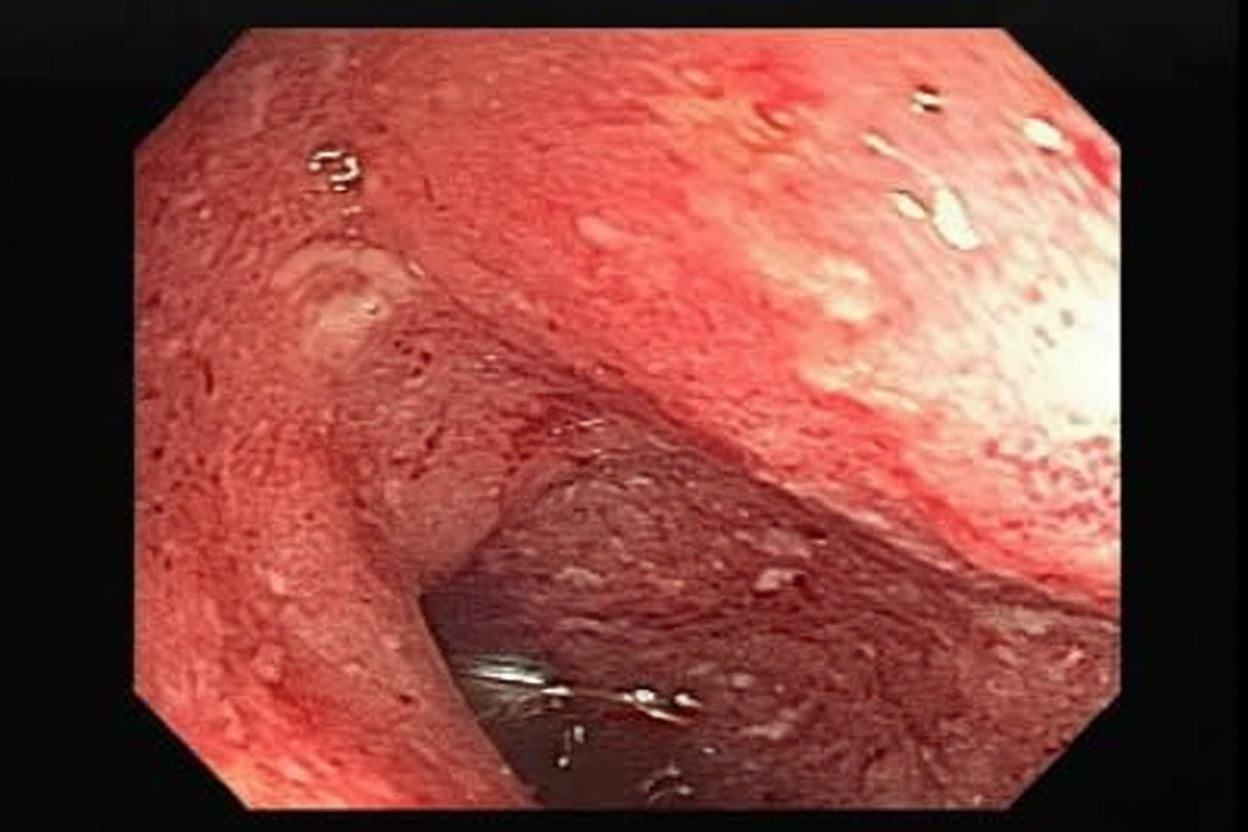
A 23-year-old female presents with a seven-day history of abdominal pain, and now bloody diarrhea that brings her to her primary care physician. Review of systems is notable for a 12-pound unintentional weight loss and intermittent loose stools. She has a family history notable for a father with CAD and a mother with primary sclerosing cholangitis. Upon further workup, she is found to have the following on colonoscopy and biopsy, Figures A and B respectively. Serum perinuclear antineutrophil cytoplasmic antibodies (P-ANCA) is positive. This patient's disease is likely to also include which of the following features?
A 42-year-old man presents to the physician with a painful ulcer in the mouth for 1 week. He has had similar episodes of ulcers over the past year. Every episode lasts about a week and heals without leaving a scar. He has also had similar ulcers on the scrotum, but the ulcers have left scars. He takes no medications. His temperature is 36.8°C (98.2°F), and the rest of the vital signs are stable. On physical examination, a 1-cm yellowish ulcer with a necrotic base is seen on the right buccal mucosa. Also, there are several tender nodules of different sizes on both shins. An image of one of the nodules is shown. Which of the following is the most likely complication of this patient’s current condition?

A 25-year-old man presents to the emergency department for severe abdominal pain. The patient states that for the past week he has felt fatigued and had a fever. He states that he has had crampy lower abdominal pain and has experienced several bouts of diarrhea. The patient states that his pain is somewhat relieved by defecation. The patient returned from a camping trip 2 weeks ago in the Rocky Mountains. He is concerned that consuming undercooked meats on his trip may have caused this. He admits to consuming beef and chicken cooked over a fire pit. The patient is started on IV fluids and morphine. His temperature is 99.5°F (37.5°C), blood pressure is 130/77 mmHg, pulse is 90/min, respirations are 12/min, and oxygen saturation is 98% on room air. Laboratory studies are ordered and are seen below. Hemoglobin: 10 g/dL Hematocrit: 28% Leukocyte count: 11,500 cells/mm^3 with normal differential Platelet count: 445,000/mm^3 Serum: Na+: 140 mEq/L Cl-: 102 mEq/L K+: 4.1 mEq/L HCO3-: 24 mEq/L BUN: 24 mg/dL Glucose: 145 mg/dL Creatinine: 1.4 mg/dL Ca2+: 9.6 mg/dL Erythrocyte sedimentation rate (ESR): 75 mm/hour Physical exam is notable for a patient who appears to be uncomfortable. Gastrointestinal (GI) exam is notable for abdominal pain upon palpation. Ear, nose, and throat exam is notable for multiple painful shallow ulcers in the patient's mouth. Inspection of the patient's lower extremities reveals a pruritic ring-like lesion. Cardiac and pulmonary exams are within normal limits. Which of the following best describes this patient's underlying condition?
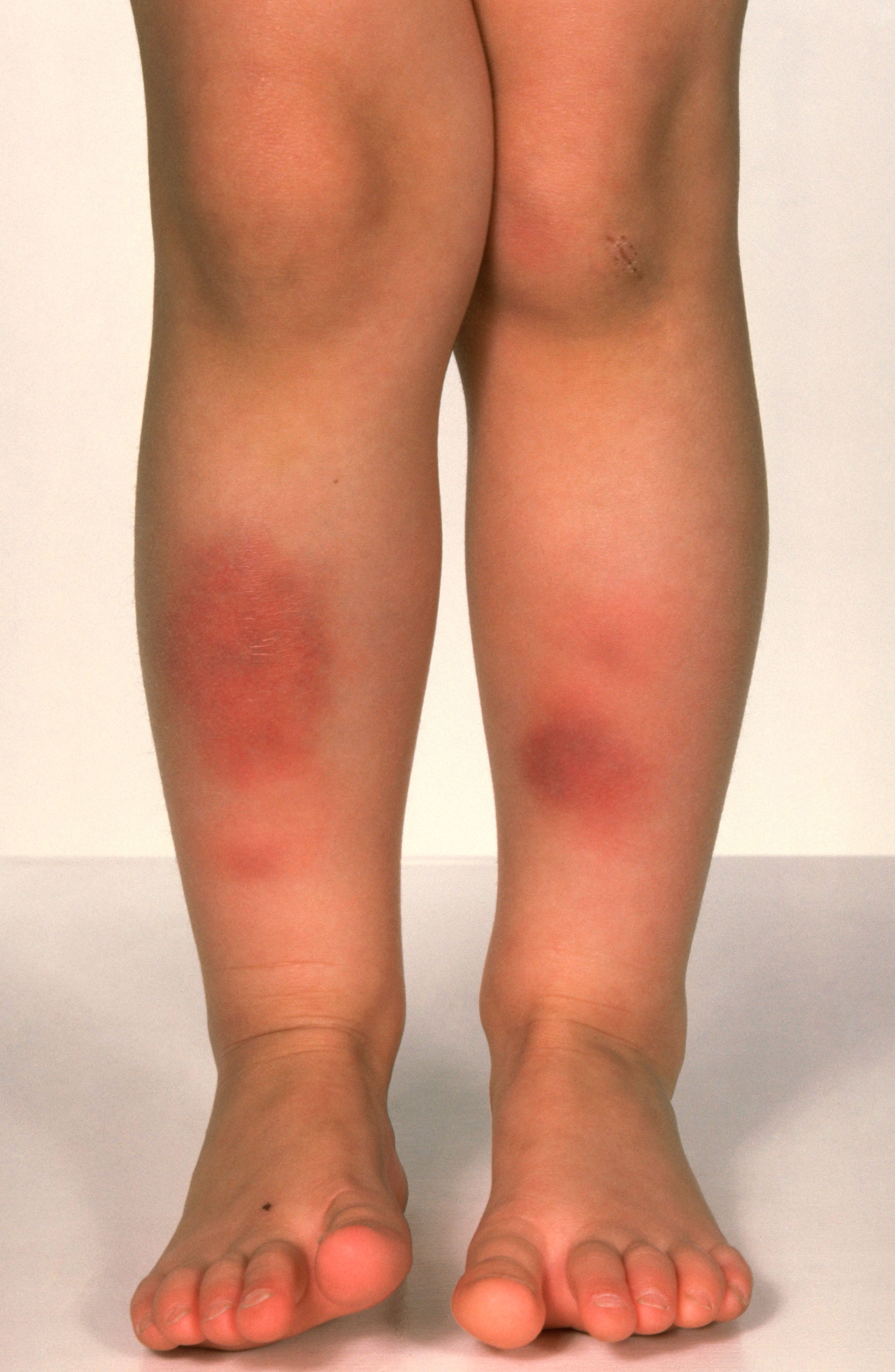
A 33-year-old African-American female presents to her physician with complaints of a persistent, dry cough. She states that the cough has gone on for some time now. Three weeks ago, during her last general checkup, she was started on lisinopril and metformin for concerns regarding an elevated blood pressure and fasting blood glucose. Past medical history is notable for eczema, asthma, and seasonal allergies. At this visit the patient has other non-specific complaints such as fatigue and joint pain as well as a burning sensation in her sternum when she eats large meals. Her physical exam is only notable for painful bumps on her lower extremities (figure A) which the patient attributes to "bumping her shins," during exercise, and an obese habitus. Which of the following is most likely true for this patient's chief concern?
Want unlimited practice?
Get full access to all questions, explanations, and performance tracking.
Scan to download app