
Sickle cell disease — MCQs

A 7-year-old boy is brought to the emergency department because of high-grade fever and lethargy for 4 days. He has had a severe headache for 3 days and 2 episodes of non-bilious vomiting. He has sickle cell disease. His only medication is hydroxyurea. His mother has refused vaccinations and antibiotics in the past because of their possible side effects. He appears ill. His temperature is 40.1°C (104.2°F), pulse is 131/min, and blood pressure is 92/50 mm Hg. Examination shows nuchal rigidity. Kernig and Brudzinski signs are present. A lumbar puncture is performed. Analysis of the cerebrospinal fluid (CSF) shows a decreased glucose concentration, increased protein concentration, and numerous segmented neutrophils. A Gram stain of the CSF shows gram-negative coccobacilli. This patient is at greatest risk for which of the following complications?
An 18-year-old African-American woman comes to the physician for the evaluation of worsening fatigue that started 1 year ago. Physical examination shows mild jaundice and splenomegaly. Laboratory studies show: Hemoglobin 10.4 g/dL Mean corpuscular hemoglobin concentration 43% Hb/cell Platelet count 220,000/mm3 Reticulocyte count 7% A peripheral blood smear shows target cells and erythrocytes with hemoglobin crystals. Which of the following is the most likely underlying cause of this patient's findings?
A clinical trial is being run with patients that have a genetic condition characterized by abnormal hemoglobin that can undergo polymerization when exposed to hypoxia, acidosis, or dehydration. This process of polymerization is responsible for the distortion of the red blood cell (RBC) that acquires a crescent shape and the hemolysis of RBCs. Researchers are studying the mechanisms of the complications commonly observed in these patients such as stroke, aplastic crisis, and auto-splenectomy. What kind of mutation leads to the development of the disease?
An 8-year-old African American girl is brought to the clinic by her mother for her regular blood exchange. They come in every 2–3 months for the procedure. The child is in good health with no symptoms. Her last trip to the emergency department was 6 months ago due to bone pain. She was treated with morphine and oxygen and a blood transfusion. She takes hydroxyurea and folic acid daily. She has an uncle that also has to get blood exchanges. Today, her heart rate is 90/min, respiratory rate is 17/min, blood pressure is 110/65 mm Hg, and temperature is 37.0°C (98.6°F). She calmly waits for the machine to be set up and catheters inserted into both of her arms. She watches a movie as her blood is slowly replaced with 6 L of red blood cells. Based on this history, which of the following mechanisms most likely explains this patient's condition?
A 15-year-old boy is brought to the physician by his father because he has been waking up frequently during the night to urinate. Apart from occasional headaches, he has no other complaints. His family recently emigrated from Tanzania and his medical history is unknown. His father was diagnosed with sickle cell disease at the age of 5. Physical examination shows no abnormalities. Laboratory studies show: Hemoglobin 14.5 g/dL Hematocrit 44% MCV 90 fL Reticulocytes 1.5% A hemoglobin electrophoresis shows: HbA 55% HbS 43% HbF 1% This patient is at greatest risk for which of the following conditions?
An 8-year-old African-American boy is brought into the emergency department by his mother due to intense abdominal pain and pain in his thighs. The mother states that she also suffers from the same disease and that the boy has been previously admitted for episodes such as this. On exam, the boy is in 10/10 pain. His vitals are HR 110, BP 100/55, T 100.2F, RR 20. His CBC is significant for a hemoglobin of 9.5 and a white blood cell count of 13,000. His mother asks if there is anything that can help her child in the long-term. Which of the following can decrease the frequency and severity of these episodes?
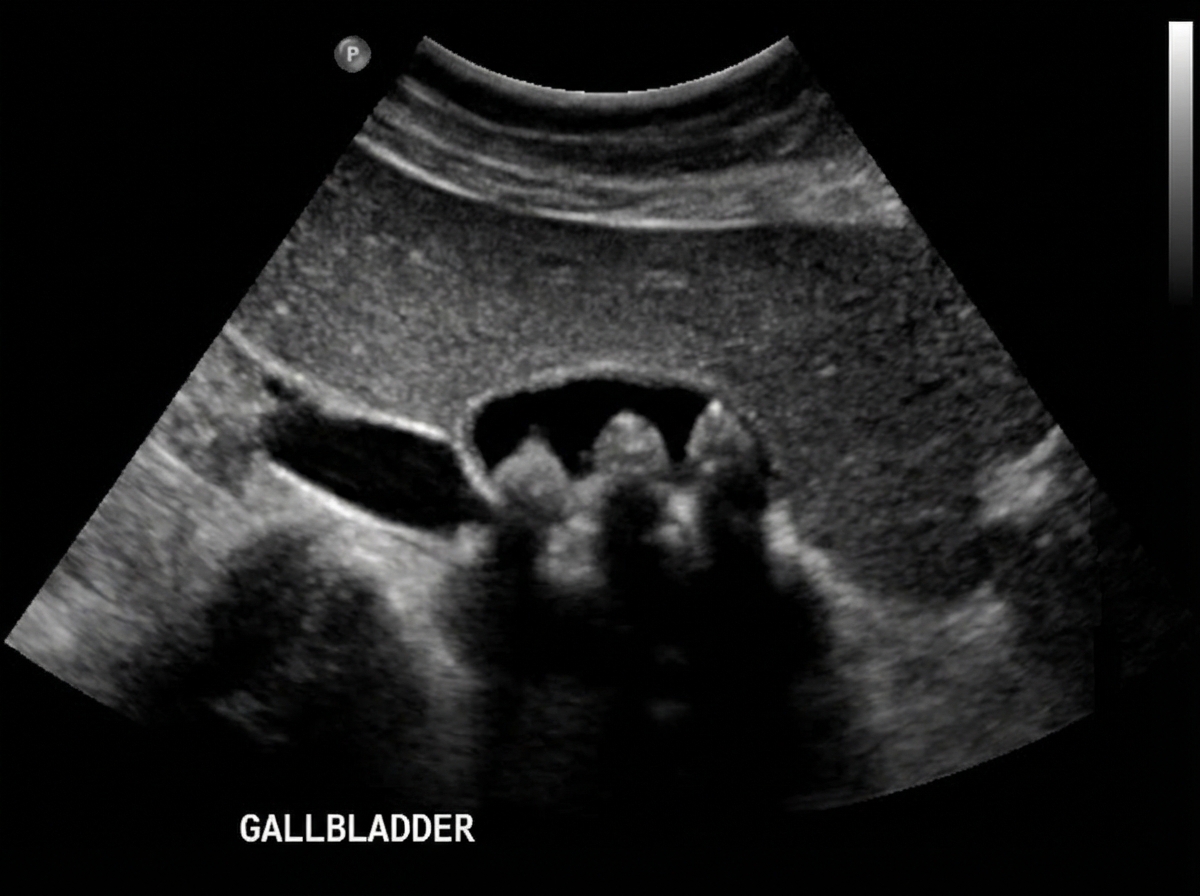
A 13-year-old African American boy with sickle cell disease is brought to the emergency department with complaints of abdominal pain over the last 24 hours. The pain is situated in the right upper quadrant and is sharp in nature with a score of 8/10 and radiates to tip of the right scapula. He also complains of anorexia and nausea over the past 2 days. He has been admitted into the hospital several times for pain episodes involving his legs, hands, thighs, lower back, and abdomen. His last hospital admission was 4 months ago for acute chest pain, and he was treated with antibiotics, analgesics, and intravenous fluid. He takes hydroxyurea with occasional red blood cell exchange. Both of his parents are in good health. Temperature is 38°C (100.4°F), blood pressure is 133/88 mm Hg, pulse is 102/min, respiratory rate is 20/min, and BMI is 18 kg/m2. On examination, he is in pain with a tender abdomen with painful inspiration. Soft palpation of the right upper quadrant causes the patient to cry out in pain. Laboratory test Complete blood count Hemoglobin 8.5 g/dL MCV 82 fl Leukocytes 13,500/mm3 Platelets 145,000/mm3 Basic metabolic panel Serum Na+ 135 mEq/L Serum K+ 3.9 mEq/L Serum Cl- 101 mEq/L Serum HCO3- 23 mEq/L Liver function test Serum bilirubin 2.8 mg/dL Direct bilirubin 0.8 mg/dL AST 30 U/L ALT 35 U/L Serum haptoglobin 23 mg/dL (41–165 mg/dL) Ultrasonography of abdomen shows the following image. What is the pathogenesis of this ultrasound finding?
A 24-year-old African American male with sickle cell disease has been followed by a hematologist since infancy. Two years ago, he was started on hydroxyurea for frequent pain crises but has not achieved good control. The addition of a Gardos channel blocking agent is being considered. What is the mechanism of action of this class of medications?
A mother brings her son to the pediatrician because she is concerned about his health. She states that throughout her child's life he has demonstrated aggressive behavior. However, he has recently begun biting himself causing injury and bleeding. The patient has a past medical history of mental retardation and episodes of severe joint pain. His temperature is 99.5°F (37.5°C), blood pressure is 87/48 mmHg, pulse is 90/min, respirations are 17/min, and oxygen saturation is 98% on room air. Physical exam reveals a child attempting to bite his arms. Which of the following is the inheritance pattern of the disease with which this patient presents?
An investigator is studying the outcomes of a malaria outbreak in an endemic region of Africa. 500 men and 500 women with known malaria exposure are selected to participate in the study. Participants with G6PD deficiency are excluded from the study. The clinical records of the study subjects are reviewed and their peripheral blood smears are evaluated for the presence of Plasmodium trophozoites. Results show that 9% of the exposed population does not have clinical or laboratory evidence of malaria infection. Which of the following best explains the absence of infection seen in this subset of participants?
Want unlimited practice?
Get full access to all questions, explanations, and performance tracking.
Scan to download app