A 38-year-old woman presents to the primary care physician with a complaint of painless hematuria over the last 5 days. History reveals that she has a 20 pack-year smoking history, and her last menses was 10 days ago. Her blood pressure is 130/80 mm Hg, heart rate is 86/min, respiratory rate is 19/min, and temperature is 36.6°C (98.0°F). Physical examination is within normal limits. Laboratory studies show:
Creatinine 0.9 mg/dL
Blood urea nitrogen 15 mg/dL
Prothrombin time 12.0 sec
Partial thromboplastin time 28.1 sec
Platelet count 250,000/mm3
Urine microscopy reveals 15 RBC/HPF and no leukocytes, casts, or bacteria. Which of the following is the best next step for this patient?
Q72
A 27-year-old man comes to the physician because of worsening abdominal pain over the last several months. He has also had recent feelings of sadness and a lack of motivation at work, where he is employed as a computer programmer. He denies suicidal thoughts. He has a history of multiple kidney stones. He has a family history of thyroid cancer in his father and uncle, who both underwent thyroidectomy before age 30. His temperature is 37°C (98°F), blood pressure is 138/86 mm Hg, and pulse is 87/min. Physical examination shows diffuse tenderness over the abdomen and obesity but is otherwise unremarkable. Serum studies show:
Na+ 141 mEq/L
K+ 3.6 mEq/L
Glucose 144 mg/dL
Ca2+ 12.1 mg/dL
Albumin 4.1 g/dL
PTH 226 pg/mL (normal range 12–88 pg/mL)
Results of a RET gene test return abnormal. The physician refers him to an endocrine surgeon. Which of the following is the most appropriate next step in diagnosis?
Q73
A 43-year-old woman comes to the physician because of worsening heartburn and abdominal pain for the past 4 months. During this period she has also had multiple episodes of greasy diarrhea. Six months ago, she had similar symptoms and was diagnosed with a duodenal ulcer. Her mother died of complications from uncontrolled hypoglycemia and had primary hyperparathyroidism. The patient does not drink alcohol or smoke cigarettes. Her only medications are pantoprazole and ranitidine. Her epigastric region is tender when palpated. An esophagogastroduodenoscopy shows a friable ulcer in the distal duodenum. Further evaluation is most likely to show which of the following?
Q74
A 58-year-old man presents to the Emergency Department after 3 hours of intense suprapubic pain associated with inability to urinate for the past day or two. His medical history is relevant for benign prostatic hyperplasia (BPH) that has been under treatment with prazosin and tadalafil. Upon admission, he is found to have a blood pressure of 180/100 mm Hg, a pulse of 80/min, a respiratory rate of 23/min, and a temperature of 36.5°C (97.7°F). He weighs 84 kg (185.1 lb) and is 175 cm (5 ft 7 in) tall. Physical exam, he has suprapubic tenderness. A bladder scan reveals 700 ml of urine. A Foley catheter is inserted and the urine is drained. Initial laboratory tests and their follow up 8 hours after admission are shown below.
Admission 8 hours after admission
Serum potassium 4.2 mmol/L Serum potassium 4.0 mmol/L
Serum sodium 140 mmol/L Serum sodium 142 mmol/L
Serum chloride 102 mmol/L Serum chloride 110 mmol/L
Serum creatinine 1.4 mg/dL Serum creatinine 1.6 mg/dL
Serum blood urea nitrogen 64 mg/dL Serum blood urea nitrogen 62 mg/dL
Urine output 250 mL Urine output 260 mL
A senior attending suggests a consultation with Nephrology. Which of the following best justifies this suggestion?
Q75
A 49-year-old man comes to the physician because of tender, red nodules that appeared on his chest 3 days ago. Three weeks ago, he had similar symptoms in his right lower limb and another episode in his left foot; both episodes resolved spontaneously. He also has diarrhea and has had a poor appetite for 1 month. He has a history of dry cough and joint pain, for which he takes albuterol and aspirin as needed. He has smoked 2 packs of cigarettes daily for 15 years. He does not drink alcohol. Physical examination shows a linear, erythematous lesion on the right anterior chest wall, through which a cord-like structure can be palpated. The lungs are clear to auscultation. The abdomen is soft, nontender, and non-distended. Examination of the legs is normal. An ultrasound of the legs shows no abnormalities. Which of the following is the most appropriate next step in diagnosis of the underlying condition?
Q76
A 21-year-old man presents to the emergency room with abdominal pain and nausea for the past 5 hours. The pain is diffusely spread and of moderate intensity. The patient also says he has not felt like eating since yesterday. He has no past medical history and is not on any medications. He regularly drinks 2–4 beers per day but does not smoke or use illicit substances. Vitals show a pulse of 120/min, a respiratory rate of 26/min, a blood pressure of 110/60 mm Hg, and a temperature of 37.8°C (100.0°F). Examination reveals a soft, diffusely tender abdomen with no guarding. Bowel sounds are present. His mucous membranes are slightly dry and there is a fruity smell to his breath. Laboratory tests show:
Laboratory test
pH 7.31
Serum glucose (random) 450 mg/dL
Serum electrolytes
Sodium 149 mEq/L
Potassium 5 mEq/L
Chloride 99 mEq/L
Bicarbonate 16 mEq/L
Serum creatinine 1.0 mg/dL
Blood urea nitrogen 15 mg/dL
Urinalysis
Proteins Negative
Glucose Positive
Ketones Positive
Leucocytes Negative
Nitrites Negative
Red blood cells (RBC) Negative
Casts Negative
Which of the following explains this patient's presentation?
Q77
A previously healthy 41-year-old woman comes to the physician for the evaluation of recurrent episodes of palpitations and sweating over the past month. Her symptoms typically start after swimming practice and improve after drinking ice tea and eating some candy. She has also had a 5-kg (11-lb) weight gain over the past 3 months. She works as a nurse. Physical examination shows no abnormalities. Fasting serum studies show:
Glucose 38 mg/dL
Insulin 260 μU/mL (N=11–240)
Proinsulin 65 μU/mL (N <20% of total insulin)
C-peptide 5.0 ng/mL (N=0.8–3.1)
Insulin secretagogues absent
Which of the following is the most likely cause of her symptoms?
Q78
A 32-year-old female comes to the physician because of recurrent episodes of abdominal pain, bloating, and loose stools lasting several days to a couple weeks. She has had these episodes since she was 24 years old but they have worsened over the last 6 weeks. The site of the abdominal pain and the intensity of pain vary. She has around 3–4 bowel movements per day during these episodes. Menses are regular at 31 day intervals with moderate flow; she has moderate pain in her lower abdomen during menstruation. She moved from a different city 2 months ago to start a new demanding job. Her mother has been suffering from depression for 10 years. She does not smoke or drink alcohol. Her own medications include multivitamins and occasionally naproxen for pain. Temperature is 37.4°C (99.3°F), pulse is 88/min, and blood pressure is 110/82 mm Hg. Abdominal examination shows no abnormalities. Laboratory studies show:
Hemoglobin 14.1 g/dL
Leukocyte count 8100/mm3
Erythrocyte sedimentation rate 15 mm/h
Serum
Glucose 96 mg/dL
Creatinine 1.1 mg/dL
IgA anti-tissue transglutaminase antibody negative
Urinalysis shows no abnormalities. Further evaluation is most likely to show which of the following in this patient?
Q79
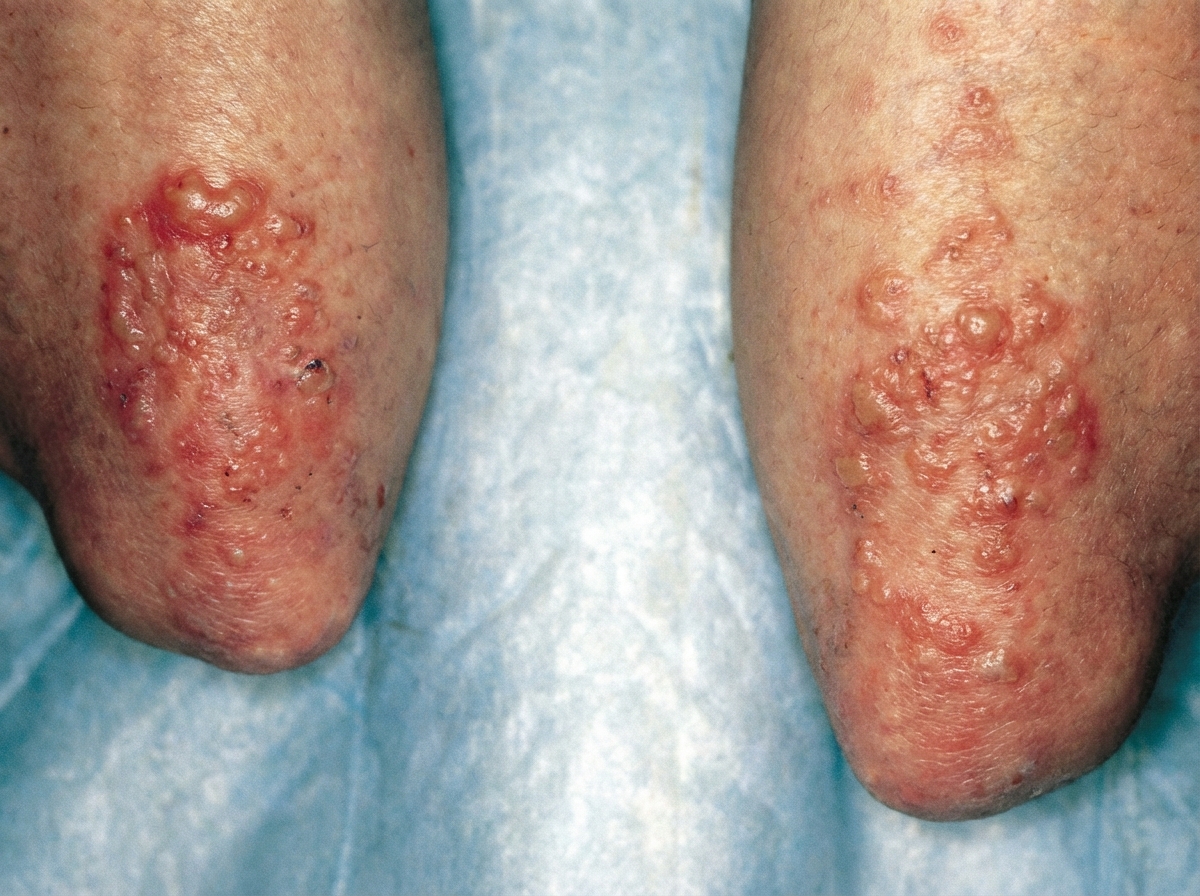
A 14-year-old boy comes to the physician because of multiple patches on his trunk and thighs that are lighter than the rest of his skin. He also has similar depigmented lesions on his hands and feet and around the mouth. The patches have gradually increased in size over the past 2 years and are not associated with itchiness, redness, numbness, or pain. His family emigrated from Indonesia 8 years ago. An image of the skin lesions is shown. What is the most likely cause of this patient's skin findings?
Q80
For which of the following patients would you recommend prophylaxis against mycobacterium avium-intracellulare?
Gastroenterology US Medical PG Practice Questions and MCQs
Question 71: A 38-year-old woman presents to the primary care physician with a complaint of painless hematuria over the last 5 days. History reveals that she has a 20 pack-year smoking history, and her last menses was 10 days ago. Her blood pressure is 130/80 mm Hg, heart rate is 86/min, respiratory rate is 19/min, and temperature is 36.6°C (98.0°F). Physical examination is within normal limits. Laboratory studies show:
Creatinine 0.9 mg/dL
Blood urea nitrogen 15 mg/dL
Prothrombin time 12.0 sec
Partial thromboplastin time 28.1 sec
Platelet count 250,000/mm3
Urine microscopy reveals 15 RBC/HPF and no leukocytes, casts, or bacteria. Which of the following is the best next step for this patient?
A. Cystoscopy (Correct Answer)
B. Digital rectal examination
C. Reassurance
D. Renal biopsy
E. Check urine for NMP22 and BTA
Explanation: ***Cystoscopy***
- The patient presents with **painless gross hematuria** and a significant **smoking history**, which are strong risk factors for **bladder cancer**.
- **Cystoscopy** is the definitive diagnostic procedure to visualize the bladder and perform biopsies if suspicious lesions are found.
*Digital rectal examination*
- This examination is primarily used to assess the prostate in men or for colorectal concerns.
- It would not provide diagnostic information for the source of hematuria in a female patient, especially when a urological malignancy is suspected.
*Reassurance*
- While some cases of hematuria are benign, the presence of **painless gross hematuria** and a significant **smoking history** in this patient makes watchful waiting or reassurance inappropriate.
- There is a high index of suspicion for a serious underlying condition like **urothelial carcinoma** that requires urgent investigation.
*Renal biopsy*
- **Renal biopsy** is indicated when there is evidence of glomerular disease (e.g., dysmorphic red blood cells, red blood cell casts, proteinuria, renal insufficiency).
- The patient's urine microscopy shows **eumorphic RBCs** and **no casts or proteinuria**, making glomerular disease less likely, and her renal function is normal.
*Check urine for NMP22 and BTA*
- While **NMP22** and **BTA** are urine markers for bladder cancer, they have **limited sensitivity and specificity** and are not definitive diagnostic tests.
- They are primarily used for surveillance in patients with a history of bladder cancer or in conjunction with cystoscopy, not as a standalone initial diagnostic step.
Question 72: A 27-year-old man comes to the physician because of worsening abdominal pain over the last several months. He has also had recent feelings of sadness and a lack of motivation at work, where he is employed as a computer programmer. He denies suicidal thoughts. He has a history of multiple kidney stones. He has a family history of thyroid cancer in his father and uncle, who both underwent thyroidectomy before age 30. His temperature is 37°C (98°F), blood pressure is 138/86 mm Hg, and pulse is 87/min. Physical examination shows diffuse tenderness over the abdomen and obesity but is otherwise unremarkable. Serum studies show:
Na+ 141 mEq/L
K+ 3.6 mEq/L
Glucose 144 mg/dL
Ca2+ 12.1 mg/dL
Albumin 4.1 g/dL
PTH 226 pg/mL (normal range 12–88 pg/mL)
Results of a RET gene test return abnormal. The physician refers him to an endocrine surgeon. Which of the following is the most appropriate next step in diagnosis?
A. Thyroidectomy
B. Urine 5-HIAA
C. Urine metanephrines (Correct Answer)
D. Midnight salivary cortisol
E. Serum gastrin
Explanation: ***Urine metanephrines***
- The patient's presentation, including **abdominal pain**, **constipation** (implied by pain, mood changes, and high calcium), **hypertension**, **hypercalcemia** with **elevated PTH**, and a family history of **thyroid cancer** with an **abnormal RET gene test**, is highly suggestive of **MEN 2A** (Multiple Endocrine Neoplasia type 2A).
- **MEN 2A** is characterized by **medullary thyroid carcinoma** (MTC), **pheochromocytoma**, and **primary hyperparathyroidism**. Given the strong suspicion of MEN 2A and the presence of hypertension, screening for **pheochromocytoma** with **urine metanephrines** is crucial before any surgical intervention (e.g., thyroidectomy) due to the risk of a hypertensive crisis.
*Thyroidectomy*
- While a **thyroidectomy** is indicated for **medullary thyroid carcinoma** (strongly suggested by the family history of thyroid cancer and abnormal RET gene), it should **not be the immediate next step** before ruling out **pheochromocytoma**.
- Performing a thyroidectomy in a patient with an undiagnosed pheochromocytoma can lead to a **life-threatening hypertensive crisis** during surgery.
*Urine 5-HIAA*
- **Urine 5-HIAA** (5-hydroxyindoleacetic acid) is a test for **carcinoid syndrome**, which presents with flushing, diarrhea, and bronchospasm.
- These symptoms are **not consistent** with the patient's presentation, and carcinoid syndrome is **not a component of MEN 2A**.
*Midnight salivary cortisol*
- **Midnight salivary cortisol** is used to screen for **Cushing's syndrome**, which is characterized by symptoms such as central obesity, moon facies, striae, and muscle weakness.
- While the patient is obese, his other symptoms and laboratory findings are **not suggestive of Cushing's syndrome**, and it is not typically associated with MEN 2A.
*Serum gastrin*
- **Serum gastrin** levels are measured to diagnose **Zollinger-Ellison syndrome**, characterized by severe peptic ulcer disease and diarrhea due to a gastrinoma.
- While gastrinomas can occur in **MEN 1**, they are **not a feature of MEN 2A**, and the patient's symptoms are more consistent with other endocrine dysfunctions.
Question 73: A 43-year-old woman comes to the physician because of worsening heartburn and abdominal pain for the past 4 months. During this period she has also had multiple episodes of greasy diarrhea. Six months ago, she had similar symptoms and was diagnosed with a duodenal ulcer. Her mother died of complications from uncontrolled hypoglycemia and had primary hyperparathyroidism. The patient does not drink alcohol or smoke cigarettes. Her only medications are pantoprazole and ranitidine. Her epigastric region is tender when palpated. An esophagogastroduodenoscopy shows a friable ulcer in the distal duodenum. Further evaluation is most likely to show which of the following?
A. Dystrophic calcifications in the pancreas
B. Parietal cell hyperplasia in the stomach (Correct Answer)
C. Noncaseating granulomas in the jejunum
D. Anti-tissue transglutaminase antibodies in the serum
E. Anti-intrinsic factor antibodies in the serum
Explanation: ***Parietal cell hyperplasia in the stomach***
- The patient's symptoms (worsening heartburn, abdominal pain, recurrent duodenal ulcer, greasy diarrhea) are highly suggestive of **Zollinger-Ellison syndrome (ZES)**, caused by a **gastrinoma** leading to excessive gastrin production.
- High gastrin levels from a gastrinoma stimulate the **parietal cells** in the stomach to produce large amounts of gastric acid, leading to **parietal cell hyperplasia** and acid hypersecretion.
*Dystrophic calcifications in the pancreas*
- **Dystrophic calcifications** in the pancreas are a hallmark of **chronic pancreatitis**, which can present with abdominal pain and steatorrhea.
- However, the recurrent severe duodenal ulcers and family history of primary hyperparathyroidism pointing towards **MEN1** are not characteristic of chronic pancreatitis.
*Noncaseating granulomas in the jejunum*
- **Noncaseating granulomas** in the gastrointestinal tract are characteristic of **Crohn's disease**, which can cause abdominal pain and diarrhea.
- However, recurrent duodenal ulcers and a likely genetic predisposition to **MEN1** would make Crohn's disease a less probable primary diagnosis.
*Anti-tissue transglutaminase antibodies in the serum*
- **Anti-tissue transglutaminase (tTG) antibodies** are markers for **celiac disease**, which can cause malabsorption and diarrhea (greasy stools).
- While celiac disease could explain the greasy diarrhea, it does not explain the severe, recurrent duodenal ulcers.
*Anti-intrinsic factor antibodies in the serum*
- **Anti-intrinsic factor antibodies** are indicative of **pernicious anemia**, an autoimmune condition causing **macrocytic anemia** and vitamin B12 deficiency.
- This condition does not typically present with severe duodenal ulcers, heartburn, or greasy diarrhea.
Question 74: A 58-year-old man presents to the Emergency Department after 3 hours of intense suprapubic pain associated with inability to urinate for the past day or two. His medical history is relevant for benign prostatic hyperplasia (BPH) that has been under treatment with prazosin and tadalafil. Upon admission, he is found to have a blood pressure of 180/100 mm Hg, a pulse of 80/min, a respiratory rate of 23/min, and a temperature of 36.5°C (97.7°F). He weighs 84 kg (185.1 lb) and is 175 cm (5 ft 7 in) tall. Physical exam, he has suprapubic tenderness. A bladder scan reveals 700 ml of urine. A Foley catheter is inserted and the urine is drained. Initial laboratory tests and their follow up 8 hours after admission are shown below.
Admission 8 hours after admission
Serum potassium 4.2 mmol/L Serum potassium 4.0 mmol/L
Serum sodium 140 mmol/L Serum sodium 142 mmol/L
Serum chloride 102 mmol/L Serum chloride 110 mmol/L
Serum creatinine 1.4 mg/dL Serum creatinine 1.6 mg/dL
Serum blood urea nitrogen 64 mg/dL Serum blood urea nitrogen 62 mg/dL
Urine output 250 mL Urine output 260 mL
A senior attending suggests a consultation with Nephrology. Which of the following best justifies this suggestion?
A. Estimated glomerular filtration rate (eGFR)
B. Urine output (Correct Answer)
C. Serum creatinine (SCr)
D. Serum blood urea nitrogen (BUN)
E. Serum potassium
Explanation: ***Urine output***
- The patient's **urine output is severely reduced** at 260 mL over 8 hours (approximately **32.5 mL/hour**), which constitutes **oliguria** (defined as <0.5 mL/kg/hr; this patient at 84 kg should produce ≥42 mL/hr).
- Despite **relief of the post-renal obstruction** via Foley catheterization, the persistent oliguria indicates **intrinsic kidney injury** rather than simple mechanical obstruction.
- The combination of **oliguria persisting after decompression** + **rising serum creatinine** (1.4→1.6 mg/dL) meets **KDIGO criteria for Stage 2 AKI** (urine output <0.5 mL/kg/hr for ≥12 hours).
- This requires **urgent nephrology consultation** to assess for acute tubular necrosis (ATN), guide fluid management during potential post-obstructive diuresis, and consider renal replacement therapy if oliguria worsens.
*Serum creatinine (SCr)*
- The serum creatinine **rose from 1.4 to 1.6 mg/dL** despite bladder decompression, which is concerning and suggests intrinsic renal injury.
- However, creatinine is a **lagging indicator** of kidney function - it takes 24-48 hours to reflect acute changes in GFR, whereas **urine output is a real-time indicator** of kidney function.
- While the rising creatinine supports the need for nephrology involvement, **urine output is the more immediate and actionable parameter** that prompted the attending's suggestion at this early time point.
*Estimated glomerular filtration rate (eGFR)*
- eGFR is **calculated from serum creatinine** using equations that assume steady-state conditions, which **do not apply in acute kidney injury**.
- In the **acute setting with rapidly changing kidney function**, eGFR calculations are unreliable and can significantly overestimate or underestimate true GFR.
- Clinicians rely more on **urine output and serial creatinine measurements** rather than eGFR when managing AKI.
*Serum blood urea nitrogen (BUN)*
- The BUN decreased slightly from 64 to 62 mg/dL, remaining elevated but showing minimal change after catheterization.
- Elevated BUN can reflect **pre-renal azotemia, dehydration, or upper GI bleeding** and is less specific for intrinsic kidney injury than oliguria.
- The **BUN:Cr ratio** is approximately 40:1 (64/1.6), suggesting a **pre-renal component**, but this alone doesn't justify urgent nephrology consultation as strongly as the persistent oliguria does.
*Serum potassium*
- Serum potassium levels remain **normal** (4.2→4.0 mmol/L) and do not indicate a metabolic emergency.
- While **hyperkalemia** is a common complication of AKI that would warrant nephrology involvement, this patient's potassium is well-controlled and not the driving concern at this time.
Question 75: A 49-year-old man comes to the physician because of tender, red nodules that appeared on his chest 3 days ago. Three weeks ago, he had similar symptoms in his right lower limb and another episode in his left foot; both episodes resolved spontaneously. He also has diarrhea and has had a poor appetite for 1 month. He has a history of dry cough and joint pain, for which he takes albuterol and aspirin as needed. He has smoked 2 packs of cigarettes daily for 15 years. He does not drink alcohol. Physical examination shows a linear, erythematous lesion on the right anterior chest wall, through which a cord-like structure can be palpated. The lungs are clear to auscultation. The abdomen is soft, nontender, and non-distended. Examination of the legs is normal. An ultrasound of the legs shows no abnormalities. Which of the following is the most appropriate next step in diagnosis of the underlying condition?
A. Coagulation studies
B. Ankle brachial index
C. Serum angiotensin-converting enzyme level
D. CT scan of the abdomen
E. X-ray of the chest (Correct Answer)
Explanation: ***X-ray of the chest***
- The patient's migratory thrombophlebitis (Trousseau's syndrome), unexplained diarrhea, weight loss, and chronic cough (despite albuterol) are highly suggestive of an underlying **malignancy**, specifically **pancreatic adenocarcinoma** or **bronchogenic carcinoma**.
- A **chest X-ray** is a crucial initial step to evaluate for a primary lung malignancy, which can often present with paraneoplastic syndromes like migratory thrombophlebitis.
*Coagulation studies*
- While Trousseau's syndrome involves hypercoagulability, obtaining coagulation studies like PT, PTT, or D-dimer would primarily confirm a coagulation abnormality but not identify the **underlying cause** (malignancy).
- The clinical presentation points towards seeking the etiology of the paraneoplastic syndrome, rather than just characterizing the coagulation defect.
*Ankle brachial index*
- An ankle brachial index (ABI) is used to diagnose **peripheral artery disease (PAD)**, which is characterized by claudication and arterial insufficiency.
- The patient's symptoms of migratory thrombophlebitis and palpable cord-like structures are indicative of venous and not arterial pathology, and a normal leg ultrasound rules out deep vein thrombosis.
*Serum angiotensin-converting enzyme level*
- Elevated serum ACE levels are characteristic of **sarcoidosis**, a granulomatous disease that can cause pulmonary symptoms and skin lesions.
- However, sarcoidosis typically does not cause migratory thrombophlebitis, and the diarrhea and weight loss point to a systemic malignant process.
*CT scan of the abdomen*
- While pancreatic adenocarcinoma is a strong consideration given the constellation of symptoms (Trousseau's syndrome, diarrhea, poor appetite/weight loss), a **chest X-ray** is often the first imaging step due to the patient's history of smoking and chronic cough, which raises suspicion for lung cancer.
- If the chest X-ray is negative, then an abdominal CT would be a reasonable next step to investigate for pancreatic or other abdominal malignancies.
Question 76: A 21-year-old man presents to the emergency room with abdominal pain and nausea for the past 5 hours. The pain is diffusely spread and of moderate intensity. The patient also says he has not felt like eating since yesterday. He has no past medical history and is not on any medications. He regularly drinks 2–4 beers per day but does not smoke or use illicit substances. Vitals show a pulse of 120/min, a respiratory rate of 26/min, a blood pressure of 110/60 mm Hg, and a temperature of 37.8°C (100.0°F). Examination reveals a soft, diffusely tender abdomen with no guarding. Bowel sounds are present. His mucous membranes are slightly dry and there is a fruity smell to his breath. Laboratory tests show:
Laboratory test
pH 7.31
Serum glucose (random) 450 mg/dL
Serum electrolytes
Sodium 149 mEq/L
Potassium 5 mEq/L
Chloride 99 mEq/L
Bicarbonate 16 mEq/L
Serum creatinine 1.0 mg/dL
Blood urea nitrogen 15 mg/dL
Urinalysis
Proteins Negative
Glucose Positive
Ketones Positive
Leucocytes Negative
Nitrites Negative
Red blood cells (RBC) Negative
Casts Negative
Which of the following explains this patient's presentation?
A. Fecalith in the caecum
B. Presence of gut contents in the abdominal cavity
C. Effects of alcohol on mitochondrial metabolic activity
D. Burn out of pancreatic beta cells (Correct Answer)
E. Blunt trauma to the abdomen
Explanation: **Burn out of pancreatic beta cells**
- The patient's presentation with **new-onset diabetes**, along with **abdominal pain**, **nausea**, **dehydration** (dry mucous membranes, tachycardia), **acidosis** (pH 7.31, bicarbonate 16 mEq/L), **hyperglycemia** (450 mg/dL), and **ketonuria**, is highly suggestive of **diabetic ketoacidosis (DKA)**. DKA in a young, previously healthy individual often indicates a new diagnosis of **type 1 diabetes mellitus** due to rapid **beta-cell destruction**.
- The **fruity smell on breath** (due to acetone) and **polydipsia** are classic signs of DKA, which results from profound insulin deficiency leading to increased lipolysis, ketogenesis, and severe metabolic acidosis, effectively representing a "burnout" or severe dysfunction of the pancreatic beta cells.
*Fecalith in the caecum*
- A **fecalith in the caecum** could cause localized abdominal pain, often associated with **appendicitis**, but it does not explain the widespread metabolic derangements seen in this patient, such as **hyperglycemia**, **acidosis**, and **ketonuria**.
- The diffuse abdominal tenderness and absence of specific signs like **guarding** or **rebound tenderness**, along with the systemic symptoms, do not align with an isolated fecalith obstruction.
*Presence of gut contents in the abdominal cavity*
- The presence of **gut contents in the abdominal cavity** (e.g., from a ruptured appendix or perforated viscus) would typically present with a more acute abdomen, including **severe guarding**, **rebound tenderness**, and signs of **septic shock**, which are not prominent here.
- This condition also would not explain the specific biochemical findings of **hyperglycemia**, **acidosis**, and **ketonuria** that point towards DKA.
*Effects of alcohol on mitochondrial metabolic activity*
- While **alcohol can affect mitochondrial metabolism** and lead to certain metabolic derangements (e.g., alcoholic ketoacidosis), this condition typically occurs in chronic alcoholics with acute alcohol withdrawal or binge drinking, and is characterized by a **normal or low glucose** level, in contrast to the severe **hyperglycemia** seen in this patient.
- The patient's reported regular alcohol consumption of 2-4 beers per day would not typically cause such a severe metabolic acidosis with profound hyperglycemia unless superimposed on an underlying condition like new-onset diabetes.
*Blunt trauma to the abdomen*
- **Blunt abdominal trauma** would typically involve a clear history of injury and localized pain, potentially with signs of internal bleeding or organ damage, such as **peritoneal signs** or **hemodynamic instability**.
- There is no history of trauma, and the patient's symptoms and lab findings are inconsistent with trauma and highly characteristic of a metabolic emergency like **diabetic ketoacidosis**.
Question 77: A previously healthy 41-year-old woman comes to the physician for the evaluation of recurrent episodes of palpitations and sweating over the past month. Her symptoms typically start after swimming practice and improve after drinking ice tea and eating some candy. She has also had a 5-kg (11-lb) weight gain over the past 3 months. She works as a nurse. Physical examination shows no abnormalities. Fasting serum studies show:
Glucose 38 mg/dL
Insulin 260 μU/mL (N=11–240)
Proinsulin 65 μU/mL (N <20% of total insulin)
C-peptide 5.0 ng/mL (N=0.8–3.1)
Insulin secretagogues absent
Which of the following is the most likely cause of her symptoms?
A. Pancreatic β-cell tumor (Correct Answer)
B. Exogenous administration of insulin
C. Binge eating disorder
D. Factitious use of sulfonylureas
E. Peripheral resistance to insulin
Explanation: ***Pancreatic β-cell tumor***
- The patient presents with **Whipple's triad**: symptoms of hypoglycemia (palpitations, sweating), low plasma glucose (<50 mg/dL), and symptom relief with glucose intake (ice tea, candy).
- Elevated **C-peptide** and **proinsulin** levels, along with inappropriately high insulin relative to the low glucose, indicate endogenous hyperinsulinism, strongly suggesting an **insulinoma (pancreatic β-cell tumor)**.
*Exogenous administration of insulin*
- Injected insulin would lead to high insulin levels and low glucose, but **C-peptide** levels would be **low** because exogenous insulin suppresses endogenous insulin secretion.
- The patient's **high C-peptide** rules out exogenous insulin administration.
*Binge eating disorder*
- Binge eating disorder does not directly explain the recurrent episodes of documented **hypoglycemia** and the specific hormonal profile of high insulin and C-peptide.
- While weight gain might be associated, it does not account for the **biochemical abnormalities**.
*Factitious use of sulfonylureas*
- Sulfonylureas stimulate endogenous insulin secretion, leading to hypoglycemia, high insulin, and **high C-peptide**.
- However, the lab results explicitly state **insulin secretagogues absent**, ruling out sulfonylurea use.
*Peripheral resistance to insulin*
- Insulin resistance is characterized by **high insulin levels** due to the pancreas overproducing insulin to compensate for tissue insensitivity, but it typically causes **hyperglycemia**, not hypoglycemia.
- The patient's **hypoglycemia** is inconsistent with peripheral insulin resistance.
Question 78: A 32-year-old female comes to the physician because of recurrent episodes of abdominal pain, bloating, and loose stools lasting several days to a couple weeks. She has had these episodes since she was 24 years old but they have worsened over the last 6 weeks. The site of the abdominal pain and the intensity of pain vary. She has around 3–4 bowel movements per day during these episodes. Menses are regular at 31 day intervals with moderate flow; she has moderate pain in her lower abdomen during menstruation. She moved from a different city 2 months ago to start a new demanding job. Her mother has been suffering from depression for 10 years. She does not smoke or drink alcohol. Her own medications include multivitamins and occasionally naproxen for pain. Temperature is 37.4°C (99.3°F), pulse is 88/min, and blood pressure is 110/82 mm Hg. Abdominal examination shows no abnormalities. Laboratory studies show:
Hemoglobin 14.1 g/dL
Leukocyte count 8100/mm3
Erythrocyte sedimentation rate 15 mm/h
Serum
Glucose 96 mg/dL
Creatinine 1.1 mg/dL
IgA anti-tissue transglutaminase antibody negative
Urinalysis shows no abnormalities. Further evaluation is most likely to show which of the following in this patient?
A. Abdominal pain at night
B. Cutaneous flushing
C. Bright red blood in the stool
D. Weight loss
E. Relief of abdominal pain after defecation (Correct Answer)
Explanation: ***Relief of abdominal pain after defecation***
- This is a key diagnostic criterion for Irritable Bowel Syndrome (IBS), as the symptoms in this patient are highly suggestive of **IBS-diarrhea predominant**.
- The patient's history of recurrent abdominal pain, bloating, and loose stools (3-4 bowel movements/day), absence of alarm symptoms, and worsening with stress (new job) are consistent with IBS.
*Abdominal pain at night*
- **Nocturnal abdominal pain** or bowel movements are considered **alarm symptoms** that warrant further investigation for organic causes such as inflammatory bowel disease (IBD) or malignancy.
- The symptoms described are typical of functional GI disorders like IBS, where pain usually improves with defecation and does not typically awaken the patient from sleep.
*Cutaneous flushing*
- **Cutaneous flushing** is a common symptom associated with **carcinoid syndrome**, often accompanied by diarrhea, wheezing, and right-sided heart valve disease.
- Other common causes of flushing include *rosacea*, *mastocytosis*, and *medication-induced flushing*; none of these fit the patient's primary GI symptoms.
*Bright red blood in the stool*
- The presence of **bright red blood in the stool** is an **alarm symptom** that suggests a structural gastrointestinal problem such as hemorrhoids, anal fissures, diverticulosis, or inflammatory bowel disease (IBD), or malignancy.
- This symptom would prompt more invasive diagnostic procedures (e.g., colonoscopy) to rule out serious conditions.
*Weight loss*
- Unintentional **weight loss** is an **alarm symptom** in the context of gastrointestinal complaints, indicating a potential organic cause such as inflammatory bowel disease, celiac disease (which was ruled out by negative anti-tTG antibodies), malabsorption, or malignancy.
- Patients with IBS typically do not experience significant weight loss, and their symptoms are often functional rather than structural.
Question 79: A 14-year-old boy comes to the physician because of multiple patches on his trunk and thighs that are lighter than the rest of his skin. He also has similar depigmented lesions on his hands and feet and around the mouth. The patches have gradually increased in size over the past 2 years and are not associated with itchiness, redness, numbness, or pain. His family emigrated from Indonesia 8 years ago. An image of the skin lesions is shown. What is the most likely cause of this patient's skin findings?
A. Mycobacterium leprae infection
B. Increased mTOR signalling
C. Postinflammatory depigmentation
D. Autoimmune melanocyte destruction (Correct Answer)
E. Malassezia globosa infection
Explanation: ***Autoimmune melanocyte destruction***
- The patient's presentation of **gradually increasing, depigmented patches** on the trunk, thighs, hands, feet, and around the mouth, especially in a young individual, is highly characteristic of **vitiligo**.
- **Vitiligo** is an autoimmune condition characterized by the destruction of **melanocytes**, leading to a loss of pigment. The absence of itchiness, redness, or sensory changes further supports this diagnosis.
*Mycobacterum leprae infection*
- **Leprosy** can cause hypopigmented or depigmented patches, but these are typically accompanied by **sensory loss** (numbness) in the affected areas, which is not present here.
- The lesions in leprosy are also often **anaesthetic** and can be associated with thickened nerves, unlike the presentation described.
*Increased mTOR signalling*
- **Increased mTOR signaling** is associated with conditions like **tuberous sclerosis**, which can present with **ash-leaf spots** (hypopigmented macules).
- However, ash-leaf spots are usually present from birth or early infancy, are typically less extensive, and are associated with other neurological or dermatological findings (e.g., facial angiofibromas, seizures) not mentioned in this case.
*Postinflammatory depigmentation*
- This typically occurs after an inflammatory skin condition (e.g., eczema, psoriasis) and the **depigmentation is confined to the areas where the inflammation occurred**.
- The patient denies previous inflammatory lesions, and the widespread, progressive nature of the depigmentation across various body sites makes this less likely.
*Malassezia globosa infection*
- **Tinea versicolor**, caused by *Malassezia globosa*, results in **hypopigmented or hyperpigmented patches**, often on the trunk and upper extremities.
- However, these lesions typically have fine scale, can be mildly itchy, and most importantly, they are **superficial infections** and do not cause complete depigmentation like vitiligo.
Question 80: For which of the following patients would you recommend prophylaxis against mycobacterium avium-intracellulare?
A. 30-year old HIV positive male with CD4 count of 20 cells/microliter and a viral load of < 50 copies/mL (Correct Answer)
B. 22-year old HIV positive female with CD4 count of 750 cells/microliter and a viral load of 500,000 copies/mL
C. 45-year old HIV positive female with CD4 count of 250 cells/microliter and a viral load of 100,000 copies/mL
D. 50-year old HIV positive female with CD4 count of 150 cells/microliter and a viral load of < 50 copies/mL
E. 36-year old HIV positive male with CD4 count of 75 cells/microliter and an undetectable viral load
Explanation: ***30-year old HIV positive male with CD4 count of 20 cells/microliter and a viral load of < 50 copies/mL***
- Prophylaxis against **Mycobacterium avium complex (MAC)** is recommended for HIV-positive individuals with a **CD4 count below 50 cells/µL** to prevent disseminated MAC infection.
- While an undetectable viral load suggests effective antiretroviral therapy (ART) in general, the extremely low CD4 count indicates severe immunosuppression, making prophylaxis crucial.
*36-year old HIV positive male with CD4 count of 75 cells/microliter and an undetectable viral load*
- The **CD4 count of 75 cells/µL** is above the threshold of 50 cells/µL for MAC prophylaxis, even though it's still low.
- An **undetectable viral load** indicates successful ART, which generally helps improve immune function over time, albeit slowly in this CD4 range.
*22-year old HIV positive female with CD4 count of 750 cells/microliter and a viral load of 500,000 copies/mL*
- A **CD4 count of 750 cells/µL** is well above the threshold for MAC prophylaxis, indicating relatively preserved immune function.
- Although the **viral load is very high**, suggesting uncontrolled HIV replication, the immune system is currently strong enough to ward off MAC.
*45-year old HIV positive female with CD4 count of 250 cells/microliter and a viral load of 100,000 copies/mL*
- A **CD4 count of 250 cells/µL** is above the threshold for MAC prophylaxis, which is 50 cells/µL.
- While the **high viral load** implies an increased risk for opportunistic infections over time, other specific prophylaxes (e.g., PCP if <200) would be considered earlier.
*50-year old HIV positive female with CD4 count of 150 cells/microliter and a viral load of < 50 copies/mL*
- A **CD4 count of 150 cells/µL** is above the threshold for MAC prophylaxis (50 cells/µL).
- An **undetectable viral load** is a positive sign of ART efficacy, but this patient would still require prophylaxis for **Pneumocystis jirovecii pneumonia (PCP)**, as her CD4 count is below 200 cells/µL.