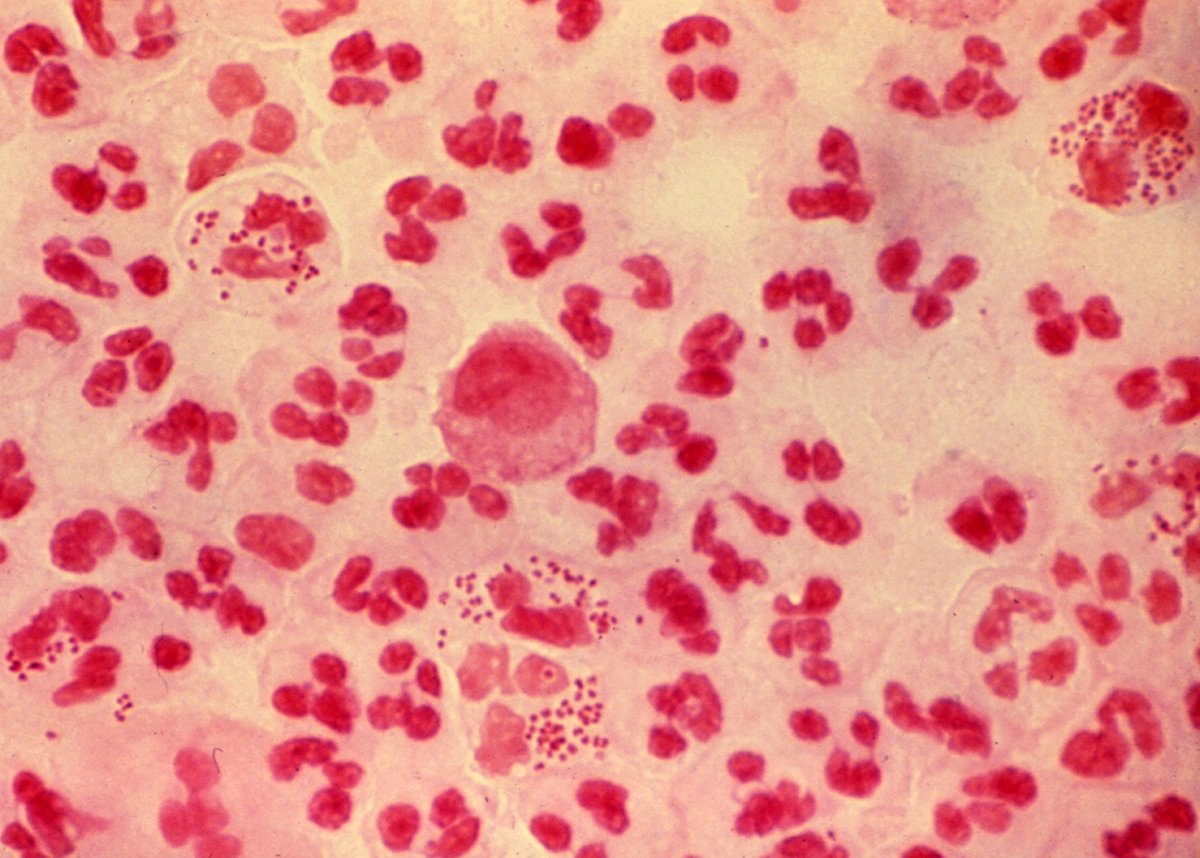
A 33-year-old man is brought to the emergency department by his partner for 24 hours of fever, severe headache, and neck stiffness. His companion also comments that he has been vomiting several times in the past 8 hours and looks confused. His personal medical history is unremarkable. Upon examination, his blood pressure is 125/82 mm Hg, heart rate 110/min, and temperature is 38.9 C (102F). There is no rash or any other skin lesions, his lung sounds are clear and symmetrical. There is nuchal rigidity, jolt accentuation of a headache, and photophobia. A lumbar puncture is taken, and cerebrospinal fluid is sent for analysis and a Gram stain (shown in the picture). The patient is put on empirical antimicrobial therapy with ceftriaxone and vancomycin. According to the clinical manifestations and Gram stain, which of the following should be considered in the management of this case?
Q352
A 48-year-old woman presents to the physician because of facial flushing and weakness for 3 months, abdominal discomfort and bloating for 6 months, and profuse watery diarrhea for 1 year. She reports that her diarrhea was episodic initially, but it has been continuous for the past 3 months. The frequency ranges from 10 to 12 bowel movements per day, and the diarrhea persists even if she is fasting. She describes the stools as odorless, watery in consistency, and tea-colored, without blood or mucus. She has not been diagnosed with any specific medical conditions, and there is no history of substance use. Her temperature is 36.9°C (98.4°F), heart rate is 88/min, respiratory rate is 18/min, and blood pressure is 110/74 mm Hg. Her physical exam shows decreased skin turgor, and the abdominal exam does not reveal any significant abnormality. Laboratory studies show:
Serum glucose 216 mg/dL (12.0 mmol/L)
Serum sodium 142 mEq/L (142 mmol/L)
Serum potassium 3.1 mEq/L (3.1 mmol/L)
Serum chloride 100 mEq/L (100 mmol/L)
Serum calcium 11.1 mg/dL (2.77 mmol/L)
Her 24-hour stool volume is 4 liters. Which of the following tests is most likely to yield an accurate diagnosis?
Q353
A 67-year-old man comes to the physician because of worsening lower back pain for 6 weeks. He reports that the pain is most intense with movement and that it sometimes occurs at night. Over the past 3 months, he has noticed a weakened urinary stream. He has not seen any blood in his urine. His only daily medication is ibuprofen. Examination shows no spinal deformities. Palpation of the lumbar spinal process elicits tenderness. Muscle strength is normal. Which of the following is the most likely cause of this patient’s back pain?
Q354
A 19-year-old man with unknown medical history is found down on a subway platform and is brought to the hospital by ambulance. He experiences two episodes of emesis en route. In the emergency department, he appears confused and is complaining of abdominal pain. His temperature is 37.0° C (98.6° F), pulse is 94/min, blood pressure is 110/80 mmHg, respirations are 24/min, oxygen saturation is 99% on room air. His mucus membranes are dry and he is taking rapid, deep breathes. Laboratory work is presented below:
Serum:
Na+: 130 mEq/L
K+: 4.3 mEq/L
Cl-: 102 mEq/L
HCO3-: 12 mEq/L
BUN: 15 mg/dL
Glucose: 362 mg/dL
Creatinine: 1.2 mg/dL
Urine ketones: Positive
The patient is given a bolus of isotonic saline and started on intravenous insulin drip. Which of the following is the most appropriate next step in management?
Q355
A 54-year-old woman presents to her primary care physician complaining of watery diarrhea for the last 3 weeks. She reports now having over 10 bowel movements per day. She denies abdominal pain or rash. A basic metabolic profile is notable for the following: Na: 127 mEq/L; K 2.1 mEq/L; Glucose 98 mg/dL. Following additional work-up, octreotide was started with significant improvement in symptoms and laboratory values. Which of the following is the most likely diagnosis?
Q356
A previously healthy 31-year-old woman comes to the emergency department because of sudden, severe epigastric pain and vomiting for the past 4 hours. She reports that the pain radiates to the back and began when she was having dinner and drinks at a local brewpub. Her temperature is 37.9°C (100.2°F), pulse is 98/min, respirations are 19/min, and blood pressure is 110/60 mm Hg. Abdominal examination shows epigastric tenderness and guarding but no rebound. Bowel sounds are decreased. Laboratory studies show:
Hematocrit 43%
Leukocyte count 9000/mm3
Serum
Na+ 140 mEq/L
K+ 4.5 mEq/L
Ca2+ 9.0 mg/dL
Lipase 170 U/L (N = < 50 U/L)
Amylase 152 U/L
Alanine aminotransferase (ALT, GPT) 140 U/L
Intravenous fluid resuscitation is begun. Which of the following is the most appropriate next step in management?
Q357
A 40-year-old woman presents with ongoing heartburn despite being on treatment for the last few months. She describes a burning sensation in her chest even after small meals. She has stopped eating fatty and spicy foods as they aggravate her heartburn significantly. She has also stopped drinking alcohol but is unable to quit smoking. Her attempts to lose weight have failed. Three months ago, she was started on omeprazole and ranitidine, but she still is having symptoms. She had previously used oral antacids but had to stop because of intolerable constipation. Past medical history is significant for a mild cough for the past several years. Her vital signs are pulse 90/min, blood pressure 120/67 mm Hg, respiratory rate 14/min, and temperature of 36.7°C (98.0°F). Her current BMI is 26 kg/m2. Her teeth are yellow-stained, but the physical examination is otherwise unremarkable. What is the next best step in her management?
Q358
A 38-year-old woman presents with dysphagia. She says the dysphagia is worse for solids than liquids and is progressive. She also complains of associated weakness, fatigue, and dyspnea. The patient denies any recent history of weight loss. Laboratory findings are significant for a hemoglobin of 8.7 g/dL. A peripheral blood smear shows evidence of microcytic hypochromic anemia. Which of the following is the most likely cause of her dysphagia?
Q359
A 50-year-old woman comes to the physician for a routine health maintenance examination. She has no personal or family history of serious illness. She smoked one pack of cigarettes daily for 5 years during her 20s. Her pulse is 70/min, and blood pressure is 120/78 mm Hg. Serum lipid studies and glucose concentration are within the reference ranges. Which of the following health maintenance recommendations is most appropriate at this time?
Q360
A 72-year-old man presents to the emergency department when he discovered a large volume of blood in his stool. He states that he was going to the bathroom when he saw a large amount of bright red blood in the toilet bowl. He was surprised because he did not feel pain and felt it was a normal bowel movement. The patient has a past medical history of diabetes, obesity, hypertension, anxiety, fibromyalgia, diabetic nephropathy, and schizotypal personality disorder. His current medications include atorvastatin, lisinopril, metformin, insulin, clonazepam, gabapentin, sodium docusate, polyethylene glycol, fiber supplements, and ibuprofen. His temperature is 99.5°F (37.5°C), blood pressure is 132/84 mmHg, pulse is 80/min, respirations are 11/min, and oxygen saturation is 96% on room air. On physical exam, the patient's cardiac exam reveals a normal rate and rhythm, and his pulmonary exam is clear to auscultation bilaterally. Abdominal exam is notable for an obese abdomen without tenderness to palpation. Which of the following is an appropriate treatment for this patient's condition?
Gastroenterology US Medical PG Practice Questions and MCQs
Question 351: A 33-year-old man is brought to the emergency department by his partner for 24 hours of fever, severe headache, and neck stiffness. His companion also comments that he has been vomiting several times in the past 8 hours and looks confused. His personal medical history is unremarkable. Upon examination, his blood pressure is 125/82 mm Hg, heart rate 110/min, and temperature is 38.9 C (102F). There is no rash or any other skin lesions, his lung sounds are clear and symmetrical. There is nuchal rigidity, jolt accentuation of a headache, and photophobia. A lumbar puncture is taken, and cerebrospinal fluid is sent for analysis and a Gram stain (shown in the picture). The patient is put on empirical antimicrobial therapy with ceftriaxone and vancomycin. According to the clinical manifestations and Gram stain, which of the following should be considered in the management of this case?
A. Switch to meropenem
B. Prophylaxis with rifampin for close contacts (Correct Answer)
C. Addition of ampicillin
D. Initiation of amphotericin
E. Initiation of rifampin, isoniazid, pyrazinamide, and ethambutol
Explanation: ***Prophylaxis with rifampin for close contacts***
- The clinical presentation of severe headache, fever, neck stiffness, confusion, vomiting, nuchal rigidity, and photophobia is highly suggestive of **bacterial meningitis**. The image provided, showing multiple pinkish-red coccal organisms arranged in pairs (diplococci) or small clusters along with numerous host neutrophils, is characteristic of **Gram-negative diplococci** likely representing *Neisseria meningitidis*.
- *Neisseria meningitidis* is a highly contagious bacterium, and close contacts (individuals in prolonged direct contact or exposed to respiratory secretions) of the infected person are at high risk of developing the disease. **Chemoprophylaxis with rifampin** (or ciprofloxacin, or ceftriaxone) is crucial for these individuals to prevent secondary cases.
*Initiation of rifampin, isoniazid, pyrazinamide, and ethambutol*
- This regimen is the standard treatment for **tuberculosis (TB)**, which is caused by *Mycobacterium tuberculosis*.
- While TB can cause meningitis, the rapid onset of symptoms (24 hours) and the visual of Gram-negative diplococci on Gram stain make bacterial meningitis (likely meningococcal) a much more probable diagnosis than TB meningitis, which typically has a more insidious onset.
*Switch to meropenem*
- Meropenem is a **carbapenem antibiotic** with a broad spectrum of activity, often used for severe bacterial infections, including meningitis, especially when there is concern for resistant organisms or in specific patient populations.
- However, the initial empirical therapy with ceftriaxone and vancomycin is appropriate for suspected bacterial meningitis. Switching to meropenem would typically only be considered if the patient is not responding to the current therapy, or if susceptibility testing reveals resistance to the initial antibiotics, which is not indicated by the current information.
*Addition of ampicillin*
- **Ampicillin** is often added to the empirical regimen for bacterial meningitis in specific age groups, particularly for **neonates and elderly patients**, or those with compromised immunity, to cover for *Listeria monocytogenes*.
- Given the patient's age (33-year-old adult) and otherwise unremarkable medical history, *Listeria* meningitis is less likely, and its addition to the current ceftriaxone and vancomycin regimen would not be a standard initial step based solely on this presentation.
*Initiation of amphotericin*
- **Amphotericin B** is an **antifungal medication** used to treat severe systemic fungal infections, including fungal meningitis.
- The clinical picture and Gram stain (showing bacterial morphology, specifically Gram-negative diplococci) point to a bacterial rather than a fungal etiology. Therefore, initiation of an antifungal agent would be inappropriate.
Question 352: A 48-year-old woman presents to the physician because of facial flushing and weakness for 3 months, abdominal discomfort and bloating for 6 months, and profuse watery diarrhea for 1 year. She reports that her diarrhea was episodic initially, but it has been continuous for the past 3 months. The frequency ranges from 10 to 12 bowel movements per day, and the diarrhea persists even if she is fasting. She describes the stools as odorless, watery in consistency, and tea-colored, without blood or mucus. She has not been diagnosed with any specific medical conditions, and there is no history of substance use. Her temperature is 36.9°C (98.4°F), heart rate is 88/min, respiratory rate is 18/min, and blood pressure is 110/74 mm Hg. Her physical exam shows decreased skin turgor, and the abdominal exam does not reveal any significant abnormality. Laboratory studies show:
Serum glucose 216 mg/dL (12.0 mmol/L)
Serum sodium 142 mEq/L (142 mmol/L)
Serum potassium 3.1 mEq/L (3.1 mmol/L)
Serum chloride 100 mEq/L (100 mmol/L)
Serum calcium 11.1 mg/dL (2.77 mmol/L)
Her 24-hour stool volume is 4 liters. Which of the following tests is most likely to yield an accurate diagnosis?
A. Plasma gastrin level
B. Plasma somatostatin level
C. Urinary 5-hydroxyindoleacetic acid excretion
D. Plasma vasoactive intestinal peptide (Correct Answer)
E. Plasma glucagon level
Explanation: ***Plasma vasoactive intestinal peptide***
- The patient's symptoms of **profuse watery diarrhea** (4 liters/24 hours, even during fasting), **hypokalemia** (3.1 mEq/L), **facial flushing**, and **abdominal discomfort** are highly characteristic of a **VIPoma** (vasoactive intestinal peptide-secreting tumor).
- **VIPomas** primarily secrete VIP, which causes significant fluid and electrolyte secretion into the gut, leading to secretory diarrhea, often accompanied by flushing and abdominal pain.
*Plasma gastrin level*
- Elevated gastrin levels are associated with **Zollinger-Ellison syndrome**, which presents with severe peptic ulcers, acid reflux, and often chronic diarrhea.
- While diarrhea can occur, it's typically due to **acid inactivation of pancreatic enzymes** or mucosal damage, and the extent of watery diarrhea and specific electrolyte abnormalities (like profound hypokalemia) seen here point away from gastrinoma as the primary cause.
*Plasma somatostatin level*
- **Somatostatinomas** are rare tumors that can cause symptoms like diabetes mellitus, cholelithiasis, steatorrhea, and sometimes diarrhea.
- The symptom complex of **profuse watery diarrhea, hypokalemia, and flushing** is not typical of a somatostatinoma; instead, the diarrhea would likely be osmotic due to malabsorption.
*Urinary 5-hydroxyindoleacetic acid excretion*
- Elevated **5-HIAA** in urine is the diagnostic test for **carcinoid syndrome**, which can cause diarrhea, flushing, and abdominal pain.
- However, carcinoid-related diarrhea is often accompanied by **bronchospasm** and **cardiac valvular lesions**, which are absent here, and the diarrhea itself is not typically as profoundly watery and secretory as described.
*Plasma glucagon level*
- High glucagon levels are indicative of a **glucagonoma**, which typically presents with a characteristic **necrolytic migratory erythema** skin rash, diabetes mellitus, weight loss, and anemia.
- While diarrhea can be a symptom, it is not the primary or most characteristic feature and the constellation of symptoms in this patient does not align with a glucagonoma.
Question 353: A 67-year-old man comes to the physician because of worsening lower back pain for 6 weeks. He reports that the pain is most intense with movement and that it sometimes occurs at night. Over the past 3 months, he has noticed a weakened urinary stream. He has not seen any blood in his urine. His only daily medication is ibuprofen. Examination shows no spinal deformities. Palpation of the lumbar spinal process elicits tenderness. Muscle strength is normal. Which of the following is the most likely cause of this patient’s back pain?
A. Disc herniation
B. Osteoporosis
C. Lumbar strain
D. Malignancy (Correct Answer)
E. Lumbar spinal stenosis
Explanation: ***Malignancy***
- The patient's age (67), worsening back pain that is both activity-related and nocturnal, and new urinary symptoms (weakened stream) are concerning for **metastatic prostate cancer** to the spine.
- Prostate cancer commonly metastasizes to bone and can cause osteoblastic lesions, leading to pain and potentially affecting spinal stability or compressing nerves.
*Disc herniation*
- While disc herniations can cause back pain, the patient's age and accompanying urinary symptoms make it less likely to be the primary diagnosis.
- **Radicular symptoms** (e.g., sciatica, weakness in a specific myotome) are more characteristic of disc herniation, which are not described here beyond general muscle strength being normal.
*Osteoporosis*
- Osteoporosis can lead to **vertebral compression fractures** causing back pain, but it typically presents acutely with sudden pain after a fall or minor trauma, or as chronic dull back pain, not usually worsening with movement and nocturnal pain alongside urinary symptoms.
- While common in older adults, it does not explain the urinary stream weakening.
*Lumbar strain*
- Lumbar strain is characterized by localized back pain, often following an injury or overuse, typically improving with rest.
- The worsening pain, nocturnal symptoms, and urinary changes in an older patient strongly suggest a more serious underlying condition than a simple strain.
*Lumbar spinal stenosis*
- Lumbar spinal stenosis typically causes **neurogenic claudication**, where leg pain and weakness are worse with standing or walking and improve with sitting or leaning forward.
- While it can cause back pain, the progressive and nocturnal nature of the pain, coupled with urinary flow issues, points away from simple stenosis as the primary explanation.
Question 354: A 19-year-old man with unknown medical history is found down on a subway platform and is brought to the hospital by ambulance. He experiences two episodes of emesis en route. In the emergency department, he appears confused and is complaining of abdominal pain. His temperature is 37.0° C (98.6° F), pulse is 94/min, blood pressure is 110/80 mmHg, respirations are 24/min, oxygen saturation is 99% on room air. His mucus membranes are dry and he is taking rapid, deep breathes. Laboratory work is presented below:
Serum:
Na+: 130 mEq/L
K+: 4.3 mEq/L
Cl-: 102 mEq/L
HCO3-: 12 mEq/L
BUN: 15 mg/dL
Glucose: 362 mg/dL
Creatinine: 1.2 mg/dL
Urine ketones: Positive
The patient is given a bolus of isotonic saline and started on intravenous insulin drip. Which of the following is the most appropriate next step in management?
A. Intravenous potassium chloride (Correct Answer)
B. Intravenous 5% dextrose and 1/2 isotonic saline
C. Intravenous sodium bicarbonate
D. Subcutaneous insulin glargine
E. Intravenous isotonic saline
Explanation: ***Intravenous potassium chloride***
- As insulin therapy is initiated, **potassium** shifts from the extracellular to the intracellular space, which can lead to **hypokalemia**, even if the initial serum potassium level is normal or slightly elevated.
- In DKA management, potassium replacement should be started once serum K+ is < 5.2 mEq/L (unless patient is anuric) to prevent potentially life-threatening **cardiac arrhythmias** from insulin-induced hypokalemia.
- This patient's K+ is 4.3 mEq/L, making potassium replacement the immediate priority after starting insulin.
*Intravenous 5% dextrose and 1/2 isotonic saline*
- This option is indicated once the patient's **glucose levels** have fallen to around 200 mg/dL to prevent **hypoglycemia** and to continue providing free water for correction of hyperosmolality.
- Using dextrose-containing fluids at this stage, with a glucose of 362 mg/dL, would worsen **hyperglycemia**.
*Intravenous sodium bicarbonate*
- **Bicarbonate therapy** is generally reserved for severe **acidosis** (pH < 6.9 or HCO3- < 5 mEq/L) in DKA, as rapid correction of acidosis can have adverse effects like **cerebral edema**.
- This patient's HCO3- is 12 mEq/L, indicating moderate acidosis that will likely correct with **insulin** and **fluid resuscitation** alone.
*Subcutaneous insulin glargine*
- **Subcutaneous insulin glargine** (long-acting insulin) is appropriate to initiate in DKA patients once they are stable, able to tolerate oral intake, and **metabolic acidosis** has resolved, to bridge the transition off intravenous insulin.
- However, in the acute management of DKA, intravenous regular **insulin drip** is preferred for its rapid onset and titratability.
*Intravenous isotonic saline*
- While **isotonic saline** (0.9% NaCl) is the initial fluid of choice for **volume resuscitation** in DKA, and the patient has already received a bolus, continued saline is important but not the *most appropriate next step* after starting the insulin drip.
- The immediate concern after starting insulin is **potassium replacement** to prevent insulin-induced hypokalemia.
Question 355: A 54-year-old woman presents to her primary care physician complaining of watery diarrhea for the last 3 weeks. She reports now having over 10 bowel movements per day. She denies abdominal pain or rash. A basic metabolic profile is notable for the following: Na: 127 mEq/L; K 2.1 mEq/L; Glucose 98 mg/dL. Following additional work-up, octreotide was started with significant improvement in symptoms and laboratory values. Which of the following is the most likely diagnosis?
A. Glucagonoma
B. Gastrinoma
C. Somatostatinoma
D. VIPoma (Correct Answer)
E. Insulinoma
Explanation: ***VIPoma***
- The patient's presentation of **prolonged watery diarrhea** (over 10 bowel movements per day for 3 weeks) coupled with **hypokalemia** (K 2.1 mEq/L) and **hyponatremia** (Na 127 mEq/L) strongly points to a VIPoma.
- Absence of abdominal pain and rash, along with improvement following **octreotide** (a somatostatin analog that inhibits VIP release), further supports this diagnosis.
*Glucagonoma*
- Characterized by **necrolytic migratory erythema** (a prominent skin rash) and often **diabetes mellitus**, neither of which are described in this patient.
- While it can cause diarrhea, it typically presents with the characteristic rash.
*Gastrinoma*
- This typically presents with **Zollinger-Ellison syndrome**, which involves **severe, refractory peptic ulcers**, rather than primarily profuse watery diarrhea.
- It also usually causes **elevated gastrin levels** and accompanying severe abdominal pain.
*Somatostatinoma*
- Often presents with a classic triad of **diabetes mellitus**, **cholelithiasis**, and **steatorrhea**, which are not reported in this case.
- Diarrhea is usually due to malabsorption rather than secretory, watery diarrhea.
*Insulinoma*
- The primary symptom of an insulinoma is **hypoglycemia**, often presenting with neuroglycopenic symptoms (e.g., confusion, dizziness) due to excessive insulin secretion.
- The patient's glucose level is normal (98 mg/dL), and her symptoms are unrelated to hypoglycemia.
Question 356: A previously healthy 31-year-old woman comes to the emergency department because of sudden, severe epigastric pain and vomiting for the past 4 hours. She reports that the pain radiates to the back and began when she was having dinner and drinks at a local brewpub. Her temperature is 37.9°C (100.2°F), pulse is 98/min, respirations are 19/min, and blood pressure is 110/60 mm Hg. Abdominal examination shows epigastric tenderness and guarding but no rebound. Bowel sounds are decreased. Laboratory studies show:
Hematocrit 43%
Leukocyte count 9000/mm3
Serum
Na+ 140 mEq/L
K+ 4.5 mEq/L
Ca2+ 9.0 mg/dL
Lipase 170 U/L (N = < 50 U/L)
Amylase 152 U/L
Alanine aminotransferase (ALT, GPT) 140 U/L
Intravenous fluid resuscitation is begun. Which of the following is the most appropriate next step in management?
A. Contrast-enhanced abdominal CT scan
B. Right upper quadrant abdominal ultrasound (Correct Answer)
C. Blood alcohol level assay
D. Measure serum triglycerides
E. Plain x-ray of the abdomen
Explanation: ***Right upper quadrant abdominal ultrasound***
- The patient presents with **acute pancreatitis** (epigastric pain radiating to back, elevated lipase >3x normal, vomiting). The **elevated ALT (140 U/L)** strongly suggests **biliary pancreatitis** caused by gallstones, as ALT >150 U/L or >3x normal has high specificity for gallstone etiology.
- After initial fluid resuscitation, **RUQ ultrasound is the most appropriate next step** to identify **cholelithiasis or choledocholithiasis**. This determines whether the patient needs ERCP for bile duct stone removal and helps guide timing of cholecystectomy.
- Ultrasound is **non-invasive, readily available**, and highly sensitive for detecting gallstones, which are the most common cause of acute pancreatitis in young women.
*Contrast-enhanced abdominal CT scan*
- While CT is excellent for **assessing severity and complications** of pancreatitis (necrosis, pseudocysts, abscesses), it is **not indicated in the initial management** of uncomplicated acute pancreatitis with a clear clinical diagnosis.
- CT should be reserved for patients who **fail to improve after 48-72 hours**, have an uncertain diagnosis, or develop signs of complications (fever, worsening pain, organ dysfunction).
- In this case, the diagnosis is already established (elevated lipase >3x normal + typical symptoms), and the patient is hemodynamically stable after initial resuscitation.
*Plain x-ray of the abdomen*
- **Plain abdominal X-ray has minimal utility** in acute pancreatitis. It may show a "sentinel loop" (localized ileus) or pancreatic calcifications in chronic pancreatitis, but these findings are nonspecific and do not guide management.
- It cannot visualize the pancreas adequately or detect gallstones (most are radiolucent), making it unhelpful for diagnosis or determining etiology.
*Blood alcohol level assay*
- While **alcohol is a common cause** of acute pancreatitis, checking blood alcohol level **does not change acute management**. The patient had "drinks" at dinner, but alcohol-induced pancreatitis typically occurs with chronic heavy use.
- The **elevated ALT strongly suggests biliary etiology**, making alcohol a less likely primary cause. Regardless of alcohol level, the immediate focus is on identifying gallstones to prevent recurrence and guide definitive treatment.
*Measure serum triglycerides*
- **Hypertriglyceridemia-induced pancreatitis** typically occurs when triglyceride levels exceed **1000 mg/dL**, often in patients with underlying lipid disorders or uncontrolled diabetes.
- This patient has **no risk factors** for hypertriglyceridemia (young, previously healthy), and the elevated ALT points toward **biliary rather than metabolic etiology**.
- While measuring triglycerides may be part of a comprehensive workup, it is not the most immediate next step compared to RUQ ultrasound to identify treatable gallstone disease.
Question 357: A 40-year-old woman presents with ongoing heartburn despite being on treatment for the last few months. She describes a burning sensation in her chest even after small meals. She has stopped eating fatty and spicy foods as they aggravate her heartburn significantly. She has also stopped drinking alcohol but is unable to quit smoking. Her attempts to lose weight have failed. Three months ago, she was started on omeprazole and ranitidine, but she still is having symptoms. She had previously used oral antacids but had to stop because of intolerable constipation. Past medical history is significant for a mild cough for the past several years. Her vital signs are pulse 90/min, blood pressure 120/67 mm Hg, respiratory rate 14/min, and temperature of 36.7°C (98.0°F). Her current BMI is 26 kg/m2. Her teeth are yellow-stained, but the physical examination is otherwise unremarkable. What is the next best step in her management?
A. Abdominal radiographs
B. Refer for bariatric surgery
C. Endoscopic evaluation (Correct Answer)
D. Start metoclopramide
E. Prescribe a nicotine patch
Explanation: ***Endoscopic evaluation***
- This patient presents with **persistent heartburn** despite maximal medical therapy (omeprazole and ranitidine) and lifestyle modifications, which is a key indication for **endoscopic evaluation**.
- Longstanding GERD symptoms, especially with failed medical management, warrant endoscopy to rule out complications like **esophagitis**, **Barrett's esophagus**, or **esophageal strictures**.
*Abdominal radiographs*
- **Abdominal radiographs** are not appropriate for evaluating symptoms of GERD as they do not visualize the esophagus or gastric mucosa.
- This imaging modality is typically used for conditions like bowel obstruction or perforation, which are not suggested by this patient's presentation.
*Start metoclopramide.*
- While **metoclopramide** is a prokinetic agent that can help with gastric emptying, it has significant side effects, including **extrapyramidal symptoms**, and is usually reserved for refractory cases or gastroparesis.
- Given the patient's existing prolonged symptoms and failed initial treatment, an investigation into the cause is more urgent than adding another medication with potential side effects.
*Refer for bariatric surgery.*
- Although the patient is overweight (BMI 26 kg/m2) and weight loss can improve GERD, a BMI of 26 kg/m2 does not meet the typical criteria for **bariatric surgery** (usually BMI >40 or >35 with comorbidities).
- Furthermore, endoscopy is required to assess for complications of GERD before considering surgical interventions for GERD itself.
*Prescribe a nicotine patch.*
- Quitting smoking is an important lifestyle modification for GERD, and a **nicotine patch** can aid in smoking cessation.
- However, addressing the underlying persistent symptoms and evaluating for complications with endoscopy takes precedence over solely focusing on smoking cessation at this point, especially since smoking cessation alone may not resolve severe, refractory GERD.
Question 358: A 38-year-old woman presents with dysphagia. She says the dysphagia is worse for solids than liquids and is progressive. She also complains of associated weakness, fatigue, and dyspnea. The patient denies any recent history of weight loss. Laboratory findings are significant for a hemoglobin of 8.7 g/dL. A peripheral blood smear shows evidence of microcytic hypochromic anemia. Which of the following is the most likely cause of her dysphagia?
A. Failure of the relaxation of lower esophageal sphincter
B. Lower esophageal spasm
C. Upper esophageal web (Correct Answer)
D. Lower esophageal ring
E. Esophageal carcinoma
Explanation: ***Upper esophageal web***
- This patient's presentation with **dysphagia**, particularly for solids, anemia, and **microcytic hypochromic red blood cells**, is highly suggestive of **Plummer-Vinson syndrome**.
- **Plummer-Vinson syndrome** is characterized by the triad of iron-deficiency anemia, dysphagia (due to esophageal webs), and atrophic glossitis.
*Failure of the relaxation of lower esophageal sphincter*
- This describes **achalasia**, which primarily involves **dysphagia for both solids and liquids**, often equally severe, unlike this patient's worse dysphagia for solids.
- Achalasia is not directly associated with **iron-deficiency anemia** or esophageal webs.
*Lower esophageal spasm*
- This condition presents with **intermittent chest pain** and dysphagia, often described as a "corkscrew esophagus" on imaging.
- It does not typically cause the progressive dysphagia or the **iron-deficiency anemia** seen in this patient.
*Lower esophageal ring*
- A **Schatzki ring** is a common cause of intermittent dysphagia for solids, but it is not directly associated with **iron-deficiency anemia**.
- While it causes dysphagia, it typically does not present with the systemic symptoms of weakness, fatigue, and dyspnea unless the anemia is severe from another cause.
*Esophageal carcinoma*
- While esophageal carcinoma can cause **progressive dysphagia** and **anemia** due to chronic blood loss, it is often associated with significant **weight loss**, which this patient denies.
- The combination of **microcytic hypochromic anemia** and dysphagia is more specifically linked to Plummer-Vinson syndrome in the absence of weight loss.
Question 359: A 50-year-old woman comes to the physician for a routine health maintenance examination. She has no personal or family history of serious illness. She smoked one pack of cigarettes daily for 5 years during her 20s. Her pulse is 70/min, and blood pressure is 120/78 mm Hg. Serum lipid studies and glucose concentration are within the reference ranges. Which of the following health maintenance recommendations is most appropriate at this time?
A. Perform BRCA gene test
B. Perform abdominal ultrasound
C. Perform 24-hour ECG
D. Perform DEXA scan
E. Perform colonoscopy (Correct Answer)
Explanation: ***Perform colonoscopy***
- **Colorectal cancer screening** with colonoscopy is generally recommended for individuals at average risk starting at age **45-50 years**.
- This patient is **50 years old** and has no increased risk factors, making routine colonoscopy the most appropriate screening.
*Perform BRCA gene test*
- **BRCA gene testing** is indicated for individuals with a strong **family history** of breast or ovarian cancer, or those with personal history suggesting a genetic predisposition.
- This patient has **no personal or family history** of serious illness, so BRCA testing is not warranted.
*Perform abdominal ultrasound*
- **Abdominal ultrasound** is typically used to investigate specific symptoms or screen for conditions like **abdominal aortic aneurysm** in high-risk individuals (e.g., male smokers over 65).
- This patient has **no relevant symptoms** or risk factors for which routine abdominal ultrasound screening is recommended.
*Perform 24-hour ECG*
- A **24-hour ECG (Holter monitor)** is used to detect paroxysmal **arrhythmias** or evaluate symptoms like palpitations, syncope, or dizziness.
- This patient is asymptomatic with a normal pulse and blood pressure; therefore, **routine 24-hour ECG** is not indicated.
*Perform DEXA scan*
- A **DEXA scan** is recommended for **osteoporosis screening** in women typically starting at age **65**, or earlier if they have significant risk factors like a history of fragility fractures or certain medical conditions.
- At **50 years old** and with no apparent risk factors for osteoporosis, a DEXA scan is not yet routinely indicated according to general guidelines.
Question 360: A 72-year-old man presents to the emergency department when he discovered a large volume of blood in his stool. He states that he was going to the bathroom when he saw a large amount of bright red blood in the toilet bowl. He was surprised because he did not feel pain and felt it was a normal bowel movement. The patient has a past medical history of diabetes, obesity, hypertension, anxiety, fibromyalgia, diabetic nephropathy, and schizotypal personality disorder. His current medications include atorvastatin, lisinopril, metformin, insulin, clonazepam, gabapentin, sodium docusate, polyethylene glycol, fiber supplements, and ibuprofen. His temperature is 99.5°F (37.5°C), blood pressure is 132/84 mmHg, pulse is 80/min, respirations are 11/min, and oxygen saturation is 96% on room air. On physical exam, the patient's cardiac exam reveals a normal rate and rhythm, and his pulmonary exam is clear to auscultation bilaterally. Abdominal exam is notable for an obese abdomen without tenderness to palpation. Which of the following is an appropriate treatment for this patient's condition?
A. Surgical excision of poorly differentiated tissue
B. Surgical resection of a blood vessel
C. IV fluids and NPO (Correct Answer)
D. NPO, ciprofloxacin, and metronidazole
E. Cautery of an arteriovenous malformation
Explanation: ***IV fluids and NPO***
- The patient presents with **hematochezia** (bright red blood per rectum), indicating a lower gastrointestinal bleed. The **immediate first-line management** for any GI bleed involves **hemodynamic stabilization** with intravenous fluids and ensuring no oral intake (NPO) to prepare for diagnostic procedures like colonoscopy.
- Given his stable vital signs and lack of pain, the immediate priority is **supportive care and resuscitation** followed by assessment of the bleeding source. All other interventions require diagnosis first via colonoscopy.
- This patient likely has **diverticular bleeding** (most common cause of painless lower GI bleed in elderly) or **angiodysplasia/AVM**, but regardless of etiology, initial management is the same: stabilize first, diagnose second, treat third.
*Surgical excision of poorly differentiated tissue*
- This intervention would be appropriate for a **malignancy**, such as colon cancer. While colon cancer can cause lower GI bleeding, the presentation of a large volume of bright red blood without pain is less typical of cancer, which often presents with occult bleeding or changes in bowel habits.
- There is no mention of a mass or other signs suggesting malignancy that would warrant immediate surgical excision without prior diagnostic workup.
*Surgical resection of a blood vessel*
- This is a highly invasive procedure usually reserved for **severe, refractory bleeding** that cannot be controlled by less invasive means.
- There is no indication of ongoing hemodynamic instability or failure of endoscopic control that would necessitate immediate surgical resection of a blood vessel.
*NPO, ciprofloxacin, and metronidazole*
- This treatment regimen (NPO and broad-spectrum antibiotics) would be appropriate for **diverticulitis**, an inflammatory condition of diverticula.
- However, diverticulitis typically presents with **abdominal pain**, fever, and localized tenderness, which are absent in this patient's presentation of painless large volume hematochezia.
*Cautery of an arteriovenous malformation*
- **Arteriovenous malformations (AVMs)** or angiodysplasias are a common cause of lower GI bleeding, especially in older patients, and often present with painless hematochezia. Cautery is a common endoscopic treatment for AVMs.
- While AVMs are a likely diagnosis, **endoscopic intervention** like cautery follows initial patient stabilization and diagnostic colonoscopy—it's not the immediate first step in the emergency department.