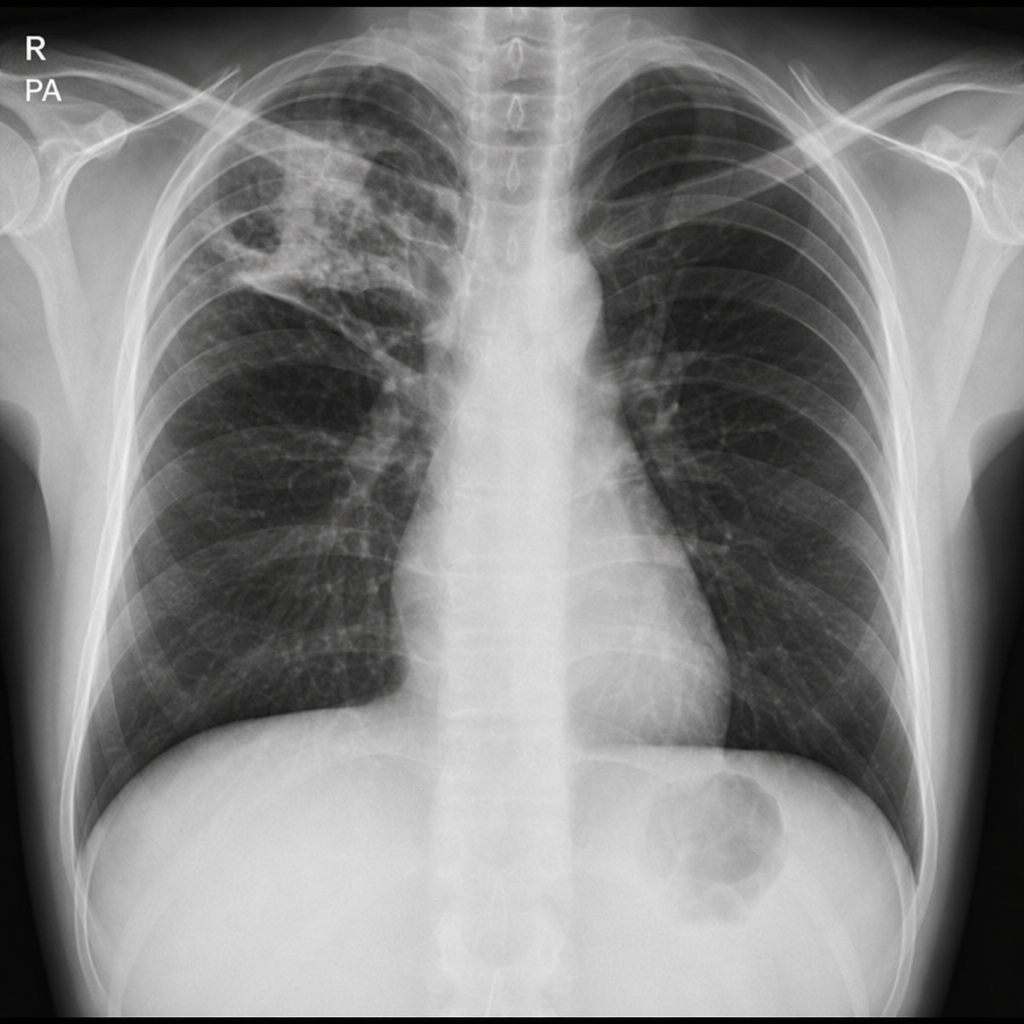
A 23-year-old woman from Texas is transferred to the intensive care unit after delivering a child at 40 weeks gestation. The pregnancy was not complicated, and there was some blood loss during the delivery. The patient was transferred for severe hypotension refractory to IV fluids and vasopressors. She is currently on norepinephrine and vasopressin with a mean arterial pressure of 67 mmHg. Her past medical history is notable only for a recent bout of asthma treated with albuterol and a prednisone taper over 5 days for contact dermatitis. Physical exam is notable for abnormally dark skin for a Caucasian woman. The patient states she feels extremely weak. However, she did experience breastmilk letdown and was able to breastfeed her infant. Laboratory values are ordered as seen below.
Serum:
Na+: 127 mEq/L
Cl-: 92 mEq/L
K+: 6.1 mEq/L
HCO3-: 22 mEq/L
BUN: 20 mg/dL
Creatinine: 1.1 mg/dL
Ca2+: 10.2 mg/dL
Which of the following is the most likely diagnosis?
Q282
A 56-year-old man comes to the physician because of lower back pain for the past 2 weeks. The pain is stabbing and shooting in quality and radiates down the backs of his legs. It began when he was lifting a bag of cement at work. The pain has been getting worse, and he has started to notice occasional numbness and clumsiness while walking. He has hypertension and peripheral artery disease. Medications include hydrochlorothiazide and aspirin. His temperature is 37°C (98.6°F), pulse is 82/min, and blood pressure is 133/92 mm Hg. Peripheral pulses are palpable in all four extremities. Neurological examination shows 5/5 strength in the upper extremities and 3/5 strength in bilateral foot dorsiflexion. Sensation to light touch is diminished bilaterally over the lateral thigh area and the inner side of lower legs. Passive raising of either the right or left leg causes pain radiating down the ipsilateral leg. Which of the following is the most appropriate next step in management?
Q283
A 22-year-old woman comes to the emergency department because of chest and epigastric pain that started just after vomiting 30 minutes ago. She does not take any medications and does not drink alcohol or smoke cigarettes. While in the emergency department, the patient experiences two episodes of forceful, bloody emesis. Her temperature is 99.1°F (37.3°C), pulse is 110/minute, and blood pressure is 105/60 mm Hg. Physical examination shows dental enamel erosion and calluses on the dorsal aspect of her right hand. There is tenderness to palpation in the epigastrium. An x-ray of the chest is normal. Further evaluation of this patient is most likely to show which of the following findings?
Q284
A 65-year-old man comes to the physician because of a 2-week history of dizziness, fatigue, and shortness of breath. He has noticed increased straining with bowel movements and decreased caliber of his stools over the past 3 months. He has no history of medical illness and takes no medications. He appears pale. Physical examination shows mild tachycardia and conjunctival pallor. Test of the stool for occult blood is positive. His hemoglobin concentration is 6.4 g/dL, and mean corpuscular volume is 74 μm3. A double-contrast barium enema study in this patient is most likely to show which of the following?
Q285
A 70-year-old male presents to his primary care physician for complaints of fatigue. The patient reports feeling tired during the day over the past 6 months. Past medical history is significant for moderately controlled type II diabetes. Family history is unremarkable. Thyroid stimulating hormone and testosterone levels are within normal limits. Complete blood cell count reveals the following: WBC 5.0, hemoglobin 9.0, hematocrit 27.0, and platelets 350. Mean corpuscular volume is 76. Iron studies demonstrate a ferritin of 15 ng/ml (nl 30-300). Of the following, which is the next best step?
Q286
A 42-year-old woman comes to the emergency department with gradually worsening pain in the abdomen and right flank. The abdominal pain started one week ago and is accompanied by foul-smelling, lightly-colored diarrhea. The flank pain started two days ago and is now an 8 out of 10 in intensity. It worsens on rapid movement. She has a history of intermittent knee arthralgias. She has refractory acid reflux and antral and duodenal peptic ulcers for which she currently takes omeprazole. She appears fatigued. Her pulse is 89/min and her blood pressure is 110/75 mmHg. Abdominal examination shows both epigastric and right costovertebral angle tenderness. Urine dipstick shows trace red blood cells (5–10/μL). Ultrasonography shows mobile hyperechogenic structures in the right ureteropelvic junction. Further evaluation is most likely going to show which of the following findings?
Q287
A 55-year-old man presents to urgent care for weakness and weight loss. He states for the past several months he has felt progressively weaker and has lost 25 pounds. The patient also endorses intermittent abdominal pain. The patient has not seen a physician in 30 years and recalls being current on most of his vaccinations. He says that a few years ago, he went to the emergency department due to abdominal pain and was found to have increased liver enzymes due to excessive alcohol use and incidental gallstones. The patient has a 50 pack-year smoking history. His temperature is 99.5°F (37.5°C), blood pressure is 161/108 mmHg, pulse is 90/min, respirations are 17/min, and oxygen saturation is 95% on room air. Physical exam reveals an emaciated man. The patient has a negative Murphy's sign and his abdomen is non-tender. Cardiopulmonary exam is within normal limits. Which of the following is the next best step in management?
Q288
A 44-year-old woman presents to the emergency department with severe, fluctuating right upper quadrant abdominal pain. The pain was initially a 4/10 but has increased recently to a 6/10 prompting her to come in. The patient has a past medical history of type II diabetes mellitus, depression, anxiety, and irritable bowel syndrome. Her current medications include metformin, glyburide, escitalopram and psyllium husks. On exam you note an obese woman with pain upon palpation of the right upper quadrant. The patient's vital signs are a pulse of 95/min, blood pressure of 135/90 mmHg, respirations of 15/min and 98% saturation on room air. Initial labs are sent off and the results are below:
Na+: 140 mEq/L
K+: 4.0 mEq/L
Cl-: 100 mEq/L
HCO3-: 24 mEq/L
AST: 100 U/L
ALT: 110 U/L
Amylase: 30 U/L
Alkaline phosphatase: 125 U/L
Bilirubin
Total: 2.5 mg/dL
Direct: 1.8 mg/dL
The patient is sent for a right upper quadrant ultrasound demonstrating an absence of stones, no pericholecystic fluid, a normal gallbladder contour and no abnormalities noted in the common bile duct. MRCP with secretin infusion is performed demonstrating patent biliary and pancreatic ductal systems. Her lab values and clinical presentation remain unchanged 24 hours later. Which of the following is the best next step in management?
Q289
A 27-year-old man presents to the emergency department with his family because of abdominal pain, excessive urination, and drowsiness since the day before. He has had type 1 diabetes mellitus for 2 years. He ran out of insulin 2 days ago. The vital signs at admission include: temperature 36.8°C (98.2°F), blood pressure 102/69 mm Hg, and pulse 121/min. On physical examination, he is lethargic and his breathing is rapid and deep. There is a mild generalized abdominal tenderness without rebound tenderness or guarding. His serum glucose is 480 mg/dL. Arterial blood gas of this patient will most likely show which of the following?
Q290
A 45-year-old man comes to the emergency department because of a 1-day history of black, tarry stools. He has also had upper abdominal pain that occurs immediately after eating and a 4.4-kg (9.7-lb) weight loss in the past 6 months. He has no history of major medical illness but drinks 3 beers daily. His only medication is acetaminophen. He is a financial consultant and travels often for work. Physical examination shows pallor and mild epigastric pain. Esophagogastroduodenoscopy shows a bleeding 15-mm ulcer in the antrum of the stomach. Which of the following is the strongest predisposing factor for this patient's condition?
Gastroenterology US Medical PG Practice Questions and MCQs
Question 281: A 23-year-old woman from Texas is transferred to the intensive care unit after delivering a child at 40 weeks gestation. The pregnancy was not complicated, and there was some blood loss during the delivery. The patient was transferred for severe hypotension refractory to IV fluids and vasopressors. She is currently on norepinephrine and vasopressin with a mean arterial pressure of 67 mmHg. Her past medical history is notable only for a recent bout of asthma treated with albuterol and a prednisone taper over 5 days for contact dermatitis. Physical exam is notable for abnormally dark skin for a Caucasian woman. The patient states she feels extremely weak. However, she did experience breastmilk letdown and was able to breastfeed her infant. Laboratory values are ordered as seen below.
Serum:
Na+: 127 mEq/L
Cl-: 92 mEq/L
K+: 6.1 mEq/L
HCO3-: 22 mEq/L
BUN: 20 mg/dL
Creatinine: 1.1 mg/dL
Ca2+: 10.2 mg/dL
Which of the following is the most likely diagnosis?
A. Withdrawal from prednisone use
B. Primary adrenal insufficiency (Correct Answer)
C. Sheehan syndrome
D. Acute kidney injury
E. Mycobacteria tuberculosis
Explanation: ***Primary adrenal insufficiency***
- This patient presents with **severe hypotension refractory to vasopressors**, **hyponatremia**, **hyperkalemia**, and **abnormally dark skin**, all classic signs of **primary adrenal insufficiency (Addison's disease)**. The recent stress of childbirth likely precipitated an adrenal crisis.
- The dark skin is due to increased **ACTH** (adrenocorticotropic hormone) levels, which also stimulates **melanocytes**, a hallmark of primary (not secondary) adrenal insufficiency.
*Withdrawal from prednisone use*
- While abrupt withdrawal from long-term corticosteroids can cause secondary adrenal insufficiency, this patient's prednisone course was **short (5 days)** for contact dermatitis, making significant adrenal suppression unlikely.
- This would lead to **decreased ACTH**, which would typically cause **pale skin**, not hyperpigmentation, differentiating it from primary adrenal insufficiency.
*Sheehan syndrome*
- **Sheehan syndrome** is **panhypopituitarism** caused by **ischemic necrosis of the pituitary gland** after severe postpartum hemorrhage.
- While the patient had some blood loss and postpartum hypotension, the presence of **breastmilk letdown** indicates intact **prolactin** production, which would be compromised in Sheehan syndrome. Also, skin pigmentation would be **pale** due to lack of ACTH.
*Acute kidney injury*
- Although the patient has **elevated BUN and creatinine** and **hyperkalemia**, these are likely secondary to **hypotension** and **hypoperfusion** due to adrenal crisis, rather than primary renal failure.
- The **hyponatremia** and **hyperkalemia** in adrenal insufficiency are due to **aldosterone deficiency**, not solely kidney dysfunction.
*Mycobacterium tuberculosis*
- While **adrenal tuberculosis** is a well-known cause of **primary adrenal insufficiency** and would present with similar features, it typically has a more **chronic, insidious onset** with constitutional symptoms (weight loss, night sweats) and often pulmonary involvement.
- Given the **acute presentation in the postpartum period** and lack of TB risk factors or chronic symptoms, this is a less likely etiology compared to autoimmune or other causes of primary adrenal insufficiency.
Question 282: A 56-year-old man comes to the physician because of lower back pain for the past 2 weeks. The pain is stabbing and shooting in quality and radiates down the backs of his legs. It began when he was lifting a bag of cement at work. The pain has been getting worse, and he has started to notice occasional numbness and clumsiness while walking. He has hypertension and peripheral artery disease. Medications include hydrochlorothiazide and aspirin. His temperature is 37°C (98.6°F), pulse is 82/min, and blood pressure is 133/92 mm Hg. Peripheral pulses are palpable in all four extremities. Neurological examination shows 5/5 strength in the upper extremities and 3/5 strength in bilateral foot dorsiflexion. Sensation to light touch is diminished bilaterally over the lateral thigh area and the inner side of lower legs. Passive raising of either the right or left leg causes pain radiating down the ipsilateral leg. Which of the following is the most appropriate next step in management?
A. Therapeutic exercise regimen
B. MRI of the lumbar spine (Correct Answer)
C. Erythrocyte sedimentation rate
D. X-ray of the lumbar spine
E. PSA measurement
Explanation: ***MRI of the lumbar spine***
- The patient presents with **progressive lower back pain** radiating down the legs, accompanied by **neurological deficits** such as foot weakness and sensory changes, particularly **diminished sensation** in specific dermatomal patterns (L4/L5-S1 distribution) and a positive **straight leg raise test**. These findings are highly suggestive of **radiculopathy** due to **herniated disc compression**.
- Given the presence of **neurological deficits** and the severity of symptoms, an **MRI of the lumbar spine** is the most appropriate next step to accurately localize the site of nerve root compression, characterize the disc pathology, and rule out other potential causes.
*Therapeutic exercise regimen*
- While therapeutic exercise is often part of the management for chronic back pain, it is not the most appropriate *initial* step for a patient presenting with **acute, severe, and progressive neurological deficits**.
- Performing exercises without a clear diagnosis can potentially exacerbate the condition or delay appropriate interventional treatment.
*Erythrocyte sedimentation rate*
- An **ESR** is a general inflammatory marker and would be useful if there were suspicion of an **inflammatory spondyloarthropathy** or **infection**.
- The patient's presentation with acute pain following a lifting injury and clear neurological signs points away from a primary inflammatory process as the immediate cause.
*X-ray of the lumbar spine*
- An **X-ray** can identify **bony abnormalities** like fractures, severe degenerative changes, or spondylolisthesis, but it is **poor at visualizing soft tissues** such as intervertebral discs and nerve roots.
- It would not provide sufficient detail to diagnose a **herniated disc** or assess nerve compression, which are strongly suspected given the neurological findings.
*PSA measurement*
- **PSA measurement** is a screening test for **prostate cancer**. While prostate cancer can metastasize to the spine and cause back pain, there are no specific symptoms or signs in this patient (e.g., urinary issues, bone pain consistent with metastatic disease without disc pathology) that would prioritize PSA over imaging for the immediate neurological signs.
- The acute onset following a lifting injury makes **mechanical disc pathology** a much more likely immediate cause of his symptoms.
Question 283: A 22-year-old woman comes to the emergency department because of chest and epigastric pain that started just after vomiting 30 minutes ago. She does not take any medications and does not drink alcohol or smoke cigarettes. While in the emergency department, the patient experiences two episodes of forceful, bloody emesis. Her temperature is 99.1°F (37.3°C), pulse is 110/minute, and blood pressure is 105/60 mm Hg. Physical examination shows dental enamel erosion and calluses on the dorsal aspect of her right hand. There is tenderness to palpation in the epigastrium. An x-ray of the chest is normal. Further evaluation of this patient is most likely to show which of the following findings?
A. Rupture of the distal esophagus
B. Friable mass in the distal esophagus
C. Clean-based gastric ulcer
D. Mucosal lacerations at the gastroesophageal junction (Correct Answer)
E. Dilated veins in the esophageal submucosa
Explanation: ***Mucosal lacerations at the gastroesophageal junction***
- This patient's symptoms (chest and epigastric pain after forceful vomiting, bloody emesis, hypotension) along with **dental enamel erosion** and **calluses on the dorsal aspect of the hand** (Russell's sign) are highly suggestive of **Mallory-Weiss tear** due to self-induced vomiting (bulimia nervosa).
- Mallory-Weiss syndrome involves **longitudinal mucosal lacerations** at the gastroesophageal junction caused by a sudden increase in intra-abdominal pressure during retching or vomiting, leading to gastrointestinal bleeding.
*Rupture of the distal esophagus*
- This describes **Boerhaave syndrome**, which is a transmural rupture of the esophagus, a more severe condition than a Mallory-Weiss tear.
- While also caused by forceful vomiting, Boerhaave syndrome would typically present with more severe symptoms, including **subcutaneous emphysema**, pleural effusion, and mediastinitis, and plain chest x-ray would often show **mediastinal air** or **pleural effusion**, which is normal in this patient.
*Friable mass in the distal esophagus*
- A friable mass would suggest an **esophageal carcinoma**, which is unlikely in a 22-year-old and typically presents with progressive dysphagia and weight loss, rather than acute pain and bleeding after vomiting.
- While bleeding can occur with esophageal tumors, the acute onset post-emesis and classic bulimia signs point away from malignancy.
*Clean-based gastric ulcer*
- A clean-based gastric ulcer is a potential cause of epigastric pain and GI bleeding, but the pain usually precedes vomiting or is exacerbated by food, and typically does not immediately follow intense retching.
- The dental enamel erosion and calluses on the hand strongly suggest a history of self-induced vomiting, making **Mallory-Weiss tear** a more specific diagnosis than a general gastric ulcer.
*Dilated veins in the esophageal submucosa*
- This describes **esophageal varices**, which are typically seen in patients with **portal hypertension** due to chronic liver disease (e.g., cirrhosis).
- The patient's history does not suggest liver disease, and variceal bleeding usually presents as painless, massive hematemesis, without the preceding forceful vomiting leading to a tear.
Question 284: A 65-year-old man comes to the physician because of a 2-week history of dizziness, fatigue, and shortness of breath. He has noticed increased straining with bowel movements and decreased caliber of his stools over the past 3 months. He has no history of medical illness and takes no medications. He appears pale. Physical examination shows mild tachycardia and conjunctival pallor. Test of the stool for occult blood is positive. His hemoglobin concentration is 6.4 g/dL, and mean corpuscular volume is 74 μm3. A double-contrast barium enema study in this patient is most likely to show which of the following?
A. Thumbprint sign of the transverse colon
B. Filling defect of the rectosigmoid colon (Correct Answer)
C. String sign in the terminal ileum
D. Diverticula in the sigmoid colon
E. Lead pipe sign of the descending colon
Explanation: ***Filling defect of the rectosigmoid colon***
- The patient's symptoms of **anemia** (dizziness, fatigue, shortness of breath, pallor, low Hb, microcytic MCV), **occult blood in stool**, and change in bowel habits (straining, decreased stool caliber) in a 65-year-old man are highly suspicious for **colorectal cancer**.
- **Rectosigmoid colon** is a common site for colorectal cancer, and a **filling defect** indicates a mass lesion on barium enema.
*Thumbprint sign of the transverse colon*
- The **thumbprint sign** on barium enema is indicative of **ischemic colitis**, where compromised blood flow to the colon wall causes mucosal edema and hemorrhage.
- This condition typically presents with sudden onset **abdominal pain** and bloody diarrhea, not the chronic symptoms of anemia and stool changes seen here.
*String sign in the terminal ileum*
- The **string sign** is characteristic of severe **Crohn's disease**, where chronic inflammation leads to stricture formation in the terminal ileum.
- Crohn's disease typically presents with chronic diarrhea, abdominal pain, and weight loss, and does not fit the chronic presentation of anemia and altered bowel habits seen in this case.
*Diverticula in the sigmoid colon*
- **Diverticula** are outpouchings of the colon wall, common in the sigmoid colon, and are often asymptomatic or cause mild abdominal pain and constipation.
- While diverticula can bleed, they do not explain the progressive change in stool caliber or the significant anemia consistent with a chronic bleeding mass.
*Lead pipe sign of the descending colon*
- The **lead pipe sign** refers to the loss of **haustral markings** and colonic shortening seen in chronic **ulcerative colitis**.
- Ulcerative colitis presents with bloody diarrhea, abdominal pain, and tenesmus, and while it can cause anemia, the change in stool caliber and positive occult blood without frank blood are less typical.
Question 285: A 70-year-old male presents to his primary care physician for complaints of fatigue. The patient reports feeling tired during the day over the past 6 months. Past medical history is significant for moderately controlled type II diabetes. Family history is unremarkable. Thyroid stimulating hormone and testosterone levels are within normal limits. Complete blood cell count reveals the following: WBC 5.0, hemoglobin 9.0, hematocrit 27.0, and platelets 350. Mean corpuscular volume is 76. Iron studies demonstrate a ferritin of 15 ng/ml (nl 30-300). Of the following, which is the next best step?
A. Blood transfusion
B. MRI abdomen
C. CT abdomen
D. Colonoscopy (Correct Answer)
E. Gel electrophoresis
Explanation: ***Colonoscopy***
- The patient presents with **fatigue** and **microcytic anemia** (hemoglobin 9.0, MCV 76), coupled with **low ferritin** (15 ng/ml), indicating **iron deficiency anemia**.
- In a 70-year-old male, **iron deficiency anemia** is a strong indicator of **gastrointestinal blood loss** (often occult), and colonoscopy is the most appropriate next step to investigate for potential causes like **colorectal cancer** or polyps.
- Standard evaluation typically includes **bidirectional endoscopy** (both upper and lower GI), but colonoscopy is prioritized in elderly males due to high risk of **colorectal malignancy**.
*Blood transfusion*
- While the patient's hemoglobin is low, there are no signs of **hemodynamic instability** or severe symptoms requiring immediate transfusion.
- Transfusing blood addresses the symptom (anemia) but does not identify or treat the **underlying cause** of the iron deficiency.
*MRI abdomen*
- An MRI of the abdomen is not the primary diagnostic tool for investigating the source of **GI blood loss** in iron deficiency anemia.
- It would be considered if other imaging or endoscopic procedures were inconclusive, or if specific **soft tissue abnormalities** were suspected.
*CT abdomen*
- A CT scan of the abdomen may identify large masses but is less sensitive than colonoscopy for detecting mucosal lesions, polyps, or early malignancies, which are common causes of **occult GI bleeding**.
- It also involves **radiation exposure** and is not the initial investigation of choice for suspected lower GI bleeding.
*Gel electrophoresis*
- Gel electrophoresis (e.g., hemoglobin electrophoresis) is used to diagnose **hemoglobinopathies** like **thalassemia** or **sickle cell disease**.
- Given the patient's **low ferritin** and **microcytic anemia**, iron deficiency is the most likely diagnosis, making electrophoresis an inappropriate next step.
Question 286: A 42-year-old woman comes to the emergency department with gradually worsening pain in the abdomen and right flank. The abdominal pain started one week ago and is accompanied by foul-smelling, lightly-colored diarrhea. The flank pain started two days ago and is now an 8 out of 10 in intensity. It worsens on rapid movement. She has a history of intermittent knee arthralgias. She has refractory acid reflux and antral and duodenal peptic ulcers for which she currently takes omeprazole. She appears fatigued. Her pulse is 89/min and her blood pressure is 110/75 mmHg. Abdominal examination shows both epigastric and right costovertebral angle tenderness. Urine dipstick shows trace red blood cells (5–10/μL). Ultrasonography shows mobile hyperechogenic structures in the right ureteropelvic junction. Further evaluation is most likely going to show which of the following findings?
A. Cutaneous flushing
B. Hypercalcemia (Correct Answer)
C. Hypertensive crisis
D. Pulmonary stenosis
E. QT prolongation on ECG
Explanation: ***Hypercalcemia***
- This patient's constellation of symptoms—kidney stones (right flank pain, hyperechogenic structures in the ureteropelvic junction), **refractory peptic ulcers**, and diarrhea—is highly suggestive of **Multiple Endocrine Neoplasia type 1 (MEN1)**.
- The refractory peptic ulcers in multiple locations (antral and duodenal) with diarrhea strongly suggest a **gastrinoma (Zollinger-Ellison syndrome)**, the most common functional pancreatic tumor in MEN1.
- **Hypercalcemia** from **primary hyperparathyroidism** is the most common (>95%) and often the **earliest biochemical manifestation** of MEN1, presenting years before pancreatic or pituitary tumors.
- Hypercalcemia leads to hypercalciuria and **calcium oxalate or calcium phosphate kidney stones**, explaining her flank pain and urinary findings.
- The intermittent knee arthralgias may represent bone/joint pain from hyperparathyroid bone disease.
*Cutaneous flushing*
- **Flushing** is characteristically associated with **carcinoid syndrome** (serotonin-secreting tumors) or **VIPoma** (vasoactive intestinal peptide-secreting tumors).
- While MEN1 can involve pancreatic neuroendocrine tumors, gastrinomas do not typically cause flushing, and this patient's presentation points to gastrinoma, not carcinoid.
*Hypertensive crisis*
- A **hypertensive crisis** with episodic severe hypertension, headaches, and palpitations suggests **pheochromocytoma**.
- Pheochromocytoma is a feature of **MEN2** (along with medullary thyroid carcinoma), not MEN1.
- This patient's blood pressure is normal (110/75 mmHg).
*Pulmonary stenosis*
- **Pulmonary stenosis** is a congenital cardiac defect seen in conditions like **Noonan syndrome** or as an isolated congenital heart disease.
- It has no association with MEN1 or endocrine neoplasia syndromes.
*QT prolongation on ECG*
- **QT prolongation** occurs with electrolyte abnormalities (hypokalemia, hypomagnesemia, hypocalcemia), certain medications, or congenital long QT syndromes.
- Notably, **hypercalcemia actually causes QT shortening**, not prolongation, making this finding unlikely in this patient.
Question 287: A 55-year-old man presents to urgent care for weakness and weight loss. He states for the past several months he has felt progressively weaker and has lost 25 pounds. The patient also endorses intermittent abdominal pain. The patient has not seen a physician in 30 years and recalls being current on most of his vaccinations. He says that a few years ago, he went to the emergency department due to abdominal pain and was found to have increased liver enzymes due to excessive alcohol use and incidental gallstones. The patient has a 50 pack-year smoking history. His temperature is 99.5°F (37.5°C), blood pressure is 161/108 mmHg, pulse is 90/min, respirations are 17/min, and oxygen saturation is 95% on room air. Physical exam reveals an emaciated man. The patient has a negative Murphy's sign and his abdomen is non-tender. Cardiopulmonary exam is within normal limits. Which of the following is the next best step in management?
A. CT scan of the abdomen (Correct Answer)
B. CT scan of the liver
C. Right upper quadrant ultrasound
D. HIDA scan
E. Smoking cessation advice and primary care follow up
Explanation: ***CT scan of the abdomen***
- The patient presents with **constitutional symptoms** (weakness, significant weight loss), **intermittent abdominal pain**, and a **50 pack-year smoking history**, which are red flags for potential **malignancy**.
- A CT scan of the abdomen is the most appropriate initial imaging study to **evaluate for masses, metastases, or other pathologies** that would explain these symptoms comprehensively.
*CT scan of the liver*
- While the patient has a history of elevated liver enzymes and gallstones, focusing solely on the liver might **miss other abdominal pathologies** that could explain his symptoms.
- A CT of the liver is a more targeted scan, usually performed after a broader abdominal assessment suggests a primary liver issue.
*Right upper quadrant ultrasound*
- An ultrasound of the right upper quadrant is excellent for evaluating the **gallbladder, bile ducts, and liver parenchyma** for stones, cholecystitis, or focal lesions.
- However, it has **limited ability to visualize the retroperitoneum, pancreas, or other bowel structures** which could be the source of the patient's symptoms.
*HIDA scan*
- A HIDA scan is used to assess **gallbladder function** and is primarily indicated for suspected **acute cholecystitis** when ultrasound findings are equivocal, or for chronic gallbladder dysfunction.
- The patient's presentation of generalized weakness, significant weight loss, and non-tender abdomen does not acutely point towards biliary obstruction or acute cholecystitis.
*Smoking cessation advice and primary care follow up*
- While **smoking cessation** is crucial for long-term health, and **primary care follow-up** is necessary, these steps are not the *next best step in management* for a patient presenting with alarming symptoms of weakness, significant weight loss, and abdominal pain.
- These are important secondary measures, but the immediate concern is to **investigate the cause of his current severe symptoms**.
Question 288: A 44-year-old woman presents to the emergency department with severe, fluctuating right upper quadrant abdominal pain. The pain was initially a 4/10 but has increased recently to a 6/10 prompting her to come in. The patient has a past medical history of type II diabetes mellitus, depression, anxiety, and irritable bowel syndrome. Her current medications include metformin, glyburide, escitalopram and psyllium husks. On exam you note an obese woman with pain upon palpation of the right upper quadrant. The patient's vital signs are a pulse of 95/min, blood pressure of 135/90 mmHg, respirations of 15/min and 98% saturation on room air. Initial labs are sent off and the results are below:
Na+: 140 mEq/L
K+: 4.0 mEq/L
Cl-: 100 mEq/L
HCO3-: 24 mEq/L
AST: 100 U/L
ALT: 110 U/L
Amylase: 30 U/L
Alkaline phosphatase: 125 U/L
Bilirubin
Total: 2.5 mg/dL
Direct: 1.8 mg/dL
The patient is sent for a right upper quadrant ultrasound demonstrating an absence of stones, no pericholecystic fluid, a normal gallbladder contour and no abnormalities noted in the common bile duct. MRCP with secretin infusion is performed demonstrating patent biliary and pancreatic ductal systems. Her lab values and clinical presentation remain unchanged 24 hours later. Which of the following is the best next step in management?
A. ERCP with manometry (Correct Answer)
B. Laparoscopy
C. Elective cholecystectomy
D. Analgesics and await resolution of symptoms
E. MRI of the abdomen
Explanation: ***ERCP with manometry***
- The patient's presentation with **biliary-type pain**, elevated liver enzymes (**AST, ALT, alkaline phosphatase**), and **conjugated hyperbilirubinemia** despite negative ultrasound and MRCP for gallstones or structural ductal abnormalities strongly suggests a **functional biliary disorder**, such as **sphincter of Oddi dysfunction (SOD)**.
- **ERCP with manometry** is the gold standard for diagnosing SOD by directly measuring the pressure within the sphincter of Oddi; this procedure can also offer therapeutic intervention via sphincterotomy.
*Laparoscopy*
- While laparoscopy can be used to perform a cholecystectomy for **acalculous cholecystitis** or **biliary dyskinesia**, these conditions are less likely given the **normal gallbladder contour** and lack of pericholecystic fluid, and would not directly address the possibility of sphincter of Oddi dysfunction.
- It is an invasive surgical procedure that would not provide diagnostic information about the patency or function of the biliary tree in the same way manometry does.
*Elective cholecystectomy*
- An **elective cholecystectomy** is not indicated as initial imaging (ultrasound, MRCP) has ruled out gallstones or significant structural gallbladder abnormalities, and the diagnosis of **biliary dyskinesia** has not been confirmed.
- Performing a cholecystectomy without a clear indication could lead to persistent symptoms if the underlying issue is **sphincter of Oddi dysfunction**.
*Analgesics and await resolution of symptoms*
- This approach is inappropriate given the **persistent pain**, **elevated liver enzymes**, and **hyperbilirubinemia**, which suggest an ongoing pathological process that requires diagnosis and definitive treatment.
- Simply masking the symptoms with analgesics would delay diagnosis and potentially lead to further complications.
*MRI of the abdomen*
- An **MRI of the abdomen** has already been performed in the form of an **MRCP** (Magnetic Resonance Cholangiopancreatography), which specifically visualizes the biliary and pancreatic ducts.
- Since the MRCP with secretin infusion was negative for structural abnormalities, a repeat or general MRI of the abdomen would likely not yield additional diagnostic information regarding the cause of the biliary pain and elevated liver enzymes.
Question 289: A 27-year-old man presents to the emergency department with his family because of abdominal pain, excessive urination, and drowsiness since the day before. He has had type 1 diabetes mellitus for 2 years. He ran out of insulin 2 days ago. The vital signs at admission include: temperature 36.8°C (98.2°F), blood pressure 102/69 mm Hg, and pulse 121/min. On physical examination, he is lethargic and his breathing is rapid and deep. There is a mild generalized abdominal tenderness without rebound tenderness or guarding. His serum glucose is 480 mg/dL. Arterial blood gas of this patient will most likely show which of the following?
A. ↑ pH, ↑ bicarbonate, and normal pCO2
B. ↓ pH, ↓ bicarbonate and ↑ anion gap (Correct Answer)
C. ↑ pH, normal bicarbonate and ↓ pCO2
D. ↓ pH, ↓ bicarbonate and normal anion gap
E. ↓ pH, normal bicarbonate and ↑ pCO2
Explanation: ***↓ pH, ↓ bicarbonate and ↑ anion gap***
- The patient's symptoms (abdominal pain, excessive urination, drowsiness, rapid and deep breathing, hyperglycemia) and history of Type 1 diabetes with missed insulin are highly suggestive of **diabetic ketoacidosis (DKA)**.
- DKA is characterized by **metabolic acidosis** due to the accumulation of ketone bodies, leading to a **decreased pH**, consumption of bicarbonate and thus a **decreased bicarbonate level**, and an **increased anion gap**.
*↑ pH, ↑ bicarbonate, and normal pCO2*
- This pattern suggests a **metabolic alkalosis**, which is inconsistent with the patient's presentation of DKA.
- Metabolic alkalosis is typically seen in conditions like severe vomiting or diuretic use, not uncontrolled diabetes.
*↑ pH, normal bicarbonate and ↓ pCO2*
- This profile describes **respiratory alkalosis**, often caused by primary hyperventilation.
- While the patient has rapid and deep breathing (Kussmaul respiration), this is a compensatory mechanism for metabolic acidosis, not a primary respiratory alkalosis.
*↓ pH, ↓ bicarbonate and normal anion gap*
- This indicates a **normal anion gap metabolic acidosis**, also known as hyperchloremic acidosis.
- This is typically seen in conditions like renal tubular acidosis or severe diarrhea, where bicarbonate is lost or chloride is retained, which is not the case for DKA.
*↓ pH, normal bicarbonate and ↑ pCO2*
- This presentation indicates **respiratory acidosis**, which is caused by hypoventilation and retention of CO2.
- The patient's rapid and deep breathing (Kussmaul breathing) is a compensatory mechanism to blow off CO2 and would decrease pCO2, not increase it.
Question 290: A 45-year-old man comes to the emergency department because of a 1-day history of black, tarry stools. He has also had upper abdominal pain that occurs immediately after eating and a 4.4-kg (9.7-lb) weight loss in the past 6 months. He has no history of major medical illness but drinks 3 beers daily. His only medication is acetaminophen. He is a financial consultant and travels often for work. Physical examination shows pallor and mild epigastric pain. Esophagogastroduodenoscopy shows a bleeding 15-mm ulcer in the antrum of the stomach. Which of the following is the strongest predisposing factor for this patient's condition?
A. Alcohol consumption
B. Age above 40 years
C. Helicobacter pylori infection (Correct Answer)
D. Acetaminophen use
E. Work-related stress
Explanation: ***Helicobacter pylori infection***
- The patient presents with classic symptoms of a **peptic ulcer disease** including **melena**, **epigastric pain** immediately after eating, and **weight loss**. While not explicitly mentioned, **H. pylori infection** is the most common cause of gastric and duodenal ulcers, especially in the absence of NSAID use.
- The chronic nature of the symptoms and the location of the ulcer in the **antrum** further support H. pylori as the primary predisposing factor, as it leads to mucosal inflammation and damage.
*Alcohol consumption*
- While **chronic alcohol consumption** can irritate the gastric mucosa and contribute to gastritis, it is generally considered a minor risk factor for peptic ulcer disease compared to H. pylori or NSAID use.
- The patient's 3 beers daily is likely not sufficient to directly cause a bleeding gastric ulcer of this magnitude.
*Age above 40 years*
- **Age** itself is not a direct predisposing factor for peptic ulcers, although the incidence of ulcers tends to increase with age.
- This is more likely due to the cumulative exposure to risk factors like H. pylori and NSAIDs over time, rather than age being an independent cause for ulcer formation.
*Acetaminophen use*
- **Acetaminophen (paracetamol)** is generally considered safe for the gastric mucosa and does not cause ulcers in therapeutic doses, unlike NSAIDs.
- It works through a different mechanism of action and does not inhibit cyclooxygenase-1 (COX-1) in the gastric lining, which is responsible for ulcer formation with NSAIDs.
*Work-related stress*
- While **stress** can exacerbate symptoms of gastrointestinal conditions, it has not been scientifically proven to be a direct cause of peptic ulcer formation.
- The role of psychological stress in ulcer genesis is considered minimal compared to established factors like H. pylori and NSAIDs.