A 45-year-old man comes to the physician because of severe left knee pain and swelling. He has hypercholesterolemia and hypertension. Current medications include pravastatin and captopril. He eats a low-fat diet that includes fish and leafy green vegetables. He drinks 4–6 cups of coffee daily. He has smoked one pack of cigarettes daily for 26 years and drinks 2–3 beers daily. Vital signs are within normal limits. Examination of the left knee shows swelling, warmth, and severe tenderness to palpation. Arthrocentesis is performed. Gram stain is negative. Analysis of the synovial fluid shows monosodium urate crystals. Which of the following health maintenance recommendations is most appropriate to prevent symptom recurrence?
Q202
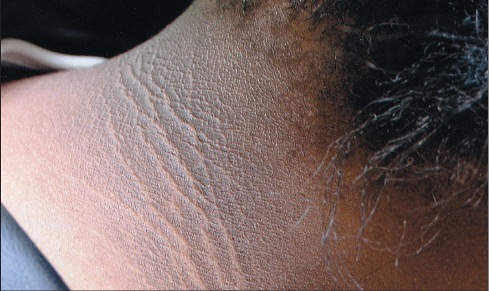
A 33-year-old man presents with a darkening of the skin on his neck over the past month. Past medical history is significant for primary hypothyroidism treated with levothyroxine. His vital signs include: blood pressure 130/80 mm Hg, pulse 84/min, respiratory rate 18/min, temperature 36.8°C (98.2°F). His body mass index is 35.3 kg/m2. Laboratory tests reveal a fasting blood glucose of 121 mg/dL and a thyroid-stimulating hormone level of 2.8 mcU/mL. The patient’s neck is shown in the exhibit. Which of the following is the best initial treatment for this patient?
Q203
A 33-year-old man presents to the emergency department with back pain. He is currently intoxicated but states that he is having severe back pain and is requesting morphine and lorazepam. The patient has a past medical history of alcohol abuse, drug seeking behavior, and IV drug abuse and does not routinely see a physician. His temperature is 102°F (38.9°C), blood pressure is 127/68 mmHg, pulse is 120/min, respirations are 17/min, and oxygen saturation is 98% on room air. Physical exam is notable for tenderness over the thoracic and lumbar spine. The pain is exacerbated with flexion of the spine. The patient’s laboratory values are notable for the findings below.
Hemoglobin: 12 g/dL
Hematocrit: 36%
Leukocyte count: 16,500/mm^3 with normal differential
Platelet count: 197,000/mm^3
Serum:
Na+: 139 mEq/L
Cl-: 100 mEq/L
K+: 4.3 mEq/L
HCO3-: 25 mEq/L
BUN: 20 mg/dL
Glucose: 99 mg/dL
Creatinine: 1.1 mg/dL
Ca2+: 10.2 mg/dL
CRP: 5.2 mg/L
Further imaging is currently pending. Which of the following is the most likely diagnosis?
Q204
A 35-year-old male with a history of hypertension presents with hematuria and abdominal discomfort. Ultrasound and CT scan reveal large, bilateral cysts in all regions of the kidney. What is the most likely diagnosis?
Q205
A 63-year-old man presents to the emergency department complaining of sudden-onset severe dyspnea and right-sided chest pain. The patient has a history of chronic obstructive pulmonary disease, hypertension, peptic ulcer disease, and hyperthyroidism. He has smoked a pack of cigarettes daily for 20 years, drinks socially, and does not take illicit drugs. The blood pressure is 130/80 mm Hg, the pulse is 98/min and regular, and the respiratory rate is 20/min. Pulse oximetry shows 90% on room air. On physical examination, he is in mild respiratory distress. Tactile fremitus and breath sounds are decreased on the right, with hyperresonance on percussion. The trachea is midline and no heart murmurs are heard. Which of the following is the most likely underlying mechanism of this patient's current condition?
Q206
A 57-year-old man presents with an ongoing asymptomatic rash for 2 weeks. A similar rash is seen in both axillae. He has a medical history of diabetes mellitus for 5 years and dyspepsia for 6 months. His medications include metformin and aspirin. His vital signs are within normal limits. His BMI is 29 kg/m2. The physical examination shows conjunctival pallor. The cardiopulmonary examination reveals no abnormalities. The laboratory test results are as follows:
Hemoglobin 9 g/dL
Mean corpuscular volume 72 μm3
Platelet count 469,000/mm3
Red cell distribution width 18%
HbA1C 6.5%
Which of the following is the most likely underlying cause of this patient’s condition?
Q207
A 65-year-old patient presents with acute left lower quadrant abdominal pain and is diagnosed with diverticulitis. Which of the following is most likely to have prevented this patient's condition?
Q208
A 47-year-old woman comes to the physician because of progressive pain and stiffness in her hands and wrists for the past several months. Her hands are stiff in the morning; the stiffness improves as she starts her chores. Physical examination shows bilateral swelling and tenderness of the wrists, metacarpophalangeal joints, and proximal interphalangeal joints. Her range of motion is limited by pain. Laboratory studies show an increased erythrocyte sedimentation rate. This patient's condition is most likely associated with which of the following findings?
Q209
A 69-year-old man presents with progressive dysphagia and a 5-kg weight loss over 3 months. Initially, he had difficulty swallowing solids, which progressed to include liquids in the past week. Endoscopy reveals a mass 3 cm proximal to the esophagogastric junction. Biopsy shows significant distortion of glandular architecture, consistent with adenocarcinoma. Which of the following is the strongest risk factor for this patient's likely diagnosis?
Q210
A 6-year-old girl with no significant past medical, surgical, social, or family history presents to urgent care for a new itchy rash on the fingers of her right hand. When questioned, the patient notes that she recently received a pair of beloved silver rings from her aunt as a birthday present. She denies any history of similar rashes. The patient's blood pressure is 123/76 mm Hg, pulse is 67/min, respiratory rate is 16/min, and temperature is 37.3°C (99.1°F). Physical examination reveals erythematous scaly plaques at the base of her right middle and ring finger. What metal alloy is most likely contained within the patient’s new rings?
Gastroenterology US Medical PG Practice Questions and MCQs
Question 201: A 45-year-old man comes to the physician because of severe left knee pain and swelling. He has hypercholesterolemia and hypertension. Current medications include pravastatin and captopril. He eats a low-fat diet that includes fish and leafy green vegetables. He drinks 4–6 cups of coffee daily. He has smoked one pack of cigarettes daily for 26 years and drinks 2–3 beers daily. Vital signs are within normal limits. Examination of the left knee shows swelling, warmth, and severe tenderness to palpation. Arthrocentesis is performed. Gram stain is negative. Analysis of the synovial fluid shows monosodium urate crystals. Which of the following health maintenance recommendations is most appropriate to prevent symptom recurrence?
A. Reduce fish intake
B. Start aspirin
C. Discontinue captopril
D. Start colchicine (Correct Answer)
E. Discontinue pravastatin
Explanation: **Start colchicine**
- The presence of **monosodium urate crystals** in the synovial fluid confirms a diagnosis of **gouty arthritis**. Chronic prophylaxis with **low-dose colchicine** is recommended for patients with recurrent gout attacks.
- **Colchicine** works by inhibiting tubulin polymerization, thereby reducing the inflammatory response to urate crystals.
*Reduce fish intake*
- While a diet high in purines can exacerbate gout, **fish intake**, especially species like salmon and tuna, are generally considered part of a healthy diet and its direct reduction is not the primary intervention for recurrent gout.
- The patient's primary dietary risk factors are most likely related to **alcohol consumption**, not green vegetables or typical fish intake.
*Start aspirin*
- **Aspirin** (especially low-dose) can **increase serum uric acid levels** by inhibiting renal uric acid excretion, which could worsen gout and is generally contraindicated for long-term gout prophylaxis.
- There is no indication for starting aspirin in the absence of cardiovascular disease, and its effect on uric acid would be detrimental in this context.
*Discontinue captopril*
- **Captopril**, an ACE inhibitor, has been shown to have a **neutral or even uricosuric effect**, meaning it tends to lower or have no significant impact on uric acid levels.
- Discontinuing an effective medication for hypertension without a clear detrimental effect on gout is not appropriate, especially when other more direct interventions for gout are available.
*Discontinue pravastatin*
- **Pravastatin**, a statin, is used to treat hypercholesterolemia and has no direct significant impact on uric acid metabolism or gout flares.
- There is no medical reason to discontinue pravastatin for gout prevention, and it would leave the patient's hypercholesterolemia untreated.
Question 202: A 33-year-old man presents with a darkening of the skin on his neck over the past month. Past medical history is significant for primary hypothyroidism treated with levothyroxine. His vital signs include: blood pressure 130/80 mm Hg, pulse 84/min, respiratory rate 18/min, temperature 36.8°C (98.2°F). His body mass index is 35.3 kg/m2. Laboratory tests reveal a fasting blood glucose of 121 mg/dL and a thyroid-stimulating hormone level of 2.8 mcU/mL. The patient’s neck is shown in the exhibit. Which of the following is the best initial treatment for this patient?
A. Isotretinoin
B. Exercise and diet (Correct Answer)
C. Adjust the dose of levothyroxine
D. Cyproheptadine
E. Surgical excision
Explanation: ***Exercise and diet***
- The patient's **darkened, velvety skin lesions** on the neck, known as **acanthosis nigricans**, commonly indicate **insulin resistance**, which is supported by his elevated BMI (35.3 kg/m2) and fasting blood glucose (121 mg/dL, indicating prediabetes).
- The most effective initial treatment for acanthosis nigricans associated with insulin resistance is to address the underlying metabolic dysfunction through **lifestyle modifications**, specifically **weight loss** via exercise and diet.
*Isotretinoin*
- **Isotretinoin** is a retinoid primarily used for treating severe **acne vulgaris** and sometimes other severe dermatological conditions.
- It is not indicated for the treatment of **acanthosis nigricans** and would not address the underlying **insulin resistance**.
*Adjust the dose of levothyroxine*
- The patient's **TSH level is 2.8 mcU/mL**, which is within the normal range for someone on levothyroxine therapy for hypothyroidism.
- There is no indication that his hypothyroidism is poorly controlled or directly contributing to the **acanthosis nigricans**, thus adjusting the levothyroxine dose is unnecessary and not directly related to the skin condition.
*Cyproheptadine*
- **Cyproheptadine** is an **antihistamine** with anti-serotonergic properties used for various conditions including allergies, pruritus, and appetite stimulation.
- It has no role in the management of **acanthosis nigricans** or the underlying **insulin resistance**.
*Surgical excision*
- **Surgical excision** is a procedure to remove tissue, typically used for lesions that are cancerous, bothersome, or cosmetically undesirable and small.
- **Acanthosis nigricans** is a skin manifestation of an underlying systemic condition (insulin resistance); surgical removal would be inappropriate, ineffective, and would not address the root cause, and the lesions are often diffuse.
Question 203: A 33-year-old man presents to the emergency department with back pain. He is currently intoxicated but states that he is having severe back pain and is requesting morphine and lorazepam. The patient has a past medical history of alcohol abuse, drug seeking behavior, and IV drug abuse and does not routinely see a physician. His temperature is 102°F (38.9°C), blood pressure is 127/68 mmHg, pulse is 120/min, respirations are 17/min, and oxygen saturation is 98% on room air. Physical exam is notable for tenderness over the thoracic and lumbar spine. The pain is exacerbated with flexion of the spine. The patient’s laboratory values are notable for the findings below.
Hemoglobin: 12 g/dL
Hematocrit: 36%
Leukocyte count: 16,500/mm^3 with normal differential
Platelet count: 197,000/mm^3
Serum:
Na+: 139 mEq/L
Cl-: 100 mEq/L
K+: 4.3 mEq/L
HCO3-: 25 mEq/L
BUN: 20 mg/dL
Glucose: 99 mg/dL
Creatinine: 1.1 mg/dL
Ca2+: 10.2 mg/dL
CRP: 5.2 mg/L
Further imaging is currently pending. Which of the following is the most likely diagnosis?
A. Musculoskeletal strain
B. Spinal epidural abscess (Correct Answer)
C. Spinal epidural hematoma
D. Malingering
E. Herniated nucleus pulposus
Explanation: ***Spinal epidural abscess***
- The patient's history of **IV drug abuse**, **fever (102°F)**, **tachycardia**, and **elevated CRP and WBC count** are highly suggestive of an infection like a spinal epidural abscess.
- **Back pain exacerbated by spinal flexion** is a common symptom, and while the patient's drug-seeking behavior might initially mask clinical suspicion, the objective signs of infection warrant immediate further investigation.
*Musculoskeletal strain*
- This typically presents with localized back pain, but it would not explain the **fever**, **tachycardia**, **elevated WBC count**, or **elevated CRP**.
- A musculoskeletal strain is not associated with the systemic inflammatory response seen in this patient.
*Spinal epidural hematoma*
- While it can cause severe back pain, a spinal epidural hematoma is usually associated with **trauma**, **anticoagulant use**, or underlying **coagulopathy**, none of which are explicitly mentioned or supported by the labs here.
- It would not typically present with **fever** or an **elevated WBC count**.
*Malingering*
- Although the patient has a history of **drug-seeking behavior**, the presence of objective signs like **fever**, **tachycardia**, and **inflammatory markers (elevated CRP and WBC count)** strongly contradict a diagnosis of malingering.
- It would be dangerous and inappropriate to dismiss these physical findings as purely behavioral.
*Herniated nucleus pulposus*
- This condition causes back pain, often with **radicular symptoms**, but it is not associated with **fever**, **tachycardia**, or systemic inflammatory markers.
- While it can cause pain exacerbated by flexion, the **infectious signs** point away from a simple herniation.
Question 204: A 35-year-old male with a history of hypertension presents with hematuria and abdominal discomfort. Ultrasound and CT scan reveal large, bilateral cysts in all regions of the kidney. What is the most likely diagnosis?
A. Henoch-Schonlein purpura
B. Diabetes mellitus
C. Aortic stenosis
D. Berger’s disease
E. Polycystic kidney disease (Correct Answer)
Explanation: ***Polycystic kidney disease***
- The presentation of **bilateral, large renal cysts** on imaging, along with **hematuria** and **hypertension** in a 35-year-old, is classic for **autosomal dominant polycystic kidney disease (ADPKD)**.
- ADPKD is a systemic disorder that can also cause cysts in other organs and is a leading cause of **end-stage renal disease**.
*Henoch-Schonlein purpura*
- This is a **small-vessel vasculitis** characterized by palpable purpura, arthritis, abdominal pain, and renal involvement (usually IgA nephropathy).
- It does not present with **large, bilateral renal cysts**.
*Diabetes mellitus*
- **Diabetic nephropathy** is a common complication causing progressive kidney damage and is a leading cause of kidney failure.
- However, it typically manifests as **proteinuria**, progressive decline in GFR, and eventually end-stage renal disease, not large renal cysts.
*Aortic stenosis*
- **Aortic stenosis** is a valvular heart disease impacting blood flow from the heart and is entirely unrelated to renal cysts or the described kidney pathology.
- While it can be associated with bleeding disorders (e.g., Heyde's syndrome), it does not directly cause **renal disease or cysts.**
*Berger’s disease*
- Also known as **IgA nephropathy**, Berger's disease is an immune-mediated glomerulonephritis, often presenting with recurrent **gross hematuria**, particularly after an upper respiratory infection.
- It involves inflammation of the glomeruli, not the development of **large renal cysts**.
Question 205: A 63-year-old man presents to the emergency department complaining of sudden-onset severe dyspnea and right-sided chest pain. The patient has a history of chronic obstructive pulmonary disease, hypertension, peptic ulcer disease, and hyperthyroidism. He has smoked a pack of cigarettes daily for 20 years, drinks socially, and does not take illicit drugs. The blood pressure is 130/80 mm Hg, the pulse is 98/min and regular, and the respiratory rate is 20/min. Pulse oximetry shows 90% on room air. On physical examination, he is in mild respiratory distress. Tactile fremitus and breath sounds are decreased on the right, with hyperresonance on percussion. The trachea is midline and no heart murmurs are heard. Which of the following is the most likely underlying mechanism of this patient's current condition?
A. Compression of a main bronchus due to neoplasia
B. Formation of an intimal flap in the aorta
C. Perforation of a peptic ulcer
D. Increased myocardial oxygen demand
E. Rupture of an apical alveolar bleb (Correct Answer)
Explanation: ***Rupture of an apical alveolar bleb***
- The sudden onset of **dyspnea**, **right-sided chest pain**, decreased tactile fremitus and breath sounds, and **hyperresonance on percussion** strongly suggest a **spontaneous pneumothorax**.
- In a patient with a history of **COPD** and smoking, a **ruptured alveolar bleb** is the most common cause of spontaneous pneumothorax.
*Compression of a main bronchus due to neoplasia*
- Bronchial compression might cause dyspnea and decreased breath sounds, but typically presents with **dullness on percussion** due to atelectasis, not hyperresonance.
- This condition usually has a more **insidious onset** rather than sudden, severe symptoms.
*Formation of an intimal flap in the aorta*
- An **aortic dissection** would present with sudden, severe, tearing chest pain, often radiating to the back, and might be associated with pulse deficits or neurological symptoms.
- It would not typically cause **hyperresonance on percussion** or decreased breath sounds with preserved tracheal position.
*Perforation of a peptic ulcer*
- A perforated peptic ulcer causes sudden, severe **epigastric pain** that often radiates to the shoulder, and typically presents with a rigid, board-like abdomen and signs of peritonitis.
- It would not explain the unilateral respiratory findings such as **hyperresonance** and decreased breath sounds.
*Increased myocardial oxygen demand*
- Increased myocardial oxygen demand can lead to **angina** or **myocardial infarction**, presenting with chest pain, but this pain is typically crushing or constricting, not pleuritic.
- It would not cause the specific physical examination findings of **decreased breath sounds** or **hyperresonance** on one side of the chest.
Question 206: A 57-year-old man presents with an ongoing asymptomatic rash for 2 weeks. A similar rash is seen in both axillae. He has a medical history of diabetes mellitus for 5 years and dyspepsia for 6 months. His medications include metformin and aspirin. His vital signs are within normal limits. His BMI is 29 kg/m2. The physical examination shows conjunctival pallor. The cardiopulmonary examination reveals no abnormalities. The laboratory test results are as follows:
Hemoglobin 9 g/dL
Mean corpuscular volume 72 μm3
Platelet count 469,000/mm3
Red cell distribution width 18%
HbA1C 6.5%
Which of the following is the most likely underlying cause of this patient’s condition?
A. Gastric cancer (Correct Answer)
B. Sarcoidosis
C. Diabetes mellitus
D. Metformin
E. Aspirin
Explanation: ***Gastric cancer***
- The patient presents with **iron deficiency anemia** (low hemoglobin, low MCV, high RDW) and dyspepsia, which are concerning for **chronic gastrointestinal bleeding** due to malignancy, particularly in a 57-year-old male.
- The presence of an ongoing, asymptomatic rash, especially in the axillae, is consistent with **acanthosis nigricans**, a paraneoplastic syndrome strongly associated with gastric adenocarcinoma.
- The combination of alarm features (age >55, anemia, new-onset dyspepsia) warrants urgent upper endoscopy.
*Sarcoidosis*
- This condition typically presents with **non-caseating granulomas** in multiple organs (lungs, lymph nodes, skin, eyes), and while it can cause skin lesions (erythema nodosum, lupus pernio), it does not explain the **microcytic anemia** or dyspepsia.
- It is more commonly associated with elevated **angiotensin-converting enzyme (ACE)** levels and hypercalcemia, which are not suggested here.
*Diabetes mellitus*
- While uncontrolled diabetes can lead to various complications, it does not directly cause **microcytic, hypochromic anemia** as seen in this patient.
- Although **acanthosis nigricans** can be associated with insulin resistance and type 2 diabetes, its presence alongside significant iron deficiency anemia and alarm symptoms makes an underlying malignancy more probable.
*Metformin*
- Metformin can cause **vitamin B12 deficiency anemia** (macrocytic anemia) due to impaired absorption, but it does not cause **iron deficiency anemia** (microcytic anemia).
- Metformin does not cause acanthosis nigricans or explain the constellation of findings suggesting malignancy.
*Aspirin*
- While aspirin can cause **gastric irritation and bleeding**, leading to iron deficiency anemia, it does not explain the **acanthosis nigricans**.
- Aspirin-induced gastropathy typically presents with acute symptoms or chronic mild blood loss, but would not cause a paraneoplastic skin manifestation.
- The combination of acanthosis nigricans with iron deficiency anemia and dyspepsia points more strongly to an underlying malignancy rather than medication effect alone.
Question 207: A 65-year-old patient presents with acute left lower quadrant abdominal pain and is diagnosed with diverticulitis. Which of the following is most likely to have prevented this patient's condition?
A. Anticoagulation with warfarin
B. High-fiber diet (Correct Answer)
C. Different antibiotic regimen for bronchitis
D. Sitz baths and nifedipine suppositories
E. Long-term use of aspirin
Explanation: ***High-fiber diet***
- A **high-fiber diet** increases stool bulk and reduces intracolonic pressure, thereby preventing the formation of **diverticula** and reducing the risk of diverticulitis.
- It helps maintain **regular bowel movements** and minimizes straining, which are key in preventing diverticular disease.
*Anticoagulation with warfarin*
- **Warfarin** is an anticoagulant used to prevent blood clots; it has no direct impact on the formation of **diverticula** or the prevention of diverticulitis.
- While bleeding is a potential complication of diverticular disease, anticoagulation would generally *increase* the risk of bleeding, not prevent the condition itself.
*Different antibiotic regimen for bronchitis*
- Antibiotics treat **bacterial infections** and are irrelevant in the prevention of diverticulitis, which primarily relates to dietary and colonic pressure issues.
- Changing an antibiotic regimen for an unrelated respiratory infection like bronchitis would not affect the risk factors for **diverticular disease**.
*Sitz baths and nifedipine suppositories*
- **Sitz baths** and **nifedipine suppositories** are treatments for anorectal conditions like **hemorrhoids** or **anal fissures** and do not influence the development of diverticulitis.
- These interventions target symptoms in the anal region and have no physiological connection to the colon's diverticular disease processes.
*Long-term use of aspirin*
- **Aspirin** is an anti-inflammatory and antiplatelet agent used for pain relief and cardiovascular protection; it does not prevent the formation of **diverticula** or diverticulitis.
- Non-steroidal anti-inflammatory drugs (NSAIDs) like aspirin can actually **increase the risk of diverticular complications**, such as bleeding or perforation, rather than prevent the disease.
Question 208: A 47-year-old woman comes to the physician because of progressive pain and stiffness in her hands and wrists for the past several months. Her hands are stiff in the morning; the stiffness improves as she starts her chores. Physical examination shows bilateral swelling and tenderness of the wrists, metacarpophalangeal joints, and proximal interphalangeal joints. Her range of motion is limited by pain. Laboratory studies show an increased erythrocyte sedimentation rate. This patient's condition is most likely associated with which of the following findings?
A. IgM antibodies against the Fc region of IgG (Correct Answer)
B. HLA-B27 protein on white blood cells
C. HLA-A3 proteins on white blood cells
D. HLA-DQ2 proteins on white blood cells
E. IgG antibodies with a TNF-α binding domain on the Fc region
Explanation: ***IgM antibodies against the Fc region of IgG***
- The patient's symptoms of symmetric **polyarthritis** affecting the **small joints of the hands and wrists**, morning stiffness that improves with activity, and elevated ESR are highly suggestive of **rheumatoid arthritis (RA)**.
- The finding described, **rheumatoid factor (RF)**, is an IgM antibody directed against the Fc portion of IgG and is a hallmark of RA.
*HLA-B27 protein on white blood cells*
- **HLA-B27** is strongly associated with **seronegative spondyloarthropathies**, such as **ankylosing spondylitis** and **reactive arthritis**.
- These conditions typically involve the **axial skeleton** (spine) and large joints, which differs from the presentation of small joint polyarthritis seen here.
*HLA-A3 proteins on white blood cells*
- **HLA-A3** is associated with **hereditary hemochromatosis**, a disorder of iron overload.
- While hemochromatosis can cause arthropathy, it typically affects the **second and third metacarpophalangeal joints** and does not present with the classic features of rheumatoid arthritis described.
*HLA-DQ2 proteins on white blood cells*
- **HLA-DQ2** is strongly associated with **celiac disease** and, to a lesser extent, type 1 diabetes.
- These conditions are not directly linked to the inflammatory polyarthritis presented by this patient.
*IgG antibodies with a TNF-α binding domain on the Fc region*
- This description refers to **therapeutic monoclonal antibodies** (biologics) used to treat inflammatory conditions like RA, such as **infliximab** or **adalimumab**, which are designed to bind TNF-α.
- These are **pharmacological interventions**, not diagnostic markers or naturally occurring antibodies in rheumatoid arthritis.
Question 209: A 69-year-old man presents with progressive dysphagia and a 5-kg weight loss over 3 months. Initially, he had difficulty swallowing solids, which progressed to include liquids in the past week. Endoscopy reveals a mass 3 cm proximal to the esophagogastric junction. Biopsy shows significant distortion of glandular architecture, consistent with adenocarcinoma. Which of the following is the strongest risk factor for this patient's likely diagnosis?
A. Chronic alcohol use
B. Visceral obesity (Correct Answer)
C. Consumption of hot liquids
D. Chewing of betel nuts
E. Consumption of cured meats
Explanation: ***Visceral obesity***
- The patient's presentation of dysphagia becoming progressively worse from solids to liquids, along with significant weight loss and an **esophagogastric junction (EGJ)** adenocarcinoma, strongly points to **esophageal adenocarcinoma**.
- **Visceral obesity** is a major risk factor for gastroesophageal reflux disease (GERD) and **Barrett's esophagus**, which are precursors to **EGJ adenocarcinoma**.
*Chronic alcohol use*
- While chronic alcohol use is a significant risk factor for **squamous cell carcinoma** of the esophagus, it is not as strongly linked to **adenocarcinoma**, especially at the EGJ.
- The patient's cancer location (3 cm proximal to EGJ) and histological type (**adenocarcinoma**) make alcohol a less likely primary risk factor compared to other options.
*Consumption of hot liquids*
- Consumption of very **hot liquids** is a known risk factor for **squamous cell carcinoma** of the esophagus, particularly in the mid and upper esophagus.
- It is not a primary risk factor for **adenocarcinoma** occurring at the esophagogastric junction.
*Chewing of betel nuts*
- **Betel nut chewing** is strongly associated with an increased risk of **oral cancer** (squamous cell carcinoma of the oral cavity and pharynx) and to a lesser extent **esophageal squamous cell carcinoma**.
- It is not considered a significant risk factor for **esophageal adenocarcinoma**.
*Consumption of cured meats*
- High intake of **cured and processed meats** has been associated with an increased risk of several gastrointestinal cancers, particularly **gastric cancer** and **colorectal cancer**.
- Its association with **esophageal adenocarcinoma** is not as strong or direct as that of visceral obesity and GERD.
Question 210: A 6-year-old girl with no significant past medical, surgical, social, or family history presents to urgent care for a new itchy rash on the fingers of her right hand. When questioned, the patient notes that she recently received a pair of beloved silver rings from her aunt as a birthday present. She denies any history of similar rashes. The patient's blood pressure is 123/76 mm Hg, pulse is 67/min, respiratory rate is 16/min, and temperature is 37.3°C (99.1°F). Physical examination reveals erythematous scaly plaques at the base of her right middle and ring finger. What metal alloy is most likely contained within the patient’s new rings?
A. Gold
B. Cobalt
C. Mercury
D. Nickel (Correct Answer)
E. Thorium
Explanation: ***Nickel***
- The itchy rash with erythematous scaly plaques on the fingers where the rings are worn is highly suggestive of **allergic contact dermatitis**. Nickel is the most common metal alloy implicated in **contact dermatitis** from jewelry.
- The symptoms developing after wearing new silver rings point to a reaction to a component within the rings, and nickel is frequently used in silver alloys to add hardness and durability.
*Gold*
- While gold alloys can cause contact dermatitis, it is far less common than with nickel, and typically occurs with **lower karat gold** (e.g., 9-14K) which contains higher percentages of other metals.
- High-grade gold (e.g., 18K or 24K) is generally **hypoallergenic**.
*Cobalt*
- Cobalt can cause allergic contact dermatitis, often in association with **nickel allergy** as they are chemically related.
- However, cobalt is less frequently found in common jewelry than nickel and is not the primary suspect in this typical presentation.
*Mercury*
- Mercury exposure more commonly causes systemic toxicity (e.g., **neurological or renal effects**) or irritant contact dermatitis, rather than allergic contact dermatitis from jewelry.
- Allergic reactions to mercury from jewelry are rare, and exposure is more likely from dental amalgams or broken thermometers.
*Thorium*
- Thorium is a **radioactive metal** and is not typically used in jewelry due to its radiological properties and toxicity.
- Exposure to thorium poses risks of radiation exposure and heavy metal poisoning, not allergic contact dermatitis from a simple ring.