A patient presents with right upper quadrant pain, fever, and nonbloody vomiting. Which of the following risk factors is most likely associated with the patient's condition?
Q162
A 42-year-old man comes to his primary care physician complaining of abdominal pain. He describes intermittent, burning, epigastric pain over the past 4 months. He reports that the pain worsens following meals. He had an upper gastrointestinal endoscopy done 2 months ago that showed a gastric ulcer without evidence of malignancy. The patient was prescribed pantoprazole with minimal improvement in symptoms. He denies nausea, vomiting, diarrhea, or melena. The patient has no other medical problems. He had a total knee replacement 3 years ago following a motor vehicle accident for which he took naproxen for 2 months for pain management. He has smoked 1 pack per day since the age of 22 and drinks 1-2 beers several nights a week with dinner. He works as a truck driver, and his diet consists mostly of fast food. His family history is notable for hypertension in his paternal grandfather and coronary artery disease in his mother. On physical examination, the abdomen is soft, nondistended, and mildly tender in the mid-epigastric region. A stool test is positive for Helicobacter pylori antigen. In addition to antibiotic therapy, which of the following is the most likely to decrease the recurrence of the patient's symptoms?
Q163
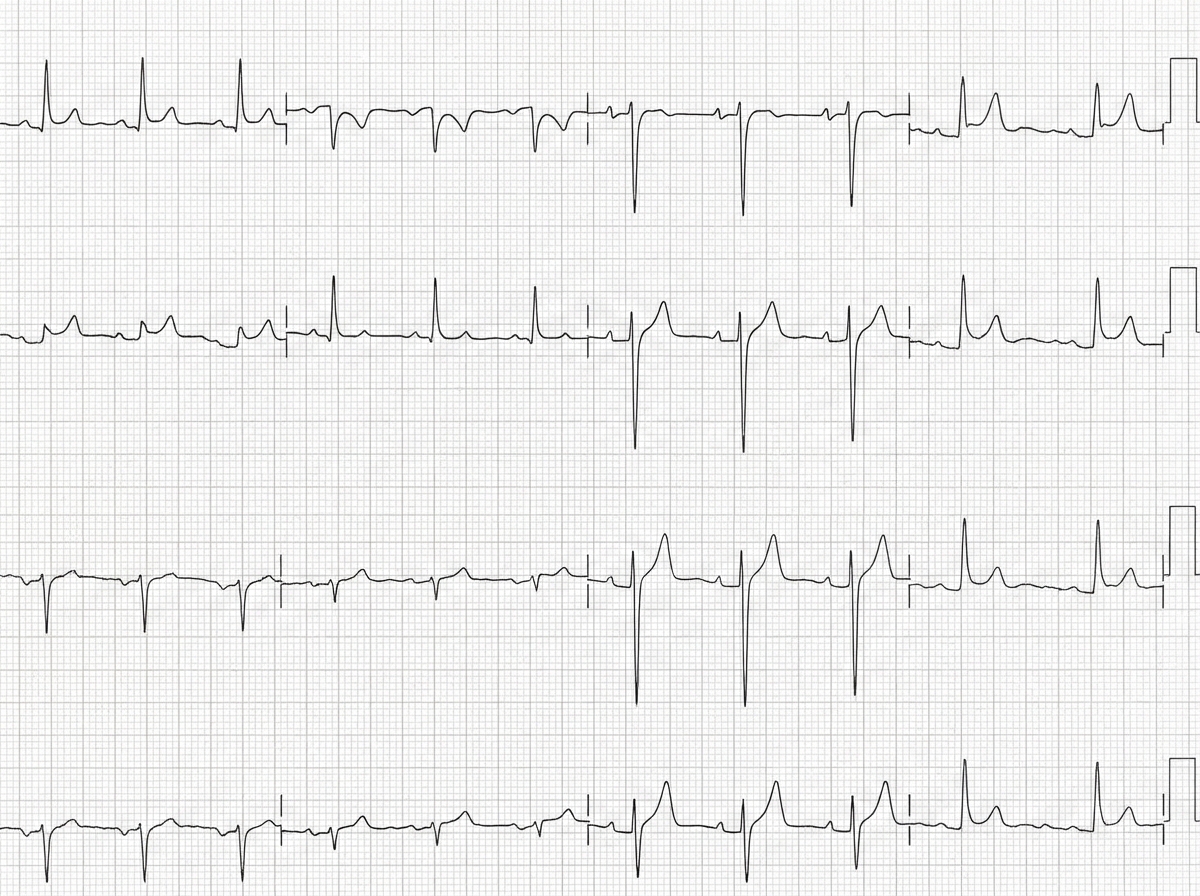
A 50-year-old man with a history of stage 4 kidney disease was admitted to the hospital for an elective hemicolectomy. His past medical history is significant for severe diverticulitis. After the procedure he becomes septic and was placed on broad spectrum antibiotics. On morning rounds, he appear weak and complains of fatigue and nausea. His words are soft and he has difficulty answering questions. His temperature is 38.9°C (102.1°F), heart rate is 110/min, respiratory rate is 15/min, blood pressure 90/65 mm Hg, and saturation is 89% on room air. On physical exam, his mental status appears altered. He has a bruise on his left arm that spontaneously appeared overnight. His cardiac exam is positive for a weak friction rub. Blood specimens are collected and sent for evaluation. An ECG is performed (see image). What therapy will this patient most likely receive next?
Q164
A 44-year-old man comes to the physician for a pre-employment evaluation. On questioning, he reports a mild cough, sore throat, and occasional headaches for 1 week. He has not had fever or weight loss. Nine years ago, he was diagnosed with HIV. He has gastroesophageal reflux disease. He has a history of IV drug abuse but quit 8 years ago. He has smoked one pack of cigarettes daily for 27 years and does not drink alcohol. Current medications include tenofovir, emtricitabine, efavirenz, and esomeprazole. He is 180 cm (5 ft 11 in) tall and weighs 89 kg (196 lbs); BMI is 27.5 kg/m2. His temperature is 37.3°C (99.1°F), pulse is 81/min, respirations are 17/min, and blood pressure is 145/75 mm Hg. Pulmonary examination shows no abnormalities. There are a few scattered old scars along the left elbow flexure. Laboratory studies show a leukocyte count of 6200/mm3, hemoglobin of 13.8 g/dL, and CD4+ count of 700/m3 (N = ≥ 500/mm3). A tuberculin skin test (TST) comes back after 50 hours with an induration of 3 mm in diameter. Which of the following is the most appropriate next step in management?
Q165
A 45-year-old man presents to an ambulatory clinic for evaluation after feeling food stuck behind the sternum when he was eating a hamburger last night. He was not in pain. He had to drink a whole glass of water to get the food down; however, he did manage to finish his dinner without any further problems. He is concerned because he has had 2 similar episodes this year. He is otherwise healthy. He has smoked 1 half-pack of cigarettes a day for 20 years and enjoys a can of beer every night. His vital signs are as follows: blood pressure 125/75 mm Hg, pulse 68/min, respiratory rate 14/min, and temperature 36.5°C (97.7°F). His oral examination reveals 2 decayed teeth. The physical exam is otherwise unremarkable. An endoscopic image of the lower esophagus is shown. Which of the following is the most appropriate next step in management?
Q166
A 65-year-old man is brought to the emergency department after coughing up copious amounts of blood-tinged sputum at his nursing home. He recently had an upper respiratory tract infection that was treated with antibiotics. He has a long-standing history of productive cough that has worsened since he had a stroke 3 years ago. He smoked a pack of cigarettes daily for 40 years until the stroke, after which he quit. The patient appears distressed and short of breath. His temperature is 38°C (100.4°F), pulse is 92/min, and blood pressure is 145/85 mm Hg. Pulse oximetry on room air shows an oxygen saturation of 92%. Physical examination shows digital clubbing and cyanosis of the lips. Coarse crackles are heard in the thorax. An x-ray of the chest shows increased translucency and tram-track opacities in the right lower lung field. Which of the following is the most likely diagnosis?
Q167
A 57-year-old woman comes to the physician because of a 3-month history of easy fatigability and dyspnea on exertion. Menopause occurred 5 years ago. Her pulse is 105/min and blood pressure is 100/70 mm Hg. Physical examination shows pallor of the nail beds and conjunctivae. A peripheral blood smear shows small, pale red blood cells. Further evaluation is most likely to show which of the following findings?
Q168
A 31-year old man presents to the emergency department for blood in his stool. The patient states that he saw a small amount of bright red blood on his stool and on the toilet paper this morning, which prompted his presentation to the emergency department. The patient denies any changes in his bowel habits or in his weight. The patient has a past medical history of asthma managed with albuterol and fluticasone. The patient has a family history of alcoholism in his father and suicide in his mother. His temperature is 97°F (36.1°C), blood pressure is 120/77 mmHg, pulse is 60/min, respirations are 12/min, and oxygen saturation is 98% on room air. On physical exam, the patient has a cardiac and pulmonary exam that are within normal limits. On abdominal exam, there is no tenderness or guarding and normal bowel sounds. Laboratory values are ordered and return as below.
Hemoglobin: 15 g/dL
Hematocrit: 42%
Leukocyte count: 4,500 cells/mm^3 with normal differential
Platelet count: 230,000/mm^3
Serum:
Na+: 139 mEq/L
Cl-: 100 mEq/L
K+: 4.3 mEq/L
HCO3-: 24 mEq/L
BUN: 20 mg/dL
Glucose: 92 mg/dL
Creatinine: 1.0 mg/dL
Ca2+: 9.9 mg/dL
Which of the following is the next best step in management?
Q169
A 25-year-old man comes to the physician because of a 4-day history of bloody stools. During this time, he has not had nausea, vomiting, abdominal cramps, or pain while defecating. He has had recurrent episodes of non-bloody diarrhea for the past 6 months. His father died of colon cancer at the age of 39 years. His vital signs are within normal limits. Physical examination shows small, painless bony swellings on the mandible, forehead, and right shin. There are multiple non-tender, subcutaneous nodules with central black pores present over the trunk and face. Fundoscopic examination shows multiple, oval, darkly pigmented lesions on the retina. Colonoscopy shows approximately 150 colonic polyps. Which of the following is the most likely diagnosis?
Q170
An 18-year-old woman comes to see her primary care physician for a physical for school. She states she has not had any illnesses last year and is on her school's volleyball team. She exercises daily, does not use any drugs, and has never smoked cigarettes. On physical exam you note bruising around the patients neck, and what seems to be burn marks on her back and thighs. The physician inquires about these marks. The patient explains that these marks are the result of her sexual activities. She states that in order for her to be aroused she has to engage in acts such as hitting, choking, or anything else that she can think of. The physician learns that the patient lives with her boyfriend and that she is in a very committed relationship. She is currently monogamous with this partner. The patient is studying with the hopes of going to law school and is currently working in a coffee shop. The rest of the patient’s history and physical is unremarkable. Which of the following is the most likely diagnosis?
Gastroenterology US Medical PG Practice Questions and MCQs
Question 161: A patient presents with right upper quadrant pain, fever, and nonbloody vomiting. Which of the following risk factors is most likely associated with the patient's condition?
A. Urine culture growing gram-negative rods
B. Frequent, high-pitched bowel sounds on auscultation
C. History of multiple past pregnancies (Correct Answer)
D. History of intravenous drug abuse
E. History of recurrent sexually transmitted infections
Explanation: ***History of multiple past pregnancies***
- The patient's symptoms of **right upper quadrant pain**, **fever**, and **nonbloody vomiting** are highly suggestive of **acute cholecystitis**, likely due to gallstones.
- Multiple past pregnancies (the **"fertile"** in "fair, fat, female, fertile, forty") are a significant risk factor for **gallstone formation**, as estrogen can increase cholesterol secretion into bile and reduce gallbladder motility.
*Urine culture growing gram-negative rods*
- This finding suggests a **urinary tract infection (UTI)**, which is not directly related to acute cholecystitis.
- While bacteria can be involved in complicated cholecystitis, a urine culture finding is not a primary risk factor for gallstone disease itself.
*Frequent, high-pitched bowel sounds on auscultation*
- **High-pitched bowel sounds** can indicate **bowel obstruction**, which is not consistent with the described symptoms of acute cholecystitis localized to the right upper quadrant.
- Acute cholecystitis typically presents with localized pain and tenderness, often accompanied by a positive **Murphy's sign**.
*History of intravenous drug abuse*
- Intravenous drug abuse is a risk factor for various infections like **hepatitis** or **endocarditis**, but it is not directly linked to the development of gallstones or acute cholecystitis.
- The symptoms described do not point towards these conditions frequently associated with IV drug use.
*History of recurrent sexually transmitted infections*
- Recurrent STIs are associated with conditions like **pelvic inflammatory disease (PID)** or chronic pelvic pain, which typically present with lower abdominal pain and different systemic symptoms.
- They are not a known risk factor for gallstone formation or acute cholecystitis.
Question 162: A 42-year-old man comes to his primary care physician complaining of abdominal pain. He describes intermittent, burning, epigastric pain over the past 4 months. He reports that the pain worsens following meals. He had an upper gastrointestinal endoscopy done 2 months ago that showed a gastric ulcer without evidence of malignancy. The patient was prescribed pantoprazole with minimal improvement in symptoms. He denies nausea, vomiting, diarrhea, or melena. The patient has no other medical problems. He had a total knee replacement 3 years ago following a motor vehicle accident for which he took naproxen for 2 months for pain management. He has smoked 1 pack per day since the age of 22 and drinks 1-2 beers several nights a week with dinner. He works as a truck driver, and his diet consists mostly of fast food. His family history is notable for hypertension in his paternal grandfather and coronary artery disease in his mother. On physical examination, the abdomen is soft, nondistended, and mildly tender in the mid-epigastric region. A stool test is positive for Helicobacter pylori antigen. In addition to antibiotic therapy, which of the following is the most likely to decrease the recurrence of the patient's symptoms?
A. Celecoxib
B. Low-fat diet
C. Increase milk consumption
D. Octreotide
E. Smoking cessation (Correct Answer)
Explanation: ***Smoking cessation***
- **Smoking** is a significant risk factor for **peptic ulcer disease** and has been shown to impair ulcer healing and increase the risk of recurrence.
- Quitting smoking helps to reduce gastric acid secretion, improve mucosal blood flow, and enhance the efficacy of ulcer treatment.
*Celecoxib*
- **Celecoxib** is a **selective COX-2 inhibitor**, which, while less damaging to the gastric mucosa than non-selective NSAIDs like naproxen, can still contribute to ulcer formation or recurrence, especially in patients with a history of ulcers.
- The patient's previous use of naproxen for a short period is not the primary ongoing risk factor, and substituting it with another NSAID without strong indication would likely worsen rather than improve ulcer recurrence.
*Low-fat diet*
- While a healthy diet is beneficial for overall health, there is no direct evidence that a specific **low-fat diet** will significantly decrease the recurrence of peptic ulcers.
- Dietary modifications typically focus on avoiding specific trigger foods that worsen symptoms, but a general low-fat diet isn't a primary intervention for ulcer recurrence.
*Increase milk consumption*
- Historically, **milk** was thought to soothe ulcers, but studies have shown it can actually **stimulate acid secretion** and provide only transient relief, potentially worsening the condition in the long run.
- Therefore, increasing milk consumption would be counterproductive for preventing ulcer recurrence.
*Octreotide*
- **Octreotide** is a synthetic analog of **somatostatin** used primarily to treat conditions involving excessive hormone secretion, such as **variceal bleeding** or neuroendocrine tumors.
- It is not a standard treatment for typical peptic ulcer disease caused by *H. pylori* or other common factors, and would not address the underlying causes of recurrence in this patient.
Question 163: A 50-year-old man with a history of stage 4 kidney disease was admitted to the hospital for an elective hemicolectomy. His past medical history is significant for severe diverticulitis. After the procedure he becomes septic and was placed on broad spectrum antibiotics. On morning rounds, he appear weak and complains of fatigue and nausea. His words are soft and he has difficulty answering questions. His temperature is 38.9°C (102.1°F), heart rate is 110/min, respiratory rate is 15/min, blood pressure 90/65 mm Hg, and saturation is 89% on room air. On physical exam, his mental status appears altered. He has a bruise on his left arm that spontaneously appeared overnight. His cardiac exam is positive for a weak friction rub. Blood specimens are collected and sent for evaluation. An ECG is performed (see image). What therapy will this patient most likely receive next?
A. Send the patient for hemodialysis (Correct Answer)
B. Perform a STAT pericardiocentesis
C. Prepare the patient for renal transplant
D. Treat the patient with aspirin
E. Treat the patient with cyclophosphamide and prednisone
Explanation: ***Send the patient for hemodialysis***
- This patient presents with symptoms of **uremic encephalopathy** and **uremic pericarditis** in the context of **stage 4 kidney disease**. The altered mental status, weakness, fatigue, nausea, and the development of a bruise (which could indicate uremic coagulopathy) are suggestive of severe uremia. The ECG shows widespread **ST elevation and PR depression**, particularly noticeable in leads like II, V2-V6, which is a classic finding for pericarditis. The **weak friction rub** confirms this clinical suspicion. Hemodialysis is crucial to rapidly remove uremic toxins and resolve both uremic encephalopathy and pericarditis.
- The ECG findings, including diffuse **ST elevation** with **PR depression**, are characteristic of **pericarditis**. In a patient with end-stage renal disease, **uremia** is a common cause of pericarditis, which can be life-threatening if not promptly treated with dialysis.
*Perform a STAT pericardiocentesis*
- While the patient has pericarditis, there are no immediate signs of **cardiac tamponade**, such as muffled heart sounds, jugular venous distension, or pulsus paradoxus, that would necessitate an emergency pericardiocentesis.
- The primary treatment for **uremic pericarditis** is typically **hemodialysis** to resolve the underlying uremic state, not direct fluid removal unless tamponade is present.
*Prepare the patient for renal transplant*
- **Renal transplant** is a long-term solution for end-stage renal disease, but it is not an acute intervention for immediate life-threatening uremic complications like uremic pericarditis and encephalopathy.
- The patient needs urgent stabilization and treatment of his current acute medical issues before transplant consideration.
*Treat the patient with aspirin*
- While aspirin can be used for some forms of pericarditis, it is generally **contraindicated** in patients with **uremic pericarditis** due to the increased risk of **gastric bleeding** and potential exacerbation of uremic coagulopathy.
- The primary treatment for uremic pericarditis is **dialysis**, not anti-inflammatory medications, as the inflammation is driven by uremic toxins.
*Treat the patient with cyclophosphamide and prednisone*
- **Immunosuppressants** like cyclophosphamide and prednisone are used for autoimmune or inflammatory conditions causing pericarditis, such as systemic lupus erythematosus.
- This patient's pericarditis is clearly linked to **uremia** from kidney disease, not an autoimmune condition, making immunosuppressive therapy inappropriate and potentially harmful.
Question 164: A 44-year-old man comes to the physician for a pre-employment evaluation. On questioning, he reports a mild cough, sore throat, and occasional headaches for 1 week. He has not had fever or weight loss. Nine years ago, he was diagnosed with HIV. He has gastroesophageal reflux disease. He has a history of IV drug abuse but quit 8 years ago. He has smoked one pack of cigarettes daily for 27 years and does not drink alcohol. Current medications include tenofovir, emtricitabine, efavirenz, and esomeprazole. He is 180 cm (5 ft 11 in) tall and weighs 89 kg (196 lbs); BMI is 27.5 kg/m2. His temperature is 37.3°C (99.1°F), pulse is 81/min, respirations are 17/min, and blood pressure is 145/75 mm Hg. Pulmonary examination shows no abnormalities. There are a few scattered old scars along the left elbow flexure. Laboratory studies show a leukocyte count of 6200/mm3, hemoglobin of 13.8 g/dL, and CD4+ count of 700/m3 (N = ≥ 500/mm3). A tuberculin skin test (TST) comes back after 50 hours with an induration of 3 mm in diameter. Which of the following is the most appropriate next step in management?
A. Repeat tuberculin skin test after 6–8 weeks
B. Reassurance (Correct Answer)
C. Start patient on isoniazid treatment
D. Interferon-γ release assay
E. Chest x-ray
Explanation: ***Reassurance***
- The patient's acute symptoms (mild cough, sore throat, headache for 1 week) are **non-specific and consistent with a common viral upper respiratory infection**, with no fever, weight loss, or progressive pulmonary symptoms suggesting active tuberculosis.
- His **CD4+ count is excellent (700/mm3)**, indicating robust immune reconstitution on effective antiretroviral therapy, which means his TST result is reliable (not falsely negative due to anergy).
- His **TST is negative by CDC criteria for HIV-positive individuals** (3 mm induration; requires ≥5 mm for positive), indicating no evidence of latent TB infection at this time.
- Given the **absence of recent TB exposure, no symptoms of active TB, and negative TST in an immunocompetent HIV patient**, no further immediate action is required for TB screening in this pre-employment context.
- His acute viral symptoms require only supportive care and observation.
*Repeat tuberculin skin test after 6–8 weeks*
- Two-step TST (repeating after 1–2 weeks, not 6–8 weeks) is used to detect the **booster phenomenon** in individuals who will undergo serial testing (e.g., healthcare workers), but there is no indication that this patient will need repeated TB screening.
- The 6–8 week timeframe stated here is **not appropriate for two-step testing** and would only be considered if evaluating for TST conversion after a known exposure, which is not the case here.
*Start patient on isoniazid treatment*
- Isoniazid treatment is indicated for **latent TB infection (LTBI)**, diagnosed by a positive TST (≥5 mm in HIV+ patients) or IGRA.
- This patient's **TST is negative** (3 mm < 5 mm threshold), so LTBI treatment is not indicated.
- Treatment without documented infection would expose the patient to unnecessary hepatotoxicity risk, especially given his GERD and use of esomeprazole.
*Interferon-γ release assay*
- IGRA is an alternative to TST for LTBI screening and can be useful when TST results are difficult to interpret or in BCG-vaccinated individuals.
- However, this patient has a **clear negative TST result** with reliable interpretation (good immune function, CD4 700), **no documented TB exposure**, and **no symptoms of active TB**.
- In the absence of specific risk factors requiring additional confirmation (recent TB contact, discordant clinical suspicion), proceeding directly to IGRA is not cost-effective or indicated for routine pre-employment screening.
*Chest x-ray*
- Chest x-ray is indicated to evaluate for **active pulmonary tuberculosis** when there are suggestive symptoms (persistent cough >2-3 weeks, hemoptysis, night sweats, weight loss) or in patients with positive LTBI screening who need to rule out active disease before starting treatment.
- This patient has **no specific TB symptoms**, normal pulmonary examination, and a **negative TST**, making chest x-ray unnecessary at this time.
- His mild acute symptoms are consistent with a self-limited viral illness and do not warrant imaging.
Question 165: A 45-year-old man presents to an ambulatory clinic for evaluation after feeling food stuck behind the sternum when he was eating a hamburger last night. He was not in pain. He had to drink a whole glass of water to get the food down; however, he did manage to finish his dinner without any further problems. He is concerned because he has had 2 similar episodes this year. He is otherwise healthy. He has smoked 1 half-pack of cigarettes a day for 20 years and enjoys a can of beer every night. His vital signs are as follows: blood pressure 125/75 mm Hg, pulse 68/min, respiratory rate 14/min, and temperature 36.5°C (97.7°F). His oral examination reveals 2 decayed teeth. The physical exam is otherwise unremarkable. An endoscopic image of the lower esophagus is shown. Which of the following is the most appropriate next step in management?
A. Endoscopic dilation (Correct Answer)
B. Laparoscopic myotomy
C. Topical glucocorticoids 'per os'
D. Esophagectomy
E. No management is indicated at this time
Explanation: ***Endoscopic dilation***
- The patient's history of **intermittent dysphagia** (food sticking) relieved by drinking water, along with the endoscopic image likely showing a **stricture** or **ring** (e.g., Schatzki ring), points to a mechanical obstruction.
- **Endoscopic dilation** is the primary treatment for esophageal rings and strictures, effectively widening the constricted area to relieve dysphagia.
*Laparoscopic myotomy*
- **Laparoscopic myotomy (Heller myotomy)** is a surgical procedure primarily used for treating **achalasia**, a motility disorder where the lower esophageal sphincter fails to relax.
- Achalasia typically presents with both solid and liquid dysphagia, regurgitation, and chest pain, which are not the primary symptoms described here.
*Topical glucocorticoids 'per os'*
- **Topical glucocorticoids** are the cornerstone treatment for **eosinophilic esophagitis (EoE)**, which can also cause dysphagia and strictures.
- While EoE can present with dysphagia, the primary diagnostic finding is a high number of eosinophils on esophageal biopsy, which is not mentioned as being found in this case.
*Esophagectomy*
- **Esophagectomy** is a major surgical procedure involving the removal of part or all of the esophagus, primarily reserved for **esophageal cancer** or severe, refractory benign conditions.
- Given the intermittent and non-painful nature of the dysphagia and the likely benign cause (e.g., Schatzki ring), esophagectomy is an overly aggressive and inappropriate initial treatment.
*No management is indicated at this time*
- The patient has experienced **recurrent episodes of dysphagia** (2 similar episodes this year) and is concerned, indicating that his symptoms are clinically significant and require intervention.
- Leaving a symptomatic esophageal obstruction untreated can lead to worsening dysphagia, nutritional deficiencies, and potential complications like food impaction.
Question 166: A 65-year-old man is brought to the emergency department after coughing up copious amounts of blood-tinged sputum at his nursing home. He recently had an upper respiratory tract infection that was treated with antibiotics. He has a long-standing history of productive cough that has worsened since he had a stroke 3 years ago. He smoked a pack of cigarettes daily for 40 years until the stroke, after which he quit. The patient appears distressed and short of breath. His temperature is 38°C (100.4°F), pulse is 92/min, and blood pressure is 145/85 mm Hg. Pulse oximetry on room air shows an oxygen saturation of 92%. Physical examination shows digital clubbing and cyanosis of the lips. Coarse crackles are heard in the thorax. An x-ray of the chest shows increased translucency and tram-track opacities in the right lower lung field. Which of the following is the most likely diagnosis?
A. Aspiration pneumonia
B. Pulmonary embolism
C. Lung cancer
D. Bronchiectasis (Correct Answer)
E. Emphysema
Explanation: ***Bronchiectasis***
- The patient's history of **chronic productive cough**, **hemoptysis** (blood-tinged sputum), **digital clubbing**, and recent respiratory infection suggests bronchiectasis. The chest X-ray finding of **tram-track opacities** is highly characteristic of this condition, indicating bronchial wall thickening and dilation. The history of stroke placing him at risk for aspiration, and prior smoking also contribute to the risk of chronic lung damage.
- **Bronchiectasis** is defined by **permanent dilation of the bronchi** due to chronic inflammation and infection, leading to impaired mucociliary clearance and recurrent infections. The description perfectly fits the clinical and radiological picture.
*Aspiration pneumonia*
- While the patient's history of **stroke** increases his risk for **aspiration**, the chronic nature of his symptoms (long-standing productive cough worsening since stroke) and the presence of **digital clubbing** are less consistent with acute aspiration pneumonia.
- **Aspiration pneumonia** typically presents as an acute illness with fever and cough, and while it could explain some symptoms, it doesn't fully account for the chronic changes (clubbing, tram-track opacities).
*Pulmonary embolism*
- **Pulmonary embolism** usually presents with **acute onset dyspnea** and **pleuritic chest pain**, often without a history of chronic productive cough or digital clubbing. Hemoptysis can occur but is not typically copious and is associated with infarction.
- The chest X-ray findings of **increased translucency** and **tram-track opacities** are not characteristic of pulmonary embolism, which might show an area of opacification (Westermark sign, Hampton hump) or be normal.
*Lung cancer*
- While **lung cancer** can cause cough, hemoptysis, and shortness of breath, and the patient's smoking history is a risk factor, the description of **tram-track opacities** on chest X-ray is not characteristic of lung cancer. **Digital clubbing** can be seen, but the chronic productive cough for years is more indicative of a chronic inflammatory process.
- The typical X-ray findings for lung cancer would be a **mass lesion**, nodule, or atelectasis, not diffuse bronchial wall thickening.
*Emphysema*
- **Emphysema** is characterized by **shortness of breath** and a **chronic cough**, often related to a smoking history, and the X-ray might show **increased translucency** due to hyperinflation. However, copious **blood-tinged sputum** and **digital clubbing** are not typical features of emphysema.
- The classic X-ray finding for emphysema is **hyperinflation** with flattened diaphragms, and while increased translucency is mentioned, **tram-track opacities** are not seen; these indicate bronchial wall thickening, not alveolar destruction.
Question 167: A 57-year-old woman comes to the physician because of a 3-month history of easy fatigability and dyspnea on exertion. Menopause occurred 5 years ago. Her pulse is 105/min and blood pressure is 100/70 mm Hg. Physical examination shows pallor of the nail beds and conjunctivae. A peripheral blood smear shows small, pale red blood cells. Further evaluation is most likely to show which of the following findings?
A. Increased concentration of HbA2
B. Decreased serum haptoglobin concentration
C. Positive stool guaiac test (Correct Answer)
D. Dry bone marrow tap
E. Increased serum methylmalonic acid concentration
Explanation: ***Positive stool guaiac test***
* The patient's symptoms of **fatigability**, **dyspnea on exertion**, and signs like **pallor**, along with a peripheral blood smear showing **small, pale red blood cells** (**microcytic hypochromic anemia**), are highly indicative of **iron deficiency anemia**.
* In a 57-year-old postmenopausal woman, the most common cause of **iron deficiency anemia** is **chronic blood loss from the gastrointestinal (GI) tract**, which would be detected by a **positive stool guaiac test**.
*Increased concentration of HbA2*
* An increased concentration of **HbA2** is characteristic of **beta-thalassemia minor**, a genetic disorder, which presents as microcytic anemia, but the clinical context and age make iron deficiency due to blood loss more likely in this patient.
* While both can cause microcytic anemia, the patient's acute presentation of symptoms and postmenopausal status strongly point to an acquired cause like chronic blood loss rather than a lifelong genetic condition.
*Decreased serum haptoglobin concentration*
* **Decreased serum haptoglobin concentration** is a marker of **hemolytic anemia**, where red blood cells are prematurely destroyed, leading to the release of free hemoglobin that binds to haptoglobin.
* The patient's peripheral smear finding of **small, pale red blood cells** (microcytic hypochromic) is inconsistent with hemolysis as the primary cause; hemolytic anemias often present with normocytic or macrocytic red blood cells.
*Dry bone marrow tap*
* A **dry bone marrow tap** is typically associated with **myelofibrosis** or sometimes **hairy cell leukemia** or severe aplastic anemia, where the bone marrow is fibrotic or hypocellular and cannot be aspirated.
* Iron deficiency anemia, while causing anemia, does not typically lead to a dry bone marrow tap; the marrow would usually be hypercellular with erythroid hyperplasia, reflecting the body's attempt to compensate for the anemia.
*Increased serum methylmalonic acid concentration*
* An **increased serum methylmalonic acid concentration** is a specific marker for **vitamin B12 deficiency**, which causes **megaloblastic (macrocytic) anemia**.
* The patient's peripheral blood smear findings of **small, pale red blood cells** (microcytic hypochromic) are inconsistent with **vitamin B12 deficiency**, which leads to **large red blood cells**.
Question 168: A 31-year old man presents to the emergency department for blood in his stool. The patient states that he saw a small amount of bright red blood on his stool and on the toilet paper this morning, which prompted his presentation to the emergency department. The patient denies any changes in his bowel habits or in his weight. The patient has a past medical history of asthma managed with albuterol and fluticasone. The patient has a family history of alcoholism in his father and suicide in his mother. His temperature is 97°F (36.1°C), blood pressure is 120/77 mmHg, pulse is 60/min, respirations are 12/min, and oxygen saturation is 98% on room air. On physical exam, the patient has a cardiac and pulmonary exam that are within normal limits. On abdominal exam, there is no tenderness or guarding and normal bowel sounds. Laboratory values are ordered and return as below.
Hemoglobin: 15 g/dL
Hematocrit: 42%
Leukocyte count: 4,500 cells/mm^3 with normal differential
Platelet count: 230,000/mm^3
Serum:
Na+: 139 mEq/L
Cl-: 100 mEq/L
K+: 4.3 mEq/L
HCO3-: 24 mEq/L
BUN: 20 mg/dL
Glucose: 92 mg/dL
Creatinine: 1.0 mg/dL
Ca2+: 9.9 mg/dL
Which of the following is the next best step in management?
A. Mesalamine enema
B. CT scan
C. Stool culture and analysis for red blood cells and leukocytes
D. Anoscopy (Correct Answer)
E. Colonoscopy
Explanation: ***Anoscopy***
- The patient presents with **bright red blood per rectum (hematochezia)**, specifically on the stool surface and toilet paper, without changes in bowel habits or weight loss, suggesting a lower gastrointestinal bleed, most likely from the **anorectal region**.
- **Anoscopy** is the most appropriate initial evaluation for this presentation, as it allows for direct visualization of the anal canal and distal rectum to identify common causes such as **hemorrhoids** or **anal fissures**.
*Mesalamine enema*
- **Mesalamine enemas** are used to treat **distal ulcerative colitis**, which typically presents with bloody diarrhea, abdominal pain, and sometimes weight loss, none of which are present in this patient.
- Administering treatment without a definitive diagnosis is inappropriate, especially when the cause of bleeding is unknown and potentially structural.
*CT scan*
- A **CT scan** is typically reserved for evaluating patients with suspected **diverticulitis**, **inflammatory bowel disease (IBD)** with complications, or internal bleeding not readily accessible by endoscopy.
- Given the patient's presentation of bright red blood per rectum, likely from a local source, a CT scan would not be the initial diagnostic step and carries radiation exposure.
*Stool culture and analysis for red blood cells and leukocytes*
- **Stool cultures** and analysis for red blood cells and leukocytes are indicated for suspected **infectious colitis**, which usually presents with diarrhea, fever, and abdominal pain.
- The patient's presentation with localized bright red blood and normal stool consistency does not suggest an infectious etiology.
*Colonoscopy*
- While **colonoscopy** can evaluate the entire colon, it is a more invasive procedure than anoscopy and is typically reserved for cases with unexplained GI bleeding, iron deficiency anemia, changes in bowel habits, or suspected proximal colonic pathology.
- Given the patient's localized symptoms and absence of systemic signs, a less invasive and more targeted approach like anoscopy is preferred first.
Question 169: A 25-year-old man comes to the physician because of a 4-day history of bloody stools. During this time, he has not had nausea, vomiting, abdominal cramps, or pain while defecating. He has had recurrent episodes of non-bloody diarrhea for the past 6 months. His father died of colon cancer at the age of 39 years. His vital signs are within normal limits. Physical examination shows small, painless bony swellings on the mandible, forehead, and right shin. There are multiple non-tender, subcutaneous nodules with central black pores present over the trunk and face. Fundoscopic examination shows multiple, oval, darkly pigmented lesions on the retina. Colonoscopy shows approximately 150 colonic polyps. Which of the following is the most likely diagnosis?
A. Cowden syndrome
B. Lynch syndrome
C. Cronkhite-Canada syndrome
D. Peutz-Jeghers syndrome
E. Gardner syndrome (Correct Answer)
Explanation: ***Gardner syndrome***
- The presence of **multiple colonic polyps** (over 100), **osteomas** (bony swellings on mandible, forehead, right shin), **epidermoid cysts** (subcutaneous nodules with central black pores), and **congenital hypertrophy of the retinal pigment epithelium (CHRPE)** are all classic extraintestinal manifestations of Gardner syndrome, a variant of **familial adenomatous polyposis (FAP)**.
- The **family history of early-onset colon cancer** (father died at 39) further supports the diagnosis of an inherited polyposis syndrome.
*Cowden syndrome*
- Characterized by **multiple hamartomas** throughout the body, but presents with specific features like **Lhermitte-Duclos disease** (benign cerebellar tumor), **trichilemmomas**, and **mucocutaneous papillomatas**, which are not described here.
- Although it increases the risk of certain cancers, its colonic polyps are typically **hamartomatous**, not exclusively adenomatous like in this case.
*Lynch syndrome*
- Also known as **hereditary nonpolyposis colorectal cancer (HNPCC)**, it typically involves a **right-sided colon cancer** and other extracolonic cancers (endometrial, ovarian).
- It is characterized by relatively **few polyps** (usually less than 10-20), unlike the hundreds seen in this patient, and does not have the osteomas or epidermoid cysts.
*Cronkhite-Canada syndrome*
- A rare, non-inherited condition characterized by **gastrointestinal polyposis** (often involving the stomach, small intestine, and colon), coupled with **ectodermal abnormalities** like alopecia, onychodystrophy, and skin hyperpigmentation.
- It does not involve osteomas, epidermoid cysts, or CHRPE, and patients typically do not have a strong family history of colon cancer.
*Peutz-Jeghers syndrome*
- Characterized by **hamartomatous polyps** mainly in the small intestine, and **mucocutaneous hyperpigmentation** (dark brown or black macules) typically around the mouth, nostrils, buccal mucosa, fingers, and toes.
- While it increases the risk of gastrointestinal cancers, it does not present with osteomas, epidermoid cysts, or CHRPE.
Question 170: An 18-year-old woman comes to see her primary care physician for a physical for school. She states she has not had any illnesses last year and is on her school's volleyball team. She exercises daily, does not use any drugs, and has never smoked cigarettes. On physical exam you note bruising around the patients neck, and what seems to be burn marks on her back and thighs. The physician inquires about these marks. The patient explains that these marks are the result of her sexual activities. She states that in order for her to be aroused she has to engage in acts such as hitting, choking, or anything else that she can think of. The physician learns that the patient lives with her boyfriend and that she is in a very committed relationship. She is currently monogamous with this partner. The patient is studying with the hopes of going to law school and is currently working in a coffee shop. The rest of the patient’s history and physical is unremarkable. Which of the following is the most likely diagnosis?
A. Sexual masochism (Correct Answer)
B. Sexual sadism
C. Dependent personality disorder
D. Avoidant personality disorder
E. Domestic abuse
Explanation: ***Sexual masochism***
- This is characterized by experiencing **sexual arousal from being humiliated, beaten, bound, or made to suffer**. The patient's description of needing hitting and choking for arousal directly aligns with this.
- The bruising and burn marks, explained as results of sexual acts necessary for arousal, are consistent with symptoms of sexual masochism.
*Sexual sadism*
- This involves experiencing sexual arousal from **inflicting pain or suffering on another person**. The patient is receiving the pain, not inflicting it.
- While sometimes seen in tandem with masochism in BDSM practices, the patient's statement focuses on her own need to be harmed for arousal.
*Dependent personality disorder*
- This is marked by an **excessive need to be taken care of**, leading to submissive and clinging behavior and fears of separation. While the patient is in a committed relationship, her drive for these sexual acts is not described as stemming from insecurity or fear of abandonment.
- The patient's independent pursuits (law school, working) do not align with the pervasive and extreme dependency seen in this disorder.
*Avoidant personality disorder*
- This disorder is characterized by **social inhibition**, feelings of inadequacy, and **hypersensitivity to negative evaluation**.
- The patient's active social life (volleyball team), pursuit of higher education, and engagement in a committed relationship contradict the typical features of avoidance.
*Domestic abuse*
- While the physical injuries might raise concern for abuse, the patient explicitly states these are self-initiated or consented to as part of her sexual arousal. **Lack of coercion and self-reporting of pleasure** from these acts differentiates it from abuse.
- The patient's description emphasizes her own agency and desire for these specific sexual acts, rather than being a victim of unwanted violence.