A 45-year-old woman comes to the physician because of a 5-month history of recurrent retrosternal chest pain that often wakes her up at night. Physical examination shows no abnormalities. Upper endoscopy shows hyperemia in the distal third of the esophagus. A biopsy specimen from this area shows non-keratinized stratified squamous epithelium with hyperplasia of the basal cell layer and neutrophilic inflammatory infiltrates. Which of the following is the most likely underlying cause of this patient's findings?
Q152
A 31-year-old man comes to the physician because of worsening abdominal pain, an inability to concentrate at work, and a general lack of motivation over the past several months. He has a history of spontaneous passage of two kidney stones. His father and uncle underwent thyroidectomy before the age of 35 for thyroid cancer. Physical examination shows diffuse tenderness over the abdomen. Serum studies show:
Na+ 142 mEq/L
K+ 3.7 mEq/L
Glucose 131 mg/dL
Ca2+ 12.3 mg/dL
Albumin 4.1 g/dL
Parathyroid hormone 850 pg/mL
Further evaluation is most likely to show elevated levels of which of the following?
Q153
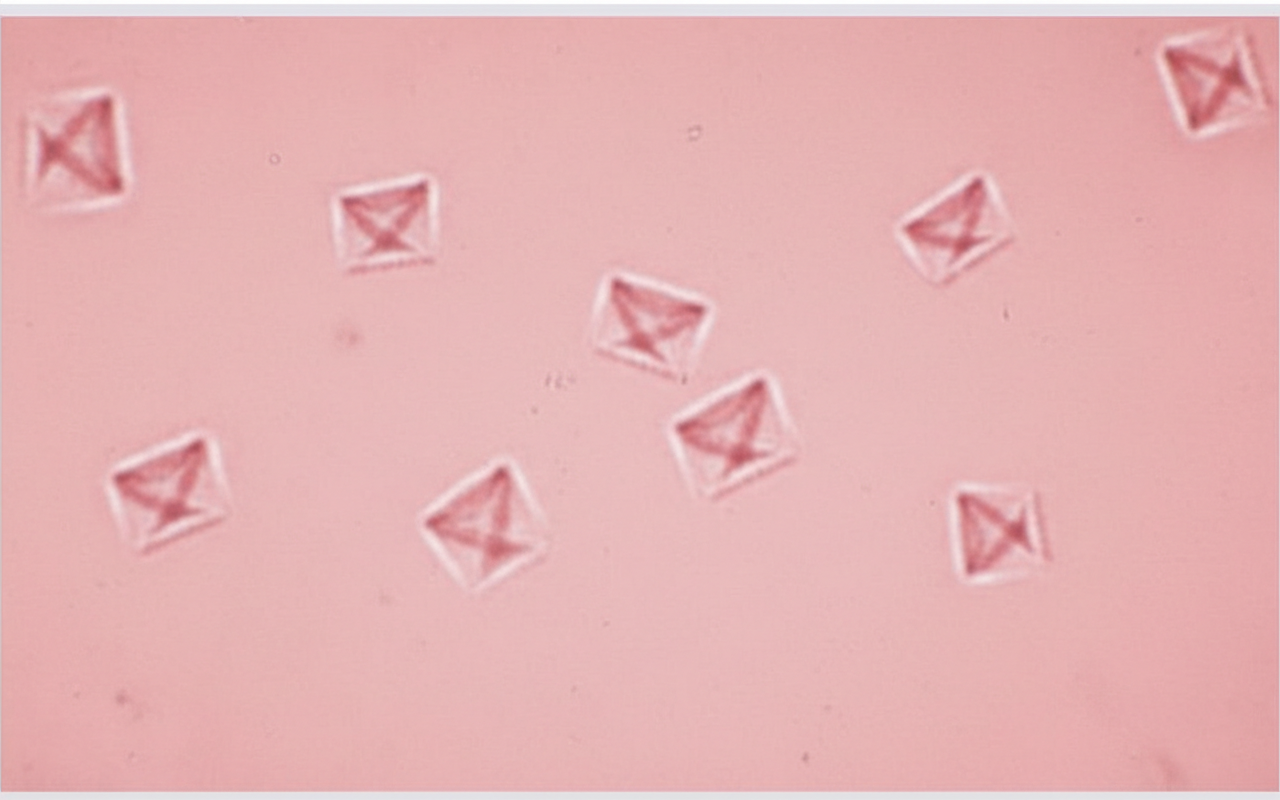
A 46-year-old man comes to the emergency department because of sharp pain in his left flank that began suddenly 30 minutes ago. Physical examination shows costovertebral angle tenderness on the left side. A photomicrograph of the urine is shown. The patient is most likely to benefit from an increase of which of the following components in the urine?
Q154
A 30-year-old man who recently emigrated from Southeast Asia presents with heartburn and a bad taste in his mouth. He says the symptoms have been present for the last 6 months and are much worse at night. He describes the pain as moderate to severe, burning in character, and localized to the epigastric region. He mentions that 1 month ago, he was tested for Helicobacter pylori back in his country and completed a course of multiple antibiotics, but there has been no improvement in his symptoms. Which of the following is the most likely diagnosis in this patient?
Q155
A 32-year-old woman complains of fatigue and pallor. She says symptoms that started several months ago and have been becoming more serious with time. She reports that she has been exercising regularly and has been adhering to a strict vegan diet. The patient has no significant past medical history and takes no current medications. She denies any smoking history, alcohol use, or recreational drug use. She is tachycardic, but otherwise, her physical examination is unremarkable. A complete blood count (CBC) shows anemia with a low MCV (mean corpuscular volume), and a peripheral blood smear shows small erythrocytes. Which of the following is the most likely diagnosis in this patient?
Q156
A 31-year-old man comes to the physician because of a 9-month history of increasing fatigue and recurrent nausea. During this period, he has had a 3.8 kg (8.3 lb) weight loss. He also reports feeling lightheaded when he stands up suddenly. He was diagnosed with alopecia areata 1 year ago and was treated with monthly intralesional triamcinolone injections for 3 months. He does not smoke or drink alcohol. His temperature is 37.4°C (99.3°F), pulse is 86/min, and blood pressure is 102/68 mm Hg. Examination of the scalp shows a few well-defined patches of hair loss without scarring. The creases of the palm are darkened. Serum studies show:
Na+ 125 mEq/L
Cl- 98 mEq/L
K+ 5.6 mEq/L
Glucose 72 mg/dL
Creatinine 0.8 mg/dL
Thyroid-stimulating hormone 4.1 μU/mL
Cortisol (AM) 2.5 μg/dL
Cortisol (30 min after 250 μg corticotropin) 2.6 μg/dL
Which of the following is the most likely underlying mechanism of this patient's symptoms?
Q157
A 35-year-old woman comes to the physician with right-sided flank pain and blood in her urine for 1 day. She does not have fever or dysuria. She had similar symptoms several weeks ago but did not seek medical care at the time. Physical examination shows right costovertebral angle tenderness. Her serum uric acid level is 6.9 mg/dL. Urine dipstick shows 3+ blood. Analysis of a 24-hour urine collection specimen shows wedge-shaped prisms. This patient is most likely to benefit from which of the following to prevent recurrence of her condition?
Q158
A 70-year-old man with a history of chronic constipation presents to the emergency department with a two-day history of left lower quadrant abdominal pain. He is found to have a temperature of 100.8F, BP 140/90, HR 85, and RR 16. On physical examination, he is tender to light palpation in the left lower quadrant and exhibits voluntary guarding. Rectal examination reveals heme-positive stool. Laboratory values are unremarkable except for a WBC count of 12,500 with a left shift. Which of the following tests would be most useful in the diagnosis of this patient's disease?
Q159
A 56-year-old woman presents to the emergency department following a seizure episode. She has a remote history of tonic-clonic seizures; however, her seizures have been well-controlled on valproate, with no seizure episodes occurring over the past 12 years. She was weaned off of the valproate 4 months ago. Her temperature is 97.6°F (36.4°C), blood pressure is 122/80 mmHg, pulse is 85/min, respirations are 15/min, and oxygen saturation is 99% on room air. Examination reveals her to be lethargic and somewhat confused. She is moving all extremities spontaneously. Her mucous membranes appear moist and she does not demonstrate any skin tenting. Laboratory values are ordered as seen below.
Arterial blood gas
pH: 7.21
PO2: 99 mmHg
PCO2: 20 mmHg
HCO3-: 10 meq/L
The patient's initial serum chemistries and CBC are otherwise unremarkable except for the bicarbonate as indicated above. An ECG demonstrates normal sinus rhythm. Which of the following is the best next step in management for this patient's acid-base status?
Q160
A 65-year-old man presents to the emergency department with vague, constant abdominal pain, and worsening shortness of breath for the past several hours. He has baseline shortness of breath and requires 2–3 pillows to sleep at night. He often wakes up because of shortness of breath. Past medical history includes congestive heart failure, diabetes, hypertension, and hyperlipidemia. He regularly takes lisinopril, metoprolol, atorvastatin, and metformin. His temperature is 37.0°C (98.6°F), respiratory rate 25/min, pulse 67/min, and blood pressure 98/82 mm Hg. On physical examination, he has bilateral crackles over both lung bases and a diffusely tender abdomen. His subjective complaint of abdominal pain is more severe than the observed tenderness on examination. Which of the following vessels is involved in the disease affecting this patient?
Gastroenterology US Medical PG Practice Questions and MCQs
Question 151: A 45-year-old woman comes to the physician because of a 5-month history of recurrent retrosternal chest pain that often wakes her up at night. Physical examination shows no abnormalities. Upper endoscopy shows hyperemia in the distal third of the esophagus. A biopsy specimen from this area shows non-keratinized stratified squamous epithelium with hyperplasia of the basal cell layer and neutrophilic inflammatory infiltrates. Which of the following is the most likely underlying cause of this patient's findings?
A. Increased collagen production and fibrosis
B. Spread of neoplastic cells
C. Chronic gastrointestinal iron loss
D. Decreased lower esophageal sphincter tone (Correct Answer)
E. Proximal migration of the gastroesophageal junction
Explanation: ***Decreased lower esophageal sphincter tone***
- The patient's symptoms (recurrent retrosternal chest pain, nocturnal awakening) and endoscopic findings (hyperemia in the distal esophagus, basal cell hyperplasia, and neutrophilic infiltrates) are classic for **Gastroesophageal Reflux Disease (GERD)**.
- **Decreased lower esophageal sphincter (LES) tone** is the most common underlying cause of GERD, allowing gastric acid to reflux into the esophagus and cause inflammation.
*Increased collagen production and fibrosis*
- This typically occurs in conditions like **scleroderma** or other fibrotic disorders, leading to esophageal dysmotility.
- While it can cause GERD-like symptoms, the primary histological findings would be **fibrosis and muscle atrophy**, not basal cell hyperplasia and neutrophilic infiltrates.
*Spread of neoplastic cells*
- While neoplastic conditions can present with chest pain and esophageal abnormalities, the biopsy findings of **hyperplasia of the basal cell layer** and **neutrophilic inflammatory infiltrates** are indicative of inflammation, not malignancy.
- Neoplastic cells would show **dysplasia** or **carcinoma**, which is not described.
*Chronic gastrointestinal iron loss*
- This symptom is primarily associated with **iron deficiency anemia**, often due to chronic blood loss.
- While some gastrointestinal conditions can cause bleeding, there is nothing in the patient's presentation or histological findings to suggest iron loss as the primary underlying cause of her esophageal symptoms.
*Proximal migration of the gastroesophageal junction*
- This describes a **hiatal hernia**, where part of the stomach pushes up through the diaphragm.
- While hiatal hernias can predispose to GERD, a decreased LES tone is a more direct and common underlying cause of reflux, and the histopathology specifically points to reflux-induced inflammation rather than solely a structural anatomical issue.
Question 152: A 31-year-old man comes to the physician because of worsening abdominal pain, an inability to concentrate at work, and a general lack of motivation over the past several months. He has a history of spontaneous passage of two kidney stones. His father and uncle underwent thyroidectomy before the age of 35 for thyroid cancer. Physical examination shows diffuse tenderness over the abdomen. Serum studies show:
Na+ 142 mEq/L
K+ 3.7 mEq/L
Glucose 131 mg/dL
Ca2+ 12.3 mg/dL
Albumin 4.1 g/dL
Parathyroid hormone 850 pg/mL
Further evaluation is most likely to show elevated levels of which of the following?
A. Serum aldosterone to renin ratio
B. Serum prolactin
C. Urine metanephrines (Correct Answer)
D. Urine 5-hydroxyindoleacetic acid
E. Midnight salivary cortisol
Explanation: ***Urine metanephrines***
- The patient's presentation with **hypercalcemia** (Ca2+ 12.3 mg/dL) and **elevated PTH** (850 pg/mL) indicates **hyperparathyroidism**.
- The family history of **thyroidectomy for thyroid cancer before age 35** (medullary thyroid cancer) along with hyperparathyroidism points towards **Multiple Endocrine Neoplasia type 2 (MEN2)**. MEN2 syndromes often include **pheochromocytoma**, which is diagnosed by elevated **urine metanephrines**.
*Serum aldosterone to renin ratio*
- This ratio is used to screen for **primary hyperaldosteronism**, which presents with **hypertension and hypokalemia**.
- The patient's blood pressure is not mentioned as elevated, and his **potassium (3.7 mEq/L) is within normal limits**, making primary hyperaldosteronism less likely.
*Serum prolactin*
- Elevated serum prolactin levels indicate **hyperprolactinemia**, which is a feature of **MEN1 (Multiple Endocrine Neoplasia type 1)**.
- While MEN1 also includes hyperparathyroidism, the family history of **early-onset thyroid cancer** (suggesting medullary thyroid cancer, not typically seen in MEN1) points more strongly to MEN2.
*Urine 5-hydroxyindoleacetic acid*
- Elevated levels of **5-HIAA in urine** are indicative of a **carcinoid tumor**, which secretes serotonin.
- Carcinoid tumors are not typically associated with the constellation of symptoms and family history presented, particularly hyperparathyroidism and early-onset medullary thyroid cancer.
*Midnight salivary cortisol*
- This test is used to diagnose **Cushing's syndrome**, which is characterized by elevated cortisol levels and symptoms like central obesity, moon facies, and striae.
- The patient's symptoms are not consistent with Cushing's syndrome, and the laboratory findings (hypercalcemia, elevated PTH) point to a different endocrine disorder.
Question 153: A 46-year-old man comes to the emergency department because of sharp pain in his left flank that began suddenly 30 minutes ago. Physical examination shows costovertebral angle tenderness on the left side. A photomicrograph of the urine is shown. The patient is most likely to benefit from an increase of which of the following components in the urine?
A. Oxalate
B. Sodium
C. Citrate (Correct Answer)
D. Hydrogen
E. Phosphate
Explanation: ***Citrate***
- The image shows **calcium oxalate crystals**, which are the most common type of kidney stones, often presenting with **flank pain** and **costovertebral angle tenderness**.
- **Citrate** in the urine helps prevent calcium oxalate stone formation by chelating calcium, thereby reducing its availability to bind with oxalate and also by directly inhibiting crystal growth and aggregation.
*Oxalate*
- This patient likely has **calcium oxalate stones**, and increasing oxalate in the urine would actually **promote stone formation**, not prevent it.
- High urinary oxalate is a **risk factor** for calcium oxalate stone disease.
*Sodium*
- While high dietary sodium can increase **urinary calcium excretion**, which can contribute to stone formation, increasing sodium in the urine itself is not a therapeutic strategy to prevent calcium oxalate stones.
- Rather, **reducing sodium intake** is often recommended for stone prevention.
*Hydrogen*
- The pH of the urine can influence the formation of certain stone types (e.g., uric acid stones in acidic urine, struvite stones in alkaline urine). However, directly increasing **hydrogen ions** (i.e., making urine more acidic) is not the primary intervention for calcium oxalate stones, and these stones can form across a wide range of urinary pH.
- Furthermore, making urine too acidic could paradoxically promote the formation of **uric acid stones**.
*Phosphate*
- Although phosphate is a component of some kidney stones (e.g., **calcium phosphate** and **struvite stones**), increasing urinary phosphate is not a general preventative measure for calcium oxalate stones.
- In some cases, high phosphate levels can even contribute to stone formation, especially if there's also high urinary calcium.
Question 154: A 30-year-old man who recently emigrated from Southeast Asia presents with heartburn and a bad taste in his mouth. He says the symptoms have been present for the last 6 months and are much worse at night. He describes the pain as moderate to severe, burning in character, and localized to the epigastric region. He mentions that 1 month ago, he was tested for Helicobacter pylori back in his country and completed a course of multiple antibiotics, but there has been no improvement in his symptoms. Which of the following is the most likely diagnosis in this patient?
A. Peptic ulcer disease
B. Gastric MALT (mucosa-associated lymphoid tissue) lymphoma
C. Duodenal ulcer disease
D. Gastroesophageal reflux disease (Correct Answer)
E. Gastric adenocarcinoma
Explanation: ***Gastroesophageal reflux disease***
- The patient's symptoms of **heartburn**, a **bad taste in his mouth**, and worsening symptoms at **night** are classic presentations of **Gastroesophageal Reflux Disease (GERD)**.
- The failure of **H. pylori eradication therapy** to improve symptoms suggests that H. pylori infection was not the primary cause of his dyspepsia.
*Peptic ulcer disease*
- While **epigastric pain** can be seen in peptic ulcer disease (**PUD**), the prominent symptoms of **heartburn** and a **sour taste in the mouth** are more characteristic of GERD.
- The lack of specific relief with food or worsening with particular food types (common in PUD) makes it less likely, and the failure of H. pylori treatment points away from most common PUD etiologies.
*Gastric MALT (mucosa-associated lymphoid tissue) lymphoma*
- **Gastric MALT lymphoma** is often associated with chronic **H. pylori infection**, but its symptoms are typically more vague, such as **weight loss**, **anorexia**, or **nausea**, and less specifically tied to heartburn and acid reflux.
- The prompt response to H. pylori eradication is often seen in early-stage MALT lymphoma, but the patient's symptoms persisted despite antibiotic treatment.
*Duodenal ulcer disease*
- Similar to peptic ulcer disease, **duodenal ulcers** typically present with **epigastric pain** that often improves with food and worsens 2-3 hours after meals or at night.
- The description of **heartburn** and a **sour taste** makes GERD a more direct fit than duodenal ulcer disease.
*Gastric adenocarcinoma*
- **Gastric adenocarcinoma** presents with symptoms like **weight loss**, **early satiety**, **dysphagia**, or **anemia**, which are not reported in this patient.
- While it can cause epigastric pain, the specific reflux symptoms and absence of "alarm features" like weight loss make it less likely in this young patient.
Question 155: A 32-year-old woman complains of fatigue and pallor. She says symptoms that started several months ago and have been becoming more serious with time. She reports that she has been exercising regularly and has been adhering to a strict vegan diet. The patient has no significant past medical history and takes no current medications. She denies any smoking history, alcohol use, or recreational drug use. She is tachycardic, but otherwise, her physical examination is unremarkable. A complete blood count (CBC) shows anemia with a low MCV (mean corpuscular volume), and a peripheral blood smear shows small erythrocytes. Which of the following is the most likely diagnosis in this patient?
A. Pernicious anemia
B. Iron deficiency anemia (Correct Answer)
C. Glucose-6-phosphate dehydrogenase deficiency
D. Hemolytic anemia
E. Lead poisoning
Explanation: ***Iron deficiency anemia***
- The patient's **vegan diet** makes her susceptible to **iron deficiency**, as primary dietary iron sources are from animal products.
- **Microcytic anemia** (low MCV and small erythrocytes) is a classic presentation of iron deficiency, further supported by symptoms like **fatigue** and **pallor**.
*Pernicious anemia*
- This is a type of **macrocytic anemia** (high MCV) caused by **vitamin B12 deficiency**, often due to an **autoimmune attack on parietal cells** leading to intrinsic factor deficiency.
- The patient in this case presents with **microcytic anemia**, which rules out pernicious anemia.
*Glucose-6-phosphate dehydrogenase deficiency*
- This is an **X-linked recessive disorder** that causes episodes of **hemolytic anemia** (rapid destruction of red blood cells) upon exposure to certain drugs, infections, or fava beans.
- It would typically present with signs of hemolysis and **normocytic/macrocytic anemia**, not microcytic.
*Hemolytic anemia*
- This refers to conditions where **red blood cells are destroyed prematurely**, leading to anemia. While it causes anemia, it typically presents with **normocytic** or **macrocytic** red blood cells, rather than the microcytic presentation seen here.
- Common signs include **jaundice**, **splenomegaly**, and elevated **reticulocyte count**, none of which are mentioned.
*Lead poisoning*
- Lead poisoning can cause a **microcytic anemia** by interfering with **heme synthesis**.
- However, it is typically associated with other symptoms such as **abdominal pain**, **neuropathy**, or **cognitive dysfunction**, and the patient's history doesn't suggest lead exposure.
Question 156: A 31-year-old man comes to the physician because of a 9-month history of increasing fatigue and recurrent nausea. During this period, he has had a 3.8 kg (8.3 lb) weight loss. He also reports feeling lightheaded when he stands up suddenly. He was diagnosed with alopecia areata 1 year ago and was treated with monthly intralesional triamcinolone injections for 3 months. He does not smoke or drink alcohol. His temperature is 37.4°C (99.3°F), pulse is 86/min, and blood pressure is 102/68 mm Hg. Examination of the scalp shows a few well-defined patches of hair loss without scarring. The creases of the palm are darkened. Serum studies show:
Na+ 125 mEq/L
Cl- 98 mEq/L
K+ 5.6 mEq/L
Glucose 72 mg/dL
Creatinine 0.8 mg/dL
Thyroid-stimulating hormone 4.1 μU/mL
Cortisol (AM) 2.5 μg/dL
Cortisol (30 min after 250 μg corticotropin) 2.6 μg/dL
Which of the following is the most likely underlying mechanism of this patient's symptoms?
A. Granulomatous inflammation of the adrenal gland
B. Amyloid deposition within the adrenal gland
C. Suppression of pituitary corticotrophic activity
D. Autoimmune destruction of the adrenal gland (Correct Answer)
E. Defective 21β-hydroxylase enzyme
Explanation: ***Autoimmune destruction of the adrenal gland***
- The patient's symptoms (fatigue, weight loss, nausea, orthostatic hypotension, hyperkalemia, hyponatremia, hypoglycemia, and low cortisol levels unresponsive to ACTH stimulation) are classic for **primary adrenal insufficiency (Addison's disease)**.
- The co-occurrence of **alopecia areata** (an autoimmune condition) and **hyperpigmentation** (darkened palmar creases due to increased ACTH stimulating melanocytes) strongly points towards autoimmune destruction as the cause of adrenal damage.
*Granulomatous inflammation of the adrenal gland*
- While granulomatous diseases (e.g., **tuberculosis**, fungal infections, sarcoidosis) can cause adrenal insufficiency, they are less likely given the patient's associated autoimmune condition (alopecia areata) and the lack of other systemic symptoms or risk factors for such infections.
- The clinical presentation with autoimmune comorbidities is more characteristic of autoimmune adrenalitis.
*Amyloid deposition within the adrenal gland*
- **Amyloidosis** can infiltrate the adrenal glands and cause adrenal insufficiency, but it typically presents with other systemic features of amyloidosis (e.g., nephrotic syndrome, cardiomyopathy, hepatomegaly) and is not usually associated with alopecia areata.
- The hyperpigmentation seen in this patient is specific to conditions causing elevated ACTH, which is not directly caused by amyloidosis.
*Suppression of pituitary corticotrophic activity*
- This would lead to **secondary adrenal insufficiency**, characterized by low ACTH and low cortisol, but typically **without hyperpigmentation** (as ACTH is not elevated) and usually with normal or low potassium levels.
- The patient's **elevated potassium** and **hyperpigmentation** are inconsistent with secondary adrenal insufficiency.
*Defective 21β-hydroxylase enzyme*
- A defect in the **21β-hydroxylase enzyme** causes **congenital adrenal hyperplasia (CAH)**, which can lead to adrenal insufficiency. However, CAH typically presents in infancy or childhood with characteristic features like ambiguous genitalia in females or salt-wasting crises.
- While CAH can share some biochemical features (e.g., low cortisol, hyponatremia, hyperkalemia), the patient's presentation at 31 years old with associated alopecia areata makes acquired autoimmune destruction far more likely.
Question 157: A 35-year-old woman comes to the physician with right-sided flank pain and blood in her urine for 1 day. She does not have fever or dysuria. She had similar symptoms several weeks ago but did not seek medical care at the time. Physical examination shows right costovertebral angle tenderness. Her serum uric acid level is 6.9 mg/dL. Urine dipstick shows 3+ blood. Analysis of a 24-hour urine collection specimen shows wedge-shaped prisms. This patient is most likely to benefit from which of the following to prevent recurrence of her condition?
A. Allopurinol
B. Amoxicillin with clavulanic acid
C. Chlorthalidone (Correct Answer)
D. Dietary calcium restriction
E. Low-potassium diet
Explanation: ***Chlorthalidone***
- The patient's symptoms (flank pain, hematuria, costovertebral angle tenderness, wedge-shaped prisms in urine) are characteristic of **calcium oxalate stones**, which are the most common type of kidney stone.
- **Thiazide diuretics** like chlorthalidone reduce urinary calcium excretion, thereby decreasing the risk of calcium stone formation.
*Allopurinol*
- Allopurinol is used to prevent **uric acid kidney stones** by inhibiting xanthine oxidase, which reduces uric acid production.
- While the patient has a mildly elevated serum uric acid, the presence of **wedge-shaped prisms** points to calcium oxalate stones, not uric acid stones.
*Amoxicillin with clavulanic acid*
- This antibiotic combination is used to treat **bacterial infections**, particularly those caused by beta-lactamase-producing bacteria.
- There is no evidence of infection (no fever, no dysuria) in this patient, and antibiotics would not prevent kidney stone recurrence.
*Dietary calcium restriction*
- For most patients with calcium stones, **dietary calcium restriction is not recommended** as it can lead to increased oxalate absorption and actually increase the risk of stone formation.
- A normal calcium intake and increased fluid intake are generally advised.
*Low-potassium diet*
- A low-potassium diet is primarily indicated in conditions like **hyperkalemia** or certain kidney diseases to manage potassium levels.
- It has no direct role in preventing the recurrence of calcium oxalate kidney stones.
Question 158: A 70-year-old man with a history of chronic constipation presents to the emergency department with a two-day history of left lower quadrant abdominal pain. He is found to have a temperature of 100.8F, BP 140/90, HR 85, and RR 16. On physical examination, he is tender to light palpation in the left lower quadrant and exhibits voluntary guarding. Rectal examination reveals heme-positive stool. Laboratory values are unremarkable except for a WBC count of 12,500 with a left shift. Which of the following tests would be most useful in the diagnosis of this patient's disease?
A. Abdominal x-ray
B. Abdominal CT (Correct Answer)
C. Emergent colonoscopy
D. Left lower quadrant ultrasound
E. Lipase
Explanation: ***Abdominal CT***
- **CT scan** is the most accurate imaging modality for diagnosing **diverticulitis**, identifying bowel wall thickening, inflammation, and complications such as abscess formation.
- It effectively differentiates diverticulitis from other causes of **left lower quadrant pain** and can guide intervention if necessary.
*Abdominal x-ray*
- An **abdominal x-ray** is generally not useful for diagnosing **diverticulitis** as it provides limited soft tissue detail.
- It may identify free air in cases of perforation, but it is not sensitive or specific for diverticular inflammation.
*Emergent colonoscopy*
- **Colonoscopy** is generally contraindicated in acute **diverticulitis** due to the risk of **perforation** of the inflamed colon.
- It is typically performed after recovery from an acute episode (usually 4-6 weeks later) to rule out underlying malignancy or other inflammatory bowel conditions.
*Left lower quadrant ultrasound*
- While **ultrasound** can identify diverticulitis, its diagnostic accuracy is highly **operator-dependent** and can be limited by bowel gas.
- It is often less sensitive than CT, particularly for deeper structures or in obese patients, making **CT** the preferred initial imaging study.
*Lipase*
- **Lipase** is a marker for **pancreatitis** and is not relevant for the diagnosis of **diverticulitis**.
- The patient's symptoms are localized to the left lower quadrant and are not suggestive of pancreatic inflammation.
Question 159: A 56-year-old woman presents to the emergency department following a seizure episode. She has a remote history of tonic-clonic seizures; however, her seizures have been well-controlled on valproate, with no seizure episodes occurring over the past 12 years. She was weaned off of the valproate 4 months ago. Her temperature is 97.6°F (36.4°C), blood pressure is 122/80 mmHg, pulse is 85/min, respirations are 15/min, and oxygen saturation is 99% on room air. Examination reveals her to be lethargic and somewhat confused. She is moving all extremities spontaneously. Her mucous membranes appear moist and she does not demonstrate any skin tenting. Laboratory values are ordered as seen below.
Arterial blood gas
pH: 7.21
PO2: 99 mmHg
PCO2: 20 mmHg
HCO3-: 10 meq/L
The patient's initial serum chemistries and CBC are otherwise unremarkable except for the bicarbonate as indicated above. An ECG demonstrates normal sinus rhythm. Which of the following is the best next step in management for this patient's acid-base status?
A. Normal saline
B. Intubation
C. Dialysis
D. Observation (Correct Answer)
E. Sodium bicarbonate
Explanation: ***Observation***
- The patient has **post-ictal lactic acidosis** following a seizure, which is a **self-limiting condition** that typically resolves within 30-60 minutes as lactate is metabolized by the liver.
- The patient is **hemodynamically stable** (BP 122/80 mmHg, HR 85/min) with adequate respiratory compensation (PCO2 20 mmHg indicates appropriate hyperventilation).
- With the seizure resolved and no signs of ongoing tissue hypoxia, shock, or organ dysfunction, the acidosis will correct spontaneously without intervention.
- Current evidence-based guidelines support **observation and supportive care** for post-ictal lactic acidosis in stable patients rather than aggressive intervention.
*Sodium bicarbonate*
- Sodium bicarbonate for lactic acidosis remains **controversial** and is not routinely recommended in modern critical care practice.
- It is generally reserved for severe acidemia (pH < 7.1) **with hemodynamic instability**, which is not present in this stable patient.
- Potential complications include paradoxical intracellular acidosis, hypernatremia, hypocalcemia, and volume overload.
- Since the underlying cause (seizure) has resolved and the patient is stable, bicarbonate administration is not indicated.
*Normal saline*
- While maintaining adequate hydration is important, normal saline alone does not address the acid-base disturbance.
- The patient shows no signs of dehydration (moist mucous membranes, no skin tenting), so aggressive fluid resuscitation is not needed.
*Intubation*
- The patient has adequate ventilation and oxygenation (pO2 99 mmHg on room air, respiratory rate 15/min).
- The low PCO2 of 20 mmHg indicates she is appropriately hyperventilating to compensate for the metabolic acidosis.
- There is no respiratory failure or inability to protect the airway, so intubation is not indicated.
*Dialysis*
- Dialysis is reserved for severe, refractory acid-base disturbances, acute kidney injury with metabolic complications, or toxic ingestions.
- This patient has self-limited post-ictal lactic acidosis with normal renal function and no indication for emergent dialysis.
Question 160: A 65-year-old man presents to the emergency department with vague, constant abdominal pain, and worsening shortness of breath for the past several hours. He has baseline shortness of breath and requires 2–3 pillows to sleep at night. He often wakes up because of shortness of breath. Past medical history includes congestive heart failure, diabetes, hypertension, and hyperlipidemia. He regularly takes lisinopril, metoprolol, atorvastatin, and metformin. His temperature is 37.0°C (98.6°F), respiratory rate 25/min, pulse 67/min, and blood pressure 98/82 mm Hg. On physical examination, he has bilateral crackles over both lung bases and a diffusely tender abdomen. His subjective complaint of abdominal pain is more severe than the observed tenderness on examination. Which of the following vessels is involved in the disease affecting this patient?
A. Left anterior descending
B. Celiac artery and superior mesenteric artery (Correct Answer)
C. Left colic artery
D. Right coronary artery
E. Meandering mesenteric artery
Explanation: **Celiac artery and superior mesenteric artery**
- The patient's presentation with **vague, constant abdominal pain** out of proportion to physical exam findings (**abdominal pain more severe than tenderness**) in the setting of **congestive heart failure** and **hypotension** is highly suggestive of **non-occlusive mesenteric ischemia (NOMI)**.
- NOMI results from **splanchnic vasoconstriction** leading to hypoperfusion of the bowel, primarily affecting the territories supplied by the **celiac artery** and **superior mesenteric artery**, which supply the foregut and midgut, respectively.
*Left anterior descending*
- The left anterior descending (LAD) artery primarily supplies the **left ventricle** and interventricular septum.
- Occlusion of the LAD typically causes a **myocardial infarction** with chest pain, EKG changes, and elevated cardiac enzymes, which is not the primary presentation here, although a degree of cardiac compromise exacerbates the NOMI.
*Left colic artery*
- The left colic artery is a branch of the **inferior mesenteric artery** and supplies portions of the **descending colon**.
- While bowel ischemia can affect this region, NOMI, a more widespread condition, is unlikely to be isolated to the left colic artery distribution, and the patient's symptoms are more consistent with multi-vessel involvement.
*Right coronary artery*
- The right coronary artery (RCA) supplies the **right ventricle**, inferior wall of the left ventricle, and often the **SA and AV nodes**.
- RCA occlusion typically leads to **inferior wall myocardial infarction** and can cause bradyarrhythmias, but it would not directly cause the described abdominal pain and out-of-proportion findings.
*Meandering mesenteric artery*
- The meandering mesenteric artery is an anatomical variant, an **anastomotic connection** between the superior and inferior mesenteric arteries.
- While it can be a source of collateral flow, it is not a primary vessel targeted in the pathogenesis of NOMI, which affects the main mesenteric arteries due to global hypoperfusion.