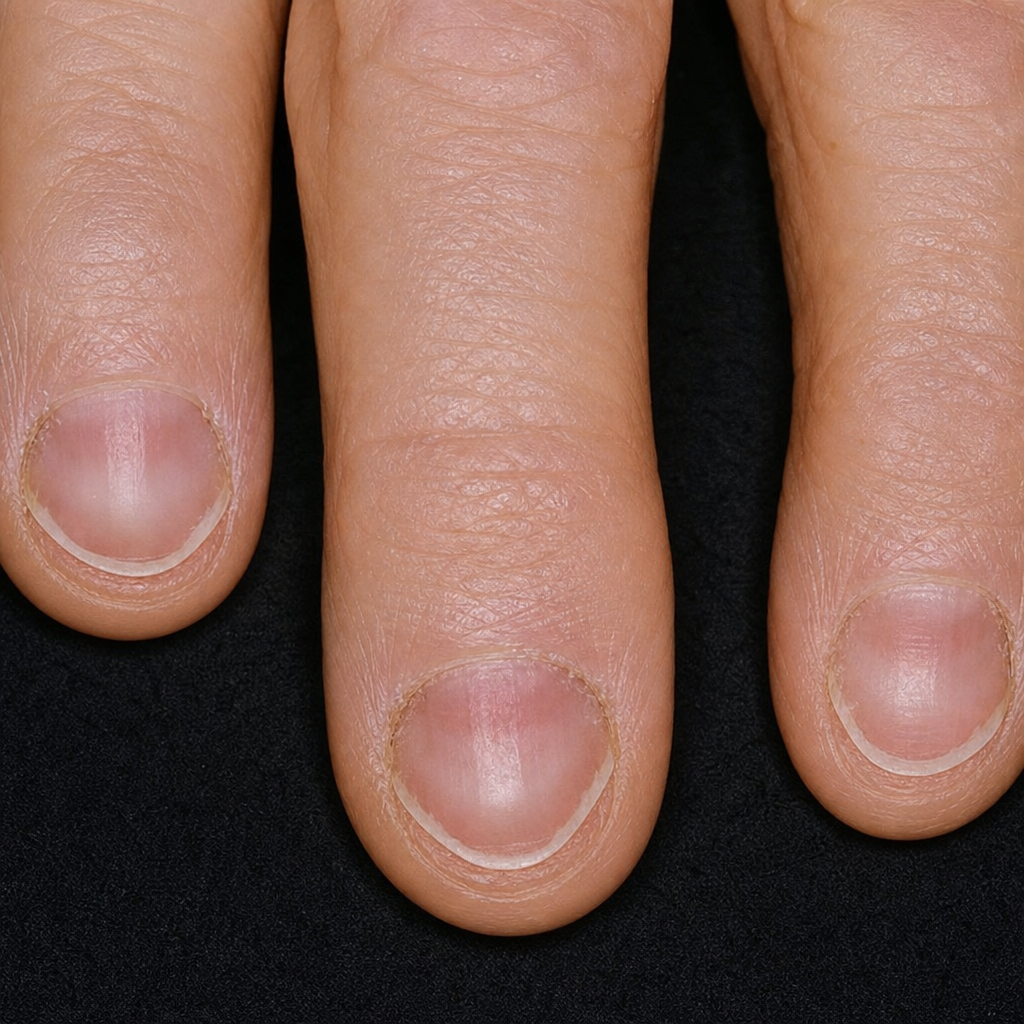
A 21-year-old Caucasian male presents to your office with wheezing and rhinitis. Laboratory results show peripheral eosinophilia and antibodies against neutrophil myeloperoxidase. What is the most likely diagnosis?
Q142
A 37-year-old African-American man presents to his primary care provider with a history of fatigue and nausea that started about 6 months ago. His symptoms have slowly gotten worse and now he has trouble climbing the stairs to his 3rd floor apartment without resting. Past medical history is significant for poorly controlled HIV and a remote history of heroin addiction. Today his temperature is 36.9°C (98.4°F), the blood pressure is 118/72 mm Hg, and the pulse is 75/min. Physical examination reveals morbid obesity and 1+ pitting edema of both lower extremities. Urine dipstick reveals 2+ proteinuria. Urinalysis shows no abnormal findings. Which of the following is the most likely etiology of this patient condition?
Q143
A 32-year-old man, otherwise healthy, presents with flank pain and severe nausea for the last 9 hours. He describes the pain as severe, intermittent, localized to the right flank, and radiates to the groin. His past medical history is significant for recurrent nephrolithiasis. The patient does not smoke and drinks alcohol socially. Today his temperature is 37.0°C (98.6°F), the pulse is 90/min, the respiratory rate is 25/min, and the oxygen saturation is 99% on room air. On physical examination, the patient is in pain and unable to lie still. The patient demonstrates severe costovertebral angle tenderness. The remainder of the exam is unremarkable. Non-contrast CT of the abdomen and pelvis reveals normal-sized kidneys with the presence of a single radiopaque stone lodged in the ureteropelvic junction and clusters of pyramidal medullary calcifications in both kidneys. Intravenous pyelography reveals multiple, small cysts measuring up to 0.3 cm in greatest dimension in medullary pyramids and papillae of both kidneys. Which of the following would you also most likely expect to see in this patient?
Q144
A 66-year-old woman comes to the emergency department because of a 1-day history of severe abdominal pain, nausea, and vomiting. She has also had profuse watery diarrhea with streaks of blood for the past 5 days. She had a urinary tract infection 3 weeks ago and was treated with a 14-day course of ciprofloxacin. She appears in severe distress. Her temperature is 39.3°C (102.7°F), pulse is 110/min, and blood pressure is 100/60 mm Hg. Examination shows a distended abdomen, tenderness in the lower quadrants, and hypoactive bowel sounds; rebound tenderness and abdominal rigidity are absent. Cardiopulmonary examination shows no abnormalities. Test of the stool for occult blood is positive. Laboratory studies show:
Hemoglobin 10.2 g/dL
Leukocyte count 28,000/mm3
Serum
Na+ 133 mEq/L
K+ 3.3 mEq/L
Cl- 97 mEq/L
Glucose 98 mg/dL
Creatinine 1.3 mg/dL
Two wide bore needles are inserted and intravenous fluids are administered. An abdominal x-ray of the patient would be most likely to show which of the following?
Q145
A 48-year-old man comes to the physician because of severe joint pain and swelling involving different joints for 3 months. He has also been having loose stools and episodes of epigastric pain for 6 months. He reports a 10-kg (22-lb) weight loss during this period. He has type 2 diabetes mellitus. He does not smoke or drink alcohol. His medications include insulin and metformin. His vital signs are within normal limits. Examination shows pale conjunctivae, angular cheilitis, and glossitis. Axillary and cervical lymphadenopathy is present. A grade 2/6 pansystolic murmur is heard best at the apex. The right knee is swollen and tender; range of motion is limited. The sacroiliac joints are tender. Test of the stool for occult blood is negative. Laboratory studies show:
Hemoglobin 9.2 g/dL
Mean corpuscular volume 90 μm3
Leukocyte count 4,800/mm3
Serum
Na+ 134 mEq/L
Cl- 96 mEq/L
K+ 3.3 mEq/L
Glucose 143 mg/dL
Creatinine 1.2 mg/dL
A small intestine biopsy shows periodic acid-Schiff-positive (PAS-positive) macrophages in the lamina propria. Which of the following is the most appropriate next step in management?
Q146
A 39-year-old woman comes to the physician for a follow-up examination after a colonoscopy showed 42 hamartomatous polyps. The physical examination findings are shown in the photograph. Which of the following conditions is most likely to develop in this patient?
Q147
A 45-year-old obese woman presents to the office complaining of intermittent chest pain for the past 3 days. She states that the pain worsens when she lays down and after she eats her meals. She thinks that she has experienced similar pain before but does not remember it lasting this long. She also complains of a bitter taste in her mouth but is otherwise in no apparent distress. She has a history of asthma, a partial hysterectomy 4 years ago, and hypothyroidism that was diagnosed 7 years ago. She admits to drinking 5–6 cans of beer on weekend nights. Her blood pressure is 130/90 mm Hg, and her heart rate is 105/min. An ECG is performed that shows no abnormal findings. Which of the following is the most likely cause of her pain?
Q148
A previously healthy 37-year-old man comes to the physician for the evaluation of an 8-week history of intermittent burning epigastric pain. During this period, he has also felt bloated and uncomfortable after meals. He has not had weight loss or a change in bowel habits. He has no personal or family history of serious illness. He takes no medications. He does not smoke. He drinks 1–3 beers per week. Vital signs are within normal limits. Abdominal examination shows mild epigastric tenderness on palpation without guarding or rebound tenderness. Bowel sounds are normal. The remainder of the examination shows no abnormalities. Which of the following is the most appropriate next step in management?
Q149
A 59-year-old man comes to the emergency department because of worsening nausea and reduced urine output for the past 3 days. One week ago he had a 4-day episode of abdominal pain, vomiting, and watery, nonbloody diarrhea that began a day after he returned from a trip to Mexico. He has not been able to eat or drink much since then, but the symptoms resolved 3 days ago. He has a history of tension headaches, for which he takes ibuprofen about 10 times a month. He also has gastroesophageal reflux disease and benign prostatic hyperplasia. His daily medications include pantoprazole and alfuzosin. He appears pale. His temperature is 36.9°C (98.4°F), pulse is 120/min, and blood pressure is 90/60 mm Hg. Examination shows dry mucous membranes. The abdomen is soft without guarding or rebound. Laboratory studies show:
Hemoglobin 14.8 g/dL
Platelet count 250,000/mm3
Serum
Na+ 147 mEq/L
Cl- 102 mEq/L
K+ 4.7 mEq/L
HCO3- 20 mEq/L
Urea nitrogen 109 mg/dL
Glucose 80 mg/dL
Creatinine 3.1 mg/dL
Urinalysis shows no abnormalities. Which of the following is the most likely underlying cause of this patient's laboratory findings?
Q150
A 63-year-old woman comes to the physician for evaluation of worsening fatigue and an unintentional 6.8-kg (15-lb) weight loss over the past 2 months. She also reports having had an unusual appetite for soil and clay for several months. She has a history of osteoarthritis of the knees, for which she takes acetaminophen. Her pulse is 116/minute and blood pressure is 125/84 mm Hg. Physical examination shows diffuse teeth abrasions and dirt in the sublingual folds. Further evaluation of this patient is most likely to show which of the following findings?
Gastroenterology US Medical PG Practice Questions and MCQs
Question 141: A 21-year-old Caucasian male presents to your office with wheezing and rhinitis. Laboratory results show peripheral eosinophilia and antibodies against neutrophil myeloperoxidase. What is the most likely diagnosis?
A. Pancoast tumor
B. Cystic fibrosis
C. Eosinophilic granulomatosis with polyangiitis (Churg-Strauss syndrome) (Correct Answer)
D. Allergic bronchopulmonary aspergillosis
E. Paragonimus westermani infection
Explanation: ***Eosinophilic granulomatosis with polyangiitis (Churg-Strauss syndrome)***
- The combination of **asthma-like symptoms** (wheezing, rhinitis), significant **eosinophilia**, and **p-ANCA positivity** (antibodies against myeloperoxidase) is highly characteristic of EGPA.
- This **small-vessel vasculitis** often presents with a prodromal allergic phase before progressing to systemic manifestations.
*Pancoast tumor*
- This is a **superior sulcus lung tumor** typically presenting with **shoulder pain**, **Horner's syndrome**, and **neurological symptoms** due to brachial plexus invasion.
- It does not cause eosinophilia or produce ANCA antibodies.
*Cystic fibrosis*
- A **genetic disorder** causing **thick, viscous secretions** in multiple organs, leading to recurrent respiratory infections, pancreatic insufficiency, and malabsorption.
- It is not associated with eosinophilia or ANCA positivity, and while it causes chronic lung symptoms, the presentation differs.
*Allergic bronchopulmonary aspergillosis*
- This is a **hypersensitivity reaction to Aspergillus fungi**, causing asthma, recurrent infiltrates, and bronchiectasis, along with high IgE levels and eosinophilia.
- However, it is not associated with **ANCA positivity** (anti-myeloperoxidase antibodies).
*Paragonimus westermani infection*
- This is a **lung fluke infection** typically acquired by consuming undercooked crustaceans, causing chronic cough, hemoptysis, and lung lesions, and can cause eosinophilia.
- While it can cause eosinophilia and respiratory symptoms, it does not lead to **ANCA positivity** as seen in this patient.
Question 142: A 37-year-old African-American man presents to his primary care provider with a history of fatigue and nausea that started about 6 months ago. His symptoms have slowly gotten worse and now he has trouble climbing the stairs to his 3rd floor apartment without resting. Past medical history is significant for poorly controlled HIV and a remote history of heroin addiction. Today his temperature is 36.9°C (98.4°F), the blood pressure is 118/72 mm Hg, and the pulse is 75/min. Physical examination reveals morbid obesity and 1+ pitting edema of both lower extremities. Urine dipstick reveals 2+ proteinuria. Urinalysis shows no abnormal findings. Which of the following is the most likely etiology of this patient condition?
A. Amyloidosis
B. Focal segmental glomerulosclerosis (Correct Answer)
C. Membranoproliferative glomerulonephritis
D. Minimal change disease
E. Membranous nephropathy
Explanation: **Focal segmental glomerulosclerosis**
- **HIV-associated nephropathy (HIVAN)**, a form of FSGS, is highly probable in this patient given their history of **poorly controlled HIV**, African-American ethnicity, and presentation with proteinuria and edema.
- **HIVAN** typically presents as **nephrotic syndrome** with rapid progression to end-stage renal disease, particularly in African-American individuals with high viral loads.
*Amyloidosis*
- While amyloidosis can cause proteinuria and nephrotic syndrome, it is typically associated with **chronic inflammatory conditions** or **monoclonal gammopathy**, neither of which are prominent in this patient's history.
- The patient's presentation with poorly controlled HIV and African-American ethnicity makes FSGS a more specific and likely diagnosis.
*Membranoproliferative glomerulonephritis*
- **MPGN** is often associated with **chronic infections like hepatitis C** or **autoimmune diseases**, which are not indicated in this case.
- While it can manifest with proteinuria and edema, the strong association with HIV in an African-American patient points away from MPGN as the primary etiology.
*Minimal change disease*
- **Minimal change disease** classically causes **nephrotic syndrome in children** and is often responsive to corticosteroids.
- Its etiology is typically idiopathic, and it is less likely to present in an adult with a history of HIV and progressive symptoms over several months.
*Membranous nephropathy*
- **Membranous nephropathy** is a common cause of nephrotic syndrome in adults and can be idiopathic or secondary to conditions like **lupus**, **hepatitis B**, or certain medications.
- The patient's specific risk factors, particularly HIV and African-American ethnicity, are not the typical associations for membranous nephropathy, making FSGS a more fitting diagnosis.
Question 143: A 32-year-old man, otherwise healthy, presents with flank pain and severe nausea for the last 9 hours. He describes the pain as severe, intermittent, localized to the right flank, and radiates to the groin. His past medical history is significant for recurrent nephrolithiasis. The patient does not smoke and drinks alcohol socially. Today his temperature is 37.0°C (98.6°F), the pulse is 90/min, the respiratory rate is 25/min, and the oxygen saturation is 99% on room air. On physical examination, the patient is in pain and unable to lie still. The patient demonstrates severe costovertebral angle tenderness. The remainder of the exam is unremarkable. Non-contrast CT of the abdomen and pelvis reveals normal-sized kidneys with the presence of a single radiopaque stone lodged in the ureteropelvic junction and clusters of pyramidal medullary calcifications in both kidneys. Intravenous pyelography reveals multiple, small cysts measuring up to 0.3 cm in greatest dimension in medullary pyramids and papillae of both kidneys. Which of the following would you also most likely expect to see in this patient?
A. Malignant hypertension
B. Proteinuria
C. Hyperparathyroidism
D. Renal cell carcinoma
E. Hematuria (Correct Answer)
Explanation: ***Hematuria***
- The presence of a **ureteral stone** causing flank pain radiating to the groin with **costovertebral angle tenderness** is highly indicative of nephrolithiasis.
- **Hematuria**, often microscopic but sometimes macroscopic, is a very common finding in acute nephrolithiasis due to the irritation and trauma caused by the stone to the urothelial lining.
*Malignant hypertension*
- While chronic kidney disease can lead to hypertension, **malignant hypertension** is a severe form associated with end-organ damage (e.g., papilledema, renal failure) and is not typically an initial or common presenting feature of nephrolithiasis.
- The patient's vital signs and lack of other systemic symptoms do not suggest malignant hypertension.
*Proteinuria*
- **Proteinuria** is not a characteristic finding in uncomplicated nephrolithiasis; it is more indicative of glomerular disease or significant renal parenchymal damage.
- The imaging findings point towards stone disease and medullary sponge kidney, not conditions primarily presenting with proteinuria.
*Hyperparathyroidism*
- **Hyperparathyroidism** can lead to recurrent kidney stones (calcium stones), but the question asks what else would *most likely* be seen in this patient *at presentation* given the acute symptoms. Elevated calcium levels or other signs of hyperparathyroidism are not mentioned.
- The finding of medullary calcifications and cysts points more towards **medullary sponge kidney**, which is a congenital malformation, not hyperparathyroidism, as the primary cause of stone formation.
*Renal cell carcinoma*
- Although **renal cell carcinoma** can present with flank pain and hematuria, it is less likely given the patient's history of recurrent nephrolithiasis and the specific imaging findings of a **ureteral stone** and **medullary calcifications/cysts**, which strongly suggest medullary sponge kidney.
- The clinical picture strongly points to acute nephrolithiasis, not malignancy.
Question 144: A 66-year-old woman comes to the emergency department because of a 1-day history of severe abdominal pain, nausea, and vomiting. She has also had profuse watery diarrhea with streaks of blood for the past 5 days. She had a urinary tract infection 3 weeks ago and was treated with a 14-day course of ciprofloxacin. She appears in severe distress. Her temperature is 39.3°C (102.7°F), pulse is 110/min, and blood pressure is 100/60 mm Hg. Examination shows a distended abdomen, tenderness in the lower quadrants, and hypoactive bowel sounds; rebound tenderness and abdominal rigidity are absent. Cardiopulmonary examination shows no abnormalities. Test of the stool for occult blood is positive. Laboratory studies show:
Hemoglobin 10.2 g/dL
Leukocyte count 28,000/mm3
Serum
Na+ 133 mEq/L
K+ 3.3 mEq/L
Cl- 97 mEq/L
Glucose 98 mg/dL
Creatinine 1.3 mg/dL
Two wide bore needles are inserted and intravenous fluids are administered. An abdominal x-ray of the patient would be most likely to show which of the following?
A. Dilation of the colon with loss of haustration (Correct Answer)
B. Dilated transverse colon and cut-off sign at splenic flexure
C. Large volume of gas under the right diaphragm
D. String-like appearance of a bowel loop
E. Dilated sigmoid colon resembling a coffee bean
Explanation: ***Dilation of the colon with loss of haustration***
- The patient's history of recent antibiotic use (ciprofloxacin), severe abdominal pain, bloody diarrhea, fever, **leukocytosis**, and dehydration (hypotension, elevated creatinine) is highly suggestive of **Clostridium difficile infection** leading to **toxic megacolon**.
- **Toxic megacolon** is a severe complication characterized by acute colonic dilation (>6 cm) and inflammation, often presenting with **loss of haustral markings** on abdominal X-ray, giving a "lead pipe" or "thumbprinting" appearance.
*Dilated transverse colon and cut-off sign at splenic flexure*
- A **"cut-off sign" at the splenic flexure** is indicative of a **large bowel obstruction**, specifically at that location, which is not suggested by the patient's symptoms of profuse bloody diarrhea and diffuse abdominal tenderness.
- While there might be some colonic dilation in obstruction, the specific presentation with diarrhea and recent antibiotic use points away from a simple mechanical obstruction.
*Large volume of gas under the right diaphragm*
- **Gas under the diaphragm** (pneumoperitoneum) is a classic sign of **bowel perforation**, which typically causes severe, sudden onset abdominal pain, rigidity, and rebound tenderness, clinical signs largely absent in this case.
- Although the patient's condition is severe, the absence of peritonitis signs like rigidity and rebound tenderness makes perforation less likely than toxic megacolon.
*String-like appearance of a bowel loop*
- A **string sign** refers to the severe narrowing of a bowel lumen, often seen in conditions like **Crohn's disease**, severe ischemic colitis, or **tuberculous enteritis**.
- This appearance is due to inflammation and fibrosis causing stenosis, which is not characteristic of the acute, severe colonic dilation seen in toxic megacolon.
*Dilated sigmoid colon resembling a coffee bean*
- A **sigmoid colon resembling a coffee bean** is a pathognomonic sign of a **sigmoid volvulus**, where the sigmoid colon twists on its mesentery.
- While this causes large bowel obstruction and dilation, the patient's presentation with profuse bloody diarrhea and recent antibiotic use is not typical for sigmoid volvulus.
Question 145: A 48-year-old man comes to the physician because of severe joint pain and swelling involving different joints for 3 months. He has also been having loose stools and episodes of epigastric pain for 6 months. He reports a 10-kg (22-lb) weight loss during this period. He has type 2 diabetes mellitus. He does not smoke or drink alcohol. His medications include insulin and metformin. His vital signs are within normal limits. Examination shows pale conjunctivae, angular cheilitis, and glossitis. Axillary and cervical lymphadenopathy is present. A grade 2/6 pansystolic murmur is heard best at the apex. The right knee is swollen and tender; range of motion is limited. The sacroiliac joints are tender. Test of the stool for occult blood is negative. Laboratory studies show:
Hemoglobin 9.2 g/dL
Mean corpuscular volume 90 μm3
Leukocyte count 4,800/mm3
Serum
Na+ 134 mEq/L
Cl- 96 mEq/L
K+ 3.3 mEq/L
Glucose 143 mg/dL
Creatinine 1.2 mg/dL
A small intestine biopsy shows periodic acid-Schiff-positive (PAS-positive) macrophages in the lamina propria. Which of the following is the most appropriate next step in management?
A. Oral trimethoprim-sulfamethoxazole (Correct Answer)
B. Oral doxycycline
C. Gluten-free diet
D. Intravenous ceftriaxone
E. Oral rifampin
Explanation: ***Oral trimethoprim-sulfamethoxazole***
- This patient's presentation with **PAS-positive macrophages** on small intestine biopsy is diagnostic of **Whipple disease**, caused by *Tropheryma whipplei*.
- **Long-term oral TMP-SMX** (for 1-2 years) is the standard maintenance therapy and can be used as initial therapy in patients **without CNS involvement**.
- This patient has no neurological symptoms (confusion, altered mental status, cranial nerve deficits, or focal findings) beyond peripheral signs of malabsorption (glossitis, cheilitis), making oral therapy appropriate.
- TMP-SMX provides excellent systemic coverage and adequate CNS penetration for prophylaxis against CNS disease development.
*Intravenous ceftriaxone*
- IV ceftriaxone (2g daily for 14 days) is preferred as **initial therapy when CNS involvement is present or suspected** (confusion, dementia, ophthalmoplegia, myoclonus, seizures).
- While some protocols use IV ceftriaxone followed by oral TMP-SMX for all patients, direct initiation with oral TMP-SMX is acceptable in patients without neurological manifestations, as in this case.
- The choice between these two options depends on clinical context, but given no CNS symptoms, oral therapy is appropriate.
*Oral doxycycline*
- Doxycycline has been used historically for Whipple disease but is **less effective** than TMP-SMX and has **poor CNS penetration**.
- It is not considered first-line therapy and has higher relapse rates, particularly with CNS involvement.
*Gluten-free diet*
- This is the treatment for **celiac disease**, which also presents with malabsorption and gastrointestinal symptoms.
- However, **PAS-positive macrophages** are pathognomonic for Whipple disease, not celiac disease (which shows villous atrophy and intraepithelial lymphocytosis).
- Celiac disease does not cause the extensive systemic manifestations seen here (lymphadenopathy, cardiac murmur, severe arthralgia).
*Oral rifampin*
- Rifampin is used primarily for **tuberculosis** and certain other mycobacterial infections.
- It is **not standard therapy** for Whipple disease, though it has occasionally been used in combination regimens for refractory cases or as part of alternative protocols.
- Monotherapy with rifampin would be inadequate for *Tropheryma whipplei*.
Question 146: A 39-year-old woman comes to the physician for a follow-up examination after a colonoscopy showed 42 hamartomatous polyps. The physical examination findings are shown in the photograph. Which of the following conditions is most likely to develop in this patient?
A. Mandibular osteoma
B. Malignant melanoma
C. Hepatocellular carcinoma
D. Medulloblastoma
E. Pancreatic carcinoma (Correct Answer)
Explanation: ***Pancreatic carcinoma***
- The image shows **perioral hyperpigmentation** (melanin spots on the lips and oral mucosa) and hamartomatous polyps in the colon, which are classic features of **Peutz-Jeghers syndrome**.
- Peutz-Jeghers syndrome is an autosomal dominant disorder that significantly increases the risk of various cancers, most notably **pancreatic carcinoma**, as well as gastric, small bowel, lung, breast, and gynecological cancers.
*Mandibular osteoma*
- **Mandibular osteomas** are characteristic of **Gardner syndrome**, a variant of Familial Adenomatous Polyposis, which involves hundreds of adenomatous polyps, not hamartomatous polyps as described in the case.
- Gardner syndrome also presents with other extra-colonic manifestations like epidermoid cysts and desmoid tumors, which are not suggested by the provided information.
*Malignant melanoma*
- While Peutz-Jeghers syndrome involves **mucocutaneous pigmentation**, these are typically benign melanin macules and do not progress to **malignant melanoma**.
- Malignant melanoma is a skin cancer linked to UV exposure and certain genetic predispositions, but not a primary manifestation or increased risk in Peutz-Jeghers syndrome beyond general population risk.
*Hepatocellular carcinoma*
- **Hepatocellular carcinoma** is strongly associated with chronic liver diseases such as **hepatitis B and C infections**, alcoholism, and non-alcoholic fatty liver disease.
- There is no direct significant increased risk of hepatocellular carcinoma specifically linked to Peutz-Jeghers syndrome.
*Medulloblastoma*
- **Medulloblastoma** is a common malignant brain tumor in children, often associated with syndromes like **Gorlin syndrome** (Nevoid Basal Cell Carcinoma Syndrome) or Turcot syndrome, but not Peutz-Jeghers syndrome.
- The patient's age and presenting features do not align with known risk factors for medulloblastoma.
Question 147: A 45-year-old obese woman presents to the office complaining of intermittent chest pain for the past 3 days. She states that the pain worsens when she lays down and after she eats her meals. She thinks that she has experienced similar pain before but does not remember it lasting this long. She also complains of a bitter taste in her mouth but is otherwise in no apparent distress. She has a history of asthma, a partial hysterectomy 4 years ago, and hypothyroidism that was diagnosed 7 years ago. She admits to drinking 5–6 cans of beer on weekend nights. Her blood pressure is 130/90 mm Hg, and her heart rate is 105/min. An ECG is performed that shows no abnormal findings. Which of the following is the most likely cause of her pain?
A. Erosion of the mucosa of the antrum of the stomach
B. Blockage of the cystic duct leading to inflammation of the wall of the gallbladder
C. Autodigestion of pancreatic tissue
D. An atherosclerotic blockage of a coronary artery causing transient ischemia during times of increased cardiac demand
E. Decreased lower esophageal sphincter tone (Correct Answer)
Explanation: ***Decreased lower esophageal sphincter tone***
- The patient's symptoms of intermittent chest pain that worsens when lying down and after meals, along with a bitter taste, are classic for **gastroesophageal reflux disease (GERD)**.
- **Decreased lower esophageal sphincter (LES) tone** is the primary mechanism of GERD, allowing gastric acid to reflux into the esophagus and cause pain and irritation. Factors like obesity and alcohol consumption can exacerbate this.
*Erosion of the mucosa of the antrum of the stomach*
- **Gastric ulcers** typically cause burning epigastric pain that may be relieved by food, or exacerbated by an empty stomach, rather than being primarily positional (lying down) or directly correlated with post-meal worsening in the described manner.
- While erosion can cause pain, it doesn't fully explain the **bitter taste** or the strong positional component described.
*Blockage of the cystic duct leading to inflammation of the wall of the gallbladder*
- **Cholecystitis** (inflammation of the gallbladder) typically presents with severe, steady pain in the right upper quadrant or epigastrium, often radiating to the back or shoulder, precipitated by fatty meals.
- While it can be worsened by meals, the pain quality (colicky vs. burning/chest pain), location, absence of fever/leukocytosis, and lack of a bitter taste make it less likely.
*Autodigestion of pancreatic tissue*
- **Pancreatitis** causes severe, constant epigastric pain that often radiates to the back, associated with nausea, vomiting, and abdominal tenderness.
- The patient's symptoms are more consistent with reflux and lack the characteristic severe pain and systemic signs of pancreatitis.
*An atherosclerotic blockage of a coronary artery causing transient ischemia during times of increased cardiac demand*
- While chest pain is a primary symptom of **angina**, it typically worsens with exertion and improves with rest, and is less commonly associated with lying down or a bitter taste.
- The normal ECG and the clear correlation with meals and position point away from a cardiac origin, although cardiac causes should always be considered with chest pain.
Question 148: A previously healthy 37-year-old man comes to the physician for the evaluation of an 8-week history of intermittent burning epigastric pain. During this period, he has also felt bloated and uncomfortable after meals. He has not had weight loss or a change in bowel habits. He has no personal or family history of serious illness. He takes no medications. He does not smoke. He drinks 1–3 beers per week. Vital signs are within normal limits. Abdominal examination shows mild epigastric tenderness on palpation without guarding or rebound tenderness. Bowel sounds are normal. The remainder of the examination shows no abnormalities. Which of the following is the most appropriate next step in management?
A. Urea breath test (Correct Answer)
B. Helicobacter pylori eradication therapy
C. Helicobacter pylori serum IgG
D. Upper gastrointestinal endoscopy
E. Proton pump inhibitors
Explanation: ***Urea breath test***
- The patient presents with classic symptoms of **dyspepsia**, and given his age (<60 years) and absence of **alarm symptoms** (e.g., weight loss, dysphagia, GI bleeding), an initial non-invasive test for **_Helicobacter pylori_** is appropriate.
- A **urea breath test** is a highly sensitive and specific non-invasive method to detect active _H. pylori_ infection.
*Helicobacter pylori eradication therapy*
- This therapy should only be initiated after a confirmed diagnosis of **_H. pylori_ infection**.
- Treating empirically without confirmation can lead to **antibiotic resistance** and unnecessary side effects.
*Helicobacter pylori serum IgG*
- A serum IgG test indicates only **prior exposure** to _H. pylori_ and does not distinguish between active and past infection.
- Therefore, it is **not suitable for diagnosing current active infection** or for confirming eradication.
*Upper gastrointestinal endoscopy*
- **Upper GI endoscopy** is indicated for patients over 60 with new-onset dyspepsia, or for those younger than 60 who present with **alarm symptoms** (e.g., weight loss, dysphagia, recurrent vomiting, GI bleeding, anemia).
- This patient currently has no alarm symptoms, making endoscopy an overly aggressive initial approach.
*Proton pump inhibitors*
- While **PPIs** are effective for symptom relief in dyspepsia, they can mask underlying _H. pylori_ infection or other serious conditions if used empirically without proper investigation.
- Furthermore, PPIs can cause **false-negative results** for _H. pylori_ tests like the urea breath test, so they should ideally be stopped for 1-2 weeks before testing.
Question 149: A 59-year-old man comes to the emergency department because of worsening nausea and reduced urine output for the past 3 days. One week ago he had a 4-day episode of abdominal pain, vomiting, and watery, nonbloody diarrhea that began a day after he returned from a trip to Mexico. He has not been able to eat or drink much since then, but the symptoms resolved 3 days ago. He has a history of tension headaches, for which he takes ibuprofen about 10 times a month. He also has gastroesophageal reflux disease and benign prostatic hyperplasia. His daily medications include pantoprazole and alfuzosin. He appears pale. His temperature is 36.9°C (98.4°F), pulse is 120/min, and blood pressure is 90/60 mm Hg. Examination shows dry mucous membranes. The abdomen is soft without guarding or rebound. Laboratory studies show:
Hemoglobin 14.8 g/dL
Platelet count 250,000/mm3
Serum
Na+ 147 mEq/L
Cl- 102 mEq/L
K+ 4.7 mEq/L
HCO3- 20 mEq/L
Urea nitrogen 109 mg/dL
Glucose 80 mg/dL
Creatinine 3.1 mg/dL
Urinalysis shows no abnormalities. Which of the following is the most likely underlying cause of this patient's laboratory findings?
A. Hemolytic uremic syndrome
B. Hypovolemia (Correct Answer)
C. Direct renal toxicity
D. IgA glomerulonephritis
E. Prostatic hyperplasia
Explanation: ***Hypovolemia***
- The patient presents with classic signs of **hypovolemic shock**: **hypotension** (90/60 mm Hg), **tachycardia** (120/min), and **dry mucous membranes**.
- His history of 4 days of **vomiting and watery diarrhea** along with subsequent inability to eat or drink confirms significant fluid loss, leading to **prerenal acute kidney injury** (elevated BUN and creatinine).
*Hemolytic uremic syndrome*
- This condition involves **microangiopathic hemolytic anemia**, **thrombocytopenia**, and **acute kidney injury**.
- The patient's **hemoglobin and platelet count are normal**, making HUS unlikely.
*Direct renal toxicity*
- While NSAIDs can cause direct renal toxicity, the patient's primary symptoms and lab findings (especially the history of significant fluid loss) point more strongly to **prerenal azotemia due to hypovolemia**.
- **Urinalysis is normal**, which would be unusual for active renal tubular damage secondary to toxicity.
*IgA glomerulonephritis*
- Typically presents with **hematuria** (often macroscopic following an upper respiratory or gastrointestinal infection) and **proteinuria**.
- This patient's **urinalysis is unremarkable**, showing no evidence of hematuria or significant proteinuria.
*Prostatic hyperplasia*
- **Benign prostatic hyperplasia (BPH)** can cause post-renal acute kidney injury due to **urinary outflow obstruction**.
- However, the presentation with **severe volume depletion** (hypotension, tachycardia, dry mucous membranes) and recent history of significant fluid loss from gastroenteritis makes hypovolemia a more immediate and likely cause of his acute kidney injury, rather than chronic BPH.
Question 150: A 63-year-old woman comes to the physician for evaluation of worsening fatigue and an unintentional 6.8-kg (15-lb) weight loss over the past 2 months. She also reports having had an unusual appetite for soil and clay for several months. She has a history of osteoarthritis of the knees, for which she takes acetaminophen. Her pulse is 116/minute and blood pressure is 125/84 mm Hg. Physical examination shows diffuse teeth abrasions and dirt in the sublingual folds. Further evaluation of this patient is most likely to show which of the following findings?
A. Positive stool guaiac test (Correct Answer)
B. Elevated serum lead concentration
C. Decreased CD4+ T-lymphocyte count
D. Positive Schilling test
E. Elevated serum thyroid-stimulating hormone concentration
Explanation: ***Positive stool guaiac test***
- The patient's **pica** (unusual appetite for soil and clay) is a **classic manifestation of iron deficiency anemia**, particularly in adults with chronic blood loss
- **Fatigue**, **weight loss**, and **tachycardia** are consistent with anemia
- In a **63-year-old woman**, the most common cause of iron deficiency anemia is **chronic gastrointestinal bleeding**, often from occult sources such as **colon cancer**, **gastric ulcers**, or **angiodysplasia**
- The **teeth abrasions** and **dirt in sublingual folds** confirm chronic geophagia (eating soil/clay), a form of pica strongly associated with iron deficiency
- Further evaluation would reveal a **positive stool guaiac test** indicating occult GI bleeding, prompting colonoscopy
*Elevated serum lead concentration*
- While **lead poisoning** can occur from ingesting contaminated soil, **pica is a cause of lead poisoning, not a result of it** in adults
- The presenting symptoms (fatigue, weight loss, tachycardia) are more consistent with **iron deficiency anemia** than lead toxicity
- Lead poisoning typically presents with abdominal pain, constipation, neuropathy, and cognitive changes, which are not prominent here
*Elevated serum thyroid-stimulating hormone concentration*
- **Hypothyroidism** can cause fatigue and weight changes, but typically causes **weight gain**, not loss
- The **elevated pulse (116/min)** is inconsistent with hypothyroidism, which typically causes **bradycardia**
- **Pica** is not a feature of thyroid dysfunction
*Decreased CD4+ T-lymphocyte count*
- **HIV/AIDS** can cause weight loss and fatigue, but there are no other features suggesting immunocompromise (no opportunistic infections, lymphadenopathy, or risk factors mentioned)
- **Pica** is not associated with decreased CD4+ count
*Positive Schilling test*
- The **Schilling test** (now largely obsolete) assessed **vitamin B12 absorption**
- While **B12 deficiency** can cause fatigue, it does not cause **pica**
- **Pica** is specifically associated with **iron deficiency**, not B12 deficiency
- B12 deficiency would also not explain the weight loss and tachycardia in this context