A 22-year-old female college student comes to your clinic to establish care. She has no significant past medical history and her only complaint today is that she has had trouble maintaining a consistent weight. Her temperature is 98.6°F (37.0°C), blood pressure is 100/65 mmHg, pulse is 62/min, and respirations are 12/min. Her body mass index is 19.5. Her physical exam is significant for callused knuckles and dental enamel erosions. What laboratory abnormalities are likely to be found in this patient?
Q132
A 49-year-old man comes with odynophagia, abdominal pain, fatigue, headache, and fever for several weeks. The patient reports no chronic medical problems, no travel, and no recent sick exposures. Physical examination is significant only for an erythematous oral mucosa and cervical lymphadenopathy. His vital signs show a blood pressure of 121/72 mm Hg, heart rate of 82/min, and respiratory rate of 16/min. On a review of systems, the patient reports regular, unprotected sexual encounters with men and women. Of the following options, which disease must be excluded?
Q133
A 27-year old woman comes to the physician for a rash that began 5 days ago. The rash involves her abdomen, back, arms, and legs, including her hands and feet. Over the past month, she has also had mild fever, headache, and myalgias. She has no personal history of serious illness. She smokes 1 pack of cigarettes a day and binge drinks on the weekends. She uses occasional cocaine, but denies other illicit drug use. Vital signs are within normal limits. Physical examination shows a widespread, symmetric, reddish-brown papular rash involving the trunk, upper extremities, and palms. There is generalized, nontender lymphadenopathy. Skin examination further shows patchy areas of hair loss on her scalp and multiple flat, broad-based, wart-like papules around her genitalia and anus. Rapid plasma reagin and fluorescent treponemal antibody test are both positive. In addition to starting treatment, which of the following is the most appropriate next step in management?
Q134
A 70-year-old man presents with severe abdominal pain over the last 24 hours. He describes the pain as severe and associated with diarrhea, nausea, and vomiting. He says he has had a history of postprandial abdominal pain over the last several months. The patient denies any fever, chills, recent antibiotic use. Past medical history is significant for peripheral arterial disease and type 2 diabetes mellitus. The patient reports a 20 pack-year smoking history. His vital signs include blood pressure 90/60 mm Hg, pulse 100/min, respiratory rate 22/min, temperature 38.0°C (100.5°F), and oxygen saturation of 98% on room air. On physical examination, the patient is ill-appearing. His abdomen is severely tender to palpation and distended with no rebound or guarding. Pain is disproportionate to the exam findings. Rectal examination demonstrates bright red-colored stool. Abdominal X-ray is unremarkable. Stool culture was negative for C. difficile. A contrast-enhanced CT scan reveals segmental colitis involving the distal transverse colon. Which of the following is the most likely cause of this patient's symptoms?
Q135
A 66-year-old woman is brought to the emergency department because of fever, chills, night sweats, and progressive shortness of breath for 1 week. She also reports generalized fatigue and nausea. She has type 2 diabetes mellitus and hypothyroidism. Current medications include metformin, sitagliptin, and levothyroxine. She appears ill. Her temperature is 38.7°C (101.7°F), pulse is 104/min, and blood pressure is 160/90 mm Hg. Examination shows pale conjunctivae and small nontender hemorrhagic macules over her palms and soles. Crackles are heard at both lung bases. A grade 2/6 mid-diastolic murmur is heard best at the third left intercostal space and is accentuated by leaning forward. The spleen is palpated 1–2 cm below the left costal margin. Laboratory studies show:
Hemoglobin 10.6 g/dL
Leukocyte count 18,300/mm3
Erythrocyte sedimentation rate 48 mm/h
Urine
Protein 1+
Blood 2+
RBCs 20-30/hpf
WBCs 0-2/hpf
An echocardiography shows multiple vegetations on the aortic valve. Blood cultures grow S. gallolyticus. She is treated with ampicillin and gentamicin for 2 weeks and her symptoms resolve. A repeat echocardiography at 3 weeks shows mild aortic regurgitation with no vegetations. Which of the following is the most appropriate next step in management?
Q136
A 39-year-old man comes to the emergency department because of fever, urinary frequency, and lower back pain for the last 3 days. During this period, he has also had pain with the 3 times he has defecated. He is sexually active with one female partner and does not use condoms. His father died of colon cancer at the age of 67 years. The patient has smoked one pack of cigarettes daily for 14 years and drinks alcohol occasionally. His temperature is 39.1°C (102.3°F), pulse is 114/min, and blood pressure is 140/90 mm Hg. Physical examination shows mild suprapubic pain on deep palpation and a swollen, tender prostate. The remainder of the examination shows no abnormalities. His hemoglobin concentration is 15.4 g/dL, leukocyte count is 18,400/mm3, and platelet count is 260,000/mm3. Which of the following is the most appropriate next step in the management of this patient's condition?
Q137
A 54-year-old man comes to the physician because of diarrhea that has become progressively worse over the past 4 months. He currently has 4–6 episodes of foul-smelling stools per day. Over the past 3 months, he has had fatigue and a 5-kg (11-lb) weight loss. He returned from Bangladesh 6 months ago after a year-long business assignment. He has osteoarthritis and hypertension. Current medications include amlodipine and naproxen. He appears pale and malnourished. His temperature is 37.3°C (99.1°F), pulse is 76/min, and blood pressure is 140/86 mm Hg. Examination shows pale conjunctivae and dry mucous membranes. Angular stomatitis and glossitis are present. The abdomen is distended but soft and nontender. Rectal examination shows no abnormalities. Laboratory studies show:
Hemoglobin 8.9 g/dL
Leukocyte count 4100/mm3
Platelet count 160,000/mm3
Mean corpuscular volume 110 μm3
Serum
Na+ 133 mEq/L
Cl- 98 mEq/l
K+ 3.3 mEq/L
Creatinine 1.1 mg/dL
IgA 250 mg/dL
Anti-tissue transglutaminase, IgA negative
Stool culture and studies for ova and parasites are negative. Test of the stool for occult blood is negative. Fecal fat content is 22 g/day (N < 7). Fecal lactoferrin is negative and elastase is within normal limits. Which of the following is the most appropriate next step in diagnosis?
Q138
A 70-year-old man comes to the physician because of episodes of watery stools for the past 6 weeks. During this period, he has also had recurrent episodes of reddening of the face, neck, and chest that last up to 30 minutes, especially following alcohol consumption. He has hypertension. He smoked one pack of cigarettes daily for 20 years but quit 8 years ago. He drinks two glasses of wine daily. Current medications include enalapril. He appears pale. He is 185 cm (6 ft 1 in) tall and weighs 67 kg (147.7 lb); BMI is 19.6 kg/m2. His temperature is 36.7°C (98°F), pulse is 85/min, and blood pressure is 130/85 mm Hg. Scattered expiratory wheezing is heard throughout both lung fields. Cardiac examination shows no abnormalities. The abdomen is soft and mildly tender. The remainder of the physical examination shows no abnormalities. A complete blood count and serum concentrations of urea nitrogen and creatinine are within the reference range. Which of the following is the most likely diagnosis in this patient?
Q139
Please refer to the summary above to answer this question
Which of the following is the most likely diagnosis?
Patient information
Age: 61 years
Gender: F, self-identified
Ethnicity: unspecified
Site of care: emergency department
History
Reason for Visit/Chief Concern: "My belly really hurts."
History of Present Illness:
developed abdominal pain 12 hours ago
pain constant; rated at 7/10
has nausea and has vomited twice
has had two episodes of nonbloody diarrhea in the last 4 hours
12-month history of intermittent constipation
reports no sick contacts or history of recent travel
Past medical history:
hypertension
type 2 diabetes mellitus
mild intermittent asthma
allergic rhinitis
Social history:
diet consists mostly of high-fat foods
does not smoke
drinks 1–2 glasses of wine per week
does not use illicit drugs
Medications:
lisinopril, metformin, albuterol inhaler, fexofenadine, psyllium husk fiber
Allergies:
no known drug allergies
Physical Examination
Temp Pulse Resp. BP O2 Sat Ht Wt BMI
38.4°C
(101.1°F)
85/min 16/min 134/85 mm Hg –
163 cm
(5 ft 4 in)
94 kg
(207 lb)
35 kg/m2
Appearance: lying back in a hospital bed; appears uncomfortable
Neck: no jugular venous distention
Pulmonary: clear to auscultation; no wheezes, rales, or rhonchi
Cardiac: regular rate and rhythm; normal S1 and S2; no murmurs, rubs, or gallops
Abdominal: obese; soft; tender to palpation in the left lower quadrant; no guarding or rebound tenderness; normal bowel sounds
Extremities: no edema; warm and well-perfused
Skin: no rashes; dry
Neurologic: alert and oriented; cranial nerves grossly intact; no focal neurologic deficits
Q140
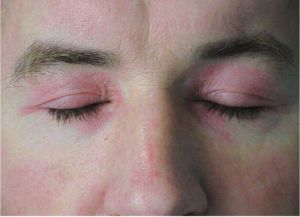
A 28-year-old man comes to the physician because of a 3-month history of a recurrent pruritic rash on his face and scalp. He reports that he has been using a new shaving cream once a week for the past 5 months. A year ago, he was diagnosed with HIV and is currently receiving triple antiretroviral therapy. He drinks several six-packs of beer weekly. Vital signs are within normal limits. A photograph of the rash is shown. A similar rash is seen near the hairline of the scalp and greasy yellow scales are seen at the margins of the eyelids. Which of the following is the most likely diagnosis?
Gastroenterology US Medical PG Practice Questions and MCQs
Question 131: A 22-year-old female college student comes to your clinic to establish care. She has no significant past medical history and her only complaint today is that she has had trouble maintaining a consistent weight. Her temperature is 98.6°F (37.0°C), blood pressure is 100/65 mmHg, pulse is 62/min, and respirations are 12/min. Her body mass index is 19.5. Her physical exam is significant for callused knuckles and dental enamel erosions. What laboratory abnormalities are likely to be found in this patient?
A. Increased chloride, increased potassium, increased bicarbonate
B. Decreased chloride, decreased potassium, increased bicarbonate (Correct Answer)
C. Increased chloride, decreased potassium, decreased bicarbonate
D. Decreased chloride, increased potassium, increased bicarbonate
E. Decreased chloride, decreased potassium, decreased bicarbonate
Explanation: ***Decreased chloride, decreased potassium, increased bicarbonate***
- The patient's symptoms (callused knuckles, dental erosions, weight fluctuations) suggest **bulimia nervosa**, characterized by recurrent episodes of binge eating followed by compensatory behaviors like self-induced vomiting.
- Frequent vomiting leads to metabolic **alkalosis** (increased bicarbonate), **hypokalemia** (decreased potassium) due to renal potassium wasting, and **hypochloremia** (decreased chloride) as the stomach acid is lost.
*Increased chloride, increased potassium, increased bicarbonate*
- This combination of electrolytes does not typically occur in any common medical condition and is inconsistent with the patient's likely diagnosis.
- Increased chloride and increased potassium are uncommon in a state of metabolic alkalosis induced by vomiting.
*Increased chloride, decreased potassium, decreased bicarbonate*
- Decreased bicarbonate indicates **metabolic acidosis**, which is not seen in bulimia nervosa.
- Increased chloride (hyperchloremia) is typically observed in non-anion gap metabolic acidosis, not in response to vomiting.
*Decreased chloride, increased potassium, increased bicarbonate*
- While **hypochloremia** and **metabolic alkalosis** (increased bicarbonate) are consistent with vomiting, **hyperkalemia** (increased potassium) is not.
- Vomiting typically causes hypokalemia due to renal compensation and loss of potassium-rich gastric fluid.
*Decreased chloride, decreased potassium, decreased bicarbonate*
- This combination indicates **hypochloremia**, **hypokalemia**, and **metabolic acidosis**, which is seen in conditions like renal tubular acidosis or severe diarrhea.
- These are not the expected findings in a patient with bulimia nervosa and chronic vomiting where metabolic alkalosis is prevalent.
Question 132: A 49-year-old man comes with odynophagia, abdominal pain, fatigue, headache, and fever for several weeks. The patient reports no chronic medical problems, no travel, and no recent sick exposures. Physical examination is significant only for an erythematous oral mucosa and cervical lymphadenopathy. His vital signs show a blood pressure of 121/72 mm Hg, heart rate of 82/min, and respiratory rate of 16/min. On a review of systems, the patient reports regular, unprotected sexual encounters with men and women. Of the following options, which disease must be excluded?
A. Secondary syphilis
B. Disseminated gonococci
C. Primary HIV infection (Correct Answer)
D. Primary syphilis
E. Primary HSV infection
Explanation: ***Primary HIV infection***
- The constellation of **odynophagia**, abdominal pain, fatigue, headache, and fever, along with **cervical lymphadenopathy** and erythematous oral mucosa, in a patient with a history of unprotected sexual encounters, is highly suggestive of **acute retroviral syndrome (ARS)**, which occurs during primary HIV infection.
- Due to the high morbidity and transmission risk associated with undiagnosed HIV, it is crucial to exclude this diagnosis promptly.
*Secondary syphilis*
- While secondary syphilis can present with **lymphadenopathy** and a **rash**, the prominent odynophagia and the specific combination of symptoms are less typical.
- A characteristic maculopapular rash, often involving the palms and soles, is usually present, which is not mentioned here.
*Primary HSV infection*
- **Primary HSV infection** can present with severe pharyngitis, fever, and lymphadenopathy, making it a reasonable differential.
- However, primary HSV typically causes more prominent **oral vesicles or ulcers** and is usually self-limited without the protracted multi-week course described.
- The constellation of systemic symptoms over several weeks is more consistent with ARS.
*Disseminated gonococci*
- **Disseminated gonococcal infection (DGI)** often presents with **migratory polyarthralgia**, tenosynovitis, and/or pustular skin lesions, which are not described.
- While fever can occur, the oral and pharyngeal symptoms are less characteristic of DGI as the primary presentation.
*Primary syphilis*
- **Primary syphilis** is characterized by a single, painless **chancre** at the site of infection and often regional lymphadenopathy, but typically not systemic symptoms like fever, fatigue, and odynophagia of several weeks duration.
- The reported symptoms are more indicative of a systemic illness rather than a localized primary lesion.
Question 133: A 27-year old woman comes to the physician for a rash that began 5 days ago. The rash involves her abdomen, back, arms, and legs, including her hands and feet. Over the past month, she has also had mild fever, headache, and myalgias. She has no personal history of serious illness. She smokes 1 pack of cigarettes a day and binge drinks on the weekends. She uses occasional cocaine, but denies other illicit drug use. Vital signs are within normal limits. Physical examination shows a widespread, symmetric, reddish-brown papular rash involving the trunk, upper extremities, and palms. There is generalized, nontender lymphadenopathy. Skin examination further shows patchy areas of hair loss on her scalp and multiple flat, broad-based, wart-like papules around her genitalia and anus. Rapid plasma reagin and fluorescent treponemal antibody test are both positive. In addition to starting treatment, which of the following is the most appropriate next step in management?
A. Blood cultures
B. CT angiography of the chest
C. Lumbar puncture
D. PCR for C. trachomatis and N. gonorrhea (Correct Answer)
E. Skin biopsy
Explanation: ***PCR for C. trachomatis and N. gonorrhea***
- This patient presents with symptoms highly suggestive of **secondary syphilis**, including a widespread rash on the trunk, palms, and soles (**condylomata lata**), patchy hair loss, generalized lymphadenopathy, and positive serological tests (RPR and FTA-ABS). Patients with syphilis, like this one who engages in risky sexual behaviors, are at high risk for co-infection with other sexually transmitted infections (STIs).
- Given the patient's sexual history and the presence of *condylomata lata*, which appear as wart-like papules, it is crucial to screen for other common STIs such as **chlamydia** and **gonorrhea** to ensure comprehensive treatment and prevent further transmission.
*Blood cultures*
- Blood cultures are generally indicated for evaluating systemic infections with suspected **bacteremia**, such as endocarditis or sepsis, which is not strongly suggested here despite the mild fever and myalgias.
- While syphilis is a systemic infection, the primary diagnostic tools are serological tests, and blood cultures are not routinely used for diagnosing or managing secondary syphilis.
*CT angiography of the chest*
- **CT angiography of the chest** is used to evaluate conditions like pulmonary embolism, aortic dissection, or vasculitis, none of which are indicated by the patient's current presentation.
- While syphilis can cause cardiovascular complications (**tertiary syphilis**), these typically manifest much later in the disease course and are not suggested by these acute symptoms.
*Lumbar puncture*
- A **lumbar puncture** is performed to evaluate for **neurosyphilis** (syphilis affecting the central nervous system).
- While neurosyphilis can occur at any stage of the disease, it is usually considered in patients with neurological symptoms (e.g., visual changes, hearing loss, cranial nerve palsies) or treatment failure, which are not present in this case.
*Skin biopsy*
- A **skin biopsy** could confirm the diagnosis of syphilis if serological tests were equivocal, but in this case, both RPR and FTA-ABS are positive, definitively confirming the diagnosis.
- While helpful in some dermatological cases, it is not the most appropriate *next step in management* for a confirmed syphilis case, especially with the high risk of co-infection.
Question 134: A 70-year-old man presents with severe abdominal pain over the last 24 hours. He describes the pain as severe and associated with diarrhea, nausea, and vomiting. He says he has had a history of postprandial abdominal pain over the last several months. The patient denies any fever, chills, recent antibiotic use. Past medical history is significant for peripheral arterial disease and type 2 diabetes mellitus. The patient reports a 20 pack-year smoking history. His vital signs include blood pressure 90/60 mm Hg, pulse 100/min, respiratory rate 22/min, temperature 38.0°C (100.5°F), and oxygen saturation of 98% on room air. On physical examination, the patient is ill-appearing. His abdomen is severely tender to palpation and distended with no rebound or guarding. Pain is disproportionate to the exam findings. Rectal examination demonstrates bright red-colored stool. Abdominal X-ray is unremarkable. Stool culture was negative for C. difficile. A contrast-enhanced CT scan reveals segmental colitis involving the distal transverse colon. Which of the following is the most likely cause of this patient's symptoms?
A. Aneurysm
B. Hypokalemia
C. Atherosclerosis (Correct Answer)
D. Bacterial infection
E. Upper GI bleeding
Explanation: ***Atherosclerosis***
- This patient's history of **peripheral arterial disease**, **type 2 diabetes mellitus**, and **smoking** are significant risk factors for **atherosclerosis**, which can lead to mesenteric ischemia.
- The presentation of **severe abdominal pain disproportionate to physical exam findings**, **postprandial pain**, **diarrhea**, **vomiting**, and **bright red rectal bleeding** with **segmental colitis** on CT is highly suggestive of **ischemic colitis**, primarily caused by atherosclerosis of the mesenteric arteries.
*Aneurysm*
- While an aneurysm (e.g., abdominal aortic aneurysm) can cause severe abdominal pain and hypotension, it typically presents with a **pulsatile mass** on examination and would likely be identified on imaging like an X-ray or CT scan as a distinct vascular abnormality, not primarily as **colitis**.
- The primary symptoms described (postprandial pain, diarrhea, and segmental colitis) are not characteristic of an uncomplicated aneurysm and don't directly explain the features of **ischemic colitis**.
*Hypokalemia*
- **Hypokalemia** can cause symptoms like **muscle weakness**, **cramps**, and **cardiac arrhythmias**, and in severe cases, paralytic ileus or constipation.
- It does not directly cause severe abdominal pain, bloody diarrhea, or **segmental colitis** described in this patient, and there is no information in the vignette to suggest electrolyte abnormalities.
*Bacterial infection*
- Although bacterial infections can cause diarrhea, abdominal pain, and colitis, the patient denies recent antibiotic use and fever is low grade. **C. difficile** was ruled out by negative stool culture.
- The history of **postprandial pain** over several months and significant vascular risk factors make **ischemic colitis** a more likely diagnosis than a primary bacterial infection.
*Upper GI bleeding*
- **Upper GI bleeding** typically presents with **melena** (black, tarry stools) or hematemesis (vomiting blood), rather than **bright red rectal bleeding**, unless the bleed is massive and extremely rapid.
- The **segmental colitis** observed on CT is not a finding typically associated with upper GI bleeding; it indicates a problem in the lower gastrointestinal tract.
Question 135: A 66-year-old woman is brought to the emergency department because of fever, chills, night sweats, and progressive shortness of breath for 1 week. She also reports generalized fatigue and nausea. She has type 2 diabetes mellitus and hypothyroidism. Current medications include metformin, sitagliptin, and levothyroxine. She appears ill. Her temperature is 38.7°C (101.7°F), pulse is 104/min, and blood pressure is 160/90 mm Hg. Examination shows pale conjunctivae and small nontender hemorrhagic macules over her palms and soles. Crackles are heard at both lung bases. A grade 2/6 mid-diastolic murmur is heard best at the third left intercostal space and is accentuated by leaning forward. The spleen is palpated 1–2 cm below the left costal margin. Laboratory studies show:
Hemoglobin 10.6 g/dL
Leukocyte count 18,300/mm3
Erythrocyte sedimentation rate 48 mm/h
Urine
Protein 1+
Blood 2+
RBCs 20-30/hpf
WBCs 0-2/hpf
An echocardiography shows multiple vegetations on the aortic valve. Blood cultures grow S. gallolyticus. She is treated with ampicillin and gentamicin for 2 weeks and her symptoms resolve. A repeat echocardiography at 3 weeks shows mild aortic regurgitation with no vegetations. Which of the following is the most appropriate next step in management?
A. Esophagogastroduodenoscopy
B. CT scan of the abdomen and pelvis
C. Colonoscopy (Correct Answer)
D. Warfarin therapy
E. Implantable defibrillator
Explanation: ***Colonoscopy***
- The isolation of **_S. gallolyticus_** (formerly _S. bovis_ biotype I) in blood cultures, especially in the context of infective endocarditis, is highly associated with **colorectal neoplasms** (adenomas or carcinomas).
- Therefore, a **colonoscopy** is essential to screen for underlying gastrointestinal malignancy, even after the infection has been successfully treated.
*Esophagogastroduodenoscopy*
- While _S. gallolyticus_ can originate from the GI tract, its strong association is specifically with **colorectal pathology**, not primarily upper GI sources.
- An EGD would not be the initial, most appropriate next step given the specific microorganism.
*CT scan of the abdomen and pelvis*
- A CT scan can detect abdominal masses but is **less sensitive** than colonoscopy for detecting adenomatous polyps or early-stage colorectal cancer.
- It would also not provide a tissue diagnosis, which is crucial for characterizing any detected lesions.
*Warfarin therapy*
- Warfarin is an anticoagulant used to prevent thromboembolic events, but there is **no indication for chronic anticoagulation** in this patient at this stage.
- Her endocarditis has resolved, and the mild aortic regurgitation alone does not necessitate warfarin.
*Implantable defibrillator*
- An implantable defibrillator is used to prevent sudden cardiac death in patients at high risk of **ventricular arrhythmias**.
- There is no information in the clinical scenario suggestive of such a risk, and her cardiac issue (mild aortic regurgitation post-endocarditis) does not warrant this intervention.
Question 136: A 39-year-old man comes to the emergency department because of fever, urinary frequency, and lower back pain for the last 3 days. During this period, he has also had pain with the 3 times he has defecated. He is sexually active with one female partner and does not use condoms. His father died of colon cancer at the age of 67 years. The patient has smoked one pack of cigarettes daily for 14 years and drinks alcohol occasionally. His temperature is 39.1°C (102.3°F), pulse is 114/min, and blood pressure is 140/90 mm Hg. Physical examination shows mild suprapubic pain on deep palpation and a swollen, tender prostate. The remainder of the examination shows no abnormalities. His hemoglobin concentration is 15.4 g/dL, leukocyte count is 18,400/mm3, and platelet count is 260,000/mm3. Which of the following is the most appropriate next step in the management of this patient's condition?
A. Urine culture (Correct Answer)
B. Perform transrectal ultrasonography
C. Administer tamsulosin
D. Administer vancomycin
E. Measure serum prostate-specific antigen
Explanation: ***Urine culture***
- The patient presents with classic symptoms of **acute bacterial prostatitis**, including fever, urinary frequency, lower back pain, and a swollen, tender prostate, along with systemic signs (fever 39.1°C, leukocytosis 18,400/mm³).
- A **urine culture** should be obtained **urgently** to identify the causative organism and determine antibiotic sensitivities. In this toxic-appearing patient, **empiric broad-spectrum antibiotic therapy** (typically a fluoroquinolone like ciprofloxacin or TMP-SMX) should be initiated **immediately after** or **concurrently with** obtaining the urine culture.
- Among the listed options, obtaining a urine culture is the most appropriate diagnostic step that directly guides management, as it will allow for **targeted antibiotic therapy** based on culture results and sensitivities.
*Perform transrectal ultrasonography*
- **Transrectal ultrasonography (TRUS)** is generally **contraindicated** in acute bacterial prostatitis due to the risk of **bacteremia** and sepsis from manipulating an acutely inflamed and infected prostate.
- TRUS may be considered later if there is suspicion of complications like a **prostatic abscess** (lack of clinical improvement after 48-72 hours of appropriate antibiotics), but it is not appropriate as an initial step.
*Administer tamsulosin*
- **Tamsulosin** is an alpha-blocker used to relax the smooth muscle of the prostate and bladder neck, improving urinary flow in conditions like **benign prostatic hyperplasia (BPH)**.
- While it might provide symptomatic relief of urinary symptoms, it does not address the underlying **bacterial infection** causing acute prostatitis and is not the priority in initial management.
*Administer vancomycin*
- **Vancomycin** is a glycopeptide antibiotic effective against **Gram-positive organisms**, particularly MRSA and other resistant Gram-positive bacteria.
- Acute bacterial prostatitis is most commonly caused by **Gram-negative enteric bacteria** (especially *E. coli*, *Klebsiella*, *Proteus*), making vancomycin **inappropriate** as empiric therapy. First-line empiric antibiotics should cover Gram-negative organisms (e.g., fluoroquinolones, TMP-SMX, or third-generation cephalosporins).
*Measure serum prostate-specific antigen*
- **Prostate-specific antigen (PSA)** levels are frequently elevated in acute prostatitis due to prostatic inflammation and increased permeability, making it an **unreliable marker** for prostate cancer screening in this acute setting.
- Measuring PSA during acute inflammation can lead to **false-positive results**, unnecessary anxiety, and potentially inappropriate invasive procedures. PSA testing should be deferred until the acute infection has resolved (typically 4-6 weeks after treatment).
Question 137: A 54-year-old man comes to the physician because of diarrhea that has become progressively worse over the past 4 months. He currently has 4–6 episodes of foul-smelling stools per day. Over the past 3 months, he has had fatigue and a 5-kg (11-lb) weight loss. He returned from Bangladesh 6 months ago after a year-long business assignment. He has osteoarthritis and hypertension. Current medications include amlodipine and naproxen. He appears pale and malnourished. His temperature is 37.3°C (99.1°F), pulse is 76/min, and blood pressure is 140/86 mm Hg. Examination shows pale conjunctivae and dry mucous membranes. Angular stomatitis and glossitis are present. The abdomen is distended but soft and nontender. Rectal examination shows no abnormalities. Laboratory studies show:
Hemoglobin 8.9 g/dL
Leukocyte count 4100/mm3
Platelet count 160,000/mm3
Mean corpuscular volume 110 μm3
Serum
Na+ 133 mEq/L
Cl- 98 mEq/l
K+ 3.3 mEq/L
Creatinine 1.1 mg/dL
IgA 250 mg/dL
Anti-tissue transglutaminase, IgA negative
Stool culture and studies for ova and parasites are negative. Test of the stool for occult blood is negative. Fecal fat content is 22 g/day (N < 7). Fecal lactoferrin is negative and elastase is within normal limits. Which of the following is the most appropriate next step in diagnosis?
A. CT scan of the abdomen
B. IgG against deamidated gliadin peptide
C. Schilling test
D. Enteroscopy
E. PAS-stained biopsy of small bowel (Correct Answer)
Explanation: ***PAS-stained biopsy of small bowel***
- The patient's history of travel to Bangladesh, chronic diarrhea, malabsorption (weight loss, fatigue, elevated fecal fat, macrocytic anemia), and negative celiac serology (anti-tissue transglutaminase IgA) are highly suggestive of **Whipple's disease**.
- **Periodic Acid-Schiff (PAS) staining** of a small bowel biopsy is the gold standard for diagnosing Whipple's disease, revealing **PAS-positive macrophages** containing *Tropheryma whipplei*.
*CT scan of the abdomen*
- While a CT scan can identify structural abnormalities or masses, it is not the most direct diagnostic test for **malabsorptive conditions** like Whipple's disease.
- It would likely show non-specific findings such as **bowel wall thickening** or **lymphadenopathy**, but not the definitive histological changes.
*IgG against deamidated gliadin peptide*
- This test is used to diagnose **celiac disease**, but the patient's IgA anti-tissue transglutaminase was already negative, and this IgG test is typically performed when IgA deficiency is suspected or in young children.
- Given the strong suspicion of an infectious etiology due to travel history and systemic symptoms, focusing solely on celiac serology is less appropriate as the first next step.
*Schilling test*
- The Schilling test is an **obsolete test** that was historically used to assess **vitamin B12 absorption** and differentiate causes of B12 deficiency (pernicious anemia, bacterial overgrowth, or pancreatic insufficiency).
- This test is **no longer performed in clinical practice** due to unavailability of radioactive B12; modern evaluation uses serum B12, methylmalonic acid, and homocysteine levels.
- While the patient has macrocytic anemia, the test would not directly address the underlying cause of fat malabsorption and systemic symptoms present.
*Enteroscopy*
- Enteroscopy allows for visualization and biopsy of the small bowel beyond the reach of a standard upper endoscopy.
- While useful for obtaining biopsies, simply performing an enteroscopy without knowing what to look for or what specific stain to request (referring to PAS) on the biopsy would be less targeted than ordering a **PAS-stained biopsy** specifically.
Question 138: A 70-year-old man comes to the physician because of episodes of watery stools for the past 6 weeks. During this period, he has also had recurrent episodes of reddening of the face, neck, and chest that last up to 30 minutes, especially following alcohol consumption. He has hypertension. He smoked one pack of cigarettes daily for 20 years but quit 8 years ago. He drinks two glasses of wine daily. Current medications include enalapril. He appears pale. He is 185 cm (6 ft 1 in) tall and weighs 67 kg (147.7 lb); BMI is 19.6 kg/m2. His temperature is 36.7°C (98°F), pulse is 85/min, and blood pressure is 130/85 mm Hg. Scattered expiratory wheezing is heard throughout both lung fields. Cardiac examination shows no abnormalities. The abdomen is soft and mildly tender. The remainder of the physical examination shows no abnormalities. A complete blood count and serum concentrations of urea nitrogen and creatinine are within the reference range. Which of the following is the most likely diagnosis in this patient?
A. Carcinoid syndrome (Correct Answer)
B. Celiac disease
C. Idiopathic flushing
D. Irritable bowel syndrome
E. Polycythemia vera
Explanation: ***Carcinoid syndrome***
- The patient's presentation with **watery diarrhea**, recurrent **flushing episodes** (especially triggered by alcohol), and **bronchospasm** (expiratory wheezing) represents the classic triad of carcinoid syndrome.
- Carcinoid tumors, typically originating in the GI tract (small bowel most common), release **vasoactive substances** including serotonin, bradykinin, histamine, and prostaglandins into systemic circulation.
- **Alcohol** is a well-documented precipitant of flushing in carcinoid syndrome, along with stress and certain foods.
- The weight loss (BMI 19.6) is consistent with chronic secretory diarrhea.
*Celiac disease*
- While celiac disease causes chronic diarrhea and weight loss, it is an **autoimmune reaction to gluten** causing villous atrophy and malabsorption.
- It does **not** explain the prominent **flushing** (especially alcohol-triggered) and **bronchospasm/wheezing** seen in this patient.
- Celiac disease typically presents with steatorrhea rather than watery diarrhea.
*Idiopathic flushing*
- This diagnosis presents as isolated episodic flushing without other systemic manifestations.
- The presence of **chronic watery diarrhea** and **bronchospasm** indicates an underlying pathologic process beyond idiopathic flushing.
- This would be a diagnosis of exclusion after ruling out carcinoid syndrome.
*Irritable bowel syndrome*
- IBS is a **functional gastrointestinal disorder** that can cause chronic diarrhea, typically alternating with constipation.
- It does **not** cause systemic symptoms such as **episodic facial flushing** or **bronchospasm/wheezing**.
- IBS symptoms are often stress and diet-related but would not explain alcohol-triggered flushing.
- The weight loss in this patient is also atypical for IBS (considered an "alarm feature" suggesting organic disease).
*Polycythemia vera*
- This myeloproliferative disorder causes **increased red blood cell mass** and can present with facial plethora and pruritus (especially after warm baths).
- The patient's **pallor** and **normal CBC** effectively rule out polycythemia vera.
- Polycythemia vera does not typically cause chronic **watery diarrhea** or **wheezing**.
Question 139: Please refer to the summary above to answer this question
Which of the following is the most likely diagnosis?
Patient information
Age: 61 years
Gender: F, self-identified
Ethnicity: unspecified
Site of care: emergency department
History
Reason for Visit/Chief Concern: "My belly really hurts."
History of Present Illness:
developed abdominal pain 12 hours ago
pain constant; rated at 7/10
has nausea and has vomited twice
has had two episodes of nonbloody diarrhea in the last 4 hours
12-month history of intermittent constipation
reports no sick contacts or history of recent travel
Past medical history:
hypertension
type 2 diabetes mellitus
mild intermittent asthma
allergic rhinitis
Social history:
diet consists mostly of high-fat foods
does not smoke
drinks 1–2 glasses of wine per week
does not use illicit drugs
Medications:
lisinopril, metformin, albuterol inhaler, fexofenadine, psyllium husk fiber
Allergies:
no known drug allergies
Physical Examination
Temp Pulse Resp. BP O2 Sat Ht Wt BMI
38.4°C
(101.1°F)
85/min 16/min 134/85 mm Hg –
163 cm
(5 ft 4 in)
94 kg
(207 lb)
35 kg/m2
Appearance: lying back in a hospital bed; appears uncomfortable
Neck: no jugular venous distention
Pulmonary: clear to auscultation; no wheezes, rales, or rhonchi
Cardiac: regular rate and rhythm; normal S1 and S2; no murmurs, rubs, or gallops
Abdominal: obese; soft; tender to palpation in the left lower quadrant; no guarding or rebound tenderness; normal bowel sounds
Extremities: no edema; warm and well-perfused
Skin: no rashes; dry
Neurologic: alert and oriented; cranial nerves grossly intact; no focal neurologic deficits
A. Cholecystitis
B. Crohn disease
C. Diverticulitis (Correct Answer)
D. Appendicitis
E. Irritable bowel syndrome
Explanation: ***Diverticulitis***
- The patient's presentation of acute **left lower quadrant abdominal pain**, fever (38.4°C), nausea, vomiting, and a history of intermittent constipation is highly suggestive of diverticulitis.
- Her obesity (BMI 35 kg/m2) and diet consisting mostly of high-fat foods are also **risk factors** for diverticular disease.
*Cholecystitis*
- This condition typically causes acute pain in the **right upper quadrant** of the abdomen, sometimes radiating to the right shoulder, which is inconsistent with the patient's left lower quadrant pain.
- While nausea and vomiting can occur, the localization of pain is a key differentiator.
*Crohn disease*
- Crohn disease usually presents with **chronic abdominal pain**, weight loss, fatigue, and persistent diarrhea, often with blood.
- The acute, localized pain with fever and recent constipation followed by non-bloody diarrhea does not fit the typical presentation of an acute flare of Crohn disease, though it can occur anywhere in the GI tract.
*Appendicitis*
- Acute appendicitis almost universally presents with pain that localizes to the **right lower quadrant** (McBurney's point), initially periumbilical.
- The patient's pain is clearly localized to the left lower quadrant, ruling out appendicitis.
*Irritable bowel syndrome*
- While IBS can cause recurrent abdominal pain, constipation, and diarrhea, it is a **functional disorder** and does not typically involve fever or a localized, acute inflammatory process as seen in this patient.
- The acute presentation with fever and severe, localized pain points away from IBS.
Question 140: A 28-year-old man comes to the physician because of a 3-month history of a recurrent pruritic rash on his face and scalp. He reports that he has been using a new shaving cream once a week for the past 5 months. A year ago, he was diagnosed with HIV and is currently receiving triple antiretroviral therapy. He drinks several six-packs of beer weekly. Vital signs are within normal limits. A photograph of the rash is shown. A similar rash is seen near the hairline of the scalp and greasy yellow scales are seen at the margins of the eyelids. Which of the following is the most likely diagnosis?
A. Allergic contact dermatitis
B. Pellagra
C. Seborrheic dermatitis (Correct Answer)
D. Dermatomyositis
E. Pityriasis versicolor
Explanation: ***Seborrheic dermatitis***
- This patient's rash presents with **erythematous plaques**, **greasy scales**, and **pruritus** on the face and scalp, which are classic signs of seborrheic dermatitis.
- The diagnosis of **HIV infection** and **alcohol abuse** are risk factors for seborrheic dermatitis, which is an inflammatory skin condition caused by an overgrowth of *Malassezia* yeast.
*Allergic contact dermatitis*
- This condition involves **intensely pruritic, erythematous, vesicular, and papular lesions** that appear after exposure to an allergen.
- Although the patient used a new shaving cream, the **greasy scales** and distribution on the scalp and eyelids are not typical for allergic contact dermatitis.
*Pellagra*
- This condition results from **niacin (vitamin B3) deficiency** and presents with the 3 Ds: **dermatitis**, **diarrhea**, and **dementia**.
- The specific rash is usually **symmetric**, **photosensitive**, and distributed in sun-exposed areas, with a **casal necklace** appearance, which does not match the clinical picture.
*Dermatomyositis*
- Dermatomyositis is an **inflammatory myopathy** characterized by **proximal muscle weakness** and distinctive skin rashes, such as **Gottron papules** and a **heliotrope rash** on the eyelids.
- While it can affect the eyelids, the absence of muscle weakness and the presence of greasy scales make this diagnosis less likely.
*Pityriasis versicolor*
- This is a superficial fungal infection caused by *Malassezia* species, resulting in **hypopigmented or hyperpigmented patches** with subtle scaling, predominantly on the trunk.
- The rash is not typically intensely pruritic, nor does it typically present with the **erythematous, greasy scales** seen on the face and scalp in this patient.