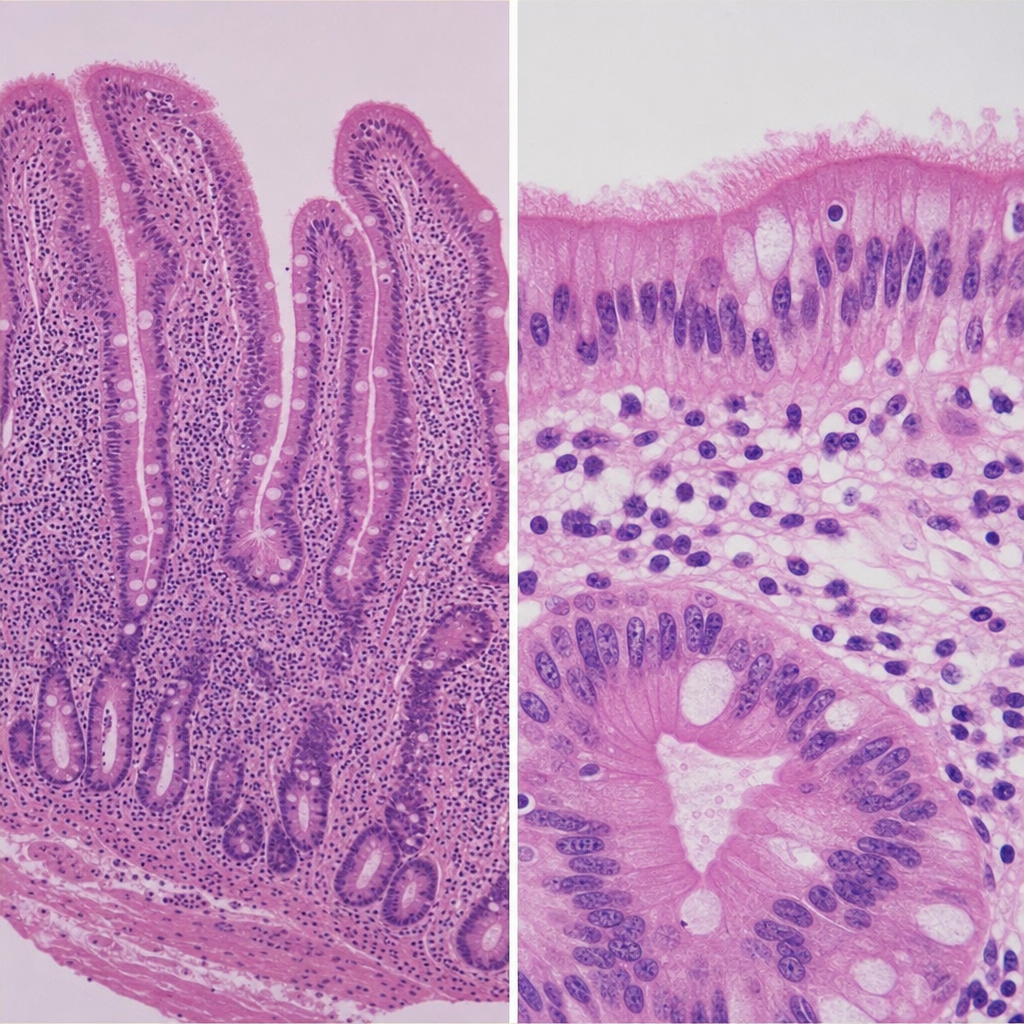
A 45-year-old woman presents to the clinic with a variety of complaints on different areas of her body, including telangiectasias on both the upper and lower extremities, bluish discoloration of the fingertips when exposed to cold, and burning midsternal chest pain. She is a tobacco smoker and works as a school teacher. After evaluation, an anti-centromere antibody test is ordered, and returns with an elevated titer. Which of the following symptoms are least likely to be seen in this patient's condition?
Q92
A 25-year-old man presents to the emergency department after numerous episodes of vomiting. The patient states that he thinks he ‘ate something weird’ and has been vomiting for the past 48 hours. He says that he came to the hospital because the last few times he "threw up blood". He is hypotensive with a blood pressure of 90/55 mm Hg and a pulse of 120/min. After opening an intravenous line, a physical examination is performed which is normal except for mild epigastric tenderness. An immediate endoscopy is performed and a tear involving the mucosa and submucosa of the gastroesophageal junction is visualized. Which of the following is the most likely diagnosis?
Q93
A 55-year-old man presents to his primary care physician for trouble swallowing. The patient claims that he used to struggle when eating food if he did not chew it thoroughly, but now he occasionally struggles with liquids as well. He also complains of a retrosternal burning sensation whenever he eats. He also claims that he feels his throat burns when he lays down or goes to bed. Otherwise, the patient has no other complaints. The patient has a past medical history of obesity, diabetes, constipation, and anxiety. His current medications include insulin, metformin, and lisinopril. On review of systems, the patient endorses a 5 pound weight loss recently. The patient has a 22 pack-year smoking history and drinks alcohol with dinner. His temperature is 99.5°F (37.5°C), blood pressure is 177/98 mmHg, pulse is 90/min, respirations are 17/min, and oxygen saturation is 98% on room air. On physical exam, you note an overweight man in no current distress. Abdominal exam is within normal limits. Which of the following is the best next step in management?
Q94
A 33-year-old HIV-positive male is seen in clinic for follow-up care. When asked if he has been adhering to his HIV medications, the patient exclaims that he has been depressed, thus causing him to not take his medication for six months. His CD4+ count is now 33 cells/mm3. What medication(s) should he take in addition to his anti-retroviral therapy?
Q95
A 42-year-old man presents to the physician with a painful ulcer in the mouth for 1 week. He has had similar episodes of ulcers over the past year. Every episode lasts about a week and heals without leaving a scar. He has also had similar ulcers on the scrotum, but the ulcers have left scars. He takes no medications. His temperature is 36.8°C (98.2°F), and the rest of the vital signs are stable. On physical examination, a 1-cm yellowish ulcer with a necrotic base is seen on the right buccal mucosa. Also, there are several tender nodules of different sizes on both shins. An image of one of the nodules is shown. Which of the following is the most likely complication of this patient’s current condition?
Q96
A 45-year-old male presents to his primary care physician complaining of joint pain and stiffness. He reports progressively worsening pain and stiffness in his wrists and fingers bilaterally over the past six months that appears to improve in the afternoon and evening. His past medical history is notable for obesity and diabetes mellitus. He takes metformin and glyburide. His family history is notable for osteoarthritis in his father and psoriasis in his mother. His temperature is 98.6°F (37°C), blood pressure is 130/80 mmHg, pulse is 90/min, and respirations are 16/min. On examination, his bilateral metacarpophalangeal joints and proximal interphalangeal joints are warm and mildly edematous. The presence of antibodies directed against which of the following is most specific for this patient’s condition?
Q97
A 15-year-old girl is brought to the physician because of an 8-month history of fatigue, intermittent postprandial abdominal bloating and discomfort, foul-smelling, watery diarrhea, and a 7-kg (15-lb) weight loss. She developed a pruritic rash on her knees 3 days ago. Physical examination shows several tense, excoriated vesicles on the knees bilaterally. The abdomen is soft and nontender. Her hemoglobin concentration is 8.2 g/dL and mean corpuscular volume is 76 μm3. Further evaluation of this patient is most likely to show which of the following findings?
Q98
A 26-year-old man presents to his primary doctor with one week of increasing weakness. He reports that he first noticed difficulty walking while attending his sister's graduation last week, and yesterday he had difficulty taking his coffee cup out of the microwave. He remembers having nausea and vomiting a few weeks prior, but other than that has no significant medical history. On exam, he has decreased reflexes in his bilateral upper and lower extremities, with intact sensation. If a lumbar puncture is performed, which of the following results are most likely?
Q99
A 52-year-old man presents to the office for evaluation of a 'weird rash' that appeared over his torso last week. The patient states that the rash just seemed to appear, but denies itching, pain, or exposure. On physical examination, the patient has multiple light brown-colored flat plaques on the torso. They appear to be 'stuck on' but do not have associated erythema or swelling. What condition is this clinical presentation most likely associated with?
Q100
A 66-year-old woman presents to her primary care physician with complaints of constipation and left lower abdominal discomfort. She says the pain usually gets worse after meals, which is felt as a dull pain. Her past medical history is positive for gastroesophageal reflux disease, for which she takes omeprazole. There is a positive history of chronic constipation but no episodes of bloody stools. On physical examination, she has a temperature of 38.5°C (101.3°F), blood pressure of 110/70 mm Hg, heart rate of 100/min, and respiratory rate of 19/min. Stool occult blood is negative. Which of the following is the most appropriate study to be performed at this stage?
Gastroenterology US Medical PG Practice Questions and MCQs
Question 91: A 45-year-old woman presents to the clinic with a variety of complaints on different areas of her body, including telangiectasias on both the upper and lower extremities, bluish discoloration of the fingertips when exposed to cold, and burning midsternal chest pain. She is a tobacco smoker and works as a school teacher. After evaluation, an anti-centromere antibody test is ordered, and returns with an elevated titer. Which of the following symptoms are least likely to be seen in this patient's condition?
A. Gastroesophageal reflux
B. Spasm of blood vessels in response to cold or stress
C. Thickening and tightening of the skin on the fingers
D. Dysphagia
E. Erythematous periorbital rash (Correct Answer)
Explanation: ***Erythematous periorbital rash***
- An **erythematous periorbital rash** (**heliotrope rash**) is highly characteristic of **dermatomyositis**, not the patient's condition.
- This symptom, along with **Gottron's papules** and **proximal muscle weakness**, would point away from scleroderma.
*Gastroesophageal reflux*
- **Gastroesophageal reflux** is common in **scleroderma**, particularly the limited cutaneous systemic sclerosis (CREST) variant.
- Esophageal dysmotility and lower esophageal sphincter incompetence lead to reflux and **heartburn**.
*Spasm of blood vessels in response to cold or stress*
- This describes **Raynaud's phenomenon**, a hallmark feature of **limited cutaneous systemic sclerosis (CREST syndrome)**.
- The patient's description of "bluish discoloration of the fingertips when exposed to cold" directly points to this symptom.
*Thickening and tightening of the skin on the fingers*
- **Sclerodactyly**, or thickening and tightening of the skin on the fingers, is a primary manifestation of **scleroderma**.
- This is a key diagnostic criterion for systemic sclerosis, especially in the limited form.
*Dysphagia*
- **Dysphagia**, or difficulty swallowing, is very common in **scleroderma** due to **esophageal hypomotility** and fibrosis.
- The sensation of food sticking or difficulty propelling food down the esophagus is a frequent complaint.
Question 92: A 25-year-old man presents to the emergency department after numerous episodes of vomiting. The patient states that he thinks he ‘ate something weird’ and has been vomiting for the past 48 hours. He says that he came to the hospital because the last few times he "threw up blood". He is hypotensive with a blood pressure of 90/55 mm Hg and a pulse of 120/min. After opening an intravenous line, a physical examination is performed which is normal except for mild epigastric tenderness. An immediate endoscopy is performed and a tear involving the mucosa and submucosa of the gastroesophageal junction is visualized. Which of the following is the most likely diagnosis?
A. Mallory-Weiss tear (Correct Answer)
B. Hiatal hernia
C. Esophageal varices
D. Boerhaave syndrome
E. Gastric ulcer
Explanation: ***Mallory-Weiss tear***
- The patient's history of **repeated vomiting** followed by **hematemesis** is hallmark for a Mallory-Weiss tear. The endoscopic finding of a **mucosal and submucosal tear at the gastroesophageal junction** confirms this diagnosis.
- This condition is often precipitated by events that cause a sudden increase in intra-abdominal pressure, such as forceful retching or vomiting, leading to a linear tear.
*Hiatal hernia*
- A hiatal hernia involves the **protrusion of the stomach through the esophageal hiatus of the diaphragm** and would not typically cause acute hematemesis from a tear.
- While it can be associated with gastroesophageal reflux, it does not directly explain sudden-onset bleeding after vomiting.
*Esophageal varices*
- Esophageal varices are **dilated veins in the lower esophagus** usually due to **portal hypertension**, often seen in patients with liver cirrhosis.
- While varices can cause significant upper gastrointestinal bleeding, the endoscopy here reveals a tear, not ruptured varices, and there is no mention of underlying liver disease.
*Boerhaave syndrome*
- Boerhaave syndrome is a **transmural rupture of the esophagus** following forceful vomiting, which is a much more severe condition than a Mallory-Weiss tear.
- It would typically present with **severe chest pain**, **crepitus**, and signs of **mediastinitis** or **pleural effusion** due to esophageal contents leaking into the mediastinum, none of which are described here.
*Gastric ulcer*
- A gastric ulcer is an **erosion in the stomach lining** that can cause bleeding.
- While it can cause hematemesis, the endoscopic finding of a tear specifically at the **gastroesophageal junction** points away from a sole gastric ulcer as the cause.
Question 93: A 55-year-old man presents to his primary care physician for trouble swallowing. The patient claims that he used to struggle when eating food if he did not chew it thoroughly, but now he occasionally struggles with liquids as well. He also complains of a retrosternal burning sensation whenever he eats. He also claims that he feels his throat burns when he lays down or goes to bed. Otherwise, the patient has no other complaints. The patient has a past medical history of obesity, diabetes, constipation, and anxiety. His current medications include insulin, metformin, and lisinopril. On review of systems, the patient endorses a 5 pound weight loss recently. The patient has a 22 pack-year smoking history and drinks alcohol with dinner. His temperature is 99.5°F (37.5°C), blood pressure is 177/98 mmHg, pulse is 90/min, respirations are 17/min, and oxygen saturation is 98% on room air. On physical exam, you note an overweight man in no current distress. Abdominal exam is within normal limits. Which of the following is the best next step in management?
A. Endoscopy (Correct Answer)
B. Omeprazole trial
C. Manometry
D. Barium swallow
E. CT scan
Explanation: ***Endoscopy***
- The patient presents with **dysphagia to solids and liquids**, significant for **recent weight loss**, and a **history of smoking**, all of which are **alarm symptoms** necessitating an upper endoscopy to rule out malignancy.
- While he has **GERD symptoms** as well (retrosternal burning), the presence of alarm features mandates a direct investigation of the upper GI tract rather than empirical treatment.
*Omeprazole trial*
- An empirical trial of **PPIs** like omeprazole is appropriate for classic GERD symptoms without alarm features.
- However, **dysphagia to solids and liquids with associated weight loss**, especially in a patient with a significant **smoking history**, are alarm symptoms that require direct visualization via endoscopy, not just symptom management.
*Manometry*
- **Esophageal manometry** is used to evaluate the motility of the esophagus and diagnose conditions like achalasia or esophageal spasm.
- While the patient has dysphagia, **alarm symptoms (weight loss, smoking history)** raise concern for mechanical obstruction or malignancy, which should be investigated before motility disorders.
*Barium swallow*
- A **barium swallow** can identify structural abnormalities like strictures, masses, or webs, and also assess motility.
- However, in the context of alarm symptoms, a **barium swallow is less sensitive** for detecting subtle mucosal changes or early malignancy compared to endoscopy, and any positive findings would still prompt an endoscopy.
*CT scan*
- A **CT scan of the chest and abdomen** is useful for assessing extraluminal pathology, mediastinal involvement, or distant metastases.
- While it may eventually be part of staging if a malignancy is found, the **initial investigation for esophageal symptoms and alarm features** focuses on direct luminal visualization with endoscopy to identify the primary pathology.
Question 94: A 33-year-old HIV-positive male is seen in clinic for follow-up care. When asked if he has been adhering to his HIV medications, the patient exclaims that he has been depressed, thus causing him to not take his medication for six months. His CD4+ count is now 33 cells/mm3. What medication(s) should he take in addition to his anti-retroviral therapy?
A. Azithromycin and fluconazole
B. Azithromycin, dapsone, and fluconazole
C. Dapsone
D. Fluconazole
E. Azithromycin and trimethoprim-sulfamethoxazole (Correct Answer)
Explanation: ***Azithromycin and trimethoprim-sulfamethoxazole***
- With a **CD4+ count of 33 cells/mm3**, this patient is at high risk for **Pneumocystis jirovecii pneumonia (PJP)** and **Toxoplasma gondii encephalitis**, for which **trimethoprim-sulfamethoxazole (TMP-SMX)** is the prophylaxis of choice.
- He is also at very high risk for **Mycobacterium avium complex (MAC) infection**, for which **azithromycin** is the recommended preventative treatment when the CD4 count is below 50 cells/mm3.
*Azithromycin and fluconazole*
- While **azithromycin** is indicated for MAC prophylaxis, **fluconazole** is typically used for **cryptococcal meningitis** or **candidiasis**, which are not the primary, immediate prophylactic concerns at this specific CD4 count unless there's evidence of these infections.
- The most critical opportunistic infections to prevent at a CD4 count of 33 cells/mm3 are PJP, Toxoplasmosis, and MAC.
*Azithromycin, dapsone, and fluconazole*
- **Dapsone** can be used as an alternative for **PJP prophylaxis** if TMP-SMX is contraindicated, but it is not the first-line choice and does not cover toxoplasmosis as effectively as TMP-SMX alone.
- **Fluconazole** again is not a primary prophylactic agent at this CD4 count in the absence of specific indications.
*Dapsone*
- **Dapsone** is an alternative for **PJP prophylaxis** and can also prevent **Toxoplasma gondii encephalitis** when combined with pyrimethamine, but it is not the first-line recommendation.
- It does not provide coverage against **MAC infection**, which is a significant risk at this CD4 count.
*Fluconazole*
- **Fluconazole** is primarily used for **fungal infections** like **candidiasis** or **cryptococcosis**.
- It does not prevent **PJP, Toxoplasmosis, or MAC**, which are the most critical prophylactic concerns for a patient with a CD4 count of 33 cells/mm3.
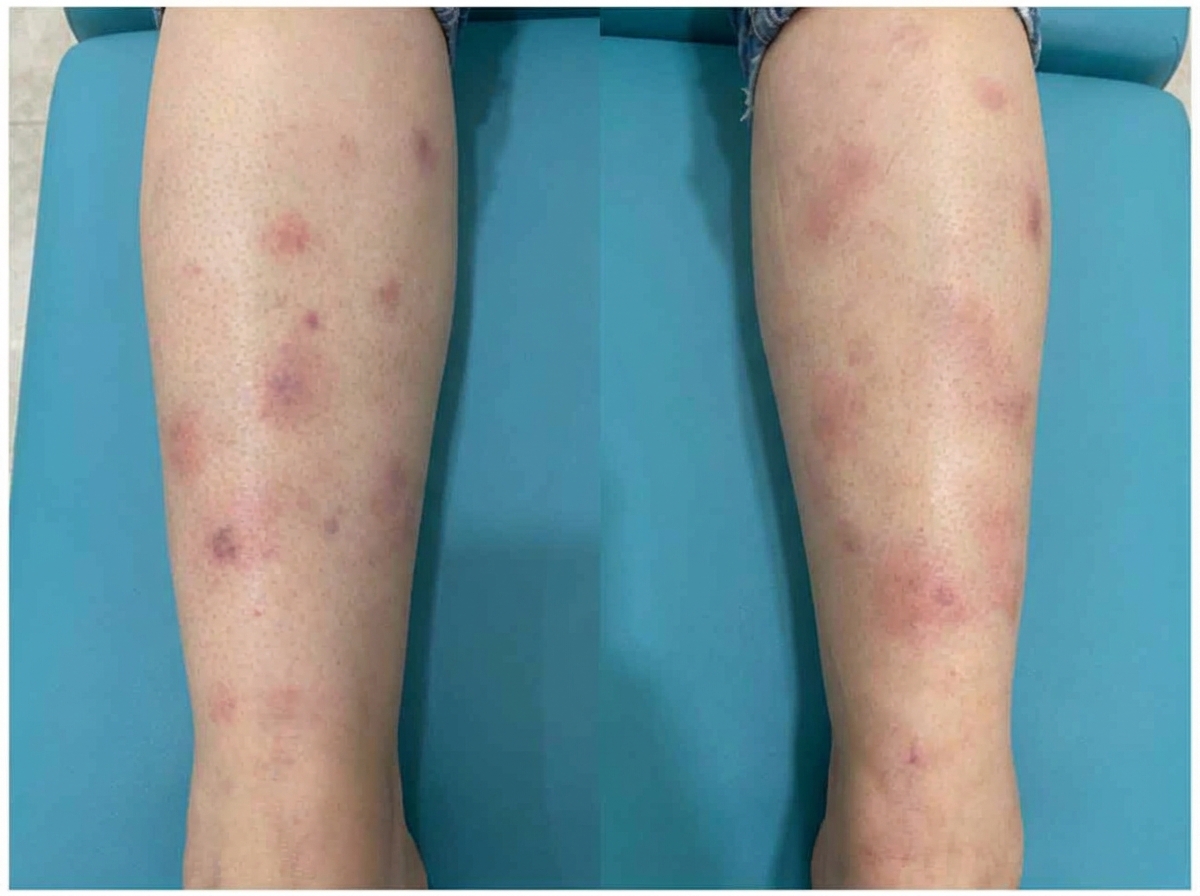
Question 95: A 42-year-old man presents to the physician with a painful ulcer in the mouth for 1 week. He has had similar episodes of ulcers over the past year. Every episode lasts about a week and heals without leaving a scar. He has also had similar ulcers on the scrotum, but the ulcers have left scars. He takes no medications. His temperature is 36.8°C (98.2°F), and the rest of the vital signs are stable. On physical examination, a 1-cm yellowish ulcer with a necrotic base is seen on the right buccal mucosa. Also, there are several tender nodules of different sizes on both shins. An image of one of the nodules is shown. Which of the following is the most likely complication of this patient’s current condition?
A. Uveitis (Correct Answer)
B. Cerebral vein thrombosis
C. Pulmonary embolism
D. Gastrointestinal ulceration
E. Deforming arthritis
Explanation: ***Uveitis***
- The constellation of **recurrent oral and genital ulcers**, **skin lesions** (erythema nodosum-like nodules on the shins), and positive pathergy test (implied by the "scars" from ulcers which may suggest an exaggerated skin response) is highly suggestive of **Behçet's disease**.
- **Uveitis** is a common and serious ocular complication of Behçet's disease, often leading to visual impairment or blindness if untreated.
*Cerebral vein thrombosis*
- While **central nervous system (CNS) involvement** can occur in Behçet's disease, leading to various neurological symptoms including **thrombosis**, it is less common than ocular complications like uveitis.
- **Cerebral vein thrombosis** is a severe but less frequent manifestation compared to the high prevalence of ocular involvement.
*Pulmonary embolism*
- **Vascular involvement**, including thrombophlebitis and arterial aneurysms, is a known feature of Behçet's disease, increasing the risk of **thrombosis**.
- However, **pulmonary embolism** specifically is a less frequent direct complication compared to other arterial or venous thromboses, and ocular issues are more prevalent.
*Gastrointestinal ulceration*
- Behçet's disease can affect the **gastrointestinal tract**, causing **ulcerations**, particularly in the ileocecal region.
- While a possible complication, gastrointestinal involvement is not as universally noted or as likely to be the *most likely* complication as uveitis, which affects a higher percentage of patients.
*Deforming arthritis*
- **Arthritis** is a common manifestation in Behçet's disease, typically presenting as **non-erosive and non-deforming** polyarthritis, predominantly affecting large joints like the knees and ankles.
- Unlike conditions like rheumatoid arthritis, Behçet's-associated arthritis rarely leads to **joint destruction or deformity**.
Question 96: A 45-year-old male presents to his primary care physician complaining of joint pain and stiffness. He reports progressively worsening pain and stiffness in his wrists and fingers bilaterally over the past six months that appears to improve in the afternoon and evening. His past medical history is notable for obesity and diabetes mellitus. He takes metformin and glyburide. His family history is notable for osteoarthritis in his father and psoriasis in his mother. His temperature is 98.6°F (37°C), blood pressure is 130/80 mmHg, pulse is 90/min, and respirations are 16/min. On examination, his bilateral metacarpophalangeal joints and proximal interphalangeal joints are warm and mildly edematous. The presence of antibodies directed against which of the following is most specific for this patient’s condition?
A. Topoisomerase I
B. Fc region of IgG molecule
C. Centromeres
D. Citrullinated peptides (Correct Answer)
E. Histidyl-tRNA synthetase
Explanation: ***Citrullinated peptides***
- The patient's presentation with **bilateral, symmetrical polyarthritis** affecting the **MCP and PIP joints**, morning stiffness that improves with activity, and a chronic course is highly suggestive of **rheumatoid arthritis (RA)**.
- **Anti-citrullinated protein antibodies (ACPA)**, specifically **anti-cyclic citrullinated peptide (anti-CCP) antibodies**, are highly specific for RA and are often present early in the disease course.
*Fc region of IgG molecule*
- Antibodies directed against the **Fc region of the IgG molecule** are known as **rheumatoid factor (RF)**. While RF is commonly positive in RA, it is less specific than anti-CCP antibodies as it can be found in other autoimmune diseases, infections, and even healthy individuals, especially in older age.
- RF is an autoantibody, usually of the IgM class, that binds to the Fc portion of IgG, forming immune complexes that contribute to inflammation.
*Topoisomerase I*
- Antibodies to **topoisomerase I (Scl-70 antibodies)** are characteristic of **diffuse systemic sclerosis (scleroderma)**, a condition presenting with skin thickening, Raynaud's phenomenon, and internal organ involvement, none of which are described here.
- Diffuse systemic sclerosis involves widespread skin involvement and often early and significant internal organ complications like interstitial lung disease.
*Centromeres*
- Antibodies to **centromeres** are characteristic of **limited systemic sclerosis (CREST syndrome)**, which is associated with calcinosis, Raynaud's phenomenon, esophageal dysmotility, sclerodactyly, and telangiectasias.
- This patient's symptoms are focused on inflammatory arthritis and do not align with the features of systemic sclerosis.
*Histidyl-tRNA synthetase*
- Antibodies to **histidyl-tRNA synthetase**, also known as **anti-Jo-1 antibodies**, are associated with **polymyositis** and **dermatomyositis**, which are inflammatory myopathies causing muscle weakness and sometimes skin rashes.
- This patient's primary complaint is joint pain and stiffness, with no mention of muscle weakness or characteristic skin findings of myositis.
Question 97: A 15-year-old girl is brought to the physician because of an 8-month history of fatigue, intermittent postprandial abdominal bloating and discomfort, foul-smelling, watery diarrhea, and a 7-kg (15-lb) weight loss. She developed a pruritic rash on her knees 3 days ago. Physical examination shows several tense, excoriated vesicles on the knees bilaterally. The abdomen is soft and nontender. Her hemoglobin concentration is 8.2 g/dL and mean corpuscular volume is 76 μm3. Further evaluation of this patient is most likely to show which of the following findings?
A. IgA tissue transglutaminase antibodies (Correct Answer)
B. Elevated serum amylase concentration
C. Intraluminal esophageal membrane
D. Periodic acid-Schiff-positive macrophages
E. Positive hydrogen breath test
Explanation: ***IgA tissue transglutaminase antibodies***
- The patient's symptoms of **fatigue, abdominal bloating and discomfort, watery diarrhea, weight loss, iron deficiency anemia**, and a **pruritic rash (dermatitis herpetiformis)** are highly suggestive of **celiac disease**.
- **IgA tissue transglutaminase (tTG) antibodies** are the most sensitive and specific serological test for celiac disease.
*Elevated serum amylase concentration*
- **Elevated serum amylase** is typically indicative of **pancreatitis**, which is not supported by the patient's symptoms (e.g., severe epigastric pain radiating to the back).
- While malabsorption can lead to some pancreatic dysfunction, it would not be the primary diagnostic finding for this presentation.
*Intraluminal esophageal membrane*
- **Intraluminal esophageal membranes** or **webs** are typically associated with conditions like **Plummer-Vinson syndrome** or **eosinophilic esophagitis**, presenting with dysphagia.
- These findings do not explain the patient's prominent gastrointestinal symptoms, weight loss, rash, or anemia.
*Periodic acid-Schiff-positive macrophages*
- **Periodic acid-Schiff (PAS)-positive macrophages** in the lamina propria are characteristic of **Whipple disease**.
- Whipple disease typically presents with polyarthralgia, lymphadenopathy, and neurological symptoms in addition to malabsorption, which are not described here.
*Positive hydrogen breath test*
- A **positive hydrogen breath test** suggests **small intestinal bacterial overgrowth (SIBO)** or **lactose intolerance**.
- While SIBO can cause bloating and diarrhea, it does not explain the pruritic rash (dermatitis herpetiformis) or the severity of the anemia and weight loss as the primary diagnosis.
Question 98: A 26-year-old man presents to his primary doctor with one week of increasing weakness. He reports that he first noticed difficulty walking while attending his sister's graduation last week, and yesterday he had difficulty taking his coffee cup out of the microwave. He remembers having nausea and vomiting a few weeks prior, but other than that has no significant medical history. On exam, he has decreased reflexes in his bilateral upper and lower extremities, with intact sensation. If a lumbar puncture is performed, which of the following results are most likely?
A. High lymphocytes, high protein, low glucose, high opening pressure
B. Normal cell count, high protein, normal glucose, normal opening pressure (Correct Answer)
C. High neutrophils, high protein, low glucose, high opening pressure
D. Normal cell count, normal protein, normal glucose, normal opening pressure
E. High lymphocytes, normal protein, normal glucose, normal opening pressure
Explanation: ***Normal cell count, high protein, normal glucose, normal opening pressure***
- This patient's presentation with **ascending paralysis** following a viral illness (nausea and vomiting a few weeks prior) is highly suggestive of **Guillain-Barré Syndrome (GBS)**.
- The classic cerebrospinal fluid (CSF) finding in GBS is **albuminocytologic dissociation**, characterized by a **normal white blood cell count** but **elevated protein levels** due to inflammation of nerve roots and increased permeability of the blood-nerve barrier.
*High lymphocytes, high protein, low glucose, high opening pressure*
- This CSF profile, particularly **low glucose** and **high lymphocytes**, is more characteristic of **bacterial meningitis** or certain **viral encephalitides**, which do not fit the clinical picture of ascending paralysis and intact sensation.
- While GBS can have high protein, the presence of low glucose points away from GBS.
*High neutrophils, high protein, low glucose, high opening pressure*
- This CSF profile strongly suggests **acute bacterial meningitis**, characterized by a prominent **neutrophilic pleocytosis**, low glucose, and high protein, which is not consistent with the patient's symptoms of progressive weakness.
- The patient's presentation is a subacute progressive weakness, not an acute infectious process affecting the CNS.
*Normal cell count, normal protein, normal glucose, normal opening pressure*
- A completely normal CSF profile would make the diagnosis of GBS less likely, as **elevated CSF protein** is a hallmark of the condition due to nerve root inflammation.
- While GBS can sometimes have normal CSF early in the disease, in the context of progressing weakness, elevated protein is expected.
*High lymphocytes, normal protein, normal glucose, normal opening pressure*
- This CSF profile with **high lymphocytes** and otherwise normal parameters might indicate a **viral meningioencephalitis** or other lymphocytic inflammatory conditions, but it does not align with the characteristic **elevated protein** seen in GBS.
- The absence of elevated protein despite significant neurological symptoms makes this less likely for GBS.
Question 99: A 52-year-old man presents to the office for evaluation of a 'weird rash' that appeared over his torso last week. The patient states that the rash just seemed to appear, but denies itching, pain, or exposure. On physical examination, the patient has multiple light brown-colored flat plaques on the torso. They appear to be 'stuck on' but do not have associated erythema or swelling. What condition is this clinical presentation most likely associated with?
A. Gastric adenocarcinoma (Correct Answer)
B. Slow-growing squamous cell carcinoma
C. Insulin insensitivity
D. Basal cell carcinoma (BCC)
E. Infection with a Poxvirus
Explanation: ***Gastric adenocarcinoma***
- The description of a "weird rash" with multiple, **light brown-colored**, **flat plaques** that appear "stuck on" but lack erythema or swelling, appearing suddenly on the torso of a 52-year-old man, is highly suggestive of **leser-trélat sign**.
- **Leser-trélat sign** is a paraneoplastic syndrome characterized by the sudden eruption of multiple seborrheic keratoses, often associated with an underlying internal malignancy, most commonly **gastric adenocarcinoma**.
*Slow-growing squamous cell carcinoma*
- **Squamous cell carcinoma** typically presents as a scaly papule or nodule, often with ulceration or crusting, and is not characterized by widespread, flat, "stuck-on" lesions.
- While it is a malignancy, it does not typically manifest with the widespread eruption of seborrheic keratoses described by the Leser-Trélat sign.
*Insulin insensitivity*
- **Insulin insensitivity** can be associated with **acanthosis nigricans**, which presents as velvety, hyperpigmented plaques, particularly in skin folds.
- However, acanthosis nigricans lesions are distinct from the "stuck-on" appearance of seborrheic keratoses seen in Leser-Trélat sign and are not typically flat or light brown like in this case.
*Basal cell carcinoma (BCC)*
- **Basal cell carcinoma** usually presents as a **pearly nodule** with telangiectasias, often on sun-exposed areas.
- It does not cause a sudden eruption of multiple, flat, "stuck-on" plaques across the torso.
*Infection with a Poxvirus*
- **Poxvirus infections**, such as **molluscum contagiosum**, typically cause small, firm, umbilicated papules.
- These lesions are distinct from the flat, light brown plaques seen in this patient and are usually associated with a different clinical presentation.
Question 100: A 66-year-old woman presents to her primary care physician with complaints of constipation and left lower abdominal discomfort. She says the pain usually gets worse after meals, which is felt as a dull pain. Her past medical history is positive for gastroesophageal reflux disease, for which she takes omeprazole. There is a positive history of chronic constipation but no episodes of bloody stools. On physical examination, she has a temperature of 38.5°C (101.3°F), blood pressure of 110/70 mm Hg, heart rate of 100/min, and respiratory rate of 19/min. Stool occult blood is negative. Which of the following is the most appropriate study to be performed at this stage?
A. Colonoscopy
B. Abdominal ultrasound
C. Barium study
D. Abdominal CT (Correct Answer)
E. MRI of the abdomen
Explanation: ***Abdominal CT***
- The patient's symptoms (left lower abdominal discomfort, **constipation**, fever) combined with her age suggest **diverticulitis**, which is best evaluated with an **abdominal CT** scan to visualize inflammation, abscess formation, or perforation.
- A CT scan can accurately identify **extracolonic inflammation** and complications, which are crucial for guiding treatment.
*Colonoscopy*
- **Colonoscopy** is generally contraindicated in acute diverticulitis due to the **risk of perforation** in an inflamed colon.
- It would be more appropriate for screening or evaluating chronic rather than acute inflammatory conditions.
*Abdominal ultrasound*
- While ultrasound can detect some **diverticular disease**, its sensitivity is lower than CT for complicated diverticulitis and it is often limited by **bowel gas**.
- It is also less effective in detecting complications like **abscesses** or perforations.
*Barium study*
- **Barium studies** are also contraindicated in acute diverticulitis due to the **risk of barium peritonitis** if there is a perforation.
- These studies are primarily used for evaluating anatomy and mucosal abnormalities in non-acute settings.
*MRI of the abdomen*
- **MRI** can be used, particularly in pregnant patients or those avoiding radiation, but it is generally **less available** and more time-consuming than CT in an acute setting.
- **CT scan** is typically the **preferred initial imaging modality** due to its speed, availability, and diagnostic accuracy for acute diverticulitis.