
Helicobacter pylori infection — MCQs

A 45-year-old woman has a history of mild epigastric pain, which seems to have gotten worse over the last month. Her pain is most severe several hours after a meal and is somewhat relieved with over-the-counter antacids. The patient denies abnormal tastes in her mouth or radiating pain. She does not take any other over-the-counter medications. She denies bleeding, anemia, or unexplained weight loss, and denies a family history of gastrointestinal malignancy. Which of the following is the best next step in the management of this patient?
A 45-year-old man comes to the emergency department because of a 1-day history of black, tarry stools. He has also had upper abdominal pain that occurs immediately after eating and a 4.4-kg (9.7-lb) weight loss in the past 6 months. He has no history of major medical illness but drinks 3 beers daily. His only medication is acetaminophen. He is a financial consultant and travels often for work. Physical examination shows pallor and mild epigastric pain. Esophagogastroduodenoscopy shows a bleeding 15-mm ulcer in the antrum of the stomach. Which of the following is the strongest predisposing factor for this patient's condition?
A 49-year-old man being treated for Helicobacter pylori infection presents to his primary care physician complaining of lower back pain. His physician determines that a non-steroidal anti-inflammatory drug (NSAID) would be the most appropriate initial treatment. Which of the following is the most appropriate NSAID for this patient?
A 49-year-old male complains of abdominal discomfort that worsens following meals. A gastric biopsy reveals a 2 cm gastric ulcer, and immunohistochemical staining demonstrates the presence of a rod-shaped bacterium in the gastric mucosa. Which of the following is used by the infiltrating pathogen to neutralize gastric acidity?
A 52-year-old man comes to the physician because of a 3-month history of upper abdominal pain and nausea that occurs about 3 hours after eating and at night. These symptoms improve with eating. After eating, he often has a feeling of fullness and bloating. He has had several episodes of dark stools over the past month. He has smoked one pack of cigarettes daily for 40 years and drinks 2 alcoholic beverages daily. He takes no medications. His temperature is 36.4°C (97.5°F), pulse is 80/min, and blood pressure is 110/70 mm Hg. Abdominal examination shows epigastric tenderness with no guarding or rebound. Bowel sounds are normal. Which of the following treatments is most appropriate to prevent further complications of the disease in this patient?
A 48-year-old woman with a history of osteoarthritis and hypertension presents to the office complaining of persistent abdominal pain for the last 2 months. She describes the pain as 'burning and achy' that is worse when she eats, which has lead to a weight loss of 4.5 kg (10.0 lb). The patient is currently taking lisinopril and atenolol for her blood pressure and ibuprofen as needed for her osteoarthritis. Her temperature is 37.1°C (98.7°F), heart rate is 75/min, and blood pressure is 120/80 mm Hg. An endoscopy is performed and a gastric ulcer is visualized and biopsied. The biopsy reveals H. pylori infection. Which of the following is the most likely predisposing factor to this patient’s diagnosis?
A 52-year-old woman presents with mild epigastric pain and persistent heartburn for the past 2 months. An endoscopy is performed and reveals inflammation of the stomach mucosa without evidence of ulceration. A biopsy is performed and reveals intestinal metaplasia with destruction of a large number of parietal cells. She is diagnosed with chronic atrophic gastritis. Which of the following is characteristic of this patient’s diagnosis?
A 67-year-old male presents to his primary care physician for evaluation of fever and an unintended weight loss of 25 pounds over the last 4 months. He also has decreased appetite and complains of abdominal pain located in the right upper quadrant. The patient has not noticed any changes in stool or urine. He emigrated from Malaysia to the United States one year prior. Social history reveals that he smokes half a pack per day and has 5-7 drinks of alcohol per day. The patient is up to date on all of his vaccinations. Physical exam findings include mild jaundice as well as an enlarged liver edge that is tender to palpation. Based on clinical suspicion, biomarker labs are sent and show polycythemia and an elevated alpha fetoprotein level but a normal CA 19-9 level. Surface antigen for hepatitis B is negative. Ultrasound reveals a normal sized gallbladder. Given this presentation, which of the following organisms was most likely associated with the development of disease in this patient?
A 23-year-old man comes to the physician for frequent and painful urination. He has also had progressive painful swelling of his right knee over the past week. He is sexually active with two female partners and uses condoms inconsistently. His mother has an autoimmune disease that involves a malar rash. Examination shows conjunctivitis bilaterally. The right knee is warm, erythematous, and tender to touch; range of motion is limited. Laboratory studies show an erythrocyte sedimentation rate of 62 mm/h. Urinalysis shows WBCs. Further evaluation of this patient is most likely to reveal which of the following?
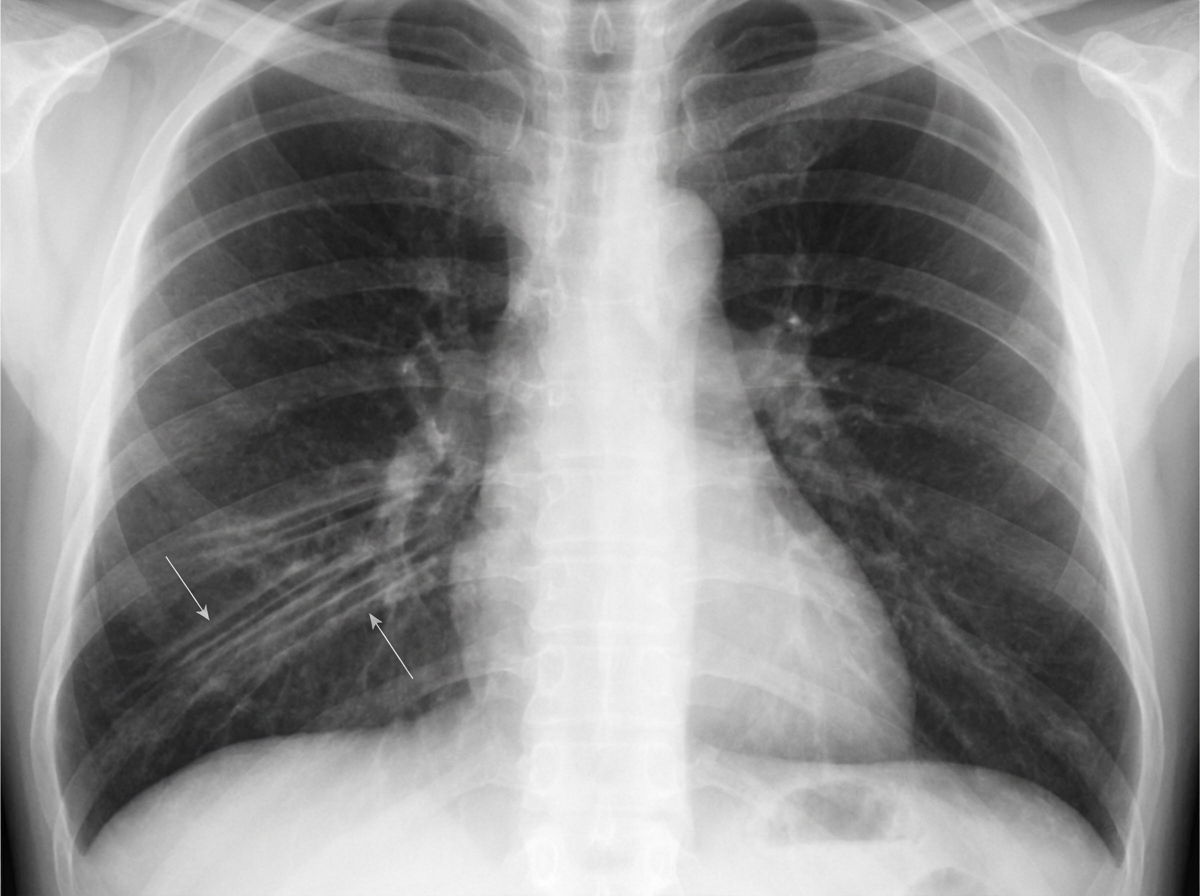
A 65-year-old man is brought to the emergency department after coughing up copious amounts of blood-tinged sputum at his nursing home. He recently had an upper respiratory tract infection that was treated with antibiotics. He has a long-standing history of productive cough that has worsened since he had a stroke 3 years ago. He smoked a pack of cigarettes daily for 40 years until the stroke, after which he quit. The patient appears distressed and short of breath. His temperature is 38°C (100.4°F), pulse is 92/min, and blood pressure is 145/85 mm Hg. Pulse oximetry on room air shows an oxygen saturation of 92%. Physical examination shows digital clubbing and cyanosis of the lips. Coarse crackles are heard in the thorax. An x-ray of the chest shows increased translucency and tram-track opacities in the right lower lung field. Which of the following is the most likely diagnosis?
Want unlimited practice?
Get full access to all questions, explanations, and performance tracking.
Scan to download app