
GI motility disorders — MCQs

A 25-year-old man presents to his gastroenterologist for trouble swallowing. The patient states that whenever he eats solids, he regurgitates them back up. Given this patient's suspected diagnosis, the gastroenterologist performs a diagnostic test. Several hours later, the patient presents to the emergency department with chest pain and shortness of breath. His temperature is 99.5°F (37.5°C), blood pressure is 130/85 mmHg, pulse is 60/min, respirations are 12/min, and oxygen saturation is 99% on room air. On physical exam, the patient demonstrates a normal cardiopulmonary exam. His physical exam demonstrates no tenderness of the neck, a normal oropharynx, palpable crepitus above the clavicles, and minor lymphadenopathy. Which of the following is the best next step in management?
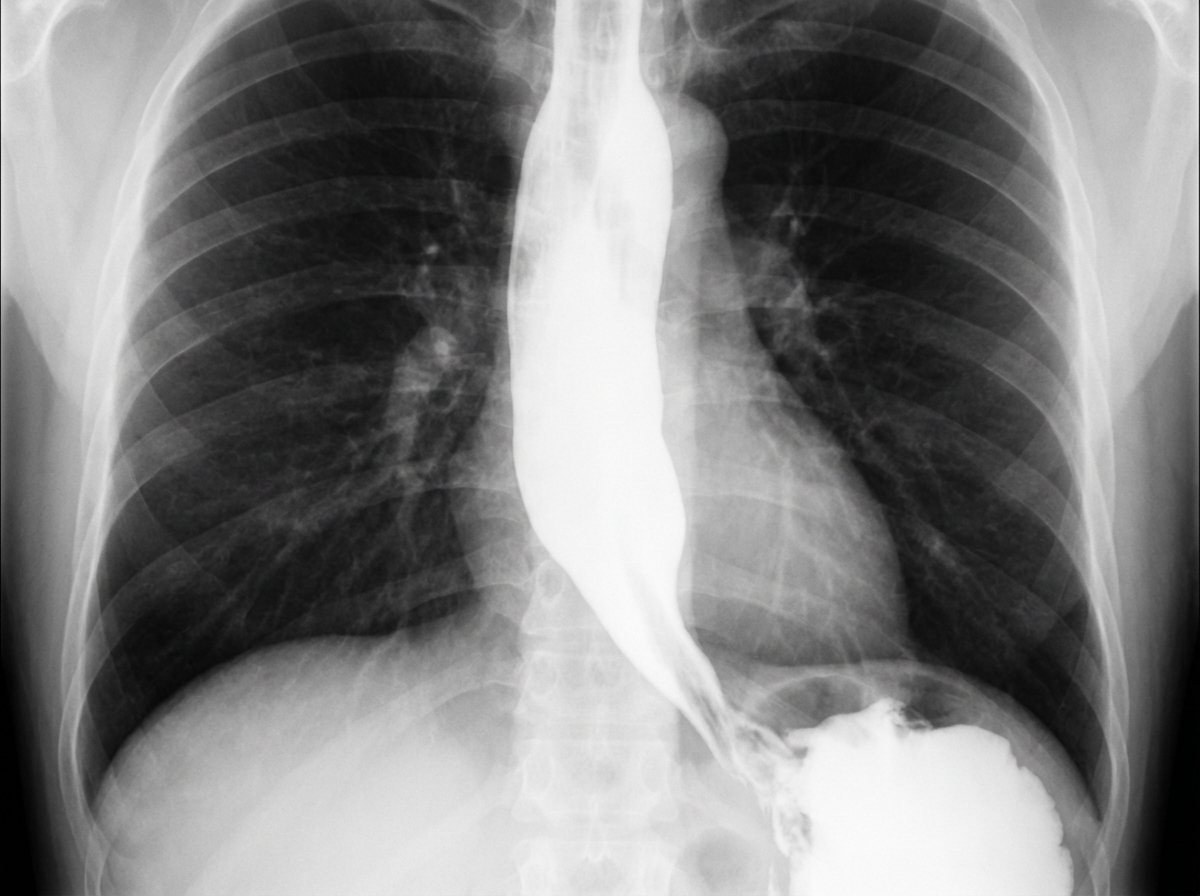
A 62-year-old man is referred to a gastroenterologist because of difficulty swallowing for the past 5 months. He has difficulty swallowing both solid and liquid foods, but there is no associated pain. He denies any shortness of breath or swelling in his legs. He immigrated from South America 10 years ago. He is a non-smoker and does not drink alcohol. His physical examination is unremarkable. A barium swallow study was ordered and the result is given below. Esophageal manometry confirms the diagnosis. What is the most likely underlying cause of this patient’s condition?
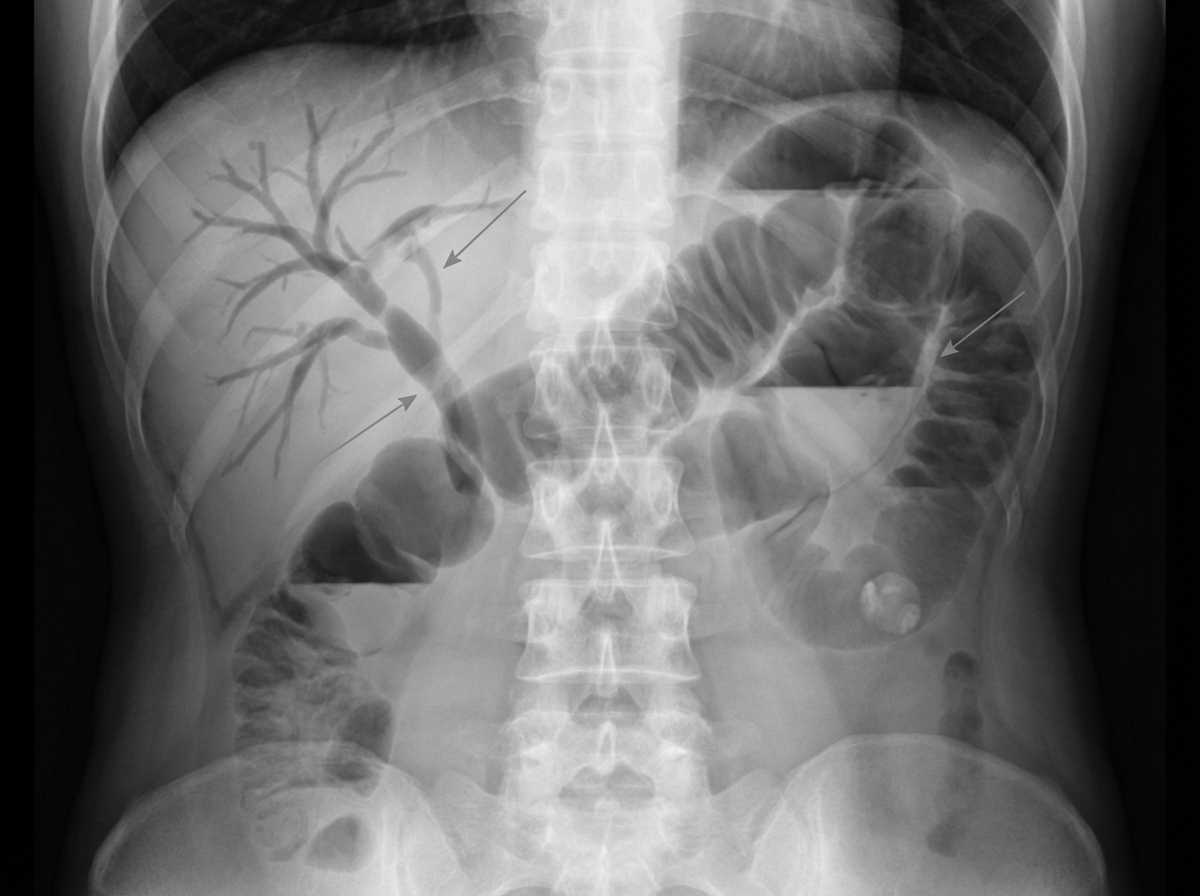
A 46-year-old woman comes to the emergency department because of intermittent abdominal pain and vomiting for 2 days. The abdominal pain is colicky and diffuse. The patient's last bowel movement was 3 days ago. She has had multiple episodes of upper abdominal pain that radiates to her scapulae and vomiting over the past 3 months; her symptoms subsided after taking ibuprofen. She has coronary artery disease, type 2 diabetes mellitus, gastroesophageal reflux disease, and osteoarthritis of both knees. Current medications include aspirin, atorvastatin, rabeprazole, insulin, and ibuprofen. She appears uncomfortable. Her temperature is 39°C (102.2°F), pulse is 111/min, and blood pressure is 108/68 mm Hg. Examination shows dry mucous membranes. The abdomen is distended and tympanitic with diffuse tenderness; bowel sounds are high-pitched. Rectal examination shows a collapsed rectum. Her hemoglobin concentration is 13.8 g/dL, leukocyte count is 14,400/mm3, and platelet count is 312,000/mm3. An x-ray of the abdomen is shown. Which of the following is the most likely cause of this patient's findings?
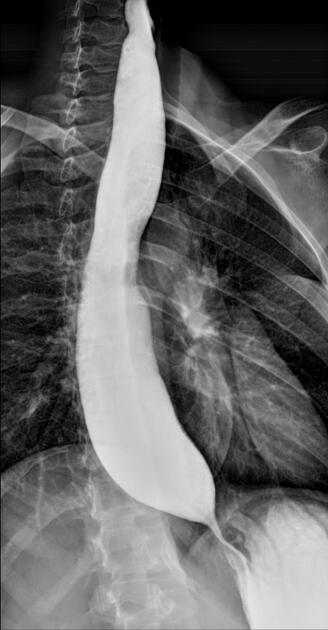
A 37-year-old man presents to the physician because of dysphagia and regurgitation for the past 5 years. In recent weeks, it has become very difficult for him to ingest solid or liquid food. He has lost 3 kg (6 lb) during this time. He was admitted to the hospital last year because of pneumonia. Three years ago, he had an endoscopic procedure which partially improved his dysphagia. He takes amlodipine and nitroglycerine before meals. His vital signs are within normal limits. BMI is 19 kg/m2. Physical examination shows no abnormalities. A barium swallow X-ray is shown. Which of the following patterns of esophageal involvement is the most likely cause of this patient’s condition?
A 7-year-old boy is brought to the physician by his mother for the evaluation of abdominal pain and trouble sleeping for the past 6 months. His mother says he complains of crampy abdominal pain every morning on school days. He started attending a new school 7 months ago and she is concerned because he has missed school frequently due to the abdominal pain. He also has trouble falling asleep at night and asks to sleep in the same room with his parents every night. He has not had fever, vomiting, diarrhea, or weight loss. He sits very close to his mother and starts to cry when she steps out of the room to take a phone call. Abdominal examination shows no abnormalities. Which of the following is the most likely diagnosis?
A 55-year-old woman with type 2 diabetes mellitus presents to her physician with intermittent nausea for the past 2 months. Her symptoms are exacerbated within one hour after eating. She has no other history of a serious illness. She takes metformin and injects insulin. Her vitals are normal. Abdominal examination is normal. An ECG shows normal sinus rhythm with no evidence of ischemia. Hemoglobin A1c is 7%. A gastric emptying scan shows 60% of her meal in the stomach 75 minutes after eating. Which of the following is the most appropriate pharmacotherapy at this time?
A 47-year-old man presents with recurrent epigastric pain and diarrhea. He has had these symptoms for the last year or so and has been to the clinic several times with similar complaints. His current dosage of omeprazole has been steadily increasing to combat his symptoms. The pain seems to be related to food intake. He describes his diarrhea as watery and unrelated to his meals. Blood pressure is 115/80 mm Hg, pulse is 76/min, and respiratory rate is 19/min. He denies tobacco or alcohol use. An upper endoscopy is performed due to his unexplained and recurrent dyspepsia and reveals thickened gastric folds with three ulcers in the first part of the duodenum, all of which are negative for H. pylori. Which of the following is the best next step in this patient's management?
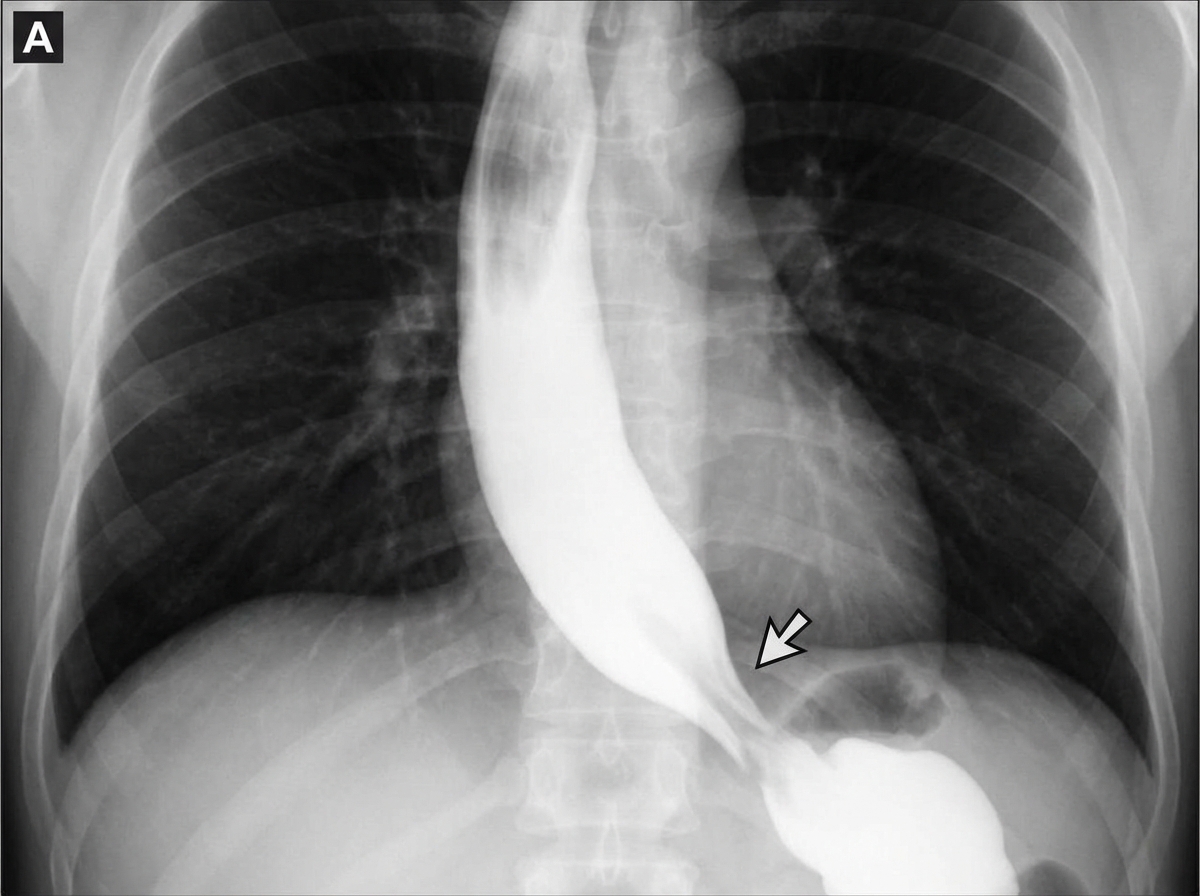
A 45-year-old woman comes to the physician because of progressive difficulty swallowing solids and liquids over the past 4 months. She has lost 4 kg (9 lb) during this period. There is no history of serious illness. She emigrated to the US from Panama 7 years ago. She does not smoke cigarettes or drink alcohol. Cardiopulmonary examination shows a systolic murmur and an S3 gallop. A barium radiograph of the chest is shown. Histopathologic examination of the esophageal wall is most likely to show which of the following?
A 28-year-old male presents to his primary care physician with complaints of intermittent abdominal pain and alternating bouts of constipation and diarrhea. His medical chart is not significant for any past medical problems or prior surgeries. He is not prescribed any current medications. Which of the following questions would be the most useful next question in eliciting further history from this patient?
A 55-year-old man presents to his primary care physician for trouble swallowing. The patient claims that he used to struggle when eating food if he did not chew it thoroughly, but now he occasionally struggles with liquids as well. He also complains of a retrosternal burning sensation whenever he eats. He also claims that he feels his throat burns when he lays down or goes to bed. Otherwise, the patient has no other complaints. The patient has a past medical history of obesity, diabetes, constipation, and anxiety. His current medications include insulin, metformin, and lisinopril. On review of systems, the patient endorses a 5 pound weight loss recently. The patient has a 22 pack-year smoking history and drinks alcohol with dinner. His temperature is 99.5°F (37.5°C), blood pressure is 177/98 mmHg, pulse is 90/min, respirations are 17/min, and oxygen saturation is 98% on room air. On physical exam, you note an overweight man in no current distress. Abdominal exam is within normal limits. Which of the following is the best next step in management?
Want unlimited practice?
Get full access to all questions, explanations, and performance tracking.
Scan to download app