
Bradyarrhythmias and conduction disorders — MCQs

A 75-year-old man presents to the emergency department after an episode of syncope while walking outside with his wife. His wife states that he suddenly appeared pale and collapsed to the ground. She says he remained unconscious for 1 minute. He says he noticed a fluttering in his chest and excessive sweating before the episode. He has type 2 diabetes mellitus, essential hypertension, and chronic stable angina. He has not started any new medications in the past few months. Vital signs reveal: temperature 37.0°C (98.6°F), blood pressure 135/72 mm Hg, and pulse 72/min. Physical examination is unremarkable. ECG shows an old bifascicular block. Echocardiogram and 24-hour Holter monitoring are normal. Which of the following is the best next step in the evaluation of this patient's condition?
A 71-year-old man is brought to the emergency department by his wife because of increasing confusion, weakness, and vomiting for 1 day. He has had 5 episodes of vomiting and blurry vision; he told his wife that "everything appears in different colors." He has been unable to recall his wife's name or their address. His wife reports that his drug regimen was adjusted because of worsening tibial edema 1 week ago. He has congestive heart failure, atrial fibrillation, hypothyroidism, and osteoarthritis. Current medications include rivaroxaban, metoprolol, digoxin, levothyroxine, spironolactone, and furosemide. His temperature is 36.7°C (98°F), pulse is 56/min, and blood pressure is 98/68 mm Hg. He is confused and oriented only to person. Neurologic examination shows no focal findings. The abdomen is soft, and there is tenderness to palpation of both lower quadrants without guarding or rebound. There is 1+ pitting edema of both ankles. This patient is most likely to have which of the following ECG findings?
A cardiologist is studying how a new virus that infects the heart affects the electrical conduction system of the cardiac myocytes. He decides to obtain electrocardiograms on patients with this disease in order to see how the wave patterns and durations change over time. While studying these records, he asks a medical student who is working with him to interpret the traces. Specifically, he asks her to identify the part that represents initial ventricular depolarization. Which of the following characteristics is most consistent with this feature of the electrocardiogram?
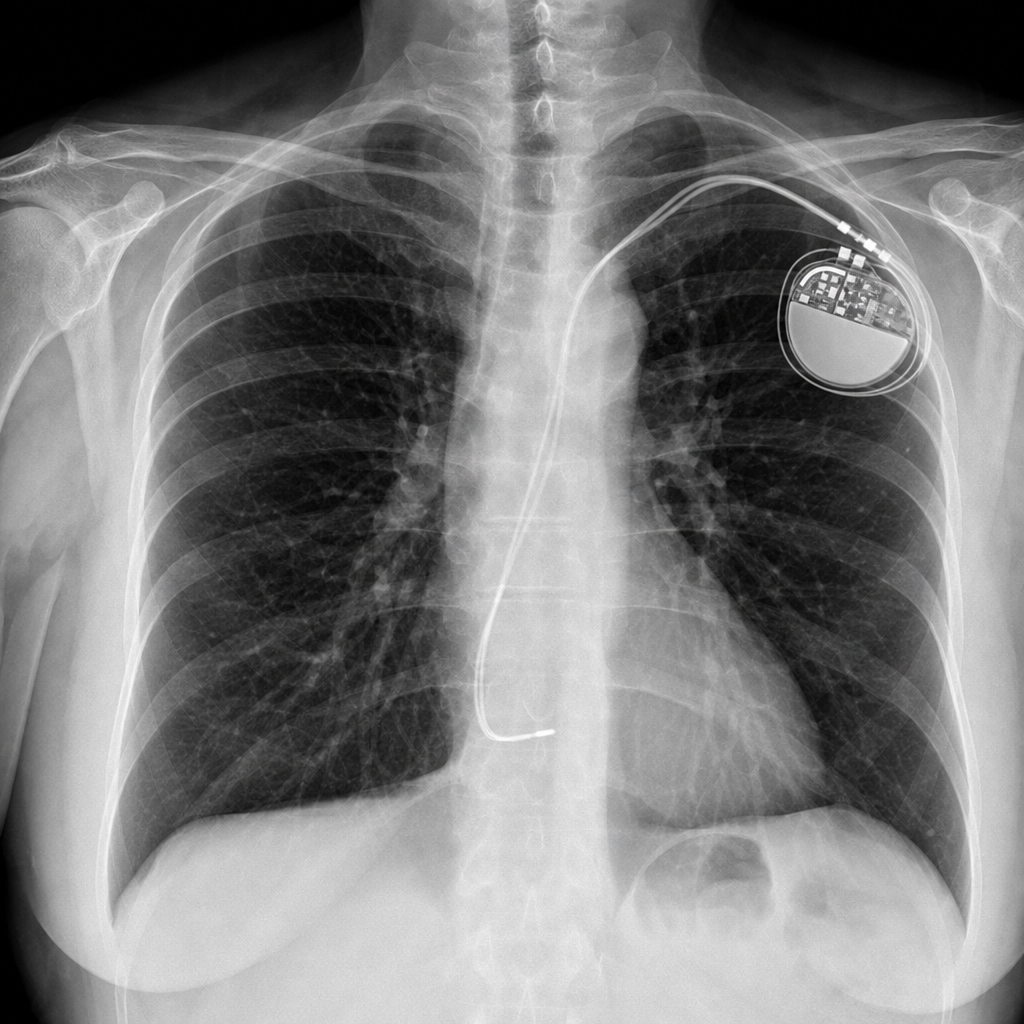
A 67-year-old woman comes to the emergency department because of a 4-month history of fatigue, shortness of breath with exertion, and dizziness. She has a history of atrial fibrillation and had a single-chamber pacemaker placed five years ago after an episode of syncope. Her pulse is 66/min and blood pressure is 98/66 mm Hg. An x-ray of the chest is shown. The x-ray confirms termination of the pacemaker lead in which of the following structures?
In a patient with acute myocardial ischemia, which of the following cardiovascular structures is at greatest risk of damage?
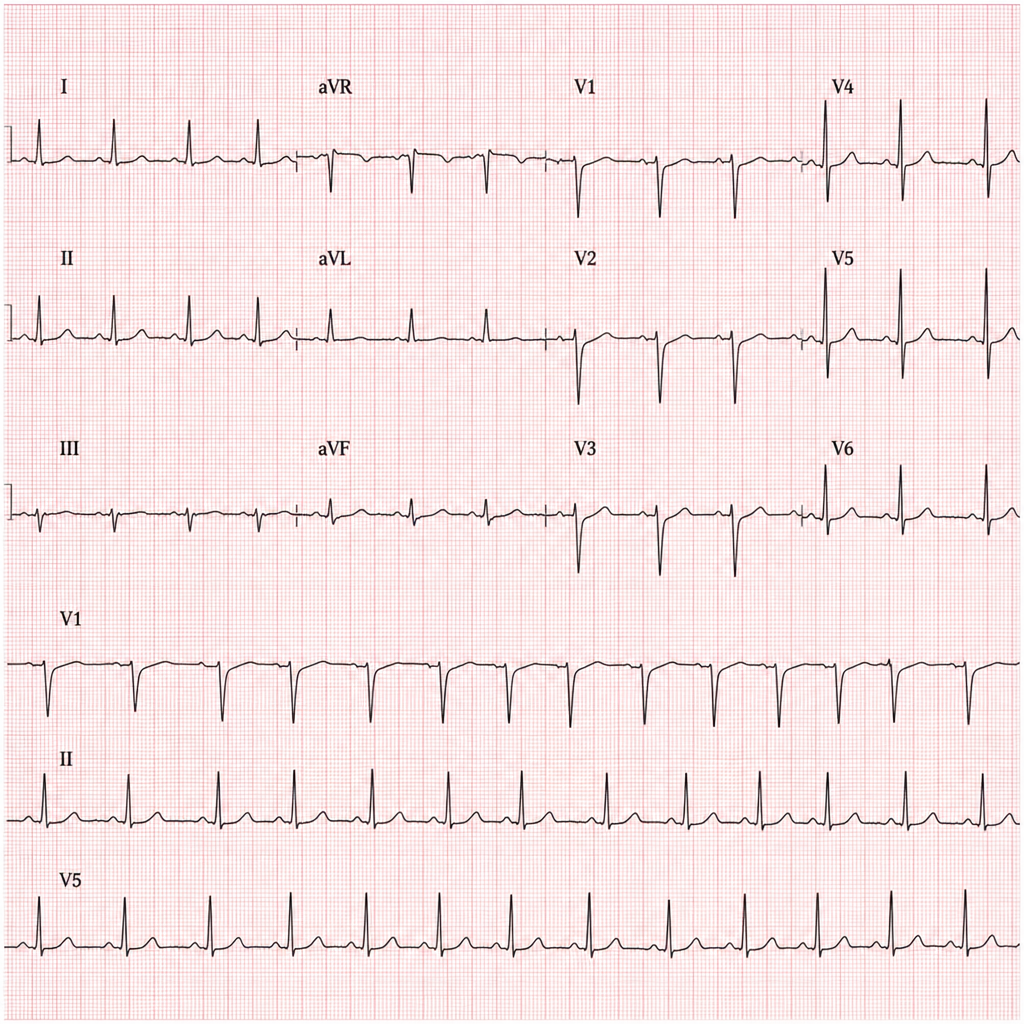
An 18-year-old high school student is brought to the emergency department after collapsing during her cheerleading practice session. She was brought to the hospital even though she regained consciousness within seconds. Her mother informs the doctor that she had a similar episode last month at a party, but they thought it was due to stress and exhaustion. Both incidents occurred in a loud and crowded environment. Her past medical history is insignificant. Her blood pressure is 120/80 mm Hg and the pulse is 77/min and regular. Physical examination findings are within normal limits. A set of tests are ordered along with a 12-lead ECG. The ECG tracing obtained is shown. What is the best treatment option for this patient?
A 28-year-old male presents to his primary care physician with complaints of intermittent abdominal pain and alternating bouts of constipation and diarrhea. His medical chart is not significant for any past medical problems or prior surgeries. He is not prescribed any current medications. Which of the following questions would be the most useful next question in eliciting further history from this patient?
A 42-year-old Caucasian woman is enrolled in a randomized controlled trial to study cardiac function in the setting of several different drugs. She is started on verapamil and instructed to exercise at 50% of her VO2 max while several cardiac parameters are being measured. During this experiment, which of the following represents the relative conduction speed through the heart from fastest to slowest?
A 40-year-old woman comes to the physician for a 6-month history of recurrent episodes of chest pain, racing pulse, dizziness, and difficulty breathing. The episodes last up to several minutes. She also reports urinary urgency and two episodes of loss of consciousness followed by spontaneous recovery. There is no personal or family history of serious illness. She does not smoke or drink alcohol. Vitals signs are within normal limits. Cardiopulmonary examination shows no abnormalities. Holter monitoring is performed. ECG recordings during episodes of tachycardia show a QRS duration of 100 ms, regular RR-interval, and absent P waves. Which of the following is the most likely underlying cause of this patient's condition?
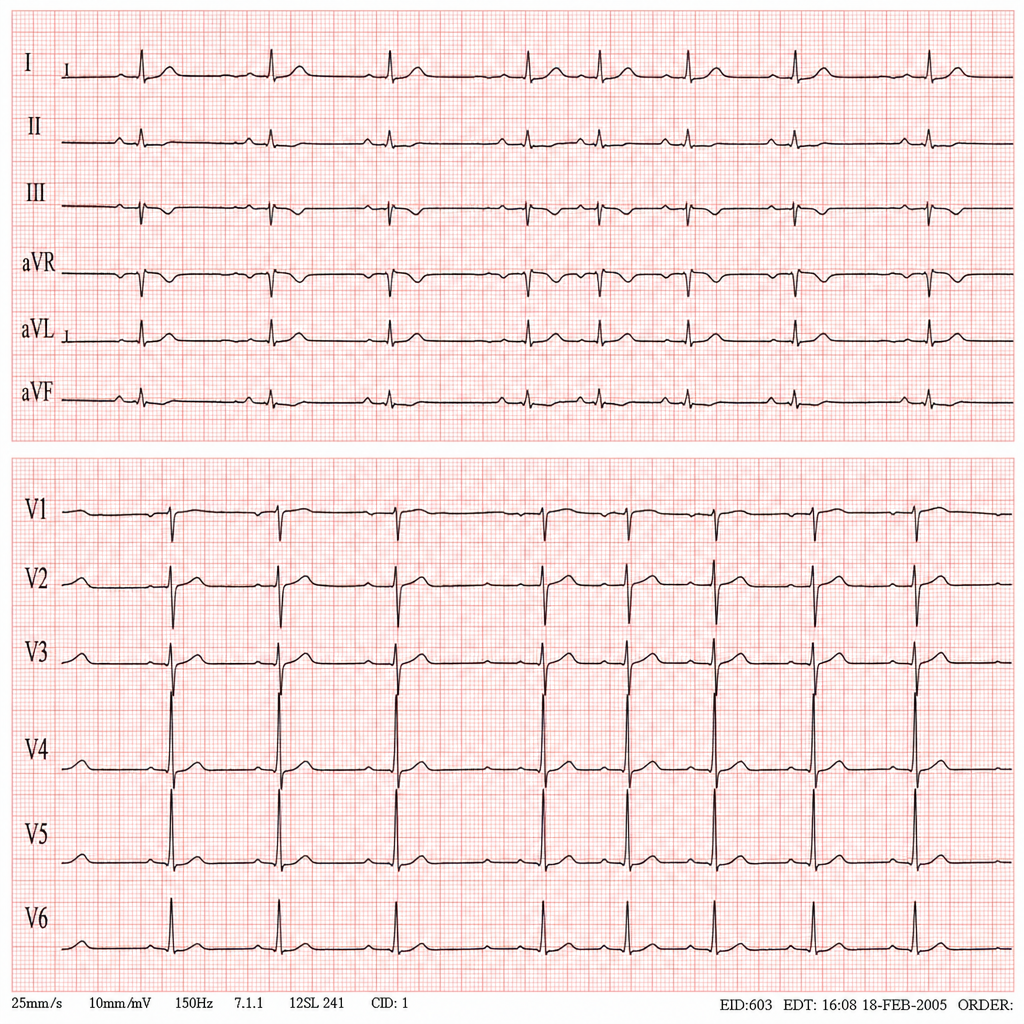
A 45-year-old man comes to the physician for a routine health maintenance examination. He feels well. He underwent appendectomy at the age of 25 years. He has a history of hypercholesterolemia that is well controlled with atorvastatin. He is an avid marathon runner and runs 8 miles per day four times a week. His father died of myocardial infarction at the age of 42 years. The patient does not smoke or drink alcohol. His vital signs are within normal limits. Cardiopulmonary examination shows no abnormalities. His abdomen is soft and nontender with a surgical scar in the right lower quadrant. Laboratory studies are within normal limits. An ECG is shown. Which of the following is the most likely diagnosis?
Want unlimited practice?
Get full access to all questions, explanations, and performance tracking.
Scan to download app