
Screening interval determination — MCQs

A 68-year-old man presents to the office for his annual physical examination. He has no current complaints. Past medical history is unremarkable. He reports a 30-pack-year smoking history but no alcohol or drug use. Review of systems is only remarkable for thicker mucous production that is worse in the morning when he coughs. A non-contrast CT scan of his chest is performed, and the doctor informs him that a 2 cm nodule has been identified in his upper lobe of the left lung near the left main bronchus and that further testing is required to rule out malignancy. The patient is surprised by this news since he has never experienced any alarming symptoms. The doctor informs him that lung cancers don’t usually present with symptoms until late in the course of the disease. The doctor says that sometimes it may take several years before it becomes severe enough to cause symptoms, which is why patients with risk factors for developing lung cancer are screened at an earlier age than the general public. Which of the following concepts is being described by the doctor to this patient?
A student health coordinator plans on leading a campus-wide HIV screening program that will be free for the entire undergraduate student body. The goal is to capture as many correct HIV diagnoses as possible with the fewest false positives. The coordinator consults with the hospital to see which tests are available to use for this program. Test A has a sensitivity of 0.92 and a specificity of 0.99. Test B has a sensitivity of 0.95 and a specificity of 0.96. Test C has a sensitivity of 0.98 and a specificity of 0.93. Which of the following testing schemes should the coordinator pursue?
A pharmaceutical corporation is developing a research study to evaluate a novel blood test to screen for breast cancer. They enrolled 800 patients in the study, half of which have breast cancer. The remaining enrolled patients are age-matched controls who do not have the disease. Of those in the diseased arm, 330 are found positive for the test. Of the patients in the control arm, only 30 are found positive. What is this test’s sensitivity?
A 65-year-old non-smoking woman with no symptoms comes to your clinic to establish care with a primary care provider. She hasn’t seen a doctor in 12 years and states that she feels very healthy. You realize that guidelines by the national cancer organization suggest that she is due for some cancer screening tests, including a mammogram for breast cancer, a colonoscopy for colon cancer, and a pap smear for cervical cancer. These three screening tests are most likely to be considered which of the following?
A 21-year-old U.S. born first year medical student with no prior hospital or healthcare work presents to the physician for a routine physical exam. The patient is HIV negative, denies drug use, and denies sick contacts. The physician places a purified protein tuberculin test in the patient's right forearm intradermally. What is the proper time to read the test and induration diameter that would indicate a positive test result?
A 50-year-old Caucasian man presents for a routine checkup. He does not have any current complaint. He is healthy and takes no medications. He has smoked 10–15 cigarettes per day for the past 10 years. His family history is negative for gastrointestinal disorders. Which of the following screening tests is recommended for this patient according to the United States Preventive Services Task Force (USPSTF)?
A 46-year-old woman presents to her primary care physician for her annual examination. At her prior exam one year earlier, she had a Pap smear which was within normal limits. Which of the following health screenings is recommended for this patient?
A 19-year-old woman presents to the physician for a routine health maintenance examination. She has a past medical history of gastroesophageal reflux disease. She recently moved to a new city to begin her undergraduate studies. Her father was diagnosed with colon cancer at age 46. Her father's brother died because of small bowel cancer. Her paternal grandfather died because of stomach cancer. She takes a vitamin supplement. Current medications include esomeprazole and a multivitamin. She smoked 1 pack of cigarettes daily for 3 years but quit 2 years ago. She drinks 1–2 alcoholic beverages on the weekends. She appears healthy. Vital signs are within normal limits. Physical examination shows no abnormalities. Colonoscopy is unremarkable. Germline testing via DNA sequencing in this patient shows mutations in DNA repair genes MLH1 and MSH2. Which of the following will this patient most likely require at some point in her life?
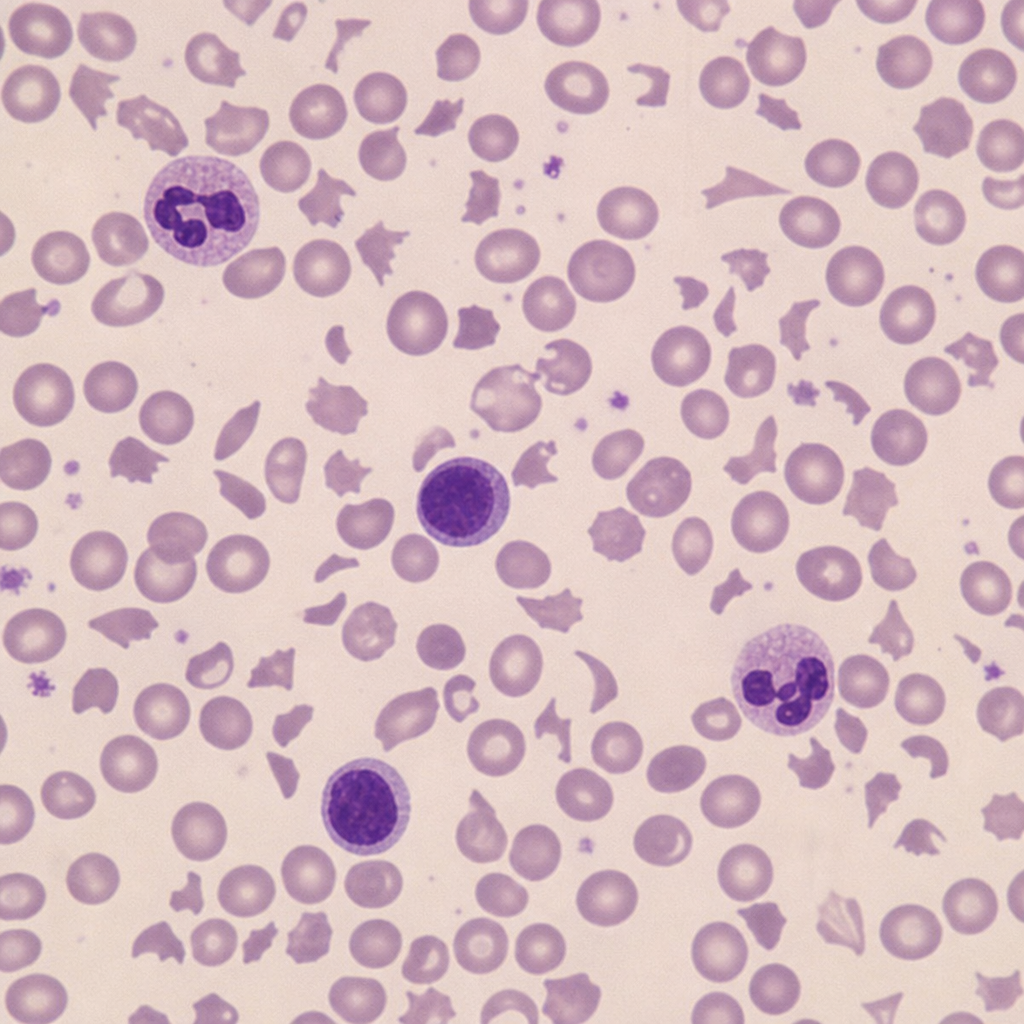
A peripheral blood smear from a 45-year-old woman with a 2-week history of fatigue, jaundice, and confusion is shown. She was recently started on ticlopidine following coronary stent placement. Her laboratory values include: hemoglobin 7.1 g/dL, platelets 18,000/µL, creatinine 2.8 mg/dL, LDH 980 U/L, and indirect bilirubin 3.4 mg/dL. Direct Coombs test is negative. The image demonstrates the most diagnostically discriminating finding. Based on the peripheral smear finding and the complete clinical picture, what is the most likely diagnosis?
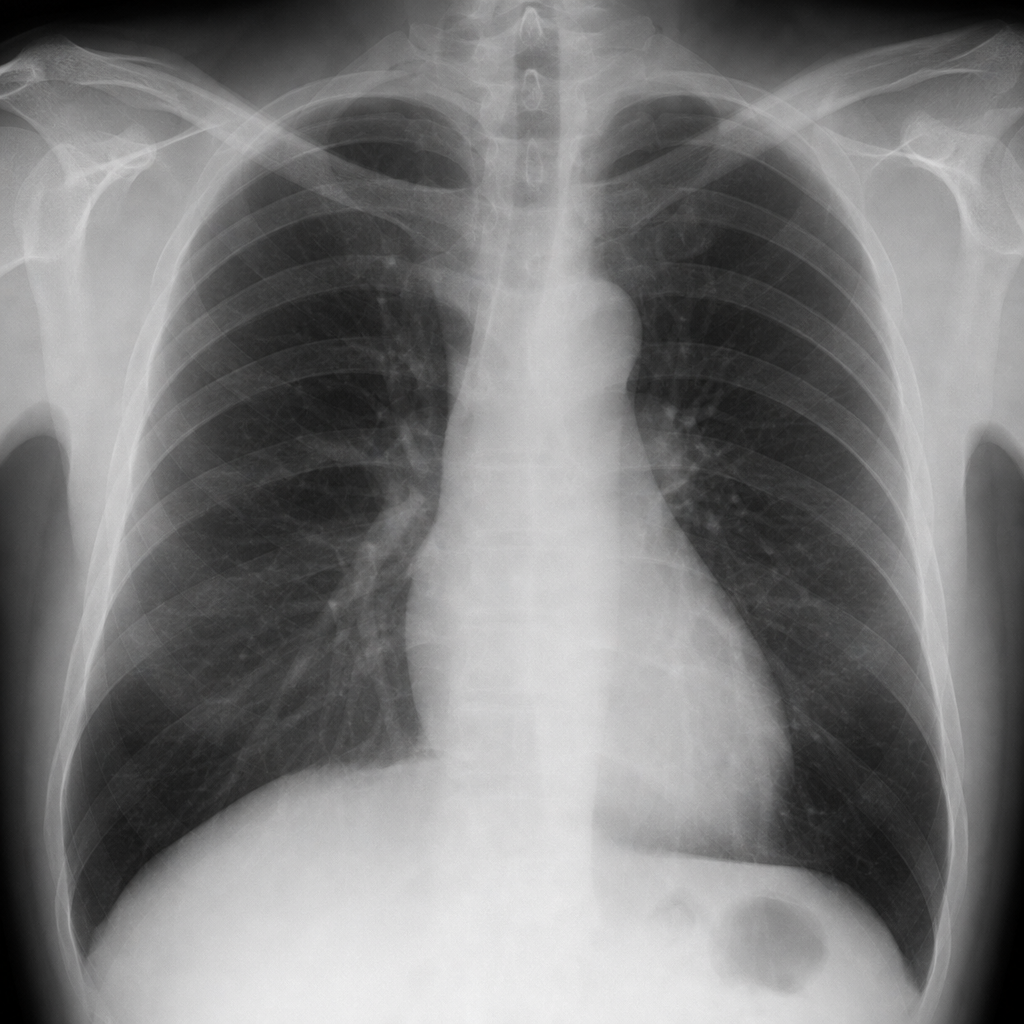
A 67-year-old man with hypertension and hyperlipidemia presents with sudden-onset severe tearing chest pain radiating to his back that began 45 minutes ago. Blood pressure is 185/100 mmHg in the right arm and 155/85 mmHg in the left arm. He is diaphoretic but hemodynamically stable. ECG shows sinus tachycardia without ischemic changes. The upright PA chest radiograph shown reveals no acute cardiopulmonary abnormality and no convincing mediastinal widening. Renal function is normal, and he has no iodinated contrast allergy. Which of the following is the most appropriate next diagnostic step?
Want unlimited practice?
Get full access to all questions, explanations, and performance tracking.
Scan to download app