
Risk-stratified screening approaches — MCQs

A 57-year-old man presents to his family physician for a routine exam. He feels well and reports no new complaints since his visit last year. Last year, he had a colonoscopy which showed no polyps, a low dose chest computerized tomography (CT) scan that showed no masses, and routine labs which showed a fasting glucose of 93 mg/dL. He is relatively sedentary and has a body mass index (BMI) of 24 kg/m^2. He has a history of using methamphetamines, alcohol (4-5 drinks per day since age 30), and tobacco (1 pack per day since age 18), but he joined Alcoholics Anonymous and has been in recovery, not using any of these for the past 7 years. Which of the following is indicated at this time?
A 25-year-old man with a genetic disorder presents for genetic counseling because he is concerned about the risk that any children he has will have the same disease as himself. Specifically, since childhood he has had difficulty breathing requiring bronchodilators, inhaled corticosteroids, and chest physiotherapy. He has also had diarrhea and malabsorption requiring enzyme replacement therapy. If his wife comes from a population where 1 in 10,000 people are affected by this same disorder, which of the following best represents the likelihood a child would be affected as well?
A 49-year-old woman presents to her primary care physician for a general check up. She has not seen a primary care physician for the past 20 years but states she has been healthy during this time frame. She had breast implants placed when she was 29 years old but otherwise has not had any surgeries. She is concerned about her risk for breast cancer given her friend was recently diagnosed. Her temperature is 97.0°F (36.1°C), blood pressure is 114/64 mmHg, pulse is 70/min, respirations are 12/min, and oxygen saturation is 98% on room air. Physical exam is unremarkable. Which of the following is the most appropriate workup for breast cancer for this patient?
An 18-year-old man presents to his primary care provider before leaving for college. He has no complaints. His past medical history is significant for asthma, acne vulgaris, and infectious mononucleosis at age 16. His home medications include doxycycline and albuterol as needed. His family history is significant for colon cancer in his father at age 50, his paternal grandfather at age 55, and an uncle at age 45. His father underwent testing for mutations in the APC gene, which were negative. There is no family history of dental abnormalities or other malignancy. The patient denies any recent weight loss, abdominal pain, hematochezia, melena, or other changes in the appearance of his stools. This patient should be screened for colorectal cancer (CRC) under which of the following protocols?
A 46-year-old woman presents to her primary care physician for her annual examination. At her prior exam one year earlier, she had a Pap smear which was within normal limits. Which of the following health screenings is recommended for this patient?
A 26-year-old primigravida woman comes to her primary care physician for the second prenatal visit. She is 10 weeks pregnant. She has no current complaint except for occasional nausea. She does not have any chronic health problems. She denies smoking or alcohol intake. Her family history is positive for paternal colon cancer at the age of 55. Vital signs include a temperature of 37.1°C (98.8°F), blood pressure of 120/60 mm Hg, and pulse of 90/min. Physical examination discloses no abnormalities. According to the United States Preventive Services Task Force (USPSTF), which of the following screening tests is recommended for this patient?
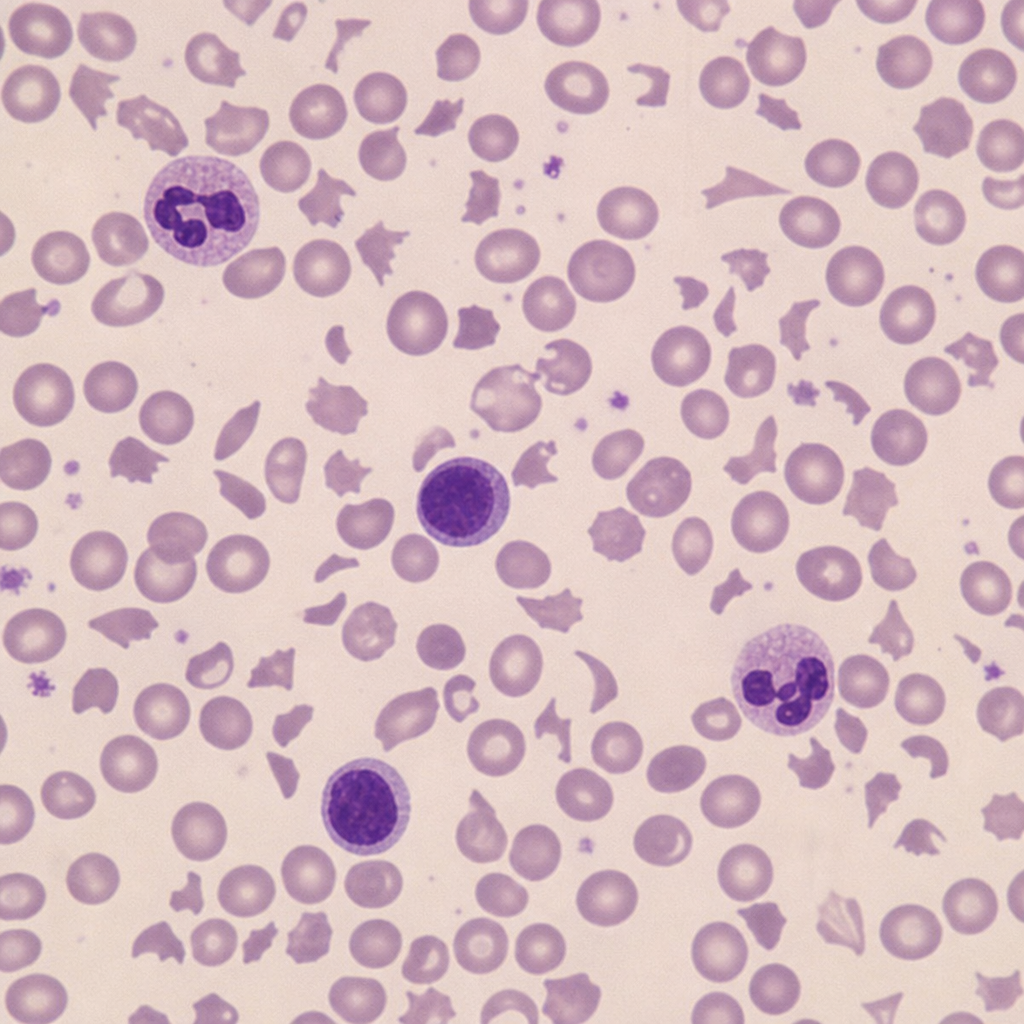
A peripheral blood smear from a 45-year-old woman with a 2-week history of fatigue, jaundice, and confusion is shown. She was recently started on ticlopidine following coronary stent placement. Her laboratory values include: hemoglobin 7.1 g/dL, platelets 18,000/µL, creatinine 2.8 mg/dL, LDH 980 U/L, and indirect bilirubin 3.4 mg/dL. Direct Coombs test is negative. The image demonstrates the most diagnostically discriminating finding. Based on the peripheral smear finding and the complete clinical picture, what is the most likely diagnosis?
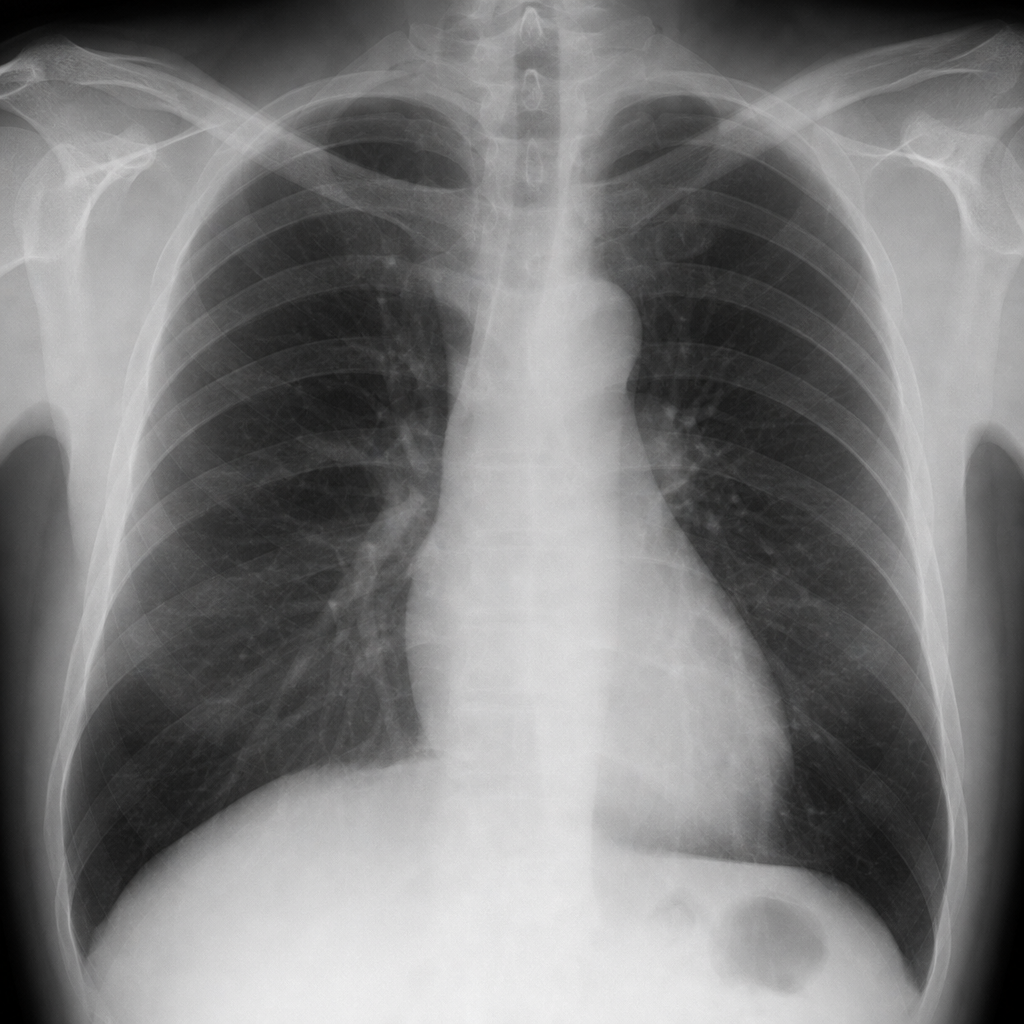
A 67-year-old man with a history of hypertension and hyperlipidemia presents to the emergency department with sudden-onset tearing chest pain radiating to the back, beginning 45 minutes ago. Blood pressure is 185/100 mmHg in the right arm and 155/85 mmHg in the left arm. Heart rate is 102 bpm. He is diaphoretic and hemodynamically stable. ECG shows sinus tachycardia with no ST changes. Troponin I is pending. Chest radiograph is shown. Which of the following is the most appropriate next diagnostic step?
A 28-year-old asymptomatic pregnant woman at 12 weeks gestation presents for prenatal care. She has no personal or family history of diabetes. Her BMI is 32 kg/m². She had a random glucose of 118 mg/dL at her first visit. She asks about gestational diabetes screening. Considering her risk factors and current pregnancy, what is the most appropriate screening approach?
A 66-year-old man underwent screening colonoscopy which revealed a 1.2 cm tubular adenoma with low-grade dysplasia in the sigmoid colon that was completely removed. He has no family history of colorectal cancer. His colonoscopy 8 years ago was normal. He asks about surveillance recommendations. Considering current guidelines and competing risks, what is the most appropriate surveillance interval?
Want unlimited practice?
Get full access to all questions, explanations, and performance tracking.
Scan to download app