
Prenatal screening — MCQs

A 32-year-old G1P0 woman undergoes her 2nd-trimester ultrasound in a community hospital. During her prenatal care, she was found to have mild anemia, low levels of folate, and serum alpha-fetoprotein levels greater than 2 multiples of the median (MoM) on 2 separate occasions. Her 1st-trimester ultrasound was significant for the absence of the intracranial lucency, no visualization of the cisterna magna, and posterior shift of the brain stem. These 2nd-trimester ultrasound reports reveal the widening of the lumbosacral spine ossification centers and the presence of a sac in proximity to the lumbosacral defect. Which of the following statements best describes the congenital defect in the fetus?
A 29-year-old primigravid woman at 18 weeks’ gestation comes to the physician for her first prenatal visit. She works as a paralegal and lives with her husband. Her current pregnancy was unexpected, and she did not take any prenatal medications or supplements. Physical examination shows a uterus 2 inches above the umbilicus. The concentration of α-fetoprotein in the maternal serum and concentrations of both α-fetoprotein and acetylcholinesterase in the amniotic fluid are elevated. Ultrasonography of the uterus shows an increased amniotic fluid volume. The fetus most likely has which of the following conditions?
A 37-year-old woman presents for prenatal counseling at 18 weeks gestation. The patient tells you that her sister recently had a child with Down's syndrome, and the patient would like prenatal screening for Down's in her current pregnancy. Which of the following prenatal screening tests and results would raise concern for Down's syndrome?
A 36-year old pregnant woman (gravida 4, para 1) presents at week 11 of pregnancy. Currently, she has no complaints. She had an uncomplicated 1st pregnancy that ended in an uncomplicated vaginal delivery at the age of 28 years. Her male child was born healthy, with normal physical and psychological development over the years. Two of her previous pregnancies were spontaneously terminated in the 1st trimester. Her elder sister has a child born with Down syndrome. The patient denies smoking and alcohol consumption. Her blood analysis reveals the following findings: Measured values Beta human chorionic gonadotropin (beta-hCG) High Pregnancy-associated plasma protein-A (PAPP-A) Low Which of the following is the most appropriate next step in the management of this patient?
A 37-year-old primigravid woman comes to the physician at 13 weeks' gestation for a prenatal visit. She feels well. Her only medication is folic acid. Vital signs are within normal limits. Pelvic examination shows a uterus consistent in size with a 13-week gestation. Ultrasonography shows a nuchal translucency above the 99th percentile. Maternal serum pregnancy-associated plasma protein A is decreased and human chorionic gonadotropin concentrations are elevated to 2 times the median level. Which of the following is most likely to confirm the diagnosis?
A 34-year-old gravida 2 para 1 woman at 16 weeks gestation presents for prenatal care. Her prenatal course has been uncomplicated. She takes no medications besides her prenatal vitamin which she takes every day, and she has been compliant with routine prenatal care. She has a 7-year-old daughter who is healthy. The results of her recent quadruple screen are listed below: AFP: Low hCG: Low Estriol: Low Inhibin-A: Normal Which of the following is the most appropriate next step to confirm the diagnosis?
A 38-year-old woman, gravida 3, para 2, at 12 weeks' gestation comes to her obstetrician for a prenatal visit. Screening tests in the first trimester showed a decreased level of pregnancy-associated plasma protein and an increased level of β-hCG. A genetic disorder is suspected. Which of the following results from an additional diagnostic test is most likely to confirm the diagnosis?
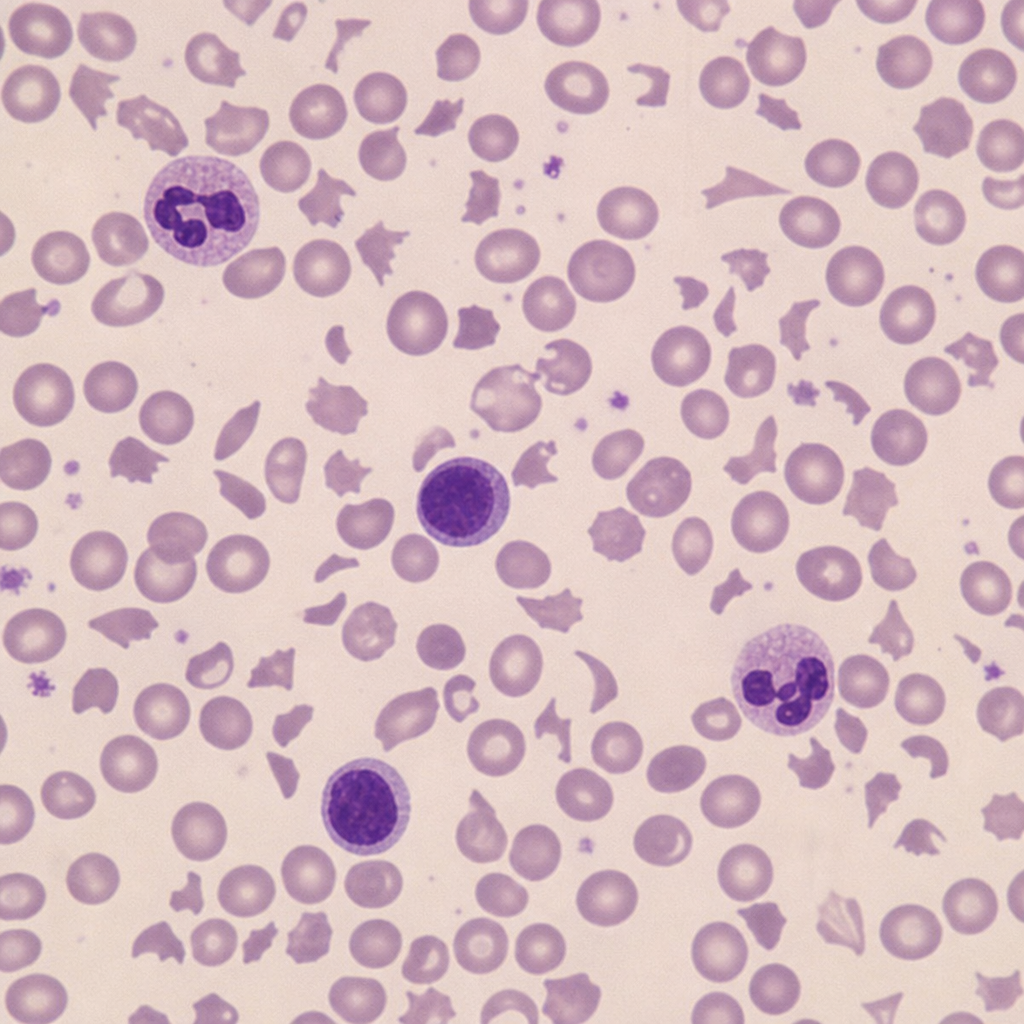
A peripheral blood smear from a 45-year-old woman with a 2-week history of fatigue, jaundice, and confusion is shown. She was recently started on ticlopidine following coronary stent placement. Her laboratory values include: hemoglobin 7.1 g/dL, platelets 18,000/µL, creatinine 2.8 mg/dL, LDH 980 U/L, and indirect bilirubin 3.4 mg/dL. Direct Coombs test is negative. The image demonstrates the most diagnostically discriminating finding. Based on the peripheral smear finding and the complete clinical picture, what is the most likely diagnosis?
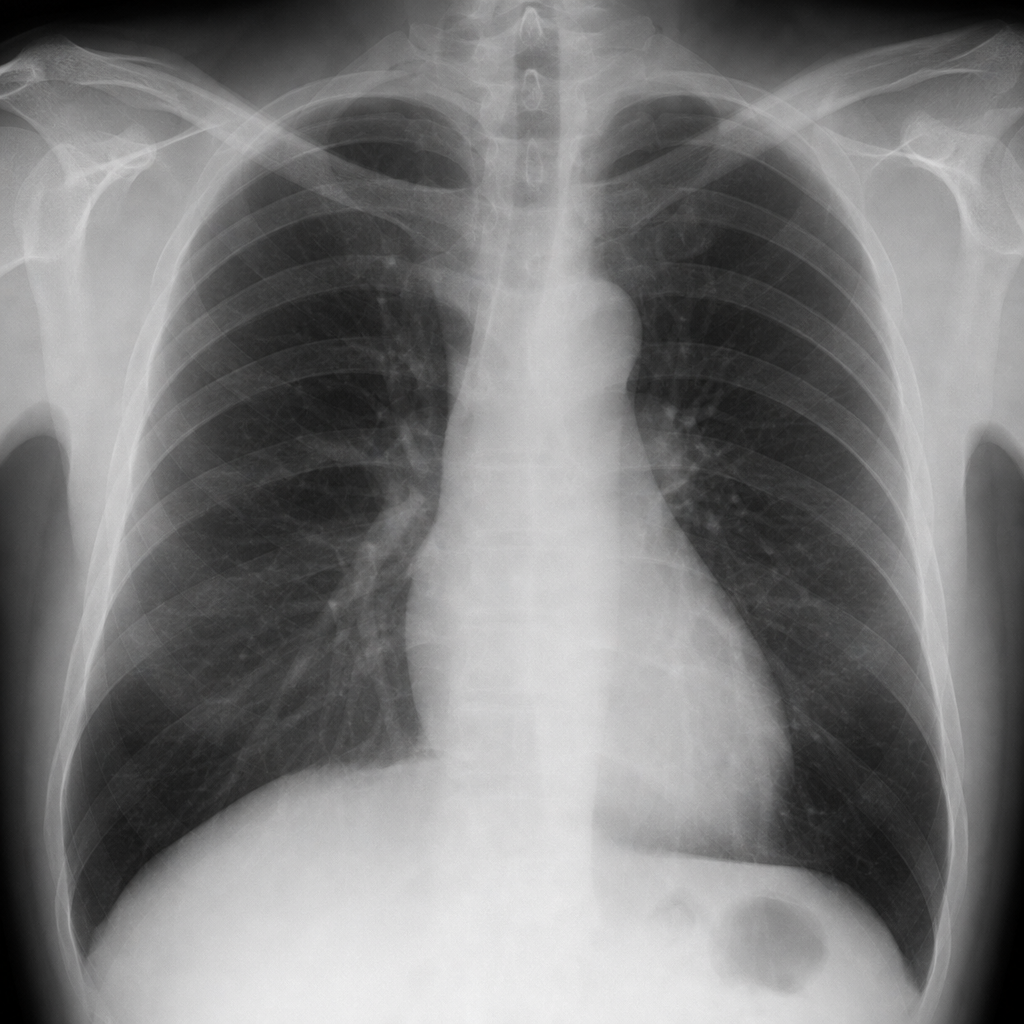
A 67-year-old man with hypertension and hyperlipidemia presents with sudden-onset severe tearing chest pain radiating to his back that began 45 minutes ago. Blood pressure is 185/100 mmHg in the right arm and 155/85 mmHg in the left arm. He is diaphoretic but hemodynamically stable. ECG shows sinus tachycardia without ischemic changes. The upright PA chest radiograph shown reveals no acute cardiopulmonary abnormality and no convincing mediastinal widening. Renal function is normal, and he has no iodinated contrast allergy. Which of the following is the most appropriate next diagnostic step?
A 28-year-old asymptomatic pregnant woman at 12 weeks gestation presents for prenatal care. She has no personal or family history of diabetes. Her BMI is 32 kg/m². She had a random glucose of 118 mg/dL at her first visit. She asks about gestational diabetes screening. Considering her risk factors and current pregnancy, what is the most appropriate screening approach?
Want unlimited practice?
Get full access to all questions, explanations, and performance tracking.
Scan to download app