
Limitations and controversies in screening — MCQs

A study is funded by the tobacco industry to examine the association between smoking and lung cancer. They design a study with a prospective cohort of 1,000 smokers between the ages of 20-30. The length of the study is five years. After the study period ends, they conclude that there is no relationship between smoking and lung cancer. Which of the following study features is the most likely reason for the failure of the study to note an association between tobacco use and cancer?
A randomized controlled trial is conducted investigating the effects of different diagnostic imaging modalities on breast cancer mortality. 8,000 women are randomized to receive either conventional mammography or conventional mammography with breast MRI. The primary outcome is survival from the time of breast cancer diagnosis. The conventional mammography group has a median survival after diagnosis of 17.0 years. The MRI plus conventional mammography group has a median survival of 19.5 years. If this difference is statistically significant, which form of bias may be affecting the results?
A 55-year-old man presents for physical and preventive health screening, specifically for prostate cancer. He has not been to the doctor in a long time. Past medical history is significant for hypertension that is well-managed. Current medication is hydrochlorothiazide. He has one uncle who died of prostate cancer. He drinks one or two alcoholic drinks on the weekends and does not smoke. Today his temperature is 37.0°C (98.6°F), blood pressure is 125/75 mm Hg, pulse is 82/min, respiratory rate is 15/min, and oxygen saturation is 99% on room air. There are no significant findings on physical examination. Which of the following would be the most appropriate recommendation for prostate cancer screening in this patient?
Study X examined the relationship between coffee consumption and lung cancer. The authors of Study X retrospectively reviewed patients' reported coffee consumption and found that drinking greater than 6 cups of coffee per day was associated with an increased risk of developing lung cancer. However, Study X was criticized by the authors of Study Y. Study Y showed that increased coffee consumption was associated with smoking. What type of bias affected Study X, and what study design is geared to reduce the chance of that bias?
A research study is comparing 2 novel tests for the diagnosis of Alzheimer’s disease (AD). The first is a serum blood test, and the second is a novel PET radiotracer that binds to beta-amyloid plaques. The researchers intend to have one group of patients with AD assessed via the novel blood test, and the other group assessed via the novel PET examination. In comparing these 2 trial subsets, the authors of the study may encounter which type of bias?
A 65-year-old non-smoking woman with no symptoms comes to your clinic to establish care with a primary care provider. She hasn’t seen a doctor in 12 years and states that she feels very healthy. You realize that guidelines by the national cancer organization suggest that she is due for some cancer screening tests, including a mammogram for breast cancer, a colonoscopy for colon cancer, and a pap smear for cervical cancer. These three screening tests are most likely to be considered which of the following?
A 46-year-old woman presents to her primary care physician for her annual examination. At her prior exam one year earlier, she had a Pap smear which was within normal limits. Which of the following health screenings is recommended for this patient?
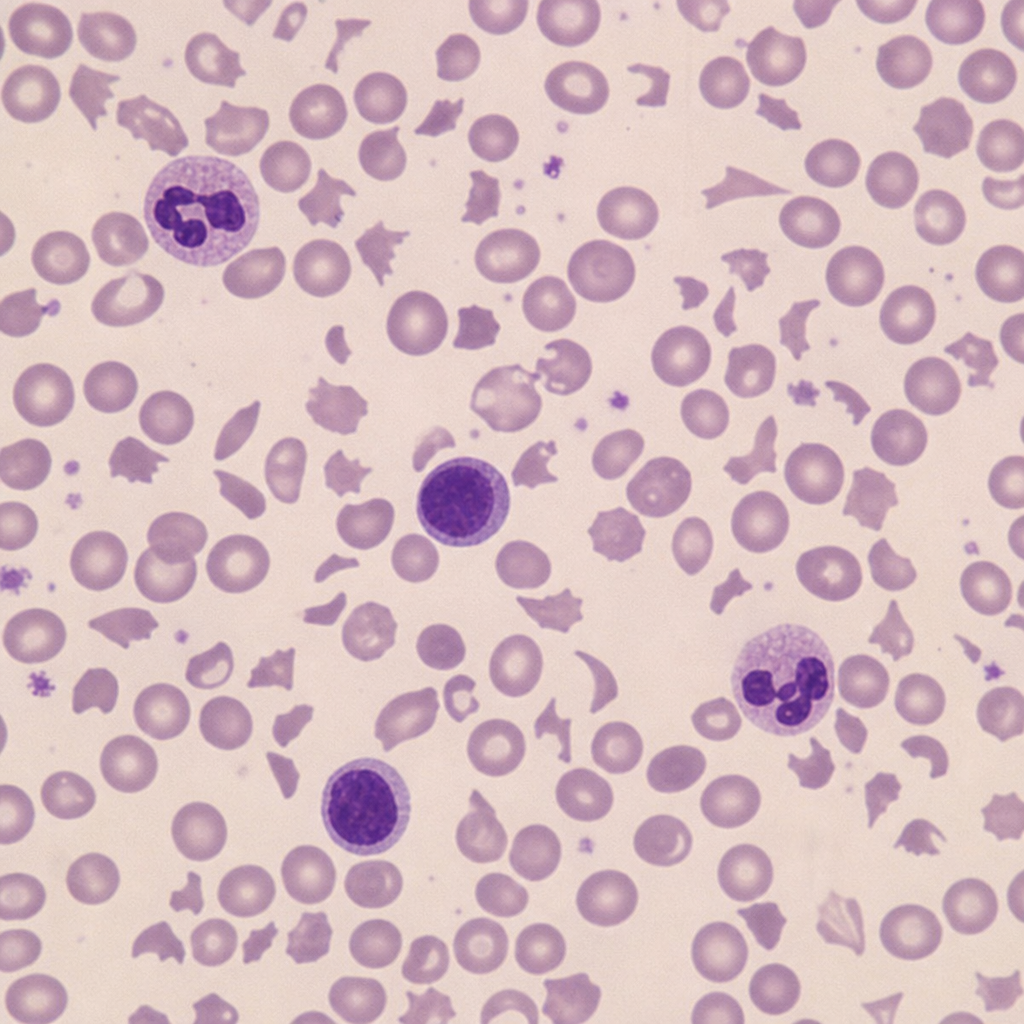
A peripheral blood smear from a 45-year-old woman with a 2-week history of fatigue, jaundice, and confusion is shown. She was recently started on ticlopidine following coronary stent placement. Her laboratory values include: hemoglobin 7.1 g/dL, platelets 18,000/µL, creatinine 2.8 mg/dL, LDH 980 U/L, and indirect bilirubin 3.4 mg/dL. Direct Coombs test is negative. The image demonstrates the most diagnostically discriminating finding. Based on the peripheral smear finding and the complete clinical picture, what is the most likely diagnosis?
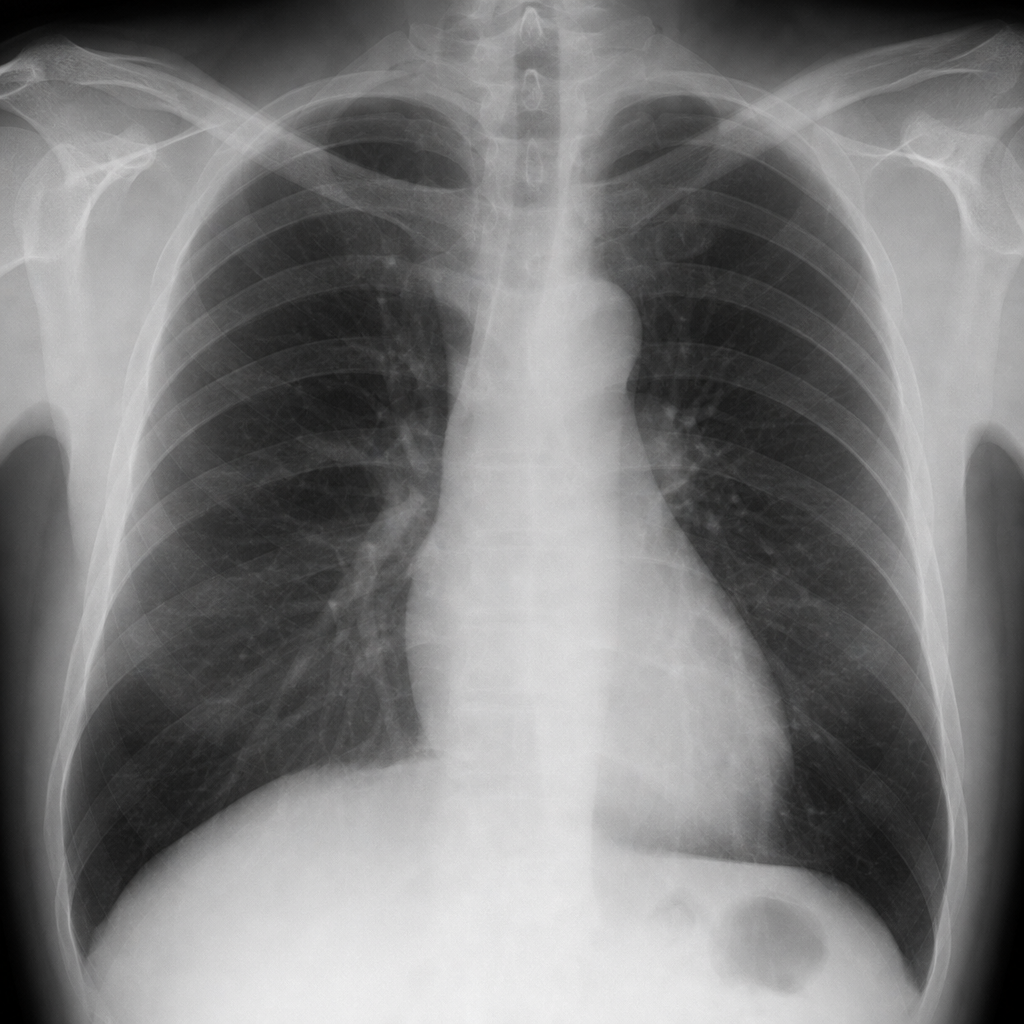
A 67-year-old man with hypertension and hyperlipidemia presents with sudden-onset severe tearing chest pain radiating to his back that began 45 minutes ago. Blood pressure is 185/100 mmHg in the right arm and 155/85 mmHg in the left arm. He is diaphoretic but hemodynamically stable. ECG shows sinus tachycardia without ischemic changes. The upright PA chest radiograph shown reveals no acute cardiopulmonary abnormality and no convincing mediastinal widening. Renal function is normal, and he has no iodinated contrast allergy. Which of the following is the most appropriate next diagnostic step?
A 28-year-old asymptomatic pregnant woman at 12 weeks gestation presents for prenatal care. She has no personal or family history of diabetes. Her BMI is 32 kg/m². She had a random glucose of 118 mg/dL at her first visit. She asks about gestational diabetes screening. Considering her risk factors and current pregnancy, what is the most appropriate screening approach?
Want unlimited practice?
Get full access to all questions, explanations, and performance tracking.
Scan to download app