
Infectious disease screening — MCQs

A 24-year-old gravida 2 para 0 presents to her physician at 15 weeks gestation to discuss the results of recent screening tests. She has no complaints and the current pregnancy has been uncomplicated. Her previous pregnancy terminated with spontaneous abortion in the first trimester. Her immunizations are up to date. Her vital signs are as follows: blood pressure 110/60 mm Hg, heart rate 78/min, respiratory rate 14/min, and temperature 36.8℃ (98.2℉). The physical examination is within normal limits. The laboratory screening tests show the following results: HBsAg negative HBcAg negative Anti-HBsAg positive HIV 1/2 AB negative VDRL positive What is the proper next step in the management of this patient?
A 24-year-old man comes to the physician for a routine health maintenance examination. He feels well. He has type 1 diabetes mellitus. His only medication is insulin. He immigrated from Nepal 2 weeks ago . He lives in a shelter. He has smoked one pack of cigarettes daily for the past 5 years. He has not received any routine childhood vaccinations. The patient appears healthy and well nourished. He is 172 cm (5 ft 8 in) tall and weighs 68 kg (150 lb); BMI is 23 kg/m2. His temperature is 36.8°C (98.2°F), pulse is 72/min, and blood pressure is 123/82 mm Hg. Examination shows a healed scar over his right femur. The remainder of the examination shows no abnormalities. A purified protein derivative (PPD) skin test is performed. Three days later, an induration of 13 mm is noted. Which of the following is the most appropriate initial step in the management of this patient?
A 27-year-old man interested in pre-exposure therapy for HIV (PrEP) is being evaluated to qualify for a PrEP study. In order to qualify, patients must be HIV- and hepatitis B- and C-negative. Any other sexually transmitted infections require treatment prior to initiation of PrEP. The medical history is positive for a prior syphilis infection and bipolar affective disorder, for which he takes lithium. On his next visit, the liver and renal enzymes are within normal ranges. HIV and hepatitis B and C tests are negative. Which of the following about the HIV test is true?
A 35-year-old man with no known past medical history presents to his physician because he is applying for a job as a healthcare worker, which requires screening for the hepatitis B virus (HBV). The patient states that he is in good health and denies any symptoms. His vital signs and physical exam are unremarkable. Labs are drawn, and the patient's HBV serology shows the following: HBsAg: positive anti-HBsAg antibody: negative anti-HBcAg IgM: negative anti-HBcAg IgG: positive HBeAg: negative anti-HBeAg antibody: positive Which of the following best describes this patient's results?
An endocervical swab is performed and nucleic acid amplification testing via polymerase chain reaction is conducted. It is positive for Chlamydia trachomatis and negative for Neisseria gonorrhoeae. Which of the following is the most appropriate pharmacotherapy?
A 34-year-old man comes to the physician for a routine health maintenance examination. He was diagnosed with HIV 8 years ago. He is currently receiving triple antiretroviral therapy. He is sexually active and uses condoms consistently. He is planning a trip to Thailand with his partner to celebrate his 35th birthday in 6 weeks. His last tetanus and diphtheria booster was given 4 years ago. He received three vaccinations against hepatitis B 5 years ago. He had chickenpox as a child. Other immunization records are unknown. Vital signs are within normal limits. Cardiopulmonary examination shows no abnormalities. Leukocyte count shows 8,700/mm3, and CD4+ T-lymphocyte count is 480 cells/mm3 (Normal ≥ 500); anti-HBs is 150 mIU/mL. Which of the following recommendations is most appropriate at this time?
A 36-year-old man comes to the physician because of a 2-week history of productive cough, weight loss, and intermittent fever. He recently returned from a 6-month medical deployment to Indonesia. He appears tired. Physical examination shows nontender, enlarged, palpable cervical lymph nodes. An x-ray of the chest shows right-sided hilar lymphadenopathy. A sputum smear shows acid-fast bacilli. A diagnosis of pulmonary tuberculosis is made from PCR testing of the sputum. The patient requests that the physician does not inform anyone of this diagnosis because he is worried about losing his job. Which of the following is the most appropriate initial action by the physician?
A pharmaceutical corporation is developing a research study to evaluate a novel blood test to screen for breast cancer. They enrolled 800 patients in the study, half of which have breast cancer. The remaining enrolled patients are age-matched controls who do not have the disease. Of those in the diseased arm, 330 are found positive for the test. Of the patients in the control arm, only 30 are found positive. What is this test’s sensitivity?
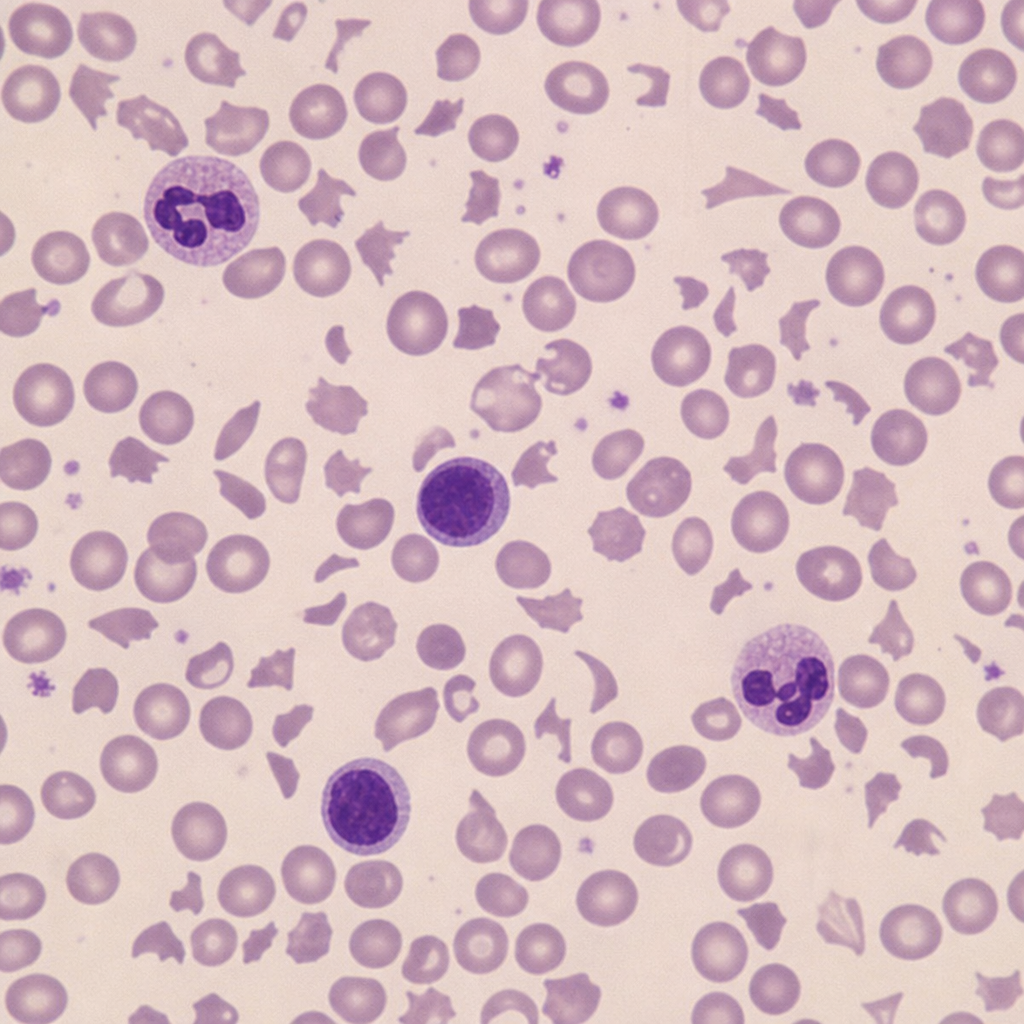
A peripheral blood smear from a 45-year-old woman with a 2-week history of fatigue, jaundice, and confusion is shown. She was recently started on ticlopidine following coronary stent placement. Her laboratory values include: hemoglobin 7.1 g/dL, platelets 18,000/µL, creatinine 2.8 mg/dL, LDH 980 U/L, and indirect bilirubin 3.4 mg/dL. Direct Coombs test is negative. The image demonstrates the most diagnostically discriminating finding. Based on the peripheral smear finding and the complete clinical picture, what is the most likely diagnosis?
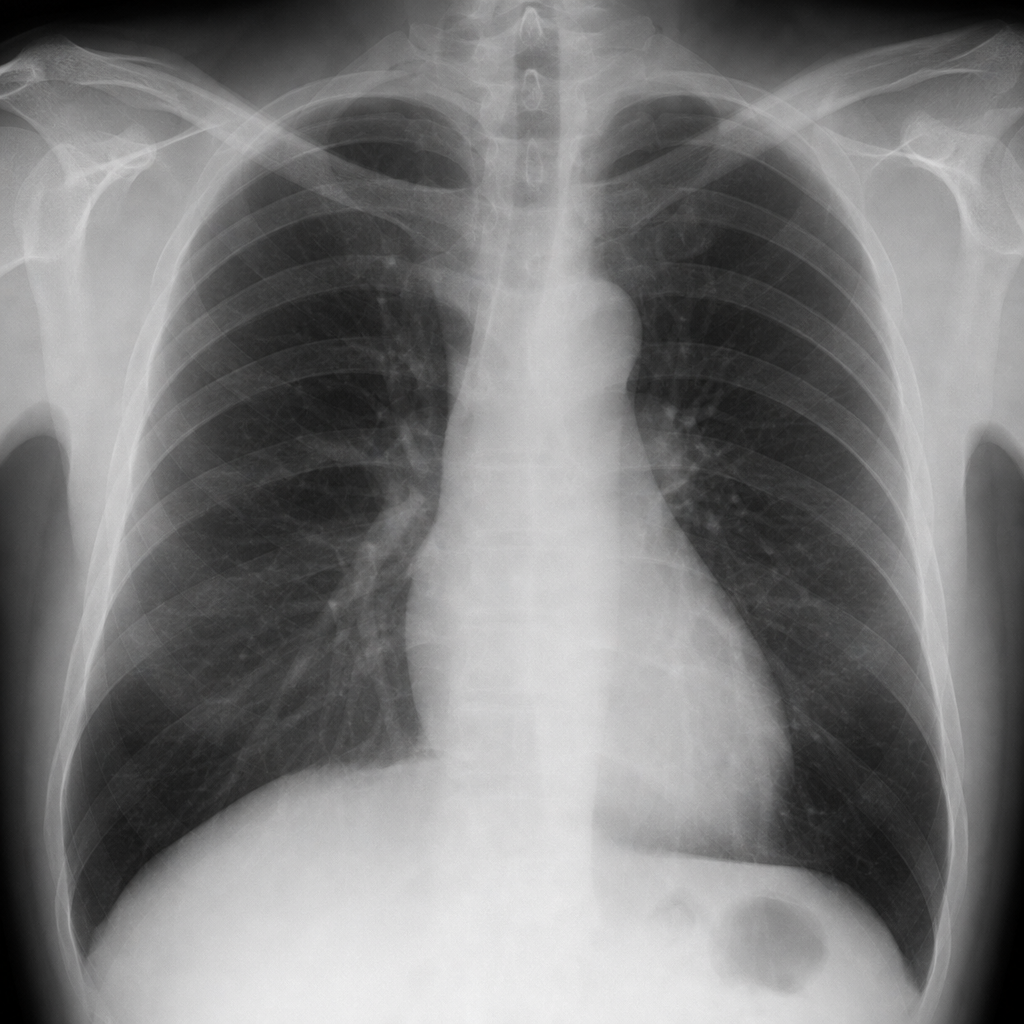
A 67-year-old man with hypertension and hyperlipidemia presents with sudden-onset severe tearing chest pain radiating to his back that began 45 minutes ago. Blood pressure is 185/100 mmHg in the right arm and 155/85 mmHg in the left arm. He is diaphoretic but hemodynamically stable. ECG shows sinus tachycardia without ischemic changes. The upright PA chest radiograph shown reveals no acute cardiopulmonary abnormality and no convincing mediastinal widening. Renal function is normal, and he has no iodinated contrast allergy. Which of the following is the most appropriate next diagnostic step?
Want unlimited practice?
Get full access to all questions, explanations, and performance tracking.
Scan to download app