
Developmental screening in pediatrics — MCQs

A 12-month-old girl is brought to her pediatrician for a checkup and vaccines. The patient’s mother wants to send her to daycare but is worried about exposure to unvaccinated children and other potential sources of infection. The toddler was born at 39 weeks gestation via spontaneous vaginal delivery. She is up to date on all vaccines. She does not walk yet but stands in place and can say a few words. The toddler drinks formula and eats a mixture of soft vegetables and pureed meals. She has no current medications. On physical exam, the vital signs include: temperature 37.0°C (98.6°F), blood pressure 95/50 mm Hg, pulse 130/min, and respiratory rate 28/min. The patient is alert and responsive. The remainder of the exam is unremarkable. Which of the following is most appropriate for this patient at this visit?
A 12-month-old boy is brought to the physician for a well-child examination. He was born at 38 weeks' gestation and was 48 cm (19 in) in length and weighed 3061 g (6 lb 12 oz); he is currently 60 cm (24 in) in length and weighs 7,910 g (17 lb 7 oz). He can walk with one hand held and can throw a small ball. He can pick up an object between his thumb and index finger. He can wave 'bye-bye'. He can say 'mama', 'dada' and 'uh-oh'. He cries if left to play with a stranger alone. Physical examination shows no abnormalities. Which of the following is most likely delayed in this child?
A 4-year-old boy is brought to a pediatrician by his parents for a consultation after his teacher complained about his inability to focus or make friends at school. They mention that the boy does not interact well with others at home, school, or daycare. On physical examination, his vital signs are stable with normal weight, height, and head circumference for his age and sex. His general examination and neurologic examination are completely normal. A recent audiological evaluation shows normal hearing, and intellectual disability has been ruled out by a clinical psychologist. Which of the following investigations is indicated as part of his diagnostic evaluation at present?
A 2-year-old girl is brought to the physician by her mother for a well-child examination. She is at the 55th percentile for height and the 40th percentile for weight. Vital signs are within normal limits. Physical examination shows no abnormalities. She is able to follow simple commands, such as “close your eyes, then stick out your tongue,” but she is unable to follow 3-step commands. She knows approximately 75 words, and half of her speech is understandable. She can say 2-word phrases, and she is able to name many parts of the body. Assuming normal development, which of the following milestones would be expected in a patient this age?
A child presents to his pediatrician’s clinic for a routine well visit. He can bend down and stand back up without assistance and walk backward but is not able to run or walk upstairs. He can stack 2 blocks and put the blocks in a cup. He can bring over a book when asked, and he will say “mama” and “dada” to call for his parents, as well as 'book', 'milk', and 'truck'. How old is this child if he is developmentally appropriate for his age?
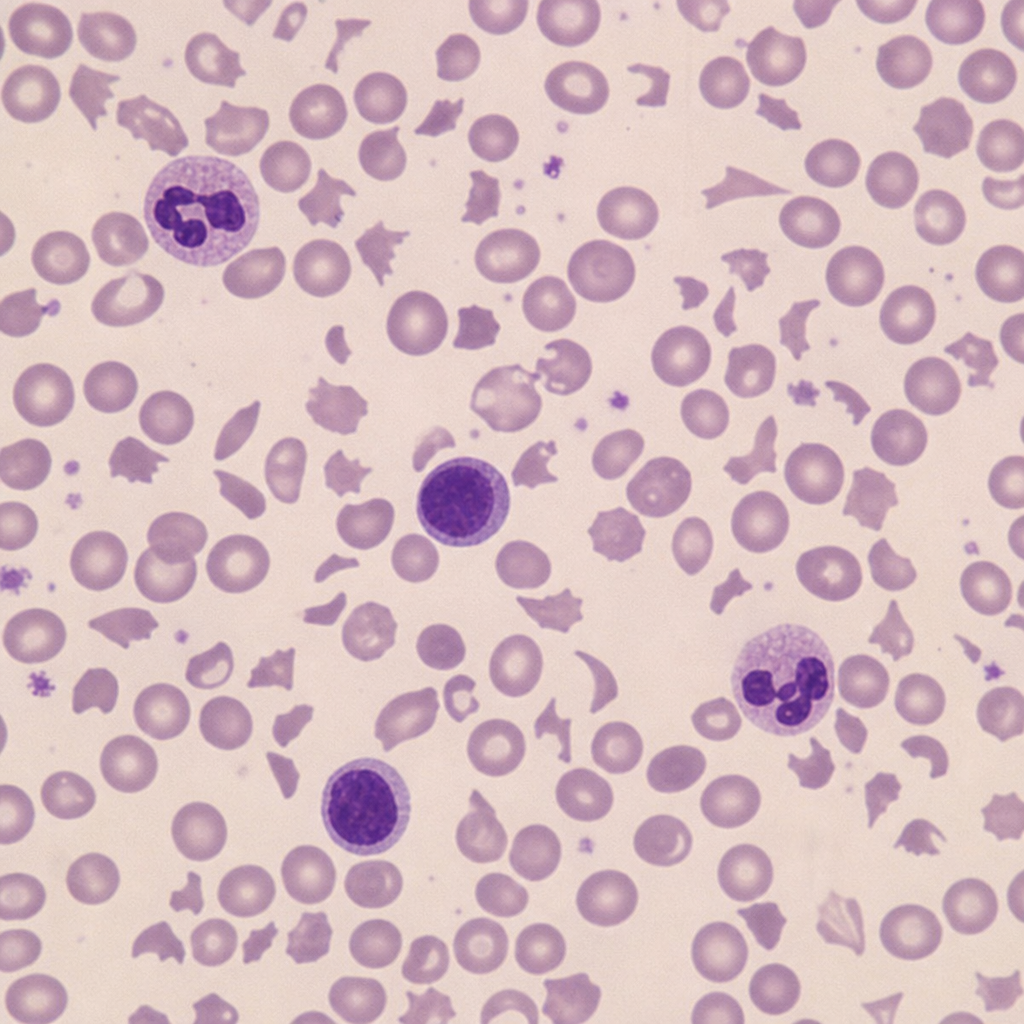
A peripheral blood smear from a 45-year-old woman with a 2-week history of fatigue, jaundice, and confusion is shown. She was recently started on ticlopidine following coronary stent placement. Her laboratory values include: hemoglobin 7.1 g/dL, platelets 18,000/µL, creatinine 2.8 mg/dL, LDH 980 U/L, and indirect bilirubin 3.4 mg/dL. Direct Coombs test is negative. The image demonstrates the most diagnostically discriminating finding. Based on the peripheral smear finding and the complete clinical picture, what is the most likely diagnosis?
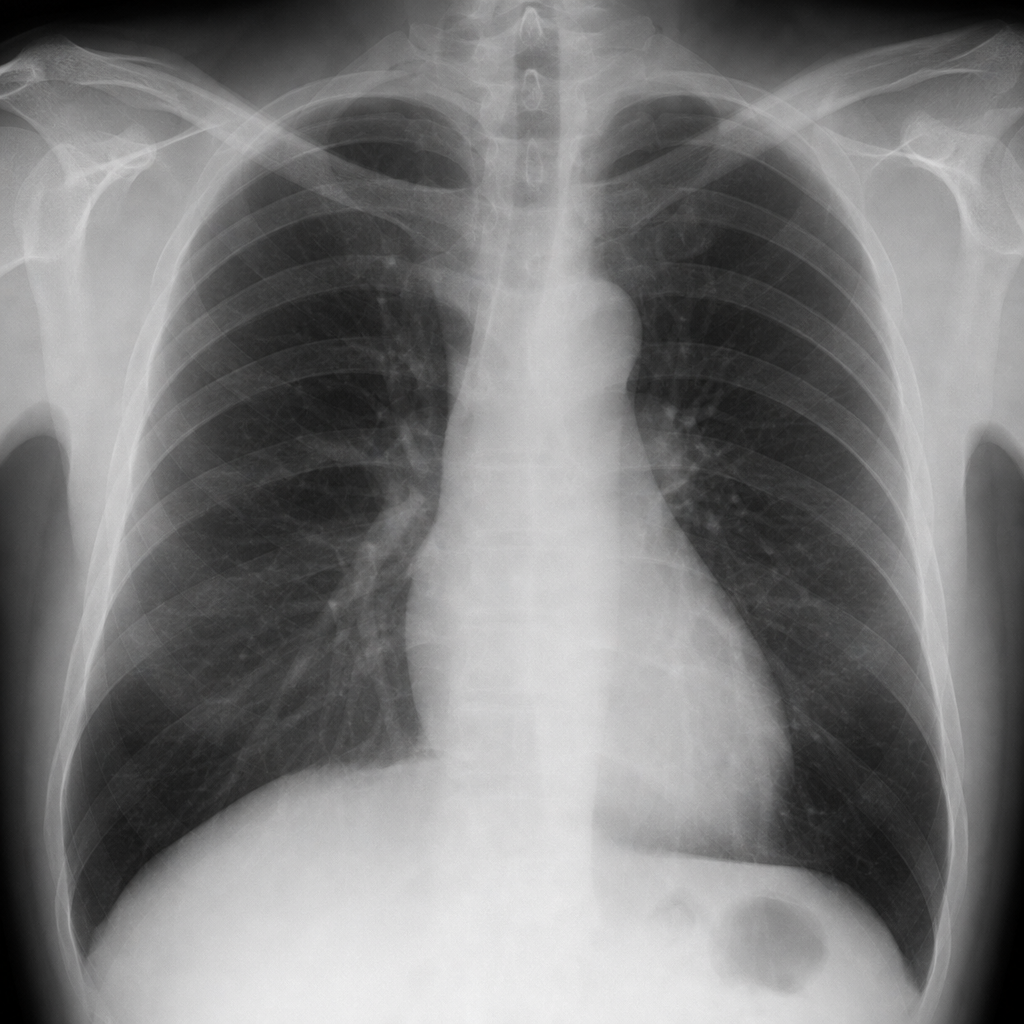
A 67-year-old man with hypertension and hyperlipidemia presents with sudden-onset severe tearing chest pain radiating to his back that began 45 minutes ago. Blood pressure is 185/100 mmHg in the right arm and 155/85 mmHg in the left arm. He is diaphoretic but hemodynamically stable. ECG shows sinus tachycardia without ischemic changes. The upright PA chest radiograph shown reveals no acute cardiopulmonary abnormality and no convincing mediastinal widening. Renal function is normal, and he has no iodinated contrast allergy. Which of the following is the most appropriate next diagnostic step?
A 28-year-old asymptomatic pregnant woman at 12 weeks gestation presents for prenatal care. She has no personal or family history of diabetes. Her BMI is 32 kg/m². She had a random glucose of 118 mg/dL at her first visit. She asks about gestational diabetes screening. Considering her risk factors and current pregnancy, what is the most appropriate screening approach?
A 66-year-old man underwent screening colonoscopy which revealed a 1.2 cm tubular adenoma with low-grade dysplasia in the sigmoid colon that was completely removed. He has no family history of colorectal cancer. His colonoscopy 8 years ago was normal. He asks about surveillance recommendations. Considering current guidelines and competing risks, what is the most appropriate surveillance interval?
A 32-year-old woman presents for preconception counseling. She is healthy with no medical problems. Her mother and maternal aunt both had breast cancer diagnosed at ages 38 and 42, respectively. Her maternal grandmother died of ovarian cancer at age 52. The patient tested negative for BRCA1 and BRCA2 mutations 2 years ago through a commercial genetic testing panel. She asks about breast cancer screening recommendations. What is the most appropriate evaluation and management?
Want unlimited practice?
Get full access to all questions, explanations, and performance tracking.
Scan to download app