
Red flags in chest pain — MCQs

A 36-year-old man presents to the physician with difficulty in breathing for 3 hours. There is no history of chest pain, cough or palpitation. He is a chronic smoker and underwent elective cholecystectomy one month back. There is no history of chronic or recurrent cough, wheezing or breathlessness. His temperature is 38.2°C (100.8°F), pulse is 108/min, blood pressure is 124/80 mm Hg, and respirations are 25/min. His arterial oxygen saturation is 98% in room air as shown by pulse oximetry. After a detailed physical examination, the physician orders a plasma D-dimer level, which was elevated. A contrast-enhanced computed tomography (CT) of the chest shows a filling defect in a segmental pulmonary artery on the left side. Which of the following signs is most likely to have been observed by the physician during the physical examination of this patient’s chest?
A 74-year-old woman is brought by ambulance to the emergency department and presents with a complaint of excruciating chest pain that started about 45 minutes ago. The patient was sitting in the garden when she 1st noticed the pain in the upper abdomen. The pain has persisted and now localizes underneath of the sternum and the left shoulder. Milk of magnesia and aspirin were tried with no relief. The patient had previous episodes of chest pain that were of lesser intensity and rarely lasted more than 10 minutes. She is diabetic and has been managed for hypertension and rheumatoid arthritis in the past. On examination, the patient is breathless and sweating profusely. The vital signs include blood pressure 140/90 mm Hg and heart rate 118/min. The electrocardiogram (ECG) shows Q waves in leads V2 and V3 and raised ST segments in leads V2, V3, V4, and V5. Laboratory studies (including cardiac enzymes at 6 hours after admission show: Hematocrit 45% Troponin T 1.5 ng/mL Troponin I 0.28 ng/mL Creatine kinase (CK)-MB 0.25 ng/mL The patient is admitted and started on analgesia and reperfusion therapy. She shows initial signs of recovery until the 6th day of hospitalization when she starts vomiting and complaining of dizziness. Physical examination findings at this time included heart rate 110/min, temperature 37.7°C (99.9°F), blood pressure 90/60 mm Hg. Jugular venous pressure is 8 cm. A harsh pansystolic murmur is present at the left lower sternal border. ECG shows sinus tachycardia and ST-segment elevation with terminal negative T waves. Laboratory studies show: Hematocrit 38% Troponin T 1.15ng/mL Troponin I 0.18 ng/mL CK-MB 0.10 ng/mL Which of the following best explains the patient's current clinical condition?
A 17-year-old girl is admitted to the emergency department with severe retrosternal chest pain. The pain began suddenly after an episode of self-induced vomiting following a large meal. The patient’s parents say that she is very restricted in the foods she eats and induces vomiting frequently after meals. Vital signs are as follows: blood pressure 100/60 mm Hg, heart rate 98/min, respiratory rate 14/min, and temperature 37.9℃ (100.2℉). The patient is pale and in severe distress. Lungs are clear to auscultation. On cardiac examination, a crunching, raspy sound is auscultated over the precordium that is synchronous with the heartbeat. The abdomen is soft and nontender. Which of the following tests would most likely confirm the diagnosis in this patient?
A 64-year-old man is brought to the emergency department because of a 2-hour history of nausea, vomiting, and retrosternal pain that radiates to the back. Abdominal examination shows tenderness to palpation in the epigastric area. A CT scan of the patient's chest is shown. Which of the following is the most likely diagnosis?
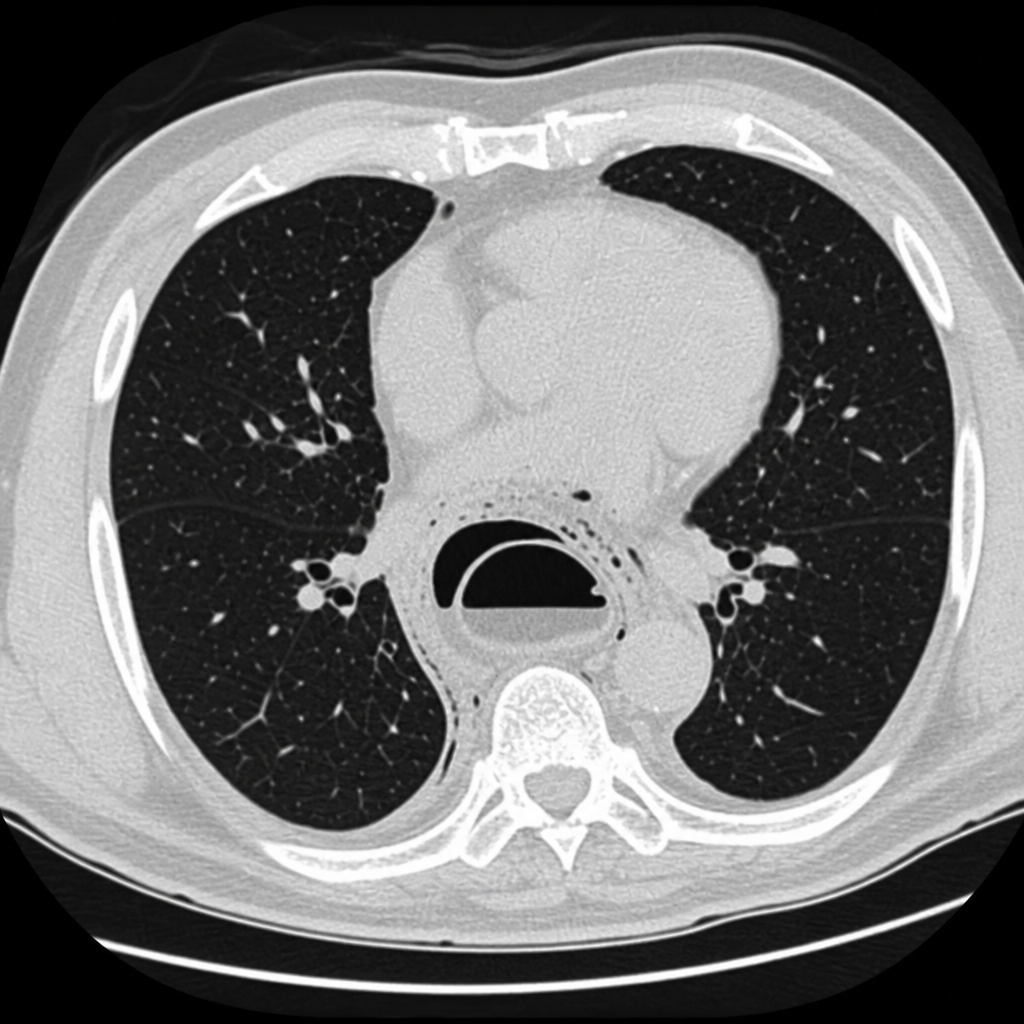
A 55-year-old man presents to the emergency department for chest pain. He states that the pain started last night and has persisted until this morning. He describes the pain as in his chest and radiating into his back between his scapulae. The patient has a past medical history of alcohol abuse and cocaine abuse. He recently returned from vacation on a transatlantic flight. The patient has smoked 1 pack of cigarettes per day for the past 20 years. His temperature is 99.5°F (37.5°C), blood pressure is 167/118 mmHg, pulse is 120/min, and respirations are 22/min. Physical exam reveals tachycardia and clear air movement bilaterally on cardiopulmonary exam. Which of the following is also likely to be found in this patient?
A 65-year-old man with hypertension and type 2 diabetes mellitus is brought to the emergency department 20 minutes after the onset of severe anterior chest pain and shortness of breath. He has smoked one pack of cigarettes daily for 30 years. He appears distressed. His pulse is 116/min, respirations are 22/min, and blood pressure is 156/88 mm Hg. Pulse oximetry on room air shows an oxygen saturation of 98%. A grade 3/6, high-pitched, blowing, diastolic murmur is heard over the right upper sternal border. Which of the following is the most likely cause of this patient's symptoms?
A 33-year-old man with a history of alcohol abuse and cirrhosis presents to the emergency department with profuse vomiting. The patient is aggressive, combative, emotionally labile, and has to be chemically restrained. The patient continues to vomit and blood is noted in the vomitus. His temperature is 99.2°F (37.3°C), blood pressure is 139/88 mmHg, pulse is 106/min, respirations are 17/min, and oxygen saturation is 100% on room air. The patient complains of sudden onset chest pain during his physical exam. A crunching and rasping sound is heard while auscultating the heart. Which of the following is the pathophysiology of the most likely diagnosis?
A 5-year-old girl is brought to the physician because of watery discharge from her right eye for 2 weeks. She and her parents, who are refugees from Sudan, arrived in Texas a month ago. Her immunization status is not known. She is at the 25th percentile for weight and the 50th percentile for height. Her temperature is 37.2°C (99°F), pulse is 90/min, and respirations are 18/min. Examination of the right eye shows matting of the eyelashes. Everting the right eyelid shows hyperemia, follicles, and papillae on the upper tarsal conjunctiva. Slit-lamp examination of the right eye shows follicles in the limbic region and the bulbar conjunctiva. There is corneal haziness with neovascularization at the 12 o'clock position. Examination of the left eye is unremarkable. Direct ophthalmoscopy of both eyes shows no abnormalities. Right pre-auricular lymphadenopathy is present. Which of the following is the most likely diagnosis in this patient?
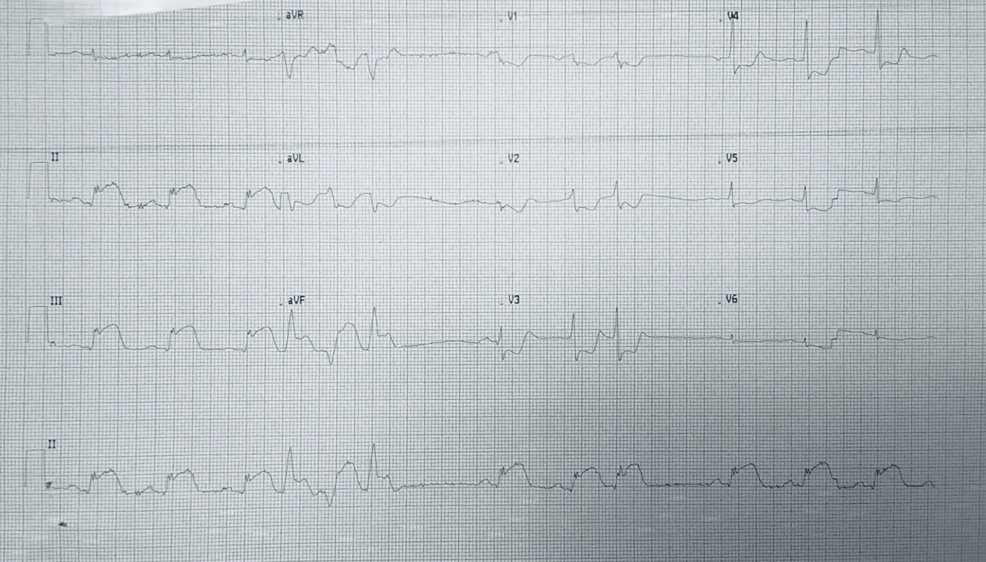
A 64-year-old man presents to the emergency department with sudden onset of chest pain and an episode of vomiting. He also complains of ongoing nausea and heavy sweating (diaphoresis). He denies having experienced such symptoms before and is quite upset. Medical history is significant for hypertension and types 2 diabetes mellitus. He currently smokes and has smoked at least half a pack daily for the last 40 years. Vitals show a blood pressure of 80/50 mm Hg, pulse of 50/min, respirations of 20/min, temperature of 37.2°C (98.9°F), and oximetry is 99% before oxygen by facemask. Except for the patient being visibly distressed and diaphoretic, the examination is unremarkable. ECG findings are shown in the picture. Where is the most likely obstruction in this patient’s cardiac blood supply?
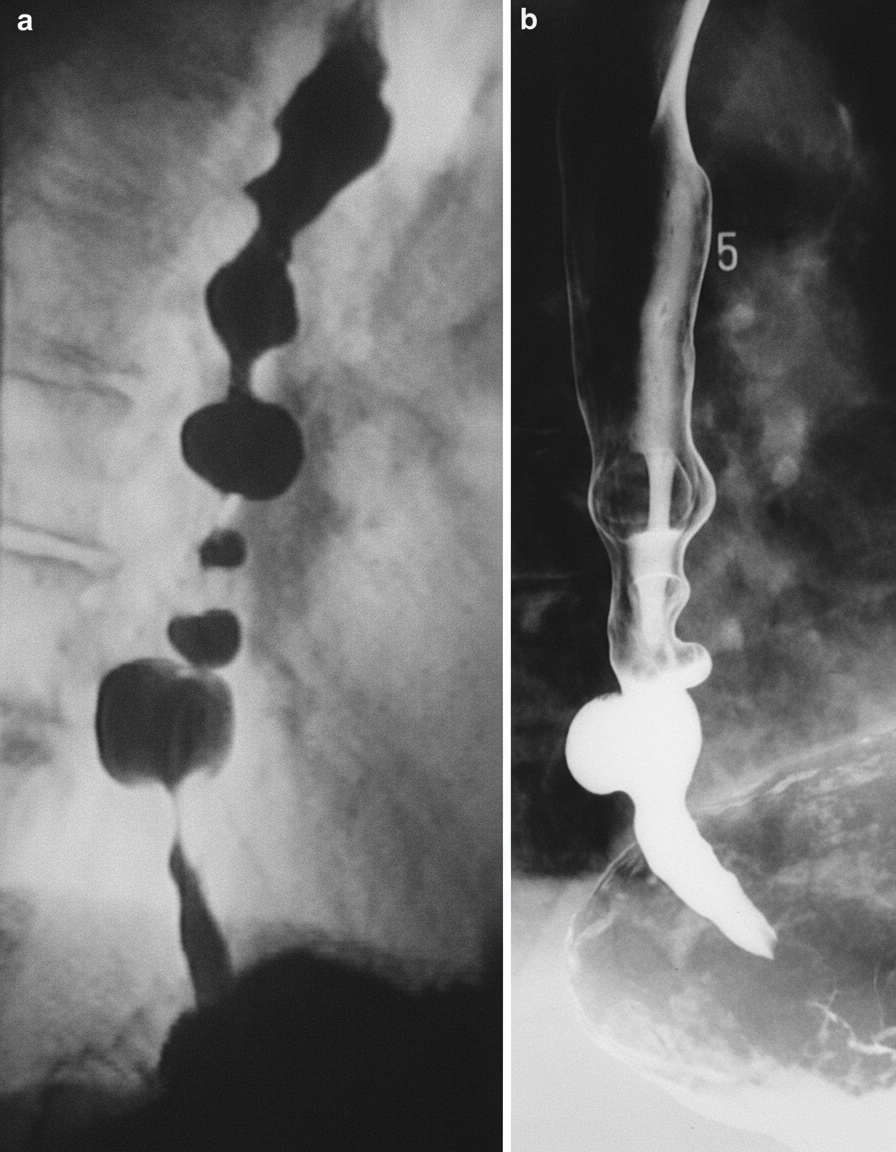
A previously healthy 49-year-old woman comes to the emergency department because of chest pain that radiates to her back. The pain started 45 minutes ago while she was having lunch. Over the past 3 months, she has frequently had the feeling of food, both liquid and solid, getting “stuck” in her chest while she is eating. The patient's vital signs are within normal limits. An ECG shows a normal sinus rhythm with no ST-segment abnormalities. An esophagogram is shown. Further evaluation is most likely to show which of the following?
Want unlimited practice?
Get full access to all questions, explanations, and performance tracking.
Scan to download app