A 19-year-old girl comes to her physician with blurred vision upon awakening for 3 months. When she wakes up in the morning, both eyelids are irritated, sore, and covered with a dry crust. Her symptoms improve after she takes a hot shower. She is otherwise healthy and takes no medications. She does not wear contact lenses. Recently, she became sexually active with a new male partner. Her temperature is 37.4°C (99.3°F), and pulse is 88/minute. Both eyes show erythema and irritation at the superior lid margin, and there are flakes at the base of the lashes. There is no discharge. Visual acuity is 20/20 bilaterally. Which of the following is the next best step in management?
Q72
A 43-year-old man comes to the physician for a follow-up examination. Four months ago, he was treated conservatively for ureteric colic. He has noticed during micturition that his urine is reddish-brown initially and then clears by the end of the stream. He has no dysuria. He has hypertension. His only medication is hydrochlorothiazide. He appears healthy and well-nourished. His temperature is 37°C (98.6°F), pulse is 80/min, and blood pressure is 122/86 mm Hg. Physical examination shows no abnormalities. Laboratory studies show:
Hemoglobin 14.1 g/dL
Serum
Glucose 88 mg/dL
Creatinine 0.6 mg/dL
Urine
Blood 2+
Protein negative
Leukocyte esterase negative
Nitrite negative
RBCs 5–7/hpf
WBCs 0–1/hpf
RBC casts none
Which of the following is the most likely origin of this patient's hematuria?
Q73
A 24-year-old woman presents to the emergency department for chest pain and shortness of breath. She was at home making breakfast when her symptoms began. She describes the pain as sharp and located in her chest. She thought she was having a heart attack and began to feel short of breath shortly after. The patient is a college student and recently joined the soccer team. She has no significant past medical history except for a progesterone intrauterine device which she uses for contraception, and a cyst in her breast detected on ultrasound. Last week she returned on a trans-Atlantic flight from Russia. Her temperature is 98.4°F (36.9°C), blood pressure is 137/69 mmHg, pulse is 98/min, respirations are 18/min, and oxygen saturation is 99% on room air. Physical exam reveals an anxious young woman. Cardiac and pulmonary exam are within normal limits. Deep inspiration and palpation of the chest wall elicits pain. Neurologic exam reveals a stable gait and cranial nerves II-XII are grossly intact. Which of the following best describes the most likely underlying etiology?
Q74
A 41-year-old woman with a past medical history significant for asthma and seasonal allergies presents with a new rash. She has no significant past surgical, social, or family history. The patient's blood pressure is 131/90 mm Hg, the pulse is 77/min, the respiratory rate is 17/min, and the temperature is 36.9°C (98.5°F). Physical examination reveals a sharply demarcated area of skin dryness and erythema encircling her left wrist. Review of systems is otherwise negative. Which of the following is the most likely diagnosis?
Q75
A previously healthy 33-year-old woman comes to the physician because of pain and sometimes numbness in her right thigh for the past 2 months. She reports that her symptoms are worse when walking or standing and are better while sitting. Three months ago, she started going to a fitness class a couple times a week. She is 163 cm (5 ft 4 in) tall and weighs 88 kg (194 lb); BMI is 33.1 kg/m2. Her vital signs are within normal limits. Examination of the skin shows no abnormalities. Sensation to light touch is decreased over the lateral aspect of the right anterior thigh. Muscle strength is normal. Tapping the right inguinal ligament leads to increased numbness of the affected thigh. The straight leg test is negative. Which of the following is the most appropriate next step in management of this patient?
Q76
Nine days after being treated for a perforated gastric ulcer and sepsis, a 78-year-old woman develops decreased urinary output and malaise. She required emergency laparotomy and was subsequently treated in the intensive care unit for sepsis. Blood cultures grew Pseudomonas aeruginosa. The patient was treated with ceftazidime and gentamicin. She has type 2 diabetes mellitus, arterial hypertension, and osteoarthritis of the hips. Prior to admission, her medications were insulin, ramipril, and ibuprofen. Her temperature is 37.3°C (99.1°F), pulse is 80/min, and blood pressure is 115/75 mm Hg. Examination shows a healing surgical incision in the upper abdomen. Laboratory studies show:
Hemoglobin count 14 g/dL
Leukocyte count 16,400 mm3
Segmented neutrophils 60%
Eosinophils 2%
Lymphocytes 30%
Monocytes 6%
Platelet count 260,000 mm3
Serum
Na+ 137 mEq/L
Cl- 102 mEq/L
K+ 5.1 mEq/L
Urea nitrogen 25 mg/dL
Creatinine 4.2 mg/dL
Fractional excretion of sodium is 2.1%. Which of the following findings on urinalysis is most likely associated with this patient's condition?
Q77
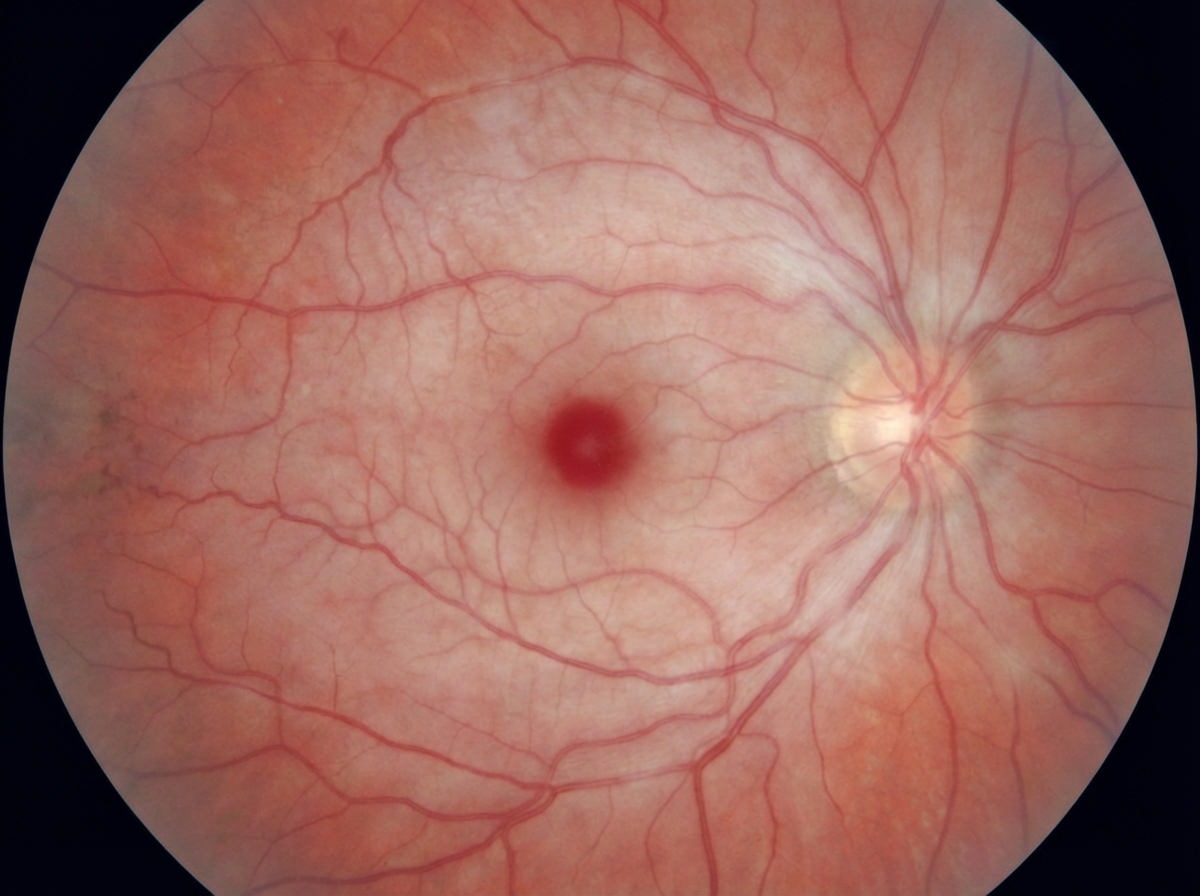
A 65-year-old man presents to the emergency department because of a sudden loss of vision in his left eye for 2 hours. He has no pain. He had a similar episode 1 month ago which lasted only seconds. He has no history of a headache or musculoskeletal pain. He has had ischemic heart disease for 8 years and hypertension and diabetes mellitus for 13 years. His medications include metoprolol, aspirin, insulin, lisinopril, and atorvastatin. He has smoked 1 pack of cigarettes for 39 years. The vital signs include: blood pressure 145/98 mm Hg, pulse 86/min, respirations 16/min, and temperature 36.7°C (98.1°F). Physical examination of the left eye shows a loss of light perception. After illumination of the right eye and consensual constriction of the pupils, illumination of the left eye shows pupillary dilation. A fundoscopy image is shown. Which of the following best explains these findings?
Q78
A 19-year-old woman undergoes a laparoscopic appendectomy for acute appendicitis. During the procedure, a black, discolored liver is noted. Other than the recent appendicitis, the patient has no history of serious illness and takes no medications. She has no medication allergies. She does not drink alcohol or use illicit drugs. She has an uncomplicated postoperative course. At her follow-up visit 3 weeks later, her vital signs are within normal limits. Examination shows scleral icterus, which the patient states has been present for many years. Abdominal examination shows healing scars without drainage or erythema. Serum studies show:
Aspartate aminotransferase 30 IU/L
Alanine aminotransferase 35 IU/L
Alkaline phosphatase 47 IU/L
Total bilirubin 5.2 mg/dL
Direct bilirubin 4.0 mg/dL
Which of the following is the most likely diagnosis?
Q79
An 82-year-old male visits his primary care physician for a check-up. He reports that he is in his usual state of health. His only new complaint is that he feels as if the room is spinning, which has affected his ability to live independently. He is currently on lisinopril, metformin, aspirin, warfarin, metoprolol, and simvastatin and says that he has been taking them as prescribed. On presentation, his temperature is 98.8°F (37°C), blood pressure is 150/93 mmHg, pulse is 82/min, and respirations are 12/min. On exam he has a left facial droop and his speech is slightly garbled. Eye exam reveals nystagmus with certain characteristics. The type of nystagmus seen in this patient would most likely also be seen in which of the following diseases?
Q80
A 79-year-old woman who lives alone is brought to the emergency department by her neighbor because of worsening confusion over the last 2 days. Due to her level of confusion, she is unable to answer questions appropriately. She has had type 2 diabetes mellitus for 29 years for which she takes metformin. Vital signs include: blood pressure 111/72 mm Hg, temperature 38.5°C (101.3°F), and pulse 100/min. Her fingerstick blood glucose is 210 mg/dL. On physical examination, she is not oriented to time or place and mistakes the nursing assistant for her cousin. Laboratory results are shown:
Hemoglobin 13 g/dL
Leukocyte count 16,000/mm3
Segmented neutrophils 70%
Eosinophils 1%
Basophils 0.3%
Lymphocytes 25%
Monocytes 4%
Which of the following is the most likely diagnosis?
Differential diagnosis US Medical PG Practice Questions and MCQs
Question 71: A 19-year-old girl comes to her physician with blurred vision upon awakening for 3 months. When she wakes up in the morning, both eyelids are irritated, sore, and covered with a dry crust. Her symptoms improve after she takes a hot shower. She is otherwise healthy and takes no medications. She does not wear contact lenses. Recently, she became sexually active with a new male partner. Her temperature is 37.4°C (99.3°F), and pulse is 88/minute. Both eyes show erythema and irritation at the superior lid margin, and there are flakes at the base of the lashes. There is no discharge. Visual acuity is 20/20 bilaterally. Which of the following is the next best step in management?
A. Lid hygiene and warm compresses (Correct Answer)
B. Topical erythromycin
C. Oral doxycycline
D. Topical mupirocin
E. Topical cyclosporine
Explanation: ***Lid hygiene and warm compresses***
- The patient's symptoms of **irritated, sore eyelids** with dry crusts upon awakening, improved by a hot shower, and flakes at the base of the lashes are classic for **blepharitis**.
- **Lid hygiene** (e.g., gentle scrubbing with diluted baby shampoo) and **warm compresses** are the primary and most effective initial treatments for blepharitis to remove crusts and improve meibomian gland function.
*Topical erythromycin*
- Topical antibiotics like erythromycin are typically reserved for cases with signs of **bacterial infection** (e.g., purulent discharge, significant conjunctivitis), which are not present here.
- While bacteria can contribute to blepharitis, hygiene is the first-line treatment unless infection is prominent.
*Oral doxycycline*
- **Oral doxycycline** is used for more severe or refractory cases of blepharitis, particularly those associated with **rosacea** or significant meibomian gland dysfunction that has not responded to conservative measures.
- It works through its **anti-inflammatory** properties and reduction of bacterial lipase activity, but it's not the initial best step.
*Topical mupirocin*
- **Topical mupirocin** is an antibiotic primarily used for **skin infections** (e.g., impetigo) and is not a standard treatment for blepharitis unless there is a clear, localized staphylococcal skin infection that is not responding to other treatments.
- It is not indicated for the general management of blepharitis.
*Topical cyclosporine*
- **Topical cyclosporine** is an **immunomodulator** used primarily for severe **dry eye disease** or ocular surface inflammation that has not responded to conventional treatments.
- While blepharitis can contribute to dry eye, cyclosporine is not the initial treatment for blepharitis itself.
Question 72: A 43-year-old man comes to the physician for a follow-up examination. Four months ago, he was treated conservatively for ureteric colic. He has noticed during micturition that his urine is reddish-brown initially and then clears by the end of the stream. He has no dysuria. He has hypertension. His only medication is hydrochlorothiazide. He appears healthy and well-nourished. His temperature is 37°C (98.6°F), pulse is 80/min, and blood pressure is 122/86 mm Hg. Physical examination shows no abnormalities. Laboratory studies show:
Hemoglobin 14.1 g/dL
Serum
Glucose 88 mg/dL
Creatinine 0.6 mg/dL
Urine
Blood 2+
Protein negative
Leukocyte esterase negative
Nitrite negative
RBCs 5–7/hpf
WBCs 0–1/hpf
RBC casts none
Which of the following is the most likely origin of this patient's hematuria?
A. Urethra (Correct Answer)
B. Ureter
C. Urinary bladder
D. Renal pelvis
E. Renal glomeruli
Explanation: ***Urethra***
- **Initial hematuria** (blood at the beginning of urination that clears by the end) is the classic presentation of **urethral bleeding**.
- Blood accumulated in the urethra is washed out at the start of micturition, with subsequent urine being clear once the urethral blood has been voided.
- Common causes include urethral stricture, urethritis, or trauma. The history of ureteric colic is likely incidental and unrelated to the current hematuria pattern.
*Urinary bladder*
- Bladder pathology typically causes **terminal hematuria** (blood at the end of urination) when the bladder neck or trigone contracts at the end of voiding.
- Bladder sources can also cause **total hematuria** (blood throughout the entire stream), but not the isolated initial hematuria pattern seen here.
*Renal pelvis*
- Hematuria from the renal pelvis presents as **total hematuria** because blood mixes with urine throughout the upper urinary tract.
- The pattern of initial hematuria clearing by the end of the stream excludes an upper tract source.
*Ureter*
- Similar to renal pelvis bleeding, ureteral sources cause **total hematuria** as blood mixes with urine during flow from kidney to bladder.
- The history of ureteric colic 4 months ago (now resolved) is not related to the current initial hematuria pattern.
*Renal glomeruli*
- Glomerular hematuria is characterized by **dysmorphic RBCs**, **RBC casts**, and often **proteinuria**—none of which are present.
- Would present as **total hematuria** with cola-colored or tea-colored urine, not the initial-clearing pattern described.
Question 73: A 24-year-old woman presents to the emergency department for chest pain and shortness of breath. She was at home making breakfast when her symptoms began. She describes the pain as sharp and located in her chest. She thought she was having a heart attack and began to feel short of breath shortly after. The patient is a college student and recently joined the soccer team. She has no significant past medical history except for a progesterone intrauterine device which she uses for contraception, and a cyst in her breast detected on ultrasound. Last week she returned on a trans-Atlantic flight from Russia. Her temperature is 98.4°F (36.9°C), blood pressure is 137/69 mmHg, pulse is 98/min, respirations are 18/min, and oxygen saturation is 99% on room air. Physical exam reveals an anxious young woman. Cardiac and pulmonary exam are within normal limits. Deep inspiration and palpation of the chest wall elicits pain. Neurologic exam reveals a stable gait and cranial nerves II-XII are grossly intact. Which of the following best describes the most likely underlying etiology?
A. Ischemia of the myocardium
B. Clot in the pulmonary veins
C. Psychogenic etiology
D. Musculoskeletal inflammation
E. Clot in the pulmonary arteries (Correct Answer)
Explanation: ***Clot in the pulmonary arteries***
- This patient has **significant risk factors for pulmonary embolism (PE)**: recent **trans-Atlantic flight** (prolonged immobilization) and **progesterone IUD** (hormonal contraception increases thrombotic risk).
- Classic PE symptoms include **acute-onset pleuritic chest pain** and **shortness of breath**, both present here.
- **Key teaching point:** While the chest wall tenderness and normal vital signs might suggest a benign cause, **PE must be ruled out in high-risk patients** presenting to the ED with chest pain and dyspnea. Normal oxygen saturation and physical exam do not exclude PE.
- The **Wells criteria** would assign points for recent travel and symptoms consistent with PE, warranting further workup (D-dimer, CT pulmonary angiography).
- In emergency medicine, **risk factors take precedence** over reassuring physical findings when considering life-threatening diagnoses like PE.
*Ischemia of the myocardium*
- The patient is **24 years old** with no traditional cardiovascular risk factors (smoking, hypertension, diabetes, family history).
- The pain is **sharp and pleuritic**, not the typical crushing, substernal pressure of acute coronary syndrome.
- **Myocardial infarction is exceedingly rare** in this demographic without congenital abnormalities or cocaine use.
*Clot in the pulmonary veins*
- This represents an **anatomical misunderstanding** of PE pathophysiology.
- **Venous thromboemboli form in systemic veins** (typically deep veins of legs) and travel through the right heart to lodge in the **pulmonary arteries**, not veins.
- Pulmonary veins carry oxygenated blood from lungs to left atrium; obstruction here would cause pulmonary edema, not PE.
*Psychogenic etiology*
- While the patient appears **anxious**, attributing symptoms to panic/anxiety is a **diagnosis of exclusion**.
- **Critical error:** Dismissing symptoms as psychogenic in a patient with **clear PE risk factors** could lead to catastrophic outcomes if PE is missed.
- Panic attacks can mimic PE, but the recent flight and hormonal contraception mandate organic cause evaluation first.
*Musculoskeletal inflammation*
- The finding of **pain with palpation** and **deep inspiration** is classically associated with **costochondritis or chest wall strain**.
- This is a **reasonable consideration** and in many patients would be the correct diagnosis.
- **However:** The combination of **recent long-haul flight + hormonal contraception + acute dyspnea** creates a clinical scenario where PE **cannot be assumed away** based on chest wall tenderness alone.
- Pleuritic chest pain can occur with PE when it causes pleural irritation, and **PE can coexist with incidental chest wall tenderness**.
- The **standard of care** requires PE evaluation before attributing symptoms solely to musculoskeletal causes in this high-risk scenario.
Question 74: A 41-year-old woman with a past medical history significant for asthma and seasonal allergies presents with a new rash. She has no significant past surgical, social, or family history. The patient's blood pressure is 131/90 mm Hg, the pulse is 77/min, the respiratory rate is 17/min, and the temperature is 36.9°C (98.5°F). Physical examination reveals a sharply demarcated area of skin dryness and erythema encircling her left wrist. Review of systems is otherwise negative. Which of the following is the most likely diagnosis?
A. Scabies
B. Atopic dermatitis
C. Tinea corporis
D. Psoriasis
E. Contact dermatitis (Correct Answer)
Explanation: ***Contact dermatitis***
- The patient's presentation of a **sharply demarcated** area of **dryness and erythema** encircling her left wrist is highly suggestive of **contact dermatitis**, especially given her history of allergies.
- This condition arises when skin comes into direct contact with an **irritating substance** or an **allergen**, and the **distribution** on the wrist strongly points to an external agent like jewelry or a watch strap.
*Scabies*
- **Scabies** typically presents with **intensely pruritic** papules and burrows, often in the **web spaces of fingers and toes**, wrists, and waistline.
- The described rash in the patient lacks the characteristic **burrows** and the **generalized severe itching** associated with scabies.
*Atopic dermatitis*
- **Atopic dermatitis** (eczema) commonly manifests as **poorly demarcated**, erythematous, and pruritic patches, often with **excoriations** and **lichenification**, typically in **flexural areas** (e.g., antecubital and popliteal fossae).
- While the patient has a history of asthma and allergies, the **sharply demarcated** nature and specific location of the rash on the wrist are less consistent with atopic dermatitis.
*Tinea corporis*
- **Tinea corporis** (**ringworm**) is a fungal infection characterized by an **annular shape** with an **elevated, scaly border** and central clearing.
- The rash described in the patient lacks the **central clearing** and the typical **scaly, raised border** seen in tinea corporis.
*Psoriasis*
- **Psoriasis** typically presents as **well-demarcated**, erythematous plaques covered with **silvery scales**, often found on the **extensor surfaces** (e.g., elbows, knees) and scalp.
- The rash in this patient does not mention the characteristic **silvery scales** or the common locations for psoriasis.
Question 75: A previously healthy 33-year-old woman comes to the physician because of pain and sometimes numbness in her right thigh for the past 2 months. She reports that her symptoms are worse when walking or standing and are better while sitting. Three months ago, she started going to a fitness class a couple times a week. She is 163 cm (5 ft 4 in) tall and weighs 88 kg (194 lb); BMI is 33.1 kg/m2. Her vital signs are within normal limits. Examination of the skin shows no abnormalities. Sensation to light touch is decreased over the lateral aspect of the right anterior thigh. Muscle strength is normal. Tapping the right inguinal ligament leads to increased numbness of the affected thigh. The straight leg test is negative. Which of the following is the most appropriate next step in management of this patient?
A. Advise patient to wear looser pants (Correct Answer)
B. Reduction of physical activity
C. MRI of the lumbar spine
D. X-ray of the hip
E. Blood work for inflammatory markers
Explanation: ***Advise patient to wear looser pants***
- This patient presents with symptoms consistent with **meralgia paresthetica**, a condition caused by compression of the **lateral femoral cutaneous nerve (LFCN)**. Modifying clothing or belts that compress the inguinal ligament can relieve pressure on the nerve.
- Her increased weight, a recent increase in physical activity, and a positive Tinel's sign at the inguinal ligament (tapping leads to increased numbness) support this diagnosis.
*Reduction of physical activity*
- While excessive physical activity can contribute to meralgia paresthetica, simply reducing it without addressing the underlying compression might not fully resolve symptoms.
- The patient has recently increased physical activity, which could be a contributing factor, but it's not the primary or most direct intervention for nerve compression.
*MRI of the lumbar spine*
- An MRI of the lumbar spine would be considered if there were signs of **radiculopathy** or other spinal pathology, such as weakness, reflex changes, or a positive straight leg test, which are absent here.
- The symptoms are localized to the distribution of the LFCN, and the physical exam points away from a central spinal cause.
*X-ray of the hip*
- An X-ray of the hip would be indicated for suspected **hip joint pathology** or **bony abnormalities**, which are not suggested by the patient's symptoms (pain and numbness in the thigh, not hip joint pain).
- Meralgia paresthetica is a nerve entrapment syndrome, not a structural issue of the hip joint.
*Blood work for inflammatory markers*
- Inflammatory markers like **ESR** or **CRP** would be relevant if an **inflammatory arthritis**, infection, or systemic inflammatory condition was suspected, but the patient's symptoms are purely neurological and localized.
- There is no clinical evidence of inflammation, fever, or joint swelling to suggest an underlying inflammatory process.
Question 76: Nine days after being treated for a perforated gastric ulcer and sepsis, a 78-year-old woman develops decreased urinary output and malaise. She required emergency laparotomy and was subsequently treated in the intensive care unit for sepsis. Blood cultures grew Pseudomonas aeruginosa. The patient was treated with ceftazidime and gentamicin. She has type 2 diabetes mellitus, arterial hypertension, and osteoarthritis of the hips. Prior to admission, her medications were insulin, ramipril, and ibuprofen. Her temperature is 37.3°C (99.1°F), pulse is 80/min, and blood pressure is 115/75 mm Hg. Examination shows a healing surgical incision in the upper abdomen. Laboratory studies show:
Hemoglobin count 14 g/dL
Leukocyte count 16,400 mm3
Segmented neutrophils 60%
Eosinophils 2%
Lymphocytes 30%
Monocytes 6%
Platelet count 260,000 mm3
Serum
Na+ 137 mEq/L
Cl- 102 mEq/L
K+ 5.1 mEq/L
Urea nitrogen 25 mg/dL
Creatinine 4.2 mg/dL
Fractional excretion of sodium is 2.1%. Which of the following findings on urinalysis is most likely associated with this patient's condition?
A. RBC casts
B. WBC casts
C. Waxy casts
D. Muddy brown casts (Correct Answer)
E. Pigmented casts
Explanation: ***Muddy brown casts***
- The patient's presentation with **decreased urinary output**, **malaise**, and significantly **elevated creatinine** (4.2 mg/dL) after recent sepsis and treatment with nephrotoxic drugs (gentamicin) strongly suggests **acute tubular necrosis (ATN)**.
- **Muddy brown casts** are pathognomonic for **acute tubular necrosis**, indicating damage to the renal tubules.
*RBC casts*
- **Red blood cell (RBC) casts** are indicative of **glomerulonephritis** or severe glomerular damage, which is not suggested by the clinical picture.
- While the patient has hypertension and diabetes, her current acute kidney injury (AKI) is more consistent with ATN given the recent sepsis and aminoglycoside use.
*WBC casts*
- **White blood cell (WBC) casts** are characteristic of **pyelonephritis** (kidney infection) or **interstitial nephritis**.
- Although she had sepsis, there is no direct evidence of pyelonephritis, and interstitial nephritis would present differently.
*Waxy casts*
- **Waxy casts** are associated with **chronic kidney disease** and indicate severe, longstanding tubular atrophy and urine stasis.
- While she has risk factors for chronic kidney disease (diabetes, hypertension), her acute decline points to an acute process like ATN, making waxy casts less likely as the primary finding.
*Pigmented casts*
- **Pigmented casts** (e.g., myoglobin casts in rhabdomyolysis or hemoglobin casts in hemolysis) are seen in conditions involving the release of large amounts of pigments into the bloodstream.
- While sepsis can cause hemolysis or muscle breakdown, **muddy brown casts** specifically refer to the granular, pigmented casts seen in ATN due to damaged tubular cells and heme pigments. "Pigmented casts" is a broader term, and "muddy brown casts" is more specific to ATN.
Question 77: A 65-year-old man presents to the emergency department because of a sudden loss of vision in his left eye for 2 hours. He has no pain. He had a similar episode 1 month ago which lasted only seconds. He has no history of a headache or musculoskeletal pain. He has had ischemic heart disease for 8 years and hypertension and diabetes mellitus for 13 years. His medications include metoprolol, aspirin, insulin, lisinopril, and atorvastatin. He has smoked 1 pack of cigarettes for 39 years. The vital signs include: blood pressure 145/98 mm Hg, pulse 86/min, respirations 16/min, and temperature 36.7°C (98.1°F). Physical examination of the left eye shows a loss of light perception. After illumination of the right eye and consensual constriction of the pupils, illumination of the left eye shows pupillary dilation. A fundoscopy image is shown. Which of the following best explains these findings?
A. Temporal arteritis
B. Wet macular degeneration
C. Retinal detachment
D. Central retinal artery occlusion (Correct Answer)
E. Demyelinating optic neuritis
Explanation: ***Central retinal artery occlusion***
- The sudden, painless monocular **loss of vision**, history of **amaurosis fugax** (transient vision loss), and the classic fundoscopic finding of a **cherry-red spot** with a **pale retina** are highly indicative of CRAO.
- Risk factors like **hypertension, diabetes, ischemic heart disease, and smoking** increase the patient's likelihood of atherosclerotic disease leading to an embolus.
*Temporal arteritis*
- This condition typically presents with **headache, scalp tenderness, jaw claudication**, and elevated inflammatory markers (e.g., ESR, CRP), none of which are mentioned.
- While it can cause sudden vision loss, the **cherry-red spot** is not a characteristic finding; rather, it often shows a **swollen optic disc**.
*Wet macular degeneration*
- Characterized by the growth of **abnormal blood vessels** under the retina, leading to **blurred or distorted central vision** and metamorphopsia.
- It usually presents with **gradual vision loss** and does not cause a *cherry-red spot* or complete loss of light perception.
*Retinal detachment*
- Typically presents with symptoms like **flashes of light (photopsias), floaters**, and a "curtain" coming across the vision.
- Fundoscopy would reveal a **detached retina**, not a pale retina with a *cherry-red spot*.
*Demyelinating optic neuritis*
- Often presents with **pain with eye movement** and **gradual vision loss**, which is generally reversible.
- Fundoscopy is typically **normal in the acute phase** or shows optic disc pallor later, not a *cherry-red spot* and pale retina.
Question 78: A 19-year-old woman undergoes a laparoscopic appendectomy for acute appendicitis. During the procedure, a black, discolored liver is noted. Other than the recent appendicitis, the patient has no history of serious illness and takes no medications. She has no medication allergies. She does not drink alcohol or use illicit drugs. She has an uncomplicated postoperative course. At her follow-up visit 3 weeks later, her vital signs are within normal limits. Examination shows scleral icterus, which the patient states has been present for many years. Abdominal examination shows healing scars without drainage or erythema. Serum studies show:
Aspartate aminotransferase 30 IU/L
Alanine aminotransferase 35 IU/L
Alkaline phosphatase 47 IU/L
Total bilirubin 5.2 mg/dL
Direct bilirubin 4.0 mg/dL
Which of the following is the most likely diagnosis?
A. Gilbert syndrome
B. Rotor syndrome
C. Type II Crigler-Najjar syndrome
D. Dubin-Johnson syndrome (Correct Answer)
E. Wilson disease
Explanation: ***Dubin-Johnson syndrome***
- The key findings are **chronic intermittent jaundice** (scleral icterus for many years), **elevated direct bilirubin** (predominantly conjugated hyperbilirubinemia), normal liver enzymes, and a **black, discolored liver** noted during surgery.
- This is an autosomal recessive disorder caused by a defect in the **MRP2 transporter**, leading to impaired biliary excretion of conjugated bilirubin and other organic anions.
*Gilbert syndrome*
- Characterized by **unconjugated hyperbilirubinemia** due to a defect in UDP-glucuronosyltransferase UGT1A1, which impairs bilirubin conjugation.
- The patient here has predominantly **conjugated hyperbilirubinemia**, and the liver would appear grossly normal, not black.
*Rotor syndrome*
- Also presents with **conjugated hyperbilirubinemia**, but it does **not cause a black discoloration of the liver**.
- It is caused by defects in hepatic organic anion transporting polypeptides (OATP1B1 and OATP1B3), leading to impaired hepatic storage and excretion of conjugated bilirubin.
*Type II Crigler-Najjar syndrome*
- This is characterized by **unconjugated hyperbilirubinemia** due to a partial deficiency of UDP-glucuronosyltransferase (UGT1A1), similar to Gilbert syndrome but more severe.
- It does not cause a black liver, and the patient's bilirubin is primarily conjugated.
*Wilson disease*
- This is a disorder of **copper metabolism** that can cause liver disease (hepatitis, cirrhosis), neurological symptoms, and *Kayser-Fleischer rings*, but it does not cause a black liver or isolated conjugated hyperbilirubinemia.
- Liver enzymes would typically be elevated in symptomatic Wilson disease.
Question 79: An 82-year-old male visits his primary care physician for a check-up. He reports that he is in his usual state of health. His only new complaint is that he feels as if the room is spinning, which has affected his ability to live independently. He is currently on lisinopril, metformin, aspirin, warfarin, metoprolol, and simvastatin and says that he has been taking them as prescribed. On presentation, his temperature is 98.8°F (37°C), blood pressure is 150/93 mmHg, pulse is 82/min, and respirations are 12/min. On exam he has a left facial droop and his speech is slightly garbled. Eye exam reveals nystagmus with certain characteristics. The type of nystagmus seen in this patient would most likely also be seen in which of the following diseases?
A. Benign paroxysmal positional vertigo
B. Multiple sclerosis (Correct Answer)
C. Meniere disease
D. Vestibular neuritis
E. Aminoglycoside toxicity
Explanation: ***Multiple sclerosis***
- This patient's presentation (acute vertigo, left facial droop, dysarthria, and nystagmus in an elderly patient with vascular risk factors) is most consistent with a **brainstem stroke** affecting the posterior circulation.
- The nystagmus in this case is **central nystagmus**, characterized by being non-fatigable, multidirectional, and not suppressed by visual fixation—typical of **CNS lesions** affecting the brainstem or cerebellum.
- **Multiple sclerosis** also causes **central nystagmus** due to demyelinating plaques in the brainstem, cerebellum, or medial longitudinal fasciculus, making it the condition that would exhibit the same type of nystagmus pattern.
- Both brainstem stroke and MS produce central vestibular dysfunction with similar nystagmus characteristics.
*Benign paroxysmal positional vertigo*
- BPPV causes **peripheral nystagmus** that is fatigable, triggered by specific head positions, and typically resolves within 30-60 seconds.
- The nystagmus is usually **rotatory or torsional** and follows a predictable pattern with the Dix-Hallpike maneuver.
- This patient's persistent symptoms and additional neurological signs (facial droop, dysarthria) indicate a **central, not peripheral**, cause.
*Meniere disease*
- Meniere's disease causes **peripheral nystagmus** associated with episodic vertigo, fluctuating hearing loss, tinnitus, and aural fullness.
- The nystagmus in Meniere's is typically **horizontal** during acute attacks but does not present with focal neurological deficits like facial weakness or speech changes.
- This patient lacks the classic auditory symptoms and has clear signs of a **central lesion**.
*Vestibular neuritis*
- Vestibular neuritis results from inflammation of the vestibular nerve, causing **peripheral nystagmus** that is horizontal-torsional, unidirectional, and enhanced without visual fixation.
- It typically presents with acute severe vertigo following a viral illness, without other neurological signs.
- The presence of **facial droop and dysarthria** in this patient rules out a purely peripheral vestibular disorder.
*Aminoglycoside toxicity*
- Aminoglycosides cause **bilateral vestibulotoxicity**, leading to oscillopsia, chronic dysequilibrium, and possible hearing loss, but not acute vertigo with nystagmus.
- When present, the vestibular dysfunction is typically **bilateral and symmetric**, without spontaneous nystagmus at rest.
- This patient is not on aminoglycosides, and his presentation with focal neurological signs points to a **central structural lesion** rather than toxic peripheral vestibulopathy.
Question 80: A 79-year-old woman who lives alone is brought to the emergency department by her neighbor because of worsening confusion over the last 2 days. Due to her level of confusion, she is unable to answer questions appropriately. She has had type 2 diabetes mellitus for 29 years for which she takes metformin. Vital signs include: blood pressure 111/72 mm Hg, temperature 38.5°C (101.3°F), and pulse 100/min. Her fingerstick blood glucose is 210 mg/dL. On physical examination, she is not oriented to time or place and mistakes the nursing assistant for her cousin. Laboratory results are shown:
Hemoglobin 13 g/dL
Leukocyte count 16,000/mm3
Segmented neutrophils 70%
Eosinophils 1%
Basophils 0.3%
Lymphocytes 25%
Monocytes 4%
Which of the following is the most likely diagnosis?
A. Brief psychotic disorder
B. Alzheimer's dementia
C. Delirium (Correct Answer)
D. Depression
E. Delusional disorder
Explanation: **Delirium**
- The patient presents with **acute-onset confusion**, **disorientation** to time and place, and **misidentification of individuals**, all fluctuating symptoms characteristic of delirium.
- The presence of **fever** (38.5°C), **leukocytosis** (16,000/mm³ with neutrophilia), and **hyperglycemia** (210 mg/dL) suggests an underlying acute medical condition (e.g., infection) as a precipitating factor for delirium in a vulnerable elderly patient with diabetes.
*Brief psychotic disorder*
- This disorder is characterized by the sudden onset of **psychotic symptoms** (e.g., delusions, hallucinations, disorganized speech) lasting less than 1 month, but it is not typically associated with an acute medical illness or systemic signs like fever and leukocytosis.
- While the patient exhibits confusion, the clinical picture points more strongly to an acute organic cause rather than a primary psychiatric disorder.
*Alzheimer's dementia*
- Alzheimer's dementia typically manifests as a **gradual, progressive decline** in cognitive function over months to years, not an acute change in mental status over 2 days.
- Although advanced dementia can present with confusion and disorientation, the acute onset, fluctuating nature, and signs of an underlying infection make delirium more likely.
*Depression*
- Depression in the elderly can sometimes cause **cognitive slowing** or **"pseudodementia,"** but it does not typically present with acute disorientation, fever, or leukocytosis.
- The patient's presentation is more consistent with an acute confusional state rather than altered mood or anhedonia associated with depression.
*Delusional disorder*
- Delusional disorder involves **persistent, non-bizarre delusions** without other prominent psychotic symptoms or significant impairment in functioning, typically developing over a longer period.
- The patient's global confusion, disorientation, and acute medical signs are inconsistent with a primary delusional disorder.