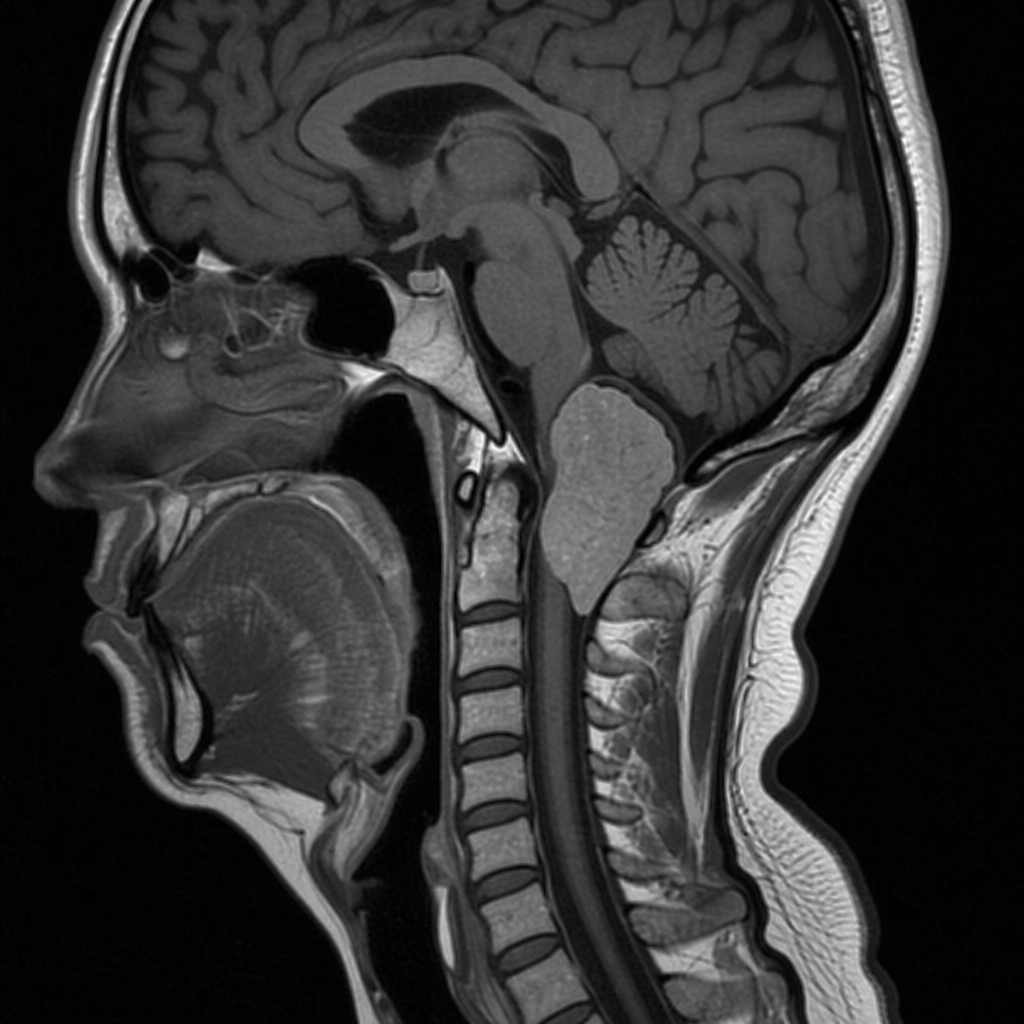
A 52-year-old woman with type 2 diabetes mellitus comes to the physician because of a 2-day history of blisters on her forearms and pain during sexual intercourse. Her only medications are metformin and glyburide. Examination reveals multiple, flaccid blisters on the volar surface of the forearms and ulcers on the buccal, gingival, and vulvar mucosa. The epidermis on the forearm separates when the skin is lightly stroked. Which of the following is the most likely diagnosis?
Q52
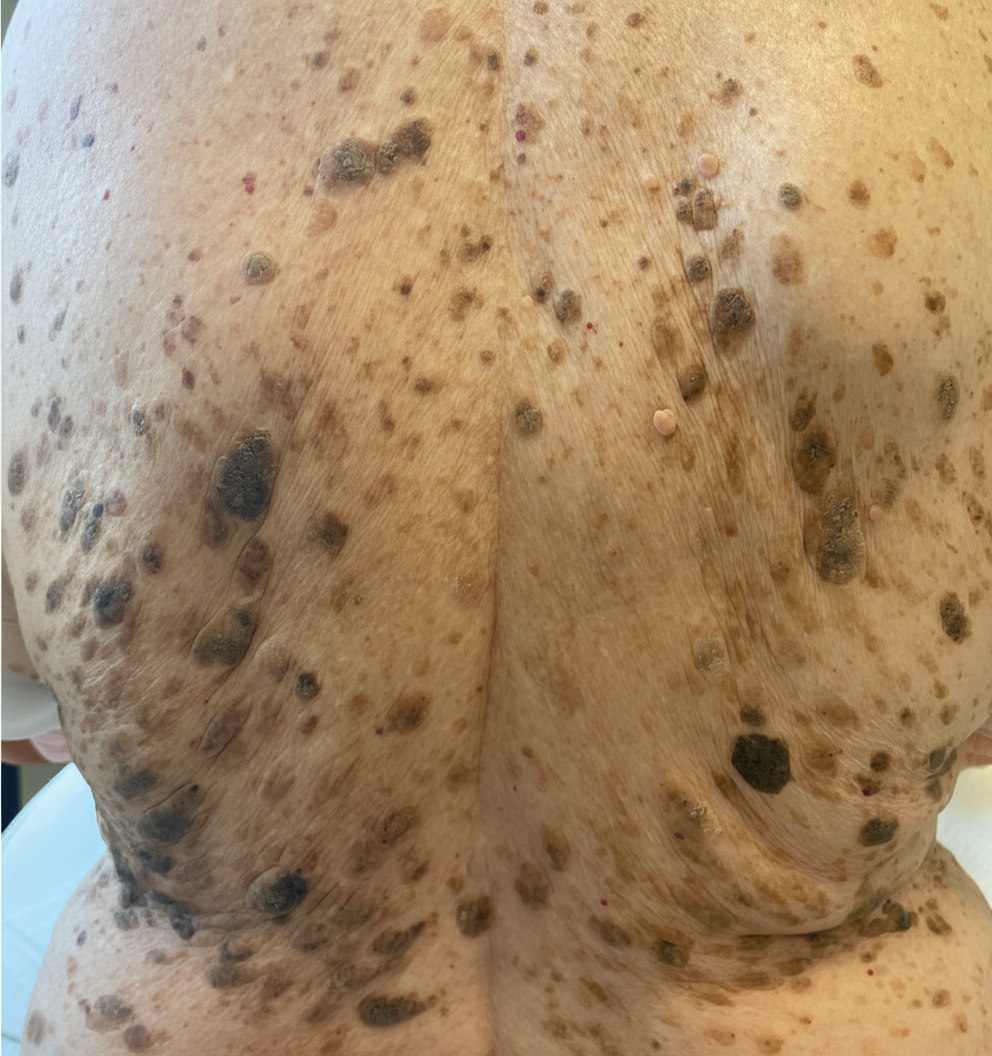
A 65-year-old woman presents to a dermatology clinic complaining about a couple of well-demarcated, dark, round skin lesions on her face. She claims she has had these lesions for 3 or 4 years. The lesions are painless, not pruritic, and have never bled. However, she is moderately distressed about the potential malignancy of these lesions after she heard that a close friend was just diagnosed with a melanoma. The medical history is unremarkable. Physical examination reveals a few well-demarcated, round, verrucous lesions, with a stuck-on appearance, distributed on the patient's back and face (see image). Under a dermatoscope, the lesions showed multiple comedo-like openings, milia cysts, and a cerebriform pattern. What is the best next step of management?
Q53
A 32-year-old man comes to the emergency department for acute pain in the left eye. He reports having awoken in the morning with a foreign body sensation. He had forgotten to remove his contact lenses before sleeping. Following lens removal, he experienced immediate pain, discomfort, and tearing of the left eye. He reports that the foreign body sensation persists and that rinsing with water has not improved the pain. He has been wearing contact lenses for 4 years and occasionally forgets to remove them at night. He has no history of serious medical illness. On examination, the patient appears distressed with pain and photophobia in the left eye. Administration of a topical anesthetic relieves the pain. Visual acuity is 20/20 in both eyes. Ocular motility and pupillary response are normal. The corneal reflex is normal and symmetric in both eyes. Which of the following is most likely to establish the diagnosis in this patient?
Q54
A 53-year-old male presents to your office for abdominal discomfort. The patient states he first noticed pain on his right flank several months ago, and it has been gradually getting worse. For the past week, he has also noticed blood in his urine. Prior to this episode, he has been healthy and does not take any medications. The patient denies fever, chills, and dysuria. He has a 40 pack-year smoking history. Vital signs are T 37 C, BP 140/90 mmHg, HR 84/min, RR 14/min, O2 98%. Physical exam is unremarkable. CBC reveals a hemoglobin of 17 and hematocrit of 51%, and urinalysis is positive for red blood cells, negative for leukocytes. Which of the following is the most likely diagnosis?
Q55
A 54-year-old man is brought by his family to the emergency department because of severe pain and weakness in his right leg. His symptoms have been gradually worsening over the past 5 weeks, but he did not seek medical care until today. He has a history of lower back pain and has no surgical history. He denies tobacco or alcohol use. His temperature is 37°C (98.6°F), the blood pressure is 140/85 mm Hg, and the pulse is 92/min. On physical examination, pinprick sensation is absent in the perineum and the right lower limb. Muscle strength is 2/5 in the right lower extremity and 4/5 in the left lower extremity. Ankle and knee reflexes are absent on the right side but present on the left. In this patient, magnetic resonance imaging (MRI) of the lumbar spine will most likely show which of the following?
Q56
A 52-year-old man is brought to the emergency department with a 2-hour history of severe, sudden-onset generalized headache. He has since developed nausea and has had one episode of vomiting. The symptoms began while he was at home watching television. Six days ago, he experienced a severe headache that resolved without treatment. He has hypertension and hyperlipidemia. The patient has smoked two packs of cigarettes daily for 30 years. His current medications include lisinopril-hydrochlorothiazide and simvastatin. His temperature is 38.1°C (100.6°F), pulse is 82/min, respirations are 16/min, and blood pressure is 162/98 mm Hg. The pupils are equal, round, and reactive to light. Fundoscopic examination shows no swelling of the optic discs. Cranial nerves II–XII are intact. He has no focal motor or sensory deficits. Finger-to-nose and heel-to-shin testing are normal. A CT scan of the head shows no abnormalities. Which of the following is the most appropriate next step in management?
Q57
A 37-year-old woman presents to the Emergency Department after 8 hours of left sided flank pain that radiates to her groin and pelvic pain while urinating. Her medical history is relevant for multiple episodes of urinary tract infections, some requiring hospitalization, and intravenous antibiotics. In the hospital, her blood pressure is 125/83 mm Hg, pulse of 88/min, a respiratory rate of 28/min, and a body temperature of 36.5°C (97.7°F). On physical examination, she has left costovertebral tenderness and lower abdominal pain. Laboratory studies include a negative pregnancy test, mild azotemia, and a urinary dipstick that is positive for blood. Which of the following initial tests would be most useful in the diagnosis of this case?
Q58
A 25-year-old woman presents with slightly yellow discoloration of her skin and eyes. She says she has had multiple episodes with similar symptoms before. She denies any recent history of nausea, fatigue, fever, or change in bowel/bladder habits. No significant past medical history. The patient is afebrile and vital signs are within normal limits. On physical examination, she is jaundiced, and her sclera is icteric. Laboratory findings are significant only for a mild unconjugated hyperbilirubinemia. The remainder of laboratory results is unremarkable. Which of the following is the most likely diagnosis in this patient?
Q59
A 67-year-old man presents with pain in both legs. He says the pain is intermittent in nature and has been present for approximately 6 months. The pain increases with walking, especially downhill, and prolonged standing. It is relieved by lying down and leaning forward. Past medical history is significant for type 2 diabetes mellitus, hypercholesterolemia, and osteoarthritis. The patient reports a 56-pack-year history but denies any alcohol or recreational drug use. His vital signs include: blood pressure 142/88 mm Hg, pulse 88/min, respiratory rate 14/min, temperature 37°C (98.6°F). On physical examination, the patient is alert and oriented. Muscle strength is 5/5 in his upper and lower extremities bilaterally. Babinski and Romberg tests are negative. Pulses measure 2+ in upper and lower extremities bilaterally. Which of the following is the next best step in the management of this patient?
Q60
A 55-year-old man presents to the emergency department with fatigue and a change in his memory. The patient and his wife state that over the past several weeks the patient has been more confused and irritable and has had trouble focusing. He has had generalized and non-specific pain in his muscles and joints and is constipated. His temperature is 99.3°F (37.4°C), blood pressure is 172/99 mmHg, pulse is 79/min, respirations are 14/min, and oxygen saturation is 99% on room air. Physical exam is unremarkable. Laboratory studies are ordered as seen below.
Hemoglobin: 9.0 g/dL
Hematocrit: 30%
Leukocyte count: 6,500/mm^3 with normal differential
Platelet count: 166,000/mm^3
MCV: 78 fL
Serum:
Na+: 141 mEq/L
Cl-: 103 mEq/L
K+: 4.6 mEq/L
HCO3-: 25 mEq/L
BUN: 20 mg/dL
Glucose: 99 mg/dL
Creatinine: 0.9 mg/dL
Ca2+: 10.2 mg/dL
Which of the following is the most likely diagnosis?
Differential diagnosis US Medical PG Practice Questions and MCQs
Question 51: A 52-year-old woman with type 2 diabetes mellitus comes to the physician because of a 2-day history of blisters on her forearms and pain during sexual intercourse. Her only medications are metformin and glyburide. Examination reveals multiple, flaccid blisters on the volar surface of the forearms and ulcers on the buccal, gingival, and vulvar mucosa. The epidermis on the forearm separates when the skin is lightly stroked. Which of the following is the most likely diagnosis?
A. Behcet disease
B. Pemphigus vulgaris (Correct Answer)
C. Toxic epidermal necrolysis
D. Dermatitis herpetiformis
E. Lichen planus
Explanation: ***Pemphigus vulgaris***
- The presence of **flaccid blisters** on the skin, **oral and vulvar mucosal ulcers**, and a **positive Nikolsky sign** (epidermal separation with light stroking) are classic features of **pemphigus vulgaris**.
- This autoimmune blistering disease is characterized by antibodies against **desmoglein 1 and 3**, leading to acantholysis within the epidermis.
*Behcet disease*
- Behcet disease is characterized by recurrent **oral ulcers**, genital ulcers, and uveitis, but it typically presents with deeper, painful ulcers rather than **flaccid blisters** and does not involve a positive Nikolsky sign.
- Skin lesions in Behcet's disease often include **erythema nodosum** or papulopustular lesions, not thin-walled blisters.
*Toxic epidermal necrolysis*
- **Toxic epidermal necrolysis (TEN)** is a severe, life-threatening drug-induced reaction characterized by widespread **epidermal detachment** (often >30% body surface area) and mucosal involvement, but it typically presents with widespread, confluent erythema followed by sheet-like epidermal peeling, not distinct flaccid blisters.
- The onset is usually acute following drug exposure, and patients are often critically ill with systemic symptoms; while this patient has blisters, the description of "multiple, flaccid blisters" and pain during intercourse points away from the acute, widespread, drug-induced skin necrosis of TEN.
*Dermatitis herpetiformis*
- **Dermatitis herpetiformis** typically presents with intensely **pruritic, erythematous papules and vesicles** symmetrically distributed on extensor surfaces, and it is strongly associated with **celiac disease**.
- It does not usually cause **flaccid blisters** or a positive Nikolsky sign, and oral lesions are uncommon.
*Lichen planus*
- **Lichen planus** is characterized by **pruritic, purple, polygonal, planar papules and plaques** with fine white lines (Wickham striae) and can affect skin, hair, nails, and mucous membranes.
- While oral lesions (lacy white networks) and vulvar involvement can occur, it typically does not present with **flaccid blisters** or a positive Nikolsky sign.
Question 52: A 65-year-old woman presents to a dermatology clinic complaining about a couple of well-demarcated, dark, round skin lesions on her face. She claims she has had these lesions for 3 or 4 years. The lesions are painless, not pruritic, and have never bled. However, she is moderately distressed about the potential malignancy of these lesions after she heard that a close friend was just diagnosed with a melanoma. The medical history is unremarkable. Physical examination reveals a few well-demarcated, round, verrucous lesions, with a stuck-on appearance, distributed on the patient's back and face (see image). Under a dermatoscope, the lesions showed multiple comedo-like openings, milia cysts, and a cerebriform pattern. What is the best next step of management?
A. Shave excision
B. Topical fluorouracil
C. Cryotherapy
D. Excisional biopsy
E. Reassure the patient and provide general recommendations (Correct Answer)
Explanation: ***Reassure the patient and provide general recommendations***
- The description of the lesions (well-demarcated, dark, round, verrucous, stuck-on appearance, comodo-openings, milia cysts, cerebriform pattern) is classic for **seborrheic keratoses**, which are benign.
- Given the benign nature and the patient's distress about potential malignancy, reassurance is the primary and most appropriate step. Removal is only indicated for cosmetic reasons, irritation, or diagnostic uncertainty.
*Shave excision*
- While a shave excision can remove seborrheic keratoses for cosmetic reasons or if symptomatic, it is an invasive procedure and not the **best first step** when the diagnosis is clear and the patient's main concern is malignancy.
- The lesions are clinically and dermatoscopically consistent with benign seborrheic keratoses, making a diagnostic excision unnecessary at this point.
*Topical fluorouracil*
- **Topical fluorouracil** is used to treat actinic keratoses and superficial basal cell carcinomas, not seborrheic keratoses.
- Applying this medication for seborrheic keratoses would be ineffective and potentially cause unnecessary side effects.
*Cryotherapy*
- **Cryotherapy** can be used to remove seborrheic keratoses, but similar to shave excision, it's a treatment for removal rather than an initial management step when the primary need is reassurance regarding a benign condition.
- It would be considered if the patient later desired removal for cosmetic reasons or irritation after being appropriately reassured.
*Excisional biopsy*
- An **excisional biopsy** is typically performed to completely remove a suspicious lesion with adequate margins or to provide a definitive diagnosis, particularly for suspected malignancies like melanoma.
- Given the classic presentation of benign seborrheic keratoses, an excisional biopsy is **overly aggressive** and unnecessary as the initial step.
Question 53: A 32-year-old man comes to the emergency department for acute pain in the left eye. He reports having awoken in the morning with a foreign body sensation. He had forgotten to remove his contact lenses before sleeping. Following lens removal, he experienced immediate pain, discomfort, and tearing of the left eye. He reports that the foreign body sensation persists and that rinsing with water has not improved the pain. He has been wearing contact lenses for 4 years and occasionally forgets to remove them at night. He has no history of serious medical illness. On examination, the patient appears distressed with pain and photophobia in the left eye. Administration of a topical anesthetic relieves the pain. Visual acuity is 20/20 in both eyes. Ocular motility and pupillary response are normal. The corneal reflex is normal and symmetric in both eyes. Which of the following is most likely to establish the diagnosis in this patient?
A. CT scan of the orbit
B. Cultures of ocular discharge
C. Gonioscopy
D. Ocular ultrasonography
E. Fluorescein examination (Correct Answer)
Explanation: ***Fluorescein examination***
- The patient's symptoms (acute pain, foreign body sensation, tearing, photophobia after prolonged contact lens wear) are highly suggestive of a **corneal abrasion** or **ulcer**.
- A **fluorescein examination** is the definitive diagnostic tool for identifying corneal epithelial defects. Fluorescein dye will stain areas where epithelial cells are missing, appearing as bright green under a cobalt blue light.
*CT scan of the orbit*
- A CT scan of the orbit is used to evaluate for **orbital cellulitis**, **fractures**, or **intraorbital foreign bodies**, which are not indicated by the patient's presentation.
- The patient's symptoms are localized to the surface of the eye, and the foreign body sensation is due to direct epithelial damage, not a deeper orbital issue.
*Cultures of ocular discharge*
- While cultures may be necessary if a **corneal ulcer** with infection is suspected, the initial diagnostic step for identifying the defect itself is fluorescein staining.
- Cultures would be performed after visualizing an ulcer and if there are signs of infection, such as purulent discharge or infiltrates.
*Gonioscopy*
- **Gonioscopy** is a specialized examination used to visualize the **anterior chamber angle** of the eye to assess for glaucoma or other angle abnormalities.
- It is not indicated for the diagnosis of corneal surface defects like abrasions or ulcers.
*Ocular ultrasonography*
- **Ocular ultrasonography** is primarily used to visualize structures within the eye that cannot be seen due to opacities (e.g., dense cataracts, vitreous hemorrhage) or to assess for retinal detachments or tumors.
- It is not useful for diagnosing surface corneal issues as presented in this case.
Question 54: A 53-year-old male presents to your office for abdominal discomfort. The patient states he first noticed pain on his right flank several months ago, and it has been gradually getting worse. For the past week, he has also noticed blood in his urine. Prior to this episode, he has been healthy and does not take any medications. The patient denies fever, chills, and dysuria. He has a 40 pack-year smoking history. Vital signs are T 37 C, BP 140/90 mmHg, HR 84/min, RR 14/min, O2 98%. Physical exam is unremarkable. CBC reveals a hemoglobin of 17 and hematocrit of 51%, and urinalysis is positive for red blood cells, negative for leukocytes. Which of the following is the most likely diagnosis?
A. Pyelonephritis
B. Renal oncocytoma
C. Renal cell carcinoma (Correct Answer)
D. Abdominal aortic aneurysm
E. Polycystic kidney disease
Explanation: ***Renal cell carcinoma***
- The classic triad of **flank pain**, **hematuria**, and a palpable abdominal mass (which may not always be present or detected on physical exam)
- **Erythrocytosis** (high hemoglobin and hematocrit) due to increased **erythropoietin** production by the tumor, and a significant **smoking history** are strong indicators.
*Pyelonephritis*
- This is an infection of the kidney, typically presenting with **fever**, **chills**, **dysuria**, and flank pain.
- The patient denies fever and chills, and the urinalysis is negative for leukocytes, making pyelonephritis unlikely.
*Renal oncocytoma*
- While it is a **renal tumor** that can cause flank pain or hematuria, it is typically **benign** and does not usually cause paraneoplastic syndromes like erythrocytosis.
- In the presence of erythrocytosis and a strong smoking history, a malignant cause like RCC is more probable.
*Abdominal aortic aneurysm*
- An AAA can cause abdominal or flank pain, but it would not typically cause **hematuria** or **erythrocytosis**.
- Rupture or dissection of an AAA presents as severe, acute pain and hemodynamic instability, which is not described.
*Polycystic kidney disease*
- This genetic disorder is characterized by multiple cysts in the kidneys, leading to pain, hematuria, and **renal failure over time**.
- While it can cause hematuria, it is less likely to present with new-onset erythrocytosis and in a patient with no previous medical history.
Question 55: A 54-year-old man is brought by his family to the emergency department because of severe pain and weakness in his right leg. His symptoms have been gradually worsening over the past 5 weeks, but he did not seek medical care until today. He has a history of lower back pain and has no surgical history. He denies tobacco or alcohol use. His temperature is 37°C (98.6°F), the blood pressure is 140/85 mm Hg, and the pulse is 92/min. On physical examination, pinprick sensation is absent in the perineum and the right lower limb. Muscle strength is 2/5 in the right lower extremity and 4/5 in the left lower extremity. Ankle and knee reflexes are absent on the right side but present on the left. In this patient, magnetic resonance imaging (MRI) of the lumbar spine will most likely show which of the following?
A. Decreased spinal canal diameter
B. Focal demyelination of the spinal cord
C. Compression of the cauda equina (Correct Answer)
D. Compression of the conus medullaris
E. Sacroiliitis and enthesitis
Explanation: ***Compression of the cauda equina***
- The patient's symptoms of **bilateral leg weakness (worse on the right)**, **perineal sensory loss**, and **absent reflexes (right side)** are hallmark signs of **cauda equina syndrome**.
- **MRI** is the gold standard for diagnosing cauda equina compression, which involves nerve roots below the L2 level.
*Decreased spinal canal diameter*
- While a decreased spinal canal diameter is seen in **spinal stenosis**, it typically causes neurogenic claudication (leg pain with walking, relieved by leaning forward) and less often acute, severe neurological deficits like those described.
- The rapid onset of severe weakness and perineal numbness points away from typical chronic spinal stenosis.
*Focal demyelination of the spinal cord*
- **Focal demyelination** (as seen in multiple sclerosis) or transverse myelitis usually causes **upper motor neuron signs** (spasticity, hyperreflexia) below the level of the lesion, which contradicts the noted areflexia in this patient.
- Cauda equina syndrome is a **lower motor neuron lesion**.
*Compression of the conus medullaris*
- **Conus medullaris compression** affects the terminal part of the spinal cord (T12-L2) and typically presents with **symmetrical symptoms**, more prominent bowel/bladder dysfunction, and often some **upper motor neuron signs** or **mixed upper and lower motor neuron signs**.
- The patient's asymmetrical weakness and severe unilateral reflex loss are more indicative of cauda equina involvement.
*Sacroiliitis and enthesitis*
- **Sacroiliitis** (inflammation of the sacroiliac joints) and **enthesitis** (inflammation of tendon/ligament insertion sites) are characteristic of **spondyloarthropathies** like ankylosing spondylitis.
- While these can cause back pain, they do not directly explain the severe neurological deficits, perineal sensory loss, and absent reflexes observed.
Question 56: A 52-year-old man is brought to the emergency department with a 2-hour history of severe, sudden-onset generalized headache. He has since developed nausea and has had one episode of vomiting. The symptoms began while he was at home watching television. Six days ago, he experienced a severe headache that resolved without treatment. He has hypertension and hyperlipidemia. The patient has smoked two packs of cigarettes daily for 30 years. His current medications include lisinopril-hydrochlorothiazide and simvastatin. His temperature is 38.1°C (100.6°F), pulse is 82/min, respirations are 16/min, and blood pressure is 162/98 mm Hg. The pupils are equal, round, and reactive to light. Fundoscopic examination shows no swelling of the optic discs. Cranial nerves II–XII are intact. He has no focal motor or sensory deficits. Finger-to-nose and heel-to-shin testing are normal. A CT scan of the head shows no abnormalities. Which of the following is the most appropriate next step in management?
A. Obtain an MRI scan of the head
B. Repeat CT scan in 24 hours
C. Administer 100% oxygen and intranasal sumatriptan
D. Place ventriculoperitoneal shunt
E. Obtain a lumbar puncture (Correct Answer)
Explanation: ***Obtain a lumbar puncture***
- The sudden onset of a "thunderclap" headache, especially if severe and generalized, is highly suspicious for **subarachnoid hemorrhage (SAH)**, even with a normal CT scan. An earlier, resolving headache ( sentinel headache) further supports this.
- A **lumbar puncture (LP)** is the gold standard for diagnosing SAH when a CT scan is negative, as it can detect **xanthochromia** (yellowish discoloration of CSF due to bilirubin degradation of red blood cells), indicating prior bleeding.
*Obtain an MRI scan of the head*
- While an MRI can detect SAH, especially in later stages, it is **less sensitive than LP** for acute SAH, particularly within the first few hours or if the bleed is small.
- MRI is generally reserved for situations where a CT scan is normal and LP is equivocal or contraindicated, or to investigate other potential causes of headache like lesions or thrombosis.
*Repeat CT scan in 24 hours*
- Repeating the CT scan in 24 hours is **not the most appropriate immediate action** as it will delay definitive diagnosis of SAH, which is a medical emergency requiring prompt management.
- While a repeat CT might show subtle changes, an LP is a more sensitive and direct method to confirm or rule out SAH in this clinical scenario.
*Administer 100% oxygen and intranasal sumatriptan*
- This treatment is appropriate for **cluster headaches** or **migraine**, which typically have a different presentation (e.g., specific aura, unilateral pain, autonomic symptoms for cluster headache).
- Given the high suspicion for SAH, administering these medications would delay proper diagnosis and management, which could be life-threatening.
*Place ventriculoperitoneal shunt*
- A ventriculoperitoneal shunt is used to treat **hydrocephalus**, a condition characterized by excessive CSF accumulation in the brain.
- There are no clinical signs or symptoms (e.g., papilledema, altered mental status with focal neurological deficits) in this patient to suggest hydrocephalus requiring immediate shunting.
Question 57: A 37-year-old woman presents to the Emergency Department after 8 hours of left sided flank pain that radiates to her groin and pelvic pain while urinating. Her medical history is relevant for multiple episodes of urinary tract infections, some requiring hospitalization, and intravenous antibiotics. In the hospital, her blood pressure is 125/83 mm Hg, pulse of 88/min, a respiratory rate of 28/min, and a body temperature of 36.5°C (97.7°F). On physical examination, she has left costovertebral tenderness and lower abdominal pain. Laboratory studies include a negative pregnancy test, mild azotemia, and a urinary dipstick that is positive for blood. Which of the following initial tests would be most useful in the diagnosis of this case?
A. Urine osmolality
B. Fractional excretion of sodium (FeNa+)
C. Renal ultrasonography (Correct Answer)
D. Contrast abdominal computed tomography
E. Blood urea nitrogen (BUN): serum creatinine (SCr) ratio
Explanation: ***Renal ultrasonography***
- This is the most appropriate initial imaging test to evaluate for **kidney stones** (given the flank pain radiating to groin and hematuria) and **hydronephrosis** (which can indicate obstruction) and assess for signs of **pyelonephritis** (given the history of recurrent UTIs and CVA tenderness).
- It is **non-invasive**, readily available, and avoids radiation exposure, making it suitable as a first-line diagnostic tool in this setting.
*Urine osmolality*
- This test primarily assesses the kidney's ability to **concentrate urine**, which is more relevant for evaluating fluid balance, diabetes insipidus, or other renal tubular disorders.
- It would not directly diagnose the cause of acute flank pain or urinary tract obstruction.
*Fractional excretion of sodium (FeNa+)*
- FeNa+ is used to differentiate between **prerenal azotemia** and **acute tubular necrosis**, indicating the kidney's response to hypoperfusion.
- While the patient has mild azotemia, FeNa+ would not identify the underlying cause of the flank pain, hematuria, or potential obstruction.
*Contrast abdominal computed tomography*
- While highly sensitive for diagnosing kidney stones and other renal pathologies, **contrast CT** exposes the patient to **ionizing radiation** and risks associated with contrast agents (e.g., contrast-induced nephropathy), especially with pre-existing azotemia.
- It is often reserved for cases where ultrasound is inconclusive or more detailed anatomical information is needed.
*Blood urea nitrogen (BUN): serum creatinine (SCr) ratio*
- This ratio is primarily used to differentiate between **prerenal** causes of acute kidney injury (high ratio, e.g., >20:1) and **intrinsic renal** causes (lower ratio, e.g., <15:1).
- While it can provide insight into the etiology of azotemia, it does not directly identify the cause of the patient's acute flank pain or potential urinary tract obstruction.
Question 58: A 25-year-old woman presents with slightly yellow discoloration of her skin and eyes. She says she has had multiple episodes with similar symptoms before. She denies any recent history of nausea, fatigue, fever, or change in bowel/bladder habits. No significant past medical history. The patient is afebrile and vital signs are within normal limits. On physical examination, she is jaundiced, and her sclera is icteric. Laboratory findings are significant only for a mild unconjugated hyperbilirubinemia. The remainder of laboratory results is unremarkable. Which of the following is the most likely diagnosis in this patient?
A. Crigler-Najjar syndrome type II
B. Crigler-Najjar syndrome type I
C. Gilbert syndrome (Correct Answer)
D. Hemolytic anemia
E. Physiological jaundice
Explanation: ***Gilbert syndrome***
- This syndrome is characterized by **mild, intermittent unconjugated hyperbilirubinemia**, often triggered by stress, fasting, or illness, and typically **without other symptoms** or signs of liver disease.
- The patient's presentation with recurrent jaundice, absence of other symptoms, and normal liver function tests except for unconjugated hyperbilirubinemia are classic for **Gilbert syndrome**.
*Crigler-Najjar syndrome type II*
- While also involving unconjugated hyperbilirubinemia, **Crigler-Najjar type II** typically presents with more severe and persistent jaundice with higher bilirubin levels than seen in Gilbert syndrome.
- This condition is rare and often requires intervention with **phenobarbital** to induce UGT1A1 activity, which is not indicated by the mild presentation here.
*Crigler-Najjar syndrome type I*
- This is a very severe and rare condition characterized by a **complete absence or near-complete absence of UGT1A1 activity**, leading to extremely high levels of unconjugated bilirubin from birth.
- Patients typically develop **kernicterus** and often die in infancy or early childhood without aggressive treatment, which is inconsistent with the patient's age and mild symptoms.
*Hemolytic anemia*
- **Hemolytic anemia** causes unconjugated hyperbilirubinemia due to the breakdown of red blood cells, but it would also present with other signs such as **anemia**, **reticulocytosis**, and potentially splenomegaly, which are not mentioned.
- The patient's laboratory results are otherwise unremarkable, ruling out red blood cell destruction as the primary cause.
*Physiological jaundice*
- **Physiological jaundice** is a common and transient condition in **newborns** due to immature liver function and increased red blood cell turnover.
- It resolves within the first few weeks of life and is not applicable to a 25-year-old woman with recurrent episodes.
Question 59: A 67-year-old man presents with pain in both legs. He says the pain is intermittent in nature and has been present for approximately 6 months. The pain increases with walking, especially downhill, and prolonged standing. It is relieved by lying down and leaning forward. Past medical history is significant for type 2 diabetes mellitus, hypercholesterolemia, and osteoarthritis. The patient reports a 56-pack-year history but denies any alcohol or recreational drug use. His vital signs include: blood pressure 142/88 mm Hg, pulse 88/min, respiratory rate 14/min, temperature 37°C (98.6°F). On physical examination, the patient is alert and oriented. Muscle strength is 5/5 in his upper and lower extremities bilaterally. Babinski and Romberg tests are negative. Pulses measure 2+ in upper and lower extremities bilaterally. Which of the following is the next best step in the management of this patient?
A. MRI of the spine (Correct Answer)
B. CT angiography of the lower extremities
C. Ankle-brachial index
D. Cilostazol
E. Epidural corticosteroid injection
Explanation: ***MRI of the spine***
- The patient's symptoms of **intermittent leg pain worsened by walking (especially downhill) and prolonged standing**, and **relieved by lying down and leaning forward**, are highly classic for **neurogenic claudication** due to **lumbar spinal stenosis**.
- An **MRI of the spine** is the *gold standard* for diagnosing spinal stenosis, clearly visualizing nerve root compression and the degree of canal narrowing.
*CT angiography of the lower extremities*
- This imaging is used to assess **peripheral artery disease** (PAD) but the patient's symptoms are inconsistent with vascular claudication.
- **Vascular claudication** typically improves with rest, not with specific postures like leaning forward.
*Ankle-brachial index*
- The **ankle-brachial index (ABI)** is a non-invasive test to screen for **peripheral artery disease (PAD)**.
- While the patient has risk factors for PAD (diabetes, hypercholesterolemia, smoking), his symptoms are classic for neurogenic claudication, and his **2+ pulses** in the lower extremities make PAD less likely.
*Cilostazol*
- **Cilostazol** is a phosphodiesterase inhibitor used to treat symptoms of **intermittent claudication** caused by **peripheral artery disease (PAD)**.
- Since the patient's symptoms are more consistent with neurogenic claudication rather than vascular claudication, cilostazol would not be the appropriate initial step.
*Epidural corticosteroid injection*
- An **epidural corticosteroid injection** is a treatment option for symptomatic spinal stenosis but is not the *initial diagnostic step*.
- Diagnosis with an **MRI** is necessary before considering targeted therapeutic interventions like injections.
Question 60: A 55-year-old man presents to the emergency department with fatigue and a change in his memory. The patient and his wife state that over the past several weeks the patient has been more confused and irritable and has had trouble focusing. He has had generalized and non-specific pain in his muscles and joints and is constipated. His temperature is 99.3°F (37.4°C), blood pressure is 172/99 mmHg, pulse is 79/min, respirations are 14/min, and oxygen saturation is 99% on room air. Physical exam is unremarkable. Laboratory studies are ordered as seen below.
Hemoglobin: 9.0 g/dL
Hematocrit: 30%
Leukocyte count: 6,500/mm^3 with normal differential
Platelet count: 166,000/mm^3
MCV: 78 fL
Serum:
Na+: 141 mEq/L
Cl-: 103 mEq/L
K+: 4.6 mEq/L
HCO3-: 25 mEq/L
BUN: 20 mg/dL
Glucose: 99 mg/dL
Creatinine: 0.9 mg/dL
Ca2+: 10.2 mg/dL
Which of the following is the most likely diagnosis?
A. Iron deficiency
B. Heavy metal exposure (Correct Answer)
C. Systemic lupus erythematosus
D. Guillain-Barre syndrome
E. Vitamin B12 deficiency
Explanation: ***Heavy metal exposure***
- The patient presents with **microcytic anemia** (Hemoglobin 9.0 g/dL, MCV 78 fL), **neuropsychiatric symptoms** (confusion, memory changes, irritability), **constipation**, **hypertension**, and **muscle/joint pain** - a constellation highly suggestive of **lead poisoning**.
- **Lead poisoning** classically causes **microcytic anemia** (due to inhibition of heme synthesis), **neurological symptoms** (encephalopathy, cognitive dysfunction), **GI symptoms** (constipation, abdominal pain/"lead colic"), and **hypertension**.
- The combination of **microcytic anemia with multisystem involvement** (CNS, GI, cardiovascular, musculoskeletal) points to **heavy metal toxicity** rather than simple iron deficiency.
- Confirmatory testing would include **blood lead levels** and **peripheral blood smear** (showing basophilic stippling).
*Iron deficiency*
- While **iron deficiency** causes **microcytic anemia**, it does NOT adequately explain the **neuropsychiatric symptoms** (confusion, irritability, memory changes), **hypertension**, or the **severe constipation**.
- Iron deficiency typically presents with **fatigue and weakness** but not the prominent **CNS dysfunction** seen in this patient.
- The **multisystem involvement** suggests a toxic or systemic process rather than simple nutritional deficiency.
*Systemic lupus erythematosus*
- While **SLE** can cause fatigue and joint pain, it typically presents with **malar rash, photosensitivity, serositis, and specific autoantibodies**.
- **SLE-associated anemia** is typically **normocytic** (anemia of chronic disease) or **hemolytic**, not microcytic.
- The lack of typical **autoimmune features** makes this diagnosis less likely.
*Guillain-Barre syndrome*
- **GBS** presents with **acute ascending paralysis** and **areflexia** following an infection.
- The patient's symptoms are **central** (confusion, memory issues), while **GBS affects the peripheral nervous system**.
- **GBS does not cause anemia** or the constellation of symptoms described.
*Vitamin B12 deficiency*
- **Vitamin B12 deficiency** causes **macrocytic anemia** (elevated MCV), not microcytic.
- The blood work shows **low MCV (78 fL)**, which rules out B12 deficiency.
- Neurological symptoms of B12 deficiency include **subacute combined degeneration** (posterior column dysfunction), **paresthesias**, and **gait disturbances**, distinct from the presentation here.