A 48-year-old man with a history of nephrolithiasis presents with acute-onset left flank pain. He says that the pain started suddenly 4 hours ago and has progressively worsened. He describes the pain as severe, sharp, and localized to the left flank. The patient denies any fever, chills, nausea, vomiting, or dysuria. His past medical history is significant for nephrolithiasis diagnosed 4 years ago status post shockwave lithotripsy. The patient says, "I’m allergic to many pain medications, but there is one that I get all the time when I have this pain. I think it starts with D". He is afebrile and his vital signs are stable. On physical examination, he is writhing in pain and moaning. Exquisite left costovertebral angle tenderness is noted. Laboratory findings, including a urinalysis, are unremarkable. IV fluid resuscitation is administered.
Which of the following is the best next step in the management of this patient?
Q12
A 47-year-old male with a medical history significant for hypertension, recurrent urinary tract infections, mitral valve prolapse, and diverticulosis experiences a sudden, severe headache while watching television on his couch. He calls 911 and reports to paramedics that he feels as if "someone shot me in the back of my head." He is rushed to the emergency room. On exam, he shows no focal neurological deficits but has significant nuchal rigidity and photophobia. Of the options below, what is the most likely etiology of this man's headache?
Q13
A 23-year-old man presents to the emergency department with a severe headache. The patient states he gets sudden, severe pain over his face whenever anything touches it, including shaving or putting lotion on his skin. He describes the pain as electric and states it is only exacerbated by touch. He is currently pain free. His temperature is 98.1°F (36.7°C), blood pressure is 127/81 mmHg, pulse is 87/min, respirations are 15/min, and oxygen saturation is 98% on room air. Neurological exam is within normal limits, except severe pain is elicited with light palpation of the patient’s face. The patient is requesting morphine for his pain. Which of the following is the most likely diagnosis?
Q14
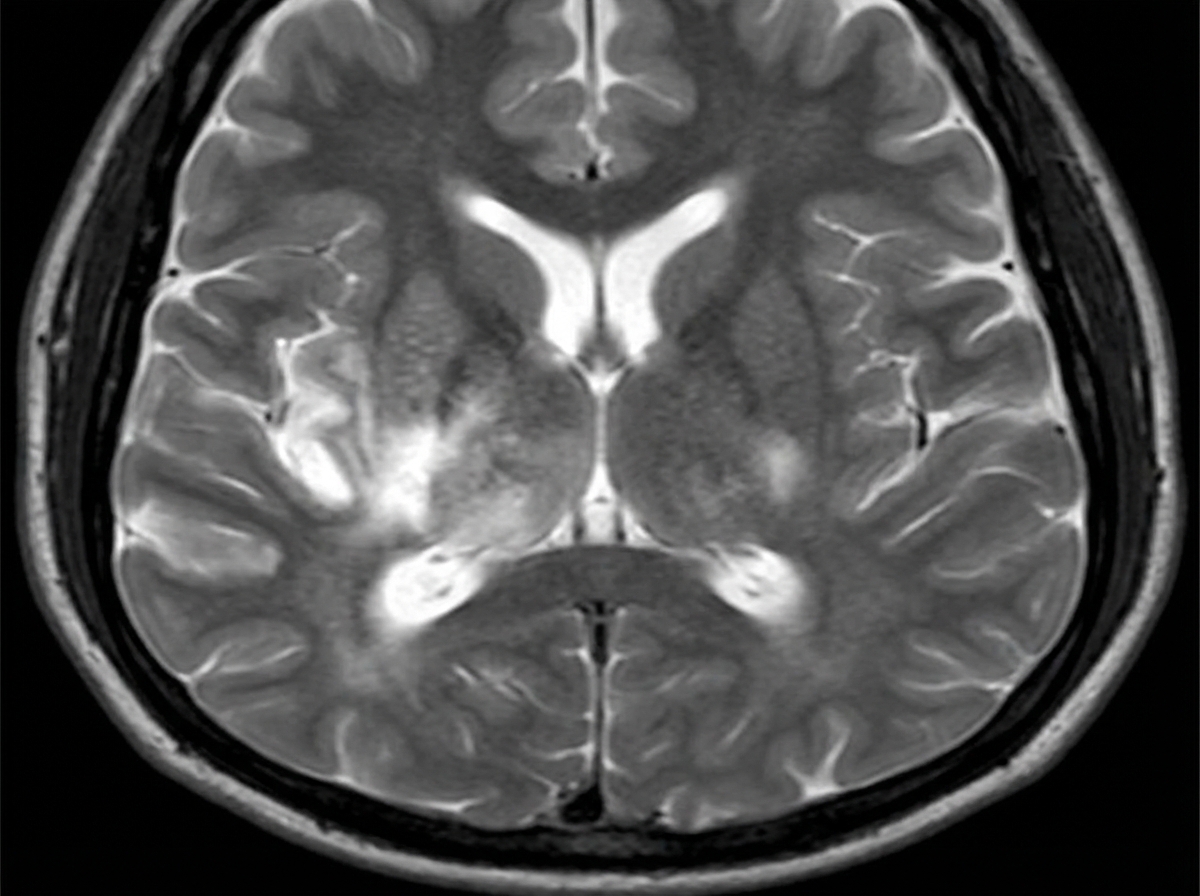
A 24-year-old man is brought to the emergency department after he is found sluggish, drowsy, feverish, and complaining about a headache. His past medical history is unremarkable. His vital signs include: blood pressure 120/60 mm Hg, heart rate 70/min, respiratory rate 17/min, and body temperature 39.0°C (102.2°F). On physical examination, the patient is dysphasic and incapable of following commands. Gait ataxia is present. No meningeal signs or photophobia are present. A noncontrast CT of the head is unremarkable. A T2 MRI is performed and is shown in the image. A lumbar puncture (LP) is subsequently performed. Which of the following CSF findings would you most likely expect to find in this patient?
Q15
A 59-year-old woman comes to the emergency department 25 minutes after the onset of severe left periorbital pain and blurred vision in the same eye. The pain began soon after she entered a theater to watch a movie. She has a headache and vomited twice on the way to the hospital. Two weeks ago, she had acute sinusitis that resolved spontaneously. She has atrial fibrillation and hypertension. Current medications include metoprolol and warfarin. Her temperature is 37.1°C (98.8°F), pulse is 101/min, and blood pressure is 140/80 mm Hg. Visual acuity is counting fingers at 3 feet in the left eye and 20/20 in the right eye. The left eye shows conjunctival injection and edematous cornea. The left pupil is mid-dilated and irregular; it is not reactive to light. Extraocular movements are normal. Fundoscopic examination is inconclusive because of severe corneal edema. Which of the following is the most likely diagnosis?
Q16
A 12-year-old boy is brought to the office by his mother with complaints of clear nasal discharge and cough for the past 2 weeks. The mother says that her son has pain during swallowing. Also, the boy often complains of headaches with a mild fever. Although his mother gave him some over-the-counter medication, there was only a slight improvement. Five days ago, his nasal discharge became purulent with an increase in the frequency of his cough. He has no relevant medical history. His vitals include: heart rate 95 bpm, respiratory rate 17/min, and temperature 37.9°C (100.2°F). On physical exploration, he has a hyperemic pharynx with purulent discharge on the posterior wall, halitosis, and nostrils with copious amounts of pus. Which of the following is the most likely cause?
Q17
A 31-year-old obese Caucasian female presents to the Emergency Department late in the evening for left lower quadrant pain that has progressively worsened over the last several hours. She describes the pain as sharp and shooting, coming and going. Her last bowel movement was this morning. She has also had dysuria and urgency. Her surgical history is notable for gastric bypass surgery 2 years prior and an appendectomy at age 9. She is sexually active with her boyfriend and uses condoms. Her temperature is 99.5 deg F (37.5 deg C), blood pressure is 151/83 mmHg, pulse is 86/min, respirations are 14/minute, BMI 32. On physical exam, she has left lower quadrant tenderness to palpation with pain radiating to the left groin and left flank tenderness on palpation. Her urinalysis shows 324 red blood cells/high power field. Her pregnancy test is negative. What is the next best step in management?
Q18
A 16-year-old girl is brought to the physician because of yellowish discoloration of her eyes and generalized fatigue since she returned from a 2-week class trip to Guatemala 2 days ago. During her time there, she had watery diarrhea, nausea, and lack of appetite for 3 days that resolved without treatment. She also took primaquine for malaria prophylaxis. Three weeks ago, she had a urinary tract infection that was treated with nitrofurantoin. Her immunizations are up-to-date. Her temperature is 37.1°C (98.8°F), pulse is 82/min and blood pressure is 110/74 mm Hg. Examination shows scleral icterus. There is no lymphadenopathy. The remainder of the examination shows no abnormalities. Laboratory studies show:
Hemoglobin 12.1 g/dL
Leukocyte count 6400/mm3
Platelet count 234,000/mm3
Reticulocyte count 1.1%
Prothrombin time 12 sec (INR=1)
Serum
Bilirubin
Total 2.8 mg/dL
Direct 0.2 mg/dL
Alkaline phosphatase 43 U/L
AST 16 U/L
ALT 17 U/L
γ-Glutamyltransferase 38 U/L (N = 5–50)
Anti-HAV IgG positive
Anti-HBs positive
A peripheral blood smear shows no abnormalities. Which of the following is the most likely diagnosis?
Q19
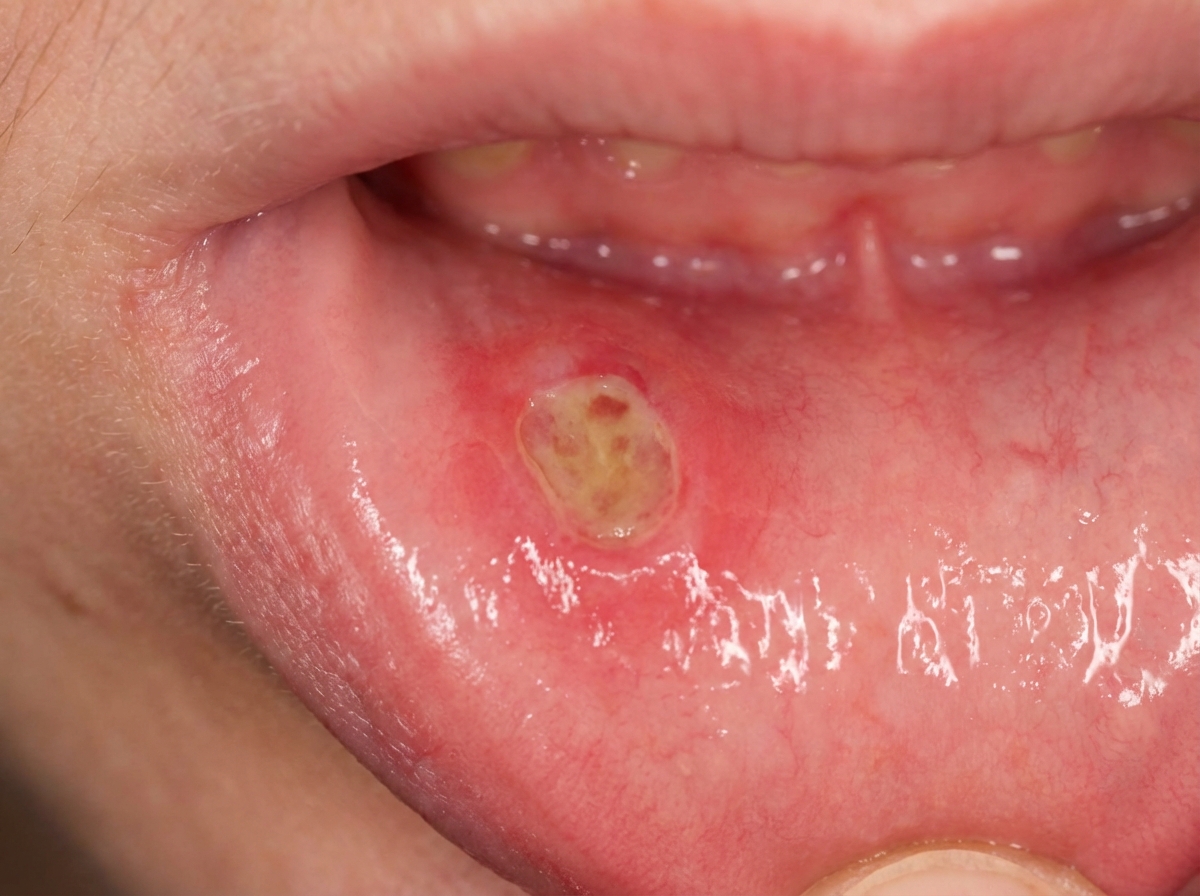
A 16-year-old boy is brought to the physician by his mother because of a 4-day history of painful lesions in his mouth. During the past year, he has twice had similar lesions that resolved without treatment after approximately 10 days. He has never had any genital or anal lesions. His mother reports that he has been very stressed over the past month because he is approaching his senior year at high school. He is otherwise healthy and takes no medications. He appears thin. His temperature is 37.6°C (99.7°F). A photograph of his oral cavity is shown. The remainder of the examination shows no abnormalities. Which of the following is the most likely diagnosis?
Q20
A 52-year-old woman presents to the urgent care center with several hours of worsening abdominal discomfort that radiates to the back. The patient also complains of malaise, chills, nausea, and vomiting. Social history is notable for alcoholism. On physical exam, she is febrile to 39.5°C (103.1℉), and she is diffusely tender on abdominal palpation. Other vital signs include a blood pressure of 126/74 mm Hg, heart rate of 74/min, and respiratory rate of 14/min. Complete blood count is notable for 13,500 white blood cells (WBCs), and her complete metabolic panel shows bilirubin of 2.1 and amylase of 3210. Given the following options, what is the most likely diagnosis?
Differential diagnosis US Medical PG Practice Questions and MCQs
Question 11: A 48-year-old man with a history of nephrolithiasis presents with acute-onset left flank pain. He says that the pain started suddenly 4 hours ago and has progressively worsened. He describes the pain as severe, sharp, and localized to the left flank. The patient denies any fever, chills, nausea, vomiting, or dysuria. His past medical history is significant for nephrolithiasis diagnosed 4 years ago status post shockwave lithotripsy. The patient says, "I’m allergic to many pain medications, but there is one that I get all the time when I have this pain. I think it starts with D". He is afebrile and his vital signs are stable. On physical examination, he is writhing in pain and moaning. Exquisite left costovertebral angle tenderness is noted. Laboratory findings, including a urinalysis, are unremarkable. IV fluid resuscitation is administered.
Which of the following is the best next step in the management of this patient?
A. Non-contrast CT of the abdomen and pelvis
B. Administer ibuprofen and acetaminophen for pain control (Correct Answer)
C. Administer dilaudid (hydromorphone) for pain control
D. Discharge patient with prescription of dilaudid with follow-up in 3 months
E. Admit to hospital floor for IV dilaudid patient-controlled analgesia
Explanation: ***Administer ibuprofen and acetaminophen for pain control***
- In acute renal colic with severe pain, **immediate pain management is the priority** before diagnostic imaging, especially in a hemodynamically stable patient without signs of infection or complications.
- **NSAIDs (ibuprofen) are first-line therapy** per American Urological Association (AUA) and European Association of Urology (EAU) guidelines for acute renal colic, as they reduce pain and decrease ureteral spasm.
- Acetaminophen provides additional analgesia through a different mechanism and is safe to combine with NSAIDs.
- The patient's mention of "allergies to many pain medications" does not contraindicate a trial of NSAIDs and acetaminophen, which are generally well-tolerated. The reference to "D" medication is a distractor suggesting opioid-seeking behavior.
- **Non-contrast CT will still be performed**, but after addressing the acute pain crisis - this is patient-centered, evidence-based care.
*Non-contrast CT of the abdomen and pelvis*
- While this is the **gold standard for diagnosing nephrolithiasis** and will be needed to confirm stone size, location, and complications, it is **not the immediate next step** in a patient writhing in severe pain.
- The clinical presentation (acute flank pain, CVA tenderness, history of stones, normal UA, stable vitals) is classic for uncomplicated renal colic.
- Modern clinical practice prioritizes **pain control first, then imaging** - delaying analgesia to obtain a CT first is not appropriate emergency management.
- CT should be performed after initiating pain management to guide definitive treatment decisions.
*Administer dilaudid (hydromorphone) for pain control*
- While opioids like dilaudid can be used for renal colic, **NSAIDs are preferred first-line therapy** as they are equally or more effective for renal colic pain and have fewer side effects.
- The patient's hint about "D" medication may suggest drug-seeking behavior, making it more appropriate to start with non-opioid analgesics.
- Opioids should be reserved for cases where NSAIDs are contraindicated or ineffective after trial.
*Discharge patient with prescription of dilaudid with follow-up in 3 months*
- Discharging a patient with **severe, acute, undiagnosed pain** without imaging or confirmed diagnosis is unsafe and inappropriate.
- The patient requires diagnostic imaging (CT) after pain control to assess stone burden, size, location, and likelihood of spontaneous passage.
- Follow-up in 3 months is far too delayed - patients with acute renal colic need reassessment within days to weeks depending on stone characteristics.
*Admit to hospital floor for IV dilaudid patient-controlled analgesia*
- Admission is premature before attempting outpatient pain management and obtaining diagnostic imaging.
- Most patients with uncomplicated renal colic can be managed in the emergency department with oral analgesics and discharged with close follow-up.
- Admission criteria include: intractable pain/vomiting, suspected infection, acute kidney injury, solitary kidney, or stones unlikely to pass spontaneously.
- Starting with PCA opioids bypasses appropriate first-line NSAID therapy.
Question 12: A 47-year-old male with a medical history significant for hypertension, recurrent urinary tract infections, mitral valve prolapse, and diverticulosis experiences a sudden, severe headache while watching television on his couch. He calls 911 and reports to paramedics that he feels as if "someone shot me in the back of my head." He is rushed to the emergency room. On exam, he shows no focal neurological deficits but has significant nuchal rigidity and photophobia. Of the options below, what is the most likely etiology of this man's headache?
A. Temporal Arteritis
B. Brain Tumor
C. Carotid Dissection
D. Migraine
E. Subarachnoid Hemorrhage (Correct Answer)
Explanation: ***Subarachnoid Hemorrhage***
- The sudden onset of a "thunderclap" headache, often described as the "worst headache of my life" or feeling like "someone shot me in the back of my head", is a classic presentation of **subarachnoid hemorrhage (SAH)**.
- **Nuchal rigidity** (neck stiffness) and **photophobia** are common signs of meningeal irritation due to blood in the subarachnoid space.
*Temporal Arteritis*
- Typically presents in older individuals (usually >50 years old) with headache, **scalp tenderness**, jaw claudication, and visual disturbances, often associated with elevated inflammatory markers.
- The sudden, extremely severe nature and the patient's age (47) make this less likely.
*Brain Tumor*
- Headache associated with a brain tumor usually has a more **gradual onset** and progressive worsening, often accompanied by **focal neurological deficits** or seizures.
- The acute, severe "thunderclap" nature described here is not typical for a brain tumor headache.
*Carotid Dissection*
- Carotid dissection can cause a sudden headache, often unilateral, and may be associated with **neck pain**, neurological deficits (e.g., Horner's syndrome, transient ischemic attacks, stroke symptoms), or cranial nerve palsies.
- While it can present with acute headache, the description of "worst headache of my life" and prominent nuchal rigidity without focal deficits points more strongly to SAH.
*Migraine*
- Migraines typically have a **prodrome** or a more gradual onset, often accompanied by aura, photophobia, phonophobia, and nausea; they are usually recurrent.
- While migraines can be severe, the description of a sudden, explosive headache with associated nuchal rigidity is more characteristic of a serious underlying vascular event like SAH.
Question 13: A 23-year-old man presents to the emergency department with a severe headache. The patient states he gets sudden, severe pain over his face whenever anything touches it, including shaving or putting lotion on his skin. He describes the pain as electric and states it is only exacerbated by touch. He is currently pain free. His temperature is 98.1°F (36.7°C), blood pressure is 127/81 mmHg, pulse is 87/min, respirations are 15/min, and oxygen saturation is 98% on room air. Neurological exam is within normal limits, except severe pain is elicited with light palpation of the patient’s face. The patient is requesting morphine for his pain. Which of the following is the most likely diagnosis?
A. Tension headache
B. Migraine headache
C. Cluster headache
D. Trigeminal neuralgia (Correct Answer)
E. Malingering
Explanation: ***Trigeminal neuralgia***
- This patient's symptoms of **sudden, severe, electric-shock-like pain** in the face, triggered by light touch (e.g., shaving, lotion), are classic for **trigeminal neuralgia**.
- The pain is typically unilateral, short-lasting, and occurs in the distribution of one or more branches of the **trigeminal nerve**.
*Tension headache*
- Tension headaches typically present as a **constant, dull aching** or pressure sensation, often described as a band around the head.
- They are usually not associated with electric shock-like pain or specific triggers like light touch to the face.
*Migraine headache*
- Migraines are characterized by **throbbing, unilateral pain** often accompanied by **nausea, photophobia, and phonophobia**.
- While severe, they do not typically present with the lancinating, trigger-point-induced pain pattern seen in this patient.
*Cluster headache*
- Cluster headaches are characterized by **severe, unilateral pain**, often orbital or periorbital, accompanied by **autonomic symptoms** (e.g., lacrimation, rhinorrhea, ptosis) on the affected side.
- The pain is usually constant during an attack and is not described as electric shock-like or triggered by light touch, unlike trigeminal neuralgia.
*Malingering*
- While the patient is requesting morphine, his description of pain and its specific triggers are highly consistent with a recognized neurological condition, **trigeminal neuralgia**.
- **Malingering** involves deliberately fabricating or exaggerating symptoms for external incentives, which is not supported by the classic presentation of a distinct medical condition.
Question 14: A 24-year-old man is brought to the emergency department after he is found sluggish, drowsy, feverish, and complaining about a headache. His past medical history is unremarkable. His vital signs include: blood pressure 120/60 mm Hg, heart rate 70/min, respiratory rate 17/min, and body temperature 39.0°C (102.2°F). On physical examination, the patient is dysphasic and incapable of following commands. Gait ataxia is present. No meningeal signs or photophobia are present. A noncontrast CT of the head is unremarkable. A T2 MRI is performed and is shown in the image. A lumbar puncture (LP) is subsequently performed. Which of the following CSF findings would you most likely expect to find in this patient?
A. Opening pressure: 28 cm H2O, color: cloudy, protein: 68 mg/dL, cell count: 150 cells/µL, mostly PMNs, ratio CSF:blood glucose: 0.3
B. Opening pressure: 38 cm H2O, color: cloudy, protein: 75 mg/dL, cell count: 80 cells/µL, mostly lymphocytes, ratio CSF:blood glucose: 0.25
C. Opening pressure: 15 cm H2O, color: clear, protein: 50 mg/dL, cell count: 40 cells/µL, mostly lymphocytes, ratio CSF:blood glucose: 0.65 (Correct Answer)
D. Opening pressure: 18 cm H2O, color: clear, protein: 40 mg/dL, cell count: 2 cells/µL, mostly polymorphonuclear (PMNs), ratio CSF:blood glucose: 0.7
E. Opening pressure: 40 cm H2O, color: cloudy, protein: 80 mg/dL, cell count: 135 cells/µL, mostly lymphocytes with some PMNs, ratio CSF:blood glucose: 0.2
Explanation: ***Opening pressure: 15 cm H2O, color: clear, protein: 50 mg/dL, cell count: 40 cells/µL, mostly lymphocytes, ratio CSF:blood glucose: 0.65***
- The MRI shows **hyperintensity in the right temporal lobe**, consistent with **herpes simplex encephalitis (HSE)**, which often presents with viral encephalitis CSF findings: mildly elevated protein, normal glucose, and lymphocytosis.
- The clinical presentation of fever, headache, altered mental status (sluggish, drowsy, dysphasic), and focal neurological deficits (gait ataxia) without meningeal signs also points towards viral encephalitis.
*Opening pressure: 28 cm H2O, color: cloudy, protein: 68 mg/dL, cell count: 150 cells/µL, mostly PMNs, ratio CSF:blood glucose: 0.3*
- This CSF profile (elevated opening pressure, cloudy appearance, high protein, low glucose, and **predominance of PMNs**) is characteristic of **bacterial meningitis**.
- While the patient has fever and altered mental status, the MRI strongly suggests encephalitis rather than meningitis, and the clinical picture does not fully align with bacterial meningitis (e.g., absence of meningeal signs).
*Opening pressure: 38 cm H2O, color: cloudy, protein: 75 mg/dL, cell count: 80 cells/µL, mostly lymphocytes, ratio CSF:blood glucose: 0.25*
- This CSF profile (very high opening pressure, cloudy, high protein, and very **low glucose**) is most consistent with **fungal or tuberculous meningitis**.
- Although there is lymphocytosis, the markedly low glucose suggests a different etiology than typical viral encephalitis like HSE, and the opening pressure is excessively high for standard viral encephalitis.
*Opening pressure: 18 cm H2O, color: clear, protein: 40 mg/dL, cell count: 2 cells/µL, mostly polymorphonuclear (PMNs), ratio CSF:blood glucose: 0.7*
- This CSF profile represents essentially **normal findings** (normal opening pressure, clear, normal protein, very low cell count, normal glucose ratio).
- Given the patient's significant symptoms (fever, dysphasia, gait ataxia) and the clear abnormalities on MRI, normal CSF findings are highly unlikely in this case, as it would suggest a non-inflammatory process.
*Opening pressure: 40 cm H2O, color: cloudy, protein: 80 mg/dL, cell count: 135 cells/µL, mostly lymphocytes with some PMNs, ratio CSF:blood glucose: 0.2*
- This profile (extremely high opening pressure, cloudy, high protein, high cell count with **mixed pleocytosis but predominantly lymphocytes**, and very **low glucose**) points towards a severe inflammatory process such as **tuberculous meningitis** or certain severe fungal infections.
- While viral encephalitis can have an elevated lymphocyte count and protein, the very high opening pressure and markedly low glucose are not typical for HSE.
Question 15: A 59-year-old woman comes to the emergency department 25 minutes after the onset of severe left periorbital pain and blurred vision in the same eye. The pain began soon after she entered a theater to watch a movie. She has a headache and vomited twice on the way to the hospital. Two weeks ago, she had acute sinusitis that resolved spontaneously. She has atrial fibrillation and hypertension. Current medications include metoprolol and warfarin. Her temperature is 37.1°C (98.8°F), pulse is 101/min, and blood pressure is 140/80 mm Hg. Visual acuity is counting fingers at 3 feet in the left eye and 20/20 in the right eye. The left eye shows conjunctival injection and edematous cornea. The left pupil is mid-dilated and irregular; it is not reactive to light. Extraocular movements are normal. Fundoscopic examination is inconclusive because of severe corneal edema. Which of the following is the most likely diagnosis?
A. Acute iridocyclitis
B. Angle-closure glaucoma (Correct Answer)
C. Retrobulbar neuritis
D. Central retinal artery occlusion
E. Open-angle glaucoma
Explanation: ***Angle-closure glaucoma***
- The sudden onset of **severe unilateral eye pain**, **blurred vision**, **nausea/vomiting**, and a **mid-dilated, fixed pupil** is highly characteristic of acute angle-closure glaucoma.
- The context of entering a dark theater (causing pupillary dilation) and the finding of **conjunctival injection** and **corneal edema** further support this diagnosis.
*Acute iridocyclitis*
- While it can cause eye pain and conjunctival injection, it typically presents with a **small or constricted pupil** due to irritation, not a mid-dilated pupil.
- Vision loss is usually less severe and gradual, and nausea/vomiting are less common unless pain is extreme.
*Retrobulbar neuritis*
- Characterized by **pain with eye movement** and **vision loss**, but does not typically present with conjunctival injection, corneal edema, or pupillary changes like a mid-dilated, fixed pupil.
- Often associated with demyelinating diseases like multiple sclerosis.
*Central retinal artery occlusion*
- Causes **sudden, painless, monocular vision loss** (often described as "a curtain coming down") and a **cherry-red spot** on fundoscopy.
- It does not usually cause severe eye pain, conjunctival injection, or pupillary abnormalities as described.
*Open-angle glaucoma*
- Involves **gradual, painless vision loss**, typically affecting peripheral vision first, and is usually asymptomatic until advanced stages.
- It does not present with acute, severe pain, pupillary changes, or corneal edema.
Question 16: A 12-year-old boy is brought to the office by his mother with complaints of clear nasal discharge and cough for the past 2 weeks. The mother says that her son has pain during swallowing. Also, the boy often complains of headaches with a mild fever. Although his mother gave him some over-the-counter medication, there was only a slight improvement. Five days ago, his nasal discharge became purulent with an increase in the frequency of his cough. He has no relevant medical history. His vitals include: heart rate 95 bpm, respiratory rate 17/min, and temperature 37.9°C (100.2°F). On physical exploration, he has a hyperemic pharynx with purulent discharge on the posterior wall, halitosis, and nostrils with copious amounts of pus. Which of the following is the most likely cause?
A. Streptococcal pharyngitis
B. Common cold
C. Non-allergic vasomotor rhinitis
D. Diphtheria
E. Acute sinusitis (Correct Answer)
Explanation: ***Acute sinusitis***
- The progression from clear to **purulent nasal discharge** and cough, worsening over 5 days, along with **halitosis**, **facial pain** (implied by headache), and **purulent discharge on the posterior pharyngeal wall** (postnasal drip), are classic signs of acute bacterial sinusitis.
- The persistence of symptoms for more than 10 days or worsening after 5-7 days of initial improvement (as seen here with the purulent discharge) strongly suggests a bacterial etiology rather than a viral infection.
*Streptococcal pharyngitis*
- While it causes **sore throat**, **fever**, and **hyperemic pharynx**, it typically presents with **tonsillar exudates** and **cervical lymphadenopathy**, not copious purulent nasal discharge or halitosis.
- **Nasal discharge** is not a prominent feature of streptococcal pharyngitis; it's more characteristic of viral upper respiratory infections or sinusitis.
*Common cold*
- Usually resolves within 7-10 days, and while it starts with clear nasal discharge, it rarely progresses to **copious purulent discharge** and persistent fever for more than 5 days, indicating a bacterial superinfection.
- The symptoms of **cough**, **sore throat**, and **headache** are general, but the severity and prolonged nature point away from a simple cold.
*Non-allergic vasomotor rhinitis*
- Characterized by **clear nasal discharge** and congestion triggered by environmental factors or temperature changes but does not involve **fever**, **purulent discharge**, **halitosis**, or **sore throat**.
- It is a chronic condition and does not typically present with acute infectious symptoms or worsening over days.
*Diphtheria*
- A rare but severe infection characterized by a **tough, grayish membrane** covering the tonsils and pharynx, profound **sore throat**, **bull neck**, and signs of toxemia, which are not described in this case.
- While it can cause pharyngitis, the absence of the characteristic membrane and the presence of copious purulent nasal discharge make it unlikely.
Question 17: A 31-year-old obese Caucasian female presents to the Emergency Department late in the evening for left lower quadrant pain that has progressively worsened over the last several hours. She describes the pain as sharp and shooting, coming and going. Her last bowel movement was this morning. She has also had dysuria and urgency. Her surgical history is notable for gastric bypass surgery 2 years prior and an appendectomy at age 9. She is sexually active with her boyfriend and uses condoms. Her temperature is 99.5 deg F (37.5 deg C), blood pressure is 151/83 mmHg, pulse is 86/min, respirations are 14/minute, BMI 32. On physical exam, she has left lower quadrant tenderness to palpation with pain radiating to the left groin and left flank tenderness on palpation. Her urinalysis shows 324 red blood cells/high power field. Her pregnancy test is negative. What is the next best step in management?
A. A KUB (kidneys, ureters and bladder) plain film
B. Noncontrast CT scan (Correct Answer)
C. Exploratory laparoscopy
D. Transvaginal ultrasound
E. Intravenous pyelogram
Explanation: ***Noncontrast CT scan***
- The patient presents with classic symptoms of **renal colic**, including acute onset, radiating flank and groin pain, dysuria, urgency, and significant hematuria (324 RBCs/HPF) on urinalysis, indicating a likely kidney stone. A **noncontrast CT scan** of the abdomen and pelvis is the most sensitive and specific imaging modality for detecting urinary tract calculi.
- A noncontrast CT scan can readily identify the size, location, and number of stones, as well as detect complications such as **hydronephrosis**, which is crucial for determining the appropriate management strategy.
*A KUB (kidneys, ureters and bladder) plain film*
- While a KUB plain film can identify some radiopaque stones, it has **limited sensitivity and specificity** compared to CT, especially for radiolucent stones, small stones, or stones obscured by bowel gas.
- **It does not provide information about hydronephrosis** or other renal pathologies, making it less useful for comprehensive evaluation of suspected kidney stones.
*Exploratory laparoscopy*
- This is an **invasive surgical procedure** that is not indicated as a primary diagnostic step for suspected kidney stones.
- Exploratory laparoscopy would only be considered if imaging studies reveal an **acute abdominal emergency** requiring surgical intervention or if the diagnosis remained elusive after less invasive methods.
*Transvaginal ultrasound*
- A transvaginal ultrasound is primarily used to evaluate **pelvic reproductive organs** in females, such as the uterus and ovaries.
- While it can sometimes visualize the distal ureters, it has **poor sensitivity for detecting ureteral stones** and is not the preferred imaging modality for kidney stone diagnosis.
*Intravenous pyelogram*
- An intravenous pyelogram (IVP) involves contrast administration and X-rays and was historically used for kidney stone diagnosis. However, it has been **largely replaced by noncontrast CT** due to its lower sensitivity, slower procedure time, and exposure to intravenous contrast and associated risks.
- CT offers superior anatomical detail and can identify stones more accurately without the need for contrast in the setting of suspected renal colic.
Question 18: A 16-year-old girl is brought to the physician because of yellowish discoloration of her eyes and generalized fatigue since she returned from a 2-week class trip to Guatemala 2 days ago. During her time there, she had watery diarrhea, nausea, and lack of appetite for 3 days that resolved without treatment. She also took primaquine for malaria prophylaxis. Three weeks ago, she had a urinary tract infection that was treated with nitrofurantoin. Her immunizations are up-to-date. Her temperature is 37.1°C (98.8°F), pulse is 82/min and blood pressure is 110/74 mm Hg. Examination shows scleral icterus. There is no lymphadenopathy. The remainder of the examination shows no abnormalities. Laboratory studies show:
Hemoglobin 12.1 g/dL
Leukocyte count 6400/mm3
Platelet count 234,000/mm3
Reticulocyte count 1.1%
Prothrombin time 12 sec (INR=1)
Serum
Bilirubin
Total 2.8 mg/dL
Direct 0.2 mg/dL
Alkaline phosphatase 43 U/L
AST 16 U/L
ALT 17 U/L
γ-Glutamyltransferase 38 U/L (N = 5–50)
Anti-HAV IgG positive
Anti-HBs positive
A peripheral blood smear shows no abnormalities. Which of the following is the most likely diagnosis?
A. Crigler-Najjar syndrome
B. Rotor syndrome
C. Dubin-Johnson syndrome
D. Hepatitis B infection
E. Gilbert's syndrome (Correct Answer)
Explanation: ***Gilbert's syndrome***
- This patient presents with **unconjugated hyperbilirubinemia** (total bilirubin 2.8 mg/dL, direct 0.2 mg/dL), mild fatigue, and **scleral icterus**, which can be exacerbated by stressors like **fasting, dehydration, or illness** (the recent diarrheal illness).
- The history of resolution of diarrhea and the normal liver enzymes (**ALT, AST, ALP, GGT**) rule out significant liver injury or cholestasis. The normal reticulocyte count and peripheral smear rule out hemolysis.
*Crigler-Najjar syndrome*
- This is a more severe genetic disorder of bilirubin conjugation, typically presenting with **profound unconjugated hyperbilirubinemia** and often leading to **kernicterus** in infancy or early childhood.
- The patient's presentation at 16 years old with relatively mild symptoms makes Crigler-Najjar syndrome type I unlikely; type II is milder but still usually presents with higher unconjugated bilirubin levels than seen here.
*Rotor syndrome*
- This is a rare, benign autosomal recessive disorder characterized by **chronic, predominantly conjugated hyperbilirubinemia**.
- The patient's bilirubin profile shows **unconjugated hyperbilirubinemia**, making Rotor syndrome an incorrect diagnosis.
*Dubin-Johnson syndrome*
- This is a benign, autosomal recessive disorder characterized by **chronic, predominantly conjugated hyperbilirubinemia** due to impaired hepatocellular excretion of bilirubin.
- The patient's bilirubin profile shows **unconjugated hyperbilirubinemia**, which is not consistent with Dubin-Johnson syndrome.
*Hepatitis B infection*
- While viral hepatitis can cause jaundice and fatigue, it typically presents with **elevated transaminases (ALT, AST)**, indicating hepatocellular damage. This patient has normal liver enzymes.
- The **anti-HBs positive result** indicates prior vaccination or resolved infection and immunity, not an active infection.
Question 19: A 16-year-old boy is brought to the physician by his mother because of a 4-day history of painful lesions in his mouth. During the past year, he has twice had similar lesions that resolved without treatment after approximately 10 days. He has never had any genital or anal lesions. His mother reports that he has been very stressed over the past month because he is approaching his senior year at high school. He is otherwise healthy and takes no medications. He appears thin. His temperature is 37.6°C (99.7°F). A photograph of his oral cavity is shown. The remainder of the examination shows no abnormalities. Which of the following is the most likely diagnosis?
A. Herpangina
B. Oral leukoplakia
C. Pemphigus vulgaris
D. Aphthous stomatitis (Correct Answer)
E. Oral thrush
Explanation: ***Aphthous stomatitis***
- This patient presents with **recurrent painful oral lesions** that resolve spontaneously, consistent with **aphthous stomatitis**, commonly known as **canker sores**. The lesions are often triggered by **stress**, as described in the patient's history.
- The absence of **genital or anal lesions** helps differentiate this from other conditions like Behçet's disease, and the photograph would likely show characteristic **shallow, circumscribed ulcers** with a reddish halo.
*Herpangina*
- Herpangina is typically caused by **coxsackievirus** and presents with **vesicles and ulcers** predominantly on the **posterior oropharynx** (soft palate, tonsillar pillars, uvula).
- It often accompanies **fever, sore throat, and dysphagia**, and is more common in younger children, differing from this patient's presentation.
*Oral leukoplakia*
- **Oral leukoplakia** is characterized by **white, adherent patches** on the oral mucosa that **cannot be scraped off**. It is typically **painless** and considered a **precancerous lesion**, often associated with chronic irritation like tobacco use.
- This differs significantly from the patient's **painful, recurrent ulcerative lesions**.
*Pemphigus vulgaris*
- **Pemphigus vulgaris** is a **severe autoimmune blistering disease** affecting the skin and mucous membranes. Oral lesions are often the **first manifestation**, presenting as **flaccid bullae** that rupture to form widespread, **painful erosions**.
- This condition is chronic, progressive, and usually requires treatment, unlike the patient's self-resolving, recurrent lesions.
*Oral thrush*
- **Oral thrush (candidiasis)** is caused by *Candida albicans* and presents as **creamy white patches** on the oral mucosa that **can be scraped off**, revealing erythematous, sometimes bleeding tissue underneath.
- It is typically seen in infants, immunocompromised individuals, or those on antibiotics, and the lesions are generally **not painful** unless severe, and they are not described as ulcers.
Question 20: A 52-year-old woman presents to the urgent care center with several hours of worsening abdominal discomfort that radiates to the back. The patient also complains of malaise, chills, nausea, and vomiting. Social history is notable for alcoholism. On physical exam, she is febrile to 39.5°C (103.1℉), and she is diffusely tender on abdominal palpation. Other vital signs include a blood pressure of 126/74 mm Hg, heart rate of 74/min, and respiratory rate of 14/min. Complete blood count is notable for 13,500 white blood cells (WBCs), and her complete metabolic panel shows bilirubin of 2.1 and amylase of 3210. Given the following options, what is the most likely diagnosis?
A. Choledocholithiasis
B. Cholelithiasis
C. Acute cholecystitis
D. Ascending cholangitis
E. Gallstone pancreatitis (Correct Answer)
Explanation: ***Gallstone pancreatitis***
- The elevated **amylase** (3210) strongly indicates **acute pancreatitis**, while the **elevated bilirubin** (2.1) suggests **biliary obstruction**, pointing toward a **gallstone etiology** blocking the common bile duct.
- The radiating abdominal pain to the back, nausea, and vomiting along with systemic inflammatory response (fever, leukocytosis) are classic symptoms of **acute pancreatitis**.
- While the patient has a history of alcoholism, the elevated bilirubin is the key finding that suggests **gallstone-induced** rather than alcoholic pancreatitis.
*Choledocholithiasis*
- While an elevated bilirubin suggests **biliary obstruction**, the significantly high **amylase** points primarily to **pancreatic inflammation** rather than just a stone in the common bile duct.
- **Choledocholithiasis** typically causes **biliary colic**, jaundice, and potentially cholangitis, but not the markedly elevated amylase seen here unless it leads to pancreatitis.
*Cholelithiasis*
- **Cholelithiasis** (gallstones) often presents as **biliary colic**, characterized by episodic right upper quadrant pain, but usually without the systemic symptoms or markedly elevated amylase.
- While it's a precursor to other biliary conditions, it doesn't explain the patient's severe generalized symptoms, fever, or the definitive **pancreatitis labs**.
*Acute cholecystitis*
- **Acute cholecystitis** involves inflammation of the **gallbladder**, typically causing **right upper quadrant pain**, fever, and leukocytosis, often with a positive Murphy's sign.
- Although there's fever and leukocytosis, the **diffuse abdominal tenderness** and significantly high **amylase** are more indicative of pancreatitis than isolated gallbladder inflammation.
*Ascending cholangitis*
- **Ascending cholangitis** presents with **Charcot's triad** (fever, right upper quadrant pain, jaundice) or **Reynolds' pentad** (adding hypotension and altered mental status), but the key differentiating factor here is the extremely high amylase.
- While **elevated bilirubin** suggests biliary involvement, the primary pathology indicated by the **amylase level** is pancreatic, not solely biliary infection.