A 32-year-old woman comes to the emergency department because of a 12-hour history of a severe headache. She does not smoke or use illicit drugs. Her blood pressure at admission is 180/125 mm Hg. Physical examination shows a bruit in the epigastric region. Fundoscopy shows bilateral optic disc swelling. Which of the following investigations is most likely to confirm the diagnosis?
Q92
A 57-year-old woman comes to the physician because of a 6-month history of tinnitus and progressive hearing loss in the left ear. She has type 2 diabetes mellitus and Raynaud syndrome. Her current medications include metformin, nifedipine, and a multivitamin. She appears well. Vital signs are within normal limits. Physical examination shows no abnormalities. A vibrating tuning fork is placed on the left mastoid process. Immediately after the patient does not hear a tone, the tuning fork is held over the left ear and she reports hearing the tuning fork again. The same test is repeated on the right side and shows the same pattern. The vibration tuning fork is then placed on the middle of the forehead and the patient hears the sound louder in the right ear. Which of the following is the most likely diagnosis?
Q93
A 31-year-old man comes to the physician because of pain, tingling, and numbness in his right hand that started 3 months ago. It is worse at night and frequently wakes him up. The symptoms can be relieved by shaking his hands but soon recur. He reports weakness of his right hand, especially when grasping objects. He has type 2 diabetes mellitus. His current medications are metformin and sitagliptin. Four months ago he went on a camping trip. He has been working as a hardscaper for 8 years. His temperature is 37.5°C (99.5°F), pulse is 86/min, and blood pressure is 110/70 mm Hg. Examination shows reproduction of his symptoms when his right hand is held above his head for 2 minutes. Laboratory studies show:
Hemoglobin 13.2 g/dL
Leukocyte count 7,600/mm3
Hemoglobin A1C 6.3%
Erythrocyte sedimentation rate 13 mm/h
Which of the following is most likely to confirm the diagnosis?
Q94
A 62-year-old woman is brought to the emergency department because of sudden loss of vision in her right eye that occurred 50 minutes ago. She does not have eye pain. She had several episodes of loss of vision in the past, but her vision improved following treatment with glucocorticoids. She has coronary artery disease, hypertension, type 2 diabetes mellitus, and multiple sclerosis. She underwent a left carotid endarterectomy 3 years ago. She had a myocardial infarction 5 years ago. Current medications include aspirin, metoprolol, lisinopril, atorvastatin, metformin, glipizide, and weekly intramuscular beta-interferon injections. Her temperature is 36.8°C (98.2°F), pulse is 80/min, and blood pressure is 155/88 mm Hg. Examination shows 20/50 vision in the left eye and no perception of light in the right eye. The direct pupillary reflex is brisk in the left eye and absent in the right eye. The indirect pupillary reflex is brisk in the right eye but absent in the left eye. Intraocular pressure is 18 mm Hg in the right eye and 16 mm Hg in the left eye. A white, 1-mm ring is seen around the circumference of the cornea in both eyes. Fundoscopic examination of the right eye shows a pale, white retina with a bright red area within the macula. The optic disc appears normal. Fundoscopic examination of the left eye shows a few soft and hard exudates in the superior and nasal retinal quadrants. The optic disc and macula appear normal. Which of the following is the most likely diagnosis?
Q95
A 13-year-old boy is brought to the physician because of a 1-month history of progressive difficulty breathing through his nose and a 2-week history of recurrent severe nosebleeds. When he holds the right nostril shut, he is unable to breathe nasally and his sense of smell is reduced. He has a 6-year history of asthma, which is well controlled with inhaled albuterol. Vital signs are within normal limits. Nasal inspection shows a pink, lobulated mass filling the left nasal cavity. The septum is deviated to the right side. The mass bleeds on touch. The remainder of the examination shows no abnormalities. Which of the following is the most appropriate next step in diagnosis?
Q96
A 50-year-old man comes to the emergency department for evaluation of right-sided facial weakness that he noticed after waking up. One month ago, he also experienced right-sided neck pain and headache that began after returning from a hunting trip to New Hampshire the week before. He took ibuprofen to relieve symptoms, which subsided a week later. He has a 5-year history of hypertension controlled with drug therapy. He has smoked one pack of cigarettes daily for 35 years and he drinks two beers daily. His vital signs are within the normal range. Physical examination shows right-sided drooping of the upper and lower half of the face. The patient has difficulties smiling and he is unable to close his right eye. The remainder of the examination shows no abnormalities. Which of the following is the most appropriate next step in diagnosis?
Q97
A 50-year-old woman comes to the physician because of blisters on her forearm that appeared 3 days ago. She also reports pain in her left cheek when eating and pain during sexual intercourse for the past week. She has not been sick for the past 6 months. She has started hiking in the woods on the weekends with her son a couple months ago but has been careful to avoid poison ivy. She has a history of hypertension and osteoarthritis. She recently started taking captopril and stopped taking meloxicam 2 weeks ago. She has a family history of pernicious anemia and Graves' disease. The patient's vital signs are within normal limits. Examination reveals multiple, flaccid blisters on the volar surface of the forearm and ulcers on the buccal, gingival, and vulvar mucosa. The epidermis on the forearm separates when the skin is lightly stroked. The total body surface area involvement of the blisters is estimated to be 10%. The remainder of the examination shows no abnormalities. Which of the following is the most likely diagnosis?
Q98
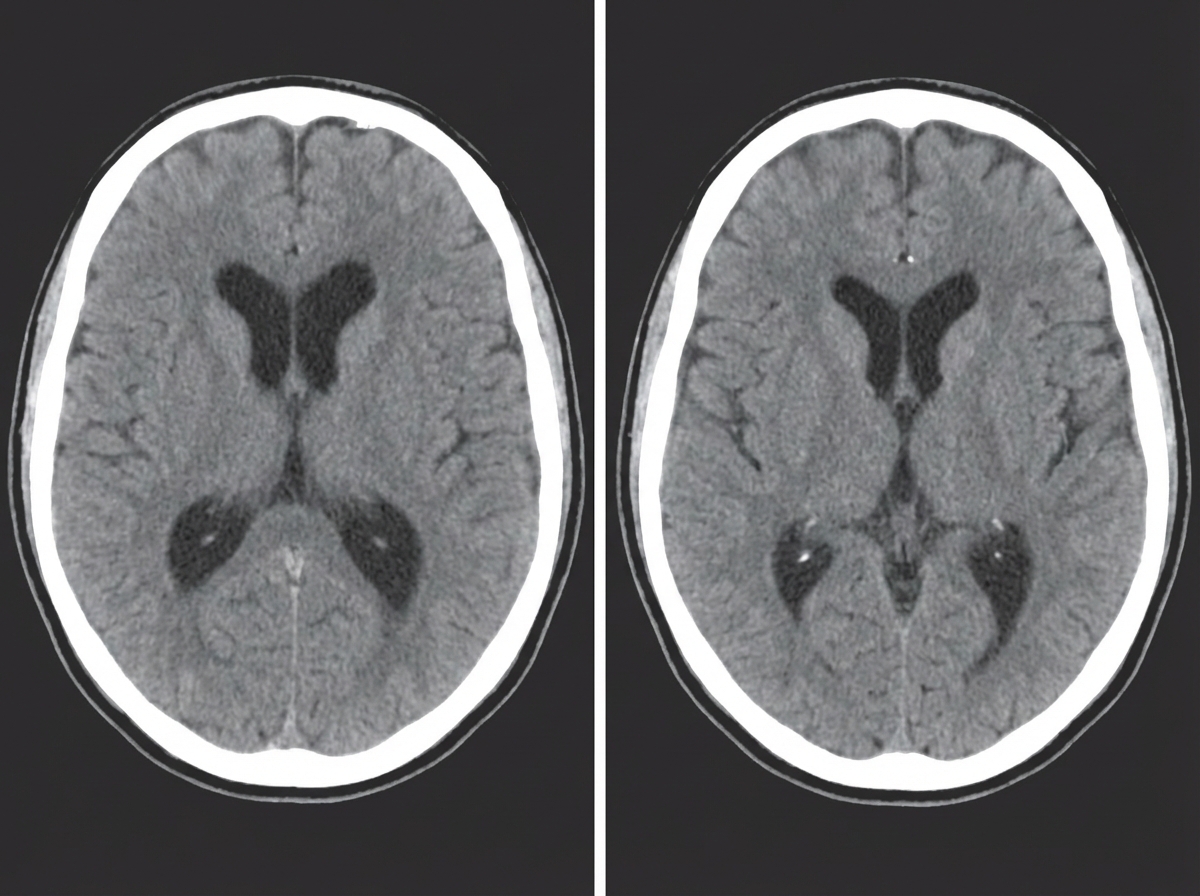
A 45-year-old man is brought by his wife with a complaint of an ongoing progressive history of memory problems for 6 months. He is an accountant by profession. He has difficulty remembering things and events, which has affected his job. He began using a diary to aid with remembering his agenda. His wife also says that he has wet his pants multiple times in the past 2 months and he avoids going out. He has been smoking 1 pack of cigarettes daily for the past 20 years. His past medical history is unremarkable. The vital signs include: blood pressure of 134/76 mm Hg, a pulse of 70 per minute, and a temperature of 37.0°C (98.6°F). His mini-mental state examination (MMSE) result is 22/30. His extraocular movements are normal. The muscle tone and strength are normal in all 4 limbs. The sensory examination is unremarkable. He has an absent Romberg’s sign. He walks slowly, taking small steps, with feet wide apart as if his feet are stuck to the floor. The CT scan of the head is shown in the image. What is the most likely diagnosis of the patient?
Q99
A 65-year-old woman comes to the clinic for an annual well-check. Her past medical history includes diabetes and hypertension, which are well-controlled with metformin and losartan, respectively. The patient reports a healthy diet consisting of mainly vegetables and lean meat. She denies smoking or alcohol use. She enjoys taking walks with her husband and sunbathing. Physical examination is unremarkable except for a rough, scaly, sandpaper-like plaque on her left dorsal hand with no tenderness or pain. What is the most likely diagnosis?
Q100
A 28-year-old female presents to her primary care physician because of pain on her right foot. She says that the pain began 2 weeks ago and gets worse with weight bearing. She has been training for a marathon, and this pain has limited her training. On exam, there are no signs of inflammation or deformities on her foot. Compression of the forefoot with concomitant pressure on the interdigital space reproduces the pain on the plantar surface between the third and fourth toes and produces an audible click. What is the cause of this patient's condition?
Differential diagnosis US Medical PG Practice Questions and MCQs
Question 91: A 32-year-old woman comes to the emergency department because of a 12-hour history of a severe headache. She does not smoke or use illicit drugs. Her blood pressure at admission is 180/125 mm Hg. Physical examination shows a bruit in the epigastric region. Fundoscopy shows bilateral optic disc swelling. Which of the following investigations is most likely to confirm the diagnosis?
A. Serum 17-hydroxyprogesterone level
B. Oral sodium loading test
C. CT angiography (Correct Answer)
D. Echocardiography
E. Urinary catecholamine metabolites
Explanation: ***CT angiography***
- The patient presents with **severe hypertension** (180/125 mm Hg) with **papilledema** (optic disc swelling) indicating hypertensive emergency, along with a **critical finding of an epigastric bruit**.
- An **epigastric or flank bruit** is highly specific for **renal artery stenosis**, which causes secondary hypertension due to renovascular disease.
- In a **young woman (32 years old)**, the most likely cause is **fibromuscular dysplasia** of the renal arteries, which typically affects women of childbearing age.
- **CT angiography** (or MR angiography) is the diagnostic test of choice to visualize the renal arteries and confirm **renal artery stenosis**, showing the characteristic "string of beads" appearance in fibromuscular dysplasia.
*Urinary catecholamine metabolites*
- This test is used to diagnose **pheochromocytoma**, which typically presents with **episodic (paroxysmal) hypertension** along with the classic triad of headache, palpitations, and diaphoresis.
- **Pheochromocytoma does not cause an epigastric bruit**, which is the key differentiating feature in this case pointing toward a vascular etiology rather than a catecholamine-secreting tumor.
*Serum 17-hydroxyprogesterone level*
- This test is used to diagnose **congenital adrenal hyperplasia (CAH)**, a genetic disorder affecting adrenal steroid synthesis.
- CAH does not present with acute hypertensive emergency and epigastric bruits as seen in this patient.
*Oral sodium loading test*
- This test is used to evaluate for **primary aldosteronism**, characterized by hypertension with hypokalemia and metabolic alkalosis.
- Primary aldosteronism does not typically present with acute severe hypertensive crisis with papilledema, and **an epigastric bruit is not a feature** of this condition.
*Echocardiography*
- Echocardiography assesses **cardiac structure and function**, and may show left ventricular hypertrophy from chronic hypertension.
- While it may reveal end-organ damage, it would not identify the underlying **renovascular cause** of the hypertension indicated by the epigastric bruit.
Question 92: A 57-year-old woman comes to the physician because of a 6-month history of tinnitus and progressive hearing loss in the left ear. She has type 2 diabetes mellitus and Raynaud syndrome. Her current medications include metformin, nifedipine, and a multivitamin. She appears well. Vital signs are within normal limits. Physical examination shows no abnormalities. A vibrating tuning fork is placed on the left mastoid process. Immediately after the patient does not hear a tone, the tuning fork is held over the left ear and she reports hearing the tuning fork again. The same test is repeated on the right side and shows the same pattern. The vibration tuning fork is then placed on the middle of the forehead and the patient hears the sound louder in the right ear. Which of the following is the most likely diagnosis?
A. Acoustic neuroma (Correct Answer)
B. Meningioma
C. Cerumen impaction
D. Ménière disease
E. Presbycusis
Explanation: ***Acoustic neuroma***
- The patient presents with **unilateral tinnitus** and **progressive sensorineural hearing loss** in the left ear, which is a classic presentation of an acoustic neuroma.
- The **Rinne test** results (air conduction > bone conduction bilaterally) indicate **no conductive hearing loss**, while the **Weber test lateralizing to the right ear** confirms **sensorineural hearing loss in the left ear**.
*Meningioma*
- While a meningioma could present with neurological symptoms, it typically does not selectively cause **unilateral tinnitus** and **hearing loss** in this specific pattern without other focal neurological deficits.
- Meningiomas are usually **slow-growing** and would likely present with mass effect symptoms, such as headache or seizures, depending on their location, which are not described here.
*Cerumen impaction*
- **Cerumen impaction** would cause a **conductive hearing loss**, where bone conduction would be *louder* than air conduction on the Rinne test (BC > AC).
- The patient's Rinne test results (AC > BC) are consistent with **sensorineural hearing loss**, not conductive.
*Ménière disease*
- **Ménière disease** is characterized by episodic **vertigo, tinnitus, fluctuating hearing loss**, and aural fullness.
- The patient's symptoms are primarily **progressive hearing loss** and constant tinnitus, without the episodic vertigo typical of Ménière disease.
*Presbycusis*
- **Presbycusis** is **age-related bilateral sensorineural hearing loss**, typically symmetric and affecting high frequencies.
- The patient's symptoms are **unilateral** (affecting the left ear predominantly) and present with specific tuning fork findings that point to a localized lesion rather than general aging.
Question 93: A 31-year-old man comes to the physician because of pain, tingling, and numbness in his right hand that started 3 months ago. It is worse at night and frequently wakes him up. The symptoms can be relieved by shaking his hands but soon recur. He reports weakness of his right hand, especially when grasping objects. He has type 2 diabetes mellitus. His current medications are metformin and sitagliptin. Four months ago he went on a camping trip. He has been working as a hardscaper for 8 years. His temperature is 37.5°C (99.5°F), pulse is 86/min, and blood pressure is 110/70 mm Hg. Examination shows reproduction of his symptoms when his right hand is held above his head for 2 minutes. Laboratory studies show:
Hemoglobin 13.2 g/dL
Leukocyte count 7,600/mm3
Hemoglobin A1C 6.3%
Erythrocyte sedimentation rate 13 mm/h
Which of the following is most likely to confirm the diagnosis?
A. MRI of the head
B. Arterial Doppler ultrasonography
C. CT scan of cervical spine
D. Nerve conduction studies (Correct Answer)
E. ELISA for B. burgdorferi antibodies
Explanation: ***Nerve conduction studies***
- **Nerve conduction studies** are the most definitive diagnostic test for **carpal tunnel syndrome (CTS)**, confirming nerve entrapment and severity at the wrist.
- The patient's symptoms of nocturnal pain and tingling, relief with shaking (**Flick sign**), weakness in grasping, and reproduction of symptoms with positional maneuvers (e.g., elevated arm test, akin to **Phalen's or Tinel's sign**) are highly characteristic of CTS.
*MRI of the head*
- An **MRI of the head** would be indicated for central neurological causes of numbness and weakness, such as stroke or brain tumor, which are not suggested by this patient's localized symptoms or a positive Flick sign.
- Symptoms of **carpal tunnel syndrome (CTS)** are typically unilateral and peripheral, making central imaging an unlikely diagnostic tool for this presentation.
*Arterial Doppler ultrasonography*
- **Arterial Doppler ultrasonography** assesses blood flow in arteries and is used to diagnose peripheral arterial disease or vascular compromise.
- The patient's symptoms are neurological (pain, tingling, numbness, weakness) and not vascular (e.g., claudication, pallor, diminished pulses).
*CT scan of cervical spine*
- A **CT scan of the cervical spine** would be used to evaluate **cervical radiculopathy**, which can mimic some symptoms of carpal tunnel.
- However, the classic symptoms like nocturnal worsening, relief with shaking, and a positive elevated arm test are more specific to **CTS** than cervical radiculopathy.
*ELISA for B. burgdorferi antibodies*
- **ELISA for *B. burgdorferi*** antibodies is used to diagnose **Lyme disease**, which can cause neurological symptoms.
- While the patient went on a camping trip, his symptoms are highly localized to the hand and consistent with a peripheral neuropathy, not the more diffuse or systemic symptoms of Lyme neuroborreliosis.
Question 94: A 62-year-old woman is brought to the emergency department because of sudden loss of vision in her right eye that occurred 50 minutes ago. She does not have eye pain. She had several episodes of loss of vision in the past, but her vision improved following treatment with glucocorticoids. She has coronary artery disease, hypertension, type 2 diabetes mellitus, and multiple sclerosis. She underwent a left carotid endarterectomy 3 years ago. She had a myocardial infarction 5 years ago. Current medications include aspirin, metoprolol, lisinopril, atorvastatin, metformin, glipizide, and weekly intramuscular beta-interferon injections. Her temperature is 36.8°C (98.2°F), pulse is 80/min, and blood pressure is 155/88 mm Hg. Examination shows 20/50 vision in the left eye and no perception of light in the right eye. The direct pupillary reflex is brisk in the left eye and absent in the right eye. The indirect pupillary reflex is brisk in the right eye but absent in the left eye. Intraocular pressure is 18 mm Hg in the right eye and 16 mm Hg in the left eye. A white, 1-mm ring is seen around the circumference of the cornea in both eyes. Fundoscopic examination of the right eye shows a pale, white retina with a bright red area within the macula. The optic disc appears normal. Fundoscopic examination of the left eye shows a few soft and hard exudates in the superior and nasal retinal quadrants. The optic disc and macula appear normal. Which of the following is the most likely diagnosis?
A. Central retinal artery occlusion (Correct Answer)
B. Acute angle-closure glaucoma
C. Central retinal vein occlusion
D. Vitreous hemorrhage
E. Central serous retinopathy
Explanation: ***Central retinal artery occlusion***
- The sudden, painless monocular vision loss, combined with the fundoscopic finding of a **pale, white retina** with a **"cherry-red spot"** (bright red area within the macula), is pathognomonic for central retinal artery occlusion (CRAO).
- The patient's history of cardiovascular risk factors (coronary artery disease, hypertension, diabetes, carotid endarterectomy, myocardial infarction) increases the likelihood of **atheroembolic disease**, which is a common cause of CRAO.
*Acute angle-closure glaucoma*
- This condition typically presents with **sudden, severe eye pain**, blurred vision, halos around lights, and a **red eye**, often accompanied by nausea and vomiting, which are absent in this patient.
- Ocular examination would usually reveal a **fixed, mid-dilated pupil** and significantly **elevated intraocular pressure**, whereas this patient's intraocular pressure is normal.
*Central retinal vein occlusion*
- While central retinal vein occlusion (CRVO) can cause sudden vision loss, the classic fundoscopic findings are **"blood and thunder" retina** (diffuse retinal hemorrhages, dilated tortuous veins, cotton wool spots, and optic disc edema).
- The described **pale retina with a cherry-red spot** is not consistent with CRVO, but rather with arterial occlusion.
*Vitreous hemorrhage*
- Vitreous hemorrhage typically causes **sudden, painless vision loss**, often described as "floaters" or a "shower of black dots," and can obscure the red reflex.
- Fundoscopic examination would show **blood within the vitreous cavity**, which might make it difficult to visualize the retina, and would not typically present with a pale retina and cherry-red spot.
*Central serous retinopathy*
- This condition is characterized by the **leakage of fluid under the retina**, leading to a serous detachment of the neurosensory retina or retinal pigment epithelium, causing blurred vision, metamorphopsia, and micropsia.
- It usually affects younger to middle-aged males and does not cause the profound, sudden vision loss or the characteristic fundoscopic appearance of central retinal artery occlusion.
Question 95: A 13-year-old boy is brought to the physician because of a 1-month history of progressive difficulty breathing through his nose and a 2-week history of recurrent severe nosebleeds. When he holds the right nostril shut, he is unable to breathe nasally and his sense of smell is reduced. He has a 6-year history of asthma, which is well controlled with inhaled albuterol. Vital signs are within normal limits. Nasal inspection shows a pink, lobulated mass filling the left nasal cavity. The septum is deviated to the right side. The mass bleeds on touch. The remainder of the examination shows no abnormalities. Which of the following is the most appropriate next step in diagnosis?
A. Coagulation tests
B. Punch biopsy of the mass
C. CT scan of head with contrast (Correct Answer)
D. Genetic analysis of dynein genes
E. Sweat chloride test
Explanation: ***CT scan of head with contrast***
- A **CT scan with contrast** is the most appropriate next step to evaluate the extent of the nasal mass, assess for bone erosion, and differentiate between benign and malignant conditions, especially given the rapid progression and severe nosebleeds.
- This presentation is classic for **juvenile nasopharyngeal angiofibroma (JNA)**, a benign but highly vascular tumor seen almost exclusively in adolescent males, characterized by unilateral nasal obstruction, epistaxis, and a lobulated mass.
- Imaging will help characterize the mass, its origin, vascularity, and potential spread, which is crucial before any invasive procedures like a biopsy and may guide preoperative embolization if needed.
*Coagulation tests*
- While recurrent severe nosebleeds can sometimes suggest a **coagulopathy**, the presence of a large nasal mass with progressive obstruction points towards a structural cause rather than primarily a bleeding disorder.
- Coagulation tests would be more appropriate if there were other signs of systemic bleeding or a known history of bleeding diathesis without a clear obstructing lesion.
*Punch biopsy of the mass*
- A **punch biopsy** carries a significant risk of severe bleeding given that the mass bleeds on touch, and its vascularity and extent are unknown.
- For suspected JNA, biopsy is contraindicated due to the risk of catastrophic hemorrhage; imaging should always precede any tissue sampling to properly plan the procedure and minimize complications.
*Genetic analysis of dynein genes*
- **Dynein gene mutations** are associated with primary ciliary dyskinesia, which can cause chronic sinusitis and nasal polyps, but not typically a rapidly growing, bleeding, lobulated mass with unilateral obstruction in a 13-year-old.
- The clinical picture strongly suggests a localized mass effect rather than a generalized ciliary dysfunction.
*Sweat chloride test*
- A **sweat chloride test** is used to diagnose cystic fibrosis, which can lead to chronic rhinosinusitis and nasal polyps, often bilateral.
- The presentation of a unilateral, rapidly growing, bleeding mass is not typical for cystic fibrosis-related nasal polyps; therefore, it's not the most appropriate initial diagnostic step.
Question 96: A 50-year-old man comes to the emergency department for evaluation of right-sided facial weakness that he noticed after waking up. One month ago, he also experienced right-sided neck pain and headache that began after returning from a hunting trip to New Hampshire the week before. He took ibuprofen to relieve symptoms, which subsided a week later. He has a 5-year history of hypertension controlled with drug therapy. He has smoked one pack of cigarettes daily for 35 years and he drinks two beers daily. His vital signs are within the normal range. Physical examination shows right-sided drooping of the upper and lower half of the face. The patient has difficulties smiling and he is unable to close his right eye. The remainder of the examination shows no abnormalities. Which of the following is the most appropriate next step in diagnosis?
A. Noncontrast CT
B. Cerebrospinal fluid analysis
C. Western blot
D. Polymerase chain reaction of the facial skin
E. Enzyme-linked immunosorbent assay (Correct Answer)
Explanation: ***Enzyme-linked immunosorbent assay***
- The patient's presentation with **right-sided facial weakness affecting both upper and lower halves of the face**, along with a history of **neck pain and headache after a hunting trip to New Hampshire** (an endemic area for Lyme disease), strongly suggests **Lyme disease-associated Bell's palsy**.
- An **ELISA** is the appropriate initial test for **Lyme disease screening**, detecting antibodies against *Borrelia burgdorferi*.
*Noncontrast CT*
- A **noncontrast CT scan of the brain** is primarily used to rule out acute intracranial pathologies like **hemorrhage** or **large strokes**.
- In this case, the isolated facial paralysis without other focal neurological deficits or signs of acute stroke makes a CT less immediately relevant as the first diagnostic step.
*Cerebrospinal fluid analysis*
- **CSF analysis** would be considered if there were signs of **meningitis** or **encephalitis**, or if Lyme disease was strongly suspected but initial serological tests were negative.
- It is not the most appropriate initial diagnostic step for isolated facial palsy.
*Western blot*
- A **Western blot** is used as a **confirmatory test** for Lyme disease, typically performed after a positive or indeterminate **ELISA result**.
- It differentiates specific antibodies, but it is not the initial screening test.
*Polymerase chain reaction of the facial skin*
- **PCR of facial skin** is not a standard diagnostic test for facial palsy or Lyme disease, as the disease is systemic and not localized to a skin lesion in this context.
- **Skin biopsy PCR** might be used to confirm an erythema migrans rash, which is not present here.
Question 97: A 50-year-old woman comes to the physician because of blisters on her forearm that appeared 3 days ago. She also reports pain in her left cheek when eating and pain during sexual intercourse for the past week. She has not been sick for the past 6 months. She has started hiking in the woods on the weekends with her son a couple months ago but has been careful to avoid poison ivy. She has a history of hypertension and osteoarthritis. She recently started taking captopril and stopped taking meloxicam 2 weeks ago. She has a family history of pernicious anemia and Graves' disease. The patient's vital signs are within normal limits. Examination reveals multiple, flaccid blisters on the volar surface of the forearm and ulcers on the buccal, gingival, and vulvar mucosa. The epidermis on the forearm separates when the skin is lightly stroked. The total body surface area involvement of the blisters is estimated to be 10%. The remainder of the examination shows no abnormalities. Which of the following is the most likely diagnosis?
A. Bullous pemphigoid
B. Toxic epidermal necrolysis
C. Dermatitis herpetiformis
D. Pemphigus vulgaris (Correct Answer)
E. Lichen planus
Explanation: ***Pemphigus vulgaris***
- The presence of **flaccid blisters** on the forearm, along with **oral and vulvar mucosal ulcers**, is highly characteristic of pemphigus vulgaris. Oral lesions often precede skin lesions, and the **Nikolsky sign** (epidermal separation with light stroking) is positive.
- This autoimmune blistering disease is caused by antibodies against **desmoglein 1 and 3**, leading to acantholysis (loss of cohesion between keratinocytes) in the epidermis. The Captopril use is notable as ACE inhibitors can rarely trigger pemphigus.
*Bullous pemphigoid*
- Bullous pemphigoid typically presents with **tense bullae** that do not rupture easily and are often accompanied by **pruritus**, which is not described here, and a negative Nikolsky sign.
- Mucosal involvement is less common and usually less severe than in pemphigus vulgaris, often sparing the oral cavity.
*Toxic epidermal necrolysis*
- This condition is characterized by widespread **erythema and epidermal detachment** (often >30% body surface area), usually triggered by medications, with prominent systemic symptoms (e.g., fever, malaise). The patient's 10% BSA involvement and lack of systemic illness makes this less likely.
- The lesions in TEN are typically diffuse and rapidly progressing, resembling a severe burn, unlike the more localized flaccid blisters seen here.
*Dermatitis herpetiformis*
- Dermatitis herpetiformis presents as intensely **pruritic vesicles and papules**, primarily on extensor surfaces, and is strongly associated with **celiac disease**.
- The blisters are typically firm and grouped, and mucosal lesions are uncommon, differentiating it from the flaccid blisters and mucosal ulcers described.
*Lichen planus*
- Lichen planus manifests as **pruritic, polygonal, planar, purple papules and plaques**, often with **Wickham's striae**.
- While it can cause oral mucosal lesions (reticular white patches) and erosions, it does not typically present with the widespread flaccid blisters or positive Nikolsky sign seen in this patient.
Question 98: A 45-year-old man is brought by his wife with a complaint of an ongoing progressive history of memory problems for 6 months. He is an accountant by profession. He has difficulty remembering things and events, which has affected his job. He began using a diary to aid with remembering his agenda. His wife also says that he has wet his pants multiple times in the past 2 months and he avoids going out. He has been smoking 1 pack of cigarettes daily for the past 20 years. His past medical history is unremarkable. The vital signs include: blood pressure of 134/76 mm Hg, a pulse of 70 per minute, and a temperature of 37.0°C (98.6°F). His mini-mental state examination (MMSE) result is 22/30. His extraocular movements are normal. The muscle tone and strength are normal in all 4 limbs. The sensory examination is unremarkable. He has an absent Romberg’s sign. He walks slowly, taking small steps, with feet wide apart as if his feet are stuck to the floor. The CT scan of the head is shown in the image. What is the most likely diagnosis of the patient?
A. Normal-pressure hydrocephalus (Correct Answer)
B. Early-onset Alzheimer’s disease
C. Parkinson’s disease
D. Progressive supranuclear palsy
E. Frontotemporal dementia
Explanation: ***Normal-pressure hydrocephalus***
- The patient presents with the classic triad of **dementia** (memory problems, MMSE 22/30), **gait disturbance** (slow, small steps, wide-based, "magnetic" gait), and **urinary incontinence** (wetting pants).
- The CT scan findings are likely to show **ventriculomegaly out of proportion to sulcal atrophy**, which is characteristic of NPH, even though the image is not provided, the clinical picture strongly points to this diagnosis.
*Early-onset Alzheimer’s disease*
- While memory problems are central to Alzheimer's, **urinary incontinence** and a prominent **gait disturbance** appearing early in the disease course are not typical features.
- Alzheimer's usually involves cortical atrophy and **hippocampal shrinkage** on imaging, not disproportionate ventriculomegaly.
*Parkinson’s disease*
- Parkinson's primarily manifests with **motor symptoms** like bradykinesia, tremor, rigidity, and postural instability, though dementia can occur later.
- The "magnetic" wide-based gait described is distinct from the **shuffling gait** with reduced arm swing typical of Parkinson's.
*Progressive supranuclear palsy*
- Key features include **supranuclear ophthalmoplegia** (especially vertical gaze palsy), postural instability leading to falls, and parkinsonism; extraocular movements are normal in this patient.
- While gait disturbance and cognitive decline occur, **urinary incontinence** is less prominent early, and the described gait is not typical.
*Frontotemporal dementia*
- This typically presents with prominent **behavioral changes** (e.g., disinhibition, apathy) or **language difficulties** (e.g., aphasia) early in the disease course.
- Though cognitive decline is present, **urinary incontinence** and **magnetic gait** are not primary distinguishing features.
Question 99: A 65-year-old woman comes to the clinic for an annual well-check. Her past medical history includes diabetes and hypertension, which are well-controlled with metformin and losartan, respectively. The patient reports a healthy diet consisting of mainly vegetables and lean meat. She denies smoking or alcohol use. She enjoys taking walks with her husband and sunbathing. Physical examination is unremarkable except for a rough, scaly, sandpaper-like plaque on her left dorsal hand with no tenderness or pain. What is the most likely diagnosis?
A. Rosacea
B. Sunburn
C. Seborrheic keratosis
D. Actinic keratosis (Correct Answer)
E. Psoriasis
Explanation: ***Actinic keratosis***
- The lesion description of a **rough**, **scaly**, **sandpaper-like plaque** on the **dorsal hand** is classic for an actinic keratosis.
- The patient's history of **sunbathing** and age (65 years old) are significant risk factors, as actinic keratosis is caused by **chronic sun exposure** and is a precursor to squamous cell carcinoma.
*Rosacea*
- Rosacea typically presents with **facial erythema**, **telangiectasias**, papules, and pustules, primarily affecting the central face.
- It does not present as a rough, scaly plaque on the dorsal hand.
*Sunburn*
- A sunburn is characterized by **erythema**, **pain**, and sometimes blistering, appearing acutely after sun exposure.
- The lesion described is a chronic plaque, not an acute burn.
*Seborrheic keratosis*
- Seborrheic keratoses are typically described as "stuck-on" lesions with a **warty** or **greasy appearance**, often pigmented.
- They do not usually have a "sandpaper-like" texture and are not directly caused by sun exposure, although they can occur in sun-exposed areas.
*Psoriasis*
- Psoriasis presents as **well-demarcated**, **erythematous plaques** with prominent **silvery scales**, often found on extensor surfaces, scalp, and nails.
- The lesion described lacks the characteristic silvery scales and is not typically isolated to a single, small, rough plaque on the dorsal hand in this manner.
Question 100: A 28-year-old female presents to her primary care physician because of pain on her right foot. She says that the pain began 2 weeks ago and gets worse with weight bearing. She has been training for a marathon, and this pain has limited her training. On exam, there are no signs of inflammation or deformities on her foot. Compression of the forefoot with concomitant pressure on the interdigital space reproduces the pain on the plantar surface between the third and fourth toes and produces an audible click. What is the cause of this patient's condition?
A. Inflammation and scarring of the plantar fascia
B. A metatarsal compression fracture
C. Inflammation of the bursa
D. A bony outgrowth
E. A benign neuroma (Correct Answer)
Explanation: ***A benign neuroma***
- The patient's presentation with **forefoot pain**, worse with **weight-bearing**, and the presence of an **audible click** (Mulder's sign) upon compression of the interdigital space, specifically between the third and fourth toes, are classic signs of **Morton's neuroma**, which is a benign fibrotic enlargement of the common plantar nerve.
- This condition is common in runners due to repetitive trauma and compression of the digital nerves.
*Inflammation and scarring of the plantar fascia*
- This description refers to **plantar fasciitis**, which typically causes pain in the **heel**, especially with the first steps in the morning or after rest.
- While also common in runners, plantar fasciitis pain is usually not localized to the interdigital space and does not present with Mulder's click.
*A metatarsal compression fracture*
- A metatarsal stress fracture would present with **localized pain** and tenderness over the affected metatarsal bone, often worse with activity, but it typically doesn't involve an interdigital click or pain reproduction by compressing the forefoot in this specific manner.
- Imaging like X-rays or MRI would confirm a stress fracture.
*Inflammation of the bursa*
- While bursitis can occur in the foot, **intermetatarsal bursitis** might cause pain in the interdigital space, but it usually doesn't involve the characteristic **Mulder's sign** or the specific nerve-related symptoms seen in a neuroma.
- The primary issue with Morton's neuroma is nerve enlargement, not just bursal inflammation.
*A bony outgrowth*
- A bony outgrowth, such as a **bone spur** or **exostosis**, would typically cause pain due to mechanical irritation or compression of surrounding structures.
- It would not typically present with a **Mulder's click** or the specific pain pattern associated with interdigital nerve compression characteristic of a neuroma.