
Metacognition and diagnostic calibration — MCQs

Two dizygotic twins present to the university clinic because they believe they are being poisoned through the school's cafeteria food. They have brought these concerns up in the past, but no other students or cafeteria staff support this belief. Both of them are average students with strong and weak subject areas as demonstrated by their course grade-books. They have no known medical conditions and are not known to abuse illicit substances. Which statement best describes the condition these patients have?
A 52-year-old man comes to the physician because of a 3-week history of a cough and hoarseness. He reports that the cough is worse when he lies down after lunch. His temperature is 37.5°C (99.5°F); the remainder of his vital signs are within normal limits. Because the physician has recently been seeing several patients with the common cold, the diagnosis of a viral upper respiratory tract infection readily comes to mind. The physician fails to consider the diagnosis of gastroesophageal reflux disease, which the patient is later found to have. Which of the following most accurately describes the cognitive bias that the physician had?
A group of gastroenterologists is concerned about low colonoscopy screening rates. They decide to implement a free patient navigation program to assist local residents and encourage them to obtain colonoscopies in accordance with U.S. Preventive Services Task Force (USPSTF) guidelines. Local residents were recruited at community centers. Participants attended monthly meetings with patient navigators and were regularly reminded that their adherence to screening guidelines was being evaluated. Colonoscopy screening rates were assessed via chart review, which showed that 90% of participants adhered to screening guidelines. Data collected via chart review for local residents recruited at community centers who did not participate in the free patient navigation system found that 34% of that population adhered to USPSTF guidelines. Which of the following has most likely contributed to the observed disparity in colonoscopy screening rates?
A student health coordinator plans on leading a campus-wide HIV screening program that will be free for the entire undergraduate student body. The goal is to capture as many correct HIV diagnoses as possible with the fewest false positives. The coordinator consults with the hospital to see which tests are available to use for this program. Test A has a sensitivity of 0.92 and a specificity of 0.99. Test B has a sensitivity of 0.95 and a specificity of 0.96. Test C has a sensitivity of 0.98 and a specificity of 0.93. Which of the following testing schemes should the coordinator pursue?
A 67-year-old man presents to the emergency department with confusion. The patient is generally healthy, but his wife noticed him becoming progressively more confused as the day went on. The patient is not currently taking any medications and has no recent falls or trauma. His temperature is 102°F (38.9°C), blood pressure is 126/64 mmHg, pulse is 120/min, respirations are 17/min, and oxygen saturation is 98% on room air. Physical exam is notable for a confused man who cannot participate in a neurological exam secondary to his confusion. No symptoms are elicited with flexion of the neck and jolt accentuation of headache is negative. Initial laboratory values are unremarkable and the patient's chest radiograph and urinalysis are within normal limits. An initial CT scan of the head is unremarkable. Which of the following is the best next step in management?
A 30-year-old computer scientist receives negative feedback on a recent project from his senior associate. He is told sternly that he must improve his performance on the next project. Later that day, he yells at his intern, a college student, for not showing enough initiative, though he had voiced only satisfaction with his performance up until this point. Which of the following psychological defense mechanisms is he demonstrating?
A 65-year-old man is admitted to the hospital because of a 1-month history of fatigue, intermittent fever, and weakness. Results from a peripheral blood smear taken during his evaluation are indicative of possible acute myeloid leukemia. Bone marrow aspiration and subsequent cytogenetic studies confirm the diagnosis. The physician sets aside an appointed time-slot and arranges a meeting in a quiet office to inform him about the diagnosis and discuss his options. He has been encouraged to bring someone along to the appointment if he wanted. He comes to your office at the appointed time with his daughter. He appears relaxed, with a full range of affect. Which of the following is the most appropriate opening statement in this situation?
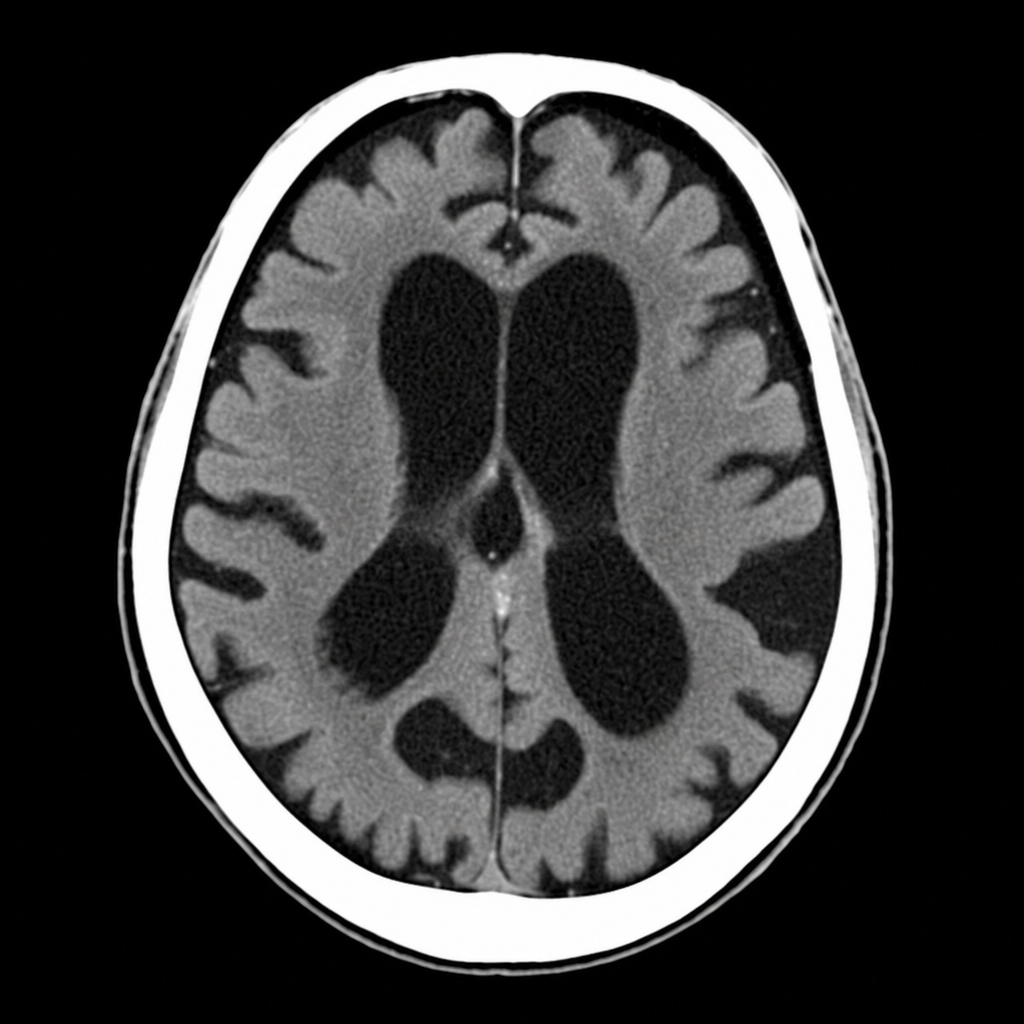
A 72-year-old woman is brought in by her daughter for progressive confusion over 4 weeks, 8 kg of unintentional weight loss over 3 months, and new-onset urinary incontinence. She has no history of psychiatric illness. Medications include amlodipine and aspirin. On examination, she is afebrile; she scores 19/30 on the MMSE. Gait is broad-based and magnetic in quality. Neurological exam shows no focal deficits and no papilledema. CBC, CMP, TSH, B12, and RPR are all within normal limits. The image shown is from her MRI brain. Which of the following diagnoses is most consistent with the clinical presentation and imaging finding?
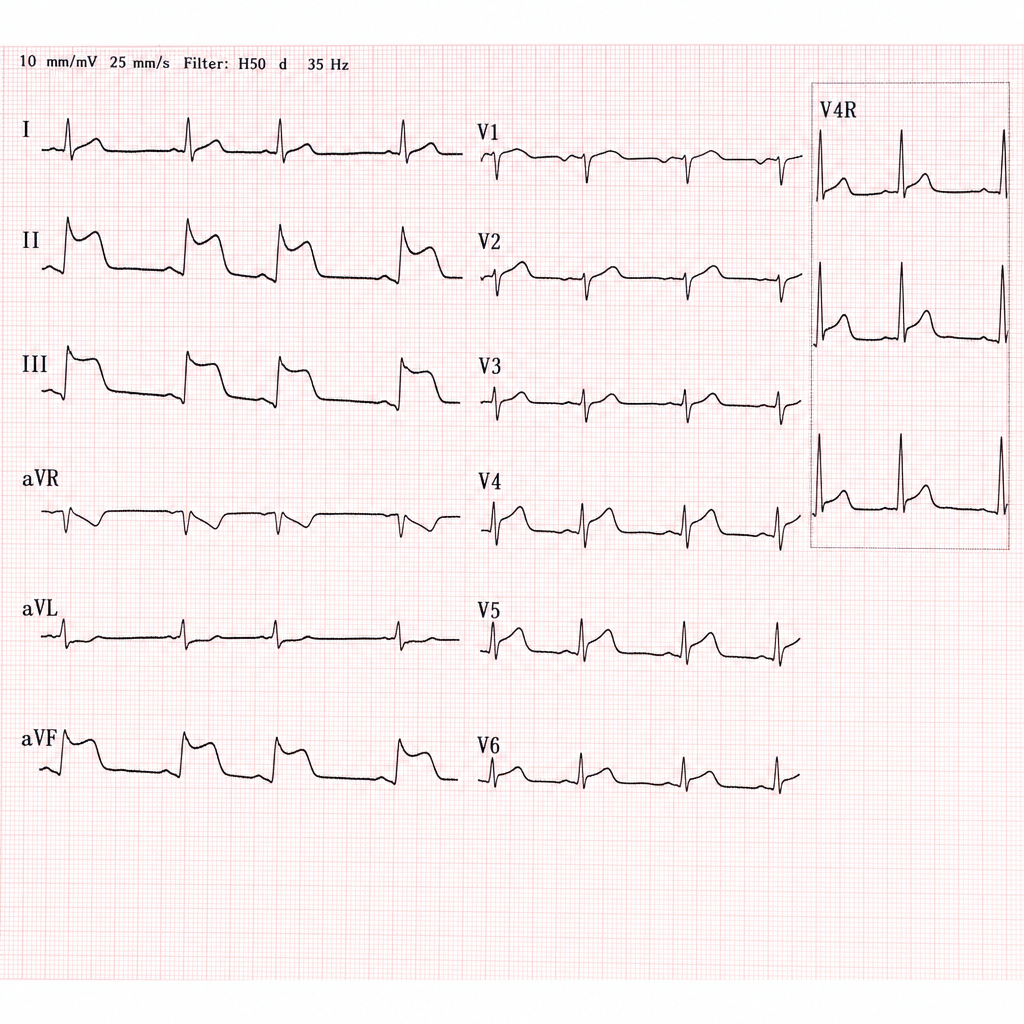
A 12-lead ECG with right-sided leads (including V4R) is shown for a 61-year-old man who presented with 40 minutes of crushing substernal chest pressure, diaphoresis, and nausea. His blood pressure is 88/60 mmHg and heart rate is 42 bpm. Lungs are clear to auscultation. Jugular venous distension is present. Based on the ECG findings, which diagnosis most precisely localizes the culprit lesion and accounts for the hemodynamic profile?
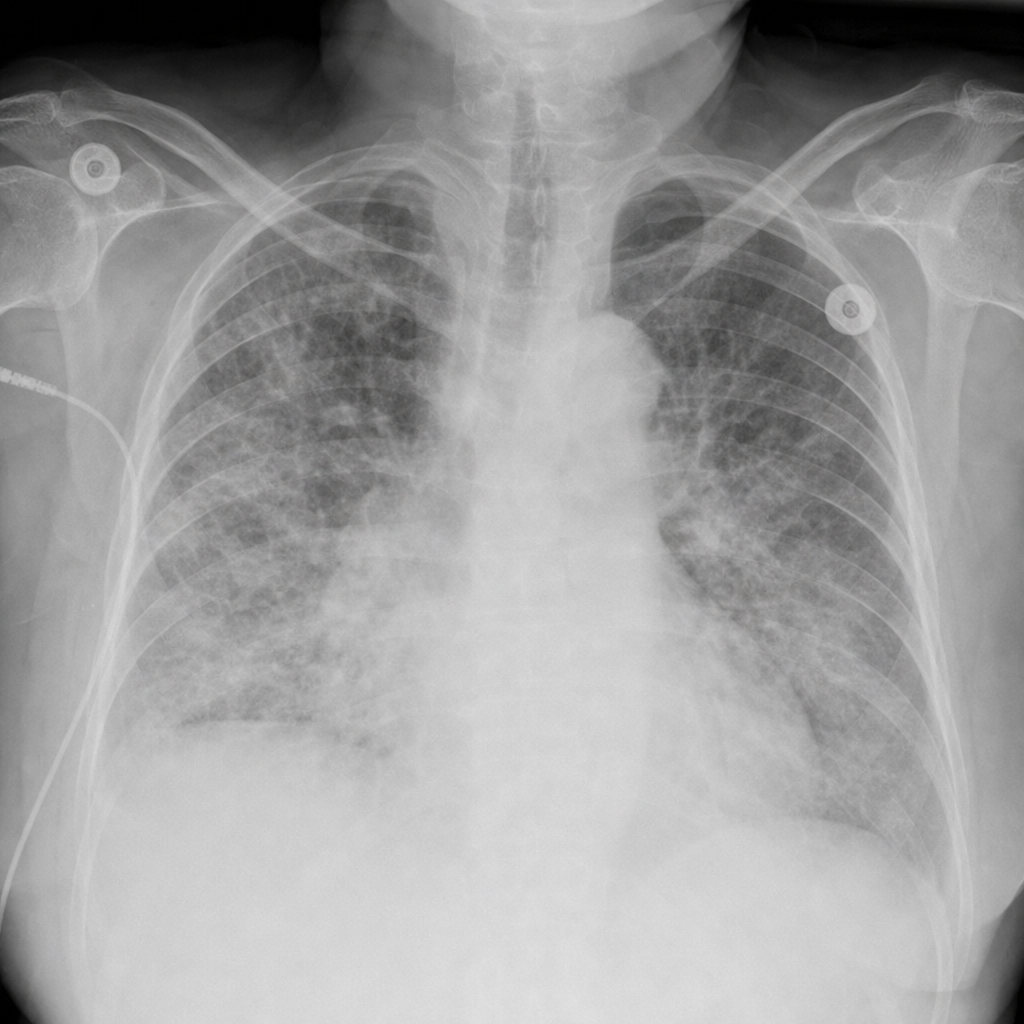
A 72-year-old immunocompromised woman receiving long-term corticosteroids for rheumatoid arthritis presents with a 5-day history of progressive dyspnea, non-productive cough, and low-grade fever. She denies rigors or purulent sputum. Oxygen saturation is 88% on room air. The image shown was obtained on presentation. Which diagnosis is most consistent with the radiographic pattern and clinical context?
Want unlimited practice?
Get full access to all questions, explanations, and performance tracking.
Scan to download app