
Hypothetico-deductive reasoning — MCQs

A scientist in Chicago is studying a new blood test to detect Ab to EBV with increased sensitivity and specificity. So far, her best attempt at creating such an exam reached 82% sensitivity and 88% specificity. She is hoping to increase these numbers by at least 2 percent for each value. After several years of work, she believes that she has actually managed to reach a sensitivity and specificity much greater than what she had originally hoped for. She travels to China to begin testing her newest blood test. She finds 2,000 patients who are willing to participate in her study. Of the 2,000 patients, 1,200 of them are known to be infected with EBV. The scientist tests these 1,200 patients' blood and finds that only 120 of them tested negative with her new exam. Of the patients who are known to be EBV-free, only 20 of them tested positive. Given these results, which of the following correlates with the exam's specificity?
Two dizygotic twins present to the university clinic because they believe they are being poisoned through the school's cafeteria food. They have brought these concerns up in the past, but no other students or cafeteria staff support this belief. Both of them are average students with strong and weak subject areas as demonstrated by their course grade-books. They have no known medical conditions and are not known to abuse illicit substances. Which statement best describes the condition these patients have?
A research study is comparing 2 novel tests for the diagnosis of Alzheimer’s disease (AD). The first is a serum blood test, and the second is a novel PET radiotracer that binds to beta-amyloid plaques. The researchers intend to have one group of patients with AD assessed via the novel blood test, and the other group assessed via the novel PET examination. In comparing these 2 trial subsets, the authors of the study may encounter which type of bias?
A 67-year-old man presents to the emergency department with confusion. The patient is generally healthy, but his wife noticed him becoming progressively more confused as the day went on. The patient is not currently taking any medications and has no recent falls or trauma. His temperature is 102°F (38.9°C), blood pressure is 126/64 mmHg, pulse is 120/min, respirations are 17/min, and oxygen saturation is 98% on room air. Physical exam is notable for a confused man who cannot participate in a neurological exam secondary to his confusion. No symptoms are elicited with flexion of the neck and jolt accentuation of headache is negative. Initial laboratory values are unremarkable and the patient's chest radiograph and urinalysis are within normal limits. An initial CT scan of the head is unremarkable. Which of the following is the best next step in management?
A 56-year-old man presents to the family medicine office since he has been having difficulty keeping his blood pressure under control for the past month. He has a significant medical history of hypertension, coronary artery disease, and diabetes mellitus. He has a prescription for losartan, atenolol, and metformin. The blood pressure is 178/100 mm Hg, the heart rate is 92/min, and the respiratory rate is 16/min. The physical examination is positive for a grade II holosystolic murmur at the left sternal border. He also has diminished sensation in his toes. Which of the following statements is the most effective means of communication between the doctor and the patient?
You are currently employed as a clinical researcher working on clinical trials of a new drug to be used for the treatment of Parkinson's disease. Currently, you have already determined the safe clinical dose of the drug in a healthy patient. You are in the phase of drug development where the drug is studied in patients with the target disease to determine its efficacy. Which of the following phases is this new drug currently in?
A regional academic medical center has 10 cases of adenovirus in the span of a week among its ICU patients. A committee is formed to investigate this outbreak. They are tasked with identifying the patients and interviewing the care providers to understand how adenovirus could have been spread from patient to patient. This committee will review charts, talk to the care provider teams, and investigate current patient safety and sanitation measures in the ICU. The goal of the committee is to identify weaknesses in the current system and to put in place a plan to help prevent this sort of outbreak from reoccurring in the future. The committee is most likely using what type of analysis?
A 77-year-old female comes to a medical school's free clinic for follow-up examination after a urinary tract infection (UTI) and is seen by a fourth year medical student. The clinic serves largely uninsured low-income patients in a New York City neighborhood with a large African American and Latino population. Two weeks ago, the patient was treated in the local emergency department where she presented with altered mental state and dysuria. The medical student had recently read about a study that described a strong relationship between cognitive impairment and UTI hospitalization risk (RR = 1.34, p < 0.001). The attending physician at the medical student's free clinic is also familiar with this study and tells the medical student that the study was conducted in a sample of upper middle class Caucasian patients in the Netherlands. The attending states that the results of the study should be interpreted with caution. Which of the following concerns is most likely underlying the attending physician's remarks?
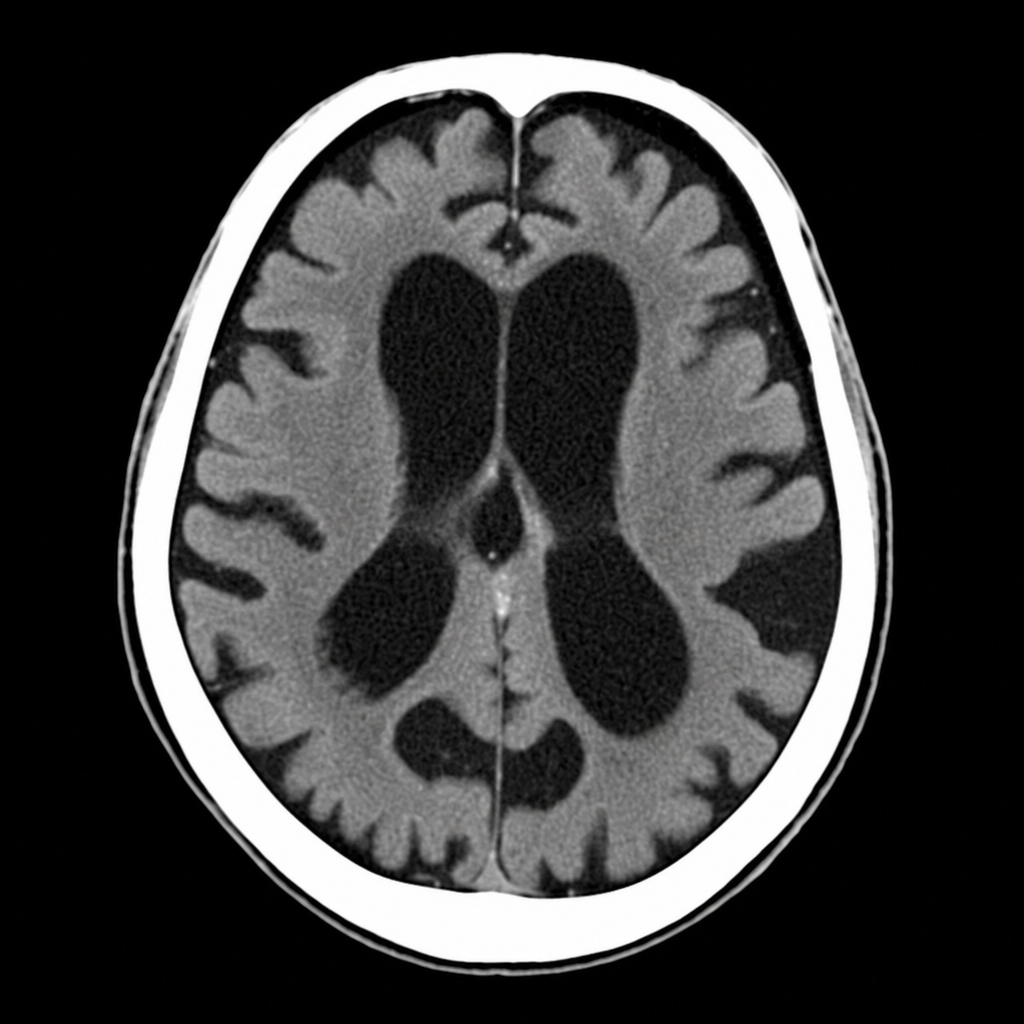
A 72-year-old woman is brought in by her daughter for progressive confusion over 4 weeks, 8 kg of unintentional weight loss over 3 months, and new-onset urinary incontinence. She has no history of psychiatric illness. Medications include amlodipine and aspirin. On examination, she is afebrile; she scores 19/30 on the MMSE. Gait is broad-based and magnetic in quality. Neurological exam shows no focal deficits and no papilledema. CBC, CMP, TSH, B12, and RPR are all within normal limits. The image shown is from her MRI brain. Which of the following diagnoses is most consistent with the clinical presentation and imaging finding?
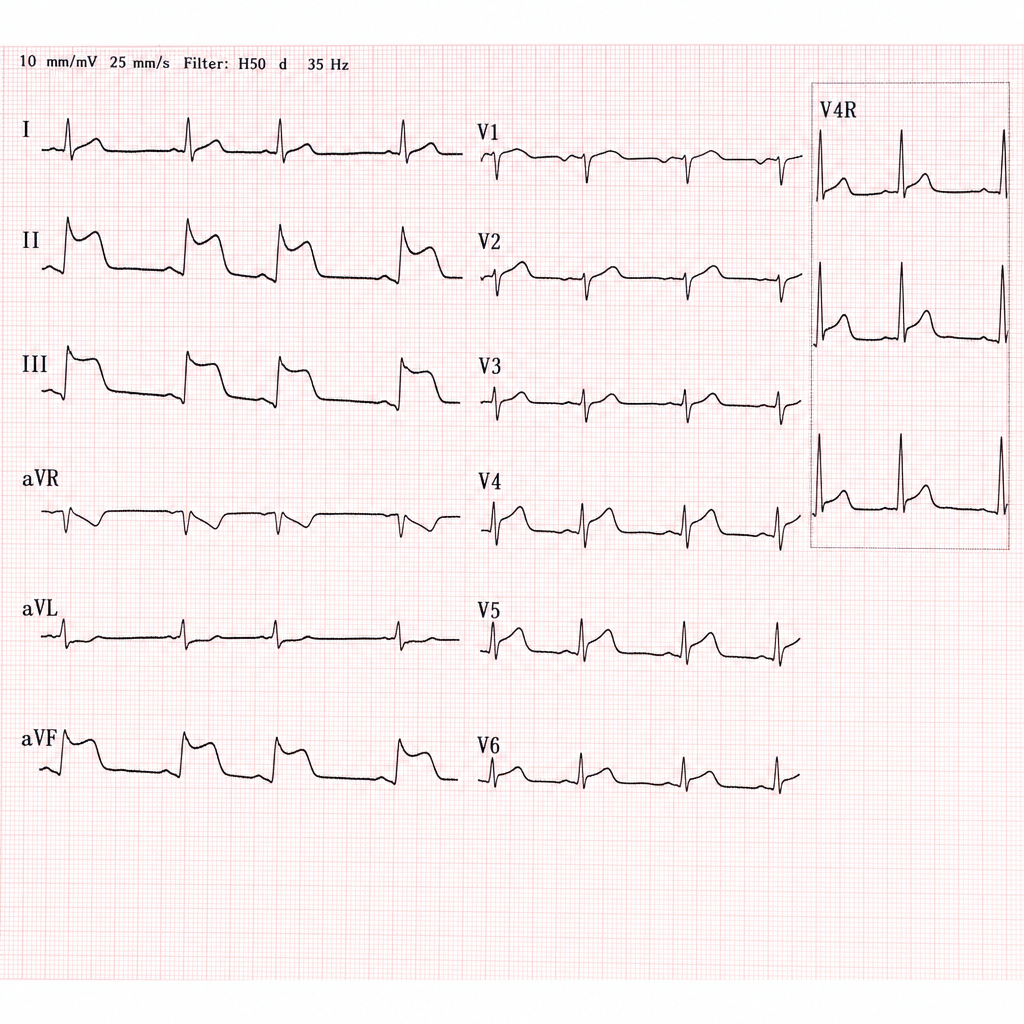
A 12-lead ECG with right-sided leads (including V4R) is shown for a 61-year-old man who presented with 40 minutes of crushing substernal chest pressure, diaphoresis, and nausea. His blood pressure is 88/60 mmHg and heart rate is 42 bpm. Lungs are clear to auscultation. Jugular venous distension is present. Based on the ECG findings, which diagnosis most precisely localizes the culprit lesion and accounts for the hemodynamic profile?
Want unlimited practice?
Get full access to all questions, explanations, and performance tracking.
Scan to download app