
Medication prioritization — MCQs

A 70-year-old female with a history of congestive heart failure presents to the emergency room with dyspnea. She reports progressive difficulty breathing which began when she ran out of her furosemide and lisinopril prescriptions 1-2 weeks ago. She states the dyspnea is worse at night and when lying down. She denies any fever, cough, or GI symptoms. Her medication list reveals she is also taking digoxin. Physical exam is significant for normal vital signs, crackles at both lung bases and 2+ pitting edema of both legs. The resident orders the medical student to place the head of the patient's bed at 30 degrees. Additionally, he writes orders for the patient to be given furosemide, morphine, nitrates, and oxygen. Which of the following should be checked before starting this medication regimen?
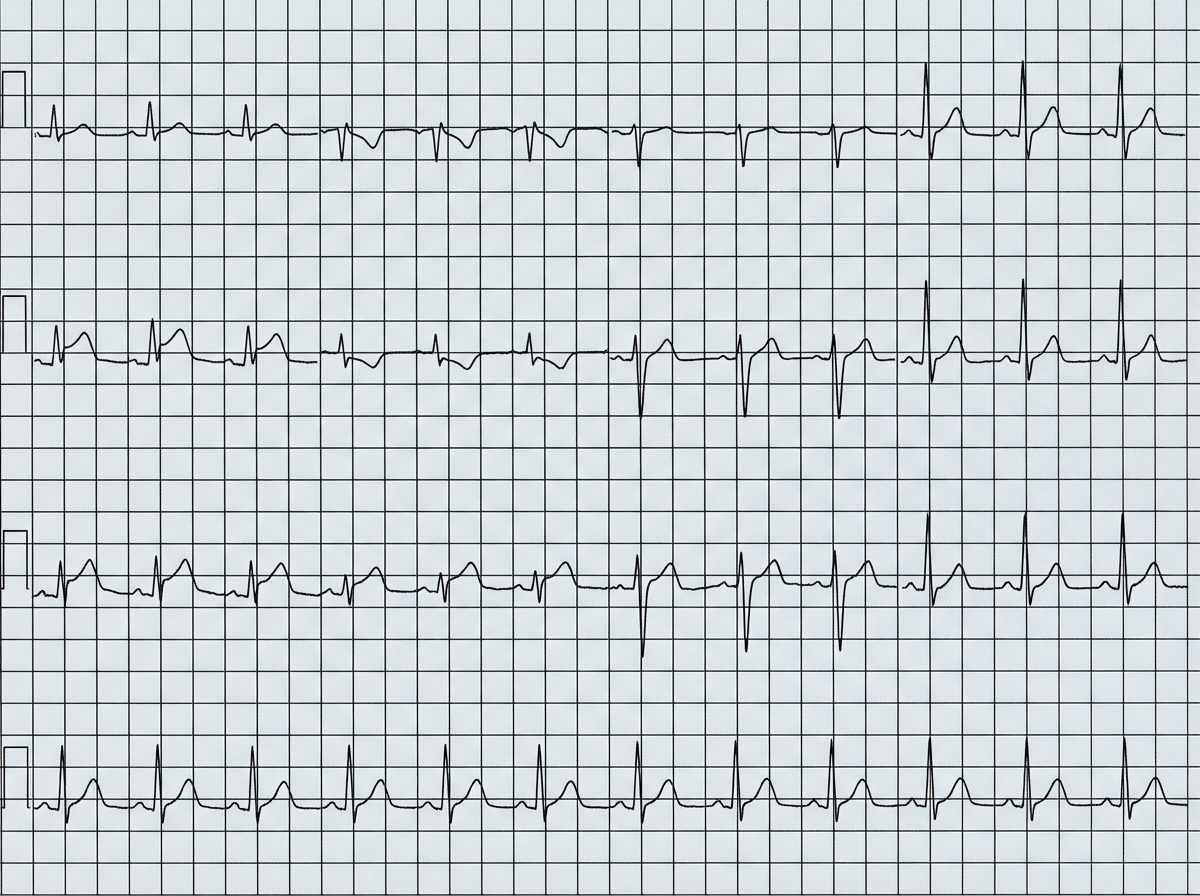
A 54-year-old man is brought to the emergency department 1 hour after the sudden onset of shortness of breath, epigastric pain, and sweating. He has no history of similar symptoms. He has hypertension and type 2 diabetes mellitus. Current medications include amlodipine and metformin. He has smoked one pack of cigarettes daily for 20 years. He appears weak and pale. His pulse is 56/min, respirations are 18/min, and blood pressure is 100/70 mm Hg. Cardiac examination shows normal heart sounds. The lungs are clear to auscultation. The skin is cold to the touch. An ECG is shown. Bedside transthoracic echocardiography shows normal left ventricular function. High-dose aspirin is administered. Administration of which of the following is most appropriate next step in management?
An 82-year-old woman comes to the physician because of difficulty sleeping and increasing fatigue. Over the past 3 months she has been waking up early and having trouble falling asleep at night. During this period, she has had a decreased appetite and a 3.2-kg (7-lb) weight loss. Since the death of her husband one year ago, she has been living with her son and his wife. She is worried and feels guilty because she does not want to impose on them. She has stopped going to meetings at the senior center because she does not enjoy them anymore and also because she feels uncomfortable asking her son to give her a ride, especially since her son has had a great deal of stress lately. She is 155 cm (5 ft 1 in) tall and weighs 51 kg (110 lb); BMI is 21 kg/m2. Vital signs are within normal limits. Physical examination shows no abnormalities. On mental status examination, she is tired and has a flattened affect. Cognition is intact. Which of the following is the most appropriate initial step in management?
A 59-year-old woman comes to the emergency department because of a 2-day history of worsening fever, chills, malaise, productive cough, and difficulty breathing. Three days ago, she returned from a trip to South Africa. She has type 2 diabetes mellitus, hypertension, and varicose veins. Her current medications include metformin, lisinopril, and atorvastatin. Her temperature is 39.4°C (102.9°F), pulse is 102/minute, blood pressure is 94/68 mm Hg, and respirations are 31/minute. Pulse oximetry on 2 L of oxygen via nasal cannula shows an oxygen saturation of 91%. Examination reveals decreased breath sounds and dull percussion over the left lung base. The skin is very warm and well-perfused. The remainder of the examination shows no abnormalities. Laboratory studies show: Hemoglobin 11.6 g/dL Leukocyte count 15,400/mm3 platelet count 282,000/mm3 Serum Na+ 144 mEq/L Cl- 104 mEq/L K+ 4.9 mEq/L Creatinine 1.5 mg/dL Blood and urine for cultures are obtained. Intravenous fluid resuscitation is begun. Which of the following is the next best step in management?
A 71-year-old man develops worsening chest pressure while shoveling snow in the morning. He tells his wife that he has a squeezing pain that is radiating to his jaw and left arm. His wife calls for an ambulance. On the way, he received chewable aspirin and 3 doses of sublingual nitroglycerin with little relief of pain. He has borderline diabetes and essential hypertension. He has smoked 15–20 cigarettes daily for the past 37 years. His blood pressure is 172/91 mm Hg, the heart rate is 111/min and the temperature is 36.7°C (98.0°F). On physical examination in the emergency department, he looks pale, very anxious and diaphoretic. His ECG is shown in the image. Troponin levels are elevated. Which of the following is the best next step in the management of this patient condition?
A 16-year-old boy with history of seizure disorder is rushed to the Emergency Department with multiple generalized tonic-clonic seizures that have spanned more than 30 minutes in duration. He has not regained consciousness between these episodes. In addition to taking measures to ensure that he maintains adequate respiration, which of the following is appropriate for initial pharmacological therapy?
A 52-year-old unconscious man is brought to the emergency department. He was found unresponsive on the sidewalk in the snow. He is recognized by the staff as a local homeless man and IV drug user. Rapid warming procedures are initiated. At physical examination, he is dirty and disheveled and unrousable with a blood pressure of 100/76 mm Hg and a temperature of 37.2°C (99°F). He is thin with apparent weight loss. Both arms have indications of recent IV injection stigmata. A head MRI reveals multiple hyperintense signals in the meninges with multiple tiny contrast-enhancing lesions in the cerebellum and cerebral cortex. A chest X-ray is within normal limits. Mild dilatation of the ventricles is also appreciated. Cerebrospinal fluid (CSF) analysis reveals: CSF opening pressure 25 cm H20 CSF total leukocyte count 580/mm3 Lymphocytes 90% Neutrophils 10% CSF protein 176 mg/dL CSF glucose 21 mg/dL A specimen stains are positive for acid-fast bacilli. CSF culture is pending. Appropriate antibacterial medication is initiated. Which of the following is true regarding the immediate future management of this patient?
A 53-year-old woman with type 2 diabetes mellitus is admitted for evaluation of recurrent episodes of nausea, tremors, and excessive sweating. She works as a nurse and reports self-measured blood glucose levels below 50 mg/dL on several occasions. Her family history is positive for borderline personality disorder. The only medication listed in her history is metformin. Which of the following is the most appropriate next step in management?
A previously healthy 5-year-old boy is brought to the emergency department because of a 1-day history of high fever. His temperature prior to arrival was 40.0°C (104°F). There is no family history of serious illness. Development has been appropriate for his age. He is administered rectal acetaminophen. While in the waiting room, he becomes unresponsive and starts jerking his arms and legs back and forth. A fingerstick blood glucose concentration is 86 mg/dL. After 5 minutes, he continues having jerky movements and is unresponsive to verbal and painful stimuli. Which of the following is the most appropriate next step in management?
Want unlimited practice?
Get full access to all questions, explanations, and performance tracking.
Scan to download app