A father brings his 3-year-old son to the pediatrician because he is concerned about his health. He states that throughout his son's life he has had recurrent infections despite proper treatment and hygiene. Upon reviewing the patient's chart, the pediatrician notices that the child has been infected multiple times with S. aureus, Aspergillus, and E. coli. Which of the following would confirm the most likely cause of this patient's symptoms?
Q2
A pathologist receives a skin biopsy specimen from a patient who is suspected to have developed graft-versus-host disease (GVHD) following allogeneic stem-cell transplantation. The treating physician informs the pathologist that he is specifically concerned about the diagnosis as the patient developed skin lesions on the 90th-day post-transplantation and therefore, by definition, it should be considered a case of acute GVHD. However, the lesions clinically appear like those of chronic GVHD. The pathologist examines the slide under the microscope and confirms the diagnosis of chronic GVHD. Which of the following findings on skin biopsy is most likely to have helped the pathologist to confirm the diagnosis?
Q3
A 38-year-old woman comes to the physician for the first time because of a 2-year history of lower back pain and fatigue. She also says that she occasionally feels out of breath. Her symptoms are not associated with physical activity. She has seen multiple physicians over the past year. Extensive workup including blood and urine tests, abdominal ultrasound, MRI of the back, and cardiac stress testing have shown no abnormalities. The patient asks for a medication to alleviate her symptoms. Which of the following is the most appropriate response by the physician?
Q4
A 13-year-old African American boy with sickle cell disease is brought to the emergency department with complaints of abdominal pain over the last 24 hours. The pain is situated in the right upper quadrant and is sharp in nature with a score of 8/10 and radiates to tip of the right scapula. He also complains of anorexia and nausea over the past 2 days. He has been admitted into the hospital several times for pain episodes involving his legs, hands, thighs, lower back, and abdomen. His last hospital admission was 4 months ago for acute chest pain, and he was treated with antibiotics, analgesics, and intravenous fluid. He takes hydroxyurea with occasional red blood cell exchange. Both of his parents are in good health. Temperature is 38°C (100.4°F), blood pressure is 133/88 mm Hg, pulse is 102/min, respiratory rate is 20/min, and BMI is 18 kg/m2. On examination, he is in pain with a tender abdomen with painful inspiration. Soft palpation of the right upper quadrant causes the patient to cry out in pain.
Laboratory test
Complete blood count
Hemoglobin 8.5 g/dL
MCV 82 fl
Leukocytes 13,500/mm3
Platelets 145,000/mm3
Basic metabolic panel
Serum Na+ 135 mEq/L
Serum K+ 3.9 mEq/L
Serum Cl- 101 mEq/L
Serum HCO3- 23 mEq/L
Liver function test
Serum bilirubin 2.8 mg/dL
Direct bilirubin 0.8 mg/dL
AST
30 U/L
ALT 35 U/L
Serum haptoglobin 23 mg/dL (41–165 mg/dL)
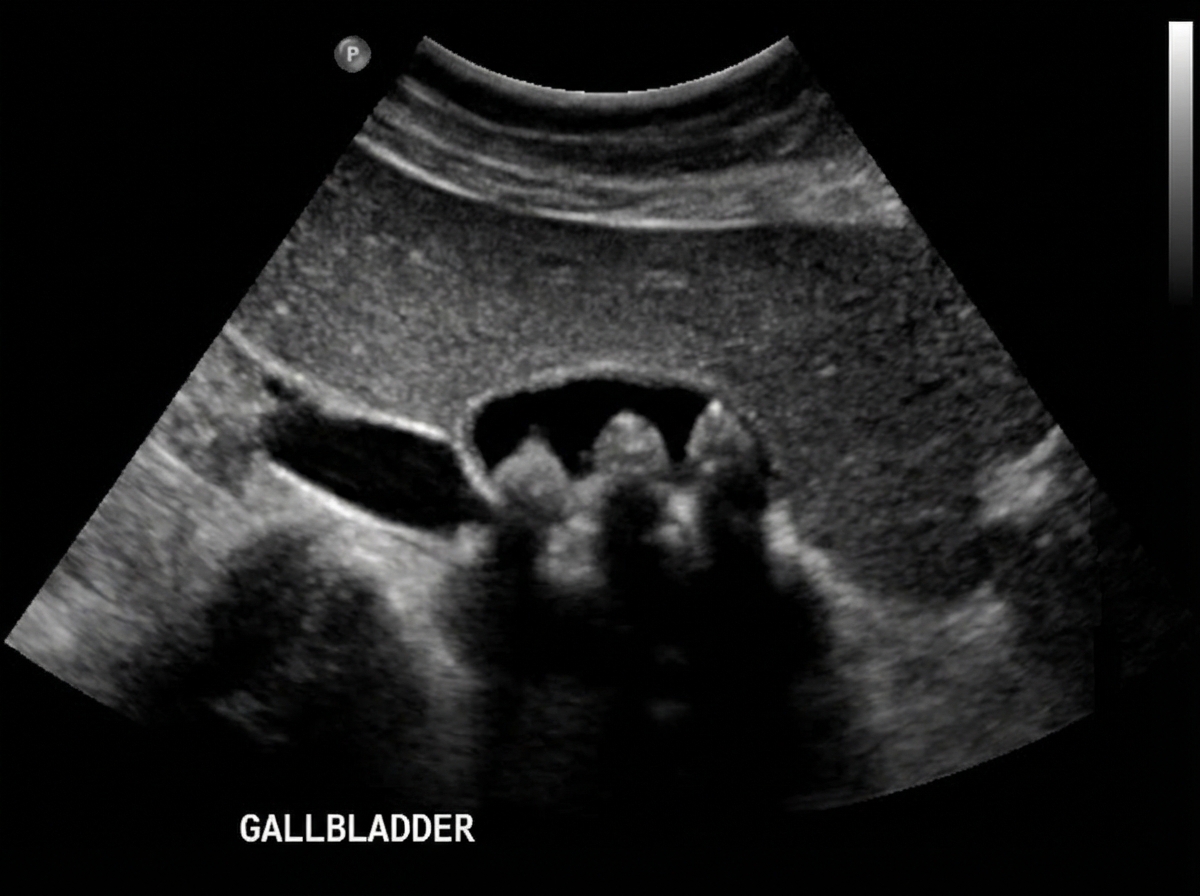
Ultrasonography of abdomen shows the following image. What is the pathogenesis of this ultrasound finding?
Q5
A 55-year-old woman with rheumatoid arthritis comes to the physician because of a 3-month history of worsening fatigue and dyspnea. She has felt short-of-breath when walking up the stairs to her apartment. Menopause occurred 5 years ago. Her medications are methotrexate and folic acid supplementation. Physical examination shows conjunctival pallor, tenderness of bilateral wrists and knees, and ulnar deviation of the fingers. Her hematocrit is 27%, mean corpuscular volume is 84 μm3, and serum ferritin is 375 ng/mL. Which of the following has most likely contributed to the patient's current symptoms?
Q6
A 60-year-old woman presents to the emergency department due to progressive shortness of breath and a dry cough for the past week. She notes that her symptoms are exacerbated by physical activity and relieved by rest. The woman was diagnosed with chronic kidney disease 2 years ago and was recently started on regular dialysis treatment. Her pulse rate is 105/min, blood pressure is 110/70 mm Hg, respiratory rate is 30/min, and temperature is 37.8°C (100.0°F). On examination of the respiratory system, there is dullness on percussion, decreased vocal tactile fremitus, and decreased breath sounds over the right lung base. The rest of the physical exam is within normal limits. Which of the following is the most likely cause of this patient’s symptoms?
Q7
A 3-month-old male is brought to the emergency room by his mother who reports that the child has a fever. The child was born at 39 weeks of gestation and is at the 15th and 10th percentiles for height and weight, respectively. The child has a history of eczema. Physical examination reveals an erythematous fluctuant mass on the patient's inner thigh. His temperature is 101.1°F (38.4°C), blood pressure is 125/70 mmHg, pulse is 120/min, and respirations are 22/min. The mass is drained and the child is started on broad-spectrum antibiotics until the culture returns. The physician also orders a flow cytometry reduction of dihydrorhodamine, which is found to be abnormal. This patient is at increased risk of infections with which of the following organisms?
Q8
A 55-year-old woman comes to the physician because of a 6-month history of worsening shortness of breath on exertion and fatigue. She has type 1 diabetes mellitus, hypertension, hypercholesterolemia, and chronic kidney disease. Her mother was diagnosed with colon cancer at the age of 65 years. Her blood pressure is 145/92 mm Hg. Examination shows conjunctival pallor. Laboratory studies show:
Hemoglobin 9.2 g/dL
Mean corpuscular volume 88 μm3
Reticulocyte count 0.6 %
Serum
Ferritin 145 ng/mL
Creatinine 3.1 mg/dL
Calcium 8.8 mg/dL
A fecal occult blood test is pending. Which of the following is the most likely underlying cause of this patient's symptoms?
Q9
A 53-year-old woman presents to her primary care physician with complaints of pain and swelling in her hands and fingers. She states that she has had these symptoms since she was in her 20s, but they have recently become more severe. She states that her wedding ring no longer fits, due to increased swelling of her fingers. She is a 30-pack-year smoker with a body mass index (BMI) of 31 kg/m2. The vital signs include: blood pressure 122/78 mm Hg, heart rate 72/min, and respiratory rate 15/min. On physical exam, a mild systolic murmur is heard over the apex, and her lungs are clear bilaterally. There is swelling of all the digits bilaterally, and a yellow-white plaque is noted beneath 3 of her nail beds. When asked about the plaques, she states that she was given itraconazole for them about 3 weeks ago; however, the plaques did not resolve. When asked further about joint pain, she notes that she has had shoulder and knee pain for the last several years, although she has not sought medical care for this. Which of the following is the best initial step in this patient’s therapeutic management?
Chronic disease management models US Medical PG Practice Questions and MCQs
Question 1: A father brings his 3-year-old son to the pediatrician because he is concerned about his health. He states that throughout his son's life he has had recurrent infections despite proper treatment and hygiene. Upon reviewing the patient's chart, the pediatrician notices that the child has been infected multiple times with S. aureus, Aspergillus, and E. coli. Which of the following would confirm the most likely cause of this patient's symptoms?
A. Increased IgM, Decreased IgG, IgA, and IgE
B. Negative nitroblue-tetrazolium test (Correct Answer)
C. Positive nitroblue-tetrazolium test
D. Normal dihydrorhodamine (DHR) flow cytometry test
E. Increased IgE and IgA, Decreased IgM
Explanation: ***Negative nitroblue-tetrazolium test***
- A **negative nitroblue-tetrazolium (NBT) test** indicates an inability of phagocytes to produce a respiratory burst, which is characteristic of **Chronic Granulomatous Disease (CGD)**.
- CGD patients suffer from recurrent infections with catalase-positive organisms such as *Staphylococcus aureus*, *Aspergillus*, and *E. coli*, consistent with the patient's history.
*Increased IgM, Decreased IgG, IgA, and IgE*
- This pattern of immunoglobulin levels is characteristic of **X-linked hyper-IgM syndrome**, where there is a defect in CD40L on T cells.
- While it also causes recurrent infections, the typical pathogens differ from those stated in the question, often including *Pneumocystis jirovecii*.
*Positive nitroblue-tetrazolium test*
- A **positive NBT test** indicates that phagocytes are capable of producing a respiratory burst and forming superoxide, thus ruling out CGD.
- This result would be expected in a healthy individual or someone with an immunodeficiency not affecting the phagocytic oxidative burst.
*Normal dihydrorhodamine (DHR) flow cytometry test*
- A **normal DHR flow cytometry test** indicates that neutrophils can produce reactive oxygen species (ROS) effectively, meaning the respiratory burst is intact.
- This result would rule out CGD, as CGD patients have an abnormal (decreased) DHR test.
*Increased IgE and IgA, Decreased IgM*
- This specific pattern of immunoglobulin abnormalities is not typically associated with a single, well-defined primary immunodeficiency that would present with the described infections.
- **Hyper-IgE syndrome (Job's syndrome)**, for example, features very high IgE levels but usually a normal IgM.
Question 2: A pathologist receives a skin biopsy specimen from a patient who is suspected to have developed graft-versus-host disease (GVHD) following allogeneic stem-cell transplantation. The treating physician informs the pathologist that he is specifically concerned about the diagnosis as the patient developed skin lesions on the 90th-day post-transplantation and therefore, by definition, it should be considered a case of acute GVHD. However, the lesions clinically appear like those of chronic GVHD. The pathologist examines the slide under the microscope and confirms the diagnosis of chronic GVHD. Which of the following findings on skin biopsy is most likely to have helped the pathologist to confirm the diagnosis?
A. Complete separation of the dermis and epidermis
B. Focal vacuolization in the basal cell layer
C. Lymphocytic infiltration of the superficial dermis
D. Hypergranulosis (Correct Answer)
E. Diffuse vacuolization in the basal cell layer
Explanation: ***Hypergranulosis***
- The presence of **hypergranulosis** (thickening of the granular layer) is a characteristic histological feature often seen in **chronic graft-versus-host disease (GVHD)**, especially in the sclerodermoid variant.
- This finding, along with other changes like epidermal atrophy and dermal fibrosis, helps differentiate chronic GVHD from acute forms.
*Complete separation of the dermis and epidermis*
- **Dermal-epidermal separation** (e.g., **subepidermal bullae**) is characteristic of severe acute GVHD (grade III-IV), indicating extensive tissue damage.
- It is not a typical feature of chronic GVHD, and its presence would suggest a more acute process.
*Focal vacuolization in the basal cell layer*
- **Focal vacuolization** and **dyskeratosis** (apoptotic keratinocytes) in the basal layer are classic microscopic signs of **acute graft-versus-host disease (GVHD)**.
- While some basal layer changes can occur in chronic GVHD, focal involvement specifically points towards an acute process rather than chronic features.
*Lymphocytic infiltration of the superficial dermis*
- **Lymphocytic infiltrate** in the superficial dermis is present in both acute and chronic GVHD, making it a **non-specific finding** for differentiating between the two.
- More specific features are needed to confirm a diagnosis of chronic GVHD.
*Diffuse vacuolization in the basal cell layer*
- Diffuse **vacuolar degeneration** of the basal cell layer is also a hallmark of **acute graft-versus-host disease (GVHD)**, indicating early epidermal damage.
- This feature points towards an acute process rather than the typical changes observed in chronic GVHD.
Question 3: A 38-year-old woman comes to the physician for the first time because of a 2-year history of lower back pain and fatigue. She also says that she occasionally feels out of breath. Her symptoms are not associated with physical activity. She has seen multiple physicians over the past year. Extensive workup including blood and urine tests, abdominal ultrasound, MRI of the back, and cardiac stress testing have shown no abnormalities. The patient asks for a medication to alleviate her symptoms. Which of the following is the most appropriate response by the physician?
A. I would like to refer you to a psychiatric specialist to start behavioral psychotherapy.
B. Your symptoms are suggestive of a condition called somatic symptom disorder.
C. I would like to investigate your shortness of breath by performing coronary artery catheterization.
D. Your desire for pain medication is suggestive of a medication dependence disorder.
E. I would like to assess your symptoms causing you the most distress and schedule monthly follow-up appointments. (Correct Answer)
Explanation: ***"I would like to assess your symptoms causing you the most distress and schedule monthly follow-up appointments."***
- This response demonstrates **empathy** and a commitment to ongoing care, which is crucial for patients with **somatic symptoms** who often feel dismissed.
- Establishing a consistent relationship with a primary care physician can help manage chronic, unexplained symptoms and build **trust**, potentially reducing the need for extensive, often fruitless, investigations.
*"Your desire for pain medication is suggestive of a medication dependence disorder."*
- This statement is **judgmental** and incorrect, as the patient has not shown any signs of drug-seeking behavior beyond requesting medication for pain.
- It would likely damage the **doctor-patient relationship** and discourage the patient from seeking further help from this physician.
*"I would like to refer you to a psychiatric specialist to start behavioral psychotherapy."*
- While psychotherapy may be beneficial, immediately referring to a **psychologist** without first validating the patient's physical symptoms can make them feel dismissed.
- It's often more effective to integrate mental health support after a continued period of medical evaluation and relationship building.
*"Your symptoms are suggestive of a condition called somatic symptom disorder."*
- While the patient's symptoms are consistent with **somatic symptom disorder**, directly labeling the condition at the initial interaction might be perceived as diagnostic and **invalidating** to the patient, who believes their symptoms are purely physical.
- A more gradual approach, focusing on symptom management and observation, is usually preferred before introducing a psychiatric diagnosis.
*"I would like to investigate your shortness of breath by performing coronary artery catheterization."*
- The patient has already undergone an extensive cardiac stress test with **no abnormalities**, making an invasive procedure like catheterization unnecessary and potentially harmful.
- This approach ignores the previous negative workup and the chronic, unexplained nature of the symptoms, contributing to over-medicalization.
Question 4: A 13-year-old African American boy with sickle cell disease is brought to the emergency department with complaints of abdominal pain over the last 24 hours. The pain is situated in the right upper quadrant and is sharp in nature with a score of 8/10 and radiates to tip of the right scapula. He also complains of anorexia and nausea over the past 2 days. He has been admitted into the hospital several times for pain episodes involving his legs, hands, thighs, lower back, and abdomen. His last hospital admission was 4 months ago for acute chest pain, and he was treated with antibiotics, analgesics, and intravenous fluid. He takes hydroxyurea with occasional red blood cell exchange. Both of his parents are in good health. Temperature is 38°C (100.4°F), blood pressure is 133/88 mm Hg, pulse is 102/min, respiratory rate is 20/min, and BMI is 18 kg/m2. On examination, he is in pain with a tender abdomen with painful inspiration. Soft palpation of the right upper quadrant causes the patient to cry out in pain.
Laboratory test
Complete blood count
Hemoglobin 8.5 g/dL
MCV 82 fl
Leukocytes 13,500/mm3
Platelets 145,000/mm3
Basic metabolic panel
Serum Na+ 135 mEq/L
Serum K+ 3.9 mEq/L
Serum Cl- 101 mEq/L
Serum HCO3- 23 mEq/L
Liver function test
Serum bilirubin 2.8 mg/dL
Direct bilirubin 0.8 mg/dL
AST
30 U/L
ALT 35 U/L
Serum haptoglobin 23 mg/dL (41–165 mg/dL)
Ultrasonography of abdomen shows the following image. What is the pathogenesis of this ultrasound finding?
A. Increased cholesterol secretion
B. Chronic hemolysis (Correct Answer)
C. Impaired gallbladder emptying
D. Bacterial infection
E. Decreased bile salt absorption
Explanation: ***Chronic hemolysis***
- The patient has **sickle cell disease**, which is characterized by **chronic hemolysis**, leading to increased bilirubin production.
- This increased **bilirubin** is excreted into the bile, predisposing to the formation of **pigment gallstones** (seen on ultrasound as echogenic foci with posterior shadowing, consistent with gallstones in the gallbladder).
*Increased cholesterol secretion*
- This is primarily associated with the formation of **cholesterol gallstones**, which are less common in sickle cell disease.
- While cholesterol secretion can contribute to gallstone formation, the underlying pathophysiology in sickle cell disease points more directly to bilirubin overload.
*Impaired gallbladder emptying*
- Impaired gallbladder emptying, or **gallbladder stasis**, can lead to the formation of gallstones and biliary sludge.
- However, it is not the primary mechanism for gallstone formation in the context of chronic hemolysis in sickle cell disease.
*Bacterial infection*
- While **bacterial infections** can lead to the formation of **pigment gallstones** containing bacterial biofilms, they are generally less common than the pigment stones formed due to chronic hemolysis.
- The patient's presentation with chronic sickle cell disease makes chronic hemolysis a more direct and primary cause.
*Decreased bile salt absorption*
- **Decreased bile salt absorption** can lead to a *reduced bile salt pool*, which in turn can increase the risk of cholesterol gallstone formation.
- It is not the main pathogenic mechanism for the formation of pigment gallstones seen in sickle cell disease.
Question 5: A 55-year-old woman with rheumatoid arthritis comes to the physician because of a 3-month history of worsening fatigue and dyspnea. She has felt short-of-breath when walking up the stairs to her apartment. Menopause occurred 5 years ago. Her medications are methotrexate and folic acid supplementation. Physical examination shows conjunctival pallor, tenderness of bilateral wrists and knees, and ulnar deviation of the fingers. Her hematocrit is 27%, mean corpuscular volume is 84 μm3, and serum ferritin is 375 ng/mL. Which of the following has most likely contributed to the patient's current symptoms?
A. Increased release of iron from macrophages
B. Increased activity of ferroportin-1 in enterocytes
C. Increased production of reticulocytes in bone marrow
D. Increased concentration of transferrin in serum
E. Increased release of hepcidin by hepatocytes (Correct Answer)
Explanation: ***Increased release of hepcidin by hepatocytes***
- The patient has anemia of chronic disease (ACD) due to rheumatoid arthritis, characterized by fatigue, dyspnea, pallor, a low hematocrit (27%), and normal MCV (84 μm3), with an elevated ferritin (375 ng/mL).
- **Hepcidin**, released by the liver in response to inflammation, blocks iron release from macrophages and enterocytes, leading to iron sequestration and reduced iron availability for erythropoiesis.
*Increased release of iron from macrophages*
- In ACD, **iron is sequestered** within macrophages, and its release is *decreased* due to hepcidin's action on ferroportin.
- This leads to reduced circulating iron, despite normal or elevated iron stores.
*Increased activity of ferroportin-1 in enterocytes*
- **Ferroportin-1** activity in enterocytes is *reduced* by hepcidin in ACD, leading to decreased iron absorption from the diet.
- This contributes to the functional iron deficiency seen in chronic inflammation.
*Increased production of reticulocytes in bone marrow*
- Anemia of chronic disease is characterized by **impaired erythropoiesis**, not increased reticulocyte production.
- The bone marrow’s response to anemia is blunted due to decreased iron availability and suppression by inflammatory cytokines.
*Increased concentration of transferrin in serum*
- In ACD, **transferrin levels are typically decreased** (or normal), which is in contrast to iron deficiency anemia where transferrin is usually elevated to compensate for low iron.
- Hepcidin's action reduces the overall iron carrying capacity.
Question 6: A 60-year-old woman presents to the emergency department due to progressive shortness of breath and a dry cough for the past week. She notes that her symptoms are exacerbated by physical activity and relieved by rest. The woman was diagnosed with chronic kidney disease 2 years ago and was recently started on regular dialysis treatment. Her pulse rate is 105/min, blood pressure is 110/70 mm Hg, respiratory rate is 30/min, and temperature is 37.8°C (100.0°F). On examination of the respiratory system, there is dullness on percussion, decreased vocal tactile fremitus, and decreased breath sounds over the right lung base. The rest of the physical exam is within normal limits. Which of the following is the most likely cause of this patient’s symptoms?
A. Primary spontaneous pneumothorax (PSP)
B. Pleural effusion (Correct Answer)
C. Acute bronchitis
D. Pneumonia
E. Pulmonary tuberculosis (TB)
Explanation: ***Pleural effusion***
- The patient's symptoms of **progressive shortness of breath**, **dry cough**, and physical exam findings of **dullness to percussion**, **decreased vocal tactile fremitus**, and **decreased breath sounds** over the right lung base are classic signs of a **pleural effusion**.
- Given her history of **chronic kidney disease** and recent initiation of **dialysis**, she is at high risk for fluid overload, which can lead to **transudative pleural effusions** due to **increased hydrostatic pressure**.
*Primary spontaneous pneumothorax (PSP)*
- PSP typically presents with **sudden onset of pleuritic chest pain** and **shortness of breath**, not a progressive onset over a week.
- Physical exam findings for pneumothorax include **hyperresonance to percussion** and **absent or diminished breath sounds**, but **vocal tactile fremitus would be decreased or absent**, which is similar to pleural effusion. However, the patient's presentation of gradual onset and risk factors for fluid overload point away from a PSP.
*Acute bronchitis*
- Acute bronchitis usually presents with a **productive cough**, and symptoms are often preceded by an **upper respiratory tract infection**.
- Physical exam findings typically include **wheezing** or **rhonchi**, with normal percussion and fremitus, differing from the described findings.
*Pneumonia*
- Pneumonia would typically present with a **productive cough**, **fever**, and signs of consolidation on lung exam, such as **bronchial breath sounds** and **increased vocal fremitus**, along with dullness to percussion.
- While dullness and decreased breath sounds can be present, the **decreased vocal tactile fremitus** observed here strongly suggests fluid in the pleural space rather than consolidation.
*Pulmonary tuberculosis (TB)*
- Pulmonary TB often presents with **chronic cough (often productive)**, **night sweats**, **weight loss**, and **low-grade fever**, which are not the primary symptoms described.
- While CXR findings can vary, the acute presentation with clear signs of fluid accumulation in a patient with kidney disease makes TB less likely without other predisposing factors or prolonged symptomatology.
Question 7: A 3-month-old male is brought to the emergency room by his mother who reports that the child has a fever. The child was born at 39 weeks of gestation and is at the 15th and 10th percentiles for height and weight, respectively. The child has a history of eczema. Physical examination reveals an erythematous fluctuant mass on the patient's inner thigh. His temperature is 101.1°F (38.4°C), blood pressure is 125/70 mmHg, pulse is 120/min, and respirations are 22/min. The mass is drained and the child is started on broad-spectrum antibiotics until the culture returns. The physician also orders a flow cytometry reduction of dihydrorhodamine, which is found to be abnormal. This patient is at increased risk of infections with which of the following organisms?
A. Giardia lamblia
B. Streptococcus viridans
C. Aspergillus fumigatus (Correct Answer)
D. Enterococcus faecalis
E. Streptococcus pyogenes
Explanation: ***Aspergillus fumigatus***
- The abnormal **dihydrorhodamine (DHR) flow cytometry** test indicates **chronic granulomatous disease (CGD)**, a defect in phagocyte function.
- Patients with CGD are particularly susceptible to **catalase-positive organisms**, including *Aspergillus* species, *Staphylococcus aureus*, *Serratia marcescens*, *Burkholderia cepacia*, and *Nocardia* species.
*Giardia lamblia*
- *Giardia lamblia* is a **protozoan parasite** causing gastrointestinal infections, and susceptibility to it is primarily linked to **IgA deficiency**, not phagocyte dysfunction.
- While patients with **immunodeficiencies** can have increased risk, CGD is not specifically associated with *Giardia* infections.
*Streptococcus viridans*
- *Streptococcus viridans* are **catalase-negative bacteria** and cause infections typically in patients with **valvular heart disease** or those undergoing dental procedures, and are not commonly associated with CGD.
- CGD patients are more prone to infections by **catalase-positive organisms**, which this bacterium is not.
*Enterococcus faecalis*
- *Enterococcus faecalis* is a **catalase-negative bacterium** that primarily causes **urinary tract infections** and endocarditis, particularly in hospitalized patients.
- While it can cause opportunistic infections, its catalase-negative status makes it less relevant to the specific phagocytic defect in CGD.
*Streptococcus pyogenes*
- *Streptococcus pyogenes* is a **catalase-negative bacterium** responsible for diseases like strep throat, scarlet fever, and necrotizing fasciitis.
- Susceptibility to *S. pyogenes* is generally not increased in CGD patients due to its **catalase-negative nature**, which allows phagocytes to still effectively kill it.
Question 8: A 55-year-old woman comes to the physician because of a 6-month history of worsening shortness of breath on exertion and fatigue. She has type 1 diabetes mellitus, hypertension, hypercholesterolemia, and chronic kidney disease. Her mother was diagnosed with colon cancer at the age of 65 years. Her blood pressure is 145/92 mm Hg. Examination shows conjunctival pallor. Laboratory studies show:
Hemoglobin 9.2 g/dL
Mean corpuscular volume 88 μm3
Reticulocyte count 0.6 %
Serum
Ferritin 145 ng/mL
Creatinine 3.1 mg/dL
Calcium 8.8 mg/dL
A fecal occult blood test is pending. Which of the following is the most likely underlying cause of this patient's symptoms?
A. Decreased erythropoietin production (Correct Answer)
B. Chronic occult blood loss
C. Deficient vitamin B12 intake
D. Hematopoietic progenitor cell mutation
E. Autoantibodies against the thyroid gland
Explanation: ***Decreased erythropoietin production***
- The patient's **chronic kidney disease** (CKD) with a creatinine of 3.1 mg/dL is the most likely cause of her **normocytic anemia** and low reticulocyte count. The kidneys produce **erythropoietin (EPO)**, and in CKD, this production is impaired, leading to insufficient stimulation of red blood cell production.
- Her **normocytic anemia** (MCV 88 μm3) and **low reticulocyte count** (0.6%) indicate an underproduction of red blood cells, rather than a problem with cell size or destruction, which is characteristic of anemia of chronic kidney disease.
*Chronic occult blood loss*
- While chronic blood loss can cause anemia, it typically leads to **iron deficiency anemia**, characterized by **microcytic anemia** (low MCV) and **low ferritin** levels. This patient has a normocytic MCV and a normal ferritin level.
- The patient's presentation with **normocytic anemia** and **normal ferritin** makes chronic occult blood loss less likely as the primary cause, even though a fecal occult blood test is pending.
*Deficient vitamin B12 intake*
- Vitamin B12 deficiency causes **macrocytic (megaloblastic) anemia**, characterized by an **elevated MCV** (Mean Corpuscular Volume). This patient has a normocytic MCV (88 μm3).
- Symptoms of vitamin B12 deficiency can also include neurological manifestations, which are not mentioned in this patient's presentation.
*Hematopoietic progenitor cell mutation*
- A **hematopoietic progenitor cell mutation** could lead to conditions like myelodysplastic syndromes or aplastic anemia, which often present with pancytopenia or characteristic abnormal blood cell morphologies.
- The isolated normocytic anemia with a clear underlying cause (CKD) makes a primary bone marrow disorder less likely, especially with a normal ferritin and MCV.
*Autoantibodies against the thyroid gland*
- **Hypothyroidism** due to autoantibodies can cause fatigue, but it typically causes **anemia that is normocytic or macrocytic**, and often linked to iron deficiency or pernicious anemia, or less commonly, directly due to decreased erythropoiesis.
- While fatigue can be a symptom, it would not explain the specific laboratory findings of **normocytic anemia with low reticulocytes in a patient with significant renal failure** as well as decreased erythropoietin production does.
Question 9: A 53-year-old woman presents to her primary care physician with complaints of pain and swelling in her hands and fingers. She states that she has had these symptoms since she was in her 20s, but they have recently become more severe. She states that her wedding ring no longer fits, due to increased swelling of her fingers. She is a 30-pack-year smoker with a body mass index (BMI) of 31 kg/m2. The vital signs include: blood pressure 122/78 mm Hg, heart rate 72/min, and respiratory rate 15/min. On physical exam, a mild systolic murmur is heard over the apex, and her lungs are clear bilaterally. There is swelling of all the digits bilaterally, and a yellow-white plaque is noted beneath 3 of her nail beds. When asked about the plaques, she states that she was given itraconazole for them about 3 weeks ago; however, the plaques did not resolve. When asked further about joint pain, she notes that she has had shoulder and knee pain for the last several years, although she has not sought medical care for this. Which of the following is the best initial step in this patient’s therapeutic management?
A. Administer methotrexate
B. Administer indomethacin
C. Administer indomethacin and methotrexate (Correct Answer)
D. Administer sulfasalazine
E. Administer indomethacin and sulfasalazine
Explanation: ***Administer indomethacin and methotrexate***
- This patient presents with symptoms highly suggestive of **psoriatic arthritis**, including typical joint pain distribution (hands, fingers, shoulders, knees), **dactylitis** (swelling of all digits causing the wedding ring to no longer fit), and **nail lesions** (yellow-white plaques unresponsive to antifungals).
- Given the patient's severe and chronic symptoms, a **combination of a non-steroidal anti-inflammatory drug (NSAID) like indomethacin for symptomatic relief and a disease-modifying anti-rheumatic drug (DMARD) like methotrexate** is the most appropriate initial therapy to control inflammation and prevent joint damage.
*Administer methotrexate*
- While **methotrexate** is a cornerstone DMARD for psoriatic arthritis, it takes several weeks to exert its full therapeutic effects.
- Administering methotrexate alone would not provide immediate relief for the patient's significant pain and swelling.
*Administer indomethacin*
- **Indomethacin**, an NSAID, would provide symptomatic relief from pain and inflammation.
- However, NSAIDs alone do not modify the disease course or prevent joint damage in psoriatic arthritis; therefore, it is an insufficient long-term monotherapy.
*Administer sulfasalazine*
- **Sulfasalazine** is an alternative DMARD used in psoriatic arthritis, often considered for patients who cannot tolerate methotrexate or for milder forms, especially with peripheral arthritis.
- However, for a patient with severe, chronic, and potentially erosive disease suggested by long-standing symptoms and diffuse dactylitis, **methotrexate is generally preferred due to its stronger efficacy profile** as an initial DMARD for psoriatic arthritis if no contraindications exist.
*Administer indomethacin and sulfasalazine*
- This combination provides short-term symptomatic relief (indomethacin) and long-term disease modification (sulfasalazine).
- While a valid option, **methotrexate is generally considered the first-line DMARD for psoriatic arthritis**, especially in severe cases, due to its greater efficacy in controlling both skin and joint manifestations compared to sulfasalazine.
Want unlimited practice?
Get full access to all questions, explanations, and performance tracking.