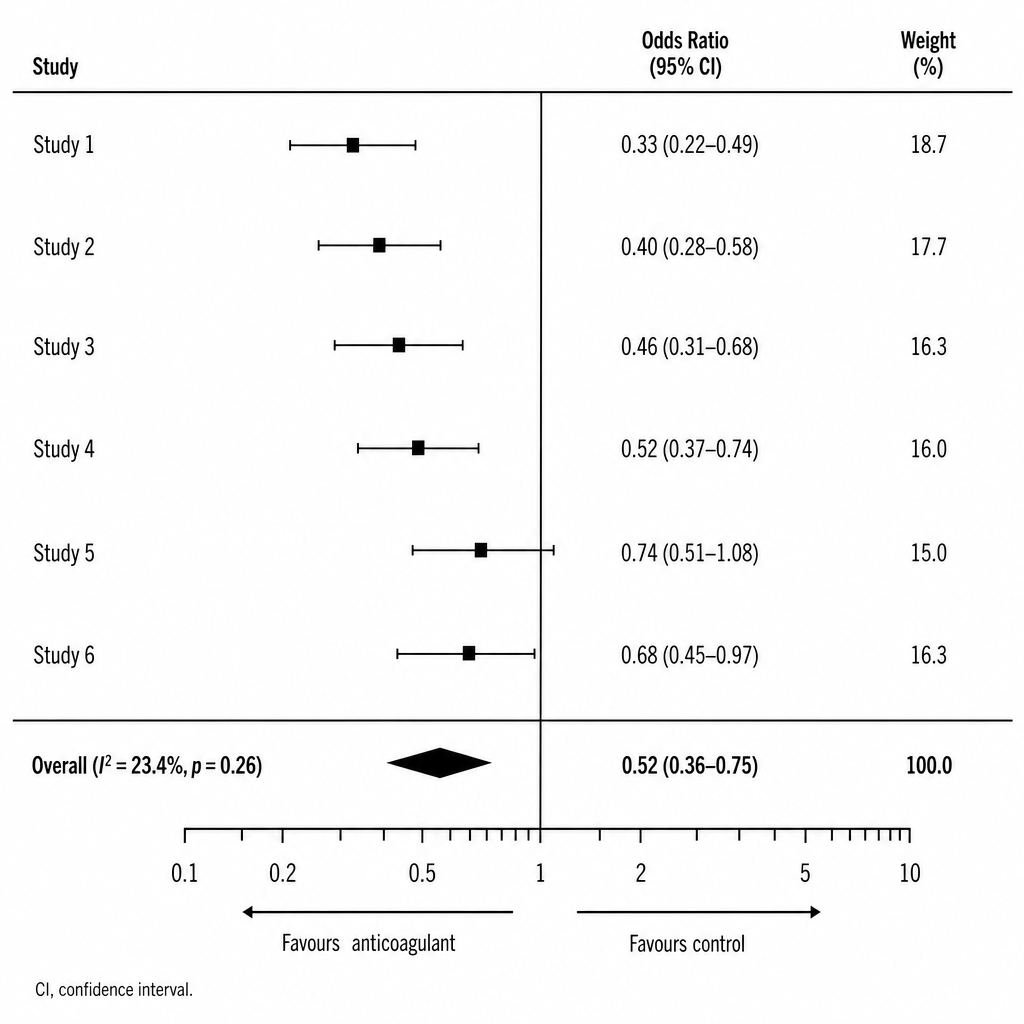
A research fellow proposes a nested case-control study within an existing cohort examining antibiotic exposure and C. difficile infection. The mentor suggests this design wastes the cohort structure and that relative risk should be calculated instead. The fellow argues that odds ratios from nested case-control studies approximate relative risk while being more efficient. Evaluate the validity of each position and synthesize the optimal approach.
Q2
Two studies examine statin therapy and stroke prevention. Study A (cohort, n=10,000) reports RR=0.75. Study B (case-control, n=2,000) reports OR=0.68. The absolute stroke rate in the general population is 2% over 5 years. Analyze these findings to determine which study provides more accurate information for clinical decision-making and why.
Q3
A genetic epidemiology study uses a case-control design to examine BRCA1 mutations and breast cancer risk, reporting an odds ratio of 15.0 (95% CI: 8.2-27.4). A patient with a BRCA1 mutation asks what this means for her actual risk of developing breast cancer. Evaluate how to appropriately counsel this patient regarding the study findings.
Q4
A hospital quality improvement team analyzes surgical site infections (SSI) following colorectal surgery. In Year 1 (pre-intervention), 50 of 500 surgeries resulted in SSI. After implementing a bundle protocol in Year 2, 20 of 500 surgeries resulted in SSI. The team debates whether to report odds ratio or relative risk. Apply your understanding to select the most appropriate measure and calculate it.
Q5
A cross-sectional study of 5,000 adults examines the association between obesity (BMI ≥30) and diabetes. Results show 800 obese individuals with 240 having diabetes, and 4,200 non-obese individuals with 420 having diabetes. The researchers calculate an odds ratio of 3.2. A reviewer criticizes the choice of odds ratio for a cross-sectional design. Evaluate which measure is most appropriate and why.
Q6
A meta-analysis combines data from 5 case-control studies and 3 cohort studies examining the association between NSAID use and myocardial infarction. The case-control studies report odds ratios ranging from 1.3-1.8, while cohort studies report relative risks of 1.2-1.4. Analyze why these measures differ and evaluate the appropriate approach for combining these studies.
Q7
A pharmaceutical company conducts a randomized controlled trial of a new anticoagulant. After analyzing 2,000 patients (1,000 per arm), they report an odds ratio of 0.6 for stroke prevention compared to standard therapy. The medical director questions why odds ratio was used instead of relative risk for a prospective randomized trial. Apply your understanding to determine the most appropriate measure and rationale.
Q8
A retrospective case-control study examines the association between oral contraceptive use and venous thromboembolism (VTE). The calculated odds ratio is 3.2 with a 95% confidence interval of 2.1-4.8. A colleague suggests converting this to relative risk to better communicate the findings to patients. Evaluate the appropriateness of this conversion.
Q9
A cohort study follows 1,000 healthcare workers for 5 years to assess the relationship between annual influenza vaccination and development of influenza infection. Among 600 vaccinated workers, 30 developed influenza. Among 400 unvaccinated workers, 80 developed influenza. Calculate the relative risk of developing influenza for vaccinated versus unvaccinated workers.
Q10
A research team conducts a case-control study examining the relationship between smoking and lung cancer. They identify 200 patients with lung cancer (cases) and 200 matched controls without lung cancer. Among cases, 160 were smokers and 40 were non-smokers. Among controls, 80 were smokers and 120 were non-smokers. Calculate the odds ratio for this study.
Odds ratio vs. relative risk US Medical PG Practice Questions and MCQs
Question 1: A research fellow proposes a nested case-control study within an existing cohort examining antibiotic exposure and C. difficile infection. The mentor suggests this design wastes the cohort structure and that relative risk should be calculated instead. The fellow argues that odds ratios from nested case-control studies approximate relative risk while being more efficient. Evaluate the validity of each position and synthesize the optimal approach.
A. Calculate RR from full cohort since all data are available and RR is more interpretable
B. Use nested case-control only if computational resources are limited, otherwise use full cohort
C. Use nested case-control with OR since it's mathematically equivalent to cohort RR with proper sampling (Correct Answer)
D. Perform both analyses and compare results to validate the nested case-control approach
E. Calculate hazard ratios using Cox regression as a compromise between efficiency and accuracy
Explanation: ***Use nested case-control with OR since it's mathematically equivalent to cohort RR with proper sampling***
- In a **nested case-control study** using **incidence density sampling** (risk-set sampling), the **Odds Ratio (OR)** provides an unbiased estimate of the **Rate Ratio** or **Relative Risk (RR)** without requiring the rare disease assumption.
- This design is highly efficient as it preserves the **temporal sequence** of the cohort while significantly reducing the need to process exposure data for the entire **at-risk population**.
*Calculate RR from full cohort since all data are available and RR is more interpretable*
- While **Relative Risk** is intuitive, calculating it requires data for the **entire denominator**, which may be prohibitively expensive or time-consuming if additional exposure processing (e.g., biomarker testing) is needed.
- The mentor's insistence ignores the **efficiency gains** of the nested design, which provides the same statistical inference with a fraction of the data processing.
*Perform both analyses and compare results to validate the nested case-control approach*
- Performing both analyses is redundant and contradicts the primary goal of using a **nested case-control** design, which is to **save resources** by not analyzing the full cohort.
- Validation is unnecessary because the **mathematical validity** of the nested case-control method is already well-established in epidemiological theory.
*Use nested case-control only if computational resources are limited, otherwise use full cohort*
- The primary limitation addressed by nested designs is usually **resource-intensive exposure assessment** (e.g., expensive lab assays) rather than mere **computational power**.
- Even if resources are available, the nested approach is often preferred in large cohorts to maintain a manageable **sub-sample** while achieving nearly identical statistical power.
*Calculate hazard ratios using Cox regression as a compromise between efficiency and accuracy*
- **Cox regression** is typically performed on the **full cohort** data, whereas the fellow is specifically proposing a sampling method to reduce the data set size.
- While a **Hazard Ratio** is a valid measure of effect, it does not solve the resource issue unless used in conjunction with a **case-cohort** or nested design, which leads back to the fellow's original point.
Question 2: Two studies examine statin therapy and stroke prevention. Study A (cohort, n=10,000) reports RR=0.75. Study B (case-control, n=2,000) reports OR=0.68. The absolute stroke rate in the general population is 2% over 5 years. Analyze these findings to determine which study provides more accurate information for clinical decision-making and why.
A. Study B because case-control designs eliminate confounding
B. Study B because odds ratios are more generalizable across populations
C. Study A because relative risk is always more accurate than odds ratio
D. Study A because the cohort design allows calculation of absolute risk reduction (Correct Answer)
E. Both are equally valid since stroke is a rare outcome making OR approximate RR
Explanation: ***Study A because the cohort design allows calculation of absolute risk reduction***
- **Study A (Cohort)** is superior for clinical decision-making because it directly measures **incidence**, enabling the calculation of **Absolute Risk Reduction (ARR)** and **Number Needed to Treat (NNT)**.
- **Cohort studies** establish a clear **temporal relationship** between exposure and outcome, providing stronger evidence for causality compared to retrospective designs.
*Study A because relative risk is always more accurate than odds ratio*
- **Relative Risk (RR)** is not inherently more "accurate," but it is mathematically more appropriate for describing risk in populations where **incidence** is known.
- The term accuracy refers to the lack of **bias** and **random error**, whereas RR and OR are simply different measures of association depending on study design.
*Study B because case-control designs eliminate confounding*
- **Case-control designs** are actually more prone to **selection and recall bias** and do not inherently eliminate **confounding** better than cohort studies.
- Confounding is typically controlled through **matching**, **stratification**, or **multivariate analysis** regardless of the study design used.
*Study B because odds ratios are more generalizable across populations*
- **Odds Ratios (OR)** are not more generalizable; they are frequently used in case-control studies because **incidence** cannot be directly calculated in those samples.
- Generalizability depends on the **representativeness** of the study sample to the target population, not on the mathematical measure (OR vs RR) used.
*Both are equally valid since stroke is a rare outcome making OR approximate RR*
- While the **Rare Disease Assumption** states that OR approximates RR when outcome prevalence is low (<10%), their clinical utility still differs.
- Even if the values are similar, the **Cohort study (Study A)** remains more robust for clinical decisions as it provides the **denominator** needed to calculate absolute benefits.
Question 3: A genetic epidemiology study uses a case-control design to examine BRCA1 mutations and breast cancer risk, reporting an odds ratio of 15.0 (95% CI: 8.2-27.4). A patient with a BRCA1 mutation asks what this means for her actual risk of developing breast cancer. Evaluate how to appropriately counsel this patient regarding the study findings.
A. The confidence interval suggests her risk is between 8-27 times higher
B. The odds ratio cannot be directly interpreted as risk; population incidence data are needed (Correct Answer)
C. Convert OR to RR using the formula: RR = OR/(1 + P0(OR-1)) where P0 is baseline risk
D. Her risk is 15 times higher than women without the mutation
E. She has a 15% absolute risk of developing breast cancer
Explanation: ***The odds ratio cannot be directly interpreted as risk; population incidence data are needed***
- In a **case-control study**, the **Odds Ratio (OR)** represents the odds of exposure among cases versus controls, not the **probability** or risk of developing the disease.
- To determine actual **individual risk**, information on the **baseline population incidence** or absolute risk is required, which this study design does not provide.
*Her risk is 15 times higher than women without the mutation*
- This statement incorrectly equates OR with **Relative Risk (RR)**; while they are similar for rare diseases, they are distinct mathematical concepts.
- An OR of 15.0 means the **odds** are 15 times higher, but the **risk** (probability) might be lower than 15-fold depending on the prevalence.
*She has a 15% absolute risk of developing breast cancer*
- The OR is a **ratio of odds**, not a **percentage of absolute risk**; a value of 15.0 describes the strength of association, not a 15/100 probability.
- Absolute risk can only be calculated from **cohort studies** where the incidence of the disease is measured over time.
*Convert OR to RR using the formula: RR = OR/(1 + P0(OR-1)) where P0 is baseline risk*
- While this formula is mathematically used to convert OR to RR, it requires knowledge of the **baseline risk (P0)** in the unexposed population, which is not provided in a case-control study.
- Providing this formula to a patient is clinically inappropriate for **counseling** as it does not translate directly to her personal clinical outcome.
*The confidence interval suggests her risk is between 8-27 times higher*
- The **95% Confidence Interval (CI)** describes the precision and statistical significance of the **odds ratio**, not the range of individual risk.
- Using the CI to estimate **magnitude of risk** for a patient persists the same error of treating the OR as an equivalent to Relative Risk.
Question 4: A hospital quality improvement team analyzes surgical site infections (SSI) following colorectal surgery. In Year 1 (pre-intervention), 50 of 500 surgeries resulted in SSI. After implementing a bundle protocol in Year 2, 20 of 500 surgeries resulted in SSI. The team debates whether to report odds ratio or relative risk. Apply your understanding to select the most appropriate measure and calculate it.
A. Relative risk of 2.50, showing the magnitude of improvement
B. Odds ratio of 2.78, comparing Year 1 to Year 2
C. Odds ratio of 0.36, because it's more stable with small numbers
D. Relative risk of 0.40, because true incidence rates can be calculated (Correct Answer)
E. Risk difference of 6%, as it's most clinically meaningful
Explanation: ***Relative risk of 0.40, because true incidence rates can be calculated***
- **Relative Risk (RR)** is the ideal measure for **cohort studies** or clinical interventions where the outcome incidence is directly observed in a fixed population over time.
- Incidence in Year 2 (20/500 = 0.04) divided by incidence in Year 1 (50/500 = 0.10) equals a **Relative Risk of 0.40**, indicating a 60% reduction in SSI risk.
*Odds ratio of 0.36, because it's more stable with small numbers*
- The **Odds Ratio (OR)** is calculated as (20/480) / (50/450), which equals approximately **0.375** (or 0.36 if rounded differently), but it is primarily used for **case-control studies**.
- While OR can estimate RR in rare diseases, **Relative Risk** is more intuitive and preferred when denominators (total population at risk) are known.
*Odds ratio of 2.78, comparing Year 1 to Year 2*
- This value represents the **reciprocal** of the odds ratio, which would describe the increased odds of infection in Year 1 compared to Year 2.
- Reporting an OR > 1 for an intervention meant to reduce infections is misleading and does not represent the effect of the **bundle protocol** correctly.
*Relative risk of 2.50, showing the magnitude of improvement*
- An **RR of 2.50** is calculated by dividing the Year 1 risk by the Year 2 risk (0.10 / 0.04), which incorrectly suggests the outcome increased.
- This value represents the **risk ratio** of the control group relative to the intervention group, rather than the impact of the **preventative measure** itself.
*Risk difference of 6%, as it's most clinically meaningful*
- The **Risk Difference** (Absolute Risk Reduction) is indeed 6% (0.10 - 0.04 = 0.06), but the calculation required by the team's debate specifically focused on RR vs. OR.
- While useful for calculating the **Number Needed to Treat (NNT)**, specific relative measures like **Relative Risk** provide a clearer picture of the proportional effect of the protocol.
Question 5: A cross-sectional study of 5,000 adults examines the association between obesity (BMI ≥30) and diabetes. Results show 800 obese individuals with 240 having diabetes, and 4,200 non-obese individuals with 420 having diabetes. The researchers calculate an odds ratio of 3.2. A reviewer criticizes the choice of odds ratio for a cross-sectional design. Evaluate which measure is most appropriate and why.
A. Prevalence ratio should be calculated since this measures disease prevalence, not incidence (Correct Answer)
B. Relative risk is appropriate since exposure and outcome are assessed simultaneously
C. Risk ratio and odds ratio are equivalent in cross-sectional studies
D. Odds ratio is correct since cross-sectional studies cannot determine temporal relationships
E. Neither measure is valid without establishing temporal sequence
Explanation: ***Prevalence ratio should be calculated since this measures disease prevalence, not incidence***
- In a **cross-sectional study**, the **prevalence ratio (PR)** is the most appropriate measure because the study captures data at a single point in time, measuring existing cases (**prevalence**) rather than new ones (**incidence**).
- The PR directly compares the prevalence of the outcome in the exposed versus unexposed groups, whereas the **odds ratio** may overestimate the association if the outcome is common (e.g., >10%).
*Odds ratio is correct since cross-sectional studies cannot determine temporal relationships*
- While the **Odds Ratio (OR)** is commonly used in cross-sectional studies, it is considered a surrogate and is primarily the definitive measure for **case-control studies**.
- The OR does not account for the **time-at-risk** or the proportion of the population already affected, potentially leading to a biased interpretation of the association.
*Relative risk is appropriate since exposure and outcome are assessed simultaneously*
- **Relative Risk (Risk Ratio)** requires **incidence** data, which is only obtainable through **longitudinal studies** (prospective cohorts) where subjects are followed over time.
- Because a cross-sectional study assesses exposure and outcome **simultaneously**, it cannot establish the **temporal sequence** necessary to define true risk.
*Risk ratio and odds ratio are equivalent in cross-sectional studies*
- These measures are only approximately equivalent when the disease is **rare** (the **rare disease assumption**); they diverge significantly when the outcome is common.
- In this scenario, the disease is not rare (prevalence is 10-30%), meaning the **Odds Ratio** will be much higher than the **Risk Ratio** or **Prevalence Ratio**.
*Neither measure is valid without establishing temporal sequence*
- While the lack of **temporal sequence** is a limitation of cross-sectional studies (leading to **protopathic bias**), measures of association like PR and OR are still valid for describing the existing relationship.
- Point-in-time associations are critical for **public health planning** and hypothesis generation, even if they do not definitively prove **causality**.
Question 6: A meta-analysis combines data from 5 case-control studies and 3 cohort studies examining the association between NSAID use and myocardial infarction. The case-control studies report odds ratios ranging from 1.3-1.8, while cohort studies report relative risks of 1.2-1.4. Analyze why these measures differ and evaluate the appropriate approach for combining these studies.
A. Perform separate meta-analyses for case-control and cohort studies due to different effect measures (Correct Answer)
B. Convert all measures to relative risk using baseline population MI incidence
C. Weight the cohort studies more heavily since RR is more accurate than OR
D. Combine all studies using odds ratios since OR approximates RR for rare outcomes
E. Use hazard ratios as the common metric since MI has a time-to-event component
Explanation: ***Perform separate meta-analyses for case-control and cohort studies due to different effect measures***
- Combining different study designs directly is inappropriate because **Odds Ratios (OR)** and **Relative Risks (RR)** represent different statistical properties and come from different levels of **epidemiological evidence**.
- Subgroup analysis by **study design** allows the researcher to assess if the association is consistent across different methodologies and prevents **methodological heterogeneity** from masking the true effect.
*Combine all studies using odds ratios since OR approximates RR for rare outcomes*
- Although the **rare disease assumption** allows OR to approximate RR, myocardial infarction in a high-risk NSAID-using population may not be rare enough to satisfy this mathematical condition.
- Forcing all data into a single metric ignores the inherent **selection and recall biases** unique to case-control studies versus the prospective nature of cohort studies.
*Convert all measures to relative risk using baseline population MI incidence*
- Converting OR to RR requires an accurate assessment of **baseline incidence** in the specific control groups, which is often not reported or available in meta-analyses.
- Mathematical conversion can introduce **extra error** and does not address the underlying differences in how data was collected in retrospective versus prospective frameworks.
*Use hazard ratios as the common metric since MI has a time-to-event component*
- **Hazard Ratios (HR)** require specific individual patient data or **Kaplan-Meier** curves, which are typically unavailable in retrospective case-control studies.
- While MI is a time-to-event outcome, case-control studies provide a "snapshot" of exposure and cannot be converted to **instantaneous risk** metrics like HR.
*Weight the cohort studies more heavily since RR is more accurate than OR*
- Meta-analysis weighting is traditionally based on **precision** (the inverse of the variance) rather than a subjective assessment of which study design is "more accurate."
- Simply weighting cohort studies more heavily does not solve the statistical problem of combining two mathematically distinct **effect measures** into a single pooled result.
Question 7: A pharmaceutical company conducts a randomized controlled trial of a new anticoagulant. After analyzing 2,000 patients (1,000 per arm), they report an odds ratio of 0.6 for stroke prevention compared to standard therapy. The medical director questions why odds ratio was used instead of relative risk for a prospective randomized trial. Apply your understanding to determine the most appropriate measure and rationale.
A. Relative risk should be calculated since true incidence can be determined in RCTs (Correct Answer)
B. Odds ratio is preferable because it remains constant across different baseline risks
C. Relative risk reduction should be used instead as it's more clinically meaningful
D. Odds ratio is correct because it can be used in logistic regression models
E. Either measure is equally appropriate and will yield identical results in RCTs
Explanation: ***Relative risk should be calculated since true incidence can be determined in RCTs***
- **Relative Risk (RR)** is the ideal measure for **Randomized Controlled Trials (RCTs)** because researchers can directly calculate the **incidence** of the outcome in both the treatment and control arms.
- Unlike retrospective studies, RCTs allow for the direct measurement of **cumulative incidence**, making RR a more precise and intuitive reflection of the probability of an event occurring.
*Odds ratio is correct because it can be used in logistic regression models*
- While **logistic regression** outputs **Odds Ratios**, it is a statistical methodology rather than a justification for choosing OR as the primary measure of effect in an RCT.
- Even if logistic regression is used for adjustment, the results are typically converted or reported alongside **Relative Risk** to maintain clinical relevance in prospective designs.
*Odds ratio is preferable because it remains constant across different baseline risks*
- While mathematically the **Odds Ratio** possesses some invariant properties across strata, it can **overestimate** the treatment effect compared to RR when the outcome is not rare.
- Clinical guidelines prefer **Relative Risk** in prospective settings because it provides a clearer understanding of how the intervention changes the **actual risk** of the event.
*Either measure is equally appropriate and will yield identical results in RCTs*
- OR and RR only yield identical results under the **"Rare Disease Assumption,"** where the incidence of the outcome is very low (usually **<10%**).
- In most clinical trials with common outcomes, the **Odds Ratio will be further from 1** than the Relative Risk, potentially leading to a biased perception of the drug's efficacy.
*Relative risk reduction should be used instead as it's more clinically meaningful*
- **Relative Risk Reduction (RRR)** is a derivative of RR (1 - RR), but it is a descriptive statistic of the benefit rather than the primary measure of association used to determine **probability**.
- While meaningful for communication, the question asks for the most appropriate measure of association based on study design, which is the **Relative Risk** itself.
Question 8: A retrospective case-control study examines the association between oral contraceptive use and venous thromboembolism (VTE). The calculated odds ratio is 3.2 with a 95% confidence interval of 2.1-4.8. A colleague suggests converting this to relative risk to better communicate the findings to patients. Evaluate the appropriateness of this conversion.
A. Convert using the standard formula RR = OR/[(1-P0) + (P0×OR)]
B. Use Bayesian methods to estimate population prevalence first, then convert
C. The OR of 3.2 can be directly interpreted as RR since the CI doesn't include 1.0
D. Direct conversion is appropriate since OR approximates RR when disease is rare
E. Conversion is inappropriate because true disease incidence cannot be determined from case-control design (Correct Answer)
Explanation: ***Conversion is inappropriate because true disease incidence cannot be determined from case-control design***
- In a **case-control study**, we start with the outcome and look back at exposure; therefore, the **incidence of disease** cannot be calculated, making **Relative Risk (RR)** mathematically unobtainable.
- While formulas exist to convert **Odds Ratio (OR)** to RR, they require knowledge of the **incidence of the outcome** in the unexposed group, which is typically unavailable in case-control designs.
*Convert using the standard formula RR = OR/[(1-P0) + (P0×OR)]*
- This formula is used to correct OR when the **disease is not rare**, but it requires a reliable estimate of **P0 (baseline risk)**, which is not provided by a case-control study.
- Applying this formula without accurate **population-based incidence** data can lead to biased and misleading results for patients.
*Direct conversion is appropriate since OR approximates RR when disease is rare*
- The **rare disease assumption** states that OR approximates RR when the prevalence is <10%, but this allows **interpretation** of the OR as RR, not a literal mathematical conversion.
- This option is incorrect because the question asks about the **appropriateness of conversion**, and the lack of incidence data remains the fundamental barrier in a case-control study.
*Use Bayesian methods to estimate population prevalence first, then convert*
- While **Bayesian modeling** can incorporate prior data to estimate prevalence, it introduces significant **assumptions and complexity** that may not be valid for this study's internal data.
- In standard epidemiological practice, the **design of the case-control study** itself is the primary reason why RR is not reported.
*The OR of 3.2 can be directly interpreted as RR since the CI doesn't include 1.0*
- The **Confidence Interval (CI)** excluding 1.0 indicates **statistical significance**, but it has no bearing on whether an OR approximates an RR.
- Direct interpretation of OR as RR is only considered valid under the **rare disease assumption**, regardless of the precision or significance of the interval.
Question 9: A cohort study follows 1,000 healthcare workers for 5 years to assess the relationship between annual influenza vaccination and development of influenza infection. Among 600 vaccinated workers, 30 developed influenza. Among 400 unvaccinated workers, 80 developed influenza. Calculate the relative risk of developing influenza for vaccinated versus unvaccinated workers.
A. 0.25 (Correct Answer)
B. 2.0
C. 4.0
D. 0.50
E. 0.75
Explanation: ***0.25***
- **Relative Risk (RR)** is calculated as the incidence in the exposed (vaccinated) group divided by the incidence in the unexposed (unvaccinated) group: **(30/600) / (80/400)**.
- This simplifies to **0.05 / 0.20**, resulting in an RR of **0.25**, indicating that vaccinated individuals have 1/4th the risk of infection compared to the unvaccinated.
*0.50*
- This value would be obtained if the incidence ratio was 1:2, but the actual data shows the **unvaccinated group** has four times the risk of the **vaccinated group**.
- It incorrectly represents the **magnitude of risk reduction** observed in this specific cohort calculation.
*0.75*
- This value would imply a **25% risk reduction**, whereas the data actually shows a **75% risk reduction** (RR of 0.25).
- It does not accurately reflect the **four-fold difference** in incidence rates (5% vs 20%) between the two groups.
*2.0*
- This value would suggest that vaccination **doubles the risk** of infection, which contradicts the provided data where the vaccinated group has a significantly lower incidence.
- Such a result would imply the **exposure is a risk factor** rather than a protective intervention.
*4.0*
- This is the **inverse of the relative risk** (unvaccinated/vaccinated), representing how much more likely the unvaccinated are to contract the illness.
- While it correctly captures the **ratio of incidence**, it fails to address the specific question requesting the risk for **vaccinated versus unvaccinated** workers.
Question 10: A research team conducts a case-control study examining the relationship between smoking and lung cancer. They identify 200 patients with lung cancer (cases) and 200 matched controls without lung cancer. Among cases, 160 were smokers and 40 were non-smokers. Among controls, 80 were smokers and 120 were non-smokers. Calculate the odds ratio for this study.
A. 2.0
B. 8.0
C. 10.0
D. 4.0
E. 6.0 (Correct Answer)
Explanation: ***6.0***
- The **odds ratio (OR)** is calculated for this **case-control study** using the cross-product formula (ad)/(bc), resulting in (160 cases exposed × 120 controls unexposed) / (80 controls exposed × 40 cases unexposed).
- Completing the calculation (19,200 / 3,200) yields **6.0**, which means the odds of lung cancer are 6 times higher among smokers than among non-smokers.
*2.0*
- This value is mathematically incorrect and would only be reached if the **unexposed controls** (120) and **unexposed cases** (40) were ignored or misidentified in the formula.
- An OR of 2.0 indicates a much weaker relationship between the **risk factor** and the disease than the study data demonstrates.
*4.0*
- This result might occur if a student incorrectly divides the **number of smokers in cases** (160) by the **number of smokers in controls** (80) without considering the non-smokers.
- This ignores the fundamental definition of **odds**, which involves a ratio of the probability of an event occurring to it not occurring.
*8.0*
- This value is an overestimation and does not correspond to the product of the **contingency table** cells provided in the scenario.
- It represents an error in either the **placement of values** in the 2x2 table or a calculation mistake in the multiplication phase.
*10.0*
- This value is significantly higher than the actual **cross-product ratio** and is not supported by the ratio of smokers/non-smokers in either group.
- Such a high OR would imply a nearly **exclusive association** that is not reflected by the presence of 40 non-smoking cases and 80 smoking controls.