
G-protein coupled receptors — MCQs

A drug research team has synthesized a novel oral drug that acts as an agonist at multiple adrenergic receptors. When administered in animals, it has been shown to produce urinary retention at therapeutic doses with the absence of other manifestations of adrenergic stimulation. The researchers are interested in understanding signal transduction and molecular mechanisms behind the action of the novel drug. Which of the following receptors would most likely transduce signals across the plasma membrane following the administration of this novel drug?
A 47-year-old woman presents to a local medical shelter while on a mission trip with her church to help rebuild homes after a hurricane. She has been experiencing severe nausea, vomiting, and diarrhea for the last 2 days and was feeling too fatigued to walk this morning. On presentation, her temperature is 99.2°F (37.3°C), blood pressure is 95/62 mmHg, pulse is 121/min, and respirations are 17/min. Physical exam reveals decreased skin turgor, and a stool sample reveals off-white watery stools. Gram stain reveals a gram-negative, comma-shaped organism that produces a toxin. Which of the following is consistent with the action of the toxin most likely involved in the development of this patient's symptoms?
A 25-year-old man presents to the physician with 2 days of profuse, watery diarrhea. He denies seeing blood or mucus in the stools. On further questioning, he reveals that he eats a well-balanced diet and generally prepares his meals at home. He remembers having some shellfish from a street vendor 3 days ago. He takes no medications. His past medical history is unremarkable. Which of the following mechanisms most likely accounts for this patient’s illness?
A stool sample was taken from a 19-year-old male who presented with profuse watery diarrhea. He recently returned from a trip to Central America. A microbiologist identified the causative agent as a gram-negative, oxidase-positive, comma-shaped bacteria that is able to grow well in a pH > 8. Which of the following is a mechanism of action of the toxin produced by this bacteria?
A 78-year-old man receives chemotherapy for advanced hepatocellular carcinoma. Despite appropriate therapy, he dies 4 months later. Histopathological examination of the cancer cells shows the presence of a transmembrane efflux pump protein that is known to cause decreased intracellular concentrations of chemotherapeutic drugs. Which of the following best describes this membrane protein?
An investigator is studying the principles of cell-to-cell signaling of the autonomic nervous system. It is found that the adrenal medulla has receptors that, when activated, result in the immediate opening of Na+, Ca2+, and K+ channels, which subsequently leads to the secretion of epinephrine and norepinephrine. These receptors are structurally most similar to which of the following receptors?
An investigator is studying the structure of the amino-terminal of the Huntingtin protein using x-ray crystallography. The terminal region is determined to have an α-helix conformation. Which of the following forces is most likely responsible for maintaining this conformation?
An 11-month-old boy is brought to a pediatrician by his parents with a recurrent cough, which he has had since the age of 2 months. He has required 3 hospitalizations for severe wheezing episodes. His mother also mentions that he often has diarrhea. The boy’s detailed history reveals that he required hospitalization for meconium ileus during the neonatal period. Upon physical examination, his temperature is 37.0°C (98.6ºF), pulse rate is 104/min, respiratory rate is 40/min, and blood pressure is 55/33 mm Hg. An examination of the boy’s respiratory system reveals the presence of bilateral wheezing and scattered crepitations. An examination of his cardiovascular system does not reveal any abnormality. His length is 67.3 cm (26.5 in) and weight is 15 kg (33 lbs). His sweat chloride level is 74 mmol/L. His genetic evaluation confirms that he has an autosomal recessive disorder resulting in a dysfunctional membrane-bound protein. Which of the following best describes the mechanism associated with the most common mutation that causes this disorder?
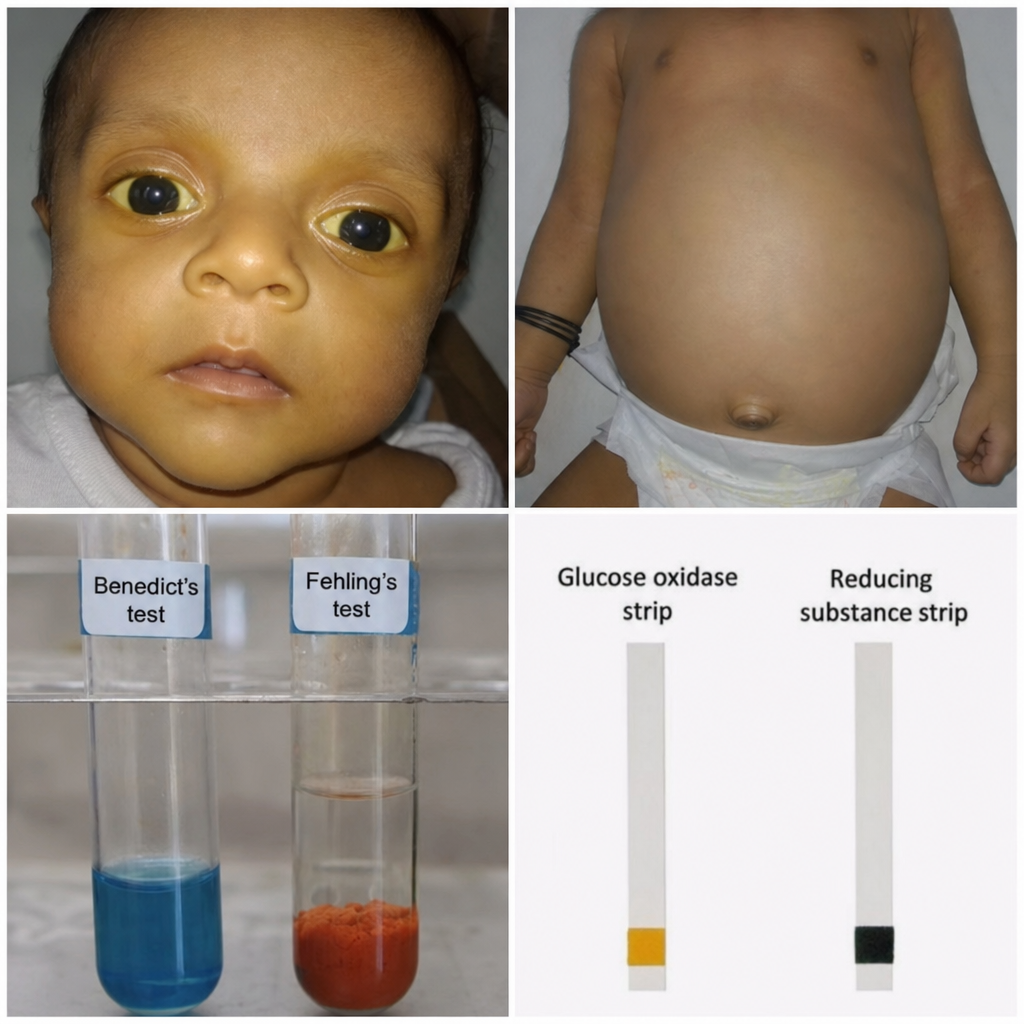
A 6-week-old infant presents with vomiting, jaundice, hepatomegaly, and cataracts. Urine reducing substances are positive, but glucose oxidase strip is negative. The infant is being breastfed. Red blood cell galactose-1-phosphate levels are markedly elevated. Based on the biochemical findings, which enzyme is most likely deficient?
A research team discovers a novel bacterial toxin that causes severe hypotension in infected patients. In vitro studies show the toxin ADP-ribosylates a specific amino acid on Gq alpha subunits, preventing their activation by GPCRs. Patients develop hypotension despite elevated levels of vasopressin, angiotensin II, and endothelin-1. Synthesize the pathophysiological mechanism explaining why multiple vasopressor hormones fail to maintain blood pressure in these patients.
Want unlimited practice?
Get full access to all questions, explanations, and performance tracking.
Scan to download app