A healthy 30-year-old woman comes to the physician with her husband for preconception counseling. Her husband is healthy but she is concerned because her brother was recently diagnosed with a genetic liver condition for which he takes penicillamine. Her father-in-law has liver cirrhosis and a tremor. The results of genetic testing show that both the patient and her husband are carriers of a mutation in the ATP7B gene. Which of the following is the chance that this patient’s offspring will eventually develop the hereditary condition?
Q52
A 2-month-old boy is presented to the clinic for a well-child visit by his parents. They are concerned with his weak cry and difficulty with feeding. Birth history reveals that the boy was born at the 37th week of gestation by cesarean section due to poor fetal movement and fetal distress. His Apgar scores were 3 and 5 at 1st and 5th minute respectively and his birth weight was 2.5 kg (6 lb). His vital signs include heart rate 120/min, respiratory rate 40/min, blood pressure 90/50 mm Hg, and temperature 37.0°C (98.6°F). Physical examination reveals a malnourished boy with a small narrow forehead and a small jaw. His mouth is small and he has comparatively small genitals. He has a poor muscle tone. After repeated follow-up, he gains weight rapidly but his height fails to increase. Developmental milestones are delayed at the age of 3 years. Genetic testing reveals Prader-Willi syndrome. Which of the following is the most common mechanism for the development of this patient’s condition?
Q53
An investigator studying DNA replication in Campylobacter jejuni inoculates a strain of this organism into a growth medium that contains radiolabeled thymine. After 2 hours, the rate of incorporation of radiolabeled thymine is measured as a proxy for the rate of DNA replication. The cells are then collected by centrifugation and suspended in a new growth medium that lacks ribonucleotides. After another 2 hours, the rate of incorporation of radiolabeled thymine is measured again. The new growth medium directly affects the function of which of the following enzymes?
Q54
A 32-year-old man presents to his primary care provider reporting weakness. He recently noticed that he has difficulty letting go of a doorknob or releasing his hand after shaking hands with others. His past medical history is notable for diabetes, for which he takes metformin. He drinks 2-3 beers per day, uses marijuana occasionally, and works as a security guard. His family history is notable for an early cardiac death in his father. His temperature is 98.6°F (37°C), blood pressure is 130/85 mmHg, pulse is 85/min, and respirations are 18/min. On exam, there is notable muscle atrophy in his hands, feet, and neck. He has delayed hand grip release bilaterally and is slow to return from a smile to a neutral facial expression. His gait is normal, and Romberg's test is negative. He also has frontal balding. This patient’s condition is caused by a mutation in which of the following genes?
Q55
A 13-year-old girl is brought to the outpatient clinic by her parents with a complaint of episodic spasm in her fingers for the past few months. Upon further questioning, her mother notes that the girl has not been doing well at school. She also believes that the girl is shorter than the other children in her class. On examination, her pulse is 72/min, temperature 37.6°C (99.7°F), respiratory rate 16/min, and blood pressure 120/88 mm Hg. The girl has short 4th and 5th fingers on both hands, a round face, and discolored teeth. Her height is 135 cm (4 ft 5 in) and she weighs 60 kg (132 lb). Investigation reports show the following values:
Hemoglobin (Hb%) 12.5 g/dL
White blood cell total count 10,000/mm3
Platelets 260,000/mm3
Calcium, serum (Ca2+) 4.0 mg/dL
Serum albumin 4.0 g/dL
Alanine aminotransferase (ALT), serum 15 U/L
Aspartate aminotransferase (AST), serum 8 U/L
Serum creatinine 0.5 mg/dL
Urea 27 mg/dL
Sodium 137 mEq/L
Potassium 4.5 mEq/L
Magnesium 2.5 mEq/L
Parathyroid hormone, serum, N-terminal 930 pg/mL (normal: 230-630 pg/mL)
Serum vitamin D 45 ng/dL
Which of the following is the mode of inheritance of the disease this patient has?
Q56
A 1-year-old girl born to a 40-year-old woman is undergoing an examination by a pediatric resident in the hospital. The pregnancy was uneventful and there were no complications during the delivery. The physical examination reveals midface hypoplasia with a flat nasal bridge and upslanting palpebral fissures. She has a small mouth and chest auscultation reveals a blowing holosystolic murmur that is heard best along the sternal border. The family history is unremarkable. A karyotype analysis is ordered because the resident suspects a numerical chromosomal disorder. Which of the following phenomena leads to the infant’s condition?
Q57
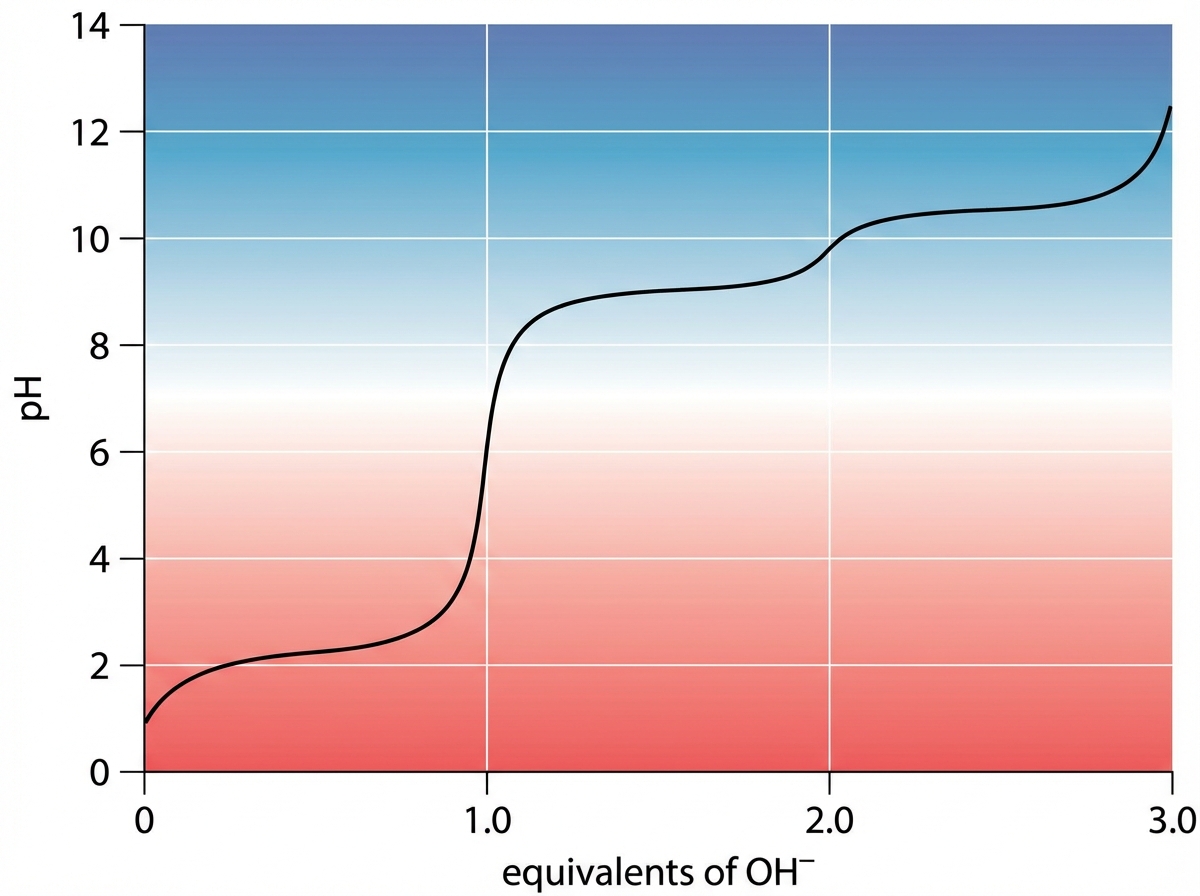
An investigator studying epigenetic mechanisms isolates histone proteins, the structural motifs involved in DNA binding and regulation of transcription. The peptide bonds of histone proteins are hydrolyzed and one type of amino acid is isolated. At normal body pH, this amino acid has a net charge of +1 . The investigator performs titration of this amino acid and obtains the graph shown. The isolated amino acid is most likely which of the following?
Q58
A 5-year-old boy presents to the pediatrician after his parents noted that he could not sustain physical exertion and would experience muscle cramping. It was noted that after physical exertion the boy experienced severe muscle pain. After a series of biochemical and genetic tests, it was discovered that the boy had a nonsense mutation in the gene encoding the muscle glycogen phosphorylase. Thus he was diagnosed with McArdle's disease. Which of the following mRNA changes would be expected to cause this mutation?
Q59
An 8-year-old boy is brought to the physician for evaluation of developmental delay and recurrent tonic-clonic seizures. There is no family history of seizures or other serious illness. Current medications include risperidone for hyperactivity. He is at the 17th percentile for head circumference. Examination shows protrusion of the mandible, strabismus, and a laughing facial expression. His gait is unsteady. He has a vocabulary of about 200 words and cannot speak in full sentences. Karyotype analysis shows a 46, XY karyotype without chromosomal deletions. Which of the following genetic mechanisms best explains this patient's findings?
Q60
A 4-year-old child presents with developmental delay, ataxia, and inappropriate laughter. The parents undergo genetic testing to determine the cause of their child's symptoms. Results show no mutations in all three family members that would cause this constellation of symptoms. Karyotyping reveals no deletions, insertions, or gene translocations. However, methylation studies demonstrate abnormal imprinting patterns at the 15q11-q13 region. Based on these findings, the child is diagnosed with Angelman syndrome. Which of the following genetic mechanisms best describes the cause of this disorder?
Molecular Genetics US Medical PG Practice Questions and MCQs
Question 51: A healthy 30-year-old woman comes to the physician with her husband for preconception counseling. Her husband is healthy but she is concerned because her brother was recently diagnosed with a genetic liver condition for which he takes penicillamine. Her father-in-law has liver cirrhosis and a tremor. The results of genetic testing show that both the patient and her husband are carriers of a mutation in the ATP7B gene. Which of the following is the chance that this patient’s offspring will eventually develop the hereditary condition?
A. 0%
B. 25% (Correct Answer)
C. 100%
D. 50%
E. 75%
Explanation: ***25%***
- The familial history (brother with a genetic liver condition, father-in-law with cirrhosis and tremor) and the **ATP7B gene mutation** indicate **Wilson's disease**, which is typically inherited in an **autosomal recessive** pattern.
- If both parents are carriers (heterozygous for the mutation), the probability that their offspring will inherit two copies of the mutated gene (one from each parent) and, therefore, develop the condition is **25%** as per Mendelian inheritance.
*0%*
- This is incorrect because both parents are identified as carriers, meaning there is a definite risk of passing on the mutated genes to their offspring.
- For the risk to be 0%, at least one parent would need to be completely free of the mutation or the inheritance pattern would need to be dominant with no penetrance.
*100%*
- This would only be the case if both parents had the disease (were homozygous for the mutation) or if the condition were dominant and at least one parent had the disease and passed on the dominant allele.
- Since both are carriers, the chance of inheriting two mutated alleles is not 100%.
*50%*
- A 50% chance would apply if one parent had the disease (homozygous recessive) and the other was a carrier, or if it were an autosomal dominant condition with one affected heterozygous parent.
- This does not reflect the inheritance pattern for two carrier parents in an autosomal recessive condition.
*75%*
- A 75% chance is not typical for a single genetic outcome in standard Mendelian inheritance patterns from carrier parents.
- In the context of two carriers for an autosomal recessive trait, 75% represents the chance of the offspring either being a carrier (50%) or being completely unaffected (25%), but not the chance of developing the condition.
Question 52: A 2-month-old boy is presented to the clinic for a well-child visit by his parents. They are concerned with his weak cry and difficulty with feeding. Birth history reveals that the boy was born at the 37th week of gestation by cesarean section due to poor fetal movement and fetal distress. His Apgar scores were 3 and 5 at 1st and 5th minute respectively and his birth weight was 2.5 kg (6 lb). His vital signs include heart rate 120/min, respiratory rate 40/min, blood pressure 90/50 mm Hg, and temperature 37.0°C (98.6°F). Physical examination reveals a malnourished boy with a small narrow forehead and a small jaw. His mouth is small and he has comparatively small genitals. He has a poor muscle tone. After repeated follow-up, he gains weight rapidly but his height fails to increase. Developmental milestones are delayed at the age of 3 years. Genetic testing reveals Prader-Willi syndrome. Which of the following is the most common mechanism for the development of this patient’s condition?
A. Anticipation
B. Heteroplasmy
C. Incomplete penetrance
D. Maternal uniparental disomy
E. Paternal deletion of 15q11-q13 (Correct Answer)
Explanation: ***Paternal deletion of 15q11-q13***
- This is the **most common genetic mechanism** (occurring in about 70-75% of cases) for Prader-Willi syndrome, involving the loss of genetic material from the paternally inherited chromosome 15 in the specified region
- The deletion affects genes that are **normally expressed only from the paternal chromosome** due to genomic imprinting, leading to the characteristic features of hypotonia, feeding difficulties in infancy, subsequent hyperphagia with obesity, hypogonadism, and developmental delays
*Incorrect: Anticipation*
- Anticipation describes a genetic phenomenon where a disorder appears earlier or symptoms become more severe with each successive generation
- This is typically seen in disorders caused by expanding **trinucleotide repeats** (e.g., Huntington's disease, myotonic dystrophy), not applicable to Prader-Willi syndrome
*Incorrect: Heteroplasmy*
- Heteroplasmy refers to the presence of more than one type of mitochondrial DNA within a cell or individual
- This concept is relevant to **mitochondrial genetic disorders** which are maternally inherited, not to Prader-Willi syndrome which is a nuclear chromosomal imprinting disorder
*Incorrect: Incomplete penetrance*
- Incomplete penetrance occurs when individuals carrying a pathogenic mutation do not express the associated clinical phenotype
- Prader-Willi syndrome typically presents with a **consistent set of features** when the genetic defect is present; incomplete penetrance is not the mechanism of disease development
*Incorrect: Maternal uniparental disomy*
- Maternal uniparental disomy (UPD) of chromosome 15 is the **second most common mechanism** for Prader-Willi syndrome (occurring in about 20-25% of cases)
- This involves inheriting **both copies of chromosome 15 from the mother** and none from the father, leading to absence of paternal gene expression in the critical 15q11-q13 region
- While less common than paternal deletion, this is still a significant cause of the syndrome
Question 53: An investigator studying DNA replication in Campylobacter jejuni inoculates a strain of this organism into a growth medium that contains radiolabeled thymine. After 2 hours, the rate of incorporation of radiolabeled thymine is measured as a proxy for the rate of DNA replication. The cells are then collected by centrifugation and suspended in a new growth medium that lacks ribonucleotides. After another 2 hours, the rate of incorporation of radiolabeled thymine is measured again. The new growth medium directly affects the function of which of the following enzymes?
A. DNA polymerase II
B. Telomerase
C. Primase (Correct Answer)
D. DNA polymerase I
E. Ligase
Explanation: ***Primase***
- **Primase** is an **RNA polymerase** that synthesizes short **RNA primers** required for DNA replication. The new growth medium lacks **ribonucleotides**, which are the building blocks for RNA.
- Without **ribonucleotides**, primase cannot synthesize RNA primers, thereby directly affecting its function and subsequently inhibiting DNA replication.
*DNA polymerase II*
- **DNA polymerase II** is primarily involved in **DNA repair** and translesion synthesis, not in synthesizing the main leading and lagging strands of DNA replication.
- Its function is not directly dependent on the availability of **ribonucleotides** for primer synthesis during normal replication.
*DNA polymerase I*
- **DNA polymerase I** is crucial for removing **RNA primers** and filling in the resulting gaps with DNA nucleotides.
- While it acts on the primers made by primase, its direct catalytic activity does not involve synthesizing RNA primers from **ribonucleotides**.
*Telomerase*
- **Telomerase** is a specialized reverse transcriptase that extends telomeres at the ends of eukaryotic chromosomes.
- **Campylobacter jejuni** is a prokaryote and therefore lacks linear chromosomes and **telomeres**, making telomerase irrelevant to its DNA replication.
*Ligase*
- **Ligase** is an enzyme that joins **Okazaki fragments** and other DNA breaks by forming phosphodiester bonds.
- Its function involves sealing nicks in the DNA backbone and does not directly rely on the presence of **ribonucleotides** for creating new primers.
Question 54: A 32-year-old man presents to his primary care provider reporting weakness. He recently noticed that he has difficulty letting go of a doorknob or releasing his hand after shaking hands with others. His past medical history is notable for diabetes, for which he takes metformin. He drinks 2-3 beers per day, uses marijuana occasionally, and works as a security guard. His family history is notable for an early cardiac death in his father. His temperature is 98.6°F (37°C), blood pressure is 130/85 mmHg, pulse is 85/min, and respirations are 18/min. On exam, there is notable muscle atrophy in his hands, feet, and neck. He has delayed hand grip release bilaterally and is slow to return from a smile to a neutral facial expression. His gait is normal, and Romberg's test is negative. He also has frontal balding. This patient’s condition is caused by a mutation in which of the following genes?
A. Dystrophin
B. SMN1
C. Frataxin
D. DMPK (Correct Answer)
E. DPC
Explanation: ***DMPK***
- The patient's symptoms, including **myotonia** (difficulty releasing grip, slow return from smile), **muscle atrophy** (hands, feet, neck), and **frontal balding**, are classic for **myotonic dystrophy type 1** (DM1).
- DM1 is an autosomal dominant disorder caused by a **trinucleotide repeat expansion** (CTG) in the **dystrophia myotonica protein kinase (DMPK) gene**.
- The **family history of early cardiac death** is also consistent, as cardiac conduction abnormalities and cardiomyopathy are common complications of DM1.
*Dystrophin*
- Mutations in the **dystrophin gene** cause **Duchenne and Becker muscular dystrophies**.
- These conditions typically present with **progressive muscle weakness** and **atrophy**, but not with myotonia, frontal balding, or the characteristic delayed grip release seen in this patient.
*SMN1*
- Mutations in the **survival motor neuron 1 (SMN1) gene** cause **spinal muscular atrophy (SMA)**.
- SMA is characterized by **progressive muscle weakness** and **atrophy** due to degeneration of anterior horn cells, but it does not present with myotonia or frontal balding.
*Frataxin*
- Mutations in the **FXN (frataxin) gene** cause **Friedreich ataxia**.
- This condition primarily affects the **nervous system** (ataxia, dysarthria, sensory loss) and heart (cardiomyopathy), but it does not cause myotonia or frontal balding.
- The **negative Romberg's test** and **normal gait** make Friedreich ataxia unlikely.
*DPC*
- The gene symbol **DPC** is not commonly associated with a known muscular dystrophy or neuromuscular disorder.
- It may refer to **deleted in pancreatic carcinoma locus 4** (DPC4/SMAD4), which is involved in cancer pathways, not neuromuscular diseases.
Question 55: A 13-year-old girl is brought to the outpatient clinic by her parents with a complaint of episodic spasm in her fingers for the past few months. Upon further questioning, her mother notes that the girl has not been doing well at school. She also believes that the girl is shorter than the other children in her class. On examination, her pulse is 72/min, temperature 37.6°C (99.7°F), respiratory rate 16/min, and blood pressure 120/88 mm Hg. The girl has short 4th and 5th fingers on both hands, a round face, and discolored teeth. Her height is 135 cm (4 ft 5 in) and she weighs 60 kg (132 lb). Investigation reports show the following values:
Hemoglobin (Hb%) 12.5 g/dL
White blood cell total count 10,000/mm3
Platelets 260,000/mm3
Calcium, serum (Ca2+) 4.0 mg/dL
Serum albumin 4.0 g/dL
Alanine aminotransferase (ALT), serum 15 U/L
Aspartate aminotransferase (AST), serum 8 U/L
Serum creatinine 0.5 mg/dL
Urea 27 mg/dL
Sodium 137 mEq/L
Potassium 4.5 mEq/L
Magnesium 2.5 mEq/L
Parathyroid hormone, serum, N-terminal 930 pg/mL (normal: 230-630 pg/mL)
Serum vitamin D 45 ng/dL
Which of the following is the mode of inheritance of the disease this patient has?
A. X-linked recessive
B. Mitochondrial inheritance
C. X linked dominant
D. Autosomal recessive
E. Autosomal dominant (Correct Answer)
Explanation: ***Autosomal dominant***
- The clinical presentation with **short 4th and 5th fingers**, **round face**, **short stature** (height 135 cm, which is below average for a 13-year-old girl), **hypocalcemia** (4.0 mg/dL), and **elevated PTH** (930 pg/mL) is characteristic of **pseudohypoparathyroidism (PHP)**, specifically **Albright hereditary osteodystrophy (AHO)**.
- PHP type 1A (AHO) is typically inherited in an **autosomal dominant** pattern, often due to mutations in the **GNAS gene**.
*X-linked recessive*
- This mode of inheritance primarily affects males, with females usually being asymptomatic carriers. The patient is a female, making X-linked recessive less likely for a symptomatic presentation like this.
- Conditions like **Duchenne muscular dystrophy** or **fragile X syndrome** are X-linked recessive and have different clinical features.
*Mitochondrial inheritance*
- This inheritance pattern involves genes located in the mitochondria and is passed down from the mother to all her children; however, the clinical picture here does not align with typical mitochondrial disorders such as **MELAS syndrome** or **Leber's hereditary optic neuropathy**.
- Mitochondrial disorders often present with neurological or muscular symptoms that are progressive and distinct from the endocrine and skeletal features seen in this patient.
*X linked dominant*
- X-linked dominant inheritance would typically cause affected fathers to pass the trait to all their daughters, but not to their sons. Affected mothers have a 50% chance of passing it to each child. While females can be affected, the specific constellation of symptoms (PHP type 1A with AHO features) does not primarily follow an X-linked dominant pattern.
- Examples include **Rett syndrome** and **vitamin D-resistant rickets**, which have different clinical manifestations.
*Autosomal recessive*
- Autosomal recessive conditions require two copies of a mutated gene for the disease to manifest, meaning both parents are usually carriers. This mode of inheritance is seen in conditions like **cystic fibrosis** or **sickle cell anemia**, which have distinct presentations and are not consistent with the patient's symptoms of AHO and PHP.
- While some forms of hypoparathyroidism can be autosomal recessive, the classic features of AHO with brachydactyly and osteodystrophy strongly point away from autosomal recessive inheritance for this specific syndrome.
Question 56: A 1-year-old girl born to a 40-year-old woman is undergoing an examination by a pediatric resident in the hospital. The pregnancy was uneventful and there were no complications during the delivery. The physical examination reveals midface hypoplasia with a flat nasal bridge and upslanting palpebral fissures. She has a small mouth and chest auscultation reveals a blowing holosystolic murmur that is heard best along the sternal border. The family history is unremarkable. A karyotype analysis is ordered because the resident suspects a numerical chromosomal disorder. Which of the following phenomena leads to the infant’s condition?
A. Meiotic non-disjunction (Correct Answer)
B. Uniparental disomy
C. Genomic imprinting
D. Partial deletion
E. Trinucleotide repeat
Explanation: ***Meiotic non-disjunction***
- The combination of **midface hypoplasia**, **upslanting palpebral fissures**, **flat nasal bridge**, and a **holosystolic murmur** (suggesting a **ventricular septal defect**) in an infant born to an older mother is highly characteristic of **Down syndrome (Trisomy 21)**.
- **Trisomy 21** is most commonly caused by **meiotic non-disjunction**, where homologous chromosomes fail to separate during meiosis I or sister chromatids fail to separate during meiosis II, resulting in a gamete with an extra chromosome 21.
*Uniparental disomy*
- **Uniparental disomy** occurs when an individual receives both copies of a chromosome from a single parent, rather than one from each parent.
- While it can lead to various genetic disorders, it does not typically cause **Trisomy 21** or the specific constellation of features described.
*Genomic imprinting*
- **Genomic imprinting** is an epigenetic phenomenon where certain genes are expressed in a parent-of-origin specific manner.
- While relevant to conditions like Prader-Willi or Angelman syndromes, it is not the mechanism responsible for **Trisomy 21**.
*Partial deletion*
- A **partial deletion** refers to the loss of a segment of a chromosome.
- While chromosomal deletions cause various syndromes (e.g., Cri-du-chat syndrome), they would result in a **monosomy or partial monosomy**, not the extra chromosome seen in Trisomy 21.
*Trinucleotide repeat*
- **Trinucleotide repeat disorders** involve an abnormal expansion of a three-nucleotide sequence within a gene, leading to conditions like Huntington's disease or fragile X syndrome.
- This mechanism is not associated with the etiology of **Down syndrome**.
Question 57: An investigator studying epigenetic mechanisms isolates histone proteins, the structural motifs involved in DNA binding and regulation of transcription. The peptide bonds of histone proteins are hydrolyzed and one type of amino acid is isolated. At normal body pH, this amino acid has a net charge of +1 . The investigator performs titration of this amino acid and obtains the graph shown. The isolated amino acid is most likely which of the following?
A. Proline
B. Lysine (Correct Answer)
C. Aspartate
D. Serine
E. Histidine
Explanation: ***Lysine***
- Histones are **positively charged** proteins rich in **basic amino acids** like lysine and arginine, which allows them to bind tightly to the negatively charged DNA.
- The titration curve shown with three distinct pKa values and a net charge of +1 at normal body pH (around 7.4) is characteristic of **lysine**, which has both an alpha-amino group (pKa ~9-10) and a basic side chain (pKa ~10.5).
*Proline*
- **Proline is a nonpolar** amino acid that does not contribute significantly to the positive charge of histones required for DNA binding.
- Furthermore, its unique cyclic structure incorporates its amino group into the ring, impacting its pKa relative to other primary amino acids but not making it a primary basic residue in the histone context.
*Aspartate*
- **Aspartate is an acidic amino acid** with a negatively charged side chain at physiological pH, which would repel DNA rather than bind to it.
- Its titration curve would show a net negative charge at normal body pH, not a positive one.
*Serine*
- **Serine is a polar, uncharged** amino acid and would not contribute the necessary positive charge for histone-DNA interaction.
- Its side chain lacks an ionizable group within the physiological pH range, so its titration curve would only show two pKa values (for the carboxyl and amino groups) and a net charge of 0 at neutral pH.
*Histidine*
- While **histidine is a basic amino acid**, its side chain pKa is around 6.0, meaning it is only partially protonated and positively charged at physiological pH.
- A protein rich in **histidine** would not consistently carry a strong positive charge across the typical physiological pH range as effectively as one rich in lysine or arginine.
Question 58: A 5-year-old boy presents to the pediatrician after his parents noted that he could not sustain physical exertion and would experience muscle cramping. It was noted that after physical exertion the boy experienced severe muscle pain. After a series of biochemical and genetic tests, it was discovered that the boy had a nonsense mutation in the gene encoding the muscle glycogen phosphorylase. Thus he was diagnosed with McArdle's disease. Which of the following mRNA changes would be expected to cause this mutation?
A. UGU -> CGC
B. CUG -> AUG
C. UAU -> UAA (Correct Answer)
D. UGA -> UAG
E. AUG -> UCA
Explanation: ***UAU -> UAA***
- A **nonsense mutation** results in a prematurely truncated protein due to the introduction of a **stop codon** where a coding codon previously existed.
- Changing UAU (tyrosine) to UAA creates a **stop codon**, leading to premature termination and a dysfunctional muscle glycogen phosphorylase, consistent with **McArdle's disease**.
*UGU -> CGC*
- This change from UGU (cysteine) to CGC (arginine) is a **missense mutation**, where one amino acid is substituted for another.
- While it could potentially affect protein function, it does not introduce a **stop codon** and therefore is not a nonsense mutation.
*CUG -> AUG*
- This change from CUG (leucine) to AUG (methionine) is a **missense mutation**.
- Although AUG functions as a start codon at the beginning of mRNA, within the coding sequence it simply codes for methionine.
- This does not create a **stop codon** and therefore is not a nonsense mutation.
*UGA -> UAG*
- Both UGA and UAG are **stop codons** (UGA = opal, UAG = amber).
- Since both codons already terminate translation, this change would not create a **new** nonsense mutation in a coding sequence.
- A nonsense mutation requires changing a **coding codon** to a **stop codon**.
*AUG -> UCA*
- This change from AUG (methionine) to UCA (serine) is a **missense mutation**.
- It results in the substitution of one amino acid for another, rather than the creation of a **stop codon**.
Question 59: An 8-year-old boy is brought to the physician for evaluation of developmental delay and recurrent tonic-clonic seizures. There is no family history of seizures or other serious illness. Current medications include risperidone for hyperactivity. He is at the 17th percentile for head circumference. Examination shows protrusion of the mandible, strabismus, and a laughing facial expression. His gait is unsteady. He has a vocabulary of about 200 words and cannot speak in full sentences. Karyotype analysis shows a 46, XY karyotype without chromosomal deletions. Which of the following genetic mechanisms best explains this patient's findings?
A. Trinucleotide repeat in FMR1 gene
B. De novo mutation of MECP2 on the X chromosome
C. Chromosome 22q11 microdeletion
D. Uniparental disomy of chromosome 15 (Correct Answer)
E. Nondisjunction of chromosome 21 during meiosis I
Explanation: ***Uniparental disomy of chromosome 15***
- The presented symptoms—developmental delay, recurrent tonic-clonic seizures, mandibular protrusion, strabismus, paroxysmal laughter, unsteady gait, and speech impairment—are all characteristic features of **Angelman syndrome**.
- **Angelman syndrome** is typically caused by the loss of function of the maternal copy of the *UBE3A* gene on chromosome 15q11-q13. This can occur due to a maternal deletion, a paternal **uniparental disomy** (inheriting both copies of chromosome 15 from the father), or a mutation in the *UBE3A* gene.
- In this case, the normal karyotype without chromosomal deletions points to **paternal uniparental disomy** as the mechanism.
*Trinucleotide repeat in FMR1 gene*
- This describes the genetic basis of **Fragile X syndrome**, which is characterized by intellectual disability, behavioral problems (e.g., hyperactivity, autism-like features), and characteristic physical features such as a **long face**, large ears, and **macro-orchidism in males**.
- While there is developmental delay and hyperactivity, the specific facial features (mandibular protrusion, laughing expression) and unsteady gait are not typical for Fragile X syndrome.
*De novo mutation of MECP2 on the X chromosome*
- This describes the genetic basis of **Rett syndrome**, which almost exclusively affects females and is characterized by a period of normal development followed by regression in communication and motor skills, **stereotypic hand movements**, microcephaly, and seizures.
- The patient is a male and presents with features inconsistent with Rett syndrome.
*Chromosome 22q11 microdeletion*
- This is associated with **DiGeorge syndrome** or velocardiofacial syndrome, characterized by cardiac defects, abnormal facies, thymic hypoplasia, cleft palate, and hypocalcemia.
- The symptoms described in the patient (seizures, laughing expression, gait ataxia) are not typical for 22q11 deletion syndrome.
*Nondisjunction of chromosome 21 during meiosis I*
- This is the most common cause of **Down syndrome** (Trisomy 21), characterized by intellectual disability, characteristic facial features (upslanting palpebral fissures, epicanthic folds, flat nasal bridge), and associated medical problems like congenital heart defects and hypotonia.
- The patient's symptoms, particularly the prominent mandible, strabismus, and laughing expression, do not align with the typical presentation of Down syndrome.
Question 60: A 4-year-old child presents with developmental delay, ataxia, and inappropriate laughter. The parents undergo genetic testing to determine the cause of their child's symptoms. Results show no mutations in all three family members that would cause this constellation of symptoms. Karyotyping reveals no deletions, insertions, or gene translocations. However, methylation studies demonstrate abnormal imprinting patterns at the 15q11-q13 region. Based on these findings, the child is diagnosed with Angelman syndrome. Which of the following genetic mechanisms best describes the cause of this disorder?
A. Variable expressivity
B. Uniparental disomy
C. Incomplete penetrance
D. Anticipation
E. Imprinting defect (Correct Answer)
Explanation: ***Imprinting defect***
- **Angelman syndrome** in this case results from a **primary imprinting defect** at the 15q11-q13 region, causing abnormal methylation patterns without deletions, mutations, or uniparental disomy.
- The key diagnostic findings are: **normal karyotype** (ruling out deletions), **no mutations in family members** (ruling out UBE3A mutations), and **abnormal methylation studies** demonstrating the imprinting center defect.
- An **imprinting defect** refers to an error in the establishment or maintenance of methylation patterns at imprinted genes, which in this case leads to silencing of the maternally inherited *UBE3A* gene expression.
- This mechanism accounts for approximately **3-5%** of Angelman syndrome cases and is diagnosed specifically through methylation studies when other causes are excluded.
*Uniparental disomy*
- While **paternal uniparental disomy (UPD)** of chromosome 15 can cause Angelman syndrome, it would typically be detected through genetic testing and represents a different mechanism.
- UPD involves inheriting **two copies of a chromosome from one parent** and none from the other, which **leads to** an imprinting defect as a secondary consequence.
- The question stem emphasizes that methylation studies were the key finding after ruling out mutations and karyotype abnormalities, suggesting a **primary imprinting center defect** rather than UPD.
*Variable expressivity*
- This refers to individuals with the **same genotype** exhibiting **different phenotypes** ranging from mild to severe.
- While Angelman syndrome can show variable severity, this term describes **phenotypic variation**, not the underlying genetic mechanism causing the disorder.
*Incomplete penetrance*
- This occurs when only a **portion of individuals** with a particular genotype actually **express the associated phenotype**.
- In Angelman syndrome due to imprinting defects, the condition is fully penetrant when the genetic abnormality is present, so this is not the relevant mechanism.
*Anticipation*
- **Anticipation** describes symptoms becoming **more severe** and/or appearing at **earlier ages** in succeeding generations.
- This phenomenon is associated with **trinucleotide repeat expansion disorders** (e.g., Huntington disease, myotonic dystrophy), not imprinting disorders like Angelman syndrome.