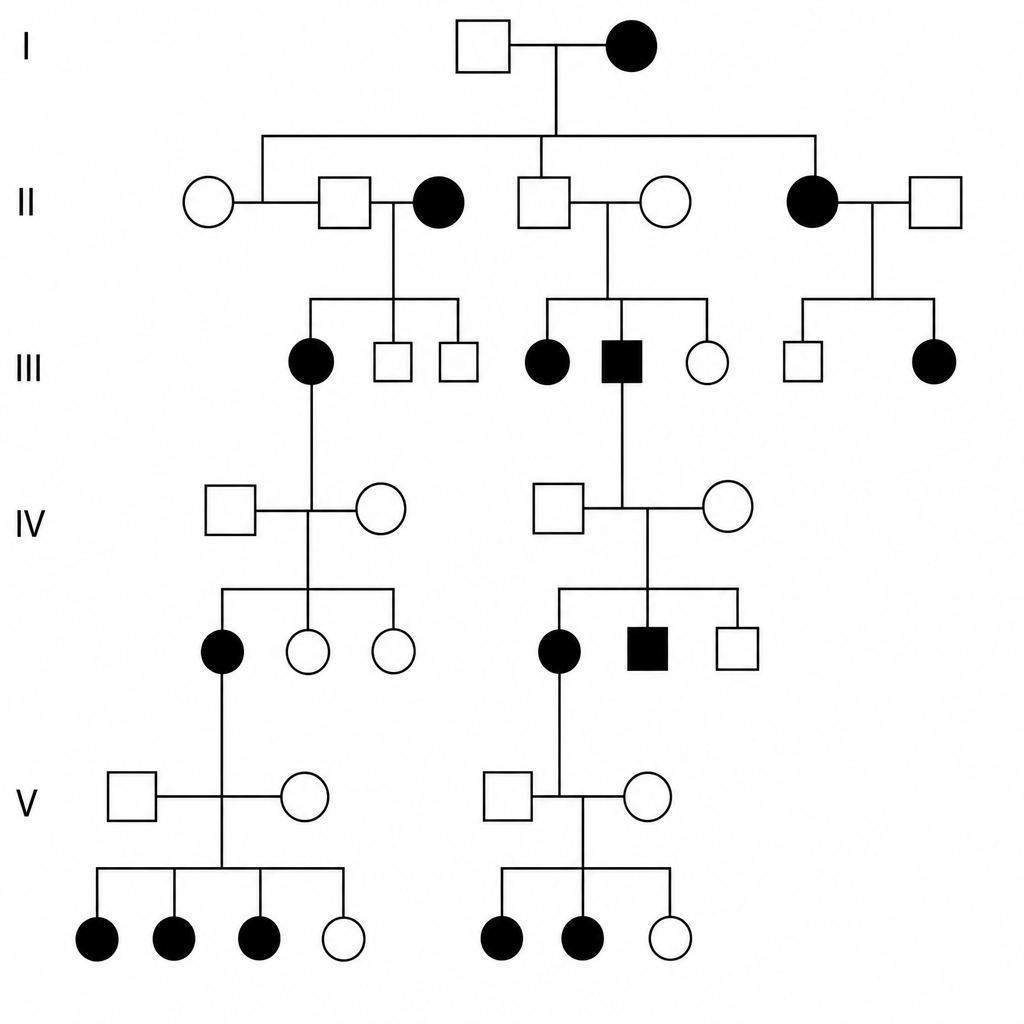
A 31-year-old man and his wife were referred to a genetic counselor. They are concerned about the chance that their children are likely to inherit certain conditions that run in their families. The wife's father and grandfather are both healthy, but her grandfather cannot see the color red. The husband is unaware if any member of his family has the same condition. The geneticist provides some details about genetic diseases and inheritance patterns, then orders lab tests to analyze the gene mutations carried by both partners. Which of the following are the correct terms regarding the genotype and phenotype of males affected by the condition described?
Q22
A mother from rural Louisiana brings her 4-year-old son to a pediatrician. Her son is intellectually disabled, and she hopes that genetic testing will help determine the cause of her son's condition. She had previously been opposed to allowing physicians to treat her son, but his impulsive behavior and learning disabilities are making it difficult to manage his care on her own. On exam, the child has a long, thin face with a large jaw, protruding ears, and macroorchidism. The physician also hears a high-pitched holosystolic murmur at the apex of the heart that radiates to the axilla. Which of the following trinucleotide repeats is most likely affected in this individual?
Q23
A deficiency in which of the following lysosomal enzymes is inherited in a pattern similar to a deficiency of iduronate sulfatase (Hunter syndrome)?
Q24
The lac operon allows E. coli to effectively utilize lactose when it is available, and not to produce unnecessary proteins. Which of the following genes is constitutively expressed and results in the repression of the lac operon?
Q25
A healthy 29-year-old nulligravid woman comes to the physician for genetic counseling prior to conception. Her brother has a disease that has resulted in infertility, a right-sided heart, and frequent sinus and ear infections. No other family members are affected. The intended father has no history of this disease. The population prevalence of this disease is 1 in 40,000. Which of the following best represents the chance that this patient’s offspring will develop her brother's disease?
Q26
A 12-year-old boy is brought by his mother to a neurologist for continuing evaluation of seizures. His seizures were previously well-controlled on medication but over the last month he has been having seizures several times per week. The boy is non-verbal and has had severe developmental delays and cognitive disability since birth. On exam, the boy is found to be enthusiastically playing with the toys in the office and laughing at almost any stimulus. Furthermore, his movements are found to be uncoordinated with a wide based gait. Previous genetic testing has revealed an abnormality in an E3 ubiquitin ligase gene. Compared to unaffected individuals, which of the following patterns of gene expression is most likely seen in this patient?
Q27
A 16-year-old male presents to an ophthalmologist as a new patient with a complaint of blurry vision. He reports that over the past several months he has had increasing difficulty seeing the board from the back of the classroom at school. The patient is otherwise doing well in school and enjoys playing basketball. His past medical history is otherwise significant for scoliosis which is managed by an orthopedic surgeon. His family history is significant for a mother with type II diabetes mellitus, and a father who underwent aortic valve replacement last year. On physical exam, the patient is tall for his age and has long arms. He has 20 degrees of thoracic scoliosis, which is stable from previous exams. On slit-lamp examination, the patient is found to have bilateral upward lens subluxation and is prescribed corrective lenses.
Which of the following is the most likely etiology of this patient’s presentation?
Q28
A 34-year-old woman comes to the fertility clinic with her husband for infertility treatment. The couple has been having unprotected intercourse for the past 2 years without any pregnancies. This is their first time seeking fertility treatment. The patient's past medical history includes asthma. She denies any menstrual irregularities, menstrual pain, abnormal bleeding or past sexually transmitted infections. The husband reports that "he would get sick easily and would always have some upper respiratory infections." Physical examination of the wife demonstrates nasal polyps bilaterally; vaginal examination is unremarkable. Physical examination of the husband is unremarkable. Semen analysis results are shown below:
Semen analysis:
Volume: 1.9 mL (Normal > 1.5 mL)
pH: 7.4 (Normal: > 7.2)
Sperm concentration: 0 million/mL (Normal: > 15 million/mL)
Total sperm count: 0 million/mL (Normal: > 39 million/mL)
Total motility: N/A (Normal: > 40%)
Morphology: N/A (Normal: > 4% normal forms)
What is the most likely explanation for this couple's infertility?
Q29
An investigator is studying the normal process of shrinking of the thymus gland with increasing age in humans. Thymic size is found to gradually start decreasing during puberty. Which of the following enzymes is most likely involved in the process underlying the decline in thymus mass with aging?
Q30
Although nucleotide addition during DNA replication in prokaryotes proceeds approximately 20-times faster than in eukaryotes, why can much larger amounts of DNA be replicated in eukaryotes in a time-effective manner?
Molecular Genetics US Medical PG Practice Questions and MCQs
Question 21: A 31-year-old man and his wife were referred to a genetic counselor. They are concerned about the chance that their children are likely to inherit certain conditions that run in their families. The wife's father and grandfather are both healthy, but her grandfather cannot see the color red. The husband is unaware if any member of his family has the same condition. The geneticist provides some details about genetic diseases and inheritance patterns, then orders lab tests to analyze the gene mutations carried by both partners. Which of the following are the correct terms regarding the genotype and phenotype of males affected by the condition described?
A. Homozygote; reduced or incomplete penetrance
B. Heterozygotes; reduced or incomplete penetrance
C. Hemizygous; reduced or incomplete penetrance
D. Heterozygotes; full penetrance
E. Hemizygous; full penetrance (Correct Answer)
Explanation: ***Hemizygous; full penetrance***
- The condition described (**red color blindness**) is an **X-linked recessive** trait, meaning males have only one X chromosome and are thus **hemizygous** for genes on the X chromosome.
- **Full penetrance** in X-linked recessive traits means that if a male inherits the affected X chromosome, he will express the phenotype of the condition.
*Homozygote; reduced or incomplete penetrance*
- **Homozygous** refers to having two identical alleles for a particular gene, which is not applicable to an X-linked gene in males as they only have one X chromosome.
- **Reduced or incomplete penetrance** means that a person with the genotype may or may not express the phenotype, which is typically not the case for males with X-linked recessive color blindness.
*Heterozygotes; reduced or incomplete penetrance*
- **Heterozygous** means having two different alleles for a gene; this term is not applicable to males regarding X-linked genes.
- Males are **hemizygous** for X-linked genes, meaning they only have one allele, not two different ones.
*Hemizygous; reduced or incomplete penetrance*
- While males are indeed **hemizygous** for X-linked genes like color blindness, the penetrance for red-green color blindness in males is generally considered to be **full**, meaning if they carry the mutated gene, they will express the trait.
- **Reduced penetrance** would imply that some males with the genotype might not exhibit color blindness, which is rare for this condition.
*Heterozygotes; full penetrance*
- The term **heterozygous** applies to individuals with two different alleles for a gene, which is not the genetic state of males for X-linked genes.
- While penetrance is full, the term **heterozygotes** is incorrect for defining the male genotype in this context.
Question 22: A mother from rural Louisiana brings her 4-year-old son to a pediatrician. Her son is intellectually disabled, and she hopes that genetic testing will help determine the cause of her son's condition. She had previously been opposed to allowing physicians to treat her son, but his impulsive behavior and learning disabilities are making it difficult to manage his care on her own. On exam, the child has a long, thin face with a large jaw, protruding ears, and macroorchidism. The physician also hears a high-pitched holosystolic murmur at the apex of the heart that radiates to the axilla. Which of the following trinucleotide repeats is most likely affected in this individual?
A. GAA on chromosome 9
B. CGG on the sex chromosome X (Correct Answer)
C. CTG on chromosome 19
D. CTG on chromosome 8
E. CAG on chromosome 4
Explanation: ***CGG on the sex chromosome X***
- The constellation of **intellectual disability**, a **long, thin face with a large jaw**, **protruding ears**, and **macroorchidism** are classic features of **Fragile X syndrome**.
- Fragile X syndrome is caused by an expansion of the **CGG trinucleotide repeat** in the **FMR1 gene** on the **X chromosome**. The **high-pitched holosystolic murmur at the apex radiating to the axilla** suggests **mitral valve prolapse**, which is also frequently associated with Fragile X.
*GAA on chromosome 9*
- This describes the **GAA trinucleotide repeat expansion** associated with **Friedreich's ataxia**, affecting the **FXN gene** on **chromosome 9**.
- Friedreich's ataxia is characterized by **progressive ataxia**, **dysarthria**, and **loss of vibratory/proprioceptive sensation**, not macroorchidism or the specific facial features seen here.
*CTG on chromosome 19*
- This describes the **CTG trinucleotide repeat expansion** associated with **myotonic dystrophy type 1**, affecting the **DMPK gene** on **chromosome 19**.
- Myotonic dystrophy is characterized by **myotonia** (delayed muscle relaxation), **muscle weakness**, and **cataracts**, which are not consistently present in this case.
*CTG on chromosome 8*
- While **CTG repeats** are involved in some genetic conditions, the specific association with **chromosome 8** as a cause for the described symptoms (intellectual disability, specific facial features, macroorchidism, and mitral valve prolapse) is not a common trinucleotide repeat disorder.
- This option does not correspond to a recognized trinucleotide repeat disorder that presents with the given clinical picture.
*CAG on chromosome 4*
- This describes the **CAG trinucleotide repeat expansion** associated with **Huntington's disease**, affecting the **HTT gene** on **chromosome 4**.
- Huntington's disease typically presents with **chorea**, **psychiatric symptoms**, and **dementia** later in life, not with the childhood onset intellectual disability and physical features described.
Question 23: A deficiency in which of the following lysosomal enzymes is inherited in a pattern similar to a deficiency of iduronate sulfatase (Hunter syndrome)?
A. Sphingomyelinase
B. Glucocerebrosidase
C. Galactocerebrosidase
D. Alpha-L-iduronidase
E. Alpha-galactosidase A (Correct Answer)
Explanation: ***Alpha-galactosidase A***
- A deficiency in **alpha-galactosidase A** causes **Fabry disease**, which, like Hunter syndrome (iduronate sulfatase deficiency), is inherited in an **X-linked recessive** pattern.
- Both conditions primarily affect males, with carrier females potentially exhibiting milder symptoms.
*Sphingomyelinase*
- A deficiency in sphingomyelinase leads to **Niemann-Pick disease types A and B**, which are inherited in an **autosomal recessive** pattern.
- This mode of inheritance differs from the X-linked pattern of Hunter syndrome.
*Glucocerebrosidase*
- A deficiency in glucocerebrosidase causes **Gaucher disease**, inherited in an **autosomal recessive** pattern.
- This is a common lysosomal storage disorder, but its inheritance pattern is distinct from X-linked disorders.
*Galactocerebrosidase*
- A deficiency in galactocerebrosidase causes **Krabbe disease (globoid cell leukodystrophy)**, which is inherited in an **autosomal recessive** pattern.
- Krabbe disease is a severe neurodegenerative disorder, but its genetic transmission is not X-linked.
*Alpha-L-iduronidase*
- A deficiency in **alpha-L-iduronidase** causes **Hurler syndrome (MPS I)**, which is inherited in an **autosomal recessive** pattern.
- While both Hunter and Hurler syndromes are mucopolysaccharidoses, their genetic inheritance patterns are different.
Question 24: The lac operon allows E. coli to effectively utilize lactose when it is available, and not to produce unnecessary proteins. Which of the following genes is constitutively expressed and results in the repression of the lac operon?
A. LacY
B. LacI (Correct Answer)
C. LacZ
D. CAP
E. LacA
Explanation: ***LacI***
- The **LacI gene** encodes the **Lac repressor protein**, which is constitutively expressed (always produced) and binds to the operator region of the lac operon.
- When bound, the **Lac repressor** blocks RNA polymerase from transcribing the structural genes (LacZ, LacY, LacA), thereby repressing the operon in the absence of lactose.
*LacY*
- The **LacY gene** encodes **lactose permease**, an enzyme responsible for transporting lactose into the bacterial cell.
- Its expression is regulated by the lac operon and is not constitutively expressed; rather, it is induced in the presence of lactose.
*LacZ*
- The **LacZ gene** encodes **beta-galactosidase**, the enzyme that breaks down lactose into glucose and galactose.
- Like LacY, its expression is part of the lac operon and is induced when lactose is available, not expressed constitutively.
*CAP*
- **CAP (Catabolite Activator Protein)** is a regulatory protein that, when bound to cAMP, activates transcription of the lac operon when glucose is absent.
- While essential for lac operon regulation, CAP is not a gene whose constitutive expression leads to repression of the operon.
*LacA*
- The **LacA gene** encodes **thiogalactoside transacetylase**, an enzyme with a less clear role in lactose metabolism but is part of the lac operon.
- Its expression is also regulated and induced along with LacZ and LacY, not constitutively expressed to repress the operon.
Question 25: A healthy 29-year-old nulligravid woman comes to the physician for genetic counseling prior to conception. Her brother has a disease that has resulted in infertility, a right-sided heart, and frequent sinus and ear infections. No other family members are affected. The intended father has no history of this disease. The population prevalence of this disease is 1 in 40,000. Which of the following best represents the chance that this patient’s offspring will develop her brother's disease?
A. 25%
B. 66%
C. 0.2% (Correct Answer)
D. 0.7%
E. 1%
Explanation: ***0.2%***
- The brother's symptoms (infertility, right-sided heart, frequent infections) are characteristic of **Kartagener syndrome**, a form of **primary ciliary dyskinesia (PCD)**, which has an **autosomal recessive** inheritance pattern.
- Since the patient's parents are obligate heterozygotes (carriers), the patient has a 2/3 chance of being a carrier. Given the population prevalence of 1/40,000 for an autosomal recessive disease, the carrier frequency (2pq) is approximately **2 x sqrt(1/40,000) = 2 x 1/200 = 1/100**. The chance of her child inheriting the disease is (2/3 chance of patient being carrier) x (1/100 chance of partner being carrier) x (1/4 chance of affected offspring) = 2/1200 ≈ **0.00166 or 0.166%**, which is closest to 0.2%.
*25%*
- This would be the risk if both parents were known carriers, and it represents the chance of an affected offspring from two heterozygotes.
- In this scenario, the woman's partner's carrier status is unknown and based on population prevalence, making the overall risk much lower.
*66%*
- This is the probability that the patient (the healthy sister of an affected individual with an autosomal recessive disease) is a **carrier**.
- This value alone does not account for the partner's carrier status or the final Mendelian inheritance probability (1/4) for an affected child.
*0.7%*
- This percentage is too high; it might result from incorrect calculation of the population carrier frequency or misapplication of probabilities.
- The correct carrier frequency for the partner is 1/100, which is significantly lower than what would lead to a 0.7% final risk.
*1%*
- This value is also too high and likely results from a miscalculation of either the carrier frequency or the overall probability.
- A 1% chance would suggest a much higher population carrier frequency or a different inheritance scenario.
Question 26: A 12-year-old boy is brought by his mother to a neurologist for continuing evaluation of seizures. His seizures were previously well-controlled on medication but over the last month he has been having seizures several times per week. The boy is non-verbal and has had severe developmental delays and cognitive disability since birth. On exam, the boy is found to be enthusiastically playing with the toys in the office and laughing at almost any stimulus. Furthermore, his movements are found to be uncoordinated with a wide based gait. Previous genetic testing has revealed an abnormality in an E3 ubiquitin ligase gene. Compared to unaffected individuals, which of the following patterns of gene expression is most likely seen in this patient?
A. Abnormally increased expression of the gene from the maternal chromosome
B. Abnormally decreased expression of the gene from the maternal chromosome (Correct Answer)
C. Abnormally decreased expression of the gene from both chromosomes
D. Abnormally decreased expression of the gene from the paternal chromosome
E. Abnormally increased expression of the gene from the paternal chromosome
Explanation: ***Abnormally decreased expression of the gene from the maternal chromosome***
- This patient's symptoms (non-verbal, severe developmental delays, cognitive disability, seizures, uncoordinated movements, wide-based gait, inappropriate laughter, and an abnormality in an E3 ubiquitin ligase gene) are characteristic of **Angelman syndrome**.
- Angelman syndrome is typically caused by a deletion or mutation on the **maternally inherited copy of chromosome 15q11-q13**, specifically affecting the *UBE3A* gene, which is an E3 ubiquitin ligase. This leads to reduced or absent expression of the *UBE3A* gene in critical brain regions where only the maternal allele is expressed.
*Abnormally increased expression of the gene from the maternal chromosome*
- Angelman syndrome is caused by a **loss of function** of the maternally inherited *UBE3A* gene, not an increase in its expression.
- Increased expression would not lead to the neurodevelopmental deficits seen in Angelman syndrome.
*Abnormally decreased expression of the gene from both chromosomes*
- While there is decreased expression of the functional *UBE3A* gene, the paternal allele is normally **silenced** in specific brain regions relevant to Angelman syndrome pathogenesis due to **genomic imprinting**. Therefore, the issue is with the maternal allele.
- If both chromosomes had decreased expression, it would imply a different genetic mechanism or a more severe, potentially lethal, condition.
*Abnormally decreased expression of the gene from the paternal chromosome*
- In the brain regions relevant to Angelman syndrome, the paternal *UBE3A* allele is normally **silenced** due to genomic imprinting. Therefore, its decreased expression would not be an abnormal finding or contribute to the pathology.
- Problems with the paternal allele in this region are associated with **Prader-Willi syndrome**, which has a different clinical presentation (e.g., hypotonia, hyperphagia, obesity).
*Abnormally increased expression of the gene from the paternal chromosome*
- The paternal *UBE3A* allele is normally **silenced** in the relevant brain regions; therefore, an increased expression would be abnormal but is not the genetic basis of Angelman syndrome.
- Angelman syndrome is caused by the **loss or absence of functional maternal *UBE3A*** expression, not altered paternal expression.
Question 27: A 16-year-old male presents to an ophthalmologist as a new patient with a complaint of blurry vision. He reports that over the past several months he has had increasing difficulty seeing the board from the back of the classroom at school. The patient is otherwise doing well in school and enjoys playing basketball. His past medical history is otherwise significant for scoliosis which is managed by an orthopedic surgeon. His family history is significant for a mother with type II diabetes mellitus, and a father who underwent aortic valve replacement last year. On physical exam, the patient is tall for his age and has long arms. He has 20 degrees of thoracic scoliosis, which is stable from previous exams. On slit-lamp examination, the patient is found to have bilateral upward lens subluxation and is prescribed corrective lenses.
Which of the following is the most likely etiology of this patient’s presentation?
A. Extra copy of sex chromosome
B. Mutation of gene on chromosome 15 (Correct Answer)
C. Mutation of COL5A1 or COL5A2
D. Defective metabolism of methionine
E. Mutation of RET proto-oncogene
Explanation: ***Mutation of gene on chromosome 15***
- The patient's presentation with **tall stature**, **long arms** (dolichostenomelia), **scoliosis**, and **bilateral upward lens subluxation** are classic features of **Marfan syndrome**.
- Marfan syndrome is an autosomal dominant disorder caused by a mutation in the *FBN1* gene located on **chromosome 15**, which encodes for **fibrillin-1**, a glycoprotein essential for connective tissue formation.
*Extra copy of sex chromosome*
- An extra copy of a sex chromosome, such as in **Klinefelter syndrome (XXY)**, is associated with tall stature and disproportionately long limbs, but it typically presents with **hypogonadism**, infertility, and learning difficulties, not lens subluxation or significant scoliosis as the primary features.
- Patients with Klinefelter syndrome often have a **eunuchoid body habitus** and gynecomastia, which are not described in this patient.
*Mutation of COL5A1 or COL5A2*
- Mutations in *COL5A1* or *COL5A2* are associated with **Ehlers-Danlos syndrome (classical type)**, which primarily features **skin hyperextensibility**, delayed wound healing, and **joint hypermobility**.
- While some forms of Ehlers-Danlos can have ocular involvement (e.g., easy bruising, scleral fragility), **lens subluxation** and the specific tall, slender build with scoliosis are not characteristic clinical features.
*Defective metabolism of methionine*
- A defective metabolism of methionine is characteristic of **homocystinuria**, an autosomal recessive disorder.
- Homocystinuria also causes **tall stature**, **scoliosis**, and **lens subluxation**, but the subluxation is typically **downward and inward**, differentiating it from the upward subluxation seen in Marfan syndrome. Patients also have an increased risk of **thromboembolic events** and **intellectual disability**.
*Mutation of RET proto-oncogene*
- Mutations of the *RET* proto-oncogene are associated with **Multiple Endocrine Neoplasia type 2 (MEN2)**.
- MEN2 presents with specific endocrine tumors such as **medullary thyroid carcinoma**, **pheochromocytoma**, and **parathyroid hyperplasia**, and does not involve the skeletal or ocular abnormalities described in this patient.
Question 28: A 34-year-old woman comes to the fertility clinic with her husband for infertility treatment. The couple has been having unprotected intercourse for the past 2 years without any pregnancies. This is their first time seeking fertility treatment. The patient's past medical history includes asthma. She denies any menstrual irregularities, menstrual pain, abnormal bleeding or past sexually transmitted infections. The husband reports that "he would get sick easily and would always have some upper respiratory infections." Physical examination of the wife demonstrates nasal polyps bilaterally; vaginal examination is unremarkable. Physical examination of the husband is unremarkable. Semen analysis results are shown below:
Semen analysis:
Volume: 1.9 mL (Normal > 1.5 mL)
pH: 7.4 (Normal: > 7.2)
Sperm concentration: 0 million/mL (Normal: > 15 million/mL)
Total sperm count: 0 million/mL (Normal: > 39 million/mL)
Total motility: N/A (Normal: > 40%)
Morphology: N/A (Normal: > 4% normal forms)
What is the most likely explanation for this couple's infertility?
A. XO chromosome in wife
B. Undescended testes in husband
C. XXY chromosome in husband
D. Deletion of Phe508 in husband (Correct Answer)
E. Deletion of Phe508 in wife
Explanation: ***Deletion of Phe508 in husband***
- The husband's history of recurrent respiratory infections combined with **complete azoospermia** (zero sperm despite normal semen volume) is highly suggestive of **Cystic Fibrosis** due to **CFTR gene mutation**, with **deletion of Phe508 (ΔF508)** being the most common mutation.
- CFTR mutations frequently cause **congenital bilateral absence of the vas deferens (CBAVD)**, resulting in obstructive azoospermia where sperm are produced but cannot be ejaculated due to absent vas deferens.
- This provides a **unifying diagnosis** explaining both the male infertility and respiratory symptoms.
*XO chromosome in wife*
- **Turner syndrome (45,XO)** presents with **primary amenorrhea**, **streak gonads**, short stature, and absent secondary sexual characteristics.
- The wife has **normal menstrual history** and unremarkable fertility evaluation, making this diagnosis incompatible with her presentation.
- The semen analysis clearly identifies **male-factor infertility** as the cause.
*Undescended testes in husband*
- **Cryptorchidism** can impair spermatogenesis due to elevated testicular temperature, typically causing **oligospermia** (reduced sperm count) rather than complete azoospermia.
- Physical examination of the husband was unremarkable, making undescended testes unlikely.
- This diagnosis does not explain the recurrent respiratory infections.
*XXY chromosome in husband*
- **Klinefelter syndrome (47,XXY)** causes **primary hypogonadism** with azoospermia, small firm testes, gynecomastia, and often tall stature with eunuchoid proportions.
- While it explains the azoospermia, it **does not account for the recurrent respiratory infections**, whereas CFTR mutation explains both features.
- Physical exam was unremarkable, without typical Klinefelter stigmata.
*Deletion of Phe508 in wife*
- While the wife has asthma and nasal polyps (which can be seen in CF or overlap with asthma-related conditions), her **normal menstrual history** indicates she is likely fertile.
- The **male-factor infertility** (complete azoospermia in the husband) is the direct cause of the couple's inability to conceive.
- Even if the wife has CF, this would not explain the husband's azoospermia, which is the primary barrier to conception.
Question 29: An investigator is studying the normal process of shrinking of the thymus gland with increasing age in humans. Thymic size is found to gradually start decreasing during puberty. Which of the following enzymes is most likely involved in the process underlying the decline in thymus mass with aging?
A. Lipase
B. Collagenase
C. Metalloproteinase
D. Caspase (Correct Answer)
E. NADPH oxidase
Explanation: **Caspase**
- The shrinking of the thymus with age, known as **thymic involution**, is primarily driven by **apoptosis** (programmed cell death) of thymocytes.
- **Caspases** are a family of proteases that play a central role in initiating and executing apoptosis, making them the most likely enzymes involved in this process.
*Lipase*
- **Lipases** are enzymes that catalyze the hydrolysis of fats (lipids).
- While fat deposition occurs in the involuting thymus, lipases are not directly responsible for the **cell death** or tissue regression.
*Collagenase*
- **Collagenases** are enzymes that break down **collagen**, a major component of the extracellular matrix.
- While there may be some remodeling of the extracellular matrix during thymic involution, collagenases are not the primary drivers of **thymocyte apoptosis**.
*Metalloproteinase*
- **Metalloproteinases (MMPs)** are enzymes that break down various components of the extracellular matrix and are involved in tissue remodeling.
- While MMPs contribute to tissue restructuring, they are not the main enzymes responsible for the **programmed cell death** that underpins thymic involution.
*NADPH oxidase*
- **NADPH oxidase** is an enzyme complex that produces **reactive oxygen species (ROS)**, primarily for pathogen killing by phagocytes.
- While excessive ROS can induce cell death, **NADPH oxidase** is not the primary or direct mechanism responsible for the physiological apoptosis during thymic involution.
Question 30: Although nucleotide addition during DNA replication in prokaryotes proceeds approximately 20-times faster than in eukaryotes, why can much larger amounts of DNA be replicated in eukaryotes in a time-effective manner?
A. Eukaryotes have multiple origins of replication (Correct Answer)
B. Eukaryotes have helicase which can more easily unwind DNA strands
C. Eukaryotes have fewer polymerase types
D. Eukaryotes have less genetic material to replicate
E. Eukaryotes have a single, circular chromosome
Explanation: ***Eukaryotes have multiple origins of replication***
- Eukaryotic chromosomes are much larger than prokaryotic chromosomes and require multiple origins of replication to complete DNA synthesis within a reasonable timeframe.
- Each origin of replication initiates simultaneously, allowing DNA synthesis to occur at many sites along the chromosome, effectively increasing the overall speed of replication.
- This compensates for the slower rate of nucleotide addition by DNA polymerase in eukaryotes compared to prokaryotes.
*Eukaryotes have helicase which can more easily unwind DNA strands*
- While helicase activity is crucial for unwinding DNA, there is no evidence to suggest that eukaryotic helicases are significantly more efficient or faster at unwinding DNA compared to prokaryotic helicases in a way that would account for the large difference in overall replication time.
- The rate of DNA unwinding by helicase is a factor in replication speed, but it does not overcome the fundamental limitation of a single origin of replication in prokaryotes.
*Eukaryotes have fewer polymerase types*
- Eukaryotic cells actually have **more** types of DNA polymerases than prokaryotic cells, each specialized for different functions like replication, repair, and mitochondrial DNA synthesis.
- The number of polymerase types does not directly relate to the speed or efficiency of overall DNA replication in terms of replicating large amounts of DNA.
*Eukaryotes have less genetic material to replicate*
- Eukaryotic organisms typically have significantly **more** genetic material (a larger genome size) than prokaryotic organisms, not less.
- If eukaryotes had less genetic material, the question itself about effective replication of "much larger amounts of DNA" would be contradictory.
*Eukaryotes have a single, circular chromosome*
- Eukaryotic cells have **multiple, linear chromosomes** within a membrane-bound nucleus, not a single circular chromosome.
- Prokaryotic cells typically have a single, circular chromosome located in the nucleoid region.
- The linear structure of eukaryotic chromosomes with multiple origins is actually what enables efficient replication of large genomes, making this statement both factually incorrect and contradictory to the mechanism in question.