
Genetic linkage and mapping — MCQs

A 25-year-old man with a genetic disorder presents for genetic counseling because he is concerned about the risk that any children he has will have the same disease as himself. Specifically, since childhood he has had difficulty breathing requiring bronchodilators, inhaled corticosteroids, and chest physiotherapy. He has also had diarrhea and malabsorption requiring enzyme replacement therapy. If his wife comes from a population where 1 in 10,000 people are affected by this same disorder, which of the following best represents the likelihood a child would be affected as well?
A 30-year-old man presents to his primary care physician for a routine check-up. During the appointment, he remarks that he has started noticing some thinning and hair loss without other symptoms. The physician reassures him that he is likely experiencing male-pattern baldness and explains that the condition is largely inherited. Specifically he notes that there are multiple genes that are responsible for the condition so it is difficult to predict the timing and development of hair loss. What genetic principle is being illustrated by this scenario?
A 23-year-old woman and her husband come to a genetic counselor because she is concerned about the chance of having an inherited defect if they had a child. Family history reveals no significant family history in her husband; however, her sister had a son who has seizures, failure to thrive, and neurodegeneration. She does not remember the name of the disease but remembers that her nephew had sparse, brittle hair that kinked in odd directions. She does not think that any other members of her family including her sister's husband have had this disorder. If this couple had a son, what is the most likely chance that he would have the same disorder that affected the patient's nephew?
A deficiency in which of the following lysosomal enzymes is inherited in a pattern similar to a deficiency of iduronate sulfatase (Hunter syndrome)?
A 3-year-old boy is brought to his pediatrician by his parents for a follow-up visit. Several concerning traits were observed at his last physical, 6 months ago. He had developmental delay, a delay in meeting gross and fine motor control benchmarks, and repetitive behaviors. At birth, he was noted to have flat feet, poor muscle tone, an elongated face with large, prominent ears, and enlarged testicles. He takes a chewable multivitamin every morning. There is one other member of the family, on the mother’s side, with a similar condition. Today, his blood pressure is 110/65 mm Hg, heart rate is 90/min, respiratory rate is 22/min, and temperature of 37.0°C (98.6°F). On physical exam, the boy repetitively rocks back and forth and has difficulty following commands. His heart has a mid-systolic click, followed by a late systolic murmur and his lungs are clear to auscultation bilaterally. Several vials of whole blood are collected for analysis. Which of the following studies should be conducted as part of the diagnostic screening protocol?
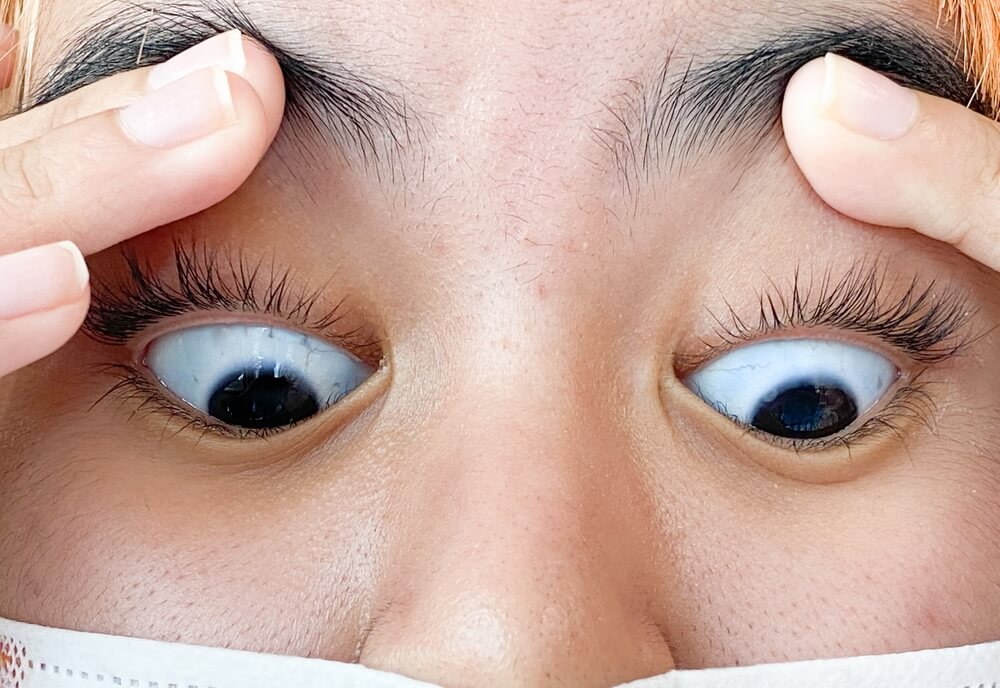
An 11-year-old male with light purple eyes presents with gradual loss of bilateral visual acuity. Over the past several years, vision has worsened from 20/20 to 20/100 in both eyes. He also has mild nystagmus when focusing on objects such as when he is trying to do his homework. He is diagnosed with a disease affecting melanin production in the iris. If both of his parents are unaffected, which of the following represents the most likely probabilities that another male or female child from this family would be affected by this disorder?
A Caucasian 32-year-old woman has an uncomplicated vaginal delivery, giving birth to male and female fraternal twins at term. At 2 days of life, the twin sister develops abdominal distension without emesis, and the mother states that she has not noticed the passage of stool for this infant. Genetic testing identifies deletion of an amino acid in a membrane channel for the girl. Both parents are healthy. Assuming that twin brother's disease status/symptomatology is unclear, which of the following best approximates the probability that the twin brother is a carrier of the disease allele?
A 5-year-old boy is brought to the emergency department after he fell on the playground in kindergarten and was unable to get up. His right leg was found to be bent abnormally at the femur, and he was splinted on site by first responders. His past medical history is significant for multiple prior fractures in his left humerus and femur. Otherwise, he has been hitting normal developmental milestones and appears to be excelling in kindergarten. Physical exam also reveals the finding shown in figure A. Which of the following is the most likely cause of this patient's multiple fractures?
A 2-month-old boy is presented to the clinic for a well-child visit by his parents. They are concerned with his weak cry and difficulty with feeding. Birth history reveals that the boy was born at the 37th week of gestation by cesarean section due to poor fetal movement and fetal distress. His Apgar scores were 3 and 5 at 1st and 5th minute respectively and his birth weight was 2.5 kg (6 lb). His vital signs include heart rate 120/min, respiratory rate 40/min, blood pressure 90/50 mm Hg, and temperature 37.0°C (98.6°F). Physical examination reveals a malnourished boy with a small narrow forehead and a small jaw. His mouth is small and he has comparatively small genitals. He has a poor muscle tone. After repeated follow-up, he gains weight rapidly but his height fails to increase. Developmental milestones are delayed at the age of 3 years. Genetic testing reveals Prader-Willi syndrome. Which of the following is the most common mechanism for the development of this patient’s condition?
Although nucleotide addition during DNA replication in prokaryotes proceeds approximately 20-times faster than in eukaryotes, why can much larger amounts of DNA be replicated in eukaryotes in a time-effective manner?
Want unlimited practice?
Get full access to all questions, explanations, and performance tracking.
Scan to download app