
DNA structure and organization — MCQs

A researcher is investigating compounds that modulate the cell cycle as possible chemotherapeutic agents against peripheral T-cell lymphoma. The researcher discovers a group of natural compounds with inhibitory activity against histone deacetylases, a class of enzymes that remove acetyl groups from the lysine residues of histones. A histone deacetylase inhibitor most likely causes which of the following?
A 17-year-old patient presents to the emergency department with left wrist pain after falling off of his bike and landing on his left hand. On physical exam the thenar eminence is red, swollen, and tender to palpation, so a radiograph is ordered. The patient is worried because he learned in biology class that radiography can cause cancer through damaging DNA but the physician reassures him that radiographs give a very minor dose of radiation. What is the most common mechanism by which ionizing radiation damages DNA?
An investigator is comparing DNA replication in prokaryotes and eukaryotes. He finds that the entire genome of E. coli (4 × 10⁶ base pairs) is replicated in approximately 30 minutes. A mammalian genome (3 × 10⁹ base pairs) is usually replicated within 3 hours. Which of the following characteristics of eukaryotic DNA replication is the most accurate explanation for this finding?
An investigator studying protein synthesis in human stem cells isolates tRNA molecules bound to mRNA molecules. The isolated tRNA molecules have inosine in the 5' position of the anticodon; of these, some are bound to adenine, some to cytosine, and some to uracil at the 3' position of the mRNA codon. Which of the following properties of the genetic code is best illustrated by this finding?
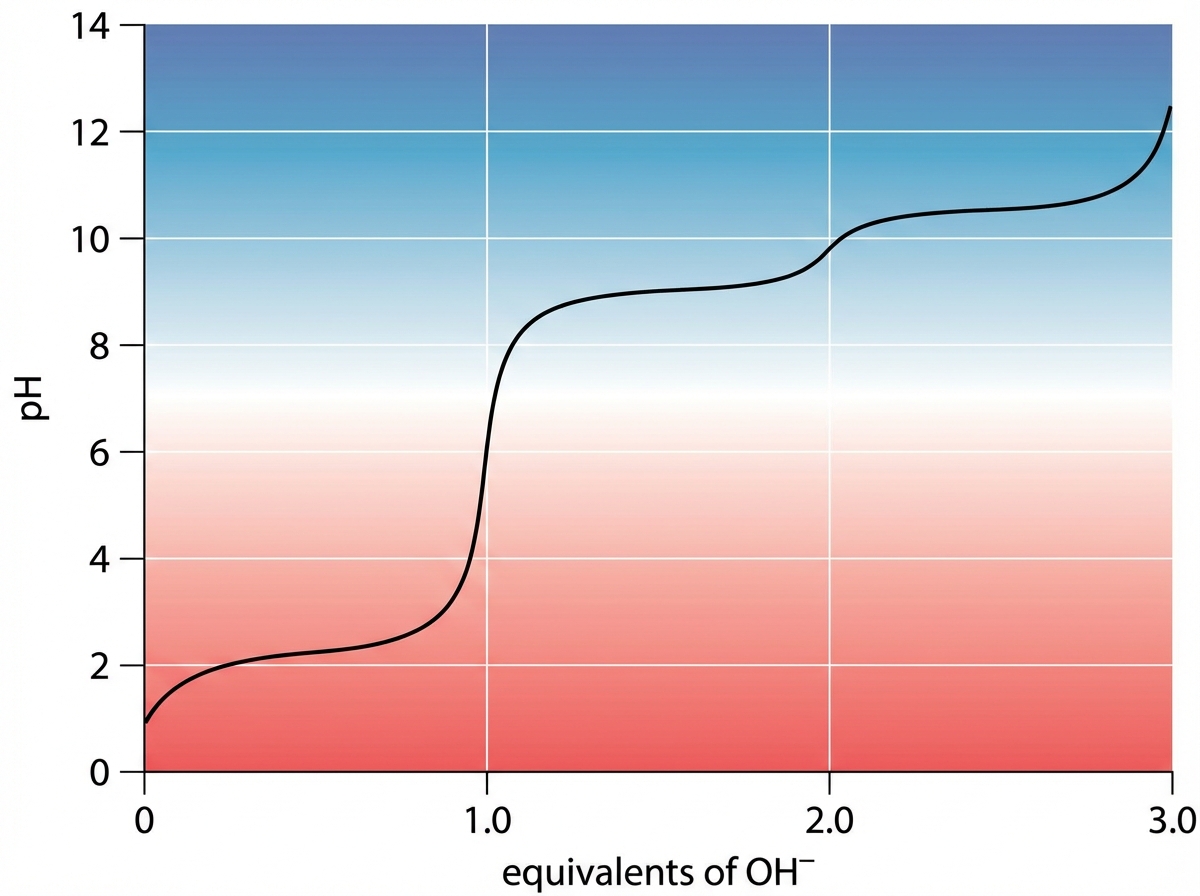
An investigator studying epigenetic mechanisms isolates histone proteins, the structural motifs involved in DNA binding and regulation of transcription. The peptide bonds of histone proteins are hydrolyzed and one type of amino acid is isolated. At normal body pH, this amino acid has a net charge of +1 . The investigator performs titration of this amino acid and obtains the graph shown. The isolated amino acid is most likely which of the following?
Replication in eukaryotic cells is a highly organized and accurate process. The process involves a number of enzymes such as primase, DNA polymerase, topoisomerase II, and DNA ligase. In which of the following directions is DNA newly synthesized?
A group of microbiological investigators is studying bacterial DNA replication in E. coli colonies. While the cells are actively proliferating, the investigators stop the bacterial cell cycle during S phase and isolate an enzyme involved in DNA replication. An assay of the enzyme's exonuclease activity determines that it is active on both intact and demethylated thymine nucleotides. Which of the following enzymes have the investigators most likely isolated?
A 62-year-old man with small cell lung cancer undergoes radiation therapy. His oncologist explains that radiation causes DNA damage and double strand breaks and this damage stops the cancer cells from growing because they can no longer replicate their DNA. One key mediator of this process is a cell cycle regulator called P53, which is upregulated after DNA damage and helps to trigger cell cycle arrest and apoptosis. One mechanism by which P53 activity is increased is a certain chromatin modification that loosens DNA coiling allowing for greater transcription of the proteins within that region of DNA. Which of the following enzymes most likely causes the chromatin modification described in this case?
Although nucleotide addition during DNA replication in prokaryotes proceeds approximately 20-times faster than in eukaryotes, why can much larger amounts of DNA be replicated in eukaryotes in a time-effective manner?
An investigator is studying the biology of human sperm cells. She isolates spermatogonia obtained on a testicular biopsy from a group of healthy male volunteers. She finds that the DNA of spermatogonia obtained from these men show a large number of TTAGGG sequence repeats. This finding can best be explained by increased activity of an enzyme with which of the following functions?
Want unlimited practice?
Get full access to all questions, explanations, and performance tracking.
Scan to download app