A 44-year-old woman is brought to the emergency department because of confusion and agitation. She was brought by police after she was found walking along a highway. The patient's brother comes to join her soon after her arrival. He says she has peptic ulcer disease and hypertension. He thinks she drinks around half a bottle of vodka daily. Her current medications include omeprazole and hydrochlorothiazide, although the brother is unsure if she takes them regularly. Her temperature is 37.1°C (98.7°F), pulse is 90/min, respirations are 16/min, and blood pressure is 135/90 mm Hg. On mental status examination, she is confused and not oriented to person, place, or time. Neurologic examination shows horizontal nystagmus. Her gait is wide-based with small steps. Her hemoglobin concentration is 9 g/dL. Her serum homocysteine concentration is elevated and her methylmalonic acid concentration is within the reference range. A peripheral blood smear shows hypersegmented neutrophils. Which of the following is the most likely cause of this patient's anemia?
Q32
A family who recently moved from Nebraska to Texas visits the pediatrician. They have a 3-year-old child that had been developing normally before this change in location. The child became lethargic, fatigued, pale, and constipated 3 months after moving to the new house. Also, the blood smear of the patient demonstrates the finding of sideroblasts. Analyze the scheme presented below. Which of the following enzymes labeled as no. 1 is impaired in this patient and causing his symptoms?
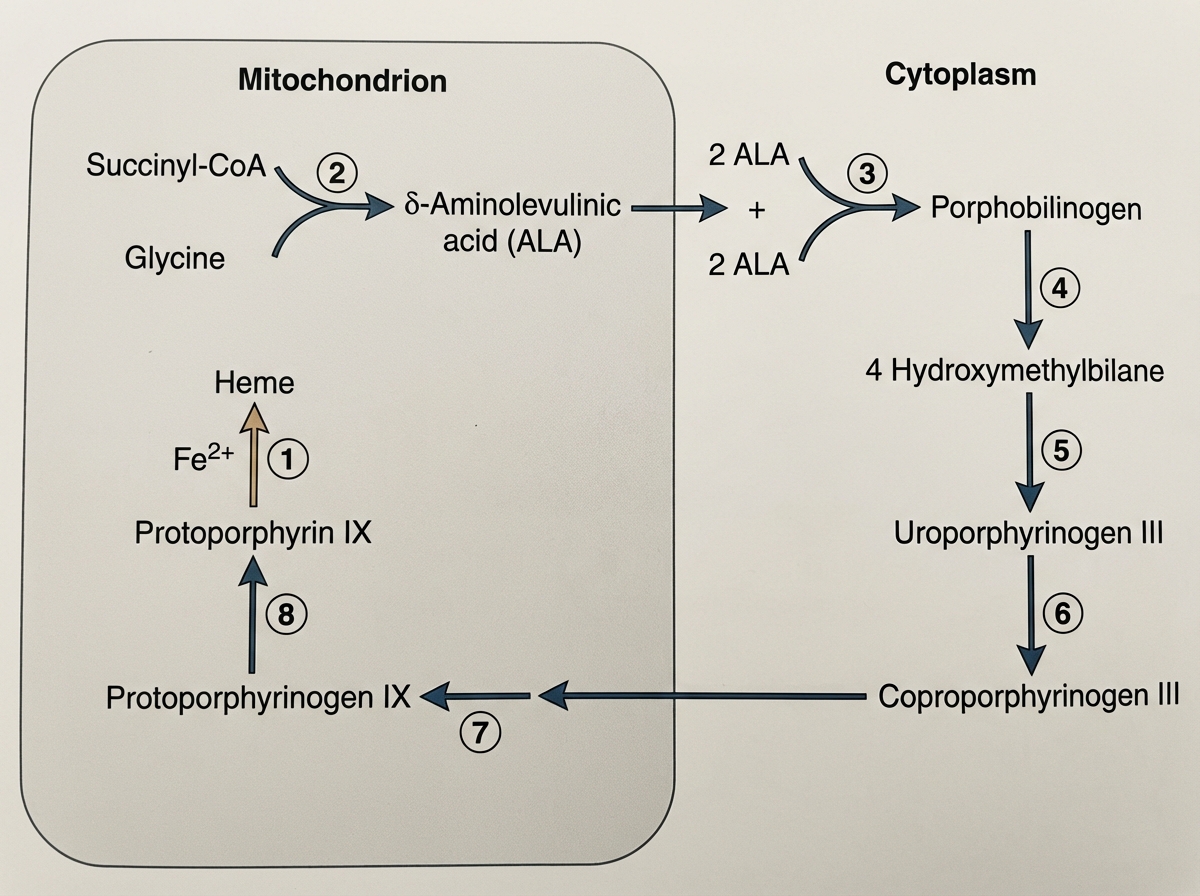
Q33
A 6-day-old female newborn is brought to the physician because of yellowish discoloration of her eyes and body, vomiting, and poor feeding for 3 days. She has had diarrhea for the past 2 days. She was born at 38 weeks' gestation and the antenatal period was uncomplicated. She appears lethargic. Vital signs are within normal limits. Examination shows jaundice of the skin and conjunctivae. Bilateral cataracts are present. The abdomen is soft and nontender. The liver is palpated 4-cm below the right costal margin; there is no splenomegaly. Muscle tone is decreased in all extremities. Serum glucose concentration is 37 mg/dL. Which of the following is the most appropriate recommendation to prevent long-term complications of this illness?
Q34
A 10-month-old boy is brought to his pediatrician because of a 3-day history of fever and lethargy. He has previously had more infections than expected since birth but otherwise appears to be developing normally. On exam, the boy is found to have a purulent, erythematous bump on his left upper extremity. This lesion is cultured and found to have a catalase-positive, coagulase-positive, gram-positive organism, which is the same organism that caused his previous infections. Based on clinical suspicion, a nitroblue tetrazolium (NBT) test is obtained that confirms the diagnosis. The substrate of the protein that is most likely defective in this patient is produced by which of the following metabolic pathways?
Q35
A 3-day-old infant presents because the patient’s parents noticed that his skin was becoming yellow. The mother said that the patient eats well, has normal stool and urine color. It’s her first child from first healthy pregnancy. The patient was born on time and delivered via spontaneous vaginal delivery with no complications. Family history is significant for a maternal aunt who died as an infant of unknown causes. The patient is afebrile and vital signs are within normal limits. On physical examination, he is awake, calm, and looks healthy, except for the yellow tone of the skin and scleral icterus. Laboratory findings are significant for elevated unconjugated bilirubin, with a normal complete blood count. Other routine laboratory blood tests are within normal limits. The patient is treated with phototherapy, but his jaundice worsens and his unconjugated hyperbilirubinemia persists well into the second week of life. Which of the following is the most likely diagnosis in this patient?
Q36
While studying vesicular trafficking in mammalian epithelial cells, a scientist identified a specific protein that was responsible for contorting the plasma membrane to capture extracellular materials and forming endosomes. This protein also helps transport those endosomes from the trans-Golgi network to lysosomes. Which of the following is the protein that the scientists identified?
Q37
A 2-month-old boy is brought to the pediatrician by his parents after they notice that he had a "floppy" appearance, poor suckling, vomiting, and spontaneous generalized movements a few weeks after birth. The boy was born at home, and routine newborn screening was normal. On physical examination, the infant is hypotonic, has poor suckling, cannot hold his head straight while prone, and does not follow objects. He has fair skin, red hair, blue eyes, and eczema. At the second appointment, laboratory tests show high levels of phenylalanine and prolactin and low levels of homovanillic acid and serotonin. Which of the following enzymes is deficient in this patient?
Q38
A 43-year-old woman presents to a hematology clinic to discuss the results of a bone marrow biopsy that was performed about 4 weeks ago. She was referred to this clinic to evaluate her chronic anemia after all other noninvasive diagnostic testing was inconclusive. Today her blood pressure is 114/76 mm Hg, pulse is 94/min, respiratory rate 21/min, and temperature is 36.6°C (97.9°F). She has mild jaundice and shortness of breath. The bone marrow aspirate showed erythroid precursors with multiple cytoplasmic structures that were highlighted with a Prussian blue stain. A deficiency of which of the following would result in these findings?
Q39
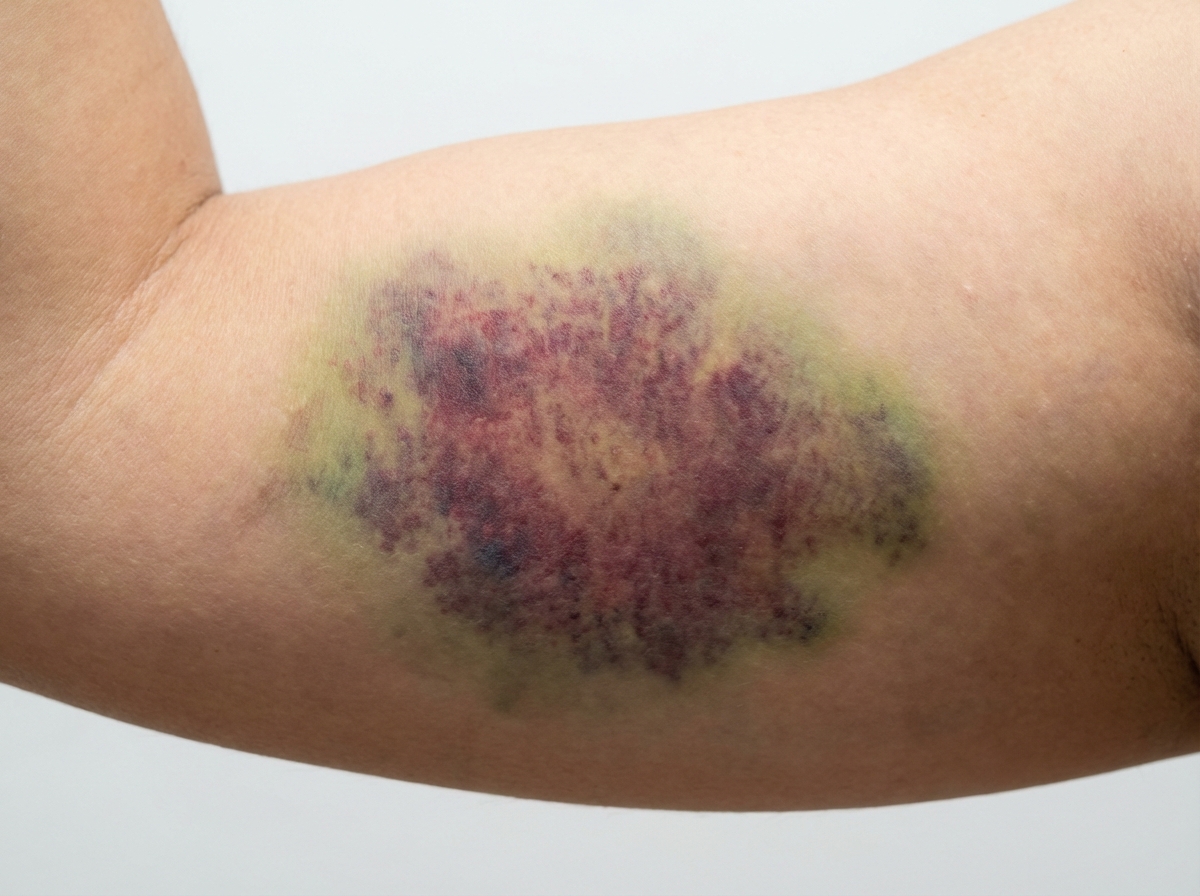
A 27-year-old man comes to the physician for a follow-up evaluation. Two days ago, he was involved in a physical altercation and sustained a bruise on his left arm and an injury to his left shoulder. Initially, there was a reddish-purple discoloration on his left upper arm. A photograph of the left upper arm today is shown. Which of the following enzymes is most likely responsible for the observed changes in color?
Q40
An 8-year-old boy is brought to the pediatrician by his mother with nausea, vomiting, and decreased frequency of urination. He has acute lymphoblastic leukemia for which he received the 1st dose of chemotherapy 5 days ago. His leukocyte count was 60,000/mm3 before starting chemotherapy. The vital signs include: pulse 110/min, temperature 37.0°C (98.6°F), and blood pressure 100/70 mm Hg. The physical examination shows bilateral pedal edema. Which of the following serum studies and urinalysis findings will be helpful in confirming the diagnosis of this condition?
Metabolism US Medical PG Practice Questions and MCQs
Question 31: A 44-year-old woman is brought to the emergency department because of confusion and agitation. She was brought by police after she was found walking along a highway. The patient's brother comes to join her soon after her arrival. He says she has peptic ulcer disease and hypertension. He thinks she drinks around half a bottle of vodka daily. Her current medications include omeprazole and hydrochlorothiazide, although the brother is unsure if she takes them regularly. Her temperature is 37.1°C (98.7°F), pulse is 90/min, respirations are 16/min, and blood pressure is 135/90 mm Hg. On mental status examination, she is confused and not oriented to person, place, or time. Neurologic examination shows horizontal nystagmus. Her gait is wide-based with small steps. Her hemoglobin concentration is 9 g/dL. Her serum homocysteine concentration is elevated and her methylmalonic acid concentration is within the reference range. A peripheral blood smear shows hypersegmented neutrophils. Which of the following is the most likely cause of this patient's anemia?
A. Folate deficiency (Correct Answer)
B. Vitamin B1 deficiency
C. Vitamin E deficiency
D. Alcohol abuse
E. Vitamin B12 deficiency
Explanation: ***Folate deficiency***
- **Elevated homocysteine** and **normal methylmalonic acid** (MMA) levels are classic laboratory findings for folate deficiency.
- **Hypersegmented neutrophils** on a peripheral blood smear indicate **megaloblastic anemia**, which is caused by either folate or vitamin B12 deficiency; the MMA level differentiates between the two.
- This is the most likely cause of **this patient's anemia** as specifically asked in the question, despite the concurrent neurologic findings.
*Vitamin B1 deficiency*
- This deficiency typically causes **Wernicke-Korsakoff syndrome**, characterized by **ataxia**, confusion, and ophthalmoplegia (like nystagmus), which aligns with the neurologic presentation in this alcoholic patient.
- However, vitamin B1 deficiency does not cause **megaloblastic anemia** with hypersegmented neutrophils or the specific homocysteine/MMA profile seen here.
- The patient likely has **concurrent Wernicke encephalopathy**, but this doesn't cause the anemia.
*Vitamin E deficiency*
- Vitamin E deficiency is rare but can cause **neurologic symptoms** such as ataxia, nystagmus, and peripheral neuropathy.
- It does not cause **megaloblastic anemia** or the characteristic laboratory findings of elevated homocysteine and normal MMA.
*Alcohol abuse*
- While alcohol abuse is a major risk factor for **nutritional deficiencies** (including folate and B1), it is the underlying cause, not the direct nutritional deficiency causing the anemia.
- The question asks for the most likely cause of the patient's **anemia** in the context of specific lab findings, pointing to a particular vitamin deficiency directly.
*Vitamin B12 deficiency*
- Vitamin B12 deficiency also causes **elevated homocysteine** and **megaloblastic anemia** with hypersegmented neutrophils.
- However, it would also lead to **elevated methylmalonic acid** (MMA) levels, which are explicitly stated as being within the reference range in this patient, effectively ruling out B12 deficiency.
Question 32: A family who recently moved from Nebraska to Texas visits the pediatrician. They have a 3-year-old child that had been developing normally before this change in location. The child became lethargic, fatigued, pale, and constipated 3 months after moving to the new house. Also, the blood smear of the patient demonstrates the finding of sideroblasts. Analyze the scheme presented below. Which of the following enzymes labeled as no. 1 is impaired in this patient and causing his symptoms?
A. Ribonuclease
B. Uroporphyrinogen decarboxylase
C. Ferrochelatase (Correct Answer)
D. Uroporphyrinogen I synthase
E. ALA dehydratase
Explanation: ***Ferrochelatase***
- The patient's symptoms of **lethargy, fatigue, pallor, and constipation**, along with the presence of **sideroblasts** on a blood smear, are classic signs of **lead poisoning**. Lead poisoning specifically inhibits **ferrochelatase** (enzyme #1 in the heme synthesis pathway), preventing the incorporation of iron into protoporphyrin IX.
- Inhibition of **ferrochelatase** leads to the accumulation of protoporphyrin IX and iron, which forms **sideroblasts** (ring sideroblasts in the bone marrow). The move from Nebraska to Texas suggests a potential exposure to lead in the new environment, possibly from older housing or contaminated water.
*Uroporphyrinogen I synthase*
- **Uroporphyrinogen I synthase** (also called hydroxymethylbilane synthase) is an earlier enzyme in the heme synthesis pathway that converts porphobilinogen to hydroxymethylbilane.
- Deficiency of this enzyme causes **congenital erythropoietic porphyria**, which presents with **photosensitivity, red urine, and hemolytic anemia**, not the clinical picture described in this patient with lead poisoning.
*Ribonuclease*
- **Ribonuclease** is an enzyme involved in the degradation of RNA, and its impairment is not directly linked to **heme synthesis** or the symptoms described in the patient.
- Deficiencies in ribonuclease would affect RNA metabolism, not cause **anemia**, **constipation**, or **sideroblasts**.
*ALA dehydratase*
- **Delta-aminolevulinic acid dehydratase (ALA dehydratase or ALAD)** is also inhibited by lead, leading to the accumulation of **ALA** in blood and urine.
- While ALAD inhibition is a feature of lead poisoning, the most direct and severe impact on heme synthesis leading to **sideroblasts** (due to iron accumulation) and the final steps of heme formation is the impairment of **ferrochelatase**, which is the terminal enzyme that inserts iron into the porphyrin ring.
*Uroporphyrinogen decarboxylase*
- Impairment of **uroporphyrinogen decarboxylase** is characteristic of **Porphyria Cutanea Tarda (PCT)**.
- PCT primarily presents with **photosensitive skin lesions** (e.g., blistering, hyperpigmentation), liver dysfunction, and elevated uroporphyrins, which are not the primary symptoms described in this patient.
Question 33: A 6-day-old female newborn is brought to the physician because of yellowish discoloration of her eyes and body, vomiting, and poor feeding for 3 days. She has had diarrhea for the past 2 days. She was born at 38 weeks' gestation and the antenatal period was uncomplicated. She appears lethargic. Vital signs are within normal limits. Examination shows jaundice of the skin and conjunctivae. Bilateral cataracts are present. The abdomen is soft and nontender. The liver is palpated 4-cm below the right costal margin; there is no splenomegaly. Muscle tone is decreased in all extremities. Serum glucose concentration is 37 mg/dL. Which of the following is the most appropriate recommendation to prevent long-term complications of this illness?
A. Phototherapy
B. Thiamine therapy
C. Levothyroxine therapy
D. Frequent glucose feeds
E. Stop milk feeds (Correct Answer)
Explanation: ***Stop milk feeds***
- The constellation of **jaundice**, **vomiting**, **diarrhea**, **lethargy**, **hepatomegaly**, **hypoglycemia**, **decreased muscle tone**, and **bilateral cataracts** in a newborn is highly suggestive of **galactosemia**.
- **Stopping milk feeds** (specifically those containing lactose and galactose) is the primary and most crucial intervention to prevent long-term complications such as intellectual disability, liver damage, and kidney failure.
*Phototherapy*
- While phototherapy is used to treat **neonatal jaundice**, it addresses only the symptom of hyperbilirubinemia, not the underlying cause in galactosemia.
- It would not prevent the systemic devastating effects on other organs caused by galactose and its metabolites.
*Thiamine therapy*
- **Thiamine therapy** is indicated for conditions like **Wernicke-Korsakoff syndrome** or **thiamine-dependent metabolic disorders**, which do not align with the presented symptoms.
- There is no evidence to support its use in galactosemia.
*Levothyroxine therapy*
- **Levothyroxine therapy** is used for **hypothyroidism**, a condition characterized by feeding problems, jaundice, and lethargy but typically lacks the specific findings of cataracts, vomiting/diarrhea in this acute presentation, and hepatomegaly, as seen in this clinical picture.
- The combination of symptoms described points more specifically to a metabolic disorder affecting galactose metabolism.
*Frequent glucose feeds*
- While the newborn has **hypoglycemia**, simply providing frequent glucose feeds addresses **only a symptom** and does not resolve the underlying metabolic defect in galactosemia.
- Continuing milk feeds would worsen the primary disease, despite potentially correcting blood glucose temporarily.
Question 34: A 10-month-old boy is brought to his pediatrician because of a 3-day history of fever and lethargy. He has previously had more infections than expected since birth but otherwise appears to be developing normally. On exam, the boy is found to have a purulent, erythematous bump on his left upper extremity. This lesion is cultured and found to have a catalase-positive, coagulase-positive, gram-positive organism, which is the same organism that caused his previous infections. Based on clinical suspicion, a nitroblue tetrazolium (NBT) test is obtained that confirms the diagnosis. The substrate of the protein that is most likely defective in this patient is produced by which of the following metabolic pathways?
A. Beta oxidation
B. Gluconeogenesis
C. Citric acid cycle
D. HMP shunt (Correct Answer)
E. Urea cycle
Explanation: ***HMP shunt***
- This patient's presentation of recurrent infections with **catalase-positive organisms** (like *Staphylococcus aureus*, which is catalase- and coagulase-positive), along with an **abnormal NBT test**, is classic for **Chronic Granulomatous Disease (CGD)**.
- CGD is caused by a defect in **NADPH oxidase**, which is crucial for the **respiratory burst** in phagocytes. The HMP shunt (pentose phosphate pathway) produces **NADPH**, which is the vital substrate for NADPH oxidase.
- The NBT test (or DHR flow cytometry) measures the ability of phagocytes to produce reactive oxygen species via NADPH oxidase.
*Beta oxidation*
- This pathway is involved in the breakdown of **fatty acids** for energy.
- Defects in beta-oxidation typically lead to problems with **energy metabolism**, particularly during fasting, and do not directly cause immune dysfunction like recurrent bacterial infections.
*Gluconeogenesis*
- This pathway synthesizes **glucose from non-carbohydrate precursors** and is important for maintaining blood glucose levels.
- Defects primarily cause **hypoglycemia** and metabolic acidosis, not immunodeficiency.
*Citric acid cycle*
- The citric acid cycle (Krebs cycle) is the central pathway for **oxidative metabolism**, generating ATP.
- While it's essential for cellular energy, a defect in this cycle generally leads to **severe systemic metabolic derangements** rather than specific immunodeficiency.
*Urea cycle*
- The urea cycle is responsible for the **detoxification of ammonia** by converting it into urea.
- Defects in the urea cycle result in **hyperammonemia**, leading to neurological symptoms, but are not associated with increased susceptibility to bacterial infections.
Question 35: A 3-day-old infant presents because the patient’s parents noticed that his skin was becoming yellow. The mother said that the patient eats well, has normal stool and urine color. It’s her first child from first healthy pregnancy. The patient was born on time and delivered via spontaneous vaginal delivery with no complications. Family history is significant for a maternal aunt who died as an infant of unknown causes. The patient is afebrile and vital signs are within normal limits. On physical examination, he is awake, calm, and looks healthy, except for the yellow tone of the skin and scleral icterus. Laboratory findings are significant for elevated unconjugated bilirubin, with a normal complete blood count. Other routine laboratory blood tests are within normal limits. The patient is treated with phototherapy, but his jaundice worsens and his unconjugated hyperbilirubinemia persists well into the second week of life. Which of the following is the most likely diagnosis in this patient?
A. Hemolytic anemia
B. Gilbert syndrome
C. Crigler–Najjar syndrome type II
D. Neonatal jaundice
E. Crigler–Najjar syndrome type I (Correct Answer)
Explanation: ***Crigler–Najjar syndrome type I***
- This condition presents with **severe unconjugated hyperbilirubinemia** that is unresponsive to phototherapy and persists beyond the typical neonatal period, as seen in this infant whose jaundice worsened despite treatment.
- The family history of an infant death of unknown causes (potentially due to severe neonatal jaundice) and the absence of other symptoms point towards a genetic disorder of bilirubin metabolism, with **Crigler–Najjar syndrome type I** being the most severe due to a complete absence of the **UDP-glucuronosyltransferase (UGT1A1) enzyme**.
*Hemolytic anemia*
- While hemolytic anemia can cause unconjugated hyperbilirubinemia, this patient has a **normal complete blood count**, which would typically show signs of hemolysis such an anemia, reticulocytosis, or abnormal red cell morphology.
- The lack of responsiveness to phototherapy and prolonged course also make isolated hemolytic anemia less likely without further evidence.
*Gilbert syndrome*
- Gilbert syndrome causes **mild unconjugated hyperbilirubinemia** that often becomes apparent in adolescence or adulthood, typically exacerbated by stress or fasting, and usually does not present with severe jaundice in the neonatal period that worsens despite phototherapy.
- This condition is characterized by a *partial* deficiency of the **UGT1A1 enzyme**, not the severe deficiency seen in this case.
*Crigler–Najjar syndrome type II*
- Crigler–Najjar syndrome type II, also known as Arias syndrome, involves a **partial deficiency** of the **UGT1A1 enzyme**, resulting in less severe hyperbilirubinemia that usually responds significantly to **phenobarbital** and partially to phototherapy.
- The patient's severe and worsening jaundice despite phototherapy suggests a more profound enzyme defect than partial deficiency.
*Neonatal jaundice*
- **Physiological neonatal jaundice** typically peaks around day 3-5 of life and resolves within the first week or two, generally responding well to phototherapy if bilirubin levels are high.
- This infant's jaundice is **severe, resistant to phototherapy**, and persists well into the second week, indicating a pathological cause beyond typical neonatal jaundice.
Question 36: While studying vesicular trafficking in mammalian epithelial cells, a scientist identified a specific protein that was responsible for contorting the plasma membrane to capture extracellular materials and forming endosomes. This protein also helps transport those endosomes from the trans-Golgi network to lysosomes. Which of the following is the protein that the scientists identified?
A. Clathrin (Correct Answer)
B. COPII
C. Sar1
D. COPI
E. Kinesin
Explanation: ***Clathrin***
- **Clathrin-mediated endocytosis** is a major pathway for the uptake of extracellular material and receptor-mediated endocytosis, involving **clathrin-coated pits** that invaginate to form endosomes.
- Clathrin also plays a critical role in the budding of vesicles from the **trans-Golgi network** that are destined for lysosomes, carrying lysosomal enzymes and other cargo.
*COPII*
- **COPII coats** are involved in forming vesicles that bud from the rough ER and transport cargo **forward** to the Golgi apparatus.
- This protein primarily functions in the **ER-to-Golgi transport** pathway, not in endocytosis or transport from the trans-Golgi to lysosomes.
*Sar1*
- **Sar1 is a small GTPase** that regulates the assembly of the **COPII coat** on the ER membrane.
- It is an initiator of COPII vesicle formation and does not directly form the coat that contorts the membrane itself nor is involved directly in transport from the trans-Golgi to lysosomes.
*COPI*
- **COPI coats** are primarily involved in **retrograde transport** within the Golgi apparatus (cisternae to cis-cisternae) and from the **Golgi back to the ER**.
- Its function is distinct from endocytosis at the plasma membrane or forwarding cargo to lysosomes from the trans-Golgi.
*Kinesin*
- **Kinesin is a motor protein** that moves along microtubules, transporting various cellular components, including vesicles, towards the **plus end of microtubules** (typically away from the cell body).
- While kinesin transports vesicles, it does not form the **coat that invaginates the plasma membrane** or directly mediates endosome formation.
Question 37: A 2-month-old boy is brought to the pediatrician by his parents after they notice that he had a "floppy" appearance, poor suckling, vomiting, and spontaneous generalized movements a few weeks after birth. The boy was born at home, and routine newborn screening was normal. On physical examination, the infant is hypotonic, has poor suckling, cannot hold his head straight while prone, and does not follow objects. He has fair skin, red hair, blue eyes, and eczema. At the second appointment, laboratory tests show high levels of phenylalanine and prolactin and low levels of homovanillic acid and serotonin. Which of the following enzymes is deficient in this patient?
A. Dihydropteridine reductase (Correct Answer)
B. Dopamine hydroxylase
C. Phenylalanine hydroxylase
D. Dopamine decarboxylase
E. Phenylethanolamine N-methyltransferase
Explanation: ***Dihydropteridine reductase***
- This enzyme is essential for regenerating **tetrahydrobiopterin (BH4)**, a critical cofactor for **phenylalanine hydroxylase**, **tyrosine hydroxylase**, and **tryptophan hydroxylase**. Its deficiency leads to elevated phenylalanine, reduced dopamine and serotonin synthesis (indicated by low homovanillic acid and serotonin), and subsequent neurological symptoms and fair pigmentation.
- The constellation of **hypotonia**, developmental delay (**cannot hold head straight, does not follow objects**), fair skin/red hair/blue eyes, and the specific lab findings of high **phenylalanine** and low **homovanillic acid/serotonin** strongly point to deficient BH4 synthesis or regeneration.
*Dopamine hydroxylase*
- This enzyme converts **dopamine to norepinephrine**. A deficiency would lead to high dopamine and low norepinephrine, but not elevated phenylalanine or low serotonin.
- The presented symptoms like fair pigmentation and developmental delay are not characteristic of dopamine hydroxylase deficiency.
*Phenylalanine hydroxylase*
- A deficiency in **phenylalanine hydroxylase** is the classic cause of **PKU (phenylketonuria)**, which would explain high phenylalanine and fair pigmentation. However, it would not explain the low **homovanillic acid** (a dopamine metabolite) and **serotonin**, as these pathways are not directly affected by this enzyme.
- While patients with **PKU** can have neurological symptoms, the specific combination of symptoms and lab findings (especially low serotonin and homovanillic acid) indicates a defect further upstream in the BH4 pathway.
*Dopamine decarboxylase*
- This enzyme converts **L-DOPA to dopamine** and **5-hydroxytryptophan to serotonin**. Its deficiency would explain low **homovanillic acid** and **serotonin**, but it would not cause elevated **phenylalanine** because it acts downstream of phenylalanine metabolism.
- The presence of high phenylalanine in the lab results excludes an isolated **dopamine decarboxylase deficiency** as the primary cause.
*Phenylethanolamine N-methyltransferase*
- This enzyme converts **norepinephrine to epinephrine** (adrenaline). Its deficiency would primarily affect the synthesis of epinephrine.
- This enzyme deficiency would not account for the elevated **phenylalanine**, low **homovanillic acid**, or low **serotonin** levels observed in the patient.
Question 38: A 43-year-old woman presents to a hematology clinic to discuss the results of a bone marrow biopsy that was performed about 4 weeks ago. She was referred to this clinic to evaluate her chronic anemia after all other noninvasive diagnostic testing was inconclusive. Today her blood pressure is 114/76 mm Hg, pulse is 94/min, respiratory rate 21/min, and temperature is 36.6°C (97.9°F). She has mild jaundice and shortness of breath. The bone marrow aspirate showed erythroid precursors with multiple cytoplasmic structures that were highlighted with a Prussian blue stain. A deficiency of which of the following would result in these findings?
A. Pyridoxine (Correct Answer)
B. Folic acid
C. Niacin
D. Thiamine
E. Riboflavin
Explanation: ***Pyridoxine***
- **Pyridoxine (vitamin B6)** is a critical cofactor for **aminolevulinate synthase**, the rate-limiting enzyme in **heme synthesis**.
- A deficiency in pyridoxine leads to impaired heme synthesis, causing **sideroblastic anemia**, characterized by **ring sideroblasts** (erythroid precursors with iron-laden mitochondria) seen with **Prussian blue stain** in the bone marrow.
*Folic acid*
- **Folic acid deficiency** causes **megaloblastic anemia**, characterized by **macrocytic red blood cells** and **hypersegmented neutrophils** due to impaired DNA synthesis.
- It does not primarily lead to the accumulation of cytoplasmic iron structures in erythroid precursors.
*Niacin*
- **Niacin (vitamin B3)** deficiency causes **pellagra**, a condition characterized by **dermatitis**, **diarrhea**, and **dementia**.
- It is not directly associated with the pathogenesis of sideroblastic anemia or the presence of ring sideroblasts.
*Thiamine*
- **Thiamine (vitamin B1)** deficiency causes **beriberi**, affecting the cardiovascular and nervous systems.
- It is not involved in heme synthesis to the extent that its deficiency would result in sideroblastic anemia.
*Riboflavin*
- **Riboflavin (vitamin B2)** is a precursor for **FAD** and **FMN**, important coenzymes in various metabolic pathways.
- While riboflavin deficiency can cause anemia, it is usually **normocytic** or **microcytic** and not typically associated with the formation of ring sideroblasts.
Question 39: A 27-year-old man comes to the physician for a follow-up evaluation. Two days ago, he was involved in a physical altercation and sustained a bruise on his left arm and an injury to his left shoulder. Initially, there was a reddish-purple discoloration on his left upper arm. A photograph of the left upper arm today is shown. Which of the following enzymes is most likely responsible for the observed changes in color?
A. Aminolevulinate dehydratase
B. Heme oxygenase (Correct Answer)
C. Porphobilinogen deaminase
D. Bilirubin UDP-glucuronosyltransferase
E. Uroporphyrinogen decarboxylase
Explanation: ***Heme oxygenase***
- **Heme oxygenase** is the rate-limiting enzyme in heme degradation and is directly responsible for the color changes observed in bruising.
- When red blood cells are damaged in traumatic injury, **heme is released from hemoglobin** and must be broken down.
- Heme oxygenase catalyzes the conversion of **heme → biliverdin (green pigment) + carbon monoxide + free iron**.
- Biliverdin is subsequently reduced to **bilirubin (yellow pigment)** by biliverdin reductase.
- This enzymatic pathway explains the characteristic color evolution of bruises: **red/purple (hemoglobin/heme) → green (biliverdin) → yellow/brown (bilirubin)**.
*Aminolevulinate dehydratase*
- This enzyme is involved in the **heme synthesis pathway**, not heme degradation.
- It catalyzes the conversion of aminolevulinic acid (ALA) to porphobilinogen in the second step of heme synthesis.
- Deficiency causes **ALA-dehydratase deficiency porphyria**, characterized by neurological symptoms, not bruise-related color changes.
*Porphobilinogen deaminase*
- Also known as **hydroxymethylbilane synthase**, this enzyme is part of the **heme synthesis pathway**.
- It converts porphobilinogen to hydroxymethylbilane in the third step of heme synthesis.
- Deficiency causes **acute intermittent porphyria** with neurovisceral symptoms, not involvement in bruise healing.
*Bilirubin UDP-glucuronosyltransferase*
- This enzyme (also called **UGT1A1**) conjugates unconjugated bilirubin in hepatocytes, making it water-soluble for biliary excretion.
- While bilirubin is a product of heme degradation, this enzyme acts **downstream in the liver**, not at the local tissue site where bruise color changes occur.
- Deficiency causes **Gilbert's syndrome** (partial deficiency) or **Crigler-Najjar syndrome** (complete deficiency), resulting in unconjugated hyperbilirubinemia.
*Uroporphyrinogen decarboxylase*
- This enzyme functions in the **heme synthesis pathway**, converting uroporphyrinogen III to coproporphyrinogen III.
- Deficiency leads to **porphyria cutanea tarda** (most common porphyria), characterized by photosensitivity, skin fragility, and blistering lesions, not bruise color changes.
Question 40: An 8-year-old boy is brought to the pediatrician by his mother with nausea, vomiting, and decreased frequency of urination. He has acute lymphoblastic leukemia for which he received the 1st dose of chemotherapy 5 days ago. His leukocyte count was 60,000/mm3 before starting chemotherapy. The vital signs include: pulse 110/min, temperature 37.0°C (98.6°F), and blood pressure 100/70 mm Hg. The physical examination shows bilateral pedal edema. Which of the following serum studies and urinalysis findings will be helpful in confirming the diagnosis of this condition?
A. Hyperuricemia, hyperkalemia, hyperphosphatemia, and urinary monoclonal spike
B. Hyperkalemia, hyperphosphatemia, hypocalcemia, hyperuricemia, urine supernatant pink, and positive for heme
C. Hyperkalemia, hyperphosphatemia, hypocalcemia, and extremely elevated creatine kinase (MM)
D. Hyperuricemia, hyperkalemia, hyperphosphatemia, lactic acidosis, and oxalate crystals
E. Hyperuricemia, hyperkalemia, hyperphosphatemia, hypocalcemia, and urate crystals in the urine (Correct Answer)
Explanation: ***Hyperuricemia, hyperkalemia, hyperphosphatemia, hypocalcemia, and urate crystals in the urine***
- This patient's presentation following chemotherapy, particularly with a high pre-treatment leukocyte count, is highly suggestive of **tumor lysis syndrome (TLS)**. TLS is characterized by rapid tumor cell breakdown, releasing intracellular contents into the bloodstream.
- The **four cardinal laboratory findings** of TLS are **hyperuricemia** (from nucleic acid breakdown), **hyperkalemia** (from intracellular potassium release), **hyperphosphatemia** (from intracellular phosphate release), and **hypocalcemia** (secondary to calcium-phosphate precipitation). The presence of **urate crystals in the urine** confirms the renal effects of uric acid overload, leading to acute kidney injury.
*Hyperuricemia, hyperkalemia, hyperphosphatemia, and urinary monoclonal spike*
- While **hyperuricemia, hyperkalemia, and hyperphosphatemia** are consistent with tumor lysis syndrome, a **urinary monoclonal spike** is typically associated with multiple myeloma or other plasma cell dyscrasias, not tumor lysis syndrome.
- The patient's history of acute lymphoblastic leukemia and recent chemotherapy points away from a monoclonal gammopathy.
- This option is also missing the key finding of **hypocalcemia**.
*Hyperkalemia, hyperphosphatemia, hypocalcemia, hyperuricemia, urine supernatant pink, and positive for heme*
- **Hyperkalemia, hyperphosphatemia, hyperuricemia, and hypocalcemia** are indeed the four cardinal metabolic abnormalities of TLS. However, a **pink urine supernatant and positive heme** indicate **hemoglobinuria** or **myoglobinuria**, pointing towards hemolysis or rhabdomyolysis, respectively.
- While TLS can lead to acute kidney injury, these specific urinalysis findings are not typical for TLS. The expected urinary finding would be **urate crystals**, not heme pigments.
*Hyperkalemia, hyperphosphatemia, hypocalcemia, and extremely elevated creatine kinase (MM)*
- **Hyperkalemia, hyperphosphatemia, and hypocalcemia** are consistent with TLS. However, **extremely elevated creatine kinase (MM)** is a hallmark of **rhabdomyolysis**, a condition involving breakdown of skeletal muscle.
- This option is also missing **hyperuricemia**, which is a cardinal feature of TLS.
- There is no clinical indication for rhabdomyolysis in this patient's presentation.
*Hyperuricemia, hyperkalemia, hyperphosphatemia, lactic acidosis, and oxalate crystals*
- While **hyperuricemia, hyperkalemia, and hyperphosphatemia** are characteristic of TLS, this option is missing **hypocalcemia**, one of the four cardinal metabolic abnormalities.
- Additionally, the presence of **oxalate crystals** in the urine is typically associated with **ethylene glycol poisoning** or primary hyperoxaluria, not tumor lysis syndrome. **Urate crystals**, not oxalate crystals, are expected due to the rapid breakdown of purines in TLS.
- **Lactic acidosis** can occur in severe TLS but is not a defining laboratory criterion.