A 70-year-old man with a long-standing history of diabetes mellitus type 2 and hypertension presents with complaints of constant wrist and shoulder pain. Currently, the patient undergoes hemodialysis 2 to 3 times a week and is on the transplant list for a kidney. The patient denies any recent traumas. Which of the following proteins is likely to be increased in his plasma, causing the patient’s late complaints?
Q162
A 4-day-old boy is brought to the physician by his mother because of vomiting, irritability, and poor feeding. Pregnancy and delivery were uncomplicated. Physical examination shows increased muscle tone in all extremities. He appears lethargic. His diapers emit a caramel-like odor. Urine studies are positive for ketone bodies. Supplementation of which of the following is most likely to improve this patient's condition?
Q163
A 20-year-old female presents to the college health clinic concerned about a rash that has recently developed along her back and flank. Aside from a history of chronic diarrhea and flatulence, she reports being otherwise healthy. She is concerned that this rash could be either from bed bugs or possibly be sexually transmitted, as she has engaged in unprotected sex multiple times over the past two years. The physician orders several lab tests and finds that the patient does indeed have chlamydia and elevated tissue transglutaminase (tTG) levels. What is the most likely cause of her rash?
Q164
A 55-year-old woman is brought to the physician by her daughter because of progressive memory loss and weakness over the past 6 months. She is now unable to perform activities of daily living and has had several falls in her apartment. She has diarrhea but has not had nausea or vomiting. She was treated for tuberculosis 10 years ago. She smoked half a pack of cigarettes daily for 25 years but stopped 8 years ago. She drinks a pint of vodka daily. Vital signs are within normal limits. Examination shows glossitis and a hyperpigmented rash on her face and arms. There are multiple bruises over both arms. On mental status examination, she is oriented to place and person only. Short-term memory is impaired; she can recall 0 out of 5 objects after 10 minutes. Which of the following deficiencies is most likely present in this patient?
Q165
You are counseling a mother whose newborn has just screened positive for a deficit of phenylalanine hydroxylase enzyme. You inform her that her child will require dietary supplementation of which of the following?
Q166
A 6-year-old girl is referred to the pediatrician after a primary care practitioner found her to be anemic, in addition to presenting with decreased bowel movements, intermittent abdominal pain, and hearing loss. The child has also shown poor performance at school and has lost interest in continuing her classes of glazed pottery that she has taken twice a week for the past year. During the examination, the pediatrician identifies gingival lines, generalized pallor, and moderate abdominal pain. Laboratory tests show elevated iron and ferritin concentration, and a blood smear shows small and hypochromic erythrocytes, basophilic stippling, and the presence of nucleated erythroblasts with granules visualized with Prussian blue. Which of the following molecules cannot be produced in the erythrocytes of this patient?
Q167
A 9-month-old boy is brought to the pediatrician because he cannot sit on his own without support and has involuntary movements. He was born vaginally with no complications at full term. There is no history of consanguinity among parents. On physical examination, it was noticed that he is a stunted infant with generalized hypotonia and severe generalized dystonic movements. The mother says that she has noticed the presence of orange sand in his diapers many times. Laboratory evaluation revealed elevated uric acid levels in both blood and urine. Which of the following enzymes is deficient in this patient?
Q168
A 25-year-old male visits his physician because of fertility issues with his wife. Physical exam reveals bilateral gynecomastia, elongated limbs, and shrunken testicles. Levels of plasma gonadotropins are elevated. Which of the following is also likely to be increased in this patient:
Q169
In your peripheral tissues and lungs, carbonic anhydrase works to control the equilibrium between carbon dioxide and carbonic acid in order to maintain proper blood pH. Through which mechanism does carbonic anhydrase exert its influence on reaction kinetics?
Q170
A 46-year-old man presents to the clinic complaining of fatigue and difficulty breathing for the past month. He reports that it is particularly worse when he exercises as he becomes out of breath at 1 mile when he used to routinely run 3 miles. He is frustrated as he was recently diagnosed with diabetes despite a good diet and regular exercise. He denies any weight changes, chest pain, or gastrointestinal symptoms. When asked about other concerns, his wife complains that he is getting darker despite regular sunscreen application. A physical examination demonstrates a tanned man with an extra heart sound just before S1, mild bilateral pitting edema, and mild bibasilar rales bilaterally. An echocardiogram is ordered and shows a left ventricular ejection fraction (LVEF) of 65% with reduced filling. What is the most likely explanation for this patient’s condition?
Metabolism US Medical PG Practice Questions and MCQs
Question 161: A 70-year-old man with a long-standing history of diabetes mellitus type 2 and hypertension presents with complaints of constant wrist and shoulder pain. Currently, the patient undergoes hemodialysis 2 to 3 times a week and is on the transplant list for a kidney. The patient denies any recent traumas. Which of the following proteins is likely to be increased in his plasma, causing the patient’s late complaints?
A. Amyloid precursor protein
B. Amyloid A (AA)
C. β2-microglobulin (Correct Answer)
D. Transthyretin (TTR)
E. Ig light chains
Explanation: **β2-microglobulin**
- The patient's presentation with **chronic wrist and shoulder pain**, particularly in the setting of **long-term hemodialysis for end-stage renal disease (ESRD)**, is highly suggestive of **dialysis-related amyloidosis (DRA)**.
- **β2-microglobulin** is a small protein that is normally filtered by the kidneys. In ESRD patients on hemodialysis, it accumulates and forms amyloid deposits, primarily in joint capsules, synovium, and bones.
*Amyloid precursor protein*
- **Amyloid precursor protein (APP)** is primarily associated with **Alzheimer's disease**, where its proteolytic cleavage leads to the formation of amyloid-beta plaques in the brain.
- It is not directly implicated in joint pain or musculoskeletal amyloidosis in the context of renal failure.
*Amyloid A (AA)*
- **Amyloid A (AA)** is the protein responsible for **secondary (reactive) amyloidosis**, which is typically associated with chronic inflammatory conditions like rheumatoid arthritis or chronic infections.
- While the patient has some chronic conditions (diabetes, hypertension), his joint pain is more characteristic of dialysis-related amyloidosis, not systemic inflammation-induced AA amyloidosis.
*Transthyretin (TTR)*
- **Transthyretin (TTR)** is associated with **familial amyloid polyneuropathy** and **senile systemic amyloidosis (SSA)**, causing heart failure or carpal tunnel syndrome, but it is not directly linked to dialysis-related amyloidosis.
- The patient's symptoms are more indicative of the specific type of amyloidosis seen in ESRD.
*Ig light chains*
- **Immunoglobulin (Ig) light chains** are involved in **primary (AL) amyloidosis**, which is caused by a plasma cell dyscrasia.
- While AL amyloidosis can affect various organs, including joints, the patient's history of ESRD and hemodialysis makes **β2-microglobulin amyloidosis** the most specific and likely cause of his musculoskeletal symptoms.
Question 162: A 4-day-old boy is brought to the physician by his mother because of vomiting, irritability, and poor feeding. Pregnancy and delivery were uncomplicated. Physical examination shows increased muscle tone in all extremities. He appears lethargic. His diapers emit a caramel-like odor. Urine studies are positive for ketone bodies. Supplementation of which of the following is most likely to improve this patient's condition?
A. Tyrosine
B. Cysteine
C. Tetrahydrobiopterin
D. Thiamine (Correct Answer)
E. Leucine
Explanation: ***Thiamine***
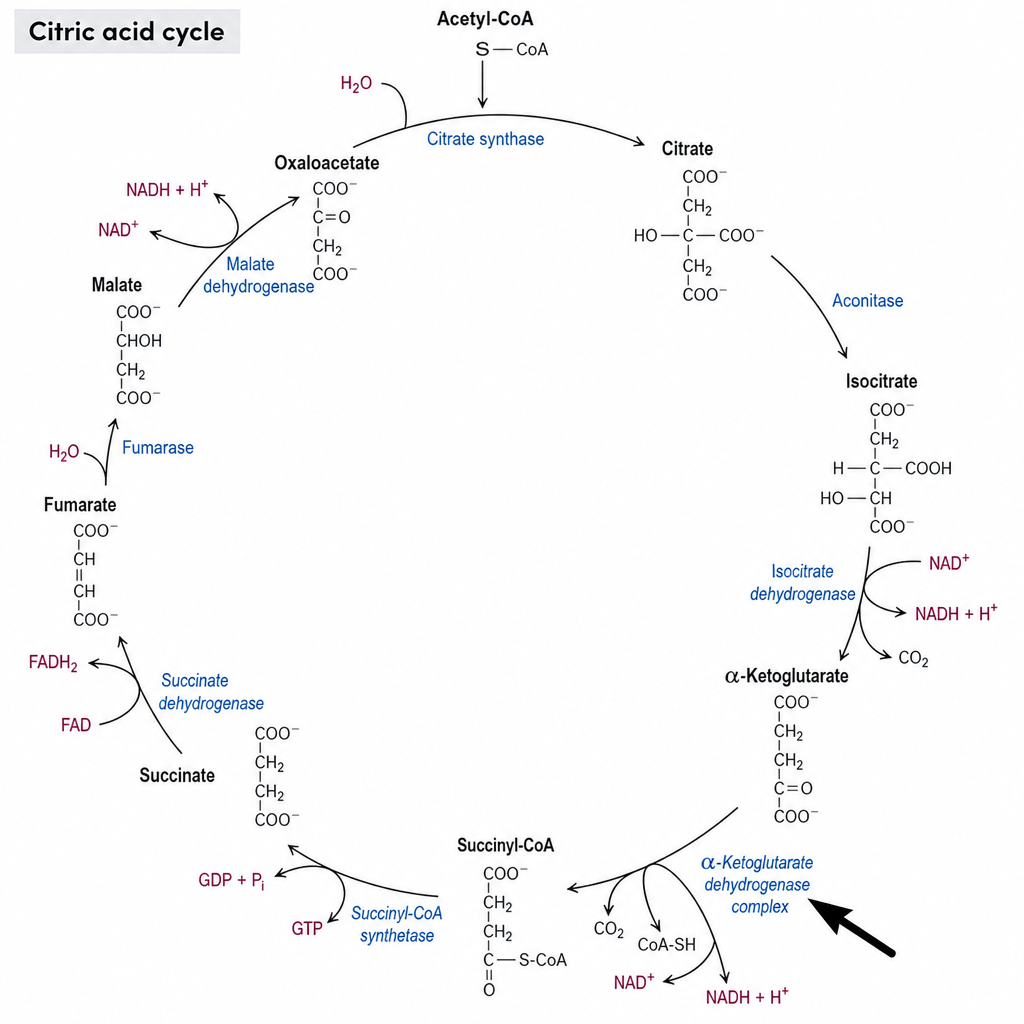
- This clinical scenario describes an infant with **vomiting, irritability, poor feeding, increased muscle tone, lethargy, and a caramel-like odor in the urine**, along with **ketone bodies in the urine**. These are classic signs of **Maple Syrup Urine Disease (MSUD)**.
- MSUD is caused by a deficiency in the **branched-chain alpha-keto acid dehydrogenase complex (BCKDC)**, an enzyme that requires **thiamine** as a cofactor. In some cases, high-dose thiamine supplementation can improve enzyme activity and alleviate symptoms.
*Tyrosine*
- **Tyrosine** is an amino acid. Disorders of tyrosine metabolism, such as tyrosinemia, present with liver dysfunction, renal tubulopathy, and neurological crises, but typically do not involve a caramel-like odor or respond to thiamine.
- Tyrosine supplementation is not indicated for MSUD and would not improve the patient's condition.
*Cysteine*
- **Cysteine** is a sulfur-containing amino acid. Disorders involving cysteine metabolism, like homocystinuria, are characterized by ocular, skeletal, vascular, and neurological abnormalities.
- There is no direct role for cysteine supplementation in treating MSUD, and it would not address the underlying enzymatic defect.
*Tetrahydrobiopterin*
- **Tetrahydrobiopterin (BH4)** is a cofactor for several enzymes involved in amino acid metabolism, particularly in the synthesis of neurotransmitters and the metabolism of phenylalanine.
- BH4 deficiency causes phenylketonuria-like symptoms or other neurological issues, but not MSUD, and it would not address the BCKDC deficiency.
*Leucine*
- **Leucine** is one of the branched-chain amino acids (BCAAs) that accumulate in MSUD due to the defective BCKDC enzyme.
- Supplementing leucine would worsen the patient's condition by increasing the toxic BCAA levels, as the body cannot properly metabolize it.
Question 163: A 20-year-old female presents to the college health clinic concerned about a rash that has recently developed along her back and flank. Aside from a history of chronic diarrhea and flatulence, she reports being otherwise healthy. She is concerned that this rash could be either from bed bugs or possibly be sexually transmitted, as she has engaged in unprotected sex multiple times over the past two years. The physician orders several lab tests and finds that the patient does indeed have chlamydia and elevated tissue transglutaminase (tTG) levels. What is the most likely cause of her rash?
A. Immunologic response to gluten (Correct Answer)
B. Disseminated chlamydial infection
C. Bed bug infestation
D. Streptococcal meningitis infection
E. Immunologic response to dairy
Explanation: ***Immunologic response to gluten***
- The combination of **chronic diarrhea**, **flatulence**, and **elevated tissue transglutaminase (tTG)** levels strongly suggests **celiac disease**.
- **Dermatitis herpetiformis**, a classic manifestation of celiac disease, causes a pruritic, vesicular rash, which is an immunologic response to **gluten**.
*Disseminated chlamydial infection*
- While the patient has **chlamydia**, disseminated chlamydial infection typically presents with **reactive arthritis**, septic arthritis, or other systemic inflammatory responses, not usually a vesicular cutaneous rash.
- The elevated **tTG levels** and gastrointestinal symptoms are not characteristic of a disseminated chlamydial infection.
*Bed bug infestation*
- **Bed bug bites** are usually intensely itchy papules or wheals, often arranged in lines or clusters, and would not explain the patient's chronic gastrointestinal symptoms or elevated tTG levels.
- The presence of **celiac disease markers** points to an internal systemic cause rather than an external irritant.
*Streptococcal meningitis infection*
- **Streptococcal meningitis** is characterized by fever, headache, stiff neck, and altered mental status, and a rash associated with meningitis is typically a non-blanching **petechial or purpuric rash**, not the vesicular rash described.
- There is no clinical or laboratory evidence (e.g., headache, fever, nuchal rigidity, or positive blood culture) to suggest this severe infection.
*Immunologic response to dairy*
- An **immunologic response to dairy**, such as lactose intolerance or a dairy allergy, can cause gastrointestinal symptoms but would not typically lead to elevated **tissue transglutaminase (tTG)** levels.
- While it could theoretically cause a rash, it would not explain the specific serologic marker for **gluten sensitivity**.
Question 164: A 55-year-old woman is brought to the physician by her daughter because of progressive memory loss and weakness over the past 6 months. She is now unable to perform activities of daily living and has had several falls in her apartment. She has diarrhea but has not had nausea or vomiting. She was treated for tuberculosis 10 years ago. She smoked half a pack of cigarettes daily for 25 years but stopped 8 years ago. She drinks a pint of vodka daily. Vital signs are within normal limits. Examination shows glossitis and a hyperpigmented rash on her face and arms. There are multiple bruises over both arms. On mental status examination, she is oriented to place and person only. Short-term memory is impaired; she can recall 0 out of 5 objects after 10 minutes. Which of the following deficiencies is most likely present in this patient?
A. Vitamin B2 (riboflavin)
B. Vitamin B3 (niacin) (Correct Answer)
C. Vitamin B7 (biotin)
D. Vitamin B6 (pyridoxine)
E. Vitamin B5 (pantothenic acid)
Explanation: ***Vitamin B3 (niacin)***
- This patient presents with the classic **"4 Ds" of pellagra**: **Dermatitis** (hyperpigmented, photosensitive rash on sun-exposed areas - face and arms), **Diarrhea**, **Dementia** (progressive memory loss, disorientation, impaired short-term memory, inability to perform ADLs), and potentially Death if untreated.
- Her history of chronic **alcoholism** (pint of vodka daily) is the most significant risk factor for niacin deficiency, as alcohol impairs nutrient absorption, decreases dietary intake, and interferes with the conversion of tryptophan to niacin.
- **Glossitis** is also commonly seen in pellagra.
*Vitamin B2 (riboflavin)*
- Deficiency typically presents with **cheilosis**, angular stomatitis, glossitis, seborrheic dermatitis, and ocular symptoms like corneal vascularization.
- While **glossitis** is present, the prominent photosensitive rash, diarrhea, and severe dementia are characteristic of pellagra, not riboflavin deficiency.
*Vitamin B7 (biotin)*
- Biotin deficiency is rare and typically causes **dermatitis** (often periorificial), **alopecia**, and neurological symptoms like depression, lethargy, or paresthesias.
- It does not present with the classic "4 Ds" complex or the photosensitive distribution of rash seen in this patient.
*Vitamin B6 (pyridoxine)*
- Deficiency can cause **seborrheic dermatitis**, cheilosis, glossitis, peripheral neuropathy, and sideroblastic anemia.
- While some mucocutaneous symptoms overlap, it does not typically present with the photosensitive hyperpigmented rash, severe diarrhea, and progressive dementia characteristic of pellagra.
*Vitamin B5 (pantothenic acid)*
- Deficiency is extremely rare and usually presents with non-specific symptoms such as fatigue, irritability, sleep disturbances, numbness, and gastrointestinal complaints.
- It is not associated with the classic tetrad of dermatitis, diarrhea, dementia, and death.
Question 165: You are counseling a mother whose newborn has just screened positive for a deficit of phenylalanine hydroxylase enzyme. You inform her that her child will require dietary supplementation of which of the following?
A. Aspartame
B. Niacin
C. Homogentisic Acid
D. Tyrosine (Correct Answer)
E. Leucine
Explanation: ***Tyrosine***
- A deficit of **phenylalanine hydroxylase** prevents the conversion of phenylalanine to tyrosine, making **tyrosine** an essential amino acid that must be supplemented.
- Dietary restriction of **phenylalanine** is also crucial to prevent the accumulation of toxic byproducts that can cause severe neurological damage.
*Aspartame*
- **Aspartame** is an artificial sweetener that contains **phenylalanine**, which would be harmful for a child with phenylalanine hydroxylase deficiency.
- Consumption of aspartame would increase the body's phenylalanine load, exacerbating the metabolic disorder.
*Niacin*
- **Niacin** (vitamin B3) is a vitamin and its supplementation is not related to the phenylalanine hydroxylase pathway or its deficiency.
- Deficiency of niacin is associated with **pellagra**, characterized by dermatitis, diarrhea, and dementia.
*Homogentisic Acid*
- **Homogentisic acid** is an intermediate in the metabolism of tyrosine, and its accumulation is characteristic of **alkaptonuria**, a different metabolic disorder.
- It is not a therapeutic supplement for phenylalanine hydroxylase deficiency.
*Leucine*
- **Leucine** is a branched-chain amino acid, and its metabolism is unrelated to phenylalanine hydroxylase deficiency.
- Supplemental leucine is not required in this condition and would not address the metabolic defect.
Question 166: A 6-year-old girl is referred to the pediatrician after a primary care practitioner found her to be anemic, in addition to presenting with decreased bowel movements, intermittent abdominal pain, and hearing loss. The child has also shown poor performance at school and has lost interest in continuing her classes of glazed pottery that she has taken twice a week for the past year. During the examination, the pediatrician identifies gingival lines, generalized pallor, and moderate abdominal pain. Laboratory tests show elevated iron and ferritin concentration, and a blood smear shows small and hypochromic erythrocytes, basophilic stippling, and the presence of nucleated erythroblasts with granules visualized with Prussian blue. Which of the following molecules cannot be produced in the erythrocytes of this patient?
A. Aminolevulinic acid
B. Hydroxymethylbilane
C. Porphobilinogen (Correct Answer)
D. Coproporphyrinogen
E. Protoporphyrin
Explanation: ***Porphobilinogen***
- The patient's symptoms, including **anemia**, **abdominal pain**, **neurological symptoms** (hearing loss, poor school performance), **gingival lines**, and lab findings of **elevated iron/ferritin**, **microcytic hypochromic anemia** with **basophilic stippling**, and **ring sideroblasts** (nucleated erythroblasts with Prussian blue-positive granules), are highly suggestive of **lead poisoning**.
- Lead inhibits **delta-aminolevulinate dehydratase (ALAD)**, the enzyme that converts **delta-aminolevulinic acid** to **porphobilinogen** in the heme synthesis pathway. Therefore, the production of porphobilinogen would be impaired.
*Aminolevulinic acid*
- **Aminolevulinic acid (ALA)** is the precursor to porphobilinogen, and its production would likely be **increased** due to the inhibition of ALAD by lead, leading to its accumulation.
- The initial step catalyzed by **ALA synthase** is generally not affected by lead directly in the early stages, although chronic lead exposure can have broader effects.
*Hydroxymethylbilane*
- **Hydroxymethylbilane** is formed from **four molecules of porphobilinogen** by the enzyme porphobilinogen deaminase (hydroxymethylbilane synthase).
- Since **porphobilinogen production is inhibited**, subsequent steps, including the formation of hydroxymethylbilane, would also be impaired, but porphobilinogen itself is the more direct consequence of ALAD inhibition.
*Coproporphyrinogen*
- **Coproporphyrinogen** is a downstream intermediate in the heme synthesis pathway, formed after hydroxymethylbilane and uroporphyrinogen.
- Its formation would be indirectly affected due to the **upstream blockade at the porphobilinogen step**.
*Protoporphyrin*
- **Protoporphyrin** is the molecule that directly incorporates iron to form heme. Lead primarily inhibits **ferrochelatase**, the enzyme that inserts iron into protoporphyrin, leading to an accumulation of protoporphyrin (specifically **zinc protoporphyrin** in red cells).
- While protoporphyrin accumulates, its *production* is not directly inhibited; rather, its **conversion to heme** is blocked.
Question 167: A 9-month-old boy is brought to the pediatrician because he cannot sit on his own without support and has involuntary movements. He was born vaginally with no complications at full term. There is no history of consanguinity among parents. On physical examination, it was noticed that he is a stunted infant with generalized hypotonia and severe generalized dystonic movements. The mother says that she has noticed the presence of orange sand in his diapers many times. Laboratory evaluation revealed elevated uric acid levels in both blood and urine. Which of the following enzymes is deficient in this patient?
A. Ribonucleotide reductase
B. Inosine monophosphate dehydrogenase
C. Orotate phosphoribosyltransferase
D. Dihydrofolate reductase
E. Hypoxanthine-guanine phosphoribosyltransferase (Correct Answer)
Explanation: ***Hypoxanthine-guanine phosphoribosyltransferase (HGPRT)***
- The clinical presentation describes classic **Lesch-Nyhan syndrome**: developmental delay, dystonia, hyperuricemia, and orange crystals (uric acid) in diapers.
- Lesch-Nyhan syndrome is caused by **deficiency of HGPRT**, an enzyme in the **purine salvage pathway**.
- HGPRT normally converts hypoxanthine to IMP and guanine to GMP, recycling purine bases.
- Without HGPRT, purines cannot be salvaged and are degraded to uric acid, causing hyperuricemia.
- Treatment includes allopurinol (xanthine oxidase inhibitor) to reduce uric acid production.
- X-linked recessive inheritance affects males primarily.
*Ribonucleotide reductase*
- This enzyme converts ribonucleotides to deoxyribonucleotides for DNA synthesis.
- Not involved in purine salvage or degradation pathways.
- Deficiency would affect DNA synthesis globally, not specifically purine metabolism.
*Inosine monophosphate dehydrogenase*
- Converts IMP to XMP in the de novo purine synthesis pathway.
- Inhibited by mycophenolate (immunosuppressant), not deficient in Lesch-Nyhan syndrome.
*Orotate phosphoribosyltransferase*
- Enzyme in de novo pyrimidine synthesis pathway.
- Deficiency causes orotic aciduria with megaloblastic anemia and developmental delay, but not hyperuricemia or dystonia.
*Dihydrofolate reductase*
- Essential for tetrahydrofolate synthesis, required for purine and pyrimidine synthesis.
- Target of methotrexate, not deficient in this condition.
Question 168: A 25-year-old male visits his physician because of fertility issues with his wife. Physical exam reveals bilateral gynecomastia, elongated limbs, and shrunken testicles. Levels of plasma gonadotropins are elevated. Which of the following is also likely to be increased in this patient:
A. Testosterone
B. Inhibin
C. Sertoli cells
D. Ejaculatory sperm
E. Aromatase (Correct Answer)
Explanation: ***Correct: Aromatase***
- The symptoms described (gynecomastia, elongated limbs, shrunken testicles, elevated gonadotropins) are characteristic of **Klinefelter syndrome (47, XXY)**.
- In Klinefelter syndrome, **increased aromatase activity** (particularly in adipose tissue) leads to enhanced conversion of androgens to estrogens, resulting in elevated estrogen levels.
- This increased estrogen contributes to gynecomastia and exacerbates the hypogonadism and fertility issues.
*Incorrect: Testosterone*
- In Klinefelter syndrome, **testosterone levels are typically low** due to primary testicular failure, which explains the shrunken testicles and infertility.
- The elevated gonadotropins (LH and FSH) are a compensatory response to the low testosterone.
*Incorrect: Inhibin*
- **Inhibin** is produced by **Sertoli cells** and normally suppresses FSH release.
- In Klinefelter syndrome, damage to the seminiferous tubules and impaired Sertoli cell function lead to **decreased inhibin production**, contributing to elevated FSH.
*Incorrect: Sertoli cells*
- Klinefelter syndrome is characterized by **dysgenesis and reduced numbers of Sertoli cells** within the seminiferous tubules, leading to impaired spermatogenesis and fertility issues.
- This reduction in Sertoli cells also contributes to decreased inhibin levels.
*Incorrect: Ejaculatory sperm*
- Individuals with Klinefelter syndrome typically have **azoospermia** or severe oligozoospermia due to profound testicular dysfunction and seminiferous tubule atrophy.
- This significantly impairs their fertility and is a common reason for presenting with infertility.
Question 169: In your peripheral tissues and lungs, carbonic anhydrase works to control the equilibrium between carbon dioxide and carbonic acid in order to maintain proper blood pH. Through which mechanism does carbonic anhydrase exert its influence on reaction kinetics?
A. Changes the delta G of the reaction
B. Lowers the free energy of products
C. Raises the activation energy
D. Lowers the activation energy (Correct Answer)
E. Lowers the free energy of reactants
Explanation: ***Lowers the activation energy***
- Enzymes like **carbonic anhydrase** function by providing an alternative reaction pathway with a **lower activation energy**.
- This reduction in activation energy leads to a significant increase in the **reaction rate**, allowing the reaction to proceed more quickly without altering its equilibrium.
*Changes the delta G of the reaction*
- Enzymes do not alter the **overall Gibbs free energy change (ΔG)** of a reaction.
- The **ΔG** is a thermodynamic property determined by the difference in free energy between reactants and products, which is unaffected by catalyst.
*Lowers the free energy of products*
- Enzymes do not change the **free energy** of either the products or the reactants.
- Affecting the free energy of products would alter the overall **ΔG** of the reaction and thus the **equilibrium constant**.
*Raises the activation energy*
- Raising the **activation energy** would slow down the reaction rate, which is the opposite of an enzyme's function.
- Enzymes are catalysts designed to **accelerate reactions** by lowering the energy barrier.
*Lowers the free energy of reactants*
- Enzymes do not change the **free energy** of reactants.
- Altering the free energy of reactants would also change the overall **ΔG** of the reaction and its equilibrium.
Question 170: A 46-year-old man presents to the clinic complaining of fatigue and difficulty breathing for the past month. He reports that it is particularly worse when he exercises as he becomes out of breath at 1 mile when he used to routinely run 3 miles. He is frustrated as he was recently diagnosed with diabetes despite a good diet and regular exercise. He denies any weight changes, chest pain, or gastrointestinal symptoms. When asked about other concerns, his wife complains that he is getting darker despite regular sunscreen application. A physical examination demonstrates a tanned man with an extra heart sound just before S1, mild bilateral pitting edema, and mild bibasilar rales bilaterally. An echocardiogram is ordered and shows a left ventricular ejection fraction (LVEF) of 65% with reduced filling. What is the most likely explanation for this patient’s condition?
A. Increased intestinal absorption of iron (Correct Answer)
B. Persistently elevated blood pressure
C. Systemic inflammatory state caused by type 2 diabetes
D. Decreased copper excretion into bile
E. Infection with coxsackie B virus
Explanation: ***Increased intestinal absorption of iron***
- This patient's symptoms, including **fatigue**, **dyspnea on exertion**, **new-onset diabetes**, **skin hyperpigmentation** ("tanned" appearance), and signs of **heart failure with preserved ejection fraction (HFpEF)** (LVEF 65% with reduced filling, extra heart sound, edema, rales) are highly suggestive of **hereditary hemochromatosis**.
- **Hereditary hemochromatosis** is an autosomal recessive disorder characterized by **increased intestinal absorption of iron**, leading to iron overload in various organs, including the heart, liver, pancreas, and skin.
*Persistently elevated blood pressure*
- While **hypertension** is a common cause of **HFpEF** and could explain symptoms like dyspnea and edema, it doesn't account for the **new-onset diabetes** or **skin hyperpigmentation**, which are key findings in this patient.
- The absence of any mention of elevated blood pressure in the history or physical exam makes this less likely as the primary cause of all symptoms.
*Systemic inflammatory state caused by type 2 diabetes*
- **Type 2 diabetes** itself can lead to complications such as cardiovascular disease, but it typically doesn't cause the characteristic **skin hyperpigmentation** or directly manifest as **HFpEF** with the specific constellation of other symptoms observed without other underlying causes.
- The patient's diagnosis of diabetes despite a healthy lifestyle suggests an underlying cause beyond typical type 2 diabetes development.
*Decreased copper excretion into bile*
- **Decreased copper excretion into bile** is characteristic of **Wilson's disease**, which involves copper accumulation.
- While Wilson's disease can affect the liver, brain, and eyes (Kayser-Fleischer rings), it typically presents with neurological or hepatic symptoms and does not cause **iron overload**, **skin hyperpigmentation**, or **diabetes** in the manner described.
*Infection with coxsackie B virus*
- **Coxsackie B virus infection** is a known cause of **viral myocarditis**, which can lead to **dilated cardiomyopathy** and **heart failure**.
- However, it typically causes **systolic dysfunction** (reduced LVEF) rather than **HFpEF** and does not explain the **new-onset diabetes** or **skin hyperpigmentation**.