
Lysosomal membrane protein disorders — MCQs

An 18-month-old girl is brought to the pediatrician’s office for failure to thrive and developmental delay. The patient’s mother says she has not started speaking and is just now starting to pull herself up to standing position. Furthermore, her movement appears to be restricted. Physical examination reveals coarse facial features and restricted joint mobility. Laboratory studies show increased plasma levels of several enzymes. Which of the following is the underlying biochemical defect in this patient?
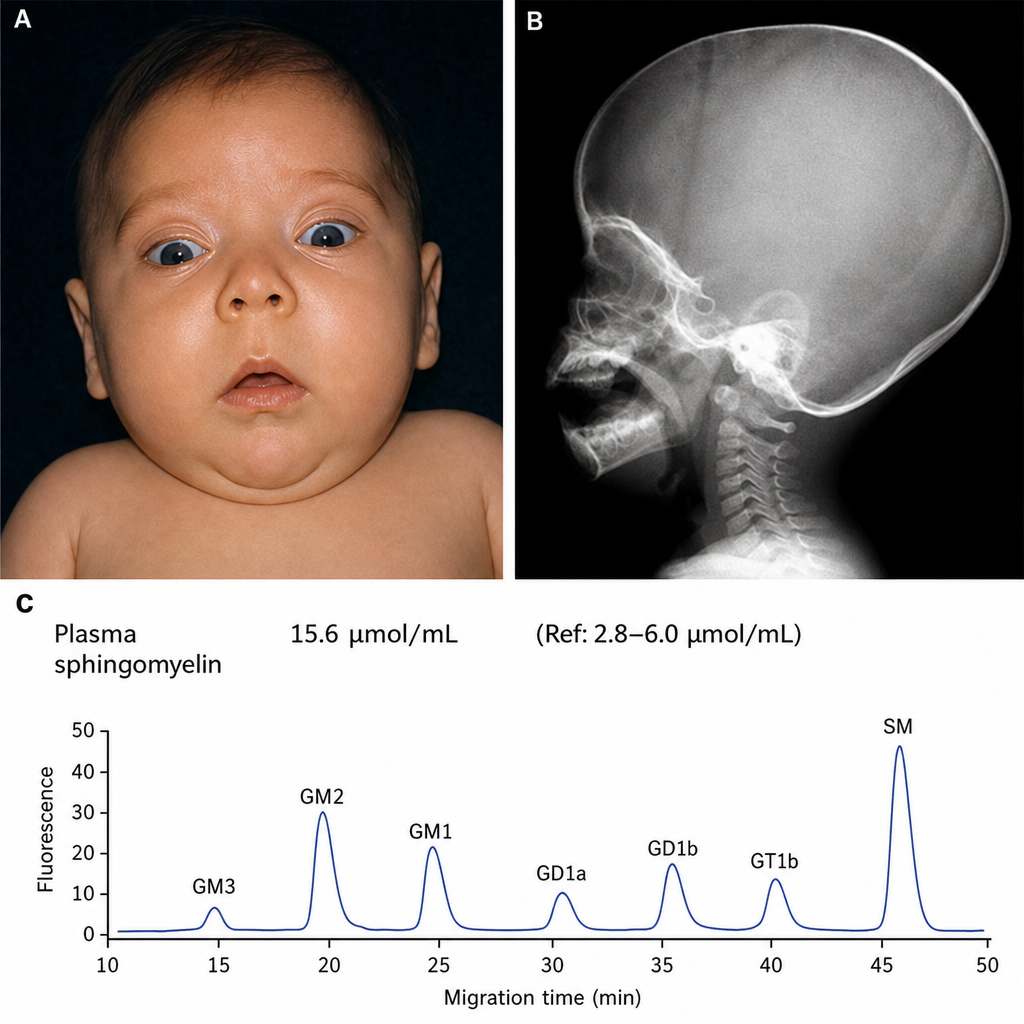
You examine an infant in your office. On exam you observe hypotonia, as well as the findings shown in Figures A and B. You order laboratory testing, which demonstrates the findings shown in Figure C. Which of the following is the most likely pathologic mechanism involved?
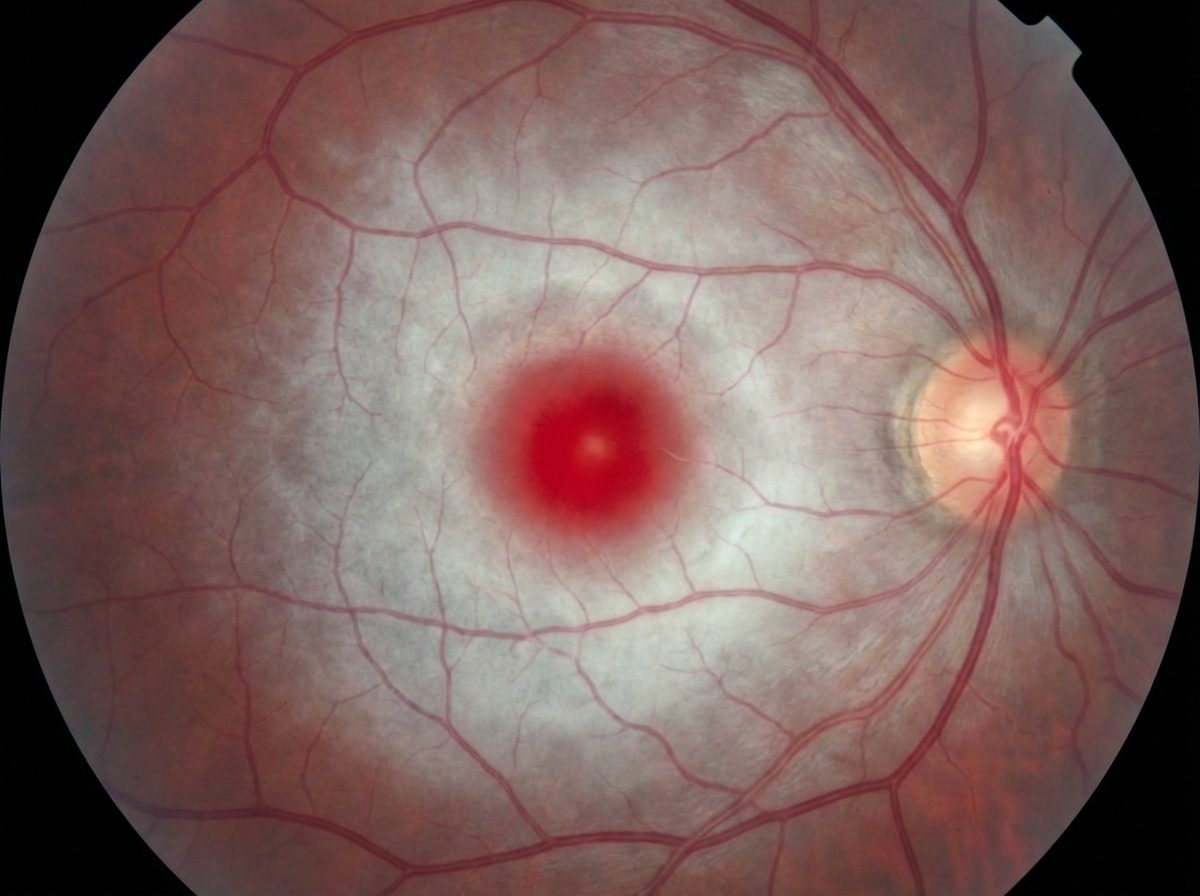
A 7-month-old boy is brought by his parents to the pediatrician’s office. His mother says the child has been weakening progressively and is not as active as he used to be when he was born. His condition seems to be getting worse, especially over the last month. He was born at 41 weeks through normal vaginal delivery. There were no complications observed during the prenatal period. He was progressing well over the 1st few months and achieving the appropriate milestones. On examination, his abdomen appears soft with no liver enlargement. The patient appears to be dehydrated and lethargic. The results of a fundoscopic examination are shown in the picture. A blood test for which of the following enzymes is the next best assay to evaluate this patient's health?
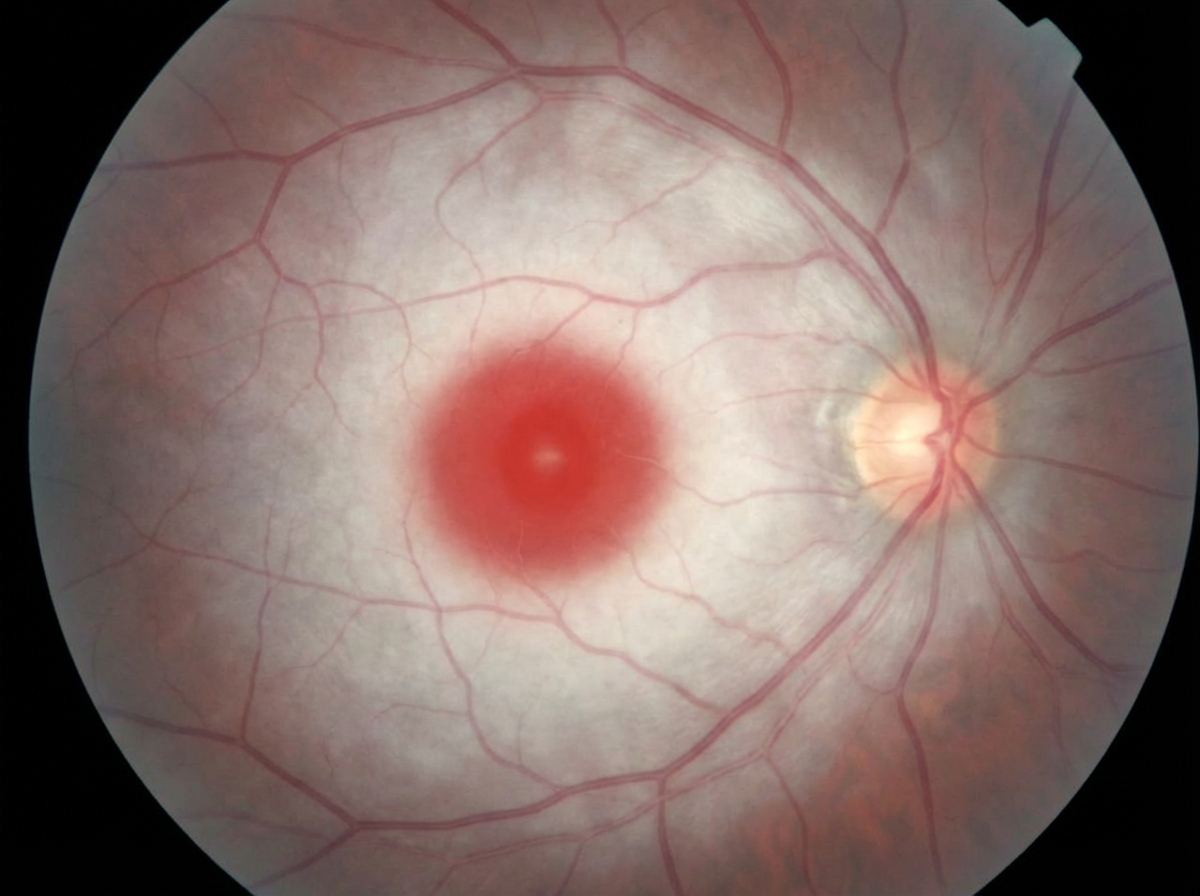
An 18-month-old boy of Ashkenazi-Jewish descent presents with loss of developmental milestones. On ocular exam, a cherry-red macular spot is observed. No hepatomegaly is observed on physical exam. Microscopic exam shows lysosomes with onion-skin appearance. What is the most likely underlying biochemical abnormality?
A 4-month-old male infant is brought in because he rejects food and is losing weight. He had several upper respiratory tract infections during the last 2 months. Upon examination, hepatosplenomegaly is noted, as well as mild hypotonia. During the next few weeks, hepatosplenomegaly progresses, the boy fails to thrive, and he continues to reject food. He has a blood pressure of 100/70 mm Hg and heart rate of 84/min. Blood tests show pancytopenia and elevated levels of transaminases. Slit lamp examination shows bilateral cherry-red spots on the macula. Chest X-ray shows a reticulonodular pattern and calcified nodules. Biopsy of the liver shows foamy histiocytes. What is the most likely diagnosis?
A 10-month-old boy is brought to the physician by his mother for evaluation of abnormal growth and skin abnormalities. His mother has also noticed that his eyes do not fully close when sleeping. He is at the 24th percentile for height, 17th percentile for weight, and 29th percentile for head circumference. Physical examination shows wrinkled skin, prominent veins on the scalp and extremities, and circumoral cyanosis. Genetic testing shows a point mutation in a gene that encodes for a scaffold protein of the inner nuclear membrane. The mutation causes a deformed and unstable nuclear membrane, which leads to premature aging. Which of the following is most likely to be the defective protein?
A 7-month-old boy is brought to the pediatrician by his parents due to progressively worsening weakness for the last three months. The parents also describe the boy as having an exaggerated response when startled as well as diminishing response to visual stimuli. At birth, the boy was healthy and remained as such for the first few months of life. The mother says pregnancy was unremarkable, and the boy was born at 39 weeks with no complications during delivery. He is up to date on his vaccinations. The boy's grandparents immigrated from an eastern European country. Physical examination reveals hyperreflexia. Abdominal examination reveals no abnormalities. On fundoscopy, the following is seen. Which of the following is most likely deficient in this patient?
A 1-year-old boy is brought to his pediatrician for a follow-up appointment. He was recently diagnosed with failure to thrive and developmental delay. His weight is 7 kg (15.4 lb), height is 61 cm (24 in), and head circumference is 42 cm (16.5 in). The patient’s father had a younger sister who suffered from mental and physical delay and died at a very young age. The patient was able to raise his head at the age of 7 months and began to sit alone only recently. He babbles, coos, and smiles to other people. On presentation, his blood pressure is 75/40 mm Hg, heart rate is 147/min, respiratory rate is 28/min, and temperature is 36.4°C (97.5°F). He has a coarse face with small deep orbits, proptotic eyes, big lips, and gingival hyperplasia. His skin is pale with decreased elasticity. His lung and heart sounds are normal. Abdominal examination reveals diminished anterior abdominal wall muscle tone and hepatomegaly. Muscle tone is increased in all groups of muscles on both upper and lower extremities. The physician becomes concerned and performs testing for the suspected hereditary disease. A blood test shows increased lysosomal enzyme concentration in the serum and decreased N-acetylglucosamine-1-phosphotransferase (GlcNAc phosphotransferase) activity within the leukocytes. Which of the statements listed below describes the mechanism of the patient’s condition?
A scientist wants to determine if a specific fragment is contained within genome X. She uses a restriction enzyme to digest the genome into smaller fragments to run on an agarose gel, with the goal of separating the resulting fragments. A nitrocellulose blotting paper is then used to transfer the fragments from the agarose gel. A radiolabeled probe containing a complementary sequence to the fragment she is searching for is incubated with the blotting paper. Which of the following is the RNA equivalent of this technique?
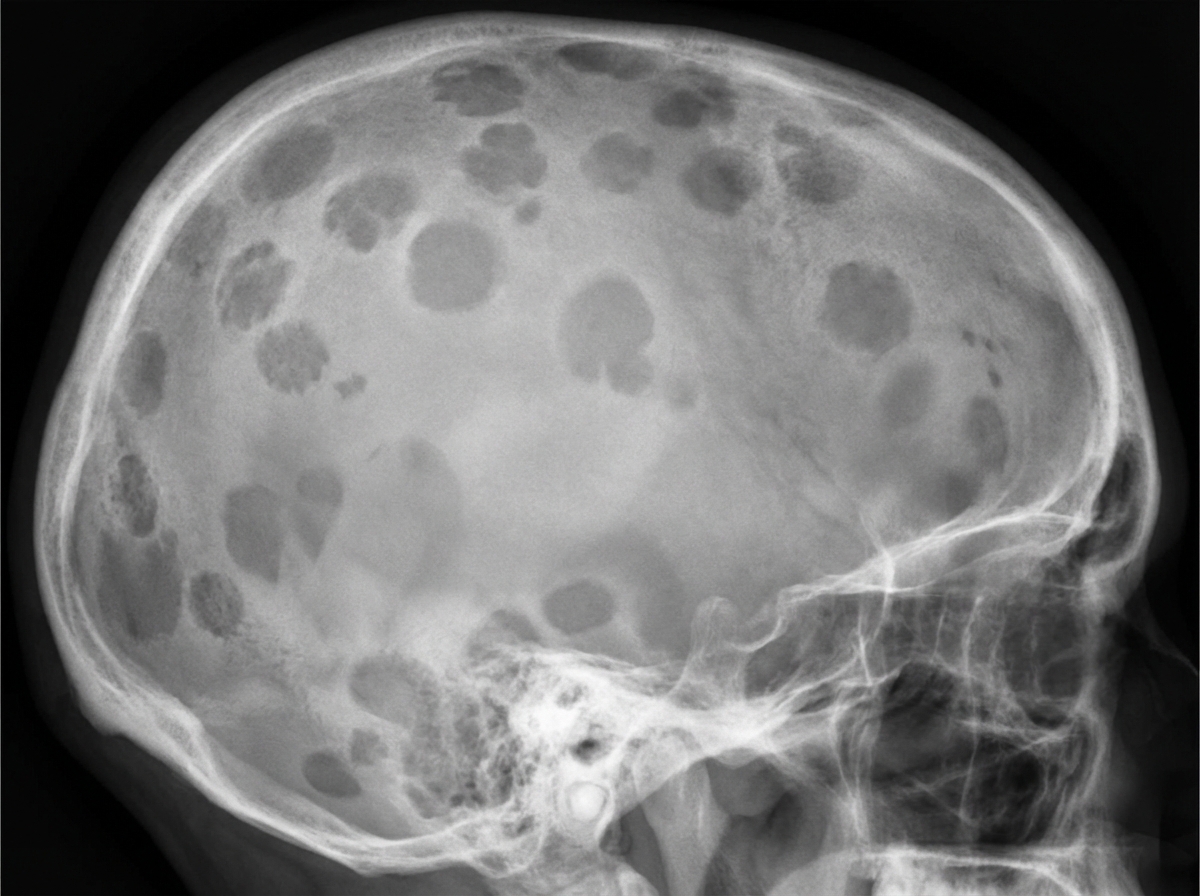
A 70-year-old man comes to the physician because of progressive fatigue and lower back pain for the past 4 months. The back pain worsened significantly after he had a minor fall while doing yard work the previous day. For the past year, he has had a feeling of incomplete emptying of his bladder after voiding. His vital signs are within normal limits. Examination shows bilateral paravertebral muscle spasm, severe tenderness over the second lumbar vertebra, and mild tenderness over the lower thoracic vertebrae. Neurologic examination shows no abnormalities. His hemoglobin is 10.5 g/dl, alkaline phosphatase is 110 U/L, and serum calcium is 11.1 mg/dl. An x-ray of the skull is shown. Which of the following is the most appropriate next step in diagnosis?
Want unlimited practice?
Get full access to all questions, explanations, and performance tracking.
Scan to download app