
Genetic counseling for lysosomal diseases — MCQs

A 28-year-old woman comes to the physician for genetic counseling prior to conception. For the past year, she has had intermittent episodes of headache, nausea, abdominal pain, and tingling of her fingers. She also complains of dark urine during the episodes. Her mother and maternal uncle have similar symptoms and her father is healthy. Her husband is healthy and there is no history of serious illness in his family. Serum studies show elevated concentrations of porphobilinogen and δ-aminolevulinic acid. What is the probability of this patient having a child with the same disease as her?
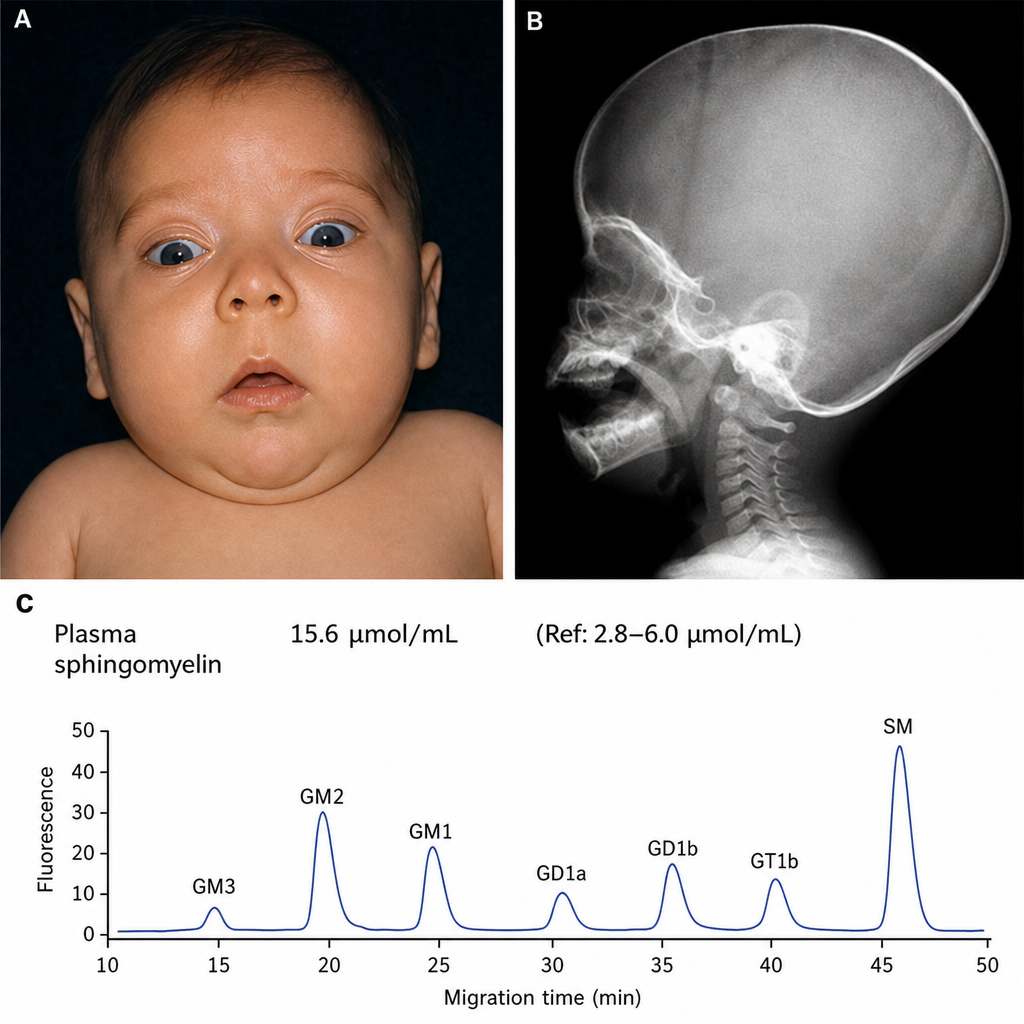
You examine an infant in your office. On exam you observe hypotonia, as well as the findings shown in Figures A and B. You order laboratory testing, which demonstrates the findings shown in Figure C. Which of the following is the most likely pathologic mechanism involved?
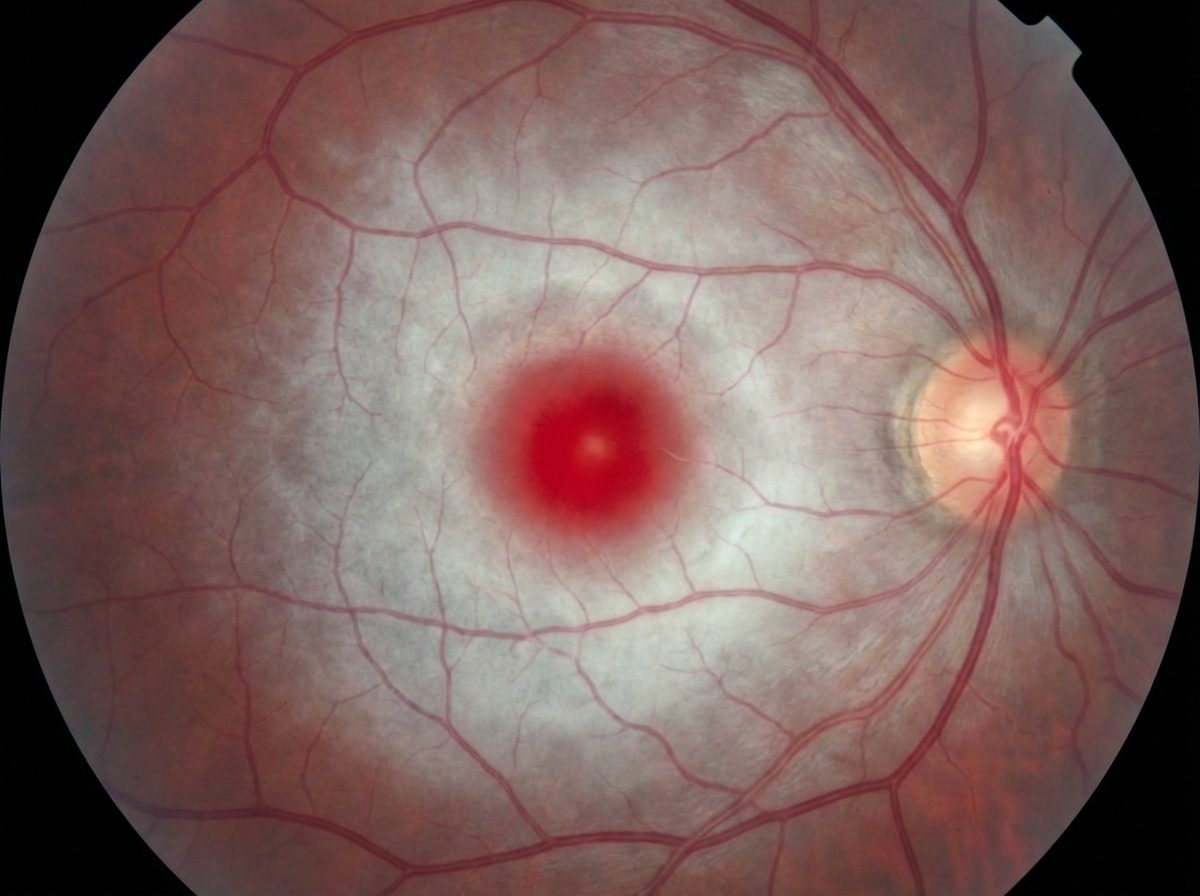
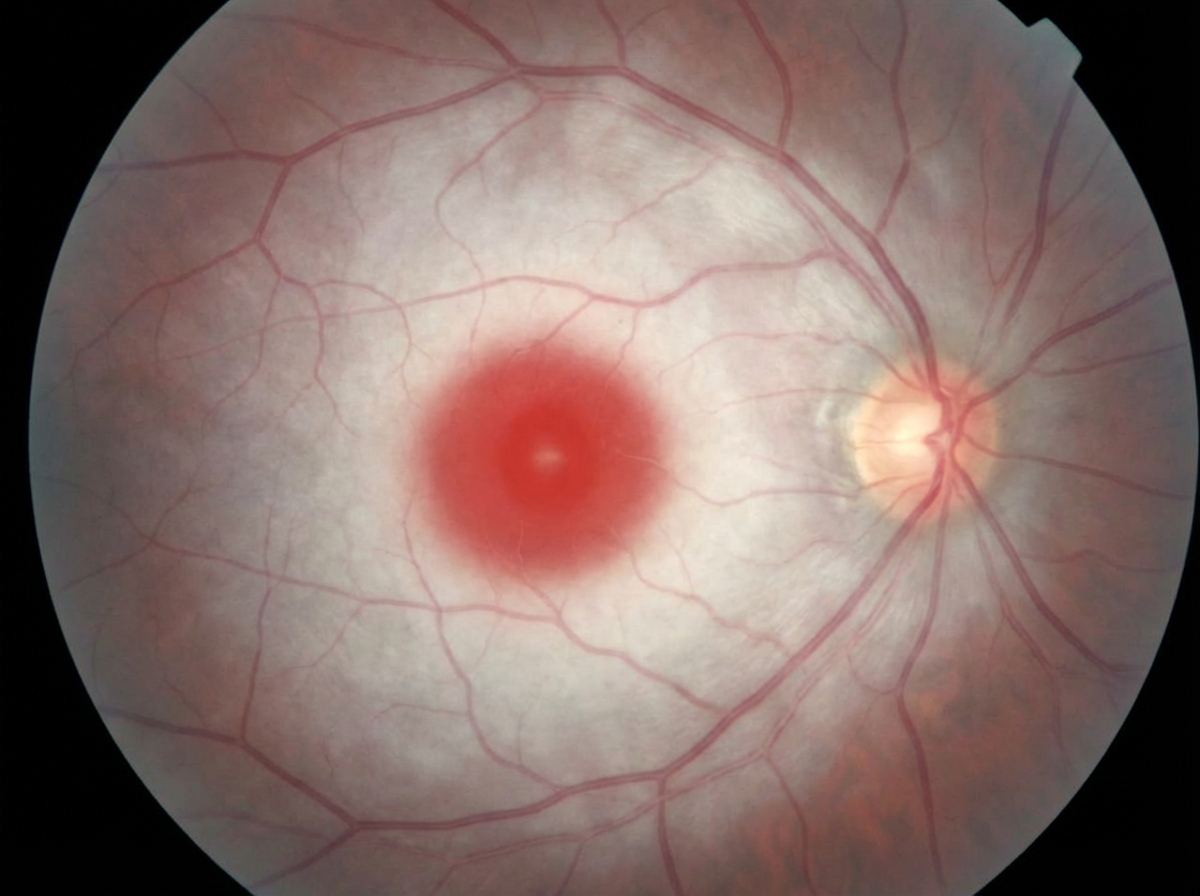
A 7-month-old boy is brought by his parents to the pediatrician’s office. His mother says the child has been weakening progressively and is not as active as he used to be when he was born. His condition seems to be getting worse, especially over the last month. He was born at 41 weeks through normal vaginal delivery. There were no complications observed during the prenatal period. He was progressing well over the 1st few months and achieving the appropriate milestones. On examination, his abdomen appears soft with no liver enlargement. The patient appears to be dehydrated and lethargic. The results of a fundoscopic examination are shown in the picture. A blood test for which of the following enzymes is the next best assay to evaluate this patient's health?
A 7-year-old boy is brought to the emergency department by his parents. He is complaining of left-sided knee pain which has progressively increased in severity over the past 2 days. It started when he was playing football with his brothers but he does not recall falling or getting any injury. Past medical history is significant for prolonged bleeding and easy bruising. His maternal uncle has similar problems. Physical exam reveals swollen and painful left knee. His laboratory investigations reveal: Hemoglobin 11.8 g/dL WBC count 7,000/mL Platelets 250,000/mL INR 0.9 aPTT 62 sec, fully corrected with a mixing study Which of the following disorders have the same mode of inheritance as this patient’s disease?
A healthy 30-year-old woman comes to the physician with her husband for preconception counseling. Her husband is healthy but she is concerned because her brother was recently diagnosed with a genetic liver condition for which he takes penicillamine. Her father-in-law has liver cirrhosis and a tremor. The results of genetic testing show that both the patient and her husband are carriers of a mutation in the ATP7B gene. Which of the following is the chance that this patient’s offspring will eventually develop the hereditary condition?
A 34-year-old woman, gravida 1, para 0, at 18 weeks' gestation, comes to the physician for a prenatal visit. She recently read about a genetic disorder that manifests with gait ataxia, kyphoscoliosis, and arrhythmia and is concerned about the possibility of her child inheriting the disease. There is no personal or family history of this disorder. The frequency of unaffected carriers in the general population is 1/100. Assuming the population is in a steady state without selection, what is the probability that her child will develop this disease?
A 3-year-old is brought to the pediatrician by his mother because she is concerned about recent changes to his behavior. She states that he has seemed to regress in his motor development and has been having occasional brief episodes of uncontrollable shaking. During the subsequent work up, a muscle biopsy is obtained which demonstrates red ragged fibers and a presumptive diagnosis of a genetic disease made. The mother asks if her other son will be affected. What should be the physician's response?
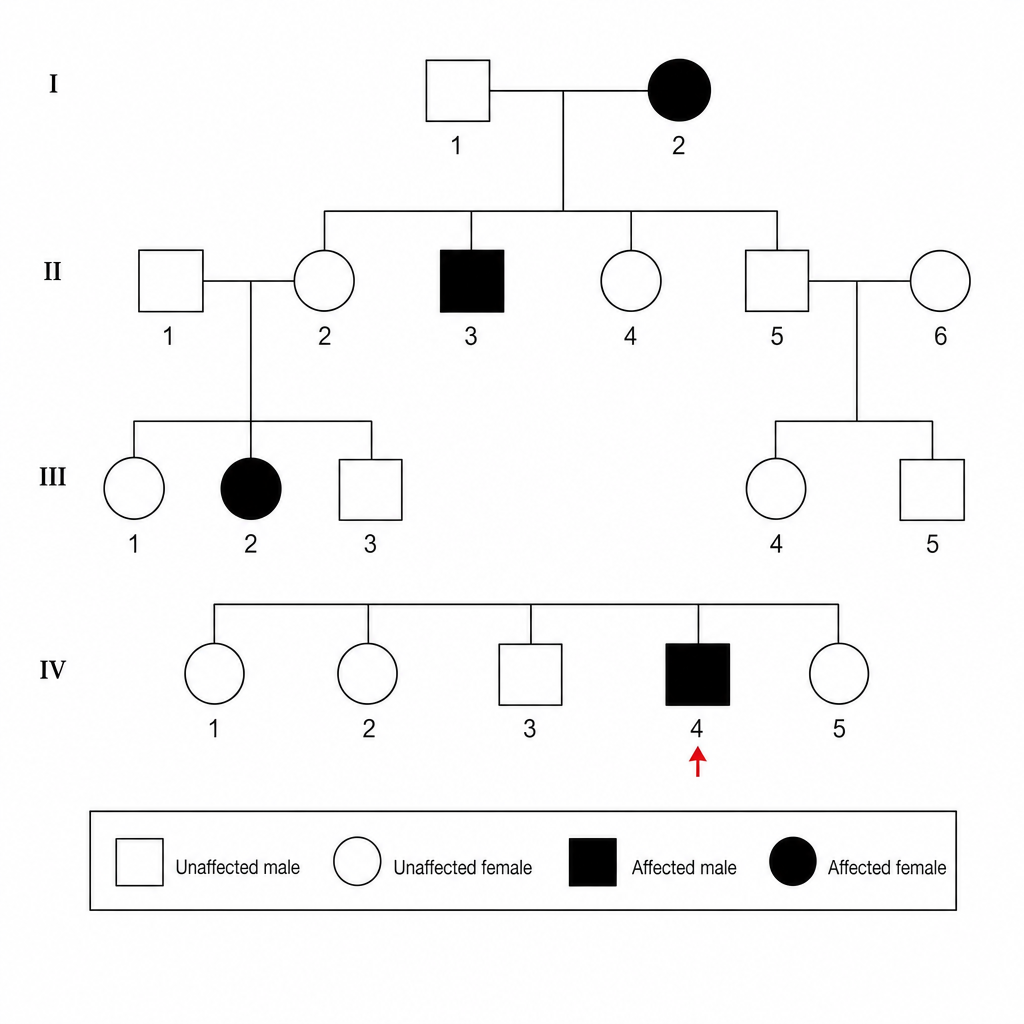
A 4-year-old boy is brought to the physician by his mother for a well-child examination. At the visit, the mother says that she is worried about the child's vision because of an “eye condition that runs in the family.” She says that the child is doing well in all activities at his preschool, except one in which he is required to sort different colored balls into baskets of a corresponding color. A pedigree chart of the family, with the patient identified by a red arrow, is shown. The most likely cause of these changes in the patient's vision involves which of the following modes of inheritance?
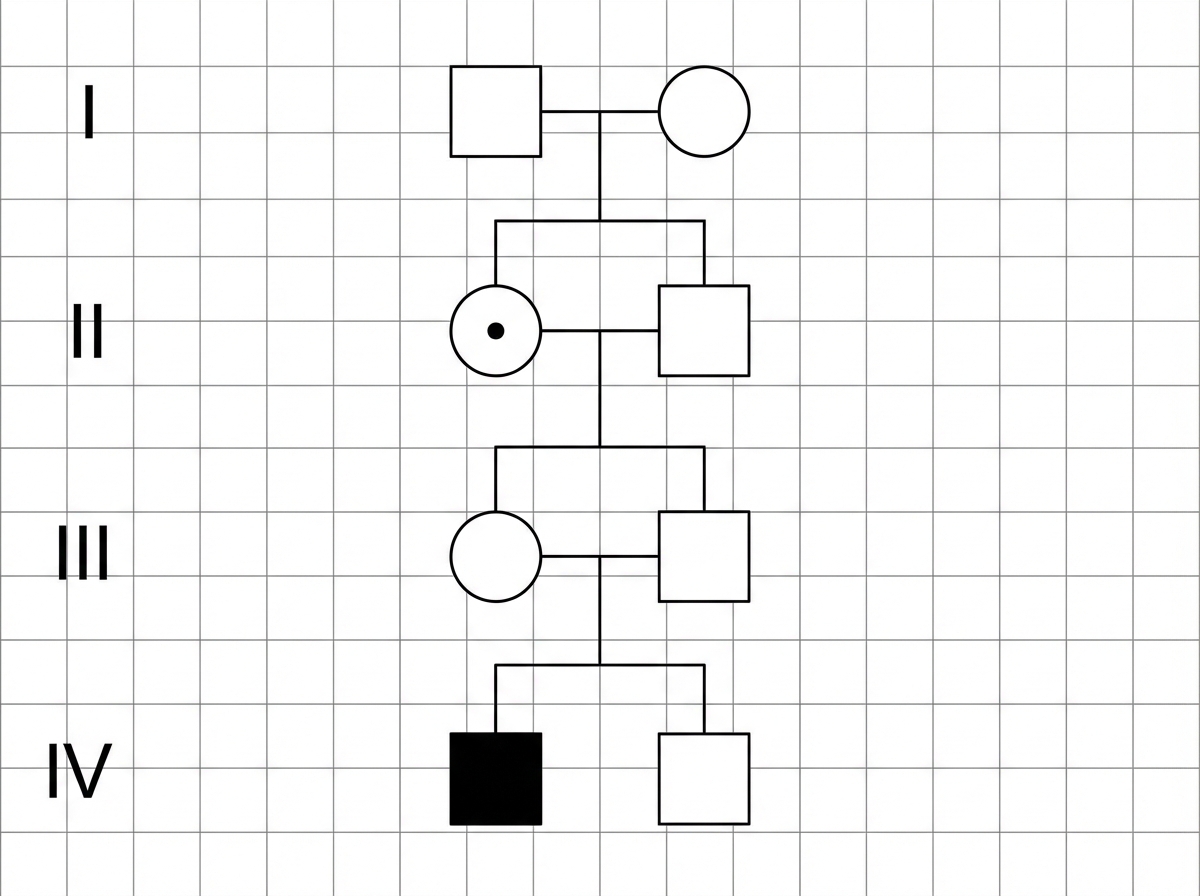
A 28-year-old woman, gravida 1, para 0, at 20 weeks' gestation comes to the physician for genetic counseling. Her brother and maternal uncle both have anemia that worsens after taking certain medications. Based on the pedigree shown, what is the probability that her son will be affected by the disease?
A 7-month-old boy is brought to the pediatrician by his parents due to progressively worsening weakness for the last three months. The parents also describe the boy as having an exaggerated response when startled as well as diminishing response to visual stimuli. At birth, the boy was healthy and remained as such for the first few months of life. The mother says pregnancy was unremarkable, and the boy was born at 39 weeks with no complications during delivery. He is up to date on his vaccinations. The boy's grandparents immigrated from an eastern European country. Physical examination reveals hyperreflexia. Abdominal examination reveals no abnormalities. On fundoscopy, the following is seen. Which of the following is most likely deficient in this patient?
Want unlimited practice?
Get full access to all questions, explanations, and performance tracking.
Scan to download app