
Activator protein deficiencies — MCQs

A 5-month-old boy is brought to his pediatrician because his parents have noticed that he has very restricted joint movement. He was born at home without prenatal care, but they say that he appeared healthy at birth. Since then, they say that he doesn't seem to move very much and is hard to arouse. Physical exam reveals coarse facial structures and hepatosplenomegaly. Radiography reveals skeletal malformations, and serum tests show high plasma levels of lysosomal enzymes. The production of which of the following substances will most likely be disrupted in this patient?
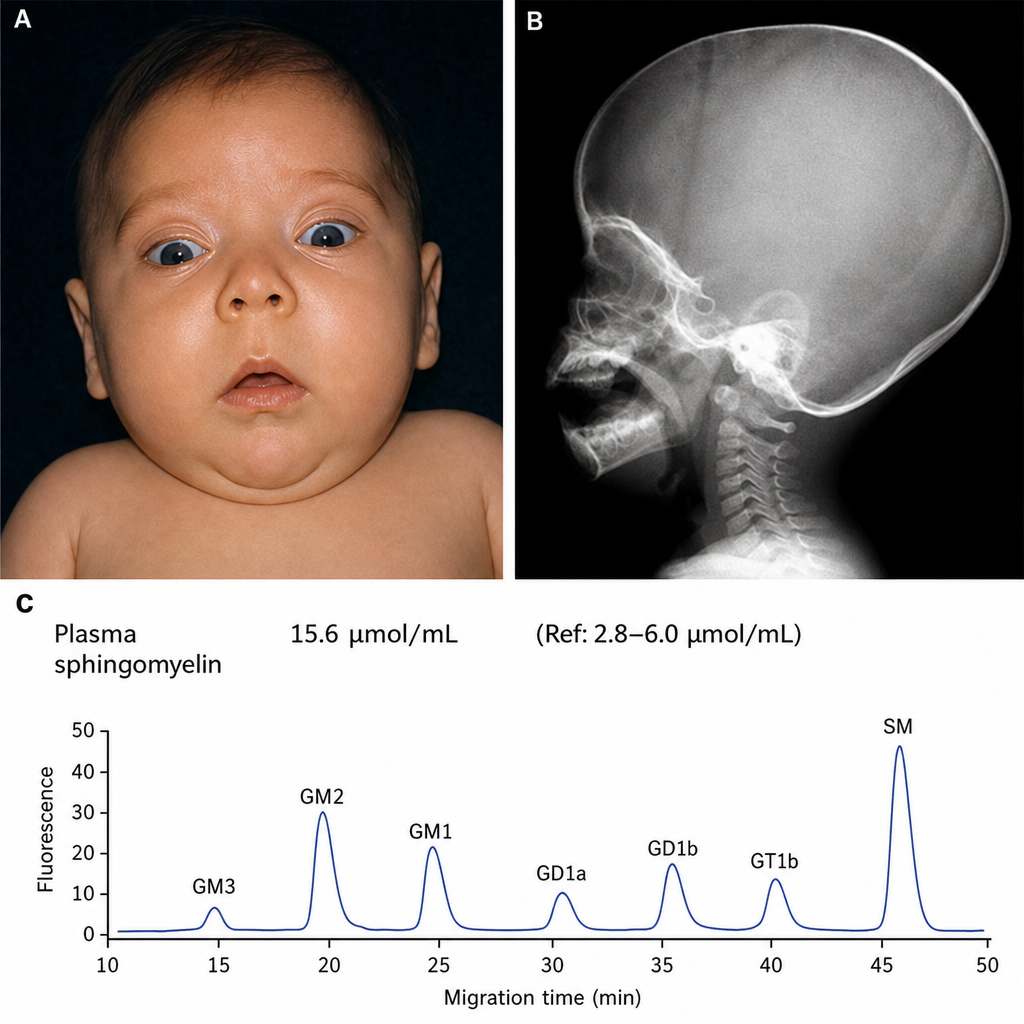
You examine an infant in your office. On exam you observe hypotonia, as well as the findings shown in Figures A and B. You order laboratory testing, which demonstrates the findings shown in Figure C. Which of the following is the most likely pathologic mechanism involved?
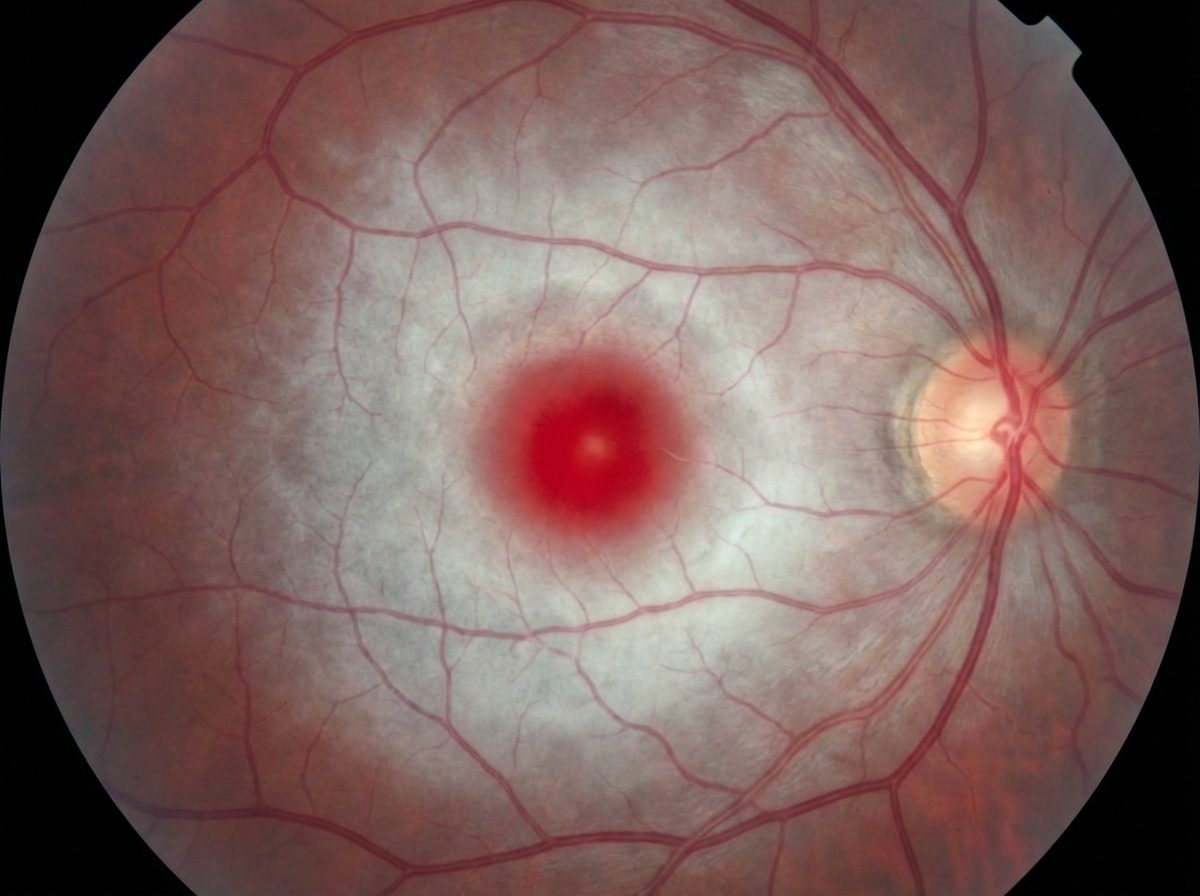
A 7-month-old boy is brought by his parents to the pediatrician’s office. His mother says the child has been weakening progressively and is not as active as he used to be when he was born. His condition seems to be getting worse, especially over the last month. He was born at 41 weeks through normal vaginal delivery. There were no complications observed during the prenatal period. He was progressing well over the 1st few months and achieving the appropriate milestones. On examination, his abdomen appears soft with no liver enlargement. The patient appears to be dehydrated and lethargic. The results of a fundoscopic examination are shown in the picture. A blood test for which of the following enzymes is the next best assay to evaluate this patient's health?
A 12-year-old boy is brought to the emergency department because of acute onset abdominal pain. On arrival, he also complains of nausea and shortness of breath in addition to epigastric pain. He has previously been admitted to the hospital several times for respiratory infections with Pseudomonas species and uses a nebulizer and a chest wall oscillation vest at home. The patient's acute condition is found to be due to premature activation of an enzyme that normally interacts with the brush border. Which of the following describes the activity of this enzyme?
A 2-year-old boy is brought to the emergency department by his parents because of fever and recurrent episodes of jerky movements of his extremities for the past 6 hours. Pregnancy and delivery were uncomplicated, and development was normal until the age of 1 year. The parents report that he has had gradual loss of speech, vision, and motor skills over the past year. During this time, he has been admitted to the hospital three times because of myoclonic seizures. Physical examination shows hypertonicity of the upper and lower extremities. Fundoscopic examination shows pallor of the optic disc bilaterally. An MRI of the brain shows brain atrophy and hyperintensity of the periventricular and subcortical areas. Two days after admission, the patient dies. Histopathologic examination of the brain shows aggregation of globoid cells and loss of glial cells. The patient’s condition was most likely caused by a deficiency of which of the following enzymes?
An 18-month-old boy of Ashkenazi-Jewish descent presents with loss of developmental milestones. On ocular exam, a cherry-red macular spot is observed. No hepatomegaly is observed on physical exam. Microscopic exam shows lysosomes with onion-skin appearance. What is the most likely underlying biochemical abnormality?
A deficiency in which of the following lysosomal enzymes is inherited in a pattern similar to a deficiency of iduronate sulfatase (Hunter syndrome)?
A 6-month-old boy is referred to a geneticist after he is found to have persistent hypotonia and failure to thrive. He has also had episodes of what appears to be respiratory distress and has an enlarged heart on physical exam. There is a family history of childhood onset hypertrophic cardiomyopathy, so a biopsy is performed showing electron dense granules within the lysosomes. Genetic testing is performed showing a defect in glycogen processing. A deficiency in which of the following enzymes is most likely to be responsible for this patient's symptoms?
A 9-month-old girl is brought to the physician because of a 1-month history of poor feeding and irritability. She is at the 15th percentile for height and 5th percentile for weight. Examination shows hypotonia and wasting of skeletal muscles. Cardiopulmonary examination shows no abnormalities. There is hepatomegaly. Her serum glucose is 61 mg/dL, creatinine kinase is 100 U/L, and lactic acid is within the reference range. Urine ketone bodies are elevated. Which of the following enzymes is most likely deficient in this patient?
A patient in a phase 1 trial for a novel epoxide reductase inhibitor, being studied for stroke prophylaxis, develops pain and erythema on the right thigh two days after starting the trial. This rapidly progresses to a purpuric rash with necrotic bullae within 24 hours. Lab results show a PTT of 29 seconds, PT of 28 seconds, and INR of 2.15. What is the most likely pathogenesis of this condition?
Want unlimited practice?
Get full access to all questions, explanations, and performance tracking.
Scan to download app