A 3-month-old girl is brought to the emergency department in respiratory distress after her parents noticed that she was having difficulty breathing. They say that she developed a fever 2 days ago and subsequently developed increasing respiratory difficulty, lethargy, and productive cough. On presentation, her temperature is 103°F (39.5°C), blood pressure is 84/58 mmHg, pulse is 141/min, and respirations are 48/min. Physical exam reveals subcostal retractions and consolidation in the right lower lung field. She is also found to have coarse facial features and restricted joint movement. Serum laboratory tests reveal abnormally elevated levels of lysosomal enzymes circulating in the blood. The enzyme that is most likely defective in this patient has which of the following substrates?
Q82
A 2-year-old girl presents to the emergency room with a witnessed seizure-like episode characterized by bilateral arm twitching, foaming at the mouth, and unresponsiveness lasting 30 seconds. The mother reports recent lethargy and current antibiotic treatment for an ear infection, but denies fever, pain, trauma, feeding changes, or gastrointestinal symptoms. Examination is unremarkable. Lab results show a glucose level of 1.9 mmol/L (34 mg/dL).
What is the most likely cause of the patient's seizure?
Q83
A 3-year-old boy is brought in to his pediatrician by his mother after she noticed that the child was starting to turn yellow. She has not noticed any behavioral changes. On exam, the boy is icteric but is behaving normally. His temperature is 98.8°F (37.1°C), blood pressure is 108/78 mmHg, pulse is 78/min, and respirations are 14/min. His labs are drawn, and he is found to have an unconjugated hyperbilirubinemia with a serum bilirubin of 15 mg/dL. The mother is counseled that this boy's condition may require phenobarbital as a treatment to reduce his bilirubin levels. Which of the following is the most likely defect in this child?
Q84
A 14-year-old Caucasian male patient found to have low serum copper, high urine copper, and low serum ceruloplasmin is placed on penicillamine for management of his genetic disorder. Which of the following is LEAST consistent with this patient's clinical picture?
Q85
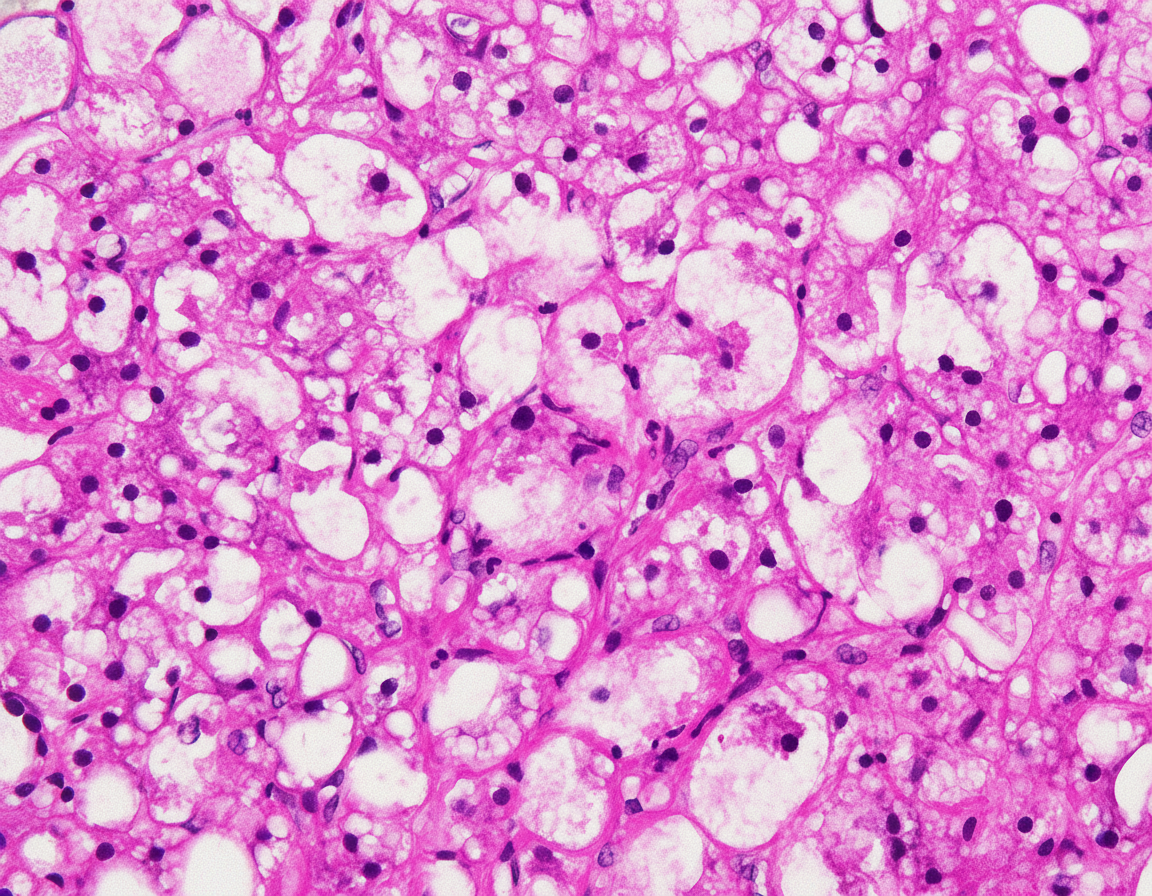
A 43-year-old woman comes to the physician because of a 2-week history of malaise, nausea, and a 3-kg (6.6-lb) weight loss. She has been drinking 8–9 alcoholic beverages daily for the past 20 years. Her temperature is 37.8°C (100°F) and pulse is 105/min. Examination shows jaundice and hepatosplenomegaly. A photomicrograph of a section of a biopsy specimen of the liver is shown. Which of the following mechanisms best explains the findings shown?
Q86
A 17-year-old female is found to have an inherited deficiency of alpha-galactosidase A. Skin biopsy shows accumulation of ceramide trihexose in the tissue. Which of the following abnormalities would be expected in this patient?
Q87
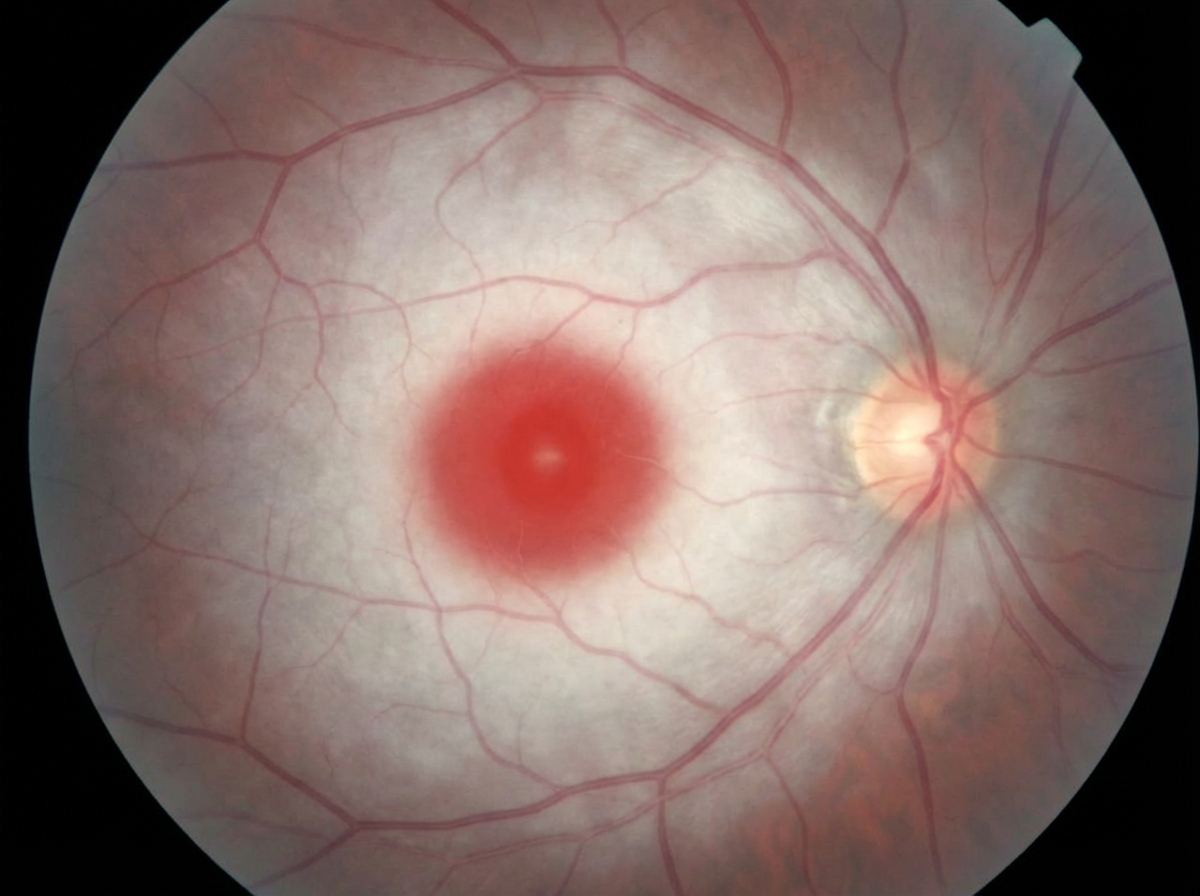
A 7-month-old boy is brought to the pediatrician by his parents due to progressively worsening weakness for the last three months. The parents also describe the boy as having an exaggerated response when startled as well as diminishing response to visual stimuli. At birth, the boy was healthy and remained as such for the first few months of life. The mother says pregnancy was unremarkable, and the boy was born at 39 weeks with no complications during delivery. He is up to date on his vaccinations. The boy's grandparents immigrated from an eastern European country. Physical examination reveals hyperreflexia. Abdominal examination reveals no abnormalities. On fundoscopy, the following is seen. Which of the following is most likely deficient in this patient?
Q88
A 10-day-old newborn is undergoing surgery. During the procedure, a tissue sample is taken from the interscapular region. Histopathology shows adipose tissue with a high concentration of mitochondria. Which of the following substances is most likely to be found within these mitochondria?
Q89
A 28-year-old woman survives a plane crash in the Arctic region of Alaska. She is unable to recover any food from the crash site but is able to melt snow into drinking water using a kettle and a lighter. A rescue helicopter finally finds her after 12 days, and she is flown to a hospital. At this time, which of the following substances is mostly responsible for supplying her brain with energy?
Q90
A 6-month-old child is brought to the pediatrician by his parents for difficulty feeding and poor motor function. The boy was born at 39 weeks gestation via spontaneous vaginal delivery. He is up to date on all vaccines and is meeting all developmental milestones until 2 months ago. He started having trouble latching onto his bottle. He has also become extremely lethargic. Examination reveals diminished muscle tone in all four limbs, areflexia, and hepatosplenomegaly. An ophthalmoscopic exam reveals macular cherry red spots. Which of the following is most likely deficient in this child?
Lipid metabolism US Medical PG Practice Questions and MCQs
Question 81: A 3-month-old girl is brought to the emergency department in respiratory distress after her parents noticed that she was having difficulty breathing. They say that she developed a fever 2 days ago and subsequently developed increasing respiratory difficulty, lethargy, and productive cough. On presentation, her temperature is 103°F (39.5°C), blood pressure is 84/58 mmHg, pulse is 141/min, and respirations are 48/min. Physical exam reveals subcostal retractions and consolidation in the right lower lung field. She is also found to have coarse facial features and restricted joint movement. Serum laboratory tests reveal abnormally elevated levels of lysosomal enzymes circulating in the blood. The enzyme that is most likely defective in this patient has which of the following substrates?
A. Sphingomyelin
B. Dermatan sulfate
C. Mannose (Correct Answer)
D. Ceramide
E. Galactocerebroside
Explanation: ***Mannose***
- This patient's presentation with **coarse facial features**, restricted joint movement, and **elevated circulating lysosomal enzymes** despite a febrile illness points towards a **lysosomal storage disease**, specifically **I-cell disease (mucolipidosis II)**.
- I-cell disease results from a deficiency in the enzyme **N-acetylglucosaminyl-1-phosphotransferase**, which normally phosphorylates **mannose residues** on lysosomal enzymes, marking them for transport to the lysosome. Without this phosphorylation, enzymes are secreted extracellularly instead of being delivered to lysosomes, leading to their accumulation in the blood.
*Sphingomyelin*
- A defect in the enzyme **sphingomyelinase**, which breaks down sphingomyelin, causes **Niemann-Pick disease**.
- While Niemann-Pick disease can present with coarse features and hepatosplenomegaly, it typically involves **foam cells** and **cherry-red spots** on the retina, not the specific enzyme trafficking defect seen here.
*Dermatan sulfate*
- Accumulation of **dermatan sulfate** and heparan sulfate occurs in several **mucopolysaccharidoses (MPS)** due to defects in enzymes that degrade these glycosaminoglycans.
- While MPS disorders share coarse features and skeletal deformities, the defining feature of I-cell disease is the **defective targeting of multiple lysosomal enzymes**, leading to their elevated levels in the serum, which is distinct from isolated GAG accumulation.
*Ceramide*
- A defect in the enzyme **ceramidase**, which hydrolyzes ceramide, can lead to **Farber disease**.
- Farber disease is characterized by **hoarseness**, **subcutaneous nodules**, and painful, swollen joints, but not the widespread secretion of lysosomal enzymes into the blood as seen in this case.
*Galactocerebroside*
- A deficiency in the enzyme **galactocerebrosidase** leads to **Krabbe disease** (globoid cell leukodystrophy).
- Krabbe disease primarily affects the nervous system, causing **demyelination**, **peripheral neuropathy**, and developmental regression, without the characteristic coarse facial features or widespread circulating lysosomal enzymes seen in I-cell disease.
Question 82: A 2-year-old girl presents to the emergency room with a witnessed seizure-like episode characterized by bilateral arm twitching, foaming at the mouth, and unresponsiveness lasting 30 seconds. The mother reports recent lethargy and current antibiotic treatment for an ear infection, but denies fever, pain, trauma, feeding changes, or gastrointestinal symptoms. Examination is unremarkable. Lab results show a glucose level of 1.9 mmol/L (34 mg/dL).
What is the most likely cause of the patient's seizure?
A. Deficiency of myophosphorylase
B. Infection with Streptococcus pneumoniae
C. Primary carnitine deficiency
D. Medium-chain acyl-CoA dehydrogenase deficiency (Correct Answer)
E. Accumulation of sphingomyelin
Explanation: **Medium-chain acyl-CoA dehydrogenase deficiency**
- The patient presents with a **seizure**, **lethargy**, and **severe hypoglycemia** (glucose 1.9 mmol/L or 34 mg/dL) in the context of illness, which is a classic presentation of **MCAD deficiency**.
- This genetic disorder impairs **fatty acid oxidation**, leading to an inability to produce **ketone bodies** during fasting or illness states, causing **hypoketotic hypoglycemia** as the body cannot mobilize alternative fuel sources.
- The intercurrent illness (ear infection) increases metabolic demands and triggers the hypoglycemic episode.
*Deficiency of myophosphorylase*
- This condition is also known as **McArdle disease** and primarily affects **muscle glycogenolysis**.
- Symptoms typically involve **exercise intolerance**, **muscle pain**, and **cramping**, not hypoglycemic seizures in young children.
*Infection with Streptococcus pneumoniae*
- While *S. pneumoniae* can cause serious infections, including **meningitis** which could lead to seizures, the patient's presentation lacks signs of severe infection like fever, stiff neck, or other neurological deficits attributable to meningitis.
- The prominent **hypoglycemia** (34 mg/dL) is not a primary feature of **bacterial infection-induced seizures** and points toward a metabolic cause.
*Primary carnitine deficiency*
- **Primary carnitine deficiency** can also cause **hypoglycemia** and seizures due to impaired **fatty acid transport** into mitochondria for beta-oxidation.
- However, **MCAD deficiency** is more common and typically presents earlier with acute decompensation during illness, fitting this clinical presentation better.
*Accumulation of sphingomyelin*
- This describes **Niemann-Pick disease**, a **lysosomal storage disorder**.
- It usually presents with **hepatosplenomegaly**, **neurodegeneration**, and **progressive developmental delay**, not acute episodes of isolated **hypoglycemia** and seizures.
Question 83: A 3-year-old boy is brought in to his pediatrician by his mother after she noticed that the child was starting to turn yellow. She has not noticed any behavioral changes. On exam, the boy is icteric but is behaving normally. His temperature is 98.8°F (37.1°C), blood pressure is 108/78 mmHg, pulse is 78/min, and respirations are 14/min. His labs are drawn, and he is found to have an unconjugated hyperbilirubinemia with a serum bilirubin of 15 mg/dL. The mother is counseled that this boy's condition may require phenobarbital as a treatment to reduce his bilirubin levels. Which of the following is the most likely defect in this child?
A. Impaired bilirubin uptake
B. Defective liver excretion of bilirubin due to SLCO1B1 and SLCO1B3 mutations
C. Absent UDP-glucuronosyltransferase activity
D. Reduced UDP-glucuronosyltransferase activity (Correct Answer)
E. Defective liver excretion of bilirubin due to ABCC2 mutation
Explanation: ***Reduced UDP-glucuronosyltransferase activity***
- The presentation of **unconjugated hyperbilirubinemia** with a normal-behaving child is characteristic of **Crigler-Najjar syndrome type 2** or **Gilbert's syndrome**, both involving reduced UDP-glucuronosyltransferase (UGT) activity.
- The mention of **phenobarbital** as a treatment is key, as it induces UGT activity, which is effective in Crigler-Najjar type 2 but not in type 1 where UGT is virtually absent.
*Impaired bilirubin uptake*
- Impaired bilirubin uptake can lead to unconjugated hyperbilirubinemia, but it is typically associated with **drug interactions** or less severe, transient conditions.
- Conditions involving impaired uptake usually do not reach such high bilirubin levels (15 mg/dL) as seen in this child without more severe underlying liver dysfunction, and phenobarbital is not a primary treatment.
*Absent UDP-glucuronosyltransferase activity*
- **Absent UGT activity** describes **Crigler-Najjar syndrome type 1**, which leads to severe unconjugated hyperbilirubinemia, usually greater than 20 mg/dL, and presents with **kernicterus** and neurological symptoms in infancy.
- Phenobarbital therapy is **ineffective** in stimulating UGT activity in type 1, making this option less likely for a child described as "behaving normally" and where phenobarbital is considered a viable treatment.
*Defective liver excretion of bilirubin due to SLCO1B1 and SLCO1B3 mutations*
- SLCO1B1 and SLCO1B3 are genes encoding **organic anion transporting polypeptides (OATPs)** involved in hepatic uptake of conjugated bilirubin and other substrates.
- Mutations in these genes are associated with Rotor syndrome, which primarily causes **conjugated hyperbilirubinemia**, not unconjugated.
*Defective liver excretion of bilirubin due to ABCC2 mutation*
- The ABCC2 gene encodes the **MRP2 transporter**, which is responsible for the **biliary excretion of conjugated bilirubin** from hepatocytes.
- A defect in this transporter (as seen in **Dubin-Johnson syndrome**) leads to **conjugated hyperbilirubinemia**, with direct bilirubin often being elevated, which contradicts the unconjugated hyperbilirubinemia seen in this patient.
Question 84: A 14-year-old Caucasian male patient found to have low serum copper, high urine copper, and low serum ceruloplasmin is placed on penicillamine for management of his genetic disorder. Which of the following is LEAST consistent with this patient's clinical picture?
A. Corneal deposits
B. Kinky, easily breakable hair (Correct Answer)
C. Hemiballismus
D. Parkinson-like symptoms
E. Cirrhosis
Explanation: ***Kinky, easily breakable hair***
- The described patient's lab findings (low serum copper, high urine copper, low serum ceruloplasmin) and treatment with penicillamine are indicative of **Wilson's disease**, a disorder of copper accumulation.
- **Kinky, easily breakable hair** (also known as **Menkes kinky hair syndrome**) is associated with a different genetic disorder of copper *deficiency* due to impaired intestinal absorption, which is the opposite of the patient's condition.
*Corneal deposits*
- **Kayser-Fleischer rings**, which are greenish-brown deposits of copper in the limbus of the cornea, are a classic ocular manifestation of **Wilson's disease**.
- These deposits are a direct result of copper accumulation and are present in most patients with neurological symptoms.
*Hemiballismus*
- This involuntary, violent flinging movement of a limb on one side of the body is a type of **dystonia** and a known neurological manifestation of **Wilson's disease** due to copper deposition in the basal ganglia.
- Copper accumulation in the brain, particularly in the basal ganglia, can lead to various motor symptoms.
*Parkinson-like symptoms*
- **Tremor**, **rigidity**, **bradykinesia**, and **postural instability** are common neurological features in patients with **Wilson's disease** that mimic Parkinson's disease.
- These symptoms arise from copper deposition and subsequent damage to the basal ganglia within the brain.
*Cirrhosis*
- **Hepatic manifestations**, including **cirrhosis**, are very common in **Wilson's disease** due to copper accumulation in the liver.
- Untreated, copper toxicity in the liver leads to inflammation, fibrosis, and ultimately liver failure.
Question 85: A 43-year-old woman comes to the physician because of a 2-week history of malaise, nausea, and a 3-kg (6.6-lb) weight loss. She has been drinking 8–9 alcoholic beverages daily for the past 20 years. Her temperature is 37.8°C (100°F) and pulse is 105/min. Examination shows jaundice and hepatosplenomegaly. A photomicrograph of a section of a biopsy specimen of the liver is shown. Which of the following mechanisms best explains the findings shown?
A. Excessive interstitial TGF-β activity
B. Decreased clearance of N-acetyl-p-benzoquinone imine
C. Estrogen-mediated glandular hyperplasia
D. Increased glycerol 3-phosphate formation (Correct Answer)
E. Intracellular accumulation of lactate
Explanation: ***Increased glycerol 3-phosphate formation***
- Chronic **alcohol consumption** leads to an increase in the **NADH/NAD+ ratio**, shifting metabolic pathways and promoting several detrimental effects in the liver, including **fatty acid synthesis** and decreased fatty acid oxidation.
- Increased NADH leads to the reduction of **dihydroxyacetone phosphate** to **glycerol 3-phosphate**, which is then esterified with fatty acids to form **triglycerides**, causing **hepatic steatosis** (fatty liver).
- This is the **primary mechanism** explaining the fat accumulation seen in alcoholic fatty liver disease.
*Excessive interstitial TGF-β activity*
- Activated **TGF-β** (Transforming Growth Factor-beta) plays a crucial role in **fibrosis** by stimulating collagen production by stellate cells, which is characteristic of **cirrhosis**, a later stage of liver disease.
- While chronic alcohol use can eventually lead to cirrhosis, the question describes initial symptoms and biopsy findings more consistent with **alcoholic steatohepatitis** rather than advanced fibrosis.
*Decreased clearance of N-acetyl-p-benzoquinone imine*
- **N-acetyl-p-benzoquinone imine (NAPQI)** is a toxic metabolite of **acetaminophen** (paracetamol), and its decreased clearance or increased production can lead to **acetaminophen-induced liver injury**.
- The patient's history of heavy alcohol consumption is relevant to **alcoholic liver disease**, not primarily acetaminophen toxicity.
*Estrogen-mediated glandular hyperplasia*
- **Estrogen-mediated glandular hyperplasia** typically refers to changes in glandular tissues like the **endometrium** or **breast**, and is not directly related to alcoholic liver disease or the described hepatic pathology.
- While alcoholism can affect hormone metabolism, it does not primarily cause liver injury through this mechanism.
*Intracellular accumulation of lactate*
- Elevated **NADH/NAD+ ratio** due to alcohol metabolism can indeed lead to increased conversion of **pyruvate to lactate**, causing **lactic acidosis**.
- While lactic acidosis can occur in severe alcoholic liver disease, it is a metabolic consequence rather than the primary mechanism explaining the fat accumulation and cell injury seen in this stage of alcoholic liver disease.
Question 86: A 17-year-old female is found to have an inherited deficiency of alpha-galactosidase A. Skin biopsy shows accumulation of ceramide trihexose in the tissue. Which of the following abnormalities would be expected in this patient?
A. Histiocytes with a wrinkled tissue paper appearance
B. Cherry red spots on macula
C. Corneal clouding
D. Angiokeratomas (Correct Answer)
E. Gargoyle-like facies
Explanation: ***Angiokeratomas***
- An inherited deficiency of **alpha-galactosidase A** with accumulation of **ceramide trihexose** is characteristic of **Fabry disease**.
- **Angiokeratomas** (small, reddish-purple skin lesions) are a classic dermatological manifestation of **Fabry disease**, along with peripheral neuropathy and renal/cardiac involvement.
*Histiocytes with a wrinkled tissue paper appearance*
- This describes **Gaucher cells**, which are characteristic of **Gaucher disease**, caused by a deficiency in **glucocerebrosidase**.
- **Gaucher disease** involves accumulation of **glucocerebroside** in macrophages, which is distinct from the patient's presentation.
*Cherry red spots on macula*
- This is a hallmark finding in **Tay-Sachs disease** and **Niemann-Pick disease**, caused by deficiencies in **hexosaminidase A** and **sphingomyelinase**, respectively.
- In **Tay-Sachs**, **GM2 ganglioside** accumulates, while in **Niemann-Pick**, **sphingomyelin** accumulates, neither of which matches the ceramide trihexose detected.
*Corneal clouding*
- **Corneal clouding** is a prominent feature in several **mucopolysaccharidoses**, such as **Hurler syndrome (MPS I)** and **Scheie syndrome (MPS IS)**.
- These disorders involve the accumulation of **glycosaminoglycans**, not ceramide trihexose.
*Gargoyle-like facies*
- This refers to coarse facial features seen in severe **mucopolysaccharidoses**, particularly **Hurler syndrome (MPS I)**.
- These patients accumulate **heparan sulfate** and **dermatan sulfate** due to enzyme deficiencies, which is distinct from Fabry disease.
Question 87: A 7-month-old boy is brought to the pediatrician by his parents due to progressively worsening weakness for the last three months. The parents also describe the boy as having an exaggerated response when startled as well as diminishing response to visual stimuli. At birth, the boy was healthy and remained as such for the first few months of life. The mother says pregnancy was unremarkable, and the boy was born at 39 weeks with no complications during delivery. He is up to date on his vaccinations. The boy's grandparents immigrated from an eastern European country. Physical examination reveals hyperreflexia. Abdominal examination reveals no abnormalities. On fundoscopy, the following is seen. Which of the following is most likely deficient in this patient?
A. Arylsulfatase A
B. β-Glucosidase
C. α-Galactosidase
D. Hexosaminidase B
E. Hexosaminidase A (Correct Answer)
Explanation: ***Hexosaminidase A***
- Deficiency of **Hexosaminidase A** leads to **Tay-Sachs disease**, characterized by deterioration in motor and cognitive functions, aligning with the symptoms of weakness and abnormal responses.
- The condition is associated with a **cherry-red spot** on the retina, often observed in patients, further confirming the diagnosis.
- **Ashkenazi Jewish ancestry** is a key risk factor, consistent with the patient's eastern European heritage.
*Arylsulfatase A*
- Deficiency causes **metachromatic leukodystrophy**, which typically presents with **ataxia** and loss of previously attained skills, but not the exaggerated startle response noted in this case.
- The condition is not commonly associated with the specific visual and neurologic symptoms observed in the patient.
*β-Glucosidase*
- Deficiency leads to **Gaucher's disease**, which presents with splenomegaly, bone pain, and anemia, rather than the neurological symptoms seen here.
- The symptoms do not match the **progressive weakness** and startle reflex changes described.
*α-Galactosidase*
- Lack of this enzyme results in **Fabry disease**, which mainly causes pain episodes, skin lesions, and organ dysfunction, especially renal involvement.
- Neurological symptoms described here do not fit the typical presentation seen in Fabry disease.
*Hexosaminidase B*
- Deficiency causes **Sandhoff disease**, which presents similarly to Tay-Sachs with developmental regression and cherry-red spot.
- However, Sandhoff disease typically includes **hepatosplenomegaly**, which is notably absent in this patient on abdominal examination.
- The normal abdominal findings help distinguish this from Hexosaminidase A deficiency.
Question 88: A 10-day-old newborn is undergoing surgery. During the procedure, a tissue sample is taken from the interscapular region. Histopathology shows adipose tissue with a high concentration of mitochondria. Which of the following substances is most likely to be found within these mitochondria?
A. Leptin
B. Kinesin
C. Thermogenin (Correct Answer)
D. Ubiquitin
E. Clathrin
Explanation: ***Thermogenin***
- The description of **adipose tissue with a high concentration of mitochondria** in the **interscapular region** of a newborn points to **brown adipose tissue (BAT)**.
- **Thermogenin**, also known as **uncoupling protein 1 (UCP1)**, is specifically found in the mitochondria of BAT and is responsible for **non-shivering thermogenesis**. This protein uncouples oxidative phosphorylation, generating heat instead of ATP.
*Leptin*
- **Leptin** is a hormone primarily produced by **white adipose tissue** that plays a key role in appetite regulation and energy balance.
- While related to fat tissue, it is a **secreted hormone** and not found within the mitochondria for heat production.
*Kinesin*
- **Kinesin** is a **motor protein** involved in intracellular transport, moving vesicles and organelles along microtubules.
- It is not localized within mitochondria and has no direct role in thermogenesis.
*Ubiquitin*
- **Ubiquitin** is a small regulatory protein that marks other proteins for degradation via the **ubiquitin-proteasome system**.
- Though crucial for protein turnover, it is not primarily located within mitochondria for energy metabolism or heat production.
*Clathrin*
- **Clathrin** is a protein involved in the formation of **coated vesicles** for endocytosis and intracellular trafficking.
- It plays no direct role in mitochondrial function or thermogenesis.
Question 89: A 28-year-old woman survives a plane crash in the Arctic region of Alaska. She is unable to recover any food from the crash site but is able to melt snow into drinking water using a kettle and a lighter. A rescue helicopter finally finds her after 12 days, and she is flown to a hospital. At this time, which of the following substances is mostly responsible for supplying her brain with energy?
A. Amino acids
B. Cholesterol
C. Acetoacetate (Correct Answer)
D. Glucose
E. Free fatty acids
Explanation: ***Acetoacetate***
- After **12 days of starvation**, the body has fully adapted to a fasting state, and **ketone bodies** (acetoacetate and β-hydroxybutyrate) become the **primary fuel source for the brain**, providing approximately **60-70% of its energy needs**.
- The liver produces ketone bodies from **fatty acid β-oxidation** when glucose availability is severely limited, allowing the brain to spare glucose and reduce the need for muscle protein catabolism.
- Ketone bodies readily cross the **blood-brain barrier** and are metabolized by brain cells for ATP production via the citric acid cycle.
- This metabolic adaptation is crucial for survival during prolonged starvation, as it conserves protein stores and allows the brain to function on fat-derived fuel.
*Amino acids*
- While amino acids from muscle protein breakdown are used for **gluconeogenesis** to produce the minimal glucose still required by the brain (~30-40 g/day), they are **not directly oxidized** by the brain for energy.
- Using amino acids as the primary energy source would result in unsustainable **muscle wasting** and loss of vital protein structures.
- During prolonged starvation, the body minimizes protein catabolism by shifting the brain to ketone body utilization.
*Cholesterol*
- Cholesterol is an essential **structural component** of cell membranes and a precursor for steroid hormones, vitamin D, and bile acids.
- Cholesterol is **never used as a fuel source** for energy production in any tissue, including the brain.
- It cannot be catabolized to generate ATP.
*Glucose*
- Under normal conditions, the brain consumes approximately **120 g of glucose daily** as its exclusive fuel source.
- After 12 days of starvation, **hepatic glycogen stores** are long depleted (exhausted within 24-48 hours), and **gluconeogenesis** can only produce minimal amounts of glucose (~80 g/day total, most going to obligate glucose-dependent tissues like red blood cells).
- The brain reduces its glucose consumption to approximately **30-40 g/day** and derives the majority of its energy from ketone bodies instead.
- Some glucose is still essential for certain brain cells and metabolic processes, but it is no longer the **primary** fuel source at this stage.
*Free fatty acids*
- Free fatty acids (FFAs) are released from adipose tissue triglycerides during starvation and serve as the major fuel for most tissues (heart, skeletal muscle, liver).
- However, FFAs **cannot efficiently cross the blood-brain barrier** due to their tight binding to albumin and the selective permeability of the BBB.
- The liver converts FFAs to **ketone bodies** via β-oxidation and ketogenesis, which then cross the BBB to fuel the brain.
- FFAs themselves are not a direct energy source for the brain.
Question 90: A 6-month-old child is brought to the pediatrician by his parents for difficulty feeding and poor motor function. The boy was born at 39 weeks gestation via spontaneous vaginal delivery. He is up to date on all vaccines and is meeting all developmental milestones until 2 months ago. He started having trouble latching onto his bottle. He has also become extremely lethargic. Examination reveals diminished muscle tone in all four limbs, areflexia, and hepatosplenomegaly. An ophthalmoscopic exam reveals macular cherry red spots. Which of the following is most likely deficient in this child?
A. Hexosaminidase A
B. Ceramidase
C. Sphingomyelinase (Correct Answer)
D. Arylsulfatase A
E. β-Glucosidase
Explanation: ***Sphingomyelinase***
- The combination of **neurodegeneration** (difficulty feeding, poor motor function, diminished muscle tone, areflexia), **hepatosplenomegaly**, and **macular cherry-red spots** is highly characteristic of **Niemann-Pick disease type A or B**.
- **Niemann-Pick disease** is caused by a deficiency in the enzyme **sphingomyelinase**, leading to the accumulation of sphingomyelin in lysosomes.
*Hexosaminidase A*
- A deficiency in **hexosaminidase A** causes **Tay-Sachs disease**, which presents with neurodegeneration and **cherry-red spots** but typically *lacks hepatosplenomegaly*.
- While both conditions show cherry-red spots, the presence of palpable organomegaly points away from Tay-Sachs.
*β-Glucosidase*
- A deficiency in **β-glucosidase** causes **Gaucher disease**, which is characterized by **hepatosplenomegaly**, bone crises, and neurological symptoms in some types, but it *does not typically present with cherry-red spots*.
- The characteristic neurodegeneration and the cherry-red spot are key differentiating features from Gaucher disease.
*Ceramidase*
- A deficiency in **ceramidase** causes **Farber disease**.
- This condition is characterized by **hoarseness**, painful swollen joints, and subcutaneous nodules, which are not described in the patient.
*Arylsulfatase A*
- A deficiency in **arylsulfatase A** causes **metachromatic leukodystrophy**.
- This disease primarily affects the **myelin sheath** in the nervous system, leading to neurological deterioration but *does not cause hepatosplenomegaly or cherry-red spots*.