A patient came to the hospital with severe abdominal pain, and lipase levels were elevated. On imaging, a stone is found in the common bile duct (CBD). Which enzyme is most likely elevated in this condition?
A patient came to the emergency room with severe abdominal pain. The serum triglyceride level was $1500 \mathrm{mg} / \mathrm{dL}$. What is the most likely defect?
A patient has multiple tendon xanthomas. Serum cholesterol ( $398 \mathrm{mg} / \mathrm{dL}$ ) and LDL ( 220 $\mathrm{mg} / \mathrm{dL}$ ) were found to be elevated. What is the most likely defect?
A patient presents with xanthomas on the Achilles tendon. What is the most likely diagnosis?
A patient with high triglycerides (TG) esterified with long-chain fatty acids (LCFA) presents with fatigue, and a biopsy of the muscle shows fat vacuoles. What is the most likely diagnosis?
A patient with tendon xanthomas, Increased LDL and cholesterol. What is the most probable diagnosis?
A previously healthy 8-year-old boy is brought to the physician because of increasing visual loss and deterioration of his hearing and speech over the past 2 months. During this period, he has had difficulty walking, using the stairs, and feeding himself. His teachers have noticed that he has had difficulty concentrating. His grades have worsened and his handwriting has become illegible. His maternal male cousin had similar complaints and died at the age of 6 years. Vital signs are within normal limits. Examination shows hyperpigmented skin and nails and an ataxic gait. His speech is dysarthric. Neurologic examination shows spasticity and decreased muscle strength in all extremities. Deep tendon reflexes are 4+ bilaterally. Plantar reflex shows an extensor response bilaterally. Sensation is decreased in the lower extremities. Fundoscopy shows optic atrophy. There is sensorineural hearing loss bilaterally. Which of the following is the most likely cause of this patient's symptoms?
The human body obtains vitamin D either from diet or from sun exposure. Darker-skinned individuals require more sunlight to create adequate vitamin D stores as the increased melanin in their skin acts like sunscreen; thus, it blocks the necessary UV required for vitamin D synthesis. Therefore, if these individuals spend inadequate time in the light, dietary sources of vitamin D are necessary. Which of the following requires sunlight for its formation?
A 25-year-old woman presents to you for a routine health checkup. She has no complaints. Family history is significant for 2 of her siblings who have died from Tay-Sachs disease, but she and her parents are phenotypically normal. Which of the following are the chances of this person being a heterozygous carrier of the mutation that causes Tay-Sachs disease?
A 7-year-old boy is brought to the pediatrician by his parents due to pubic hair growth and changes in his voice. He has been developing in the 98th percentile for his age. His vaccination is up-to-date. The patient’s blood pressure is within the 60th percentile for his age. Physical examination reveals pubic and armpit hair, and Tanner stage 2 characterized by enlarged scrotum and testes. Laboratory findings are significant for the following: Hemoglobin 13.1 g/dL Hematocrit 39.7% Leukocyte count 8,500/mm3 Neutrophils 65% Lymphocytes 30% Monocytes 5% Mean corpuscular volume 82.2 μm3 Platelet count 20,000/mm3 Urine creatinine clearance 98 mL/min Serum 17-hydroxyprogesterone 313 ng/dL (normal <110 ng/dL) Which of the following enzymes is most likely to be defective in this patient?
Explanation: ***ALP (Alkaline Phosphatase)*** - **ALP** is the **most characteristic enzyme elevation** in **biliary obstruction** from a CBD stone. - ALP is found in high concentrations in the **bile duct epithelium** and hepatocytes adjacent to bile ducts, and rises dramatically with **cholestasis** and **obstructive jaundice**. - In CBD stone obstruction, ALP typically rises **3-10 times normal**, making it the hallmark biochemical marker of this condition. - While lipase is elevated due to associated pancreatitis, **ALP elevation specifically indicates the biliary obstruction**. *GGT (Gamma-Glutamyl Transferase)* - **GGT** is also elevated in **cholestasis** and **bile duct obstruction**. - GGT often rises in parallel with ALP and helps confirm the hepatobiliary origin of ALP elevation (vs. bone source). - However, **ALP is more specific** and typically shows greater magnitude of elevation in acute CBD obstruction, making it the **most likely** elevated enzyme in this clinical context. *ALT (Alanine Aminotransferase)* - **ALT** may be **mildly to moderately elevated** if there is secondary hepatocellular injury from biliary obstruction. - However, ALT primarily indicates **hepatocyte damage** rather than cholestasis, and its elevation is typically **less pronounced** than ALP in obstructive biliary disease. - The pattern in CBD obstruction is **cholestatic** (high ALP) rather than **hepatocellular** (high ALT). *AST (Aspartate Aminotransferase)* - **AST** can be elevated in various conditions including liver, heart, and muscle damage. - Like ALT, it may show mild elevation in biliary obstruction but is **not the primary marker**. - AST is less specific than ALP for diagnosing CBD stone obstruction. *LDH (Lactate Dehydrogenase)* - **LDH** is a **non-specific marker** of tissue damage found in multiple organs. - While it may be elevated, it provides little diagnostic value when specific markers like **ALP and lipase** are available. - LDH does not help differentiate biliary obstruction from other causes of abdominal pain.
Explanation: ***Apo C-II*** - **Apo C-II** is an essential cofactor for **lipoprotein lipase (LPL)**, which is responsible for hydrolyzing triglycerides from chylomicrons and VLDL. - A defect in Apo C-II leads to severely impaired triglyceride clearance, resulting in **chylomicronemia** and extremely high serum triglyceride levels (e.g., 1500 mg/dL), which can cause acute pancreatitis. - Both Apo C-II deficiency and LPL deficiency present similarly, but Apo C-II deficiency is the more specific answer when considering the **"defect"** terminology, as it represents the regulatory cofactor rather than the enzyme itself. *Apo B-48* - **Apo B-48** is a structural protein uniquely found on **chylomicrons**, synthesized in the intestine, and is essential for their formation and secretion. - A defect in Apo B-48 (e.g., in abetalipoproteinemia) would lead to the **absence of chylomicrons**, resulting in very low or undetectable triglyceride levels after a fat-containing meal, not high levels. *Apo B-100* - **Apo B-100** is the primary apolipoprotein of **VLDL, IDL, and LDL**, and it is crucial for VLDL assembly in the liver and for LDL receptor binding. - Defects in Apo B-100 leading to hyperlipidemia typically cause elevated LDL cholesterol (e.g., familial defective Apo B-100), rather than severe hypertriglyceridemia associated with chylomicronemia. *LDL receptor* - The **LDL receptor** is responsible for the uptake of **LDL particles** from the bloodstream, primarily in the liver. - A defect in the LDL receptor (e.g., in familial hypercholesterolemia) primarily causes **elevated LDL cholesterol** levels, but typically does not lead to the extreme hypertriglyceridemia seen in this patient. *Lipoprotein lipase* - **Lipoprotein lipase (LPL)** is the enzyme that hydrolyzes triglycerides in chylomicrons and VLDL particles. - A primary deficiency of LPL itself (Type I familial chylomicronemia) would also cause severe hypertriglyceridemia similar to Apo C-II deficiency. - However, Apo C-II deficiency is the more specific answer as it represents the **cofactor defect** that impairs LPL function, while direct LPL deficiency is a separate genetic entity.
Explanation: ***LDL receptor defect*** - **Tendon xanthomas** are a classic sign of **familial hypercholesterolemia**, which is most commonly caused by a genetic defect in the **LDL receptor**. - **Elevated LDL cholesterol** levels are a hallmark of this condition, as dysfunctional LDL receptors lead to impaired clearance of LDL particles from the blood. *Lipoprotein lipase deficiency* - This condition primarily causes severe **hypertriglyceridemia** and can lead to **eruptive xanthomas**, but not typically tendon xanthomas. - While cholesterol levels might be elevated, the defining feature would be very high triglyceride levels, often exceeding 1000 mg/dL. *Apo E defect* - A defect in **ApoE** (specifically the **ApoE2/E2 genotype**) is associated with **familial dysbetalipoproteinemia** (Type III hyperlipoproteinemia). - This condition causes elevated remnants of chylomicrons and VLDL, leading to **palmar xanthomas**, but less commonly tendon xanthomas, and often presents with high triglyceride levels in addition to cholesterol. *Apo B-100 defect* - **Familial defective apoB-100** can present similarly to familial hypercholesterolemia with elevated LDL cholesterol. - However, this is much **rarer** than LDL receptor defects (affecting ~1:700 vs 1:250-500 for LDL receptor mutations). - The clinical presentation and lipid profile overlap significantly, but LDL receptor defects remain the most common cause of this clinical picture. *LCAT deficiency* - **Lecithin-cholesterol acyltransferase (LCAT)** deficiency leads to an accumulation of **unesterified cholesterol** in plasma and tissues. - This typically presents with **corneal opacities**, **hemolytic anemia**, and proteinuria, rather than predominantly tendon xanthomas and isolated severe LDL elevation.
Explanation: ***Familial hypercholesterolemia*** - **Xanthomas** on the **Achilles tendon** are a classic clinical sign of familial hypercholesterolemia, along with significantly elevated **LDL-C levels**. - This condition is an **autosomal dominant** genetic disorder characterized by defects in the **LDL receptor** pathway, leading to impaired clearance of LDL from the blood. - **Tendon xanthomas** (especially Achilles and extensor tendons) are pathognomonic for this condition. *Tangier's disease* - Characterized by very low or absent **HDL-C (high-density lipoprotein cholesterol)** levels, leading to **cholesterol ester accumulation** in various tissues. - While it can cause lipid deposition, its hallmark is **enlarged, orange tonsils** and peripheral neuropathy, not typically Achilles tendon xanthomas. *Familial hyperchylomicronemia* - This disorder primarily involves elevated **chylomicrons** and **triglycerides**, presenting with **eruptive xanthomas** (small, red-yellow papules) but not typically tendon xanthomas. - It is often associated with **pancreatitis** and **lipemia retinalis**. *Familial dysbetalipoproteinemia* - Characterized by elevated levels of **cholesterol** and **triglycerides** due to accumulation of remnant lipoproteins (IDL). - While it can cause **xanthomas**, these are typically **palmar xanthomas** (xanthoma striata palmaris) and **tuberoeruptive xanthomas**, less commonly Achilles tendon xanthomas. *Familial combined hyperlipidemia* - Most common familial lipid disorder, characterized by elevated **LDL-C** and/or **triglycerides** with variable phenotype. - While it causes premature coronary artery disease, it typically does **not** cause tendon xanthomas, which distinguishes it from familial hypercholesterolemia. - Xanthomas, if present, are usually **xanthelasma** (around eyelids) rather than tendon xanthomas.
Explanation: ***Carnitine deficiency*** - **Carnitine** is essential for transporting **long-chain fatty acids (LCFAs)** into the mitochondria for beta-oxidation. - A deficiency leads to the accumulation of **LCFAs** as **triglycerides** in the cytoplasm, resulting in **fat vacuoles** in muscle and systemic fatigue due to impaired energy production. *Fatty acid synthase defect* - **Fatty acid synthase** is involved in the *de novo* synthesis of fatty acids, not their catabolism or transport. - A defect would impair fatty acid production, not lead to the accumulation of **triglycerides** from exogenous sources. *Lipoprotein lipase (LPL) defect* - **LPL** is crucial for cleaving **triglycerides** in circulating chylomicrons and VLDL, allowing fatty acids to be taken up by tissues. - A defect causes severe hypertriglyceridemia, but the primary issue in the muscle with fat vacuoles points towards a problem with intracellular fatty acid utilization rather than plasma triglyceride clearance. *LDL defect* - **LDL** is primarily responsible for transporting cholesterol to peripheral tissues. - Defects in **LDL** metabolism typically lead to hypercholesterolemia, not the accumulation of **triglycerides** or muscle fat vacuoles as described. *Medium-chain acyl-CoA dehydrogenase (MCAD) deficiency* - **MCAD** deficiency is a fatty acid oxidation disorder affecting **medium-chain fatty acids** (C6-C12), not the **long-chain fatty acids** specifically mentioned in the stem. - It typically presents with hypoketotic hypoglycemia during fasting, often in infancy or childhood, rather than the characteristic muscle fat vacuole accumulation pattern seen with **carnitine deficiency**.
Explanation: ***Type II Hyperlipoproteinemia*** - This type is characterized by significantly **elevated LDL and total cholesterol** due to a defect in LDL receptor function or APOB-100. - **Tendon xanthomas** are a classic physical finding in Type II hyperlipoproteinemia, specifically in familial hypercholesterolemia. *Type III Hyperlipoproteinemia* - This condition involves increased levels of **chylomicron remnants** and **VLDL remnants (IDL)**, leading to elevated cholesterol and triglycerides. - While xanthomas can occur (e.g., **palmar xanthomas**), tendon xanthomas are less typical, and the primary lipid abnormality isn't isolated LDL elevation. *Abetalipoproteinemia* - This is a rare autosomal recessive disorder resulting in the **absence of LDL, VLDL, and chylomicrons** in the blood. - Patients present with **fat malabsorption**, neurologic symptoms, and generally have very low or undetectable cholesterol and triglyceride levels, which is contrary to the clinical presentation. *Type I Hyperlipoproteinemia* - This disorder is characterized by a deficiency of **lipoprotein lipase (LPL)** or its cofactor, APO C-II, leading to extremely high levels of **chylomicrons** and **triglycerides**. - While eruptive xanthomas can be seen, **tendon xanthomas** are not a feature, and the primary abnormality is hypertriglyceridemia, not elevated LDL. *Type IV Hyperlipoproteinemia* - This condition is characterized by **elevated VLDL** and **triglycerides** with normal or slightly elevated LDL. - Xanthomas are generally not a feature, and the primary abnormality is hypertriglyceridemia rather than hypercholesterolemia with elevated LDL.
Explanation: ***ATP-binding cassette transporter dysfunction*** - The patient's symptoms, including progressive visual loss, hearing loss, speech deterioration, ataxia, spasticity, hyperpigmentation, and neurological decline, are highly suggestive of **adrenoleukodystrophy (ALD)**. This X-linked disorder is caused by a defect in an **ATP-binding cassette (ABC) transporter** protein (specifically, the ABCD1 gene) that normally transports very long-chain fatty acids (VLCFAs) into peroxisomes for degradation. - The accumulation of **VLCFAs** in the brain, adrenal glands, and Schwann cells leads to **demyelination**, adrenal insufficiency (manifested by hyperpigmentation), and progressive neurological dysfunction. The family history of a male cousin with similar complaints and early death further supports an X-linked recessive inheritance pattern. *β-Glucocerebrosidase deficiency* - This deficiency causes **Gaucher disease**, which is characterized by **visceromegaly** (hepatosplenomegaly), **bone crises**, and variable neurological involvement (in neuronopathic forms). - The clinical presentation in this patient, particularly the prominent demyelination and adrenal insufficiency signs, is not typical for Gaucher disease. *α-Galactosidase A deficiency* - This deficiency causes **Fabry disease**, an X-linked lysosomal storage disorder. It is characterized by neurological symptoms such as **neuropathic pain** (acroparesthesias), **renal failure**, **cardiovascular disease**, and distinct skin lesions called **angiokeratomas**. - While it is X-linked, the specific constellation of symptoms, including hyperpigmentation and profound demyelinating neurological decline, does not fit Fabry disease. *Lysosomal galactocerebrosidase deficiency* - This deficiency leads to **Krabbe disease** (globoid cell leukodystrophy). Krabbe disease typically presents in infancy with **irritability, developmental regression, spasticity**, and **optic atrophy**. - While it causes demyelination and some similar neurological features, the later onset (8 years old) and the specific symptom of hyperpigmentation (suggesting adrenal involvement) are less characteristic of Krabbe disease. *Arylsulfatase A deficiency* - This deficiency causes **metachromatic leukodystrophy (MLD)**. MLD is characterized by progressive demyelination, leading to **ataxia, spasticity, peripheral neuropathy**, and **cognitive decline**. - While MLD shares features of demyelination and neurological deterioration, it does not typically present with the prominent **hyperpigmentation** indicative of adrenal involvement, which is a key distinguishing feature pointing towards ALD in this case.
Explanation: ***Cholecalciferol (D3)*** - **Cholecalciferol** (vitamin D3) is synthesized in the skin when **7-dehydrocholesterol** is exposed to **ultraviolet B (UVB) radiation** from sunlight. - This is the initial step in the body's natural production of vitamin D, which then undergoes further hydroxylation in the liver and kidneys to become its active form. *1,25-dihydroxyvitamin D* - This is the **active form of vitamin D**, also known as **calcitriol**, produced in the **kidneys** from 25-hydroxyvitamin D via 1-alpha-hydroxylase. - Its formation requires prior synthesis of cholecalciferol and subsequent hydroxylation, but it does not directly require sunlight. *25-hydroxyvitamin D* - This compound, also known as **calcidiol**, is formed in the **liver** from cholecalciferol (or ergocalciferol) through **25-hydroxylation**. - While its precursor, cholecalciferol, is sunlight-dependent, 25-hydroxyvitamin D itself is not directly formed by sunlight. *7-dehydrocholesterol* - **7-dehydrocholesterol** is a **precursor molecule** found in the skin that is converted to cholecalciferol upon exposure to sunlight. - It is not "formed" by sunlight; rather, it's the substrate upon which sunlight acts. *Ergocalciferol (D2)* - **Ergocalciferol** (vitamin D2) is primarily obtained from **plant-based sources** and fortified foods. - It is not synthesized in the human skin through exposure to sunlight.
Explanation: ***66%*** - Tay-Sachs disease is an **autosomal recessive** condition, meaning affected individuals inherit two copies of the mutated gene (aa). Since her two siblings died from Tay-Sachs disease, her parents must both be carriers of the mutation (Aa x Aa). - The cross between two carriers (Aa x Aa) yields offspring genotypes in a 1:2:1 ratio: 1 AA (unaffected, non-carrier), 2 Aa (unaffected, carriers), and 1 aa (affected). Since the woman is phenotypically normal (not affected), she cannot be 'aa'. Therefore, among the unaffected offspring (AA and Aa), the probability of being a carrier (Aa) is 2/3, or **66%**. *50%* - This probability would apply if one parent was a carrier and the other was homozygous dominant (Aa x AA), but this is not the case here as affected siblings indicate both parents are carriers. - A 50% chance would also be relevant if we were considering the chance of one specific gamete from a carrier parent carrying the mutation. *33%* - This probability is not directly derived from the Mendelian ratios for autosomal recessive inheritance in this specific scenario. - It does not represent the conditional probability of being a carrier given that the individual is phenotypically normal. *25%* - This is the overall probability of any child from two carrier parents being affected with an autosomal recessive disease (aa). - It is also the probability of being homozygous dominant (AA) among all offspring, but not the probability of being a carrier among unaffected offspring. *0%* - This is incorrect because, given that her siblings had Tay-Sachs disease and her parents are phenotypically normal, both parents must be carriers. This means there is a significant chance that she also inherited one copy of the mutated gene. - Absence of symptoms does not rule out carrier status; carriers are phenotypically normal but carry one copy of the mutated gene.
Explanation: ***21-hydroxylase*** - The elevated 17-hydroxyprogesterone level is a hallmark of **21-hydroxylase deficiency**, the most common cause of **congenital adrenal hyperplasia (CAH)**. - Deficiency in this enzyme leads to the shunting of steroid precursors towards **androgen production**, causing premature pubic hair, voice changes, and accelerated growth in males, as seen in this patient. *Aromatase* - **Aromatase** converts androgens to estrogens; a deficiency would lead to masculinization in females and tall stature with delayed epiphyseal closure in males due to lack of estrogen for bone maturation. - This enzyme deficiency would not lead to elevated 17-hydroxyprogesterone. *11ß-hydroxylase* - **11ß-hydroxylase deficiency** also causes CAH and leads to androgen excess but is characterized by an accumulation of **11-deoxycorticosterone** and **11-deoxycortisol**, which have mineralocorticoid activity, leading to **hypertension**. - This patient has normal blood pressure and an elevated 17-hydroxyprogesterone, not 11-deoxycorticosterone or 11-deoxycortisol. *17-α-hydroxylase* - **17-α-hydroxylase deficiency** impairs the production of cortisol and sex steroids, leading to an accumulation of **mineralocorticoids** (like corticosterone and deoxycorticosterone), causing **hypertension** and **hypokalemia**. - This condition would result in **decreased androgen production** and **delayed puberty**, which is contrary to the clinical presentation of this patient. *5-α-reductase* - **5-α-reductase** converts testosterone to the more potent dihydrotestosterone (DHT), which is crucial for external male virilization. - A deficiency in this enzyme would lead to **undervirilization of external genitalia** in 46, XY individuals, typically not premature puberty with significant androgenic effects.
Explanation: ***Decreased biliary concentration of bile acids*** - The patient's **Crohn disease** and recent **ileocecal resection** impair the reabsorption of bile acids in the terminal ileum, leading to reduced bile acid concentration in the enterohepatic circulation. - This **reduced bile acid pool** causes supersaturation of cholesterol in bile, leading to the formation of **cholesterol gallstones**, consistent with the ultrasound findings of echogenic foci with acoustic shadows. *Increased hepatic cholesterol secretion* - While increased hepatic cholesterol secretion can contribute to gallstone formation, the primary driver in this patient's case is the **impaired enterohepatic recirculation of bile acids** due to Crohn disease and ileocecal resection. - The specific history points to a problem with bile acid reabsorption, not necessarily an isolated increase in cholesterol synthesis or secretion. *Decreased fat absorption* - Decreased fat absorption (malabsorption) can occur in Crohn disease due to inflammation or resection, but it primarily leads to **steatorrhea** and **fat-soluble vitamin deficiencies**. - While malabsorption of fat can indirectly impact bile acid metabolism, the more direct and relevant mechanism for gallstone formation here is the **disruption of bile acid reabsorption** in the ileum. *Increased bilirubin production* - Increased bilirubin production primarily leads to **pigment gallstones** (black or brown stones), which are more commonly associated with conditions causing hemolysis or biliary infections. - The ultrasound findings of **echogenic foci with acoustic shadows** are characteristic of **cholesterol gallstones**, not bilirubin stones. *Decreased motility of the gallbladder* - Poor gallbladder motility (stasis) can contribute to gallstone formation, as it allows bile to become more concentrated and cholesterol to precipitate. - However, in the context of Crohn disease and ileocecal resection, the most significant and *primary* mechanism for gallstone development is the **disruption of bile acid enterohepatic circulation**, rather than primarily gallbladder dysmotility.
Explanation: ***Retinol*** - The constellation of symptoms including **night blindness** (frequently trips at night), **dry skin**, **recurrent infections**, and **Bitot's spots** (triangular keratin plaques on conjunctiva) are classic signs of **Vitamin A (retinol) deficiency**. - **Diarrhea** can lead to malabsorption, further exacerbating the deficiency, and Vitamin A plays a crucial role in **immune function**, explaining the recurrent infections. *Zinc* - Zinc deficiency can cause **diarrhea**, **recurrent infections**, and skin changes, but it does not typically present with **night blindness** or **Bitot's spots**. - Other common symptoms of zinc deficiency include **poor wound healing** and **taste disturbances**, which are not mentioned here. *Riboflavin* - Riboflavin (Vitamin B2) deficiency is associated with **cheilosis** (cracking at mouth corners), **glossitis** (inflamed tongue), and **angular stomatitis**, none of which are described in the patient. - It does not cause night blindness or Bitot's spots. *Niacin* - Niacin (Vitamin B3) deficiency causes **pellagra**, characterized by the "3 Ds": **dermatitis**, **diarrhea**, and **dementia**. - While diarrhea is present, the key ophthalmological and night blindness symptoms are absent, and the skin findings are not typical for pellagra's characteristic rash. *Pantothenic acid* - Pantothenic acid (Vitamin B5) deficiency is extremely rare and its symptoms are largely non-specific, including **fatigue**, **headaches**, and **numbness**. - It is not associated with night blindness, dry skin, or Bitot's spots.
Explanation: ***Low serum 25-OH D with low serum calcium levels*** - The patient's presentation with **numbness, tingling, muscle pain, bone demineralization**, and risk factors (lactose intolerance, indoor lifestyle, smoking) are highly suggestive of **vitamin D deficiency** (low 25-OH D). - Severe vitamin D deficiency impairs calcium absorption, leading to **hypocalcemia**, which directly causes neuromuscular symptoms like **paresthesias** and **muscle cramps (tetany)**. - The hypocalcemia typically triggers **secondary hyperparathyroidism** (elevated PTH) as a compensatory mechanism to maintain calcium homeostasis. *Low alkaline phosphatase levels with low serum PTH levels* - **Low alkaline phosphatase** is typically not associated with vitamin D deficiency or osteomalacia; rather, alkaline phosphatase is often **normal or elevated** due to increased osteoblastic activity. - **Low PTH levels** would contradict the body's compensatory response to hypocalcemia from vitamin D deficiency, where PTH levels usually **rise** (secondary hyperparathyroidism) to maintain calcium homeostasis. *High serum 25-OH D levels with high serum parathyroid hormone (PTH) levels* - **High serum 25-OH D levels** would indicate vitamin D sufficiency or toxicity, which contradicts the clinical picture of symptoms and risk factors for deficiency. - While **high PTH levels** can be seen in primary hyperparathyroidism, the accompanying high 25-OH D level and the patient's symptoms are inconsistent with this diagnosis. *High serum 25-OH D with high phosphate levels* - **High serum 25-OH D levels** are inconsistent with the patient's presentation of symptoms and risk factors for vitamin D deficiency. - **High phosphate levels** are not typically seen with vitamin D deficiency; rather, hypophosphatemia can occur due to secondary hyperparathyroidism induced by vitamin D deficiency. *Low serum 25-OH D with high serum calcium levels* - While **low serum 25-OH D** is consistent with the patient's presentation, **high serum calcium levels** would be contradictory. - Vitamin D deficiency directly leads to impaired calcium absorption and **hypocalcemia**, not hypercalcemia.
Explanation: ***21-hydroxylase*** - **21-hydroxylase deficiency** is the most common cause of congenital adrenal hyperplasia (CAH), leading to a buildup of **androgen precursors**. - The patient's symptoms of **hirsutism** (upper lip, cheeks, chest hair), **acne**, **deep voice**, and **primary amenorrhea** are all consistent with **virilization** due to excess androgens. *17-α-hydroxylase* - **17-α-hydroxylase deficiency** impairs the production of all sex steroids and cortisol, leading to **hypertension**, **hypokalemia**, and **female pseudohermaphroditism** in XY individuals or **lack of secondary sexual characteristics** in XX individuals. - This patient presents with signs of **androgen excess**, not deficiency, and her blood pressure is normal, making 17-α-hydroxylase deficiency an unlikely diagnosis. *5-α-reductase* - **5-α-reductase deficiency** prevents the conversion of **testosterone to dihydrotestosterone (DHT)**, affecting external male genitalia development but not adrenal steroid synthesis. - This typically presents as **ambiguous genitalia** in males (XY individuals) but would not cause the signs of **virilization** and **amenorrhea** observed in this female patient. *Aromatase* - **Aromatase deficiency** prevents the conversion of androgens to estrogens, leading to **virilization** in XX individuals due to unopposed androgen action. - While it can manifest with similar symptoms of **hirsutism** and **amenorrhea**, it is much rarer than 21-hydroxylase deficiency and doesn't explain the potential for **adrenal crisis** issues associated with CAH. *11-β-hydroxylase* - **11-β-hydroxylase deficiency** leads to an accumulation of **11-deoxycorticosterone (DOC)**, causing **hypertension** and **virilization** due to increased androgen production. - While virilization is present, the patient's **normal blood pressure** (90/50 mm Hg) makes this diagnosis less likely compared to 21-hydroxylase deficiency, which typically presents with normal or low blood pressure (salt-wasting forms) unless a salt-retaining form is present.
Explanation: ***Calcitriol*** - **Calcitriol** (1,25-dihydroxycholecalciferol) is the active form of vitamin D, crucial for intestinal **calcium and phosphate absorption** and **bone mineralization**. Its deficiency directly leads to osteomalacia. - The patient's low vitamin D levels, normal serum calcium (often maintained by compensatory PTH), and pathologic fracture due to compromised bone density align with a primary lack of calcitriol function, whether from insufficient synthesis or action. *Cholecalciferol* - **Cholecalciferol** (vitamin D3) is a precursor; while its deficiency can lead to osteomalacia, it must be metabolized to 25-hydroxycholecalciferol and then to calcitriol to be active. - The direct lack of the *active form* is more central to the impaired bone mineralization in osteomalacia than the initial precursor. *25-hydroxycholecalciferol* - **25-hydroxycholecalciferol** (calcifediol) is the main circulating form of vitamin D, reflecting overall vitamin D stores, but it is not the directly active form. - While low levels indicate vitamin D deficiency, the final conversion to **calcitriol** is the critical step for its bone-mineralizing effects. *Vitamin D binding protein* - **Vitamin D binding protein (DBP)** transports vitamin D metabolites in the blood but does not directly cause osteomalacia with its deficiency. - While altered DBP levels can affect vitamin D bioavailability, the core problem in osteomalacia is the lack of the active vitamin D metabolite itself. *PTH* - **Parathyroid hormone (PTH)** regulates calcium and phosphate homeostasis and stimulates renal 1-alpha-hydroxylase to produce calcitriol. - While PTH levels can be affected in vitamin D deficiency (often elevated), its lack is not the direct cause of osteomalacia; rather, it plays a role in the *synthesis* of the compound responsible for bone health.
Explanation: ***It is a fat soluble vitamin*** - The patient's symptoms (bowed legs, hard lumps on ribs, bone pain, and difficulty walking) are classic signs of **rickets**, caused by severe **vitamin D deficiency**. - **Vitamin D** is a **fat-soluble vitamin** crucial for intestinal absorption of calcium and phosphate, essential for bone mineralization. *It is a water soluble vitamin* - **Water-soluble vitamins** (e.g., B vitamins, vitamin C) are not implicated in the development of rickets or the specific bone abnormalities described. - Deficiencies in water-soluble vitamins lead to different clinical syndromes, such as scurvy (vitamin C) or beriberi (thiamine). *It is produced by parafollicular cells of the thyroid gland* - **Parafollicular C cells** of the thyroid gland produce **calcitonin**, a hormone that lowers blood calcium levels, which is not the substance deficient in this case. - The low substance is directly involved in absorption, not primarily regulation through calcitonin. *It is produced by chief cells of the parathyroid gland* - **Chief cells** of the parathyroid gland produce **parathyroid hormone (PTH)**, which raises blood calcium levels. - While PTH regulation interacts with vitamin D, PTH itself is not the substance that is abnormally low and directly promotes intestinal absorption of calcium in this patient; rather it would be elevated in severe vitamin D deficiency. *It is produced by oxyphil cells of the parathyroid gland* - The function of **oxyphil cells** in the parathyroid gland is not fully understood, but they are generally less numerous than chief cells and are not known to produce a substance directly promoting intestinal nutrient absorption. - These cells are not associated with vitamin D production or its primary actions.
Explanation: ***Vitamin A*** - **Dry, irritated eyes** with **corneal and conjunctival thickening and ulcerations** are classic signs of **xerophthalmia**, a severe manifestation of **vitamin A deficiency**. - The **red bumpy rash with small, white raised lesions** on the arms (follicular hyperkeratosis or **phrynoderma**) is also characteristic of **vitamin A deficiency**, commonly seen in individuals with **alcoholism** due to poor nutrition and malabsorption. *Thiamine* - **Thiamine (B1) deficiency** (beriberi or Wernicke-Korsakoff syndrome) primarily affects the **nervous and cardiovascular systems**, leading to symptoms like peripheral neuropathy, Wernicke's encephalopathy, or heart failure. - It does not typically cause the specific ocular or dermatological findings described in this patient. *Folic acid* - **Folic acid deficiency** usually presents with **macrocytic anemia**, fatigue, and glossitis. - It is not associated with the ocular and skin manifestations seen in this patient. *Vitamin B12* - **Vitamin B12 deficiency** can cause **macrocytic anemia** and neurological symptoms such as peripheral neuropathy, cognitive impairment, and subacute combined degeneration of the spinal cord. - It does not explain the specific eye and skin symptoms observed. *Vitamin K* - **Vitamin K deficiency** primarily leads to **coagulopathy** (bleeding disorders) due to impaired synthesis of clotting factors. - It does not cause the ocular dryness, corneal damage, or the specific rash described in the patient.
Explanation: ***Plasma retinol levels*** - The patient's history of consuming **polar bear liver**, combined with symptoms like **discolored, itchy skin**, **joint pain**, and **hepatosplenomegaly**, strongly suggests **vitamin A toxicity (hypervitaminosis A)**. - Measuring **plasma retinol levels** directly assesses vitamin A status and would confirm dangerously high levels. *Jejunal biopsy* - A jejunal biopsy is typically used to diagnose malabsorption syndromes or inflammatory bowel diseases affecting the small intestine. - The symptoms and the recent dietary history do not point towards a primary intestinal pathology requiring a biopsy for diagnosis. *BRCA2 gene mutation* - The BRCA2 gene mutation is associated with an increased risk of certain cancers, particularly breast and ovarian cancers. - This genetic test is irrelevant to the acute presentation of symptoms or the suspected etiology of vitamin A toxicity. *Antimitochondrial antibodies* - **Antimitochondrial antibodies (AMA)** are a hallmark of **primary biliary cholangitis (PBC)**, an autoimmune liver disease. - While PBC can cause pruritus and liver abnormalities, the patient's acute onset of symptoms after consuming polar bear liver makes vitamin A toxicity a more plausible diagnosis. *Elevated hepatic venous pressure gradient* - An **elevated hepatic venous pressure gradient (HVPG)** is a measure of portal hypertension and is used to assess the severity of liver cirrhosis. - While hepatomegaly is present, there is no indication of advanced liver disease or portal hypertension in the initial presentation; the liver enzyme levels (ALP, bilirubin) are normal, which contradicts severe liver damage leading to portal hypertension.
Explanation: ***β-glucosidase*** - The patient's symptoms (hepatosplenomegaly, easy bruisability, anemia, thrombocytopenia) and the characteristic **crinkled-paper appearance of macrophages** on bone marrow biopsy are pathognomonic for **Gaucher disease**. - **Gaucher disease** is an autosomal recessive lysosomal storage disorder caused by a deficiency of the enzyme **β-glucosidase** (also known as glucocerebrosidase), leading to the accumulation of glucocerebroside. *Arylsulfatase A* - Deficiency of **arylsulfatase A** causes **metachromatic leukodystrophy**, characterized by progressive demyelination and neurological symptoms, not the hematological and visceral findings seen here. - While it is also a lysosomal storage disorder, the clinical presentation and specific cell morphology are distinct. *Sphingomyelinase* - Deficiency of **sphingomyelinase** leads to **Niemann-Pick disease**, which shares some features with Gaucher disease, such as hepatosplenomegaly. - However, the characteristic cell found in Niemann-Pick disease is a lipid-laden macrophage with a **foamy appearance**, not a "crinkled-paper" appearance. *α-galactosidase* - Deficiency of **α-galactosidase A** causes **Fabry disease**, an X-linked lysosomal storage disorder. - Symptoms include episodic pain, acroparesthesias, angiokeratomas, and renal/cardiac involvement, which are not described in this patient. *Hexosaminidase* - Deficiency of **hexosaminidase A** causes **Tay-Sachs disease**, a lysosomal storage disorder primarily affecting the central nervous system. - It is characterized by progressive neurodegeneration, developmental delay, and a **cherry-red spot** on the retina, without the hepatosplenomegaly or characteristic macrophages seen in this case.
Explanation: ***High density lipoprotein*** - This patient's lifestyle, characterized by **regular exercise**, a **diet rich in good fats** (fish, whole grains), and **moderate alcohol consumption** (one glass of red wine), are all factors known to increase **HDL levels**. - **HDL** is often referred to as "good cholesterol" and plays a vital role in reverse cholesterol transport, removing cholesterol from peripheral tissues and transporting it to the liver for excretion. *Low density lipoprotein* - A diet high in fruits, vegetables, fish, and whole grains, along with regular exercise, would typically lead to a **decrease in LDL** ("bad cholesterol"). - The absence of processed foods and carbohydrates further supports a **lower, not higher, LDL level**. *Apolipoprotein B-100* - **Apolipoprotein B-100** is the primary protein component of LDL and VLDL, and its levels generally **correlate directly with LDL levels**. - Given the patient's healthy lifestyle, an increase in LDL is unlikely, making an increase in **ApoB-100** also unlikely. *Very low density lipoprotein* - VLDL levels are strongly influenced by dietary intake, particularly of **saturated fats and refined carbohydrates**. - This patient's diet explicitly avoids processed foods and carbohydrates, making an **increase in VLDL unlikely**. *Triglyceride* - This patient's **healthy diet**, including lean proteins and whole grains, combined with regular exercise and limited saturated fats, would typically result in **lower triglyceride levels**. - **Moderate alcohol intake** may temporarily increase triglycerides in some individuals, but the overall lifestyle factors strongly point towards reduced levels.
Explanation: ***Factor X*** - This patient presents with **vitamin K deficiency** secondary to long-term antibiotic use, which disrupts gut flora responsible for vitamin K synthesis. - **Factor X** is a vitamin K-dependent procoagulant factor essential for both the intrinsic and extrinsic coagulation pathways (common pathway). - Vitamin K deficiency leads to reduced activity of **all vitamin K-dependent factors** (II, VII, IX, X, Protein C, Protein S), but the **bleeding presentation** is caused by deficiency of the **procoagulant factors** (II, VII, IX, X). - Factor X deficiency results in **prolonged PT and PTT** (affects both pathways) with **normal bleeding time** (platelet function intact), exactly matching this patient's lab findings. - The clinical presentation of **hemarthrosis and significant bleeding** following trauma is consistent with a coagulation factor deficiency, specifically Factor X in the context of vitamin K deficiency. *Factor XI* - Factor XI deficiency (Hemophilia C) would cause a **prolonged PTT only**, not prolonged PT. - This patient has **both prolonged PT and PTT**, ruling out isolated Factor XI deficiency. *von Willebrand factor* - von Willebrand factor deficiency primarily causes **prolonged bleeding time** due to impaired platelet adhesion. - This patient has **normal bleeding time**, making von Willebrand disease unlikely. *Factor VIII* - Factor VIII deficiency (Hemophilia A) causes **prolonged PTT only** with normal PT. - The patient's **prolonged PT and PTT** excludes isolated Factor VIII deficiency. *Protein C* - Protein C is a vitamin K-dependent **anticoagulant** factor, so its activity would indeed be reduced in vitamin K deficiency. - However, Protein C deficiency causes **thrombosis** (increased clotting), not bleeding. - This patient presents with **bleeding** and prolonged coagulation times, which are caused by deficiency of **procoagulant factors** like Factor X, not anticoagulant factors like Protein C. - While Protein C activity is affected by vitamin K deficiency, it does not explain the patient's bleeding presentation.
Explanation: ***Measurement of erythrocyte glutathione reductase activity*** - This measures the activity of an enzyme that requires **flavin adenine dinucleotide (FAD)**, a coenzyme derived from **riboflavin (vitamin B2)**. Reduced activity, especially after FAD stimulation, suggests **riboflavin deficiency**. - The patient's symptoms (painful red tongue, red eyes, cracked lips, photophobia, spontaneous lacrimation, itchy dermatitis) are classic manifestations of **ariboflavinosis**, exacerbated by her history of malabsorption and poor dietary intake. *Measurement of erythrocyte folate levels* - This test is used to diagnose **folate (vitamin B9) deficiency**, which can cause **macrocytic anemia** and megaloblastic changes. - While malabsorption can lead to folate deficiency, the patient's specific constellation of symptoms (cheilosis, glossitis, angular stomatitis, ocular symptoms) is more indicative of **riboflavin deficiency**, not folate. *Measurement of erythrocyte glutamic oxaloacetic transaminase activity* - This (also known as AST or Aspartate Aminotransferase) enzyme requires **pyridoxal phosphate (vitamin B6)** as a coenzyme. Measurement of its activity, particularly with and without B6 supplementation, can assess **vitamin B6 status**. - While B6 deficiency can present with dermatitis and glossitis, the prominent ocular symptoms and cheilosis point more strongly towards **riboflavin deficiency**. *Measurement of erythrocyte transketolase activity* - This test assesses **thiamine (vitamin B1) status**, as transketolase requires **thiamine pyrophosphate (TPP)** as a cofactor. Reduced activity, especially after TPP stimulation, indicates **thiamine deficiency (beri-beri)**. - Thiamine deficiency typically presents with neurological symptoms (dry beri-beri) or cardiovascular symptoms (wet beri-beri), which are not described in this patient's presentation. *Measurement of serum methylmalonic acid levels* - Elevated **methylmalonic acid (MMA)** levels in serum are a highly sensitive and specific indicator of **vitamin B12 deficiency**, as B12 is essential for the conversion of MMA to succinyl CoA. - While vitamin B12 deficiency can cause glossitis and neurological symptoms, the patient's specific ocular and dermatological findings are not characteristic of B12 deficiency.
Explanation: ***21-hydroxylase*** - **21-hydroxylase deficiency** is the most common cause of **congenital adrenal hyperplasia (CAH)**, leading to a build-up of **17-hydroxyprogesterone** and its metabolites, which are shunted into androgen pathways. - The deficiency in cortisol and aldosterone synthesis results in **hyponatremia**, **hyperkalemia**, and **hypotension** (due to salt-wasting) and **ambiguous genitalia** in females due to excess androgens. *11-hydroxylase* - **11-hydroxylase deficiency** also causes **CAH** and leads to ambiguous genitalia in females, but it is typically associated with **hypertension** due to the accumulation of 11-deoxycorticosterone, a mineralocorticoid, not hypotension. - While 17-hydroxyprogesterone might be elevated, the defining feature of this deficiency is elevated levels of **11-deoxycorticosterone** and **11-deoxycortisol**. *3β-hydroxysteroid dehydrogenase* - **3β-hydroxysteroid dehydrogenase deficiency** leads to impaired synthesis of all adrenal steroids (glucocorticoids, mineralocorticoids, and androgens), resulting in severe **salt-wasting** and **hypotension**. - However, females with this deficiency would typically present with **undervirilized** or normal genitalia, rather than ambiguous genitalia, due to reduced androgen synthesis. *11β-hydroxysteroid dehydrogenase* - **11β-hydroxysteroid dehydrogenase deficiency** is typically associated with **apparent mineralocorticoid excess syndrome**, leading to **hypertension** and **hypokalemia**, not hyperkalemia or ambiguous genitalia. - This enzyme is responsible for converting cortisol to cortisone, preventing cortisol from activating mineralocorticoid receptors. *17-hydroxylase* - **17-hydroxylase deficiency** impairs the synthesis of sex hormones and cortisol, leading to **hypertension** and **hypokalemia** due to increased mineralocorticoid production (e.g., corticosterone, 11-deoxycorticosterone). - Females would typically have **normal female external genitalia** but lack pubertal development, and males would present with **undervirilized external genitalia**.
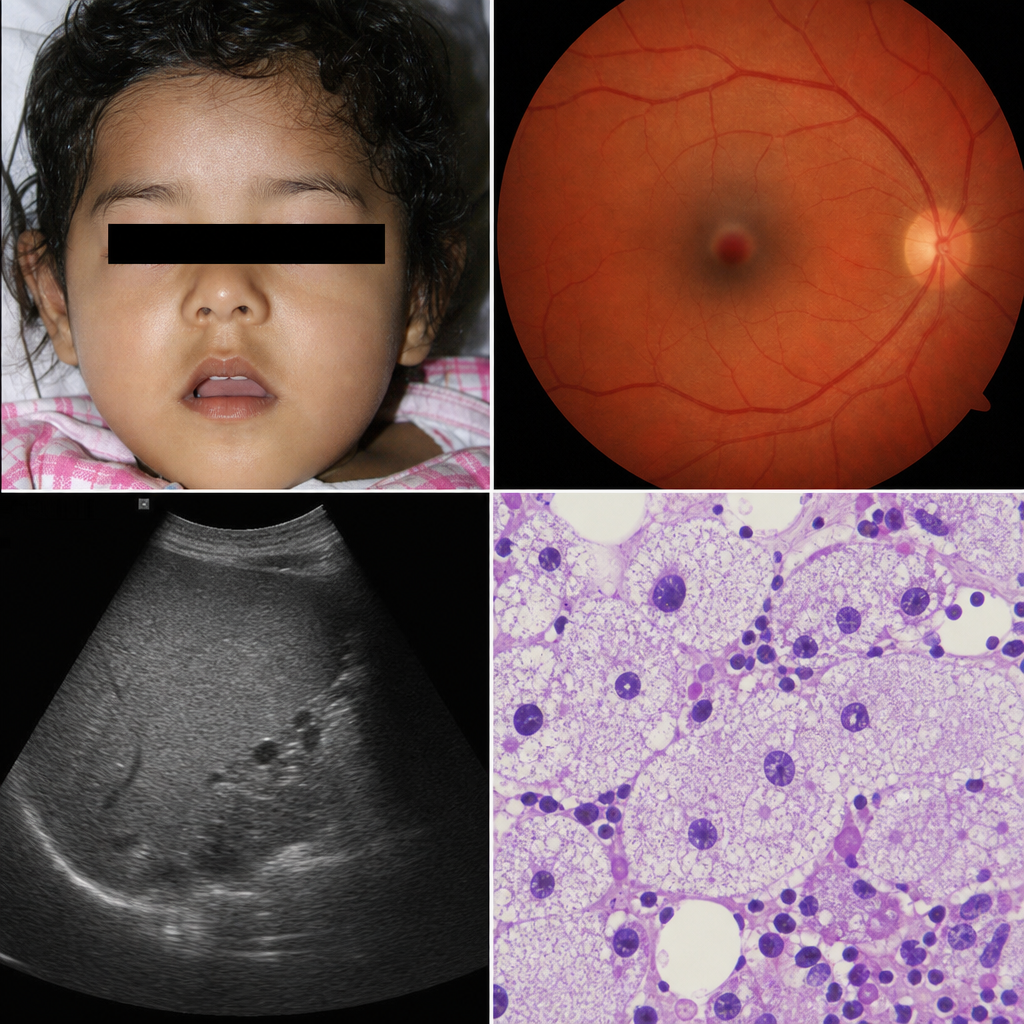
Explanation: ***β-hexosaminidase A deficiency*** - The constellation of **developmental regression** (loss of neck control, inability to roll over), **hypotonia**, **exaggerated startle response**, **cherry-red macular spots**, and **Ashkenazi Jewish descent** is classic for **Tay-Sachs disease**, which is caused by a deficiency in β-hexosaminidase A. - The patient's seizures ("unresponsiveness with a blank stare and fluttering of the eyelids") and **hyperreflexia** (3+ deep tendon reflexes, extensor plantar response) are also consistent with the progressive neurodegeneration seen in Tay-Sachs disease. *Sphingomyelinase deficiency* - This deficiency causes **Niemann-Pick disease**, which can also present with **developmental regression**, **hypotonia**, and **cherry-red macular spots**. - However, Niemann-Pick disease typically involves **hepatosplenomegaly** and **pulmonary involvement**, which are not mentioned in this patient's presentation. *β-glucocerebrosidase deficiency* - This deficiency leads to **Gaucher disease**, characterized by **hepatosplenomegaly**, **bone crises**, and cytopenias. - While some forms can have neurological symptoms, the classic cherry-red spot and pronounced developmental regression as described are not typical of Gaucher disease. *α-galactosidase A deficiency* - This deficiency causes **Fabry disease**, which is an **X-linked lysosomal storage disorder** presenting with **neuropathic pain**, **angiokeratomas**, **renal disease**, and **cardiac involvement** in adolescence or adulthood. - It does not present with infantile neurodegeneration or cherry-red spots. *ATP-binding cassette transporter mutation* - Mutations in ABC transporters can lead to various disorders, such as **adrenoleukodystrophy** (deficiency in VLCFA transport) or **cystic fibrosis**. - These conditions do not present with the specific combination of symptoms, especially the cherry-red macula and profound developmental regression, seen in this infant.
Explanation: ***Low serum ceruloplasmin concentration*** - This patient presents with a constellation of symptoms including neurological (difficulty walking, clumsy hands, slurred speech, unsteady gait), hepatic (father died of esophageal varices at an early age, hepatosplenomegaly, scleral icterus), and psychiatric (sadness, slurred and monotonous speech) manifestations, all suggestive of **Wilson's disease**. - **Wilson's disease** is an autosomal recessive disorder of copper metabolism leading to copper accumulation in various organs, predominantly the **liver**, **brain**, and **cornea**. **Low serum ceruloplasmin** is a hallmark biochemical finding, as ceruloplasmin is a copper-carrying protein, and its synthesis or copper incorporation is defective. *Increased number of CAG repeats* - An increased number of **CAG trinucleotide repeats** is characteristic of **Huntington's disease**. - While Huntington's disease causes neurological and psychiatric symptoms, it does not typically involve significant **liver disease** or scleral icterus, which are prominent features in this patient's presentation. *Oligoclonal bands on CSF analysis* - **Oligoclonal bands** in the **cerebrospinal fluid (CSF)** are a key diagnostic finding for **multiple sclerosis**. - Multiple sclerosis presents with neurological deficits, but it does not account for the prominent liver involvement (scleral icterus, hepatosplenomegaly, family history of varices) seen in this case. *Ventriculomegaly on CT scan of the brain* - **Ventriculomegaly** on a CT scan of the brain can be seen in various conditions, including **hydrocephalus** or **cerebral atrophy**. - While some neurological degenerative diseases can lead to cerebral atrophy and resulting ventriculomegaly, it's a non-specific finding and doesn't explain the patient's severe **hepatic involvement** with scleral icterus and hepatosplenomegaly. *Increased transferrin saturation* - **Increased transferrin saturation** is a laboratory finding indicative of **hemochromatosis**, a disorder of iron metabolism leading to iron overload. - While hemochromatosis can cause liver disease and neurological symptoms, the combination of **scleral icterus**, the specific neurological presentation, and the strong family history of early liver disease in this context points much more strongly towards **Wilson's disease** rather than hemochromatosis.
Explanation: ***ApoC-II*** - **ApoC-II** is an apolipoprotein found on HDL that serves as an **activator for lipoprotein lipase (LPL)**, which is the enzyme responsible for hydrolyzing triglycerides in VLDL. - The transfer of ApoC-II from HDL to VLDL enables the VLDL particles to be substrates for LPL, leading to the hydrolysis of their **triglyceride content** into free fatty acids. *Apo-A1* - **ApoA-I** is the primary apolipoprotein of HDL and is crucial for the activation of **lecithin-cholesterol acyltransferase (LCAT)**, an enzyme involved in cholesterol esterification. - While essential for HDL function and reverse cholesterol transport, ApoA-I does not directly activate triglyceride hydrolysis by lipoprotein lipase. *ApoE* - **ApoE** is an apolipoprotein important for the **uptake of chylomicron remnants and VLDL remnants** by the liver, binding to LDL receptors and LRP (LDL receptor-related protein). - It plays a role in lipoprotein metabolism but is not directly involved in activating lipoprotein lipase for triglyceride hydrolysis. *Lipoprotein lipase* - **Lipoprotein lipase (LPL)** is the enzyme that hydrolyzes triglycerides in VLDL and chylomicrons into free fatty acids and glycerol. - However, LPL is located on the **endothelial surface of capillaries**, not transferred from HDL to VLDL; rather, ApoC-II on HDL activates LPL. *ApoB-100* - **ApoB-100** is the main structural protein of VLDL, intermediate-density lipoprotein (IDL), and LDL, and it is essential for the **assembly and secretion of VLDL** from the liver. - While it remains on the VLDL particle throughout its metabolism, it does not have the function of activating triglyceride hydrolysis.
Explanation: ***Acyl-CoA dehydrogenase*** - This patient presents with **hypoglycemia** (44 mg/dL) and **absent ketone bodies** after prolonged fasting, along with elevated **liver transaminases** and **hepatosplenomegaly**, which are classic signs of a **fatty acid oxidation disorder**. - A deficiency in **acyl-CoA dehydrogenase**, particularly **medium-chain acyl-CoA dehydrogenase (MCAD)**, prevents adequate fatty acid breakdown for energy and ketone production, leading to **hypoketotic hypoglycemia** during periods of fasting. *α-glucosidase* - A deficiency in **α-glucosidase** (Pompe disease) leads to the accumulation of **glycogen** in lysosomes, primarily affecting muscles, heart, and liver. - While it can cause hepatomegaly and muscle weakness, it typically presents with **cardiomyopathy** and does not directly cause hypoketotic hypoglycemia. *Glucose-6-phosphatase* - A deficiency in **glucose-6-phosphatase** (Von Gierke disease) is a type of **glycogen storage disease** characterized by severe **fasting hypoglycemia with lactic acidosis**, **massive hepatomegaly**, and **hyperlipidemia**. - Unlike fatty acid oxidation disorders, Von Gierke disease typically presents with **lactic acidosis** as the predominant metabolic derangement, and patients often have a **doll-like face** and **growth retardation** from chronic presentation. *Acetyl-CoA carboxylase* - **Acetyl-CoA carboxylase** is a key enzyme in **fatty acid synthesis**, not fatty acid oxidation. - A deficiency would primarily impair the body's ability to synthesize fatty acids, which is not consistent with the hypoketotic hypoglycemia observed here. *Nicotinic acid* - **Nicotinic acid** (niacin or vitamin B3) is a precursor to **NAD+** and **NADP+**, coenzymes involved in various metabolic reactions, including fatty acid synthesis and breakdown. - While a deficiency (pellagra) can cause dermatitis, diarrhea, and dementia, it does not directly lead to **hypoketotic hypoglycemia** or fatty liver disease.
Explanation: ***Wilson disease*** - The combination of **neuropsychiatric symptoms** (depression, irritability, personality changes, gait disturbances), **liver disease** (jaundice, hepatomegaly, elevated aminotransferases, hyperbilirubinemia), and **Kayser-Fleischer rings** in the eyes is pathognomonic for Wilson disease. - **Decreased serum ceruloplasmin** levels further confirm the diagnosis, as ceruloplasmin is the main copper-carrying protein in the blood, and its deficiency leads to copper accumulation. *Primary sclerosing cholangitis* - Characterized by inflammation and fibrosis of the **bile ducts**, leading to cholestasis and can be associated with inflammatory bowel disease, which is not mentioned here. - While it causes jaundice and elevated liver enzymes, it does not typically present with the neurological or psychiatric symptoms, or **Kayser-Fleischer rings** seen in Wilson disease. *Hemochromatosis* - This disorder involves excessive **iron accumulation** in the body, leading to symptoms like fatigue, joint pain, impotence, and liver damage (cirrhosis, hepatomegaly). - The patient's **normal iron levels** and the absence of classic bronze skin pigmentation, along with the presence of Kayser-Fleischer rings and neuropsychiatric symptoms, rule out hemochromatosis. *Nonalcoholic fatty liver disease* - Primarily associated with **metabolic syndrome** (obesity, diabetes, hyperlipidemia) and is characterized by fat accumulation in the liver. - While it can cause hepatomegaly and elevated liver enzymes, it does not typically manifest with neurological or psychiatric symptoms, nor **Kayser-Fleischer rings**, and the patient describes a balanced diet. *Autoimmune hepatitis* - Involves **immune-mediated inflammation of the liver** and can present with elevated aminotransferases, hyperbilirubinemia, and hepatomegaly, often with positive autoantibodies (e.g., ANA, anti-smooth muscle antibodies). - The patient's **negative ANA** and the presence of **Kayser-Fleischer rings** and prominent neuropsychiatric symptoms are not characteristic of autoimmune hepatitis.
Explanation: ***↑ NADH/NAD+; AST:ALT ≥ 2:1; β-oxidation ↓; β-hydroxybutyrate ↑; lactic acid ↑*** - **Alcohol metabolism** increases the **NADH/NAD+ ratio**, diverting substrates to lipid synthesis (leading to fatty liver) and inhibiting **β-oxidation**. - The elevated NADH also promotes **lactic acid** and **β-hydroxybutyrate** formation, while the **AST:ALT ratio ≥ 2:1** is characteristic of **alcoholic liver disease**, often due to mitochondrial damage and pyridoxal phosphate deficiency. *↑ NADH/NAD+; ALT:AST ≥ 2:1; β-oxidation ↓; β-hydroxybutyrate ↓; lactic acid ↑* - While a high **NADH/NAD+ ratio** and **lactic acid ↑** are consistent with alcohol metabolism, the **ALT:AST ≥ 2:1** ratio is more commonly seen in **non-alcoholic liver diseases**, and **β-hydroxybutyrate ↓** is incorrect as it should be elevated. - **β-hydroxybutyrate** is increased in alcoholic ketoacidosis due to altered redox state, not decreased. *↑ NAD+/NADH; AST:ALT ≥ 2:1; β-oxidation ↑; β-hydroxybutyrate ↓; lactic acid ↓* - This option incorrectly states an **↑ NAD+/NADH ratio**, when alcohol metabolism actually increases **NADH**. - **β-oxidation** is inhibited, not increased, and both **β-hydroxybutyrate** and **lactic acid** would be elevated. *↑ NADH/NAD+; ALT:AST ≥ 2:1; β-oxidation ↓; β-hydroxybutyrate ↓; lactic acid ↓* - While **↑ NADH/NAD+** and **β-oxidation ↓** are correct, the **ALT:AST ≥ 2:1** ratio is atypical for alcoholic liver disease where AST is usually higher. - Both **β-hydroxybutyrate** and **lactic acid** should be elevated due to the increased NADH, not decreased. *↑ NAD+/NADH; ALT:AST ≥ 2:1; β-oxidation ↑; β-hydroxybutyrate, no change; lactic acid ↓* - This option is incorrect as **alcohol metabolism** increases **NADH**, not NAD+, and inhibits **β-oxidation**. - **β-hydroxybutyrate** and **lactic acid** are typically elevated, not unchanged or decreased.
Explanation: ***Bile acid production*** - The patient has high **LDL-cholesterol** (190 mg/dL) and total cholesterol (250 mg/dL), indicating **hypercholesterolemia**. The liver attempts to eliminate excess cholesterol by converting it into **bile acids**. - This process is a primary mechanism for cholesterol excretion, especially when intracellular cholesterol levels are high. *Surface LDL-receptors* - High intracellular cholesterol levels typically lead to a **downregulation** of **LDL receptors** on the hepatocyte surface to prevent further cholesterol uptake. - This patient's high LDL-C suggests impaired LDL receptor function or insufficient numbers, contributing to elevated circulating LDL. *HMG-CoA reductase activity* - **HMG-CoA reductase** is the rate-limiting enzyme in cholesterol synthesis. High intracellular cholesterol levels, as inferred from hypercholesterolemia, would normally **inhibit** this enzyme to reduce endogenous cholesterol production. - An increase in its activity would worsen hypercholesterolemia. *Scavenger receptors* - **Scavenger receptors** primarily bind and internalize **modified LDL particles**, such as oxidized LDL, which are typically associated with atherogenesis. - While they contribute to cholesterol uptake, their activity doesn't directly increase in response to high *unmodified* LDL levels in the same homeostatic regulatory manner as LDL receptors or bile acid production. *Cholesterol degradation* - While cholesterol can be degraded, the primary pathway for its removal from the body is its conversion to **bile acids**, not direct metabolic degradation into smaller non-steroid molecules. - The liver converts cholesterol to bile acids, which are then excreted via bile, rather than "degrading" the cholesterol molecule itself.
Explanation: ***Beta-oxidation*** - Zellweger syndrome is a **peroxisomal disorder** where the peroxisomes are either absent or dysfunctional. - Peroxisomes are primarily responsible for the **beta-oxidation** of very long chain fatty acids (VLCFAs, >C22) and branched-chain fatty acids. - Mitochondria handle shorter chain fatty acids, but **only peroxisomes can initiate breakdown of VLCFAs**, which explains why these fatty acids accumulate in the blood when peroxisomes are defective. *Transcription* - **Transcription** is the process of synthesizing RNA from a DNA template in the nucleus. - This process is not directly affected in Zellweger syndrome, which involves organelle dysfunction, not gene expression at the mRNA level. *Phosphorylation* - **Phosphorylation** is the addition of a phosphate group to a molecule, a common post-translational modification or energy transfer mechanism. - While essential for many metabolic pathways, it is not the primary enzymatic process deficient in peroxisomes in Zellweger syndrome. *Translation* - **Translation** is the process by which ribosomes synthesize proteins from mRNA in the cytoplasm. - This cellular process is not the direct cause of the accumulation of very long chain fatty acids in Zellweger syndrome. *Ubiquitination* - **Ubiquitination** is a process that tags proteins for degradation by the proteasome. - While critical for protein turnover, it is not the deficient metabolic pathway within peroxisomes in Zellweger syndrome.
Explanation: ***5-α reductase deficiency*** - This patient presents with **primary amenorrhea**, **clitoromegaly**, **facial hair**, **coarse pubic hair extending to the thighs**, the absence of a **uterus and ovaries**, and the presence of **inguinal testes**. This constellation of findings is classic for **5-α reductase deficiency**. - In individuals with **46,XY karyotype**, 5-α reductase converts testosterone to **dihydrotestosterone (DHT)**, which is essential for external male genital development. A deficiency leads to ambiguous or feminized external genitalia at birth that often undergo **virilization at puberty** (due to a surge in testosterone), while internal male structures (testes and epididymis) develop normally, and Wolffian ducts differentiate. *Sex chromosome mosaicism* - This refers to the presence of two or more cell lines with different chromosomal constitutions within the same individual, e.g., **45,X/46,XX** or **46,XY/45,X**. - While it can cause diverse reproductive issues like ambiguous genitalia or primary amenorrhea, it doesn't typically present with the specific combination of **masculinization at puberty** with **inguinal testes** and absence of uterus/ovaries as seen here. *Complete androgen insensitivity* - In **complete androgen insensitivity syndrome (CAIS)**, individuals with a **46,XY karyotype** have normal or elevated testosterone levels but their cells cannot respond to androgens. - This leads to **female external genitalia**, a **blind-ending vagina**, absence of a uterus and ovaries, and **inguinal or abdominal testes**. However, these patients develop **breast tissue** (due to peripheral conversion of androgens to estrogens) and **do not develop pubic hair or facial hair** due to androgen insensitivity, which contrasts with this patient's findings. *Aromatase deficiency* - **Aromatase deficiency** prevents the conversion of androgens to estrogens. In a **46,XX** individual, this leads to **virilization of female external genitalia** at birth, primary amenorrhea, and lack of breast development, but they would have a uterus and ovaries. - In a **46,XY** individual, it would primarily affect **bone maturation** and lead to tall stature due to unfused epiphyses, but not the constellation of features described here. *Sex chromosome monosomy* - The most common sex chromosome monosomy is **45,X (Turner syndrome)**, which affects females. - Individuals with Turner syndrome typically present with **primary amenorrhea**, **streaked gonads** (instead of testes), **lack of pubic hair** in some cases, **webbed neck**, **short stature**, and **cardiac anomalies**, none of which are consistent with the virilization and presence of testes noted in this case.
Explanation: ***Acyl-CoA dehydrogenase*** - The combination of **hypoglycemia** with **low ketones** in a setting of prolonged vomiting (stress) strongly suggests a **disorder of fatty acid oxidation**. These disorders impair the body's ability to produce ketones when glucose stores are low. - **Acyl-CoA dehydrogenase** is a key enzyme in the mitochondrial β-oxidation of fatty acids. A deficiency prevents the breakdown of fatty acids into acetyl-CoA, which is necessary for ketogenesis and to fuel gluconeogenesis indirectly. *HMG-CoA reductase* - This enzyme is involved in **cholesterol synthesis**, not directly in fatty acid oxidation or ketone body formation from fatty acids. - Deficiency would primarily affect cholesterol levels and not typically present with the described metabolic crisis of hypoglycemia and low ketones. *Glycerol kinase* - **Glycerol kinase** phosphorylates glycerol, a product of triglyceride hydrolysis, allowing it to enter glycolysis or gluconeogenesis. - A deficiency would impair glycerol utilization but would not directly impact fatty acid oxidation pathways that are critical for ketone production during hypoglycemia. *Acetyl-CoA carboxylase* - **Acetyl-CoA carboxylase** is the rate-limiting enzyme in **fatty acid synthesis**, not degradation. - A deficiency would lead to impaired fatty acid synthesis, which is the opposite of the metabolic problem described (impaired breakdown of fatty acids). *Glycerol-3-phosphate dehydrogenase* - This enzyme is involved in the conversion of **dihydroxyacetone phosphate (DHAP)** to **glycerol-3-phosphate** in both triglyceride synthesis and the glycerol phosphate shuttle. - While related to lipid metabolism, a deficiency would not directly cause the severe hypoglycemia and hypoketosis seen with a fatty acid oxidation defect.
Explanation: ***7-dehydrocholesterol*** - The patient's symptoms (bone pain, weakness, fractures) and lab results (decreased calcium and phosphate, increased alkaline phosphatase) suggest **osteomalacia** due to **vitamin D deficiency**. - **7-dehydrocholesterol** is a precursor in the skin that is converted to **cholecalciferol (vitamin D3)** upon exposure to UV radiation. *Beta-carotene* - **Beta-carotene** is a precursor to **vitamin A**, which is important for vision, immune function, and cell growth, but not directly involved in calcium and phosphate metabolism. - Deficiency of vitamin A would present with different symptoms such as **night blindness** and **xerophthalmia**. *Alpha-tocopherol* - **Alpha-tocopherol** is a form of **vitamin E**, a fat-soluble antioxidant. - Vitamin E deficiency is rare but can lead to **neurological symptoms** and **hemolytic anemia**, not bone disorders. *Calcium-sensing receptor* - The **calcium-sensing receptor (CaSR)** regulates parathyroid hormone secretion and renal calcium reabsorption in response to extracellular calcium levels. - While crucial for calcium homeostasis, it is not a substance that is "synthesized from" the options provided; rather, it is a **protein receptor**. *Glutamyl carboxylase* - **Glutamyl carboxylase** is an enzyme that catalyzes the carboxylation of glutamic acid residues in proteins, a crucial step for the activation of **vitamin K-dependent clotting factors** and bone proteins like osteocalcin. - Its dysfunction would primarily affect blood clotting and bone matrix formation, but it is not a precursor for vitamin D.
Explanation: ***GM2 ganglioside*** - This patient presents with classic symptoms of **Tay-Sachs disease**, an **autosomal recessive lysosomal storage disorder** common in Ashkenazi Jewish populations. Key features include **developmental regression**, **hypotonia**, an **exaggerated startle reflex**, and characteristic **cherry-red spots** on fundoscopy. - Tay-Sachs disease is caused by a deficiency of the enzyme **hexosaminidase A**, leading to the accumulation of **GM2 ganglioside** in neuronal lysosomes. *Ceramide trihexoside* - Accumulation of **ceramide trihexoside** (also known as globotriaosylceramide, or Gb3) is characteristic of **Fabry disease**, an X-linked lysosomal storage disorder. - Symptoms of Fabry disease include **neuropathic pain**, **angiokeratomas**, **corneal opacities**, and **renal and cardiac complications**, which are not seen here. *Sphingomyelin* - Accumulation of **sphingomyelin** occurs in **Niemann-Pick disease**, caused by a deficiency of **sphingomyelinase**. - While Niemann-Pick disease can present with **developmental regression** and **cherry-red spots** (Type A), it typically also involves significant **hepatosplenomegaly**, which is absent in this patient. *Glucocerebroside* - **Glucocerebroside** accumulates in **Gaucher disease** due to a deficiency of **glucocerebrosidase**. - Gaucher disease is characterized by **hepatosplenomegaly**, **bone crises**, and **pancytopenia**, not the neurological regression and cherry-red spots seen in this patient. *Galactocerebroside* - Accumulation of **galactocerebroside** is seen in **Krabbe disease** (globoid cell leukodystrophy), an autosomal recessive lysosomal storage disorder. - Krabbe disease presents with **irritability, developmental regression, hypotonia, and optic atrophy**, but typically does not feature cherry-red spots. Peripheral neuropathy and white matter abnormalities are prominent.
Explanation: ***11-deoxycorticosterone*** - This clinical picture describes **11-beta-hydroxylase deficiency**, which blocks the conversion of 11-deoxycorticosterone to corticosterone and 11-deoxycortisol to cortisol. - The accumulation of **11-deoxycorticosterone** acts as a mineralocorticoid, causing **hypertension** and **low renin/aldosterone levels**. *17-hydroxyprogesterone* - This is typically elevated in **21-hydroxylase deficiency**, which presents with **virilization** (due to increased testosterone) but usually causes **hypotension** (due to aldosterone deficiency), not hypertension. - While testosterone is high, the low aldosterone and hypertension point away from 21-hydroxylase deficiency. *Progesterone* - Elevation of progesterone can occur in **3-beta-hydroxysteroid dehydrogenase deficiency**, which would also lead to virilization but typically causes **salt wasting** and **hypotension**, not hypertension. - It is not a primary marker for the specific type of hypertension seen here. *Corticosterone* - In 11-beta-hydroxylase deficiency, the enzyme responsible for converting 11-deoxycorticosterone to corticosterone is deficient, so **corticosterone levels would be low**, not elevated. - Corticosterone is a precursor to aldosterone, and its reduced synthesis contributes to the hormonal imbalance. *Androstenedione* - While **androstenedione** would be elevated (as it is a precursor to testosterone, which is high), it is not the primary direct cause of the **hypertension** in this specific adrenal enzyme deficiency. - The direct cause of hypertension is the accumulation of mineralocorticoid precursors like **11-deoxycorticosterone**.
Explanation: ***11-deoxycorticosterone to corticosterone*** - This reaction is catalyzed by **11β-hydroxylase**. Deficiency of this enzyme (second most common cause of congenital adrenal hyperplasia) leads to the clinical triad seen in this patient: 1. **Virilization** in XX individuals (clitoral enlargement, labioscrotal fusion) due to shunting of steroid precursors toward **androgen synthesis** 2. **Hypertension** due to accumulation of **11-deoxycorticosterone (DOC)**, which has potent mineralocorticoid activity 3. **Hypokalemia and hypernatremia** resulting from the mineralocorticoid excess caused by accumulated DOC - The 46,XX karyotype with ambiguous genitalia confirms this is a disorder of **androgen excess** affecting a genetic female - 11β-hydroxylase deficiency accounts for approximately 5-8% of CAH cases *Progesterone to 11-deoxycorticosterone* - This reaction is catalyzed by **21-hydroxylase** (most common cause of CAH, ~90-95% of cases) - However, 21-hydroxylase deficiency typically presents with **salt-wasting** (hypotension, hyponatremia, hyperkalemia) in 75% of cases, or simple virilizing form with normal blood pressure and electrolytes in 25% of cases - The **hypertension with hypokalemia and hypernatremia** in this case is NOT consistent with 21-hydroxylase deficiency, which causes **decreased** mineralocorticoid production - While virilization occurs in 21-hydroxylase deficiency, the cardiovascular and electrolyte findings rule this out *Progesterone to 17-hydroxyprogesterone* - This reaction is catalyzed by **17α-hydroxylase** - Deficiency leads to **decreased androgens and estrogens**, causing **undervirilization** in XY individuals and absent secondary sexual characteristics - Would cause hypertension due to mineralocorticoid excess, but **cannot explain the virilization** seen in this XX patient - The clinical picture of masculinization directly contradicts 17α-hydroxylase deficiency *Androstenedione to estrone* - This reaction is catalyzed by **aromatase** - Aromatase deficiency causes accumulation of androgens and deficiency of estrogens - While this could explain virilization, it **does not cause hypertension** or the electrolyte abnormalities (hypernatremia, hypokalemia) seen in this patient - Aromatase deficiency would present with virilization but normal blood pressure *Testosterone to dihydrotestosterone* - This conversion is mediated by **5α-reductase** - Deficiency causes **undervirilization** in XY individuals with ambiguous genitalia at birth - **Would not cause virilization** in an XX individual, as this enzyme affects androgen potency rather than androgen production - Does not explain the hypertension or electrolyte abnormalities - 5α-reductase deficiency presents in genetic males (46,XY), not genetic females (46,XX)
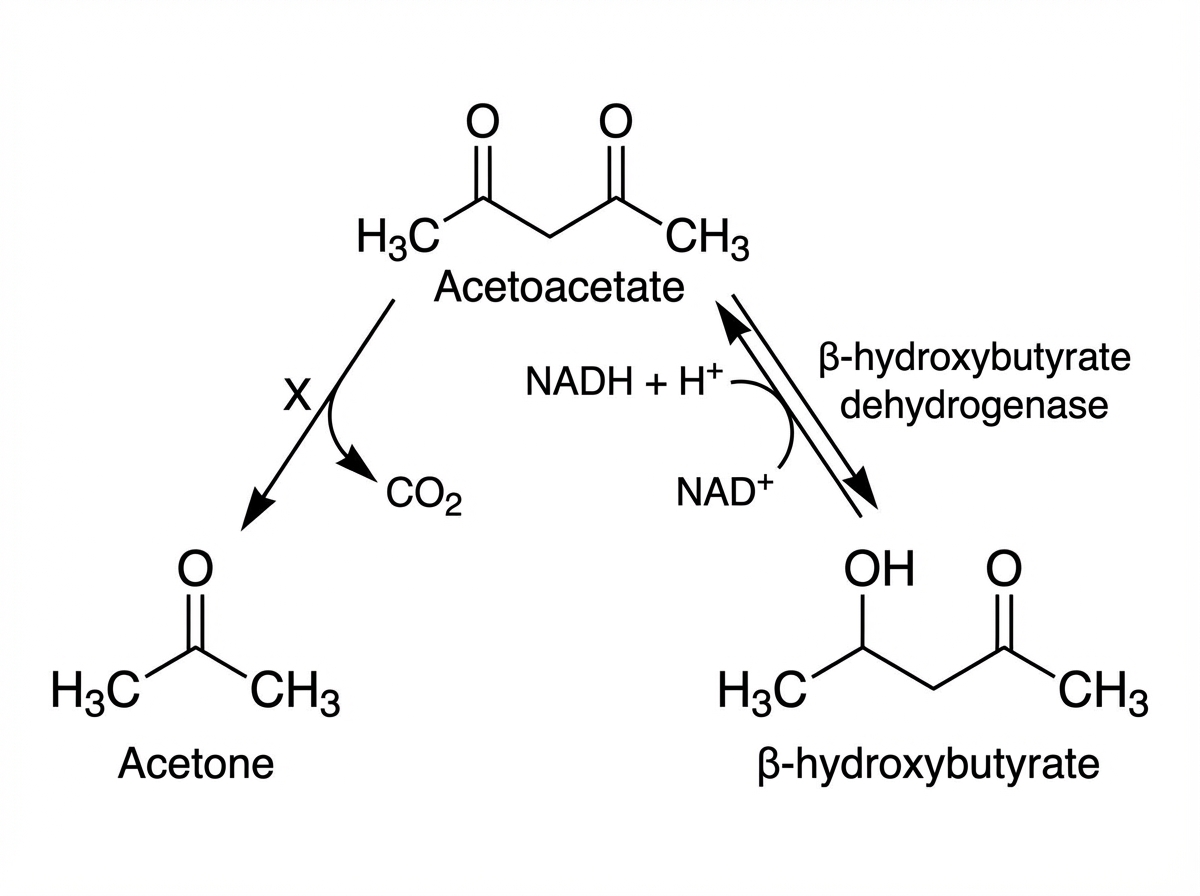
Explanation: ***Increased acetyl CoA levels*** - This patient presents with **alcoholic ketoacidosis (AKA)**, and the underlying biochemical mechanism is the accumulation of **acetyl CoA** that is shunted into ketone body synthesis. - In AKA, starvation depletes glycogen stores and **oxaloacetate** (needed for the TCA cycle). Simultaneously, alcohol metabolism increases the **NADH/NAD+ ratio**, which further impairs gluconeogenesis and reduces oxaloacetate availability. - Enhanced lipolysis (due to low insulin and high counter-regulatory hormones) produces large amounts of fatty acids, which undergo β-oxidation to generate **acetyl CoA**. - With insufficient oxaloacetate to enter the TCA cycle, acetyl CoA accumulates and is diverted to **ketogenesis** (producing acetoacetate, β-hydroxybutyrate, and acetone). - The **fruity breath** is from acetone, and the metabolic acidosis causes the patient's symptoms (abdominal pain, nausea, tachycardia, tachypnea). *Starvation* - While **starvation** is a critical **precipitating factor** in AKA (it depletes glycogen and triggers lipolysis), it is not the underlying biochemical mechanism itself. - Starvation creates the metabolic conditions (low insulin, depleted oxaloacetate) that lead to the accumulation of acetyl CoA and subsequent ketogenesis, but the question asks for the mechanism, not the trigger. *Inadequate insulin production* - **Inadequate insulin production** is the primary defect in **diabetic ketoacidosis (DKA)**, which is ruled out by this patient's normal blood glucose (76 mg/dL). - In AKA, insulin levels are typically low (due to starvation), but this is secondary to metabolic stress rather than a primary pancreatic failure. The key mechanism is still the acetyl CoA accumulation and shunting to ketogenesis. *Increased osmolal gap* - An **increased osmolal gap** suggests unmeasured osmolytes, typically seen with toxic alcohol ingestions (methanol, ethylene glycol) or severe lactic acidosis. - While ethanol itself can transiently increase the osmolal gap, this is not the mechanism explaining the ketoacidosis, fruity breath, and clinical presentation in this case. *Thiamine deficiency* - **Thiamine deficiency** is common in chronic alcoholics and causes Wernicke-Korsakoff syndrome and other neurological complications. - Thiamine is a cofactor for pyruvate dehydrogenase and α-ketoglutarate dehydrogenase, but its deficiency does not directly cause the ketoacidosis seen here, which results from altered lipid metabolism and acetyl CoA accumulation.
Explanation: ***Stimulation of lipolysis*** - The patient's symptoms (diarrhea, weight loss, necrolytic migratory erythema, and a pancreatic mass) are highly suggestive of a **glucagonoma**. - **Glucagon** is a catabolic hormone that **stimulates gluconeogenesis and glycogenolysis** to raise blood glucose, and it also promotes **lipolysis** and **ketogenesis**. *Activation of glycogen synthase* - **Glycogen synthase** is activated by **insulin**, which promotes glycogen synthesis, storing glucose. - Glucagon opposes the action of insulin; thus, it would **inactivate glycogen synthase**, not activate it. *Inhibition of gluconeogenesis* - **Glucagon's primary role** is to increase blood glucose levels, and it does so by **stimulating gluconeogenesis and glycogenolysis**. - **Inhibition of gluconeogenesis** would occur with insulin, not glucagon. *Inhibition of insulin secretion* - While glucagon can have complex effects on insulin, its primary metabolic actions are independent of direct inhibition of insulin secretion. - Pancreatic somatostatin inhibits both insulin and glucagon secretion. *Inhibition of acetone production* - Glucagon promotes **ketogenesis**, which can lead to the production of **ketone bodies**, including acetone, especially in states of insulin deficiency. - Therefore, glucagon would **stimulate**, not inhibit, processes that can lead to acetone production.
Explanation: ***Pernicious anemia*** - The combination of **neurological symptoms** (paresthesias, decreased proprioception), **anemia symptoms** (pallor, fatigue), **megaloblastic anemia** on blood smear (megaloblasts, hypersegmented neutrophils), and the specific Schilling test results (vitamin B12 malabsorption corrected by added **intrinsic factor**) is diagnostic for pernicious anemia. - Pernicious anemia is an autoimmune condition targeting **gastric parietal cells** or **intrinsic factor** itself, leading to **vitamin B12 deficiency** due to impaired absorption. *Bacterial overgrowth* - **Bacterial overgrowth in the small intestine** can consume vitamin B12, leading to deficiency, but the Schilling test would show improvement with **antibiotics**, not intrinsic factor. - While it can cause B12 deficiency and megaloblastic anemia, improvement upon adding intrinsic factor points away from this diagnosis. *Pancreatic insufficiency* - **Pancreatic enzymes** are required to cleave vitamin B12 from its binding proteins, but the **Schilling test** would show improvement with **pancreatic enzyme supplements**, not intrinsic factor. - While pancreatic insufficiency can lead to B12 malabsorption, the specific Schillings test results rule it out. *Insufficient vitamin intake* - **Insufficient dietary intake** of vitamin B12 would lead to B12 deficiency, but in such a case, the **Schilling test** would show normal absorption of radiolabeled B12 even without intrinsic factor in the second stage. - The initial B12 malabsorption indicates an absorption problem, not solely a dietary lack. *Folate deficiency* - **Folate deficiency** also causes **megaloblastic anemia** and can present with fatigue and pallor, but it does **not cause neurological symptoms** like paresthesias or proprioception deficits. - The Schilling test specifically evaluates **vitamin B12 absorption**, not folate levels, so it would be irrelevant for diagnosing pure folate deficiency.
Explanation: ***Elevated serum low-density lipoprotein*** - The patient's symptoms (fatigue, generalized weakness, constipation, weight gain despite efforts, cold intolerance implied by dry skin, bradycardia, and edema) are highly suggestive of **hypothyroidism**. - **Hypothyroidism** classically leads to **hyperlipidemia**, specifically elevated **LDL cholesterol**, due to decreased catabolism of cholesterol. *Decreased serum creatine kinase* - **Hypothyroidism** typically causes **myopathy**, which can manifest as elevated, not decreased, serum **creatine kinase** levels. - Muscle weakness and fatigue in hypothyroidism are often associated with muscle damage and elevated CK. *Hyperglycemia* - While hypothyroidism can impact glucose metabolism, it more commonly leads to **insulin resistance** and can contribute to **hyperglycemia**, but it is not a direct or consistent consequence, and other factors are often more significant. - However, hypothyroidism is not primarily characterized by hyperglycemia as a direct pathognomonic finding. *Decreased serum creatinine* - **Hypothyroidism** is typically associated with **decreased glomerular filtration rate (GFR)**, which can lead to **increased serum creatinine**, not decreased. - A decreased GFR would imply reduced clearance of creatinine, thus elevating its serum concentration. *Decreased plasma homocysteine concentrations* - **Hypothyroidism** is linked to **elevated plasma homocysteine** concentrations, likely due to impaired metabolism (e.g., reduced activity of methionine synthase). - High homocysteine levels are a risk factor for cardiovascular disease.
Explanation: ***LDL receptor*** - The patient's presentation with **xanthomas** (yellow bumps on eyelids and ankles), a very high **LDL level (300 mg/dL)**, and a strong family history of **early myocardial infarctions** and hypercholesterolemia in both parents is characteristic of **familial hypercholesterolemia**. - Familial hypercholesterolemia is most commonly caused by a defective or deficient **LDL receptor**, which impairs the uptake of LDL from the blood, leading to significantly elevated LDL levels. *Apoprotein B48* - **Apoprotein B48** is primarily found on **chylomicrons** and is essential for their formation and secretion from the intestines. - A defect in apoB48 would lead to **abetalipoproteinemia**, characterized by very low levels of chylomicrons, VLDL, and LDL, and would present with fat malabsorption and neurological symptoms, which is inconsistent with this patient's findings. *Lipoprotein lipase* - **Lipoprotein lipase (LPL)** is an enzyme responsible for hydrolyzing triglycerides in circulating **chylomicrons** and **VLDLs**. - A deficiency in LPL would cause severe **hypertriglyceridemia** and the accumulation of chylomicrons, leading to eruptive xanthomas and pancreatitis, rather than isolated high LDL and tendinous xanthomas. *VLDL receptor* - The **VLDL receptor** is involved in the clearance of VLDL remnants and chylomicrons, especially in peripheral tissues. - While it plays a role in lipid metabolism, its primary role in familial hypercholesterolemia, which is characterized by profoundly elevated LDL, is less significant than the **LDL receptor**. *Apoprotein E* - **Apoprotein E** is crucial for the uptake of **chylomicron remnants** and **VLDL remnants** by the liver. - Defects in apoE are associated with **Type III hyperlipoproteinemia (familial dysbetalipoproteinemia)**, characterized by elevated levels of chylomicron and VLDL remnants, and typically presents with palmar xanthomas and tuberous xanthomas, which is different from the presentation here.
Explanation: ***Peroxisome*** - The clinical description of **seizures**, poor muscle tone, **corneal opacities**, and **hepatomegaly** in a neonate, along with the accumulation of **very long chain fatty acids (VLCFAs)** due to impaired myelination, is characteristic of a peroxisomal disorder like **Zellweger syndrome**. - **Peroxisomes** are organelles responsible for the beta-oxidation of VLCFAs; their dysfunction leads to VLCFA accumulation. *Mitochondria* - **Mitochondrial disorders** present with a wide range of symptoms, including neurological dysfunction, but typically involve deficits in energy production, not specifically VLCFA accumulation. - While VLCFAs are also metabolized in mitochondria, the primary defect in **Zellweger spectrum disorders** lies in peroxisomal assembly or function. *Endoplasmic reticulum* - The **endoplasmic reticulum (ER)** is involved in protein synthesis and lipid metabolism, but its primary dysfunction does not typically lead to the specific accumulation of VLCFAs or the constellation of symptoms observed. - ER stress can contribute to cellular pathology, but it is not the primary site of metabolic defect in this case. *Golgi apparatus* - The **Golgi apparatus** is crucial for modifying, sorting, and packaging proteins and lipids for secretion or delivery to other organelles. - Defects in the Golgi apparatus would present with different clinical manifestations, such as glycoprotein processing errors, rather than VLCFA accumulation. *Lysosome* - **Lysosomes** are involved in the degradation of various macromolecules, and their dysfunction leads to **lysosomal storage disorders**. - While these can cause neurological symptoms and hepatomegaly, they are characterized by the accumulation of specific substrates like mucopolysaccharides or sphingolipids, not VLCFAs.
Explanation: ***Hepatocyte*** - **Hepatocytes** are the primary site of **ketone body synthesis** during fasting, starvation, or poorly controlled diabetes, producing acetoacetate and β-hydroxybutyrate from fatty acid oxidation. - However, hepatocytes **cannot utilize ketone bodies for energy** because they lack the enzyme **succinyl-CoA:3-ketoacid CoA transferase (thiophorase)**, which is essential for converting acetoacetate to acetoacetyl-CoA. - This enzymatic deficiency ensures that ketone bodies produced by the liver are exported to **peripheral tissues** (brain, muscle, kidney) for energy utilization during periods of glucose scarcity. - This represents a critical metabolic concept: the liver makes ketones for other organs but cannot use them itself. *Thrombocyte* - **Thrombocytes** (platelets) lack **mitochondria** and rely exclusively on **anaerobic glycolysis** for ATP production. - While platelets technically cannot use ketone bodies due to the absence of mitochondria, this is not the primary educational focus when discussing ketone body metabolism in biochemistry. - Platelets also cannot perform oxidative phosphorylation or utilize fatty acids. *Adipocyte* - **Adipocytes** can utilize **acetoacetate** for energy, particularly during fasting states when ketone body levels are elevated. - They possess mitochondria and the enzyme **succinyl-CoA:3-ketoacid CoA transferase**, allowing conversion of acetoacetate to acetoacetyl-CoA and subsequent entry into the citric acid cycle. *Myocyte* - **Myocytes** (cardiac and skeletal muscle) are major consumers of **ketone bodies** during prolonged fasting, starvation, or extended exercise. - The heart preferentially uses ketone bodies over glucose when available, making them highly efficient at ketone body oxidation. - Muscle cells contain all necessary enzymes to convert acetoacetate to acetyl-CoA for **oxidative phosphorylation**. *Neuron* - **Neurons** adapt to use **ketone bodies** as an alternative fuel to glucose during prolonged fasting (after 3-4 days), providing up to 60-70% of the brain's energy needs. - This metabolic flexibility is crucial for survival during starvation and is the basis for therapeutic ketogenic diets in certain neurological conditions. - Brain tissue efficiently metabolizes both acetoacetate and β-hydroxybutyrate.
Explanation: ***21-hydroxylase deficiency*** - The very high **17-OH progesterone** (230 ng/dL) is characteristic of **21-hydroxylase deficiency**, as the enzyme block causes a buildup of precursors proximal to the block. - This leads to increased shunting towards **androgen production** (**androstenedione** and **DHEAS** are elevated), explaining the severe acne, early puberty, and advanced physical development, while **cortisol** and **aldosterone** are low or normal leading to mineralocorticoid deficiency, though it's not a salt-wasting crisis in this non-classical presentation. *Constitutive activation of adenylyl cyclase* - This condition, in the context of adrenal hyperplasia, would lead to **ACTH-independent cortisol production**, not the low cortisol observed here after ACTH administration, nor the specific steroid precursor elevations. - It is associated with conditions like **primary pigmented nodular adrenocortical disease** (PPNAD) or McCune-Albright syndrome, which presents differently, primarily with Cushing features. *Leydig-cell tumor production of androgens* - While a Leydig-cell tumor would cause **precocious puberty** and elevated androgens, it would typically **suppress LH and FSH** and would not explain the specific pattern of elevated adrenal precursors like **17-OH progesterone**. - **Adrenal steroid levels** (like 17-OH progesterone, DHEA-S) would not be elevated from a testicular Leydig cell tumor. *Exposure to exogenous steroids* - Exogenous androgen exposure would lead to **suppression of endogenous androgen production** and would likely cause **adrenal suppression**, resulting in low cortisol levels, but not the elevated **17-OH progesterone** and other adrenal androgen precursors seen in this patient. - Long-term exogenous corticosteroid use causes **Cushingoid features** and adrenal suppression, not directly increased androgen production. *17α-hydroxylase deficiency* - This deficiency would lead to **low cortisol and androgens** but markedly **elevated mineralocorticoids** like deoxycorticosterone and corticosterone. - The patient's **deoxycorticosterone** is below the normal range, and **aldosterone** is normal, ruling out 17α-hydroxylase deficiency.
Explanation: ***Activates pancreatic enzyme precursors*** - The patient's history of **recurrent respiratory infections with Pseudomonas** and use of a **nebulizer/chest wall oscillation vest** strongly suggests **cystic fibrosis (CF)**. - In cystic fibrosis, **thickened secretions** can obstruct the pancreatic ducts, leading to **autodigestion of the pancreas** due to obstruction preventing the release of pancreatic enzymes. The enzyme being referred to is **trypsin**, which, when prematurely activated, activates other pancreatic enzyme precursors, leading to **pancreatitis**. *Breaks down elastin molecules* - This activity is characteristic of **elastase**, an enzyme produced by the pancreas. While elastase is involved in the overall digestive process and can be prematurely activated, its primary role is not the one alluded to in the clinical presentation, which points to **pancreatitis** from premature activation of the cascade. - Damage to elastin is more classically associated with conditions like **emphysema** (due to alpha-1 antitrypsin deficiency) rather than acute abdominal pain secondary to autodigestion. *Hydrolyzes phospholipids* - This is the function of **phospholipase**, another pancreatic enzyme. While also capable of contributing to pancreatic autodigestion if prematurely activated, it is typically activated by **trypsin**, making trypsin the primary enzyme responsible for initiating the cascade of activation. - **Phospholipase A2** acts on phospholipids, but the question describes an enzyme that *normally interacts with the brush border* before activation of the precursors begins. *Digests triglycerides* - This is the function of **pancreatic lipase**. Premature activation of lipase can contribute to the fat necrosis seen in pancreatitis. - However, lipase, like many other pancreatic enzymes, is activated by **trypsin**, which is the initial enzyme in the cascade of activation leading to autodigestion. *Activates phospholipase A2* - This describes the action of **trypsinogen turning into trypsin**, which then activates other proenzymes like **prophospholipase A2**. - While correct that trypsin activates phospholipase A2, the question asks about the primary enzyme whose *premature activation* causes the issue, which is **trypsin** itself, as it activates *multiple* pancreatic enzyme precursors, initiating a cascade.
Explanation: ***Restriction of long-chain fatty acids*** - This patient has **abetalipoproteinemia** due to the mutation in the **microsomal triglyceride transfer protein (MTP)**, causing defective chylomicron formation and severe fat malabsorption. Restricting **long-chain fatty acids (LCFAs)** minimizes the substrate for chylomicron synthesis, reducing gastrointestinal symptoms. - **Medium-chain triglycerides (MCTs)** can be supplemented as they do not require chylomicron formation for absorption, bypassing the defective MTP pathway and providing a source of energy. - Additional treatment includes **fat-soluble vitamin supplementation** (vitamins A, D, E, K) since fat malabsorption leads to deficiency of these vitamins. *Nicotinic acid supplementation* - **Nicotinic acid (niacin)** is typically used to lower **LDL cholesterol** and **triglyceride** levels in patients with **hyperlipidemia**. - It would not address the underlying issue of fat malabsorption or the inability to form chylomicrons in abetalipoproteinemia. *Pancreatic enzyme replacement* - **Pancreatic enzyme replacement therapy** is used for conditions like **cystic fibrosis** or **chronic pancreatitis**, where there is insufficient production of lipase and other digestive enzymes. - In this case, the issue is not enzyme deficiency but rather the inability to package absorbed fats into chylomicrons for transport. *Long-term antibiotic therapy* - Long-term antibiotics are primarily used to treat **chronic bacterial infections** or **small intestinal bacterial overgrowth (SIBO)**. - The patient's symptoms are due to a genetic metabolic defect, not an infection, making antibiotics ineffective for the primary condition. *Avoidance of dietary gluten* - **Gluten-free diets** are prescribed for **celiac disease**, an autoimmune condition triggered by gluten, leading to villous atrophy and malabsorption. - The patient's symptoms, low triglyceride levels, and genetic mutation point to abetalipoproteinemia, not celiac disease.
Explanation: ***It is stimulated by epinephrine*** - The protein described is likely **hormone-sensitive lipase (HSL)**, which catabolizes **triglycerides** in adipocytes to **glycerol** and **fatty acids**. - **Epinephrine** (and norepinephrine) stimulates HSL activity via a **cAMP-dependent protein kinase A (PKA)** pathway, leading to increased fatty acid release for energy. *It is inhibited by glucagon* - **Glucagon primarily acts on the liver** to promote gluconeogenesis and glycogenolysis, but it does **not directly inhibit HSL** in adipocytes. - While glucagon has a lipolytic effect, it doesn't inhibit the enzyme that releases fatty acids. *It is inhibited by acetylcholine* - **Acetylcholine** is a neurotransmitter involved in the **parasympathetic nervous system**, which generally promotes energy storage. - It does **not directly inhibit HSL**; its effects on lipid metabolism are indirect and typically involve other pathways. *It is inhibited by cortisol* - **Cortisol**, a glucocorticoid, generally **promotes lipolysis** (breakdown of fats) in certain contexts, particularly during stress to provide energy substrates. - Therefore, it would **not inhibit HSL**; rather, it often enhances its activity or provides a permissive effect for other lipolytic hormones. *It is stimulated by insulin* - **Insulin** is an **anabolic hormone** that promotes energy storage, including **lipogenesis** (fat synthesis) and inhibits lipolysis. - Insulin **inhibits HSL activity** by activating phosphodiesterase, which reduces cAMP levels, thus deactivating PKA and preventing HSL phosphorylation.
Explanation: ***Ammonia*** - An elevated **ammonia** level in the context of hypoglycemia and muscle weakness in a child suggests an **inborn error of metabolism** that affects the **urea cycle** or **organic acidemia**, not primarily the carnitine shuttle. - Urea cycle disorders lead to **hyperammonemia**, which can cause neurological symptoms, fatigue, and muscle weakness, often exacerbated by catabolic states. - This finding would **strongly suggest a different diagnosis** from a carnitine shuttle defect. *Creatine kinase* - **Creatine kinase (CK)** levels are typically **elevated in carnitine shuttle defects** due to muscle damage and myopathy. - Elevated CK would **support** the suspected diagnosis of a carnitine shuttle defect rather than suggest an alternative. - This is an **expected finding** in fatty acid oxidation disorders. *Alanine aminotransferase* - **Alanine aminotransferase (ALT)** can be elevated in **carnitine shuttle defects** due to liver involvement and hepatic dysfunction. - While elevated ALT indicates liver damage, it can occur in fatty acid oxidation disorders and would not necessarily point away from a carnitine shuttle defect. - This finding is **consistent with** rather than against the suspected diagnosis. *Uric acid* - **Uric acid** levels are not directly affected by defects in the **carnitine shuttle**. - While an elevated uric acid level might prompt investigation into conditions like **glycogen storage diseases** or purine metabolism disorders, it is not a strong discriminator for alternative diagnoses in this clinical context. *β-hydroxybutyrate* - **β-hydroxybutyrate** is a **ketone body** produced from fatty acid oxidation during fasting states. - In carnitine shuttle defects, the body **cannot effectively oxidize fatty acids** to produce ketones, resulting in **hypoketotic hypoglycemia** (low or inappropriately low ketones despite low glucose). - If β-hydroxybutyrate is **elevated** during fasting hypoglycemia, this indicates **intact fatty acid oxidation** and would suggest a different diagnosis such as **hyperinsulinism**, **glycogen storage disease**, or other causes of hypoglycemia where ketogenesis is preserved. - However, **ammonia elevation** is a stronger indicator of an alternative diagnosis (urea cycle disorder) compared to the scenario presented.
Explanation: **Gaucher disease type I** - The characteristic finding of **diffuse macrophages with eosinophilic cytoplasm** that resembles **"wrinkled tissue paper"** on bone marrow biopsy is pathognomonic for **Gaucher cells**, confirming **Gaucher disease type I**. - **Painless hepatosplenomegaly**, **anemia**, **thrombocytopenia**, and **petechiae** are common clinical manifestations resulting from the accumulation of glucocerebroside in macrophages within the reticuloendothelial system. *Autoimmune disorder* - While autoimmune disorders can cause anemia and hepatosplenomegaly, the distinct **"wrinkled tissue paper" macrophages** found in the bone marrow biopsy are not characteristic of autoimmune conditions. - Autoimmune disorders like lupus or autoimmune hemolytic anemia would present with different serological markers and histological findings. *Biliary obstruction* - **Biliary obstruction** typically presents with **jaundice**, dark urine, pale stools, and significant elevation of **liver enzymes** (especially direct bilirubin and alkaline phosphatase), which are not prominent features here. - It would not explain the hematopoietic abnormalities (anemia, thrombocytopenia) or the presence of Gaucher cells in the bone marrow. *Acute lymphoblastic leukemia* - **Acute lymphoblastic leukemia** would typically show a significant presence of **blasts** (immature white blood cells) in the bone marrow, which are explicitly noted as absent in this case. - While it can cause anemia and thrombocytopenia, the key diagnostic feature of **blasts** is missing, and the characteristic macrophages would not be present. *Viral hepatitis* - **Viral hepatitis** primarily causes **liver inflammation** and can lead to significant elevation of **liver enzymes** (transaminases), often much higher than "mildly elevated." - It does not explain the **painless hepatosplenomegaly**, **anemia**, **thrombocytopenia**, or the pathognomonic **Gaucher cells** in the bone marrow.
Explanation: ***Medium-chain triglycerides*** - This patient presents with symptoms consistent with a **fatty acid oxidation disorder** (lethargy, hypotonia, hepatomegaly, hypoglycemia, and undetectable ketones in the setting of hypoglycemia). A **carnitine palmitoyltransferase II (CPT II) deficiency** is a specific fatty acid oxidation disorder. - **Medium-chain triglycerides (MCTs)** can be directly used for energy in the mitochondria without requiring the carnitine shuttle system, bypassing the defective CPT II enzyme and providing an alternative energy source. *Thiamine* - **Thiamine (vitamin B1)** is a coenzyme important for carbohydrate metabolism (e.g., pyruvate dehydrogenase, alpha-ketoglutarate dehydrogenase) and can be deficient in conditions like Wernicke-Korsakoff syndrome. - It is not directly involved in fatty acid oxidation or carnitine palmitoyltransferase II function. *Coenzyme A* - **Coenzyme A (CoA)** is a crucial cofactor in many metabolic pathways, including fatty acid oxidation, but its deficiency is not the primary issue in CPT II deficiency. - Supplementation with CoA would not address the specific defect in the carnitine shuttle system, which prevents long-chain fatty acids from entering the mitochondria. *Methionine* - **Methionine** is an essential amino acid involved in protein synthesis and as a precursor for other molecules like S-adenosylmethionine (SAM). - It is not directly involved in fatty acid oxidation or CPT II function, and its supplementation would not alleviate the metabolic crisis caused by CPT II deficiency. *Tetrahydrobiopterin* - **Tetrahydrobiopterin (BH4)** is a cofactor for several enzymes, including phenylalanine hydroxylase (deficient in PKU) and tyrosine hydroxylase. - It is not involved in fatty acid metabolism, and its deficiency would not explain the symptoms or the underlying genetic defect in CPT II.
Explanation: ***Increased activity of serine kinases*** - High-fat diets lead to **increased levels of intracellular fatty acids** and their metabolites, which activate **serine kinases** (e.g., JNK, IKK). - These serine kinases phosphorylate the **insulin receptor substrate (IRS) proteins** at serine residues, rather than tyrosine residues, thereby **inhibiting insulin signal transduction** and leading to insulin resistance. *Decreased activation of caspase 8* - **Caspase 8** is primarily involved in the **extrinsic apoptotic pathway** and is not directly implicated in a decrease in glucose uptake in the context of insulin resistance. - While prolonged insulin resistance and lipotoxicity can eventually lead to β-cell apoptosis, decreased caspase 8 activation would generally *reduce* apoptosis, not directly cause impaired glucose metabolism in this acute scenario. *Decreased production of protein kinase A* - **Protein kinase A (PKA)** is activated by cAMP and plays a role in various metabolic processes, including glucose homeostasis, but its *decreased* production is not the primary mechanism by which a high-lipid diet causes insulin resistance. - In some contexts, PKA activity can even be involved in counter-regulatory responses to insulin or may play complex roles, but the direct inhibition of insulin signaling via IRS serine phosphorylation is more central to lipid-induced resistance. *Decreased expression of TP53* - **TP53** (p53) is a tumor suppressor gene involved in cell cycle arrest, DNA repair, and apoptosis. - While p53 can indirectly influence metabolism in various cancer-related contexts, its decreased expression is not a direct or primary mechanism for high-lipid diet-induced **insulin resistance** in this setting. *Increased exposure of nuclear localization signal* - An **increased exposure of a nuclear localization signal (NLS)** would facilitate the transport of proteins into the nucleus, which is relevant for transcription factors or nuclear processes. - This is not a direct or well-established mechanism for the development of **insulin resistance** caused by a high-lipid diet, which primarily affects early insulin signaling pathways at the cell membrane and in the cytoplasm.
Explanation: The patient's presentation with **developmental regression**, **seizures**, worsening weakness, and a family history of a consanguineous marriage (first cousins) and a sibling with similar symptoms strongly suggests a **lysosomal storage disease**. The finding of **absent hexosaminidase A activity** confirms the diagnosis of **Tay-Sachs disease**. ***Cherry red spot*** - A **cherry red spot** on fundoscopic examination is a classic and highly characteristic finding in **Tay-Sachs disease** and other gangliosidoses. - It is caused by the accumulation of **GM2 ganglioside** in the ganglion cells of the retina, making the fovea appear red in contrast to the surrounding opaque retina. *Cotton wool spots* - **Cotton wool spots** are seen in conditions like **hypertensive retinopathy** and **diabetic retinopathy**, representing areas of retinal nerve fiber layer ischemia. - They are not associated with lysosomal storage diseases like Tay-Sachs disease. *Arteriovenous nicking* - **Arteriovenous nicking** is a sign of **hypertensive retinopathy**, where stiffened arteries compress underlying veins. - This finding is unrelated to the pathophysiology of Tay-Sachs disease. *Papilledema* - **Papilledema** is swelling of the optic disc due to **increased intracranial pressure**. - While increased intracranial pressure can occur in some metabolic disorders, a **cherry red spot** is a more specific and direct ocular manifestation of Tay-Sachs disease. *Hollenhorst plaque* - A **Hollenhorst plaque** is a **cholesterol embolus** in a retinal artery, typically indicating a source of embolism from the carotid arteries. - This finding is indicative of atherosclerotic disease and is not associated with Tay-Sachs disease.
Explanation: ***Deficiency of vitamin A*** - The combination of **recurrent infections** (pneumonia, diarrhea), **night blindness**, and **ocular signs** like white patches on the sclera (Bitot's spots due to keratinized epithelium) and conjunctival dryness (xerophthalmia) are classic manifestations of **vitamin A deficiency**. - Vitamin A is crucial for **immune function**, **vision** (a component of rhodopsin), and the **maintenance of epithelial tissues**. *Congenital rubella* - This typically presents with a **triad of cataracts**, **heart defects** (e.g., patent ductus arteriosus), and **sensorineural hearing loss**, often detected earlier in infancy. - It does not explain the recurrent infections, night blindness, or specific ocular epithelial changes described. *Spinocerebellar ataxia (SCA) type 1* - This is a **neurodegenerative disorder** primarily affecting coordination and balance, leading to progressive **ataxia**. - It does not cause recurrent infections, night blindness, or xerophthalmia; its symptoms are distinct and neurological in nature. *Autoimmune neutropenia* - Primarily causes **recurrent bacterial infections** due to low neutrophil counts. - It does not explain the night blindness, diarrhea, or the specific ocular findings of keratinization. *Vitamin B1 deficiency* - Also known as **thiamine deficiency**, it leads to **beriberi**, characterized by cardiac (wet beriberi) or neurological (dry beriberi) symptoms. - Common symptoms include **peripheral neuropathy**, **heart failure**, and **Wernicke-Korsakoff syndrome**, none of which are descriptive of this patient's presentation.
Explanation: ***Hepcidin*** - The constellation of **joint pain**, **darker skin (hyperpigmentation)**, **polydipsia/polyuria (diabetes mellitus)**, **pale stools (liver dysfunction/biliary obstruction)**, **elevated AST/ALT**, and **elevated ferritin** points to **hemochromatosis**. - **Hemochromatosis** is characterized by **excess iron accumulation** due to **hepcidin deficiency or dysfunction**, leading to increased intestinal iron absorption and deposition in organs like the liver, pancreas, heart, and joints. *Ceruloplasmin* - **Ceruloplasmin** deficiency causes **Wilson's disease**, characterized by copper overload, which can lead to liver disease, neurological symptoms, and Kayser-Fleischer rings. - While liver involvement and elevated AST/ALT can be seen, the other symptoms like hyperpigmentation, high ferritin, and diabetes are not typical of Wilson's disease. *α1-antitrypsin* - **α1-antitrypsin** deficiency primarily affects the lungs (emphysema) and liver (cirrhosis), but it does not cause the specific combination of symptoms such as elevated ferritin, hyperpigmentation, diabetes, or joint involvement in the described pattern. - Liver disease due to this deficiency is typically progressive and presents earlier in life, often with cholestasis in infancy or cirrhosis in adulthood. *Transferrin* - **Transferrin** is an iron-binding protein responsible for transporting iron in the blood; a deficiency would lead to **iron-deficiency anemia**, not iron overload. - Patients with transferrin deficiency would exhibit low ferritin levels and not the signs of iron accumulation seen in this patient. *Pyridoxine* - **Pyridoxine (Vitamin B6)** deficiency can lead to microcytic anemia, peripheral neuropathy, and dermatitis. - It is not associated with the severe liver dysfunction, iron overload, diabetes, or hyperpigmentation presented in this clinical case.
Explanation: ***Abetalipoproteinemia*** - This condition is characterized by a defect in **microsomal triglyceride transfer protein (MTP)**, leading to an inability to synthesize ApoB-containing lipoproteins. - The resulting **malabsorption of fat and fat-soluble vitamins (especially vitamin E)** leads to the neurological symptoms (retinopathy, neuropathy) and hemolytic anemia due to increased oxidative stress on red blood cell membranes. *Excessive boiling of formula* - Excessive boiling of formula could potentially degrade some **heat-sensitive vitamins**, such as vitamin C or thiamine (B1). - However, this is unlikely to cause a severe, combined deficiency leading to the specific constellation of symptoms seen, particularly the ophthalmologic and neurological signs related to **fat-soluble vitamin malabsorption**. *Goat milk ingestion* - Goat milk is naturally low in **folate** and **vitamin D** and can cause **folate deficiency anemia** and rickets if it's the sole source of nutrition for an infant. - However, it does not typically cause the entire spectrum of symptoms described, particularly **pigmented retinopathy** and **peripheral neuropathy**, which are more indicative of **vitamin E deficiency**. *Pernicious anemia* - Pernicious anemia is caused by a deficiency in **intrinsic factor**, leading to **vitamin B12 malabsorption**. - Symptoms primarily include **megaloblastic anemia**, **glossitis**, and **neurological deficits** (subacute combined degeneration of the spinal cord), but not pigmented retinopathy or hemolytic anemia due to increased fatty acid oxidation via vitamin E malabsorption. *Hartnup disease* - Hartnup disease is an inherited disorder of **amino acid transport**, specifically affecting the absorption of **neutral amino acids** like tryptophan. - It leads to **niacin deficiency** (pellagra-like symptoms) and can cause skin rashes, ataxia, and psychiatric symptoms, but not hemolytic anemia or pigmented retinopathy.
Explanation: ***Congenital adrenal hyperplasia (CAH)*** - The patient's **ambiguous genitalia at birth**, maternal virilization during pregnancy, clitoromegaly, **primary amenorrhea**, and nodulocystic acne are all characteristic signs of **classic congenital adrenal hyperplasia**, specifically 21-hydroxylase deficiency. - The tall stature (95th percentile for height) is consistent with **accelerated growth** due to excess androgens, while **lack of breast development** (Tanner stage I) and **cystic ovaries** suggest impaired estrogen production and anovulation. *Aromatase deficiency* - This condition presents with **ambiguous genitalia at birth** in females and leads to **primary amenorrhea** and **virilization** in adolescence due to the inability to convert androgens to estrogens. - However, patients with aromatase deficiency often have **tall stature** with delayed epiphyseal fusion due to low estrogen levels, which doesn't fully align with the patient's current growth pattern and other findings. *Kallmann syndrome* - This syndrome is characterized by **hypogonadotropic hypogonadism** and **anosmia** (loss of smell), leading to **primary amenorrhea** and **absent/delayed puberty**; however, it does not cause androgen excess or ambiguous genitalia. - Patients with Kallmann syndrome would typically present with **eunuchoid proportions** rather than tall stature, and would not have clitoromegaly or acne due to androgen excess. *Polycystic ovary syndrome (PCOS)* - While PCOS presents with **anovulation**, **hirsutism**, and **polycystic ovaries**, it typically manifests in adolescence or adulthood and does not cause **ambiguous genitalia at birth** or clitoromegaly to the extent described. - The onset of symptoms in PCOS is usually insidious, and the patient's history of ambiguous genitalia points to a congenital adrenal issue. *Mullerian agenesis* - This condition, also known as Mayer-Rokitansky-Küster-Hauser (MRKH) syndrome, causes **primary amenorrhea** due to **absent or underdeveloped uterus and vagina**. - However, patients with Mullerian agenesis have **normal secondary sexual characteristics** (breast development, pubic hair pattern) and external female genitalia, and do not exhibit signs of androgen excess like ambiguous genitalia or clitoromegaly.
Explanation: ***Smooth Endoplasmic Reticulum*** - The **smooth endoplasmic reticulum (SER)** is rich in enzymes that catalyze the synthesis of **lipids**, including steroid hormones, and is crucial for the detoxification of drugs and poisons, particularly in liver cells. - Its tubular structure, devoid of ribosomes, differentiates its functions from the rough ER, focusing on metabolic processes like **calcium ion storage** and carbohydrate metabolism. *Peroxisomes* - Peroxisomes are primarily involved in the breakdown of **fatty acids** and amino acids, producing hydrogen peroxide as a byproduct. - They also play a role in detoxification but are not the primary site for steroid hormone or general lipid synthesis. *Nucleolus* - The **nucleolus** is a dense structure within the nucleus responsible for synthesizing **ribosomal RNA (rRNA)** and assembling ribosomes. - It has no direct role in steroid hormone synthesis, lipid metabolism, or chemical detoxification. *Rough Endoplasmic Reticulum* - The **rough endoplasmic reticulum (RER)** is studded with **ribosomes** and is primarily involved in the synthesis and modification of **proteins** destined for secretion or insertion into membranes. - While it's part of the endomembrane system, it does not directly perform lipid synthesis or chemical detoxification as its main functions. *Golgi bodies* - **Golgi bodies (or Golgi apparatus)** are responsible for modifying, sorting, and packaging **proteins and lipids** synthesized in the ER into vesicles for secretion or delivery to other organelles. - They do not perform the initial synthesis of steroid hormones or lipids, nor are they the primary site for chemical detoxification.
Explanation: ***Myophosphorylase*** - The patient's symptoms of **exercise-induced muscle cramps** and pain, specifically after intense activity, and normal lab findings, are classic for **McArdle disease** (glycogen storage disease type V). - McArdle disease is caused by a deficiency in **myophosphorylase**, preventing the breakdown of glycogen for energy in muscles during exercise. *Carnitine palmitoyltransferase I* - Deficiency in CPT I primarily affects the liver and causes a hypoketotic hypoglycemia, not isolated exercise-induced muscle cramps. - This enzyme is crucial for the transport of long-chain fatty acids into the mitochondria for beta-oxidation. *Medium-chain acyl-coenzyme A dehydrogenase* - MCAD deficiency is characterized by **hypoketotic hypoglycemia** and liver dysfunction, especially during fasting or illness, due to impaired fatty acid oxidation. - It does not typically present with isolated exercise-induced muscle cramps in an otherwise healthy active adolescent. *Carnitine palmitoyltransferase II* - CPT II deficiency can cause **recurrent myoglobinuria** and acute muscle pain precipitated by prolonged exercise, fasting, or cold exposure, which might resemble the patient's symptoms. - However, the presentation of "severe cramping pain in his legs after intense practice sessions" with normal lab tests points more directly to an issue with carbohydrate metabolism in muscle, making myophosphorylase deficiency a more likely primary diagnosis given the typical onset with intense, high-energy demand activities rather than prolonged exercise or fasting. *Phosphofructokinase* - PFK deficiency (Tarui disease) also presents with exercise intolerance, muscle pain, and cramps, and is a type of glycogen storage disease. - It would typically result in **hemolytic anemia** and elevated bilirubin, which are not mentioned in this patient, and would also lead to an accumulation of glycolytic intermediates, which is not indicated by the normal lab results.
Explanation: ***1-α-hydroxylase*** - The patient's symptoms (diffuse bone pain, generalized weakness, waddling gait, hypotonia, osteopenia, and osseous resorption) in the context of **end-stage renal disease (ESRD)** and non-compliance strongly suggest **renal osteodystrophy**, specifically **osteomalacia** due to impaired vitamin D activation. - In ESRD, the kidneys are unable to produce sufficient amounts of **calcitriol (1,25-dihydroxyvitamin D)**, which is the active form of vitamin D. The enzyme responsible for the final activation step, converting 25-hydroxyvitamin D to 1,25-dihydroxyvitamin D, is **1-α-hydroxylase**, primarily located in the renal proximal tubules. *α-1-antitrypsin* - This enzyme is a **serine protease inhibitor** primarily involved in protecting tissues from damage by proteases, especially in the lungs. - Deficiency is associated with conditions like **emphysema** and **liver disease**, not directly with bone metabolism or vitamin D activation. *24,25 hydroxylase* - The enzyme **24-hydroxylase** inactivates calcitriol and its precursor by converting them into inert forms. - Its activity would lead to reduced active vitamin D, mimicking a deficiency, but it is not the enzyme responsible for the **final activation step** of vitamin D. *α-Glucosidase* - This enzyme is crucial for the digestion of **carbohydrates** in the small intestine, breaking down complex sugars into glucose. - Deficiencies are associated with conditions like **Pompe disease (glycogen storage disease type II)**, which primarily affects muscle and liver, not vitamin D metabolism. *7-α-hydroxylase* - **Cholesterol 7-α-hydroxylase (CYP7A1)** is a rate-limiting enzyme in the **bile acid synthesis pathway** in the liver. - It plays no direct role in the activation of vitamin D; its function is related to cholesterol metabolism and bile production.
Explanation: ***Lipases*** - The patient's presentation with **severe epigastric pain**, **agitation**, and **fever** following massive trauma suggests **acute pancreatitis**, which can result from blunt abdominal injury. - In acute pancreatitis, activated **lipases** degrade adipocytes, leading to the release of fatty acids that combine with calcium to form **calcium soaps**, appearing as white, chalky deposits in the abdominal tissues. *Proteases* - While proteases are also involved in the pathogenesis of acute pancreatitis, their primary role is the **breakdown of proteins** and cell membranes, contributing to tissue destruction. - They do not directly cause the characteristic **white, calcium-containing deposits** observed in fat necrosis. *Plasmin* - **Plasmin** is a key enzyme in the **fibrinolytic system**, responsible for dissolving blood clots. - While trauma can activate coagulation and fibrinolysis, plasmin's activity is not directly linked to the formation of **calcium deposits** in fat necrosis. *Thrombin* - **Thrombin** is a central enzyme in the **coagulation cascade**, converting fibrinogen to fibrin, leading to clot formation. - Its primary role is in **hemostasis**, and it is not directly responsible for the development of **calcium soaps** in adipose tissue necrosis. *Immunoglobulin* - **Immunoglobulins** (antibodies) are part of the immune system, involved in recognizing and neutralizing pathogens or foreign substances. - They are not directly involved in the enzymatic processes that lead to **fat necrosis** and **calcium deposition** in the context of acute pancreatitis.
Explanation: ***Decreasing carbohydrate intake, increasing fat intake*** - **Carbohydrates** have the highest respiratory quotient (RQ=1.0), meaning their metabolism produces the most CO₂ per unit of oxygen consumed. Decreasing carbohydrate intake directly reduces CO₂ production. - **Fats** have the lowest respiratory quotient (RQ=0.7), producing the least CO₂ per unit of oxygen consumed. Increasing fat intake as a primary energy source will therefore lower the overall RQ. *Decreasing carbohydrate intake, increasing protein intake* - While decreasing carbohydrate intake helps lower CO₂ production, **protein** has an intermediate respiratory quotient (RQ=0.8-0.9), higher than fat. - Increasing protein intake instead of fat would not be as effective in minimizing CO₂ production and the respiratory burden. *Increasing carbohydrate intake, decreasing protein intake* - **Increasing carbohydrate intake** would raise the respiratory quotient (RQ=1.0), leading to increased CO₂ production and higher respiratory burden, which is the opposite of the desired outcome. - Decreasing protein intake by itself would not offset the increased CO₂ from carbohydrates. *Decreasing fat intake, increasing protein intake* - Decreasing fat intake would replace a fuel source with a low RQ (fat, RQ=0.7) with one of a higher RQ (protein, RQ=0.8-0.9), leading to increased CO₂ production. - This dietary change would increase the respiratory quotient and CO₂ burden, contrary to the goal. *Increasing carbohydrate intake, decreasing fat intake* - **Increasing carbohydrate intake** significantly raises the respiratory quotient (RQ=1.0), which would increase CO₂ production and the patient's respiratory burden, making breathing more difficult. - Decreasing fat intake would further exacerbate this issue by removing the lowest RQ energy source.
Explanation: ***Increased amount of 11-deoxycorticosterone*** - The presented symptoms of **ambiguous genitalia**, **hypertension**, and **elevated sex hormones** alongside normal cortisol point to **11β-hydroxylase deficiency (CYP11B1)**. - In this condition, **11-deoxycorticosterone (DOC)**, a potent mineralocorticoid, accumulates, leading to **volume expansion** and **hypertension**. - The **low renin** (0.4 nmol/L/h) confirms volume expansion from DOC's mineralocorticoid activity. *Decreased amount of cortisol* - While adrenal enzyme deficiencies can lead to decreased cortisol, a normal cortisol level of **190 nmoL/L** makes this option unlikely. - Decreased cortisol typically causes **adrenal crisis symptoms** (e.g., hypotension, hypoglycemia) rather than hypertension directly. *Decreased angiotensin response* - A decreased angiotensin response would likely contribute to **hypotension**, not hypertension, as angiotensin II is a potent vasoconstrictor. - The high blood pressure in this case indicates an overactive pressor system. *Decreased amount of aldosterone* - While aldosterone is **secondarily suppressed** in 11β-hydroxylase deficiency due to low renin (from DOC-mediated volume expansion), this is not the **primary mechanism** of hypertension. - The hypertension is caused by **DOC accumulation**, not by aldosterone deficiency. - Decreased aldosterone alone would typically lead to **salt wasting** and **hypotension**, but DOC's mineralocorticoid effects override this. *Increased concentration of sex hormones* - While **elevated sex hormones** contribute to the **ambiguous genitalia**, they are not the direct cause of the hypertension. - The hypertension in this context is primarily mediated by the **mineralocorticoid effects** of accumulated adrenal precursors.
Explanation: ***Medium-chain acyl-CoA dehydrogenase*** - The patient presents with **hypoglycemia** (glucose 42 mg/dL) and **hypoketonemia** (ketone 0.2 mg/dL) after a prolonged fast, which are classic signs of a **fatty acid oxidation disorder**. - **Medium-chain acyl-CoA dehydrogenase (MCAD) deficiency** leads to impaired breakdown of medium-chain fatty acids, crucial for energy production during fasting, resulting in symptoms like **lethargy**, **vomiting**, and **metabolic derangements**. *Galactose-1-phosphate uridyltransferase* - Deficiency of this enzyme causes **classic galactosemia**, presenting with **vomiting**, **jaundice**, **hepatomegaly**, and **cataracts** upon introduction of lactose in the diet. - While vomiting is present, the key features like jaundice and cataracts are absent, and the primary metabolic issue is not related to glucose and ketone levels in the context of fasting. *Alpha-L-iduronidase* - This enzyme deficiency causes **Hurler syndrome (MPS I)**, a lysosomal storage disease characterized by **coarse facial features**, **skeletal abnormalities**, **hepatosplenomegaly**, and **developmental delay**. - The patient's acute presentation with hypoglycemia and hypoketonemia does not align with the typical long-term, progressive features of a mucopolysaccharidosis. *Propionyl-CoA carboxylase* - Deficiency of this enzyme leads to **propionic acidemia**, a type of **organic acidemia**, typically presenting with **ketoacidosis** (elevated ketones), metabolic acidosis, hyperammonemia, and neurological symptoms like seizures and lethargy. - The patient's **hypoketonemia** is the key distinguishing feature that rules this out; propionic acidemia presents with elevated ketones, not reduced ketones as seen in fatty acid oxidation disorders. *Lysosomal acid α-1,4-glucosidase* - Deficiency of this enzyme causes **Pompe disease (glycogen storage disease type II)**, which leads to accumulation of glycogen primarily in muscle and liver, resulting in **cardiomyopathy**, **hypotonia**, and **hepatomegaly**. - While it is a metabolic disorder, the clinical picture of severe hypoglycemia and hypoketonemia after fasting is not the hallmark of Pompe disease; instead, muscle weakness and cardiac issues dominate.
Explanation: ***Increased lipolysis in adipose tissues*** - While **glucagon's primary target is the liver**, it can have **modest lipolytic effects** on adipose tissue by opposing insulin's anti-lipolytic actions. - Glucagon stimulates cAMP production, which can activate **hormone-sensitive lipase** to break down triglycerides into **fatty acids** and **glycerol**. - However, **catecholamines (epinephrine/norepinephrine)** are far more potent direct stimulators of adipose tissue lipolysis than glucagon. - The friend is attempting to exploit this lipolytic effect for fat loss, though **exogenous glucagon is not an evidence-based or safe weight-loss strategy**. *Increased glucose utilization by tissues* - This is **opposite** to glucagon's actual effect. **Glucagon raises blood glucose** levels; it does not promote glucose uptake by peripheral tissues. - **Insulin** is the hormone responsible for promoting glucose uptake and utilization by muscle, adipose, and other tissues. *Decreased blood cholesterol level* - Glucagon does not have a direct, clinically significant effect on reducing blood cholesterol levels. - While glucagon affects overall lipid metabolism through its catabolic actions, it is not used therapeutically for hypercholesterolemia. *Increased hepatic gluconeogenesis* - **Glucagon strongly stimulates hepatic gluconeogenesis**, which is the synthesis of glucose from non-carbohydrate precursors (amino acids, lactate, glycerol) in the liver. - This action **raises blood glucose** levels and would not directly contribute to fat loss or weight reduction. - In the context of a low-carbohydrate diet, increased gluconeogenesis would maintain blood glucose but not promote the fat loss the bodybuilder seeks. *Increased hepatic glycogenolysis* - **Glucagon is a potent stimulator of hepatic glycogenolysis**, the breakdown of stored liver glycogen into glucose. - This rapidly increases blood glucose levels during fasting or hypoglycemia. - However, this does not directly target adipose tissue for fat loss; it mobilizes glucose stores rather than fat stores, so it's not the mechanism relevant to weight loss goals.
Explanation: ***Normal ↓ Normal Normal*** - A 46, XY karyotype with male external genitalia indicates **normal SRY-gene activity** and normal **testosterone** production, as these are critical for male sexual differentiation. - The presence of a **uterus and fallopian tubes** in a 46, XY individual is characteristic of persistent **Müllerian duct syndrome**, caused by a **deficiency or insensitivity to Müllerian Inhibiting Factor (MIF)**, leading to a decreased level of MIF. *Normal Normal Normal ↓* - This pattern would suggest normal initial male differentiation but an issue downstream, possibly with **5-alpha-reductase deficiency** (leading to decreased DHT) and normal MIF, which would prevent Müllerian structure development. - The presence of a **uterus and fallopian tubes** contradicts normal MIF levels. *↓ ↓ ↓ ↓* - This combination indicates severe defects in all aspects of male sexual development, which would lead to **female external genitalia** or ambiguous genitalia, not male external genitalia. - Such low levels would also prevent the formation of a palpable testis, and a 46, XY karyotype with female internal structures due to low testosterone and MIF would be highly unlikely to produce male external genitalia. *↓ ↓ Normal Normal* - While low MIF would explain the presence of a uterus and fallopian tubes, a **decreased SRY-gene activity** would prevent the development of testes and lead to ambiguous or female external genitalia, rather than male external genitalia. - Normal testosterone and DHT with decreased SRY gene activity is a contradictory combination, as testosterone production is dependent on the presence of testes. *Normal Normal ↑ ↑* - This profile would result in normal male internal and external genitalia, without the presence of **uterus or fallopian tubes**. - Increased levels of androgens are typically found in conditions like **congenital adrenal hyperplasia** in XX individuals, leading to virilization, but are not consistent with the internal structures seen here.
Explanation: ***Increased LDL and decreased HDL*** - This patient's presentation is most consistent with **hepatic adenoma rupture** related to **anabolic steroid use** (suggested by powerlifting, muscle hypertrophy, and acne) combined with oral contraceptive use. - **Anabolic steroids have well-documented effects on lipid metabolism**, characteristically causing **decreased HDL cholesterol** and **increased LDL cholesterol**, which significantly increases cardiovascular risk. - This lipid pattern is one of the most consistent and clinically significant metabolic effects of anabolic steroid abuse and would be expected in this patient. *Elevated alpha fetoprotein* - **Alpha-fetoprotein (AFP)** is a tumor marker for **hepatocellular carcinoma (HCC)**, not hepatic adenoma. - While anabolic steroids can cause hepatic adenomas and rarely HCC, this acute presentation with hemodynamic instability in a young woman on oral contraceptives is classic for **ruptured hepatic adenoma**, which does **not** elevate AFP. - AFP elevation would not be expected in this clinical scenario. *Elevated viral core antigen* - Elevated viral core antigen would indicate active **hepatitis B infection**, a risk factor for chronic liver disease and HCC. - There is no evidence in this vignette to suggest viral hepatitis, and this would not be related to the acute presentation or anabolic steroid use. *Increased pigmentation in flexural areas* - **Acanthosis nigricans** (hyperpigmentation in flexural areas) is associated with insulin resistance and certain malignancies. - While anabolic steroids can affect glucose metabolism, acanthosis nigricans is not a characteristic finding of steroid use or hepatic adenoma. *Prolonged PT and PTT* - While severe liver dysfunction can cause coagulopathy with prolonged PT and PTT, this is not the most characteristic finding in hepatic adenoma. - The acute presentation is more likely due to hemorrhage from adenoma rupture rather than chronic liver failure with synthetic dysfunction.
Explanation: ***Post-prandial lipid-laden enterocytes*** - This finding would be characteristic of **abetalipoproteinemia** due to the inability to properly form and secrete **chylomicrons** from enterocytes. - The clinical picture of **malabsorption**, **neurological symptoms** (ataxia, muscle weakness), **retinopathy** (poor night vision), **low serum cholesterol**, and **acanthocytosis** (spiny red blood cells) is highly suggestive of abetalipoproteinemia. *IgA anti-tissue transglutaminase antibodies* - These antibodies are characteristic of **celiac disease**, which involves an immune reaction to gluten causing intestinal damage. - While celiac disease causes malabsorption, it does not explain the **neurological symptoms**, **retinopathy**, or **acanthocytosis** seen in this patient. *Sweat chloride levels > 60 mmol/L* - Elevated sweat chloride levels are the diagnostic hallmark of **cystic fibrosis**. - While cystic fibrosis can cause malabsorption and growth failure due to pancreatic insufficiency, it does not typically lead to the described **neurological manifestations**, **retinopathy**, or **acanthocytosis**. *Fibrofatty replacement of muscle tissue* - This is a characteristic finding in muscular dystrophies, such as **Duchenne muscular dystrophy**, where muscle tissue is progressively replaced by fat and fibrous connective tissue. - However, muscular dystrophy does not explain the **malabsorption**, **retinopathy**, **low cholesterol**, or **acanthocytosis** observed in this patient. *GAA trinucleotide repeats on chromosome 9* - This genetic abnormality is associated with **Friedreich's ataxia**, a hereditary neurodegenerative disorder. - While Friedreich's ataxia causes **ataxia** and neurological symptoms, it does not typically present with **malabsorption**, **retinopathy**, or **acanthocytosis** in the way described in this case, particularly with the very low cholesterol level.
Explanation: ***Oxidized low-density lipoprotein (ox-LDL)*** - The patient has multiple risk factors for **atherosclerosis**, including **hypertension**, **smoking**, and **poorly controlled diabetes (HbA1c 11%)**. - **Oxidized LDL** is a key player in atherogenesis; it promotes endothelial dysfunction, foam cell formation, and plaque buildup, ultimately leading to arterial occlusion and stroke. *Lipoprotein lipase (LPL) deficiency* - LPL deficiency primarily causes **severe hypertriglyceridemia** and can lead to recurrent pancreatitis. - While hypertriglyceridemia is a risk factor for cardiovascular disease, LPL deficiency itself is not the most direct or potent contributor to the atherosclerotic process leading to an ischemic stroke in this context. *Very low-density lipoprotein (VLDL)* - VLDL transports triglycerides and is a precursor to LDL, contributing to atherogenesis. - However, **oxidized LDL** is considered a more direct and potent pro-atherogenic particle in the development of plaques that lead to ischemic stroke. *Chylomicron* - Chylomicrons are responsible for transporting dietary fats from the intestines and are typically cleared rapidly from the blood. - Elevated chylomicrons are primarily associated with **severe hypertriglyceridemia** and pancreatitis, rather than a direct and significant contribution to atherosclerotic stroke. *High-density lipoprotein (HDL)-cholesterol* - **HDL-cholesterol** is generally considered protective against atherosclerosis due to its role in reverse cholesterol transport. - Low levels of HDL are a risk factor, but high HDL itself does not cause ischemic stroke; instead, it is often associated with a reduced risk.
Explanation: ***Decreased intestinal absorption of ergocalciferol*** - The patient's symptoms of **generalized weakness, perioral and fingertip tingling, abdominal cramps, and Chvostek's sign** (involuntary muscle contractions on facial tapping) are classic manifestations of **hypocalcemia**. Her high **parathyroid hormone (PTH)** concentration (834 pg/mL, normal range 10-65 pg/mL) indicates **secondary hyperparathyroidism**, a compensatory response to hypocalcemia. - Given her history of **celiac disease** and **veganism**, she has multiple risk factors for **vitamin D malabsorption**. Celiac disease causes **malabsorption** of fat-soluble vitamins (A, D, E, K) due to damage to the small intestinal villi. **Ergocalciferol (vitamin D2)** is a form of vitamin D found in plant foods and supplements, and its absorption would be compromised in both states. Impaired vitamin D absorption leads to decreased calcium absorption, triggering secondary hyperparathyroidism. *Autoimmune-mediated destruction of parathyroid tissue* - This scenario describes **primary hypoparathyroidism**, which would lead to **low PTH levels**, not the elevated PTH observed in the patient. - While it causes hypocalcemia, the underlying pathology and hormonal profile are inconsistent with the patient's presentation. *Decreased levels of renal 1α-hydroxylase* - This enzyme is crucial for converting 25-hydroxyvitamin D to its active form, **1,25-dihydroxyvitamin D (calcitriol)**, in the kidneys. Decreased levels are a hallmark of **chronic kidney disease**. - While it leads to hypocalcemia, the patient's history does not suggest kidney disease, and primary issues with intestinal absorption are more likely given her celiac disease. *Decreased conversion of 7-dehydrocholesterol to cholecalciferol* - This conversion occurs in the skin upon exposure to **UVB light** and is the primary natural source of **cholecalciferol (vitamin D3)**. - While lack of sun exposure can cause vitamin D deficiency, it doesn't directly explain the malabsorption issues related to her **celiac disease**, which would affect dietary vitamin D forms. *Decreased dietary intake of ergocalciferol* - While a **vegan diet** can be deficient in certain nutrients, including vitamin D, the primary issue is likely **malabsorption** due to **celiac disease**. - A simple dietary deficiency alone wouldn't explain such severe hypocalcemia with high PTH in a 16-year-old, especially when coupled with intestinal pathology.
Explanation: ***Aldolase B*** - The symptoms of vomiting, irritability, jaundice, hepatosplenomegaly, and poor feeding in an infant after starting baby foods strongly suggest **hereditary fructose intolerance (HFI)**. - HFI is caused by a deficiency in **Aldolase B**, which is responsible for cleaving **fructose-1-phosphate** into dihydroxyacetone phosphate and glyceraldehyde in the liver, kidney, and small intestine. *Galactokinase* - A deficiency in **galactokinase** causes **galactosemia type II**, characterized primarily by **cataracts** from birth, with milder symptoms compared to classic galactosemia. - It does not typically present with the severe liver failure, vomiting, and convulsions seen in this patient. *Lactase* - **Lactase deficiency** causes **lactose intolerance**, presenting with gastrointestinal symptoms like bloating, gas, and diarrhea, particularly after consuming milk products. - It does not typically cause the systemic symptoms of liver dysfunction, vomiting, convulsions, or jaundice experienced by this infant. *Fructokinase* - A deficiency in **fructokinase** causes **essential fructosuria**, which is a **benign, asymptomatic** metabolic disorder. - Fructose accumulates in the urine but does not lead to the severe clinical manifestations such as vomiting, convulsions, or liver enlargement. *Gal-1-phosphate uridyl transferase* - A deficiency in **Gal-1-phosphate uridyl transferase** causes **classic galactosemia**, which would also present with vomiting, feeding difficulties, jaundice, and hepatosplenomegaly. - However, classic galactosemia symptoms appear upon ingestion of **lactose** (from breast milk or formula), typically much earlier than the introduction of baby foods containing fructose.
Explanation: ***Hurler's syndrome*** - This patient presents with classic features of Hurler's syndrome, including **short stature**, **gargoyle-like facies**, **clouded corneas**, poor dentition, and **severe mental retardation**. - The finding of **heparan and dermatan sulfate** in the urine is diagnostic, indicating a deficiency in the enzyme **alpha-L-iduronidase**, which leads to the accumulation of these **glycosaminoglycans (GAGs)**. *Gaucher's disease* - Characterized by **hepatosplenomegaly**, **bone crises**, and **pancytopenia** due to glucocerebroside accumulation. - It does not typically cause **clouded corneas** or the specific facial dysmorphia described. *Hunter's syndrome* - While similar to Hurler's in some ways (also involves GAG accumulation), Hunter's syndrome is **X-linked recessive**, and a key differentiating feature is the **absence of corneal clouding**. - The deficient enzyme is **iduronate sulfatase**, and it also presents with characteristic facial features and mental retardation. *Fabry's disease* - This is an **X-linked lysosomal storage disease** characterized by **angiokeratomas**, **neuropathic pain**, **renal failure**, and **corneal opacities** (verticillata), but not the severe skeletal and facial dysmorphia seen in this patient. - It involves the accumulation of globotriaosylceramide due to deficiency of **alpha-galactosidase A**. *Tay Sachs disease* - Primarily a neurological disorder characterized by **progressive neurodegeneration**, **developmental delay**, **blindness**, and a **cherry-red spot** on the retina. - It does not involve skeletal deformities, coarse facial features, or corneal clouding, and accumulation is of GM2 gangliosides due to **hexosaminidase A** deficiency.
Explanation: ***Hexosaminidase A*** - The accumulation of **GM2-gangliosides** in neurons, coupled with severe neurological decline (deafness, paralysis, mental and physical deterioration), is characteristic of **Tay-Sachs disease**. - **Tay-Sachs disease** is caused by a deficiency of the enzyme **hexosaminidase A**, which is responsible for the breakdown of GM2-gangliosides. *α-L-iduronidase* - A deficiency in **α-L-iduronidase** causes **Hurler syndrome (MPS I)**, which involves the accumulation of heparan sulfate and dermatan sulfate. - While Hurler syndrome involves severe developmental delay and coarse facial features, it does not typically present with the specific GM2-ganglioside accumulation seen here. *α-galactosidase A* - A deficiency in **α-galactosidase A** causes **Fabry disease**, leading to the accumulation of globotriaosylceramide (Gb3). - Symptoms of Fabry disease include neuropathic pain, angiokeratomas, and renal/cardiac complications, which differ from this child's presentation. *Sphingomyelinase* - A deficiency in **sphingomyelinase** causes **Niemann-Pick disease (Type A and B)**, leading to the accumulation of sphingomyelin. - Niemann-Pick disease often presents with hepatosplenomegaly, neurodegeneration (Type A), and lung disease, which are not mentioned as primary findings. *β-galactocerebrosidase* - A deficiency in **β-galactocerebrosidase** causes **Krabbe disease (globoid cell leukodystrophy)**, leading to the accumulation of galactocerebroside. - Krabbe disease causes severe neurological deterioration, but the hallmark is the presence of **globoid cells** and **demyelination**, not GM2-ganglioside accumulation.
Explanation: ***Mannose*** - This patient's presentation with **coarse facial features**, restricted joint movement, and **elevated circulating lysosomal enzymes** despite a febrile illness points towards a **lysosomal storage disease**, specifically **I-cell disease (mucolipidosis II)**. - I-cell disease results from a deficiency in the enzyme **N-acetylglucosaminyl-1-phosphotransferase**, which normally phosphorylates **mannose residues** on lysosomal enzymes, marking them for transport to the lysosome. Without this phosphorylation, enzymes are secreted extracellularly instead of being delivered to lysosomes, leading to their accumulation in the blood. *Sphingomyelin* - A defect in the enzyme **sphingomyelinase**, which breaks down sphingomyelin, causes **Niemann-Pick disease**. - While Niemann-Pick disease can present with coarse features and hepatosplenomegaly, it typically involves **foam cells** and **cherry-red spots** on the retina, not the specific enzyme trafficking defect seen here. *Dermatan sulfate* - Accumulation of **dermatan sulfate** and heparan sulfate occurs in several **mucopolysaccharidoses (MPS)** due to defects in enzymes that degrade these glycosaminoglycans. - While MPS disorders share coarse features and skeletal deformities, the defining feature of I-cell disease is the **defective targeting of multiple lysosomal enzymes**, leading to their elevated levels in the serum, which is distinct from isolated GAG accumulation. *Ceramide* - A defect in the enzyme **ceramidase**, which hydrolyzes ceramide, can lead to **Farber disease**. - Farber disease is characterized by **hoarseness**, **subcutaneous nodules**, and painful, swollen joints, but not the widespread secretion of lysosomal enzymes into the blood as seen in this case. *Galactocerebroside* - A deficiency in the enzyme **galactocerebrosidase** leads to **Krabbe disease** (globoid cell leukodystrophy). - Krabbe disease primarily affects the nervous system, causing **demyelination**, **peripheral neuropathy**, and developmental regression, without the characteristic coarse facial features or widespread circulating lysosomal enzymes seen in I-cell disease.
Explanation: **Medium-chain acyl-CoA dehydrogenase deficiency** - The patient presents with a **seizure**, **lethargy**, and **severe hypoglycemia** (glucose 1.9 mmol/L or 34 mg/dL) in the context of illness, which is a classic presentation of **MCAD deficiency**. - This genetic disorder impairs **fatty acid oxidation**, leading to an inability to produce **ketone bodies** during fasting or illness states, causing **hypoketotic hypoglycemia** as the body cannot mobilize alternative fuel sources. - The intercurrent illness (ear infection) increases metabolic demands and triggers the hypoglycemic episode. *Deficiency of myophosphorylase* - This condition is also known as **McArdle disease** and primarily affects **muscle glycogenolysis**. - Symptoms typically involve **exercise intolerance**, **muscle pain**, and **cramping**, not hypoglycemic seizures in young children. *Infection with Streptococcus pneumoniae* - While *S. pneumoniae* can cause serious infections, including **meningitis** which could lead to seizures, the patient's presentation lacks signs of severe infection like fever, stiff neck, or other neurological deficits attributable to meningitis. - The prominent **hypoglycemia** (34 mg/dL) is not a primary feature of **bacterial infection-induced seizures** and points toward a metabolic cause. *Primary carnitine deficiency* - **Primary carnitine deficiency** can also cause **hypoglycemia** and seizures due to impaired **fatty acid transport** into mitochondria for beta-oxidation. - However, **MCAD deficiency** is more common and typically presents earlier with acute decompensation during illness, fitting this clinical presentation better. *Accumulation of sphingomyelin* - This describes **Niemann-Pick disease**, a **lysosomal storage disorder**. - It usually presents with **hepatosplenomegaly**, **neurodegeneration**, and **progressive developmental delay**, not acute episodes of isolated **hypoglycemia** and seizures.
Explanation: ***Reduced UDP-glucuronosyltransferase activity*** - The presentation of **unconjugated hyperbilirubinemia** with a normal-behaving child is characteristic of **Crigler-Najjar syndrome type 2** or **Gilbert's syndrome**, both involving reduced UDP-glucuronosyltransferase (UGT) activity. - The mention of **phenobarbital** as a treatment is key, as it induces UGT activity, which is effective in Crigler-Najjar type 2 but not in type 1 where UGT is virtually absent. *Impaired bilirubin uptake* - Impaired bilirubin uptake can lead to unconjugated hyperbilirubinemia, but it is typically associated with **drug interactions** or less severe, transient conditions. - Conditions involving impaired uptake usually do not reach such high bilirubin levels (15 mg/dL) as seen in this child without more severe underlying liver dysfunction, and phenobarbital is not a primary treatment. *Absent UDP-glucuronosyltransferase activity* - **Absent UGT activity** describes **Crigler-Najjar syndrome type 1**, which leads to severe unconjugated hyperbilirubinemia, usually greater than 20 mg/dL, and presents with **kernicterus** and neurological symptoms in infancy. - Phenobarbital therapy is **ineffective** in stimulating UGT activity in type 1, making this option less likely for a child described as "behaving normally" and where phenobarbital is considered a viable treatment. *Defective liver excretion of bilirubin due to SLCO1B1 and SLCO1B3 mutations* - SLCO1B1 and SLCO1B3 are genes encoding **organic anion transporting polypeptides (OATPs)** involved in hepatic uptake of conjugated bilirubin and other substrates. - Mutations in these genes are associated with Rotor syndrome, which primarily causes **conjugated hyperbilirubinemia**, not unconjugated. *Defective liver excretion of bilirubin due to ABCC2 mutation* - The ABCC2 gene encodes the **MRP2 transporter**, which is responsible for the **biliary excretion of conjugated bilirubin** from hepatocytes. - A defect in this transporter (as seen in **Dubin-Johnson syndrome**) leads to **conjugated hyperbilirubinemia**, with direct bilirubin often being elevated, which contradicts the unconjugated hyperbilirubinemia seen in this patient.
Explanation: ***Kinky, easily breakable hair*** - The described patient's lab findings (low serum copper, high urine copper, low serum ceruloplasmin) and treatment with penicillamine are indicative of **Wilson's disease**, a disorder of copper accumulation. - **Kinky, easily breakable hair** (also known as **Menkes kinky hair syndrome**) is associated with a different genetic disorder of copper *deficiency* due to impaired intestinal absorption, which is the opposite of the patient's condition. *Corneal deposits* - **Kayser-Fleischer rings**, which are greenish-brown deposits of copper in the limbus of the cornea, are a classic ocular manifestation of **Wilson's disease**. - These deposits are a direct result of copper accumulation and are present in most patients with neurological symptoms. *Hemiballismus* - This involuntary, violent flinging movement of a limb on one side of the body is a type of **dystonia** and a known neurological manifestation of **Wilson's disease** due to copper deposition in the basal ganglia. - Copper accumulation in the brain, particularly in the basal ganglia, can lead to various motor symptoms. *Parkinson-like symptoms* - **Tremor**, **rigidity**, **bradykinesia**, and **postural instability** are common neurological features in patients with **Wilson's disease** that mimic Parkinson's disease. - These symptoms arise from copper deposition and subsequent damage to the basal ganglia within the brain. *Cirrhosis* - **Hepatic manifestations**, including **cirrhosis**, are very common in **Wilson's disease** due to copper accumulation in the liver. - Untreated, copper toxicity in the liver leads to inflammation, fibrosis, and ultimately liver failure.
Explanation: ***Angiokeratomas*** - An inherited deficiency of **alpha-galactosidase A** with accumulation of **ceramide trihexose** is characteristic of **Fabry disease**. - **Angiokeratomas** (small, reddish-purple skin lesions) are a classic dermatological manifestation of **Fabry disease**, along with peripheral neuropathy and renal/cardiac involvement. *Histiocytes with a wrinkled tissue paper appearance* - This describes **Gaucher cells**, which are characteristic of **Gaucher disease**, caused by a deficiency in **glucocerebrosidase**. - **Gaucher disease** involves accumulation of **glucocerebroside** in macrophages, which is distinct from the patient's presentation. *Cherry red spots on macula* - This is a hallmark finding in **Tay-Sachs disease** and **Niemann-Pick disease**, caused by deficiencies in **hexosaminidase A** and **sphingomyelinase**, respectively. - In **Tay-Sachs**, **GM2 ganglioside** accumulates, while in **Niemann-Pick**, **sphingomyelin** accumulates, neither of which matches the ceramide trihexose detected. *Corneal clouding* - **Corneal clouding** is a prominent feature in several **mucopolysaccharidoses**, such as **Hurler syndrome (MPS I)** and **Scheie syndrome (MPS IS)**. - These disorders involve the accumulation of **glycosaminoglycans**, not ceramide trihexose. *Gargoyle-like facies* - This refers to coarse facial features seen in severe **mucopolysaccharidoses**, particularly **Hurler syndrome (MPS I)**. - These patients accumulate **heparan sulfate** and **dermatan sulfate** due to enzyme deficiencies, which is distinct from Fabry disease.
Explanation: ***Thermogenin*** - The description of **adipose tissue with a high concentration of mitochondria** in the **interscapular region** of a newborn points to **brown adipose tissue (BAT)**. - **Thermogenin**, also known as **uncoupling protein 1 (UCP1)**, is specifically found in the mitochondria of BAT and is responsible for **non-shivering thermogenesis**. This protein uncouples oxidative phosphorylation, generating heat instead of ATP. *Leptin* - **Leptin** is a hormone primarily produced by **white adipose tissue** that plays a key role in appetite regulation and energy balance. - While related to fat tissue, it is a **secreted hormone** and not found within the mitochondria for heat production. *Kinesin* - **Kinesin** is a **motor protein** involved in intracellular transport, moving vesicles and organelles along microtubules. - It is not localized within mitochondria and has no direct role in thermogenesis. *Ubiquitin* - **Ubiquitin** is a small regulatory protein that marks other proteins for degradation via the **ubiquitin-proteasome system**. - Though crucial for protein turnover, it is not primarily located within mitochondria for energy metabolism or heat production. *Clathrin* - **Clathrin** is a protein involved in the formation of **coated vesicles** for endocytosis and intracellular trafficking. - It plays no direct role in mitochondrial function or thermogenesis.
Explanation: ***Acetoacetate*** - After **12 days of starvation**, the body has fully adapted to a fasting state, and **ketone bodies** (acetoacetate and β-hydroxybutyrate) become the **primary fuel source for the brain**, providing approximately **60-70% of its energy needs**. - The liver produces ketone bodies from **fatty acid β-oxidation** when glucose availability is severely limited, allowing the brain to spare glucose and reduce the need for muscle protein catabolism. - Ketone bodies readily cross the **blood-brain barrier** and are metabolized by brain cells for ATP production via the citric acid cycle. - This metabolic adaptation is crucial for survival during prolonged starvation, as it conserves protein stores and allows the brain to function on fat-derived fuel. *Amino acids* - While amino acids from muscle protein breakdown are used for **gluconeogenesis** to produce the minimal glucose still required by the brain (~30-40 g/day), they are **not directly oxidized** by the brain for energy. - Using amino acids as the primary energy source would result in unsustainable **muscle wasting** and loss of vital protein structures. - During prolonged starvation, the body minimizes protein catabolism by shifting the brain to ketone body utilization. *Cholesterol* - Cholesterol is an essential **structural component** of cell membranes and a precursor for steroid hormones, vitamin D, and bile acids. - Cholesterol is **never used as a fuel source** for energy production in any tissue, including the brain. - It cannot be catabolized to generate ATP. *Glucose* - Under normal conditions, the brain consumes approximately **120 g of glucose daily** as its exclusive fuel source. - After 12 days of starvation, **hepatic glycogen stores** are long depleted (exhausted within 24-48 hours), and **gluconeogenesis** can only produce minimal amounts of glucose (~80 g/day total, most going to obligate glucose-dependent tissues like red blood cells). - The brain reduces its glucose consumption to approximately **30-40 g/day** and derives the majority of its energy from ketone bodies instead. - Some glucose is still essential for certain brain cells and metabolic processes, but it is no longer the **primary** fuel source at this stage. *Free fatty acids* - Free fatty acids (FFAs) are released from adipose tissue triglycerides during starvation and serve as the major fuel for most tissues (heart, skeletal muscle, liver). - However, FFAs **cannot efficiently cross the blood-brain barrier** due to their tight binding to albumin and the selective permeability of the BBB. - The liver converts FFAs to **ketone bodies** via β-oxidation and ketogenesis, which then cross the BBB to fuel the brain. - FFAs themselves are not a direct energy source for the brain.
Explanation: ***Sphingomyelinase*** - The combination of **neurodegeneration** (difficulty feeding, poor motor function, diminished muscle tone, areflexia), **hepatosplenomegaly**, and **macular cherry-red spots** is highly characteristic of **Niemann-Pick disease type A or B**. - **Niemann-Pick disease** is caused by a deficiency in the enzyme **sphingomyelinase**, leading to the accumulation of sphingomyelin in lysosomes. *Hexosaminidase A* - A deficiency in **hexosaminidase A** causes **Tay-Sachs disease**, which presents with neurodegeneration and **cherry-red spots** but typically *lacks hepatosplenomegaly*. - While both conditions show cherry-red spots, the presence of palpable organomegaly points away from Tay-Sachs. *β-Glucosidase* - A deficiency in **β-glucosidase** causes **Gaucher disease**, which is characterized by **hepatosplenomegaly**, bone crises, and neurological symptoms in some types, but it *does not typically present with cherry-red spots*. - The characteristic neurodegeneration and the cherry-red spot are key differentiating features from Gaucher disease. *Ceramidase* - A deficiency in **ceramidase** causes **Farber disease**. - This condition is characterized by **hoarseness**, painful swollen joints, and subcutaneous nodules, which are not described in the patient. *Arylsulfatase A* - A deficiency in **arylsulfatase A** causes **metachromatic leukodystrophy**. - This disease primarily affects the **myelin sheath** in the nervous system, leading to neurological deterioration but *does not cause hepatosplenomegaly or cherry-red spots*.
Explanation: ***Peroxisomes*** - The constellation of symptoms including **difficulty walking and maintaining balance**, **impaired night vision and hearing**, **scaling skin**, **distal muscle weakness**, **ataxia**, **peripheral neuropathy**, **pigmentary retinopathy**, and **markedly elevated serum phytanic acid** is characteristic of **Refsum disease**. - **Refsum disease** is an autosomal recessive disorder caused by a defect in **peroxisomal alpha-oxidation** (specifically phytanoyl-CoA hydroxylase deficiency), leading to the accumulation of phytanic acid in tissues. - Phytanic acid is a branched-chain fatty acid derived from dietary sources (dairy products, ruminant fats) that cannot undergo beta-oxidation and requires alpha-oxidation in peroxisomes. *Proteasomes* - **Proteasomes** are responsible for the degradation of ubiquitinated proteins, important for cellular protein homeostasis. - Defects in proteasomes are associated with various conditions like **neurodegenerative diseases** (e.g., Parkinson's), but not with the specific symptoms of phytanic acid accumulation. *Smooth endoplasmic reticulum* - The **smooth endoplasmic reticulum** is involved in **lipid synthesis**, detoxification, and calcium storage. - While lipid metabolism is affected in Refsum disease, the primary defect is in the degradation of branched-chain fatty acids like phytanic acid, which occurs in **peroxisomes**, not the smooth ER. *Mitochondria* - **Mitochondria** are the primary sites of **ATP production** through oxidative phosphorylation and are involved in fatty acid beta-oxidation. - While some metabolic disorders affect mitochondria, **phytanic acid accumulation** specifically points to a peroxisomal defect because phytanic acid cannot undergo beta-oxidation due to its 3-methyl branch and requires alpha-oxidation, which is a peroxisomal process. *Myofilaments* - **Myofilaments** (actin and myosin) are the contractile proteins within muscle cells. - While muscle weakness is a symptom, the underlying cause is not a primary defect in myofilaments themselves, but rather the **neurological and systemic effects** of phytanic acid accumulation affecting peripheral nerves and muscle innervation.
Explanation: ***Galactose-1-phosphate uridyl transferase*** - The constellation of symptoms including **vomiting**, **irritability**, **jaundice**, **hepatomegaly**, **cataracts**, and **failure to thrive** in a neonate, with improvement upon eliminating galactose/lactose from the diet, is highly characteristic of **classic galactosemia**. - **Classic galactosemia** is caused by a deficiency in **galactose-1-phosphate uridyl transferase (GALT)**, leading to the accumulation of galactose-1-phosphate, which is toxic to various tissues. *Aldose reductase* - This enzyme converts galactose to **galactitol**, which can accumulate in the lens and cause **cataracts** in all forms of galactosemia if left untreated. - However, isolated aldose reductase deficiency does not explain the full spectrum of severe systemic symptoms like hepatomegaly, jaundice, and failure to thrive observed in this neonate, which are indicative of classic galactosemia. *UDP-galactose-4-epimerase* - Deficiency in **UDP-galactose-4-epimerase (GALE)**, also known as epimerase deficiency galactosemia, has a wide range of severity. - While it can present with similar symptoms to GALT deficiency, its severe form is rarer, and the classic, pronounced presentation described here is more commonly associated with GALT deficiency. *Galactokinase* - Deficiency in **galactokinase (GALK)** causes **Type II galactosemia**, which primarily manifests as **cataracts** due to galactitol accumulation. - It typically does not present with the severe hepatic (jaundice, hepatomegaly) or systemic symptoms (vomiting, failure to thrive) seen in classic galactosemia. *Glucose-6-phosphate dehydrogenase* - **Glucose-6-phosphate dehydrogenase (G6PD) deficiency** primarily causes **hemolytic anemia** triggered by certain drugs, infections, or fava beans. - It does not present with the specific constellation of symptoms related to galactose metabolism, such as cataracts, hepatomegaly, and vomiting upon milk ingestion, as described in this case.
Explanation: ***Fatty acid (beta) oxidation*** - **MELAS syndrome** (Mitochondrial Encephalomyopathy, Lactic Acidosis, and Stroke-like episodes) is caused by defects in **mitochondrial function**. - **Beta-oxidation of fatty acids** is a crucial metabolic process that occurs within the mitochondria, generating ATP. *Hexose monophosphate shunt* - The **hexose monophosphate shunt** (pentose phosphate pathway) occurs in the **cytosol** and is primarily involved in producing NADPH and synthesizing nucleotides, not a primary mitochondrial function. - Its dysfunction is not directly linked to the core metabolic defects seen in MELAS syndrome. *Cholesterol synthesis* - **Cholesterol synthesis** primarily occurs in the **cytosol** and the **endoplasmic reticulum**, not within the mitochondria. - While cholesterol metabolism can be indirectly affected by mitochondrial health, it is not a direct mitochondrial metabolic pathway. *Glycolysis* - **Glycolysis** is the metabolic pathway that converts glucose into pyruvate, occurring in the **cytosol**. - Although it precedes mitochondrial oxidative phosphorylation, glycolysis itself does not occur within the mitochondria. *Fatty acid synthesis* - **Fatty acid synthesis** primarily takes place in the **cytosol** and endoplasmic reticulum, utilizing NADPH from the hexose monophosphate shunt. - It is an anabolic process, while MELAS typically involves defects in catabolic/energy-producing mitochondrial pathways.
Explanation: ***Fatty acid synthesis*** - The hormone whose blood levels track evenly with **C-peptide** levels after a glucose load is **insulin**. - Insulin is a key anabolic hormone that promotes **fatty acid synthesis** from excess glucose in the fed state, particularly in the liver and adipose tissue. *Protein catabolism* - **Insulin** is an anabolic hormone that generally **inhibits protein catabolism** and promotes protein synthesis. - Conditions like **glucagon excess** or **cortisol excess** promote protein catabolism, not insulin. *Fatty acid breakdown* - **Insulin inhibits fatty acid breakdown** (beta-oxidation) by suppressing hormone-sensitive lipase. - **Glucagon** and **epinephrine** promote fatty acid breakdown, especially during fasting. *Ketogenesis* - **Insulin inhibits ketogenesis** by reducing the supply of fatty acids to the liver and inhibiting the enzymes involved in ketone body formation. - **Glucagon** and **low insulin levels** (as in uncontrolled diabetes or prolonged fasting) promote ketogenesis. *Lipolysis* - **Insulin is a potent inhibitor of lipolysis** (breakdown of triglycerides into fatty acids and glycerol) in adipose tissue. - **Glucagon**, **catecholamines**, and **growth hormone** stimulate lipolysis.
Explanation: ***T-cell differentiation*** - The patient's symptoms (night blindness, dry eyes, corneal ulcer, dry conjunctiva) are classic for **vitamin A deficiency**, which is crucial for **immune function** including T-cell differentiation. - **Vitamin A** (retinoids) plays a vital role in the proper development and function of the immune system, influencing the differentiation of various immune cells, including T cells. *Clotting factor synthesis* - **Vitamin K** is essential for the synthesis of **blood clotting factors**, not vitamin A. - Deficiency would manifest as bleeding tendencies, which are not described in this patient. *Cystathionine synthesis* - This process is dependent on **vitamin B6 (pyridoxine)**, which is involved in amino acid metabolism. - Deficiency would lead to symptoms like **neuropathy** or **anemia**, not ophthalmic issues. *Methylation reactions* - **Folate (vitamin B9)** and **vitamin B12** are key cofactors in methylation reactions. - Deficiencies typically lead to **megaloblastic anemia** and neurological symptoms. *Collagen synthesis* - **Vitamin C** is a crucial cofactor for **collagen synthesis** and hydroxylation. - Deficiency results in **scurvy**, characterized by bleeding gums, poor wound healing, and petechiae.
Explanation: ***Accumulation of GM2 ganglioside*** - This constellation of symptoms—**loss of developmental milestones**, **cherry-red macular spot**, absence of hepatomegaly, and **lysosomes with onion-skin appearance** in an individual of **Ashkenazi-Jewish descent**—is classic for **Tay-Sachs disease**. - **Tay-Sachs disease** is caused by a deficiency of **hexosaminidase A**, leading to the accumulation of **GM2 ganglioside** in neuronal lysosomes. *Accumulation of ceramide trihexoside* - This refers to **Fabry disease**, which is an **X-linked disorder** presenting in adolescence or adulthood with acroparesthesias, angiokeratomas, and renal/cardiac complications. - While it involves a lysosomal storage, its clinical presentation and the absence of a cherry-red spot differentiate it from the case described. *Accumulation of glucocerebroside* - This is characteristic of **Gaucher disease**, which is caused by a deficiency in **glucocerebrosidase**. - Key features include **hepatosplenomegaly**, bone pain, and pancytopenia, which are not consistent with the patient's presentation. *Accumulation of galactocerebroside* - This describes **Krabbe disease**, a **globoid cell leukodystrophy** caused by a deficiency in galactocerebrosidase. - Krabbe disease primarily affects the **myelin sheath** in the nervous system, leading to neurological degeneration but typically does not present with a cherry-red macular spot. *Accumulation of sphingomyelin* - This is the hallmark of **Niemann-Pick disease**, caused by **sphingomyelinase deficiency**. - While Niemann-Pick disease also presents with a **cherry-red macular spot** and neurodegeneration, it is classically associated with **hepatosplenomegaly**, which is explicitly stated to be absent in this patient.
Explanation: ***Excessive mobilization of fatty acids*** - The fruity smell on the breath is due to the presence of **acetone**, a ketone body. Acetone is produced from the excessive breakdown of **fatty acids** into acetyl-CoA, which then enters ketogenesis - This process is triggered by **insulin deficiency** and high glucagon levels, leading the body to use fat as its primary energy source instead of glucose. *Diminished glucose metabolism* - While diminished glucose metabolism is a core problem in **diabetic ketoacidosis (DKA)**, it directly leads to the body's reliance on **fatty acid oxidation**, which then produces ketones. - The sweet smell itself is a result of the **ketone bodies**, specifically acetone, rather than the diminished glucose metabolism directly. *Fermentation of excess blood sugars* - **Fermentation** of sugars typically occurs in anaerobic conditions, often involving microorganisms, and produces products like lactic acid or alcohol, not ketones. - The fruity breath in DKA is due to **ketone body production**, not fermentation of glucose. *Extrahepatic ketone production* - **Ketone bodies** (acetoacetate, β-hydroxybutyrate, and acetone) are primarily produced in the **liver** (hepatic), not extrahepatically. - The liver is the main site for **ketogenesis** when fatty acid oxidation is elevated. *Inhibition of HMG-CoA synthase* - **HMG-CoA synthase** is a crucial enzyme in the **biosynthesis of ketone bodies** in the liver. - **Inhibition** of this enzyme would *decrease* ketone body production, rather than cause the sweet-smelling breath associated with their excess.
Explanation: ***Aromatase*** - The biopsy findings (straight uniform tubular glands with high mitotic activity and pseudostratified columnar cells in an edematous stroma) are characteristic of **endometrial hyperplasia**, a condition often driven by **unopposed estrogen stimulation**. - **Aromatase** is the enzyme responsible for converting androgens (such as androstenedione and testosterone) into estrogens (estrone and estradiol), thus directly contributing to the elevated estrogen levels causing the hyperplasia. *Theca externa cells* - **Theca externa cells** are primarily involved in the structural support of the follicle and do not directly produce significant amounts of hormones. - The primary hormone production from the ovarian follicles comes from theca interna cells (androgens) and granulosa cells (estrogens). *Corpus luteum* - The **corpus luteum** is responsible for producing progesterone after ovulation. Its activity would lead to secretory changes in the endometrium, counteracting the proliferative effects of unopposed estrogen and typically reducing bleeding. - Absence or dysfunction of the corpus luteum could lead to anovulatory cycles and prolonged estrogenic stimulation, but the corpus luteum itself does not directly cause hyperplasia by its own activity in this context. *5-alpha-reductase* - **5-alpha-reductase** converts testosterone into the more potent androgen, dihydrotestosterone (DHT). - This enzyme is primarily active in androgen-sensitive tissues like the prostate, hair follicles, and skin, and its activity does not directly lead to endometrial hyperplasia. *Luteinizing hormone* - **Luteinizing hormone (LH)** triggers ovulation and stimulates the theca cells to produce androgens, which are then aromatized to estrogen by granulosa cells. - While LH is essential for ovarian function, the direct cause of the endometrial hyperplasia in this scenario is the sustained high estrogen level, often due to anovulation or peripheral conversion, not the LH itself.
Explanation: ***Vitamin K deficiency*** - The combination of **prolonged PT**, normal PTT, and normal bleeding time strongly suggests an issue with the **extrinsic coagulation pathway**, which is dependent on vitamin K-dependent factors (II, VII, IX, X, proteins C and S). - Her history of **anorexia nervosa** with restricted food intake and **recurrent antibiotic use** for sinusitis predisposes her to **vitamin K deficiency** by reducing dietary intake and altering gut flora responsible for vitamin K synthesis. *Acute myelogenous leukemia* - While AML can cause **bleeding and easy bruising** due to **thrombocytopenia** or **DIC**, this patient has normal platelet counts and a specific coagulation profile (prolonged PT, normal PTT) not typical of AML. - AML would typically present with **abnormal WBC counts** (either very high or very low) and possibly immature blast cells on a peripheral smear, which are not mentioned here. *Immune thrombocytopenic purpura* - ITP is characterized by **isolated thrombocytopenia**, leading to bleeding symptoms like petechiae, purpura, and mucosal bleeding. - This patient has **normal platelet counts**, ruling out ITP as the cause of her bleeding symptoms. *Missed miscarriage* - A missed miscarriage would present with symptoms related to pregnancy loss, such as vaginal bleeding, and possibly a history of positive pregnancy tests followed by negative ones. The **urine pregnancy test is negative**, ruling out this diagnosis. - While a missed miscarriage can lead to **DIC** and bleeding, the specific coagulation profile (prolonged PT, normal PTT) is not a primary symptom unless DIC is severe. *Physical abuse* - While physical abuse can cause **ecchymosis and bruises**, it does not explain the **heavy menses** or the specific **coagulation abnormalities** (prolonged PT, normal PTT). - The history of anorexia, antibiotic use, and specific lab findings point towards a medical explanation for the bleeding diathesis rather than trauma.
Explanation: ***Lipase*** - The patient's history of **recurrent pancreatitis** likely led to **exocrine pancreatic insufficiency**, reducing the production of digestive enzymes, particularly **lipase**. - **Steatorrhea** (foul-smelling, floating, sticky stools) is a classic symptom of **fat malabsorption**, which occurs due to insufficient lipase for triglyceride digestion. *Enterokinase* - **Enterokinase** is an enzyme produced in the **duodenum** that activates trypsinogen to trypsin, which then activates other pancreatic proteases. - A deficiency would primarily cause **protein malabsorption**, not the pronounced fat malabsorption (steatorrhea) seen in this patient. *Amylase* - **Amylase** is responsible for **carbohydrate digestion**. - While chronic pancreatitis can lead to amylase deficiency, the primary symptom of this patient's diarrhea, steatorrhea, points more directly to **fat malabsorption** rather than carbohydrate malabsorption. *Colipase* - **Colipase** is a co-enzyme that helps **lipase** bind to the fat-water interface to digest triglycerides. - While essential for fat digestion, lipase itself is the primary enzyme responsible, and a direct deficiency in colipase alone is less commonly implicated as the sole cause of severe steatorrhea than a general pancreatic enzyme insufficiency affecting lipase production. *Chymotrypsin* - **Chymotrypsin** is a **protease** primarily involved in **protein digestion**. - A deficiency would lead to **protein malabsorption**, which typically presents with symptoms like muscle wasting and edema, rather than the prominent steatorrhea described.
Explanation: ***β-Galactocerebrosidase*** - The clinical presentation, including the **rapid neurodegeneration** (loss of speech, vision, motor skills), **hypertonicity**, **optic disc pallor**, brain atrophy, and periventricular/subcortical hyperintensities on MRI, is highly consistent with **Krabbe disease**. - The classic histopathologic finding of **globoid cells** (macrophages filled with undigested galactocerebroside) and **loss of glial cells** in the brain are pathognomonic for Krabbe disease, which is caused by a deficiency of **β-galactocerebrosidase**. *β-Glucocerebrosidase* - Deficiency of β-glucocerebrosidase causes **Gaucher disease**, which typically involves **hepatosplenomegaly**, **bone crises**, and **pancytopenia**. - While some forms have neurological involvement, the characteristic globoid cells and rapid neurodegeneration seen here are not typical for Gaucher disease. *Arylsulfatase A* - Deficiency of arylsulfatase A leads to **metachromatic leukodystrophy (MLD)**, which also presents with **progressive neurological deterioration**, motor regression, and demyelination. - However, MLD is characterized by the accumulation of **sulfatides** in white matter and detection of **metachromatic granules** in nerves and urine, not globoid cells. *Sphingomyelinase* - Deficiency of sphingomyelinase causes **Niemann-Pick disease**, which is characterized by **hepatosplenomegaly**, **cherry-red spots** in the macula (in type A), and foam cells in various tissues. - The neurological symptoms and brain pathology in this child are not consistent with Niemann-Pick disease. *β-Hexosaminidase A* - Deficiency of β-hexosaminidase A causes **Tay-Sachs disease**, which presents with **progressive neurodegeneration**, **cherry-red spots** in the macula, and **exaggerated startle response**. - While it causes loss of motor skills and vision, the severe demyelination with periventricular hyperintensities and globoid cells are not features of Tay-Sachs disease (which primarily involves ganglioside accumulation).
Fatty acid oxidation (beta-oxidation)
Practice Questions
Fatty acid synthesis
Practice Questions
Ketone body metabolism
Practice Questions
Cholesterol synthesis and regulation
Practice Questions
Lipoprotein metabolism
Practice Questions
Phospholipid metabolism
Practice Questions
Eicosanoid synthesis and function
Practice Questions
Steroid hormone synthesis
Practice Questions
Adipose tissue metabolism
Practice Questions
Brown vs. white adipose tissue
Practice Questions
Disorders of lipid metabolism
Practice Questions
Integration with carbohydrate metabolism
Practice Questions
Get full access to all questions, explanations, and performance tracking.
Start For Free