
Qualitative research methods — MCQs

A research group designed a study to investigate the epidemiology of syphilis in the United States. The investigators examined per capita income and rates of syphilis in New York City, Los Angeles, Chicago, and Houston. Data on city-wide syphilis rates was provided by each city's health agency. The investigators ultimately found that the number of new cases of syphilis was higher in low-income neighborhoods. This study is best described as which of the following?
A surgeon is interested in studying how different surgical techniques impact the healing of tendon injuries. In particular, he will compare 3 different types of suture repairs biomechanically in order to determine the maximum load before failure of the tendon 2 weeks after repair. He collects data on maximum load for 90 different repaired tendons from an animal model. Thirty tendons were repaired using each of the different suture techniques. Which of the following statistical measures is most appropriate for analyzing the results of this study?
A 52-year-old man with stage IV melanoma comes to the physician with his wife for a routine follow-up examination. He was recently diagnosed with new bone and brain metastases despite receiving aggressive chemotherapy but has not disclosed this to his wife. He has given verbal consent to discuss his prognosis with his wife and asks the doctor to inform her of his condition because he does not wish to do so himself. She is tearful and has many questions about his condition. Which of the following would be the most appropriate statement by the physician to begin the interview with the patient's wife?
A recent study attempted to analyze whether increased "patient satisfaction" driven healthcare resulted in increased hospitalization. In this hospital, several of the wards adopted new aspects of "patient satisfaction" driven healthcare, whereas the remainder of the hospital continued to use existing protocols. Baseline population characteristics and demographics were collected at the start of the study. At the end of the following year, hospital use was assessed and compared between the two groups. Which of the following best describes this type of study?
You are currently employed as a clinical researcher working on clinical trials of a new drug to be used for the treatment of Parkinson's disease. Currently, you have already determined the safe clinical dose of the drug in a healthy patient. You are in the phase of drug development where the drug is studied in patients with the target disease to determine its efficacy. Which of the following phases is this new drug currently in?
A 28-year-old male presents to his primary care physician with complaints of intermittent abdominal pain and alternating bouts of constipation and diarrhea. His medical chart is not significant for any past medical problems or prior surgeries. He is not prescribed any current medications. Which of the following questions would be the most useful next question in eliciting further history from this patient?
During identification of severely decomposed remains, which of the following methods provides the most reliable means of positive identification?
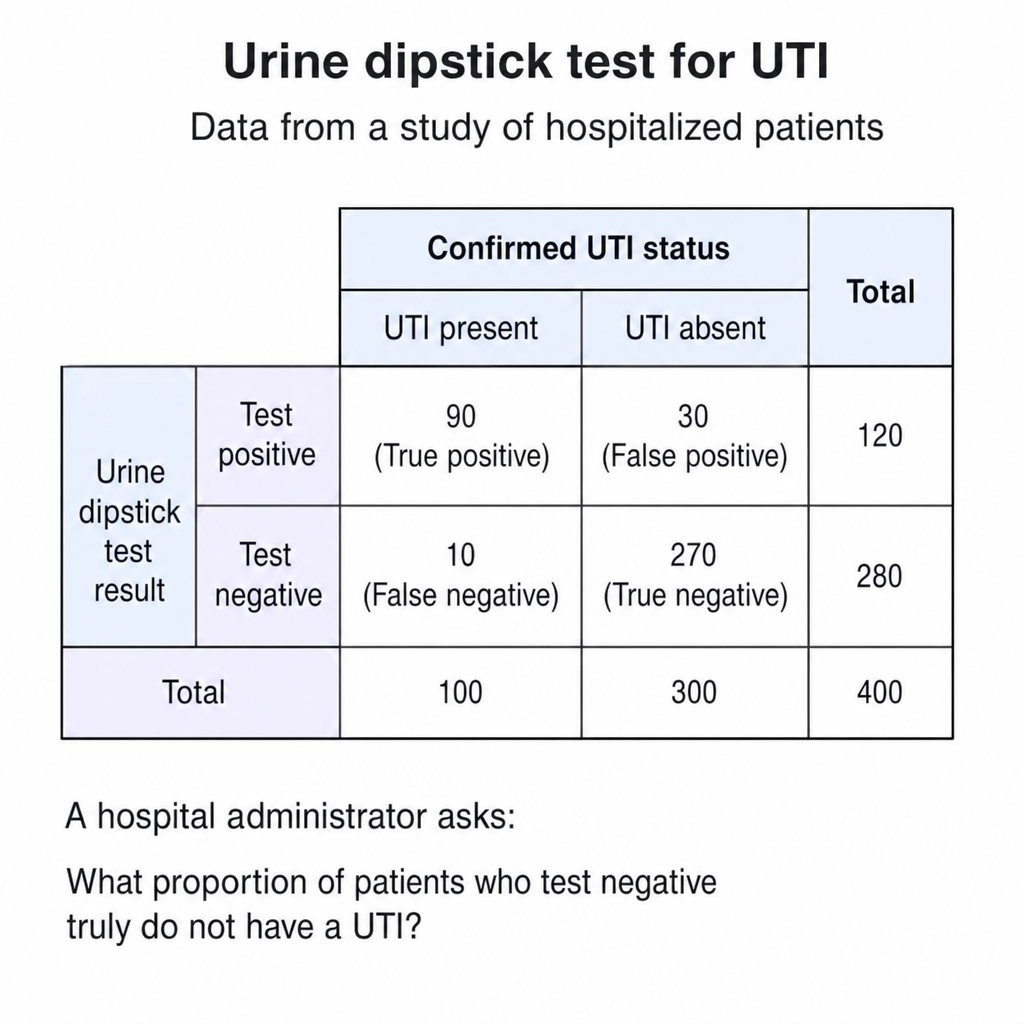
A researcher is reviewing data from a study evaluating a new urine dipstick test for detecting a urinary tract infection (UTI) in hospitalized patients. The following results were recorded: 90 patients with confirmed UTI tested positive, 10 with confirmed UTI tested negative, 30 patients without UTI tested positive, and 270 patients without UTI tested negative. A hospital administrator asks the researcher what proportion of patients who test negative truly do not have a UTI. Which value from the 2×2 table answers this question?
A research team has data from three completed studies on statin use and Alzheimer's disease: Study A (case-control, OR=0.6, n=500), Study B (retrospective cohort, RR=0.7, n=10,000), and Study C (RCT with cognitive decline as secondary endpoint, RR=0.9, n=2,000). The case-control study used prevalent cases, the cohort study had significant loss to follow-up in the unexposed group, and the RCT was underpowered for cognitive outcomes. Synthesize the evidence to determine the most reliable conclusion about the association.
A public health department needs to determine whether a cluster of birth defects in a county is associated with industrial pollution. They have limited resources, the suspected exposure occurred 3-5 years ago, and the outcome is rare (15 cases identified). Multiple potential confounders exist including maternal age, socioeconomic status, and prenatal care access. The community demands rapid answers. Evaluate the most appropriate initial study design considering feasibility, ethics, and scientific validity.
Want unlimited practice?
Get full access to all questions, explanations, and performance tracking.
Scan to download app