
Liver, gallbladder and biliary tree — MCQs

A 65-year-old man comes to the clinic complaining of abdominal pain for the past 2 months. He describes the pain as a dull, aching, 6/10 pain that is diffuse but worse in the right upper quadrant (RUQ). His past medical history is significant for diabetes controlled with metformin and a cholecystectomy 10 years ago. He reports fatigue and a 10-lb weight loss over the past month that he attributes to poor appetite; he denies fever, nausea/vomiting, palpitations, chest pain, or bowel changes. Physical examination is significant for mild scleral icterus and tenderness at the RUQ. Further workup reveals a high-grade malignant vascular neoplasm of the liver. What relevant detail would you expect to find in this patient’s history?
During a surgical procedure to repair an abdominal aortic aneurysm, the surgeon must be careful to avoid injury to which of the following arterial structures that originates near the level of the renal vessels?
A 65-year-old obese female presents to the emergency room complaining of severe abdominal pain. She reports pain localized to the epigastrium that radiates to the right scapula. The pain occurred suddenly after a fast food meal with her grandchildren. Her temperature is 100.9°F (38.2°C), blood pressure is 140/85 mmHg, pulse is 108/min, and respirations are 20/min. On examination, she demonstrates tenderness to palpation in the epigastrium. She experiences inspiratory arrest during deep palpation of the right upper quadrant but this exam finding is not present on the left upper quadrant. A blockage at which of the following locations is most likely causing this patient’s symptoms?
A 48-year-old woman with a history of obesity presents with acute onset of diffuse epigastric pain that began a few hours ago and then localized to the right upper quadrant. Further questioning reveals that the pain has been exacerbated by eating but has otherwise been unchanged in nature. Physical exam reveals severe right upper quadrant pain that is accompanied by arrest of respiration with deep palpation of the right upper quadrant. Which of the following symptoms is associated with the most likely etiology of this patient's presentation?
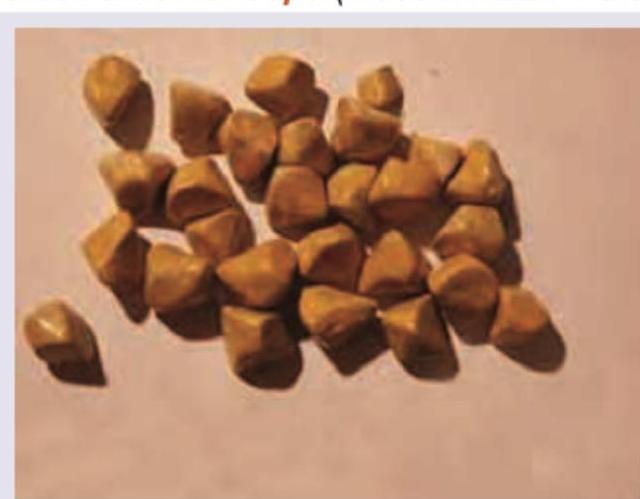
A 41-year-old G3P3 woman presents with acute on chronic right upper quadrant abdominal pain. She says that her current symptoms acutely onset 8 hours ago after eating a large meal and have not improved. She describes the pain as severe, sharp and cramping in character, and localized to the right upper quadrant. She also describes feeling nauseous. The patient says she has had similar less severe episodes intermittently for the past 2 years, usually precipitated by the intake of fatty foods. She denies any history of fever or jaundice. Vital signs are stable. Physical examination is unremarkable, and laboratory findings show normal liver function tests and normal serum bilirubin and serum amylase levels. Ultrasonography of the abdomen reveals multiple stones in the gallbladder. The patient is managed symptomatically for this episode, and after a few months, undergoes elective cholecystectomy, which reveals multiple stones in her gallbladder as shown in the figure (see image). Which of the following best describes these gallstones?
A 26-year-old medical student who is preparing for Step 1 exams is woken up by her friend for breakfast. She realizes that she must have fallen asleep at her desk while attempting to study through the night. While walking with her friend to breakfast, she realizes that she has not eaten since breakfast the previous day. Using this as motivation to review some biochemistry, she pauses to consider what organs are responsible for allowing her to continue thinking clearly in this physiologic state. Which of the following sets of organs are associated with the major source of energy currently facilitating her cognition?
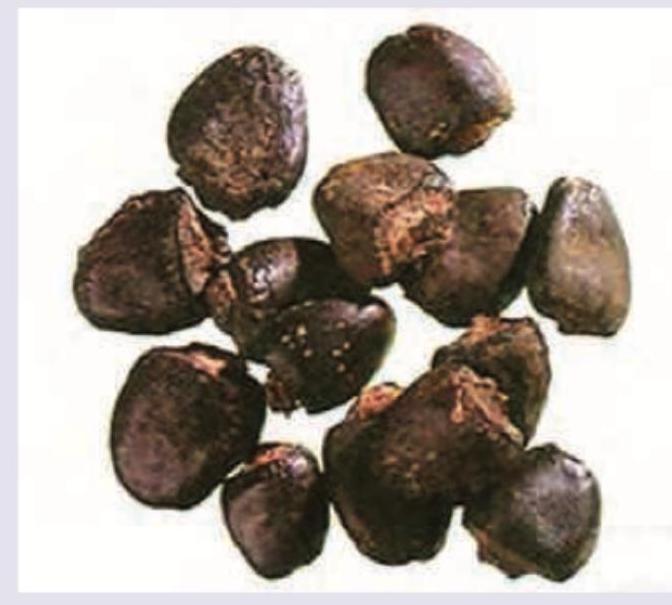
A 49-year-old woman is admitted to the hospital for the evaluation of postprandial colicky pain in the right upper quadrant of the abdomen. Abdominal ultrasound shows multiple round, hyperechoic structures within the gallbladder lumen. She undergoes a cholecystectomy. A photograph of the content of her gallbladder is shown. This patient is most likely to have which of the following additional conditions?
A 44-year-old woman presents to the emergency department with severe, fluctuating right upper quadrant abdominal pain. The pain was initially a 4/10 but has increased recently to a 6/10 prompting her to come in. The patient has a past medical history of type II diabetes mellitus, depression, anxiety, and irritable bowel syndrome. Her current medications include metformin, glyburide, escitalopram and psyllium husks. On exam you note an obese woman with pain upon palpation of the right upper quadrant. The patient's vital signs are a pulse of 95/min, blood pressure of 135/90 mmHg, respirations of 15/min and 98% saturation on room air. Initial labs are sent off and the results are below: Na+: 140 mEq/L K+: 4.0 mEq/L Cl-: 100 mEq/L HCO3-: 24 mEq/L AST: 100 U/L ALT: 110 U/L Amylase: 30 U/L Alkaline phosphatase: 125 U/L Bilirubin Total: 2.5 mg/dL Direct: 1.8 mg/dL The patient is sent for a right upper quadrant ultrasound demonstrating an absence of stones, no pericholecystic fluid, a normal gallbladder contour and no abnormalities noted in the common bile duct. MRCP with secretin infusion is performed demonstrating patent biliary and pancreatic ductal systems. Her lab values and clinical presentation remain unchanged 24 hours later. Which of the following is the best next step in management?
A 35-year-old female presents to her primary care physician complaining of right upper quadrant pain over the last 6 months. Pain is worst after eating and feels like intermittent squeezing. She also admits to lighter colored stools and a feeling of itchiness on her skin. Physical exam demonstrates a positive Murphy's sign. The vitamin level least likely to be affected by this condition is associated with which of the following deficiency syndromes?
A CT scan of the abdomen reveals a mass in the pancreatic uncinate process. Which of the following structures is most likely to be compressed by this mass?
Want unlimited practice?
Get full access to all questions, explanations, and performance tracking.
Scan to download app