
Head and neck surface landmarks — MCQs

A 4-year-old girl is brought to the physician for a painless lump on her neck. She has no history of serious illness and her vital signs are within normal limits. On examination, there is a firm, 2-cm swelling at the midline just below the level of the hyoid bone. The mass moves cranially when she is asked to protrude her tongue. Which of the following is the most likely diagnosis?
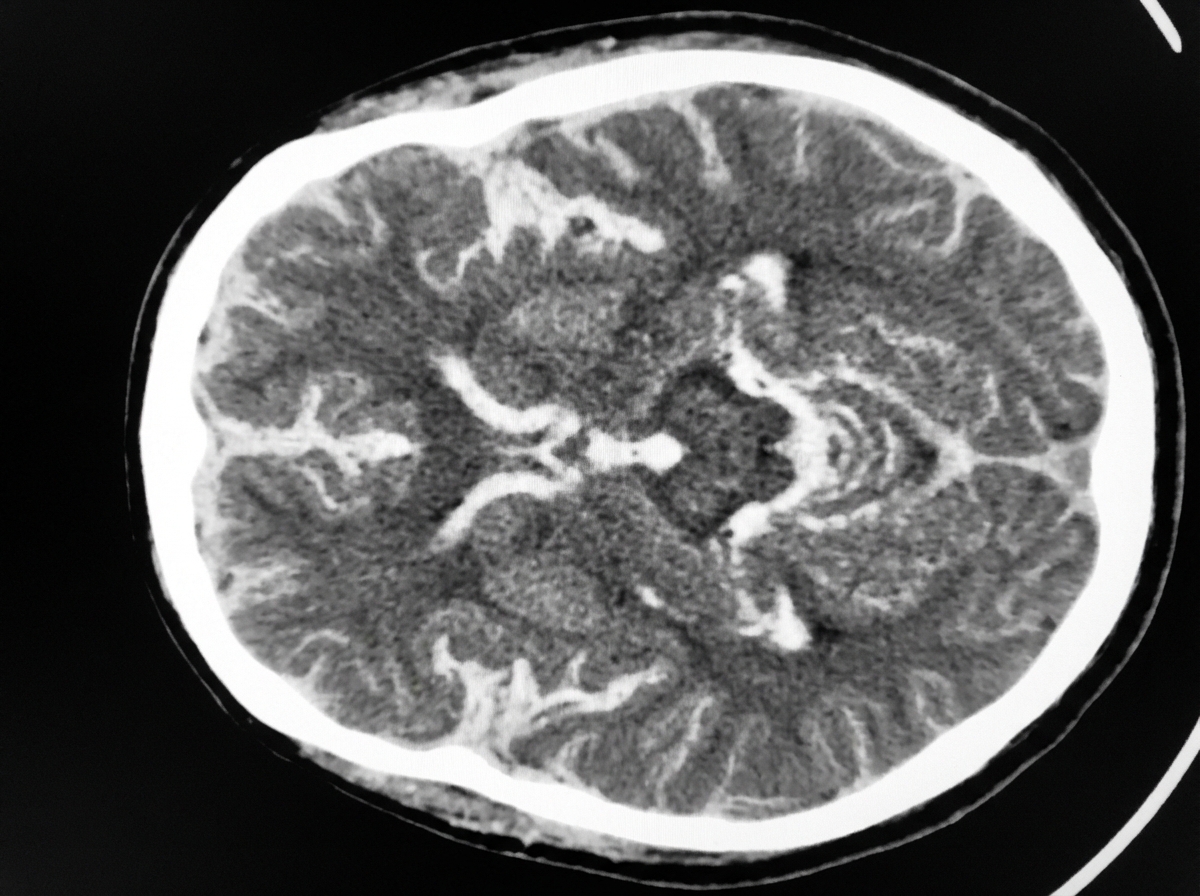
A 54-year-old man is brought to the emergency department 30 minutes after being hit by a car while crossing the street. He had a left-sided tonic-clonic seizure and one episode of vomiting while being transported to the hospital. On arrival, he is not oriented to person, place, or time. Physical examination shows flaccid paralysis of all extremities. A CT scan of the head is shown. This patient's symptoms are most likely the result of a hemorrhage in which of the following structures?
A 26-year-old woman presents to your clinic with complaints of increasing muscle fatigue that worsens after periods of sustained activity. She also reports both ptosis and diplopia that make reading in the late afternoon and evenings difficult. An edrophonium test is performed and is positive, demonstrating resolution of the patient's weakness. One organ in particular, when abnormal, is associated with this patient's condition. Which of the following embryologic structures gives rise to this organ?
A 65-year-old male presents to the emergency room complaining of a severe headache. He developed a sudden-onset severe throbbing headache while watching a football game on television. His past medical history is significant for migraines and hypertension; however, he states that this headache is different from his normal migraine headaches. He has a 30 pack-year smoking history. His family history is notable for stroke in his mother and father. His temperature is 98.9°F (37.2°C), blood pressure is 150/90 mmHg, pulse is 100/min, and respirations are 14/min. On examination, he is oriented to person, place, and time. Neck motion is limited due to pain. Strength is 5/5 bilaterally in both the upper and the lower extremities and sensation is grossly intact across all the dermatomal distributions. Patellar, brachioradialis, and Achilles reflexes are 2+ bilaterally. The vessel that is most commonly involved in this patient's likely condition directly branches off which of the following vessels?
A 47-year-old man presents to you with gradual loss of voice and difficulty swallowing for the past couple of months. The difficulty of swallowing is for both solid and liquid foods. His past medical history is insignificant except for occasional mild headaches. Physical exam also reveals loss of taste sensation on the posterior third of his tongue and palate, weakness in shrugging his shoulders, an absent gag reflex, and deviation of the uvula away from the midline. MRI scanning was suggested which revealed a meningioma that was compressing some cranial nerves leaving the skull. Which of the following openings in the skull transmit the affected cranial nerves?
During a surgical procedure involving the posterior triangle of the neck, which of the following muscles forms its anterior boundary?
A 27-year-old man presents to a physician for evaluation of 3 months of increased vertigo. He says that occasionally he will experience several seconds of intense vertigo that makes him lose his balance. He came in for evaluation because this symptom is affecting his ability to drive to work. He has also been occasionally experiencing tinnitus. Physical exam reveals rotatory nystagmus that is delayed in onset and stops with visual fixation. The nerve that is most likely causing these symptoms exits the skull at which of the following locations?
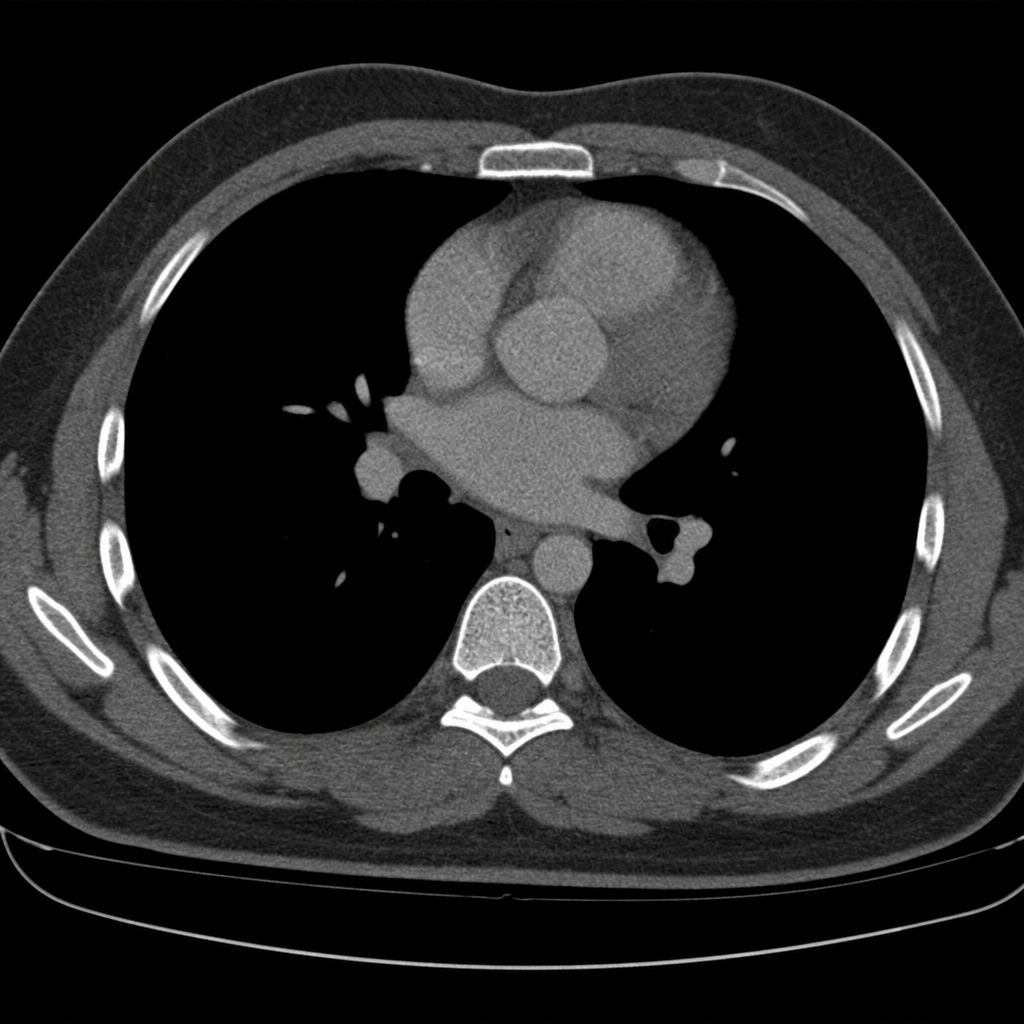
A 40-year-old woman is brought to the emergency department by a paramedic team from the scene of a motor vehicle accident where she was the driver. The patient was restrained by a seat belt and was unconscious at the scene. On physical examination, the patient appears to have multiple injuries involving the trunk and extremities. There are no penetrating injuries to the chest. As part of her trauma workup, a CT scan of the chest is ordered. At what vertebral level of the thorax is this image from?
A 35-year-old woman, gravida 2, para 1, at 40 weeks' gestation, presents to the hospital with contractions spaced 2 minutes apart. Her past medical history is significant for diabetes, which she has controlled with insulin during this pregnancy. Her pregnancy has otherwise been unremarkable. A baby boy is born via a spontaneous vaginal delivery. Physical examination shows he weighs 4.5 kg (9 lb), the pulse is 140/min, the respirations are 40/min, and he has good oxygen saturation on room air. His left arm is pronated and medially rotated. He is unable to move it away from his body. The infant’s right arm functions normally and he is able to move his wrists and all 10 digits. Which of the following nerve roots were most likely damaged during delivery?
A 3629-g (8-lb) newborn is examined shortly after spontaneous vaginal delivery. She was delivered at 40 weeks' gestation and pregnancy was uncomplicated. Her mother is concerned because she is not moving her left arm as much as her right arm. Physical examination shows her left arm to be adducted and internally rotated, with the forearm extended and pronated, and the wrist flexed. The Moro reflex is present on the right side but absent on the left side. Which of the following brachial plexus structures is most likely injured in this infant?
Want unlimited practice?
Get full access to all questions, explanations, and performance tracking.
Scan to download app