
Back surface landmarks — MCQs

A patient presents with difficulty extending their wrist following trauma to the posterior forearm. Which of the following muscles would be most affected by injury to the posterior interosseous nerve?
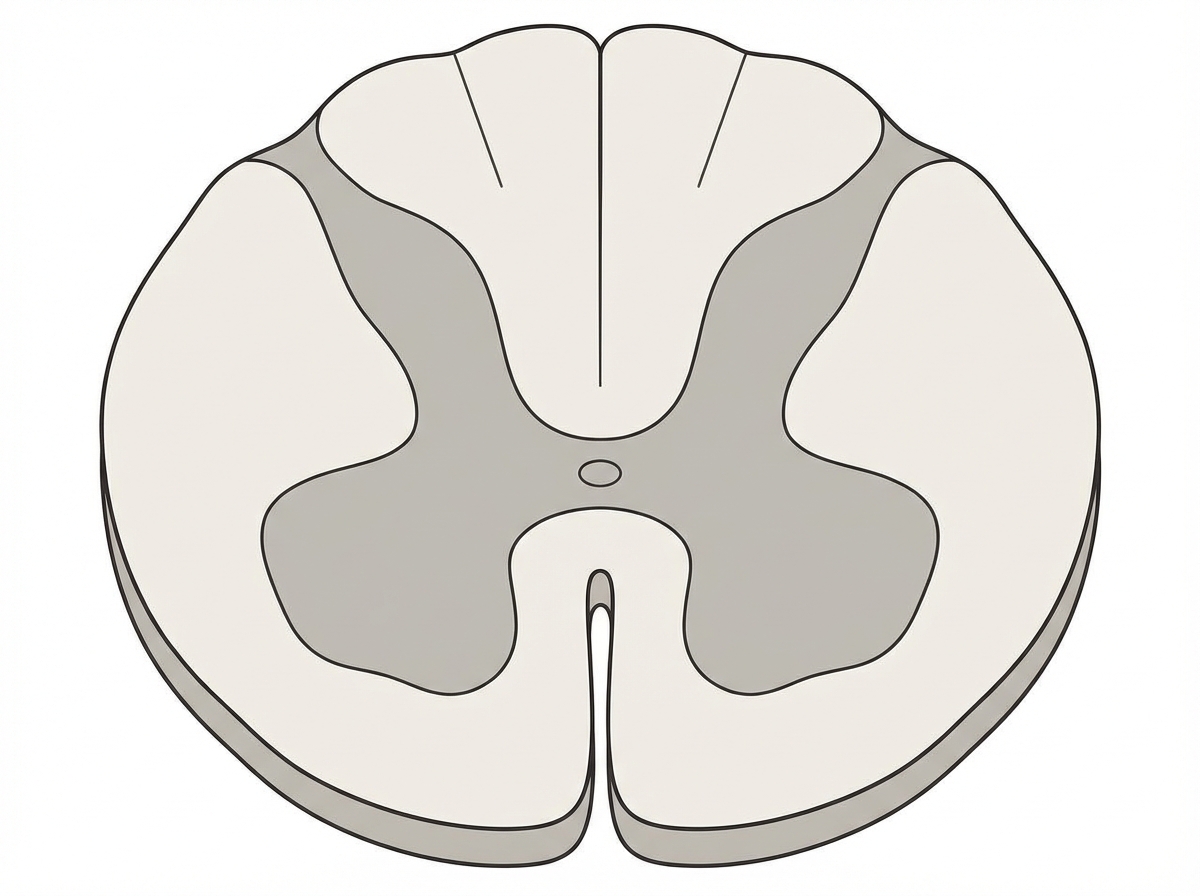
A 45-year-old man is brought to the emergency department by ambulance after a motor vehicle collision. He is not responsive to verbal commands and is unable to provide any history. His pulse is 108/min and regular. Physical examination shows ecchymoses over the neck and back. Neurological examination indicates damage to the spinal cord at the level shown in the illustration. This patient's injury is most likely located at which of the following levels of the spinal cord?
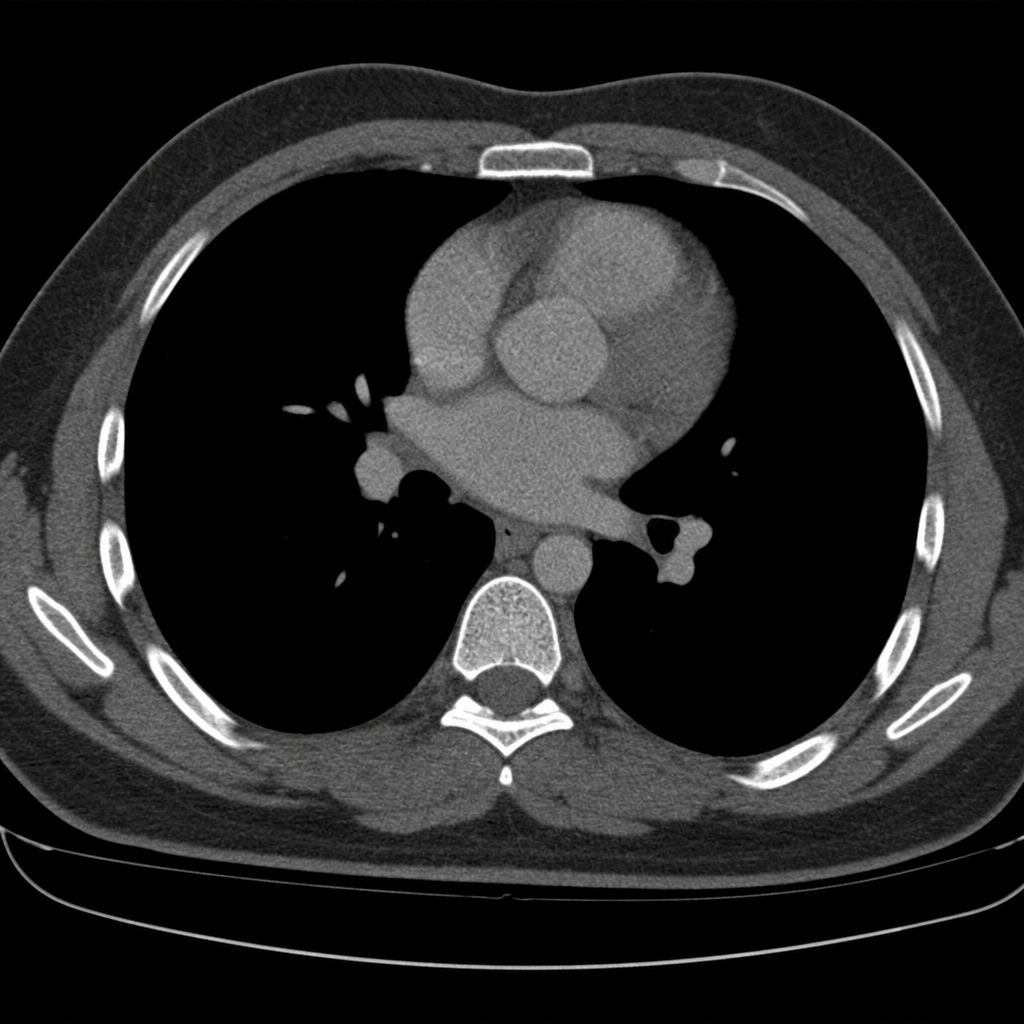
A 40-year-old woman is brought to the emergency department by a paramedic team from the scene of a motor vehicle accident where she was the driver. The patient was restrained by a seat belt and was unconscious at the scene. On physical examination, the patient appears to have multiple injuries involving the trunk and extremities. There are no penetrating injuries to the chest. As part of her trauma workup, a CT scan of the chest is ordered. At what vertebral level of the thorax is this image from?
A 25-year-old man comes to the physician for severe back pain. He describes the pain as shooting and stabbing. On a 10-point scale, he rates the pain as a 9 to 10. The pain started after he lifted a heavy box at work; he works at a supermarket and recently switched from being a cashier to a storekeeper. The patient appears to be in severe distress. Vital signs are within normal limits. On physical examination, the spine is nontender without paravertebral muscle spasms. Range of motion is normal. A straight-leg raise test is negative. After the physical examination has been completed, the patient asks for a letter to his employer attesting to his inability to work as a storekeeper. Which of the following is the most appropriate response?
A 22-year-old man is rushed to the emergency department after a motor vehicle accident. The patient states that he feels weakness and numbness in both of his legs. He also reports pain in his lower back. His airway, breathing, and circulation is intact, and he is conversational. Neurologic exam is significant for bilateral lower extremity flaccid paralysis and impaired pain and temperature sensation up to T10-T11 with normal vibration sense. A computerized tomography scan of the spine is performed which shows a vertebral burst fracture of the vertebral body at the level of T11. Which of the following findings is most likely present in this patient?
A 24-year-old man presents to the emergency department after a motor vehicle accident. The patient was at a stop when he was rear-ended from behind by a vehicle traveling at 11 miles per hour. The patient complains of severe back pain but states he otherwise feels well. The patient is currently seeing a physical therapist who is giving him exercises to alleviate the back pain that is present every morning, relived by activity, and worse with inactivity. He is a student at the university and is struggling with his grades. His temperature is 98.4°F (36.9°C), blood pressure is 117/78 mmHg, pulse is 116/min, respirations are 12/min, and oxygen saturation is 99% on room air. Physical exam demonstrates a decreased range of motion of the patient's spine and tenderness to palpation over the vertebrae. The rest of the exam is deferred due to pain. The patient is requesting a note to excuse him from final exams and work. Which of the following is the most likely diagnosis in this patient?
A 56-year-old woman presents with sudden-onset severe headache, nausea, vomiting, and neck pain for the past 90 minutes. She describes her headache as a ‘thunderclap’, followed quickly by severe neck pain and stiffness, nausea and vomiting. She denies any loss of consciousness, seizure, or similar symptoms in the past. Her past medical history is significant for an episode 6 months ago where she suddenly had trouble putting weight on her right leg, which resolved within hours. The patient denies any history of smoking, alcohol or recreational drug use. On physical examination, the patient has significant nuchal rigidity. Her muscle strength in the lower extremities is 4/5 on the right and 5/5 on the left. The remainder of the physical examination is unremarkable. A noncontrast CT scan of the head is normal. Which of the following is the next best step in the management of this patient?
A 25-year-old man is admitted to the emergency department because of an episode of acute psychosis with suicidal ideation. He has no history of serious illness and currently takes no medications. Despite appropriate safety precautions, he manages to leave the examination room unattended. Shortly afterward, he is found lying outside the emergency department. A visitor reports that she saw the patient climbing up the facade of the hospital building. He does not respond to questions but points to his head when asked about pain. His pulse is 131/min, respirations are 22/min, and blood pressure is 95/61 mm Hg. Physical examination shows a 1-cm head laceration and an open fracture of the right tibia. He opens his eyes spontaneously. Pupils are equal, round, and reactive to light. Breath sounds are decreased over the right lung field, and the upper right hemithorax is hyperresonant to percussion. Which of the following is the most appropriate next step in management?
A 33-year-old pregnant woman at 38 weeks gestation requires emergency cesarean section. The obstetrician must perform a perimortem procedure due to maternal cardiac arrest. She makes a Pfannenstiel incision but encounters significant bleeding. The patient has a history of previous cesarean section with documented bladder injury. Considering the surface anatomy and previous surgery, evaluate the most likely source of bleeding and the anatomical relationship that increases risk in this scenario.
A 71-year-old man with atrial fibrillation presents with sudden onset of severe abdominal pain out of proportion to physical findings. He has mild diffuse tenderness but no peritoneal signs. His lactate is 4.5 mmol/L. CT angiography shows occlusion of a major mesenteric vessel. The surgeon explains that the occluded vessel supplies the midgut from just distal to the second part of the duodenum to the proximal two-thirds of the transverse colon. Based on surface anatomy, at what vertebral level does this vessel originate?
Want unlimited practice?
Get full access to all questions, explanations, and performance tracking.
Scan to download app