
Pancreas and salivary gland histology — MCQs

A 45-year-old woman comes to the emergency department with recurrent episodes of shaking, sweating, and palpitations. The patient is confused and complains of hunger. One week ago, she had similar symptoms that improved after eating. She has hypertension and a history of biliary pancreatitis. She underwent cholecystectomy 1 year ago. She works as a nurse aide in a nursing care facility. She does not smoke or drink alcohol. She does not exercise. Her temperature is 36.7°C (98°F), pulse is 104/min, respirations are 20/min, and blood pressure is 135/88 mm Hg. Examination shows tremors and diaphoresis. Laboratory studies show: Blood glucose 50 mg/dL Thyroid-stimulating hormone 1 mU/L C-peptide 0.50 ng/mL (N=0.8–3.1) Abdominal ultrasound reveals a 1-cm anechoic lesion in the head of the pancreas. Which of the following is the most likely cause of this patient's symptoms?
A 58-year-old woman with refractory gastrointestinal complaints undergoes a bowel biopsy. On histology, the pathologist observes that submucosal glands of Brunner are present in the specimen. Which portion of the bowel was most likely biopsied?
A histological examination of the carotid body reveals glomus cells containing dense-core vesicles. These cells function primarily as chemoreceptors for which of the following?
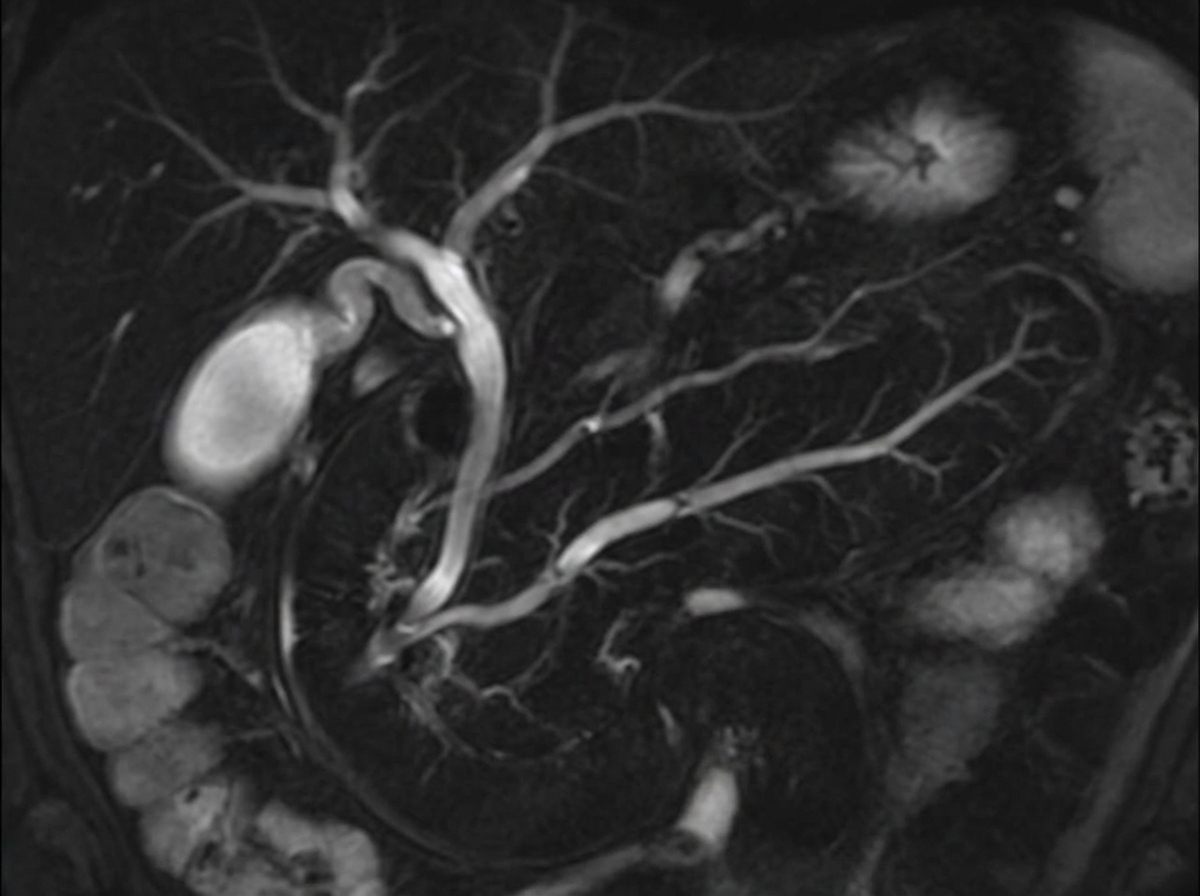
A 37-year-old man presents with dull, continuous epigastric pain that radiates to the back in a circumscribing fashion. The history is significant for 3 episodes of acute pancreatitis that were managed conservatively. He reports no history of such episodes in his relatives and denies a family history of any cardiovascular or gastrointestinal disorders. The vital signs include: blood pressure 105/70 mm Hg, heart rate 101/min, respiratory rate 17/min, and temperature 37.4℃ (99.3℉). The physical examination reveals epigastric tenderness, slight muscle guarding, a positive Mayo-Robson’s sign, and abdominal distention. Laboratory studies show the following findings: Complete blood count Erythrocytes 4.5 x 10⁶/mm3 Hgb 14.7 g/dL Hct 43% Leukocytes 12,700/mm3 Segmented neutrophils 65% Bands 4% Eosinophils 1% Basophils 0% Lymphocytes 27% Monocytes 3% Biochemistry Serum amylase 170 U/L ALT 21 U/L AST 19 U/L Total serum cholesterol 139 mg/dL (3.6 mmol/L) Serum triglycerides 127 mg/dL (1.4 mmol/L) The magnetic resonance cholangiopancreatography findings are shown in the exhibit. What embryogenic disruption could cause such anatomic findings?
You have been asked to deliver a lecture to medical students about the effects of various body hormones and neurotransmitters on the metabolism of glucose. Which of the following statements best describes the effects of sympathetic stimulation on glucose metabolism?
A 21-year-old college student comes to the emergency department because of a two-day history of vomiting and epigastric pain that radiates to the back. He has a history of atopic dermatitis and Hashimoto thyroiditis. His only medication is levothyroxine. He has not received any routine vaccinations. He drinks 1–2 beers on the weekends and occasionally smokes marijuana. The patient appears distressed and is diaphoretic. His temperature is 37.9°C (100.3°F), pulse is 105/min, respirations are 16/min, and blood pressure is 130/78 mm Hg. Physical examination shows abdominal distention with tenderness to palpation in the epigastrium. There is no guarding or rebound tenderness. Skin examination shows several clusters of yellow plaques over the trunk and extensor surfaces of the extremities. Hemoglobin concentration is 15.2 g/dL and serum calcium concentration is 7.9 mg/dL. Which of the following is the most appropriate next step in evaluation?
A 38-year-old man comes to the clinic complaining of recurrent abdominal pain for the past 2 months. He reports a gnawing, dull pain at the epigastric region that improves with oral ingestion. He has been taking calcium carbonate for the past few weeks; he claims that “it used to help a lot but it’s losing its effects now.” Laboratory testing demonstrated increased gastrin levels after the administration of secretin. A push endoscopy visualized several ulcers at the duodenum and proximal jejunum. What characteristics distinguish the jejunum from the duodenum?
A 55-year-old woman comes to the physician because of a 2-week history of painful swelling on the right side of her face. The pain worsens when she eats. Examination of the face shows a right-sided, firm swelling that is tender to palpation. Oral examination shows no abnormalities. Ultrasonography shows a stone located in a duct that runs anterior to the masseter muscle and passes through the buccinator muscle. Sialoendoscopy is performed to remove the stone. At which of the following sites is the endoscope most likely to be inserted during the procedure?
An 87-year-old male presents to his neurologist for a follow-up visit. He is being followed for an inoperable tumor near his skull. He reports that he recently noticed that food has started to lose its taste. He also notes increasing difficulty with swallowing. He has a history of myocardial infarction, diabetes mellitus, hyperlipidemia, hypertension, and presbycusis. He takes aspirin, metoprolol, metformin, glyburide, atorvastatin, lisinopril, and hydrochlorothiazide. On examination, the patient is a frail-appearing male sitting in a wheelchair. He is oriented to person, place, and time. Gag reflex is absent on the right side. A taste evaluation is performed which demonstrates a decreased ability to detect sour and bitter substances on the right posterior tongue. The nerve responsible for this patient’s loss of taste sensation also has which of the following functions?
A 32-year-old woman presents with amenorrhea and galactorrhea. MRI shows a pituitary adenoma. Histological examination of the surgical specimen shows cells arranged in cords and nests with sinusoidal capillaries. Special staining reveals three distinct cell types: chromophobes (50%), acidophils (40%), and basophils (10%). Immunohistochemistry shows the tumor cells staining strongly for prolactin. Evaluate the relationship between normal pituitary architecture and tumor development to determine which cell type most likely gave rise to this neoplasm.
Want unlimited practice?
Get full access to all questions, explanations, and performance tracking.
Scan to download app